As the Kashi Khanda tells it
Skanda Purana, Kashi Khanda 7 to 17 · from Haridwar up the road of the sky · 4 min read
The sage Agastya told this to his wife Lopamudra.
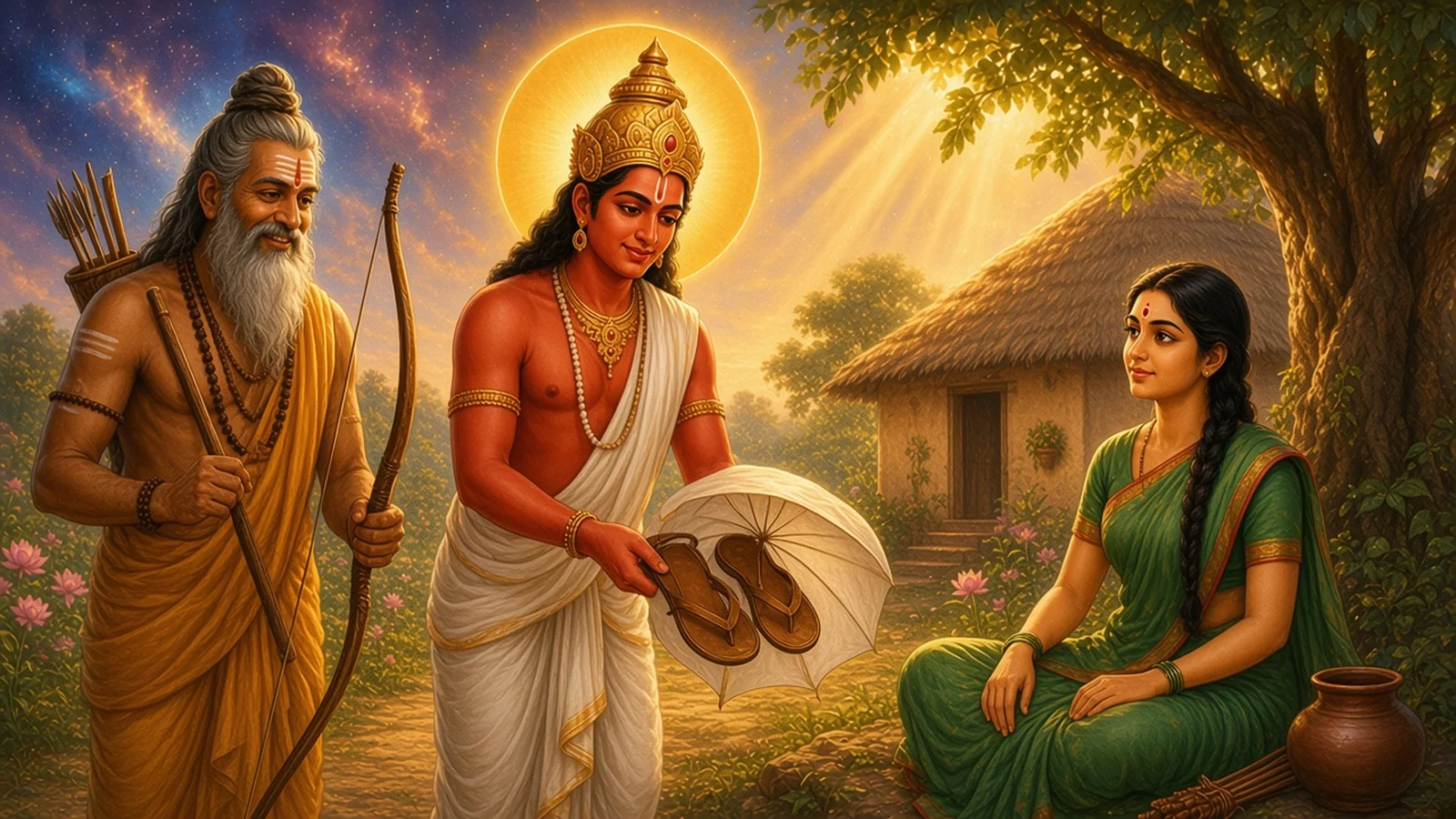
In Mathura there lived a Brahmin named Shivasharman who had learned the Vedas and the law, logic and archery, dance and statecraft, and the scripts of far countries. He earned his wealth honestly, raised good sons and divided his property among them. Then one morning he found grey in his hair, and fear came over him.
"I have spent my whole life reading and earning," he thought. "I never set up a single linga. I never dug a well, never planted a tree for its shade, never gave away a cow. What have I done that will go with me?"
So while his body was still strong he set out to see the seven cities that free the soul. He bathed at Prayaga, saw Kashi and went on, and at last came to Mayapuri, which is Haridwar, where the Ganga comes down from the hills. There, the morning after a night of fasting, as he sat down to eat, he began to shake with cold and fever.
He was alone and far from home. For fourteen days he lay burning, until he no longer knew who or where he was, and then he died there by the river.
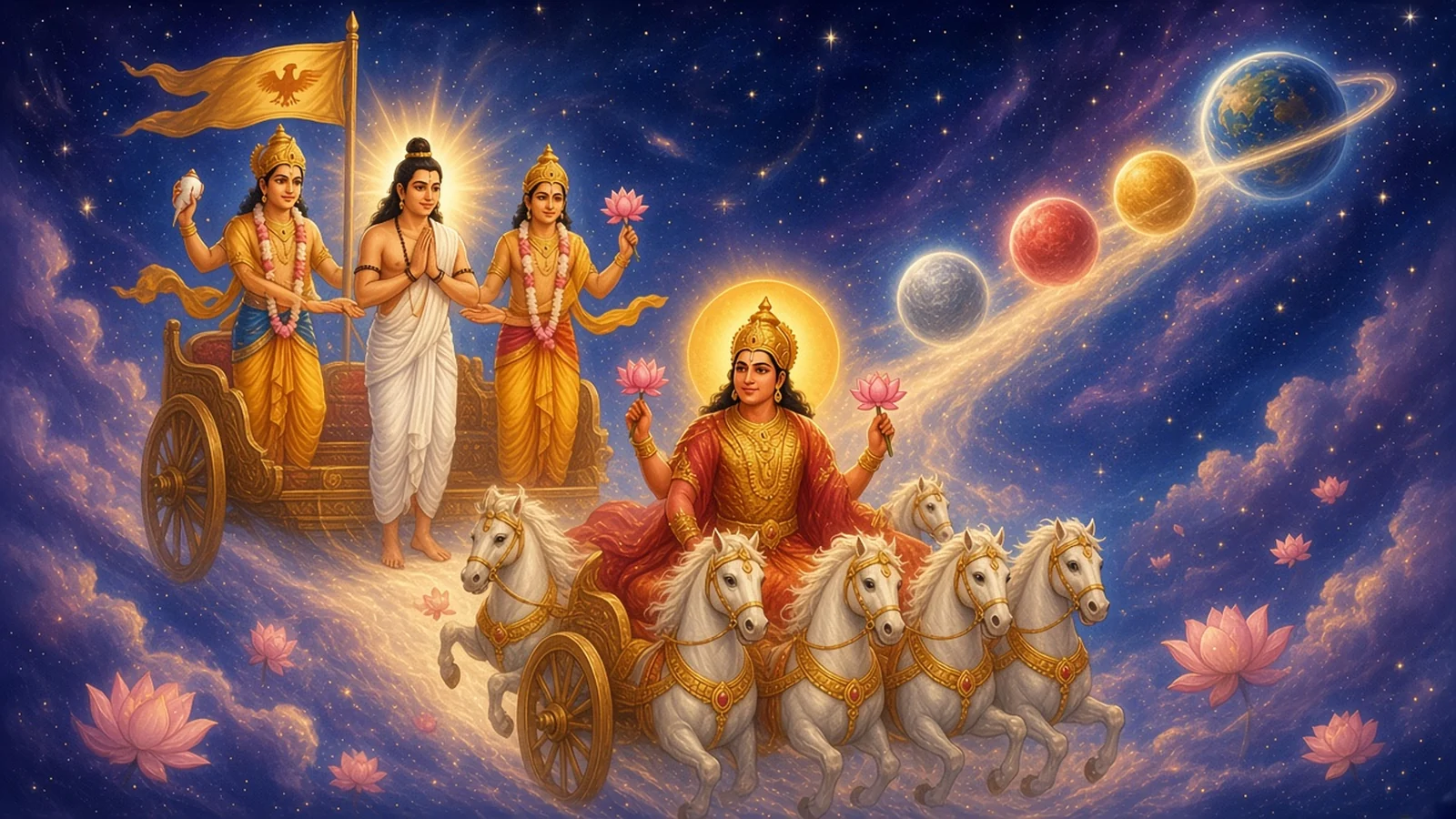
At once a flying chariot came down from Vaikuntha with Garuda on its banner. Two attendants of Vishnu stood in it, Punyashila and Sushila, each with four arms. Shivasharman rose from his body with four arms of his own, dressed in yellow, and stepped in beside them, and the chariot went up the road of the sky.
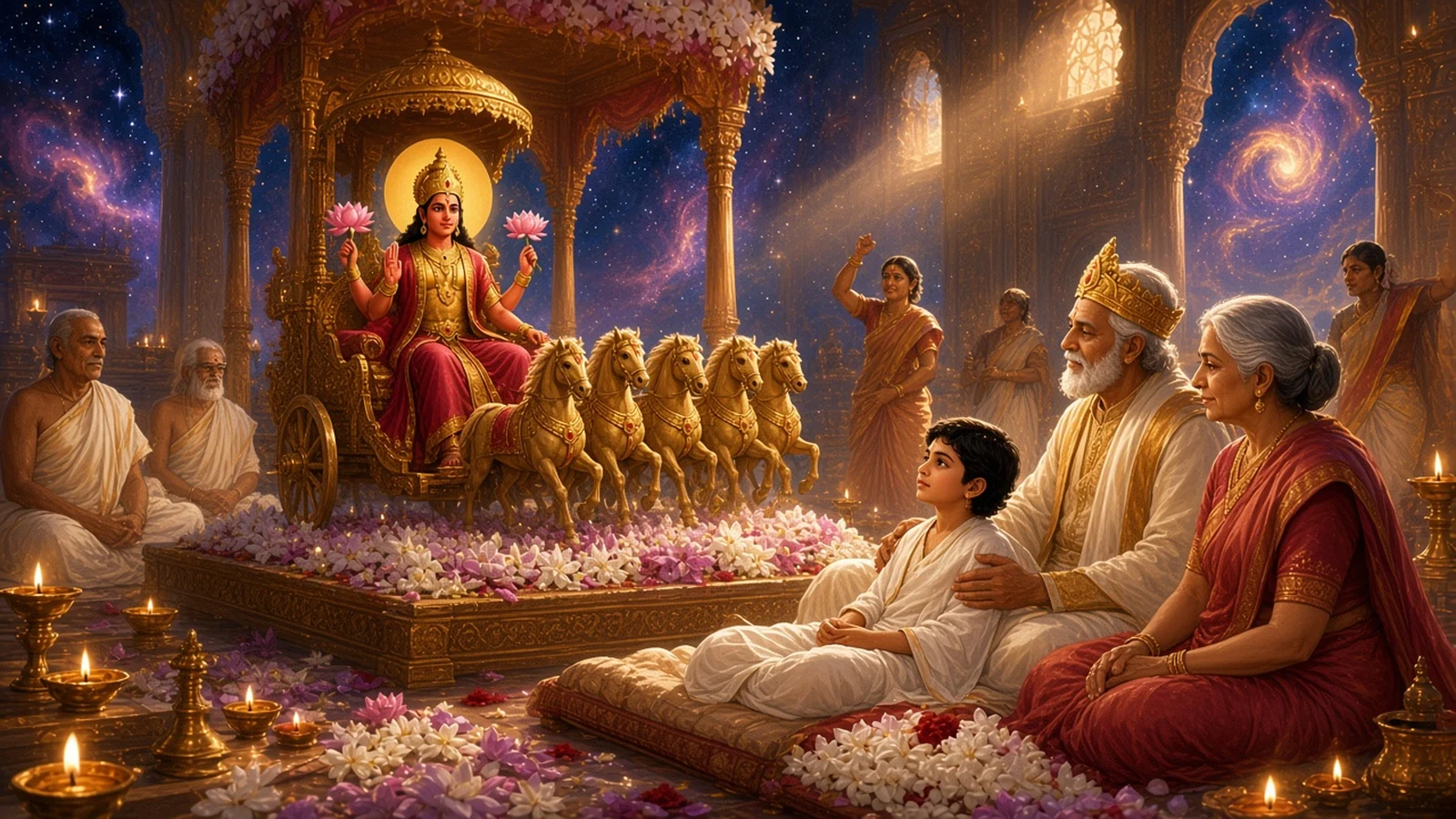
First they passed the Sun in his one-wheeled chariot with the seven horses. Shivasharman joined his palms and bowed, and the Sun acknowledged him with the slightest movement of his brows and was gone.
Then moonlight fell over everything, though it was day.
"Whose world is this?" Shivasharman asked.
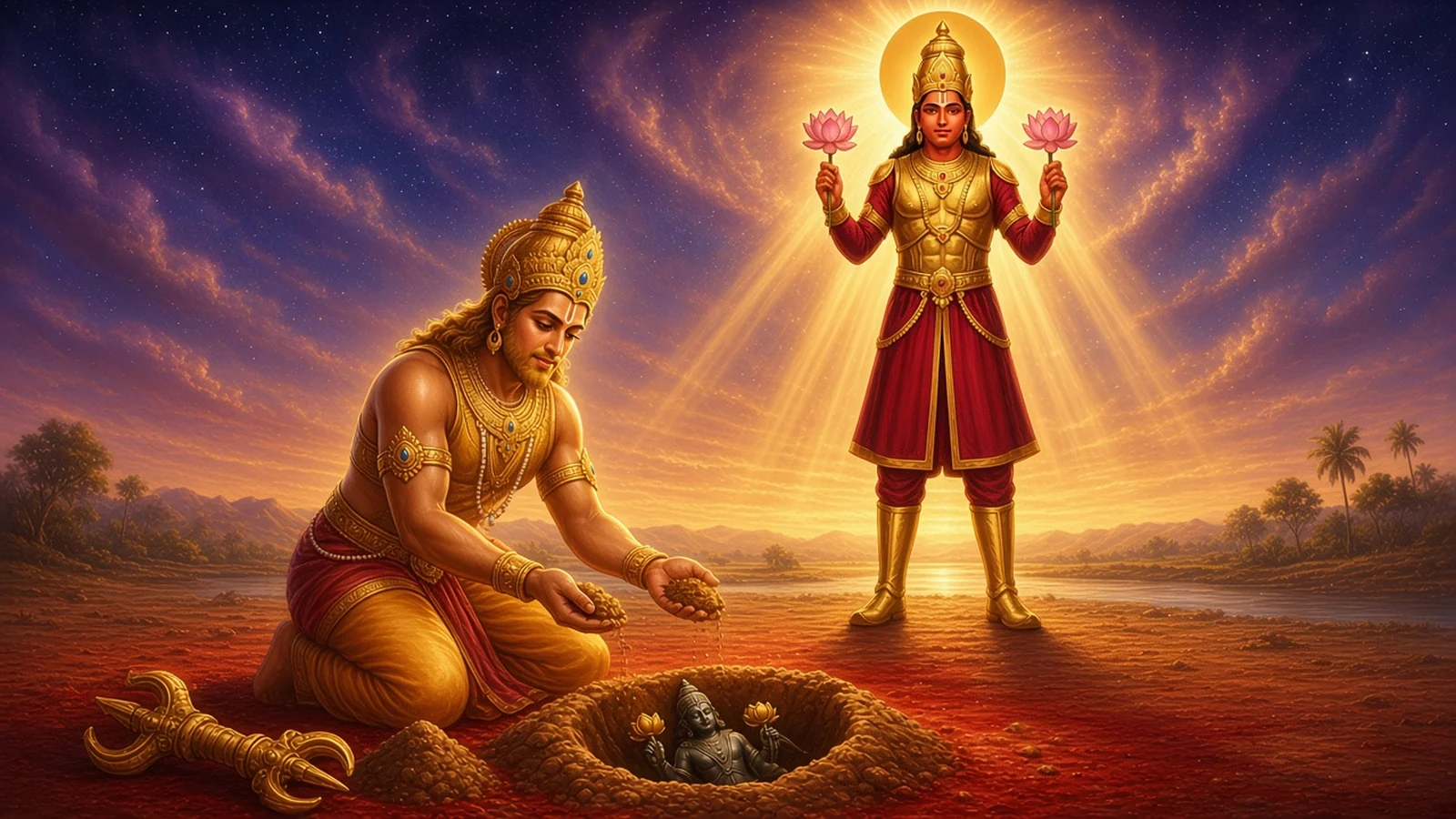
"The Moon's," said the attendants. "He sat in penance at Kashi and set up a linga there, Chandreshvara, and dug a well beside it. Shiva was so pleased that he placed him on his own head, and made him king of the plants and the waters."
They passed the world of the stars, and then a new world came in sight.
"This is Mercury's," they said. "The Moon's son. He went to Kashi as a boy, set up his linga and sat ten thousand years. When Shiva offered him anything he liked, he asked only to love him. So Shiva set his world above the stars, and gave him honour among the planets."
Next came Venus, the teacher of the demons. He too had gone to Kashi. For a thousand years he breathed the smoke of burning rice husks, until Shiva gave him the art of bringing the dead back to life and told him to be first among the planets.
Then a red world. "Mars," they said. "A drop of sweat fell from Shiva's brow while he grieved for Sati, and the Earth raised the child that sprang from it. He sat in penance at Kashi until he glowed like a burning coal. So they call him Angaraka, the ember, and Shiva made him a planet."
Then Jupiter's city. Angiras's son had worshipped at his linga in Kashi for ten thousand years of the gods, and Shiva made him the teacher of the gods, and Brahma crowned him while the drums of heaven sounded.
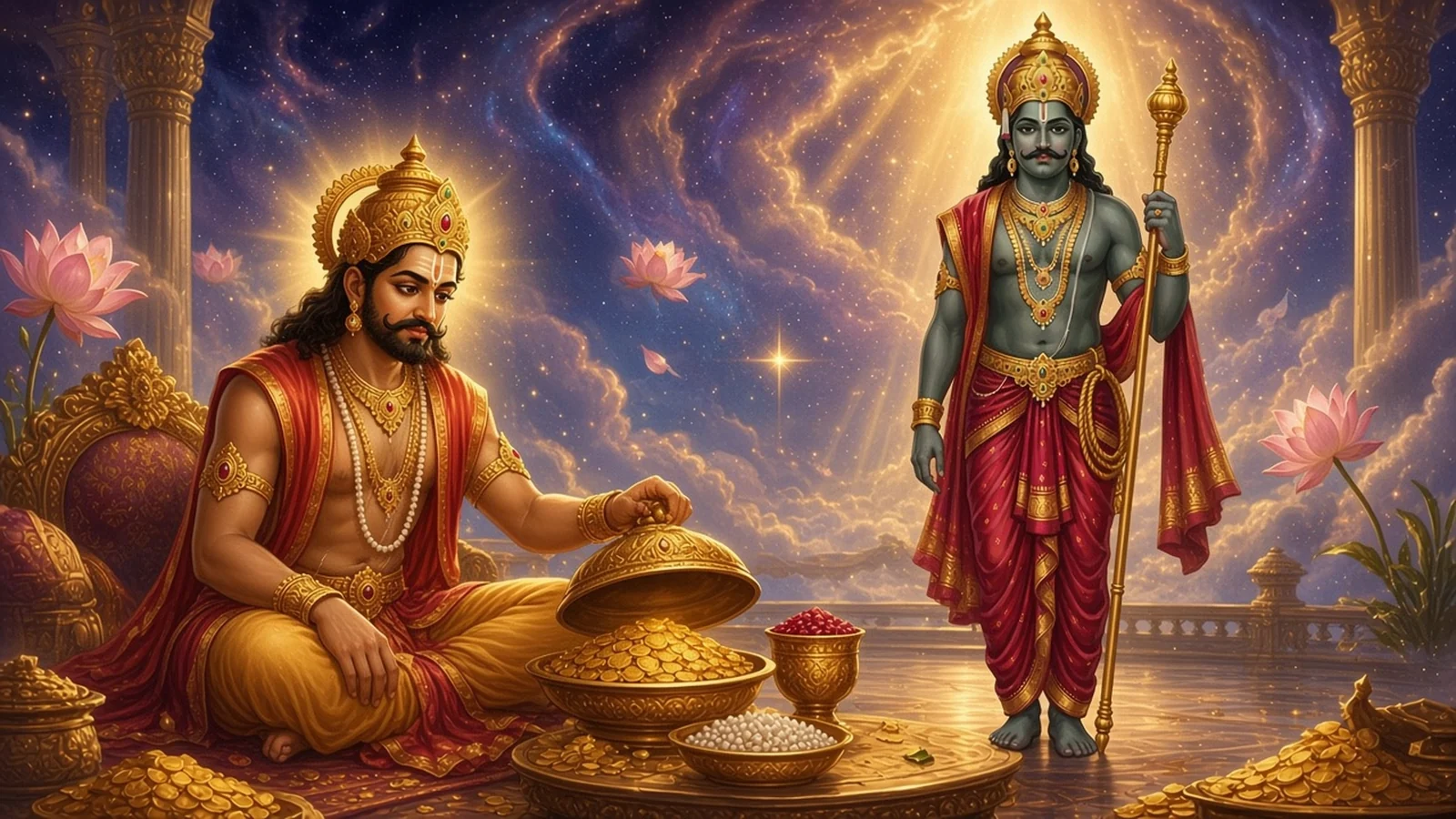
Last, a world wrapped in a ring of light. "Saturn's," they said. "The Sun's son by Chhaya. He too went to Varanasi, set up a linga and won this world and the rank of a planet."
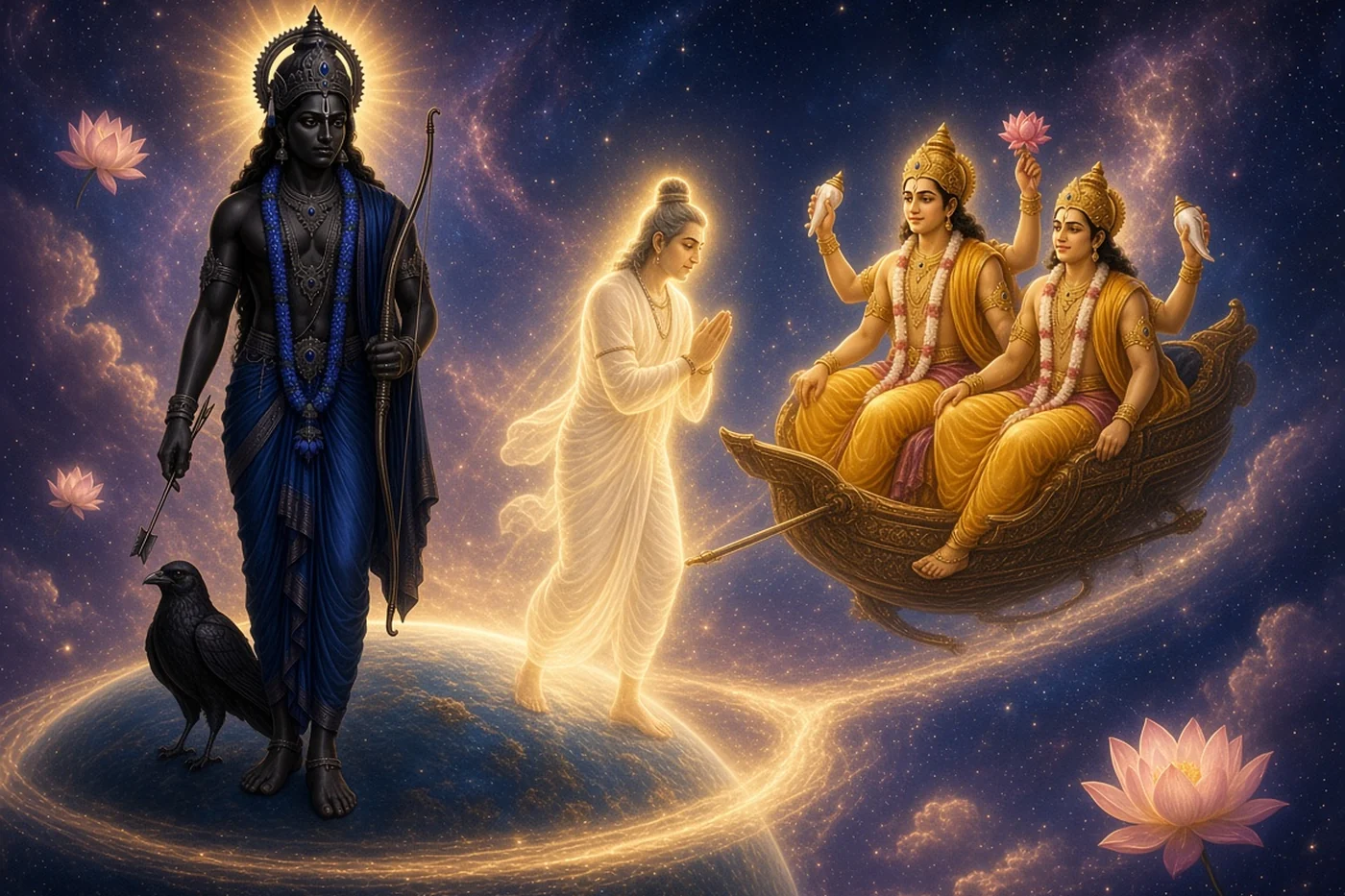
Shivasharman looked back down the road he had come. Every planet on it, from the Moon to Saturn, had won his world the same way, with a linga set up in Kashi and a long penance in front of it.
Higher up the road, the attendants told him what lay ahead for him. After his time in Vishnu's world he would be born a king, Vriddhakala, and one day he would hand his kingdom to his son, go to Kashi with his queen, set up a linga of his own, and be free.
As the Bhagavata tells it
Bhagavata Purana 5.22 and 5.24 · Shukadeva's lesson to Parikshit · 2 min read
In the Bhagavata the same road is not a journey but a lesson. King Parikshit, hearing the sage Shukadeva, asks a hard question about the sun: how can it keep the pole star on its right and also on its left?
Shukadeva answers with a potter's wheel. Ants walk on a turning wheel. The wheel carries them round, and still they walk their own way, so that they are seen first in one place and then in another. So it is with the sun and the planets on the great wheel of time.
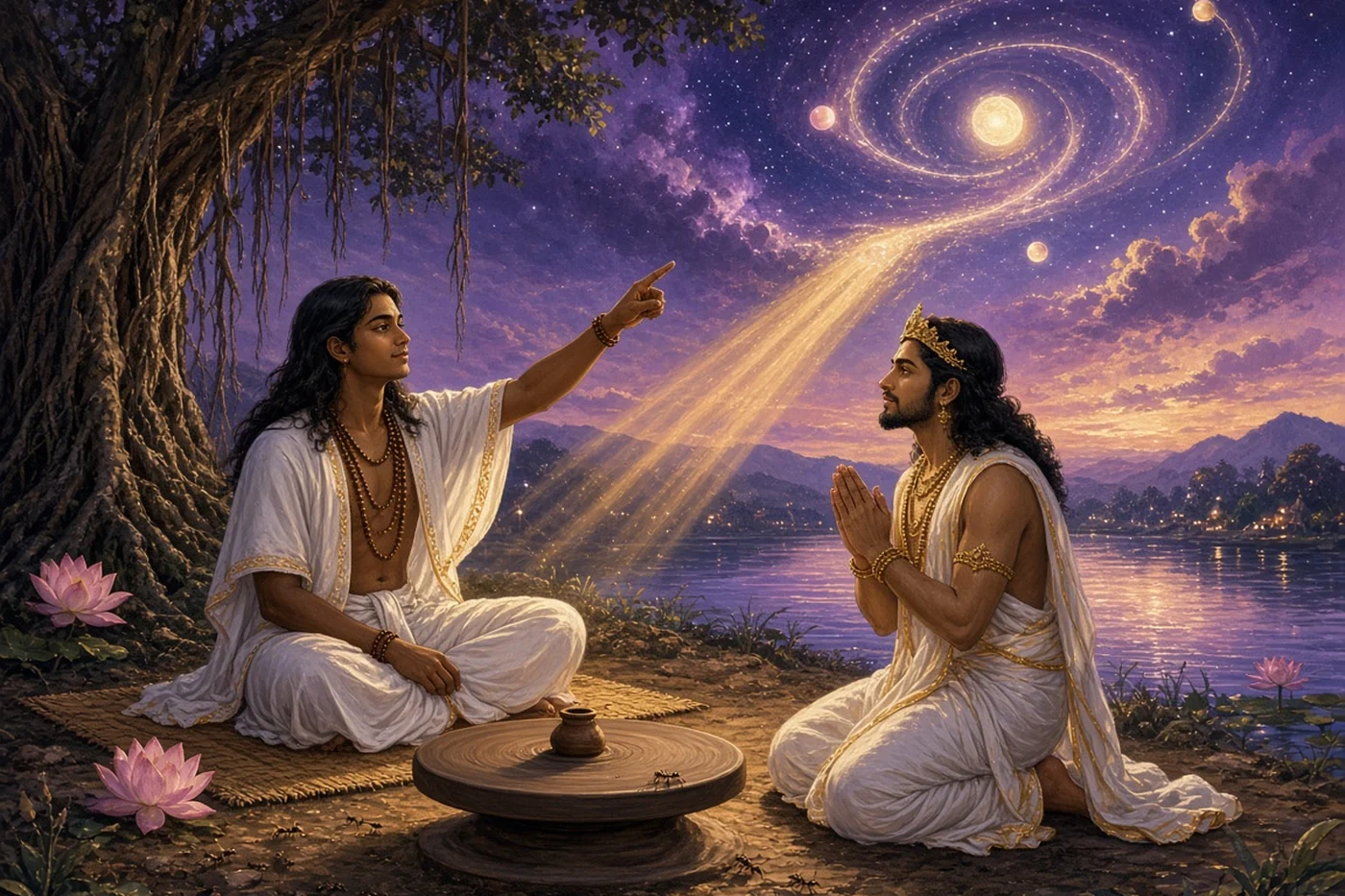
Then he gives the king the heights, rung by rung. The sun is Narayana himself, divided into twelve for the twelve months. A hundred thousand yojanas above the sun's rays runs the Moon, faster than the sun, giving the gods their day as he waxes and the ancestors theirs as he wanes; he feeds the plants and rules the mind. Two hundred thousand yojanas above the Moon are the twenty-eight stars, led by Abhijit.
Two hundred thousand higher goes Venus, sometimes ahead of the sun, sometimes behind, sometimes beside it, and wherever he goes he clears away what holds back the rain. Above him goes Mercury, the Moon's son, kind as a rule; but when he strays from the sun he brings wind and dust and clouds without water. Above him Mars spends three fortnights in each sign and seldom brings good. Above Mars, Jupiter spends a year in each sign and is kind to the Brahmins, unless his course turns crooked. Above Jupiter, Saturn spends thirty months in each sign, and he is always hard on the world.
Above Saturn the seven sages go round the pole star, wishing every creature well. And Rahu, the king learns later, runs ten thousand yojanas below the sun, waiting for the new moon and the full.