Devalok ← All gods
Also calledChandramaSomaShashiShashinShashankaInduNishakaraMoon

In short

Who is Chandra?
The Moon as a god, one of the nine planets. The Puranas make him a son of the sage Atri, king of the plants, the Brahmanas and the stars, and husband of the twenty-seven stars of the lunar month.
Is Chandra the same as Soma?
In the Puranas, yes; Soma is simply another name of the Moon. In the Rigveda Soma is the pressed drink and the god of that plant, and only the later books made him the Moon.
Why does the moon wax and wane?
The Vishnu Purana says the gods drink his nectar each fortnight and the Sun fills him again. The Mahabharata says Daksha cursed him for loving only Rohini, and a bath at Prabhasa let him grow back for half of every month.
Why is there a hare on the moon?
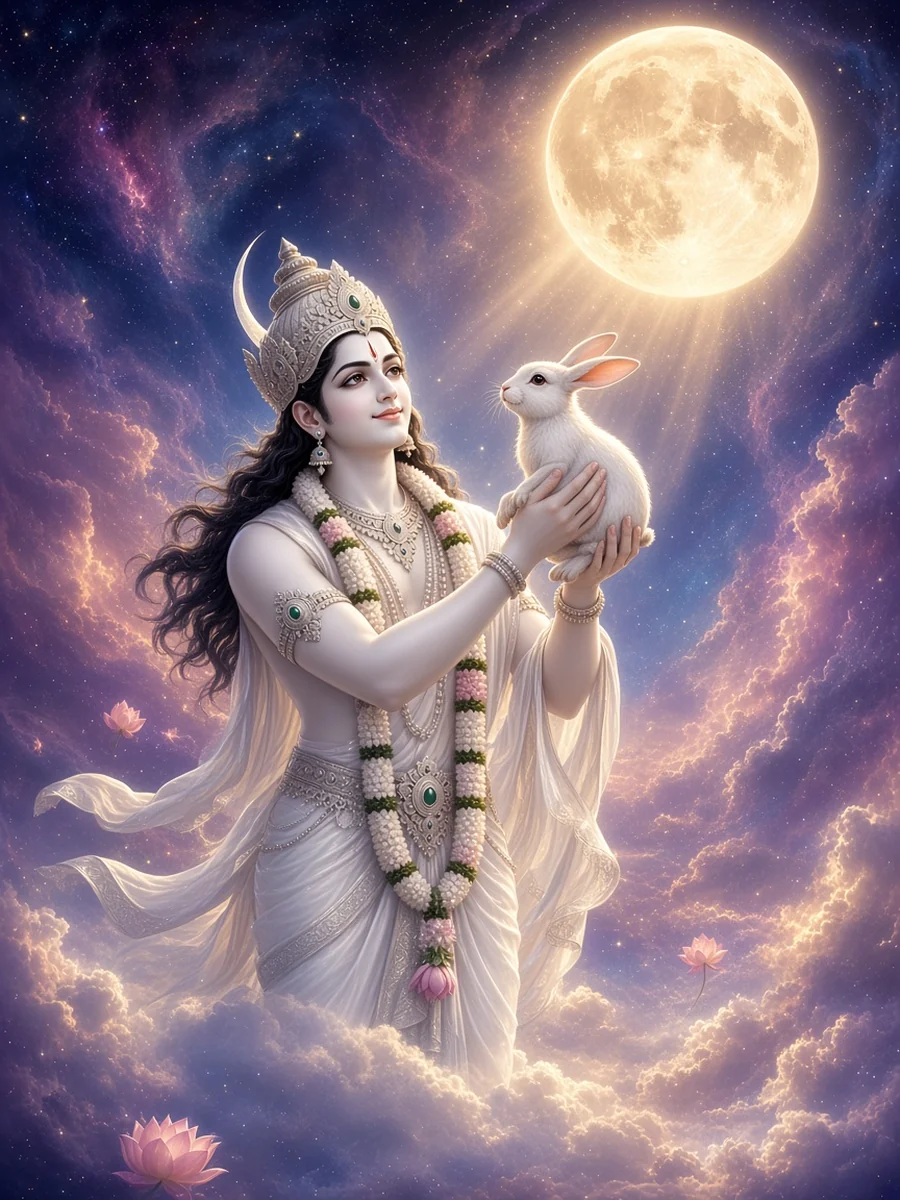
The Buddhist Sasa Jataka says Sakka drew it there to honour a hare who leapt into a fire to feed a guest. That is why the Moon is called Shashin and Shashanka, the one who bears the hare.
Which day belongs to Chandra?
Monday, Somavara, the Moon's day. Among the nine planets he is the white one.

Artwork ›

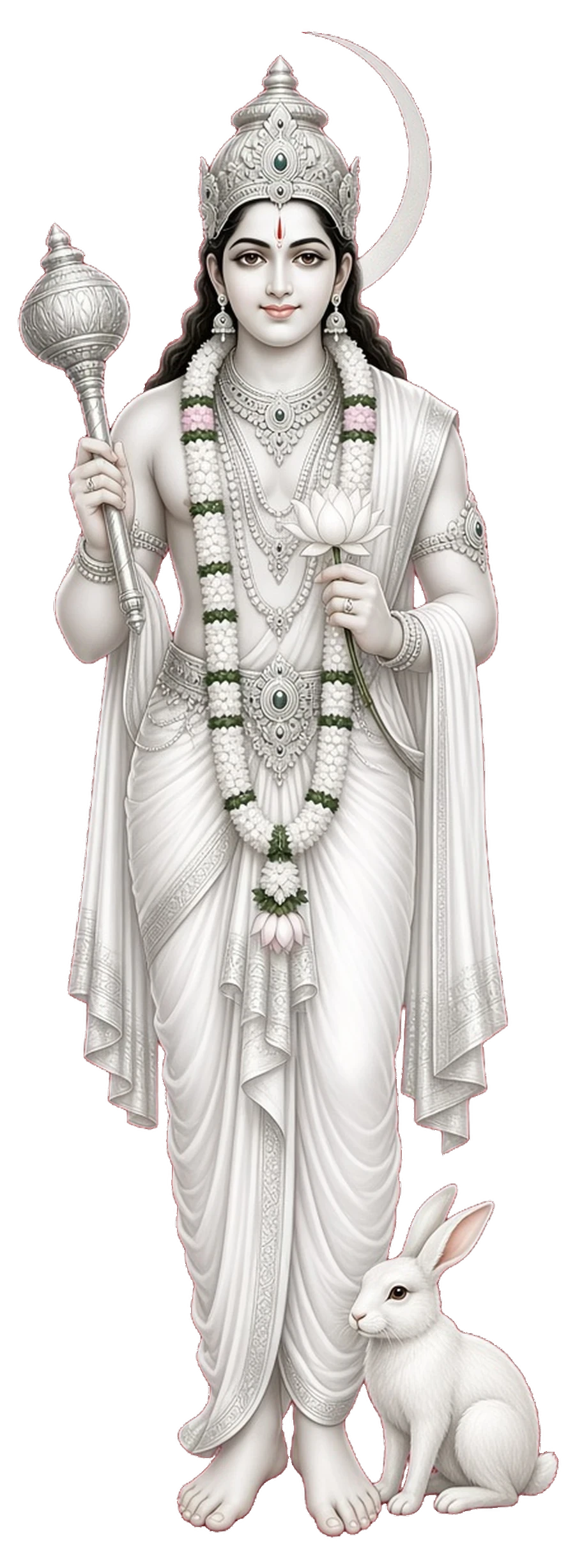
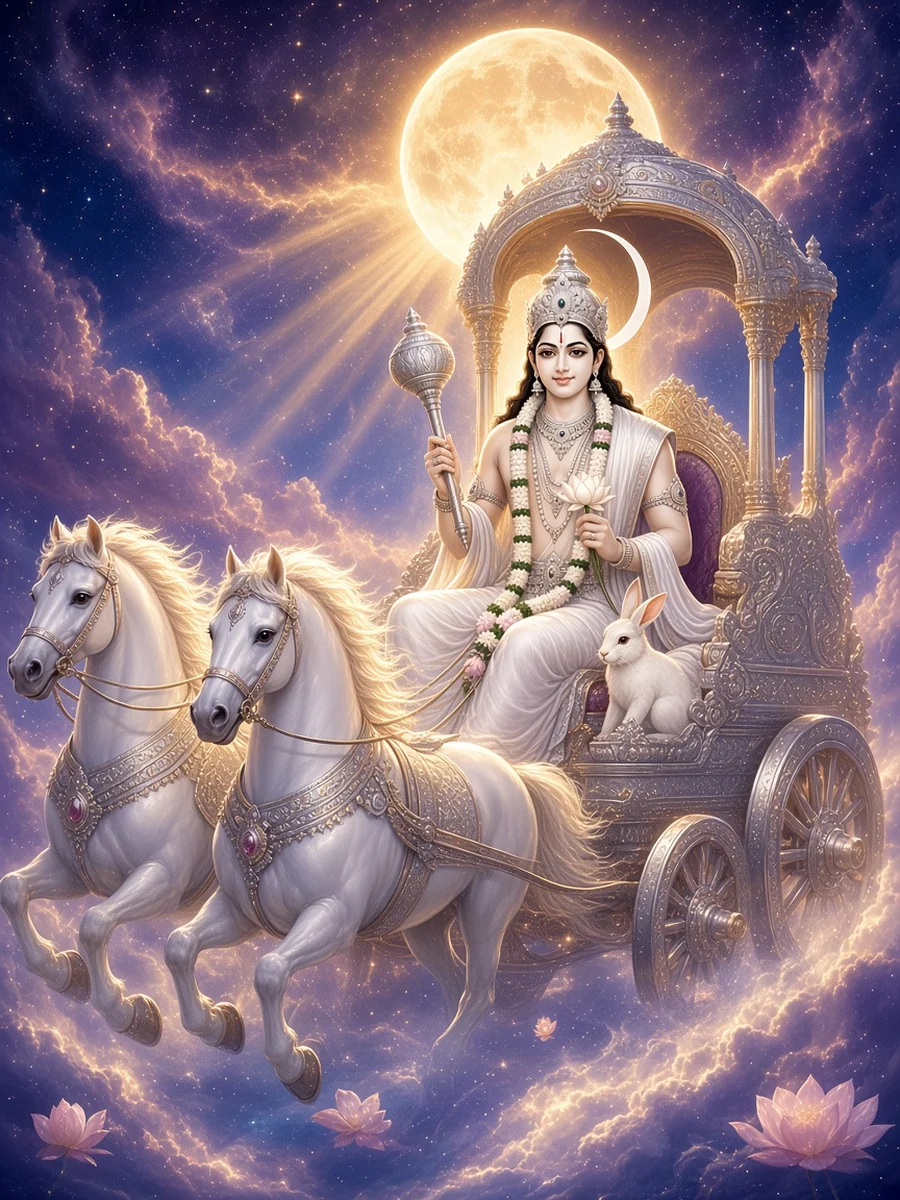
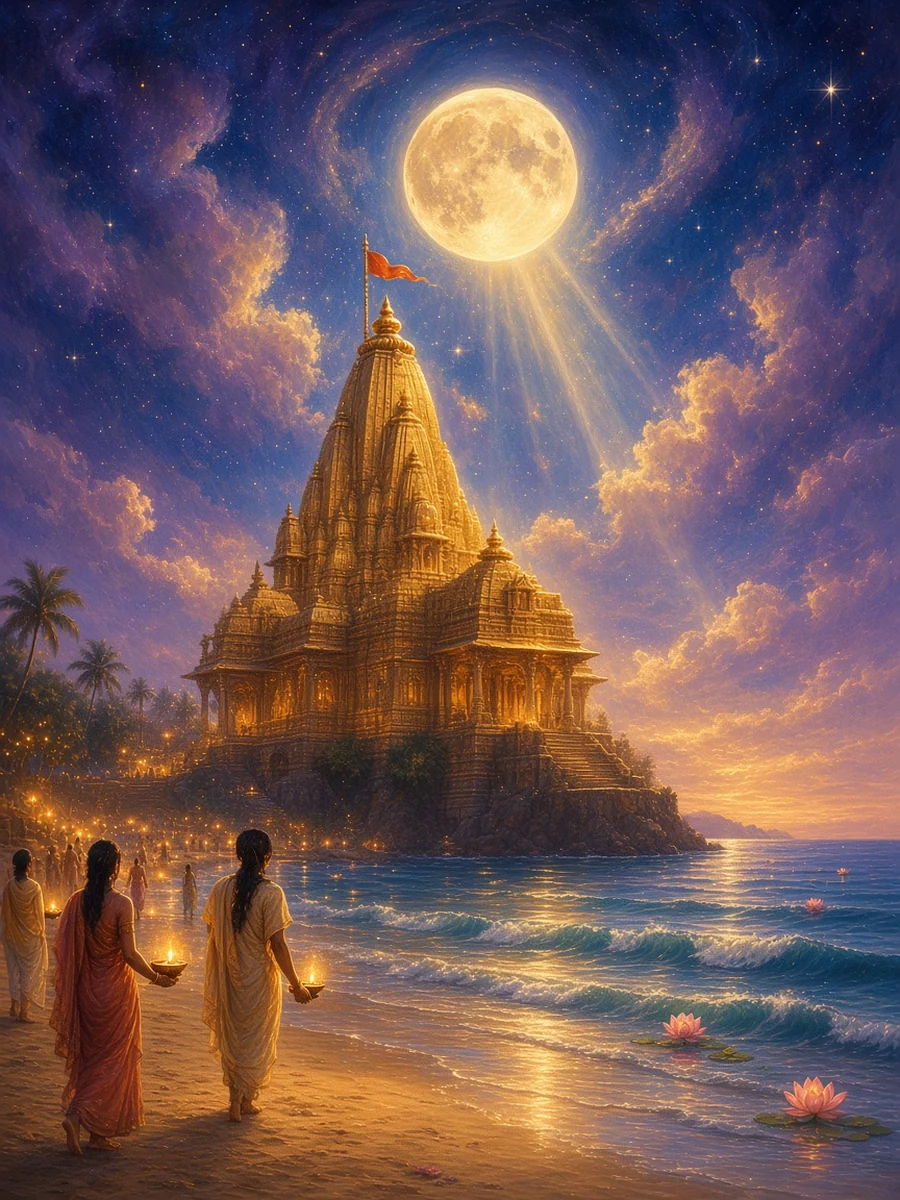
Three wheels and horses white as jasmine Somnath, where the Moon worshipped Shiva and was healed

For kids

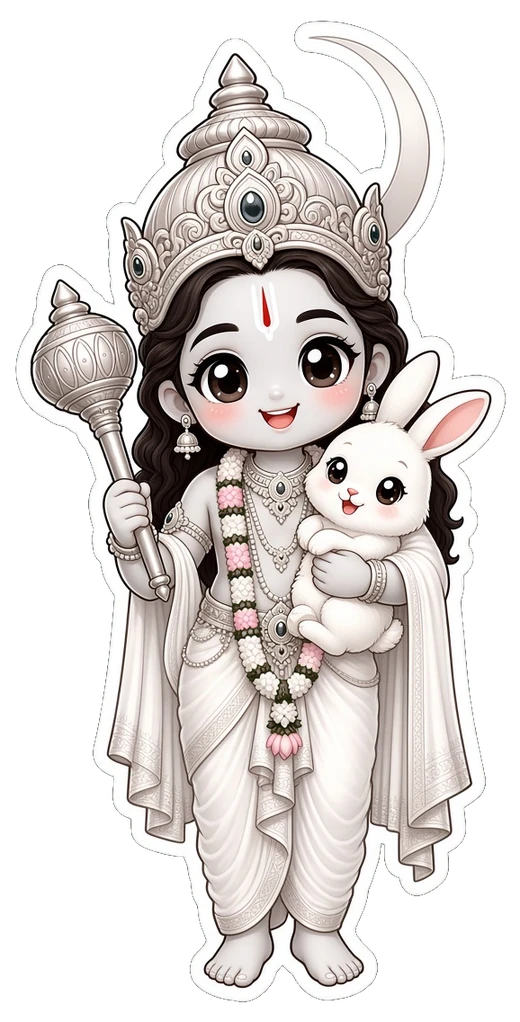
Moon and bunny, best friends
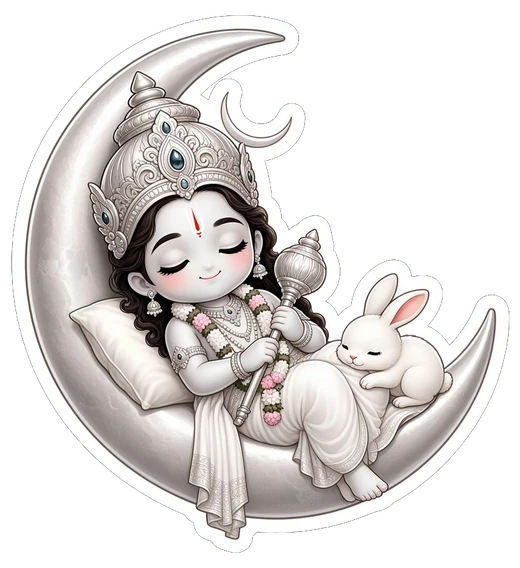
Waning, back in two weeks

At a glance

TraditionSmarta
FormWhite as curd

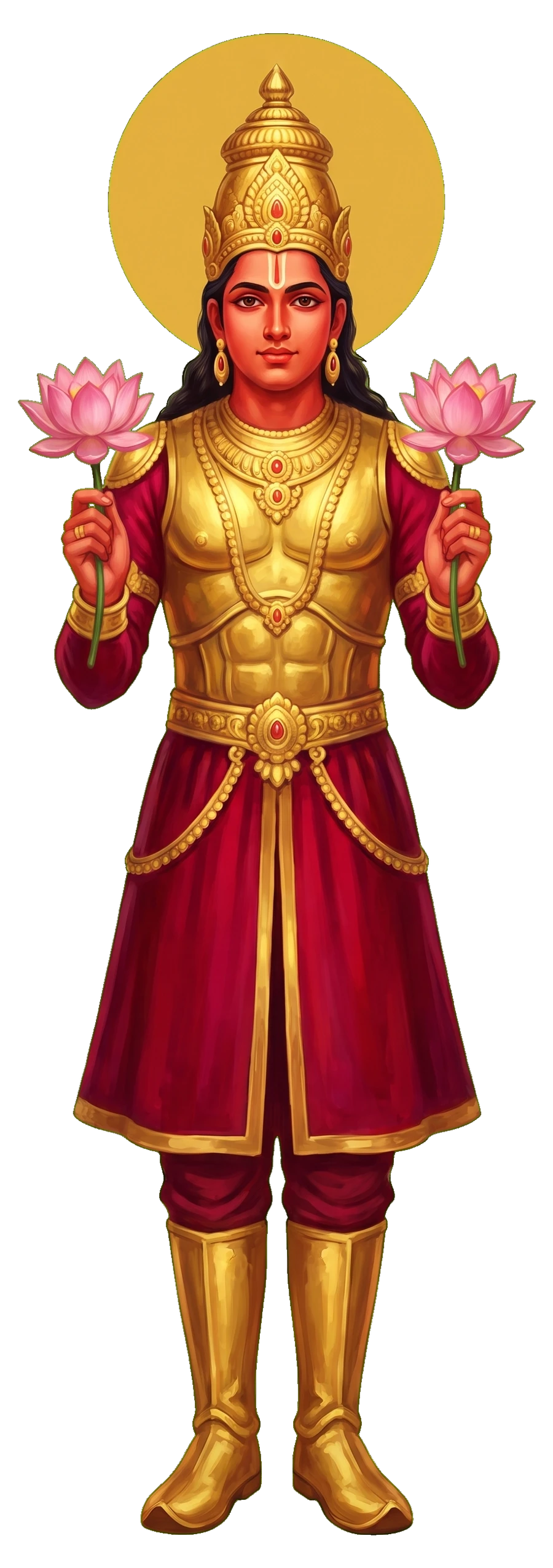
the conch and snow, the hymn says; in many images he holds a mace

ChariotThree wheels and ten horses white as jasmine, five on each side, says the Vishnu Purana

Who Chandra is

Chandra is the Moon, and the Moon is a god. He is the bright one, which is what his name means, and he has many other names besides: Soma, Indu the drop, Nishakara the maker of night, and Shashin and Shashanka, the one who carries the hare. He drives across the sky each night in a chariot of three wheels, the Vishnu Purana says, behind ten horses as white as jasmine.

He is the son of the sage Atri. The Harivamsha says he was born as light that ran from Atri's eyes after a silence of thousands of years; the churning of the ocean has him rise out of the milk sea instead. The site tells both births in The Light in Atri's Eyes. Brahma made him king of the plants, of the Brahmanas and of the stars, and Daksha gave him twenty-seven daughters as wives, the star groups the moon passes through in a month.

His stories are mostly stories of a fault and its price. He loved only Rohini of his twenty-seven wives, and her father's curse made him waste away until he was healed at Somnath; that is told in The Moon and the Twenty-Seven Sisters. He carried off Tara, the wife of Brihaspati, and their son Budha began the lunar line of kings, told in Tara and the Child of the Moon. He laughed at Ganesha and was cursed for it, told in The Moon Who Laughed at Ganesha. But the Mahabharata also gives him a father's heart: he lent his son Varchas to the earth for sixteen years only, as Abhimanyu, in The Son the Moon Lent.

He is one of the nine planets honoured in temples and in household worship, the white one, and Monday, Somavara, is his day. The hymn to the nine planets greets him like this:

Dadhishankha tusharabham kshirarnava samudbhavam, namami shashinam somam shambhor mukuta bhushanam: White as curd, the conch and snow, born of the ocean of milk, I bow to the hare-bearer, Soma, the jewel in Shambhu's crown.

The crescent in Shiva's hair is the Moon himself, and Shiva is called Chandrashekhara, the one crowned with the moon. Wives break the Karva Chauth fast when he rises, bowls of rice and milk are left out in his light on Sharad Purnima, and on Ganesh Chaturthi many people take care not to look at him at all.
Before the Puranas

The Vedic roots of Chandra

The Rigveda has a moon but hardly a moon god. Its word for the moon is chandramas, and in the hymn of the cosmic Person (10.90.13) the moon is born from that being's mind, as the sun is from his eye. The great god of the Rigveda who later became the Moon was someone else: Soma, the plant pressed for the sacrifice, its juice and the god who was both. His story is told on Soma's own page. Chandra the son of Atri, with his chariot, his wives and his curses, is the work of the Brahmanas, the epics and the Puranas.

How the drink became the moon can be followed step by step. Soma in the hymns is bright, he swells, he is called the drop, indu, and in the bowls he looks like the moon in the water. In the wedding hymn of the tenth book (10.85) he stands among the stars, and the poet says the Soma the priests know is one nobody on earth eats. A. A. Macdonell counts this as one of a few late hymns where most scholars see the moon, and adds that the Rigveda has no plain statement of it. Alfred Hillebrandt went much further and read the whole ninth book as hymns to the moon; that reading is his, and Macdonell rejects it.

In the Brahmanas the matter is settled. The Shatapatha Brahmana (1.6.4) says that King Soma, the food of the gods, is the moon; the Aitareya and the Chandogya Upanishad say the same. The gods drink him and he wanes, and he fills again. The Taittiriya Samhita (2.3.5) already gives him the daughters of Prajapati as wives and a wasting illness for loving one of them best.

The Mahabharata brings the moon up out of the churned ocean (Adi 18), counts Soma among the eight Vasus with a son Varchas (Adi 66), and tells the curse and the cure at Prabhasa. The Puranas make him Atri's son, the Harivamsha telling the birth in full, and the Vishnu Purana gives him his chariot and explains his phases by the gods drinking his nectar and the Sun refilling it. Astronomy then set him among the nine planets, and the week gave him Monday.

See how the Vedic gods became the Puranic ones →

Related gods