As the Adi Parva tells it
Mahabharata, Adi Parva 66-67 · 3 min read
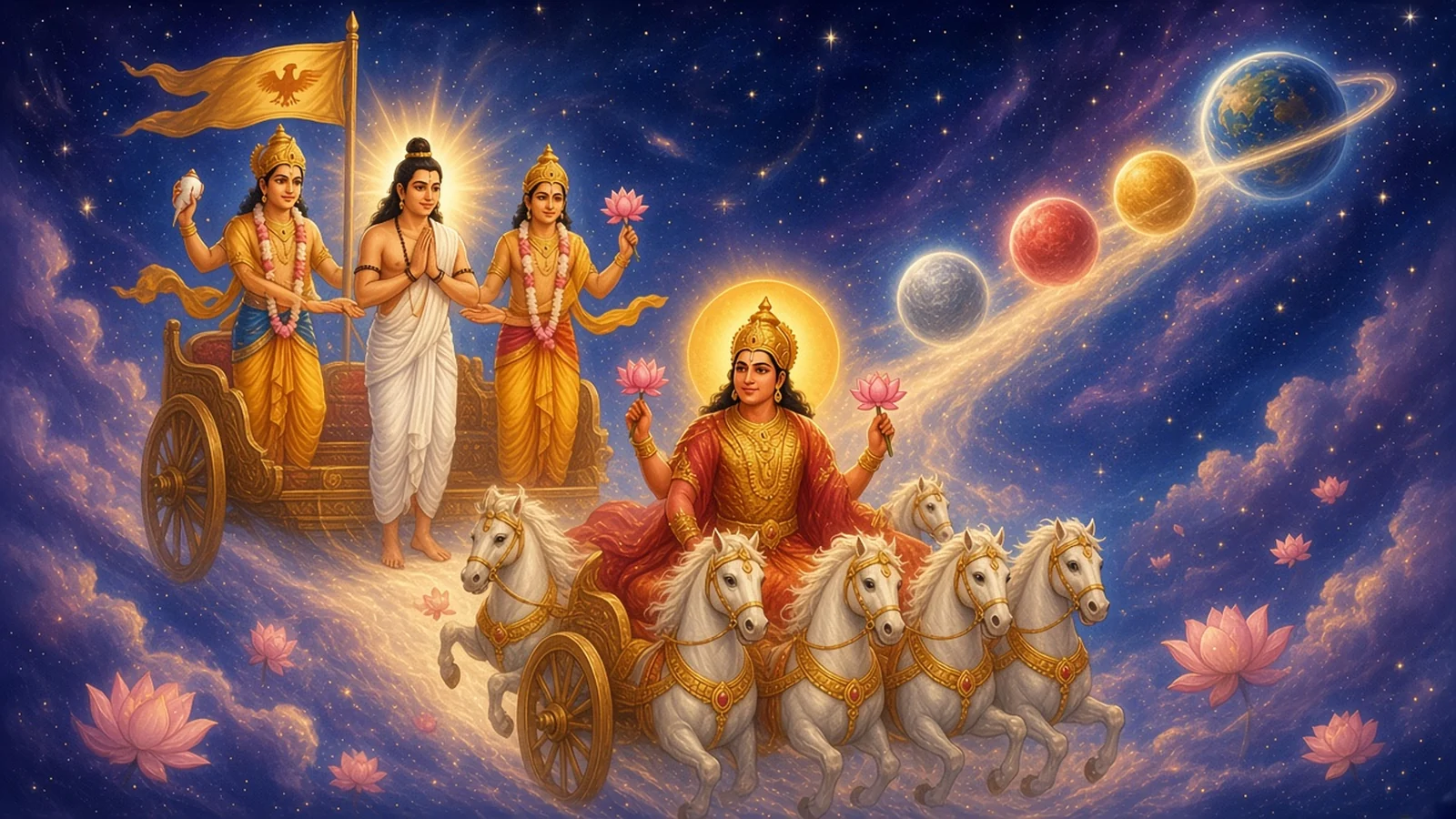
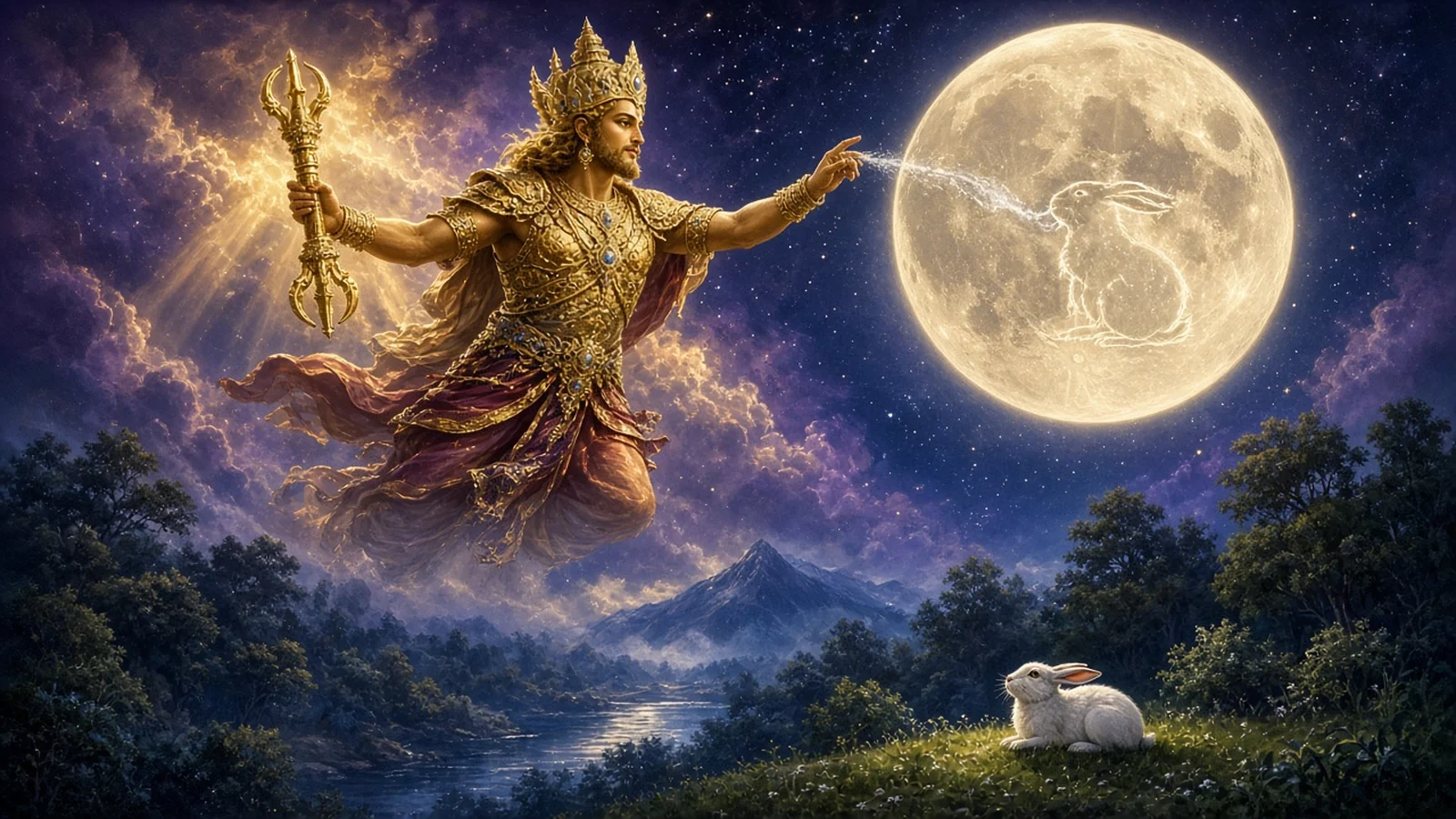
The Asuras were being born on earth as kings and warriors, and the gods agreed among themselves that each of them would send a portion of himself down to be born as a man and stand against them. Indra would go, and the Wind, and Dharma, and the twin Ashvins. Long afterwards the sage Vaishampayana would read the whole list out to King Janamejaya, because it was the story of the king's own family.
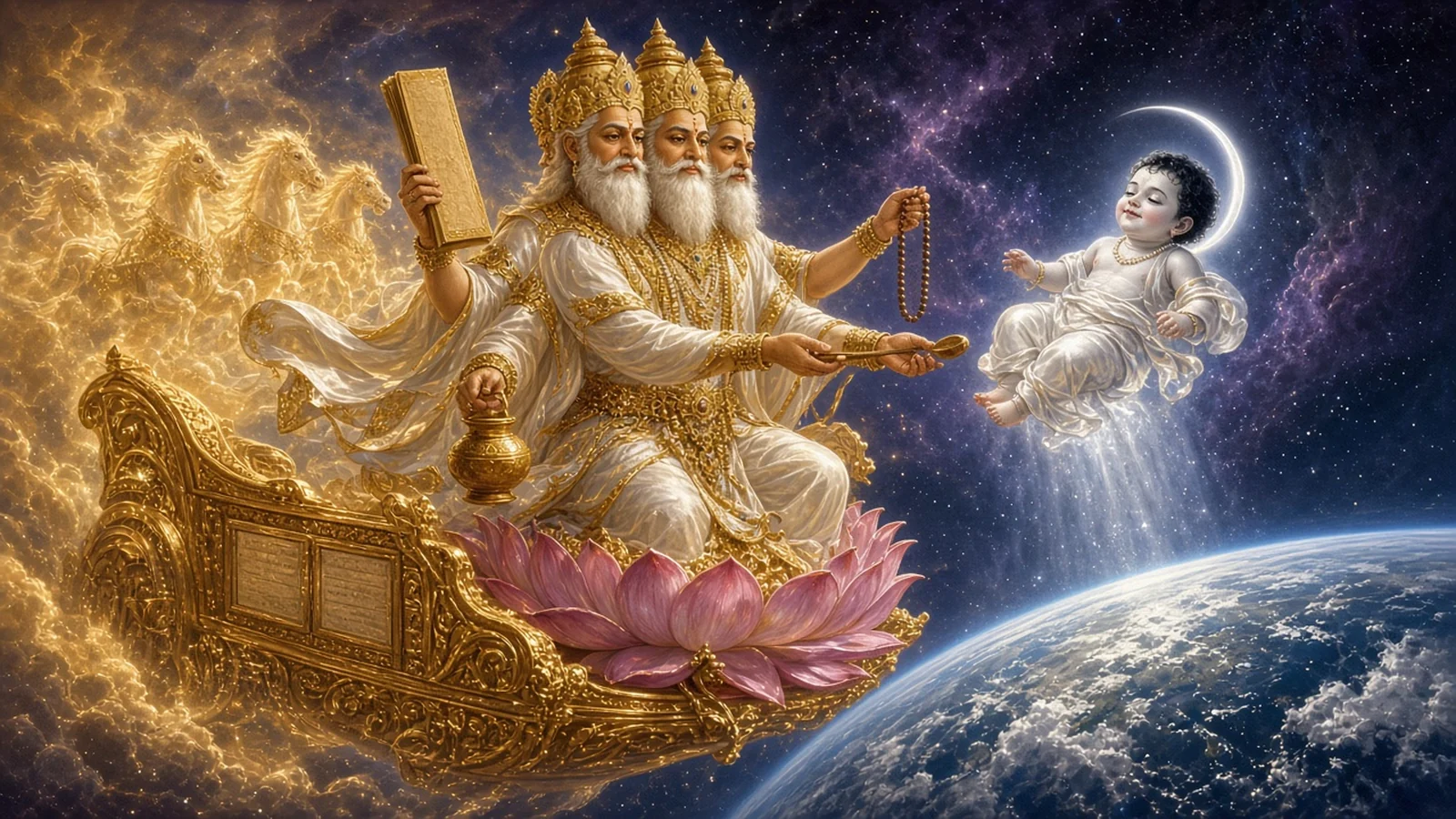
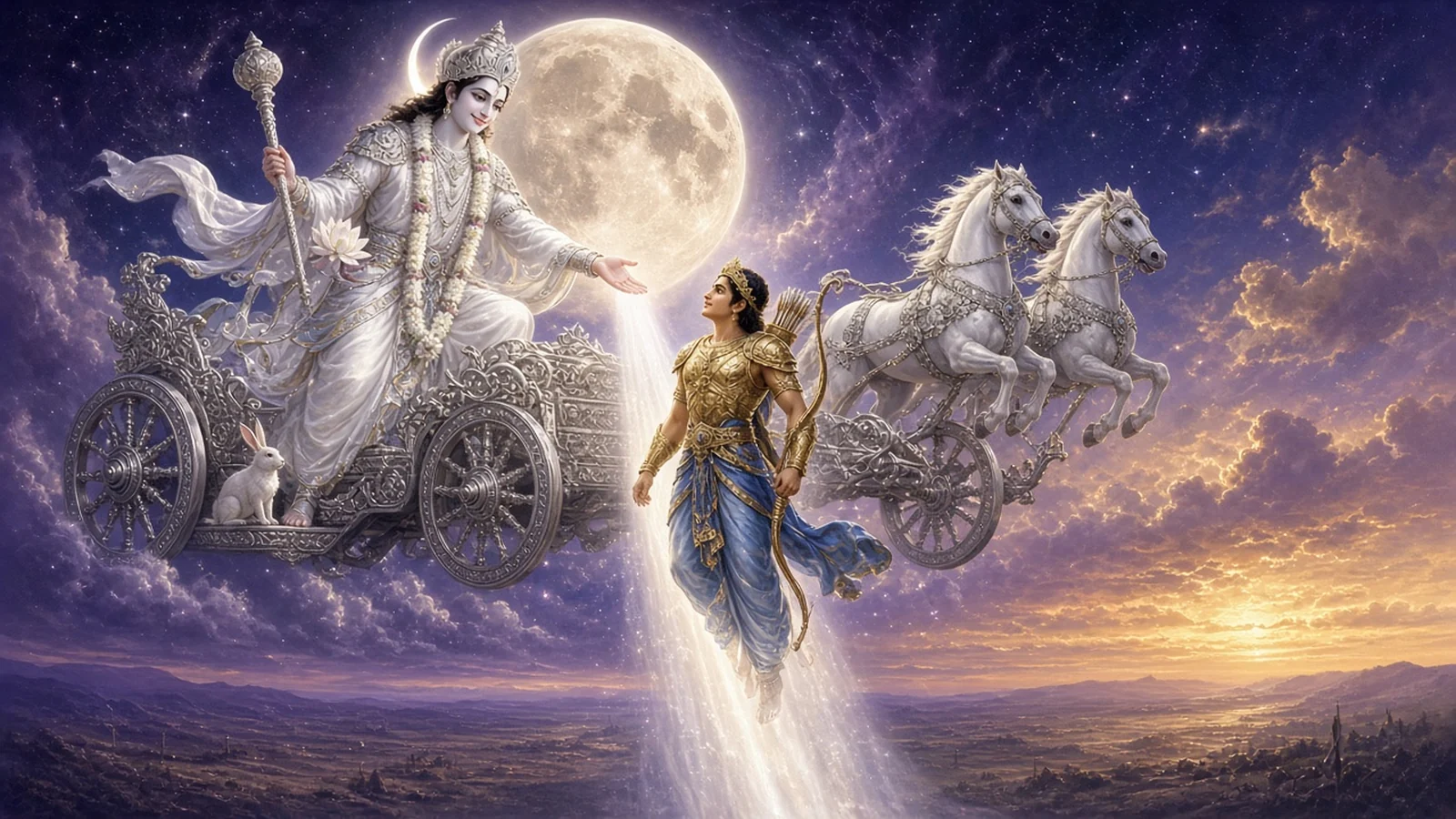
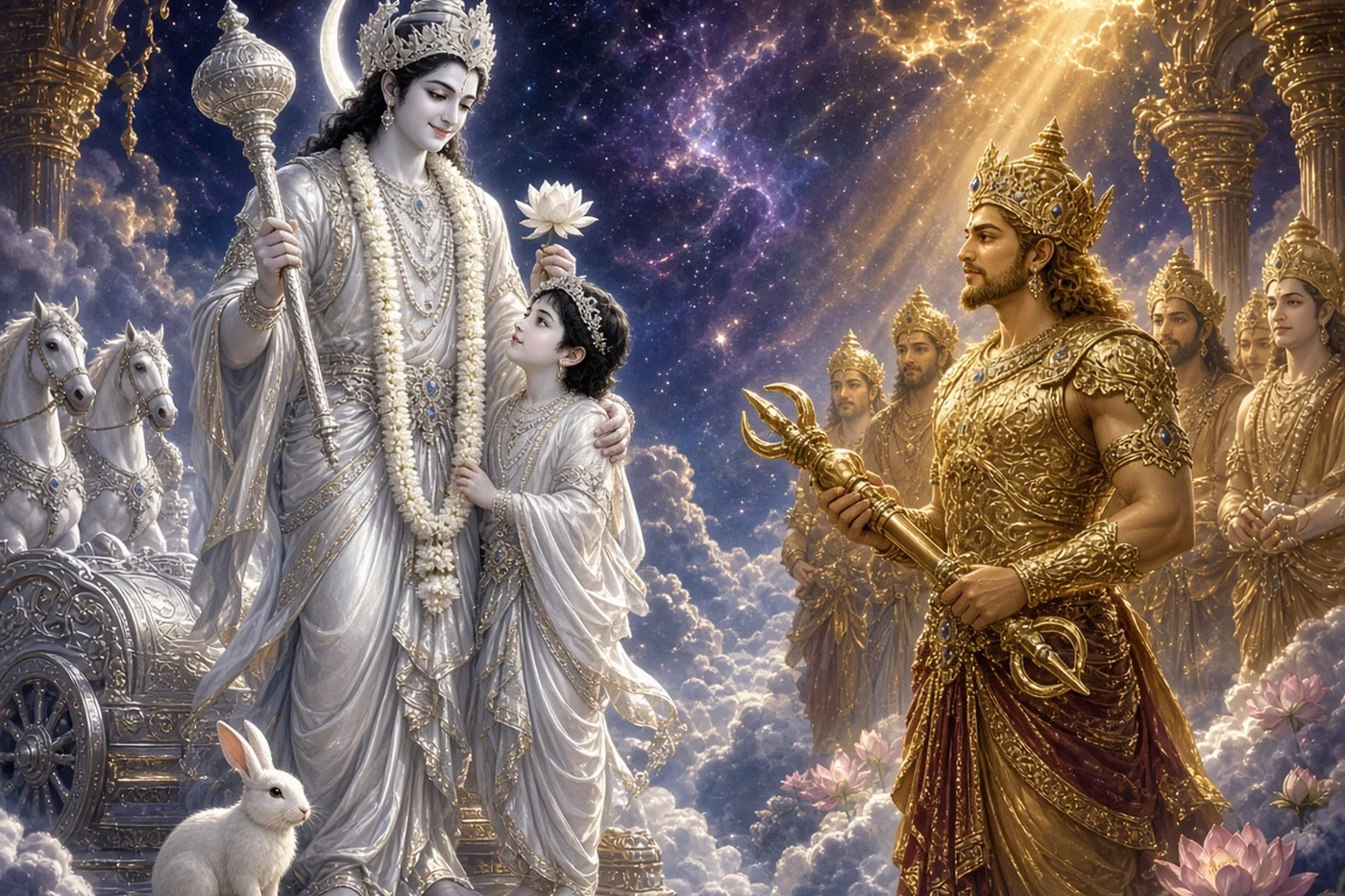
Soma, the Moon, was one of the eight Vasus, and he had a son named Varchas, whose name means radiance. When the gods turned to the Moon, he did not answer at once.
"I cannot give him up," he said at last. "He is dearer to me than my own life."
The gods waited.
"I know what the work is," said the Moon. "The Asuras on earth must be destroyed. That is the work of the gods, so it is my work too. Very well. Let my son go. But let us make a compact first, and let nobody break it."
"Name it," said the gods.
"He goes, but he does not stay long. Nara is to be born as Indra's son, Arjuna the son of Pandu, with Narayana beside him as his friend. My boy will be Arjuna's son, and a great warrior while he is still a boy. He stays sixteen years. Not a day more."
Then the Moon told them how the sixteen years would end, as if he could already see it.
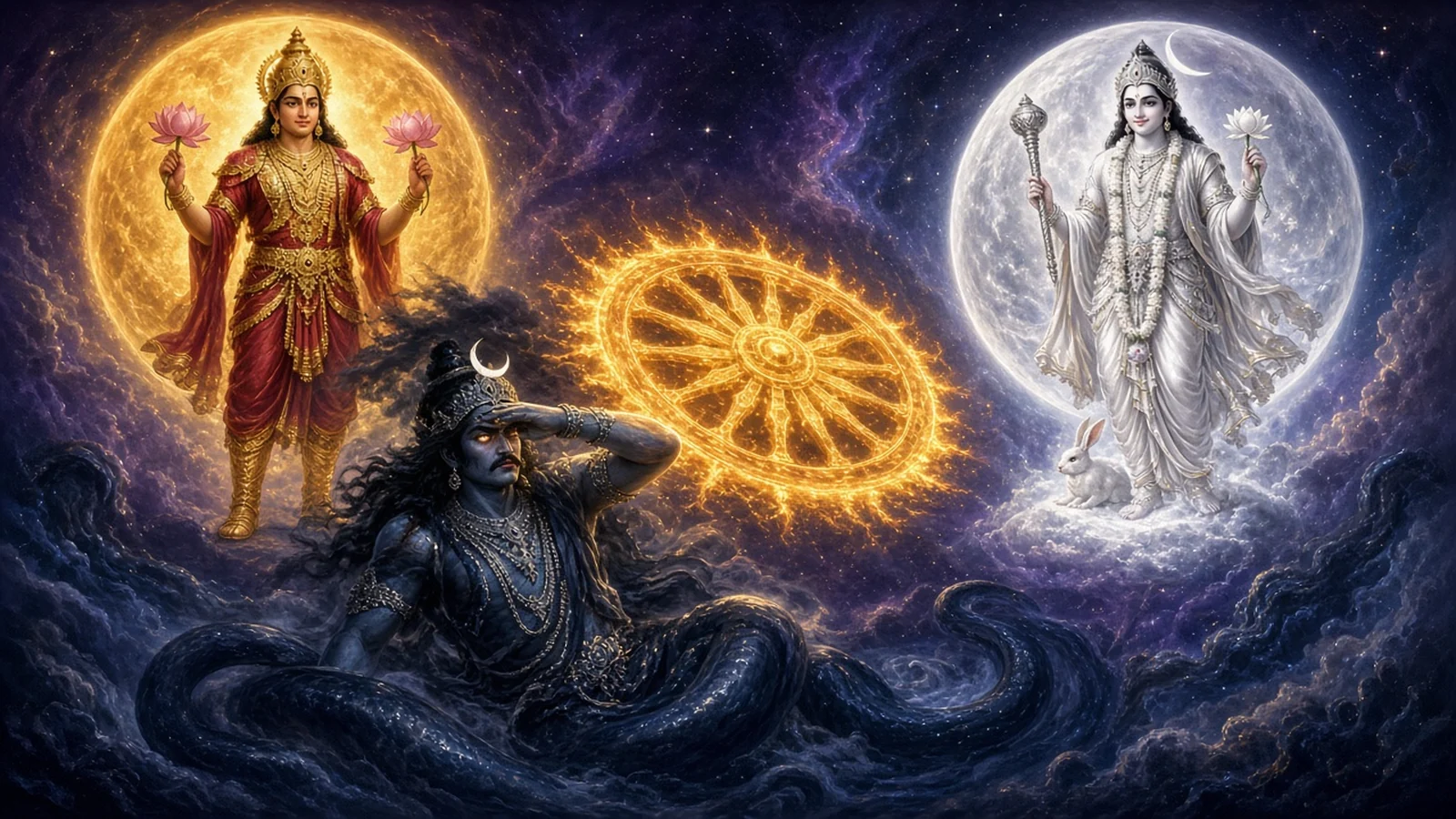
"In his sixteenth year there will be a great battle, and your portions will kill many mighty men in it. On one day of that battle Nara and Narayana will not be there. On that day the enemy will stand in the wheel array, the one no one can break. My son will break it. He will go inside without fear, and in half a day he will send a quarter of their army to the king of the dead. Then, toward evening, when the great ones turn on him together, he will come back to me."
He was quiet for a moment.
"He will leave one son behind him, a hero, and through that son the line of Bharata, nearly gone by then, will go on."
"So be it," said the gods, and they praised the Moon and honoured him for what he had given.
So Varchas was born on earth. His mother was Subhadra, the sister of Krishna and Balarama, and his father was Arjuna, and they named him Abhimanyu. He grew up in Dwaraka among his mother's people and learned arms there, and he was married young, to Uttara, a princess of the Matsyas.
The war came when he was in his sixteenth year. On the thirteenth day at Kurukshetra, while Arjuna and Krishna were fighting far away on another part of the field, Drona drew the Kaurava army up in the wheel array, and Abhimanyu broke into it alone, fought his way deep inside and was killed there by many warriors together.
His son Parikshit was born after him, and the line went on.
Nobody on the field that day knew of the bargain made in heaven. Only the Moon, looking down at the end of the afternoon, could have known that the day was keeping its word.
As the last book tells it
Mahabharata, Svargarohanika Parva 4-5 · 1 min read
The epic does not leave the boy at Kurukshetra. It brings him back in its very last book.
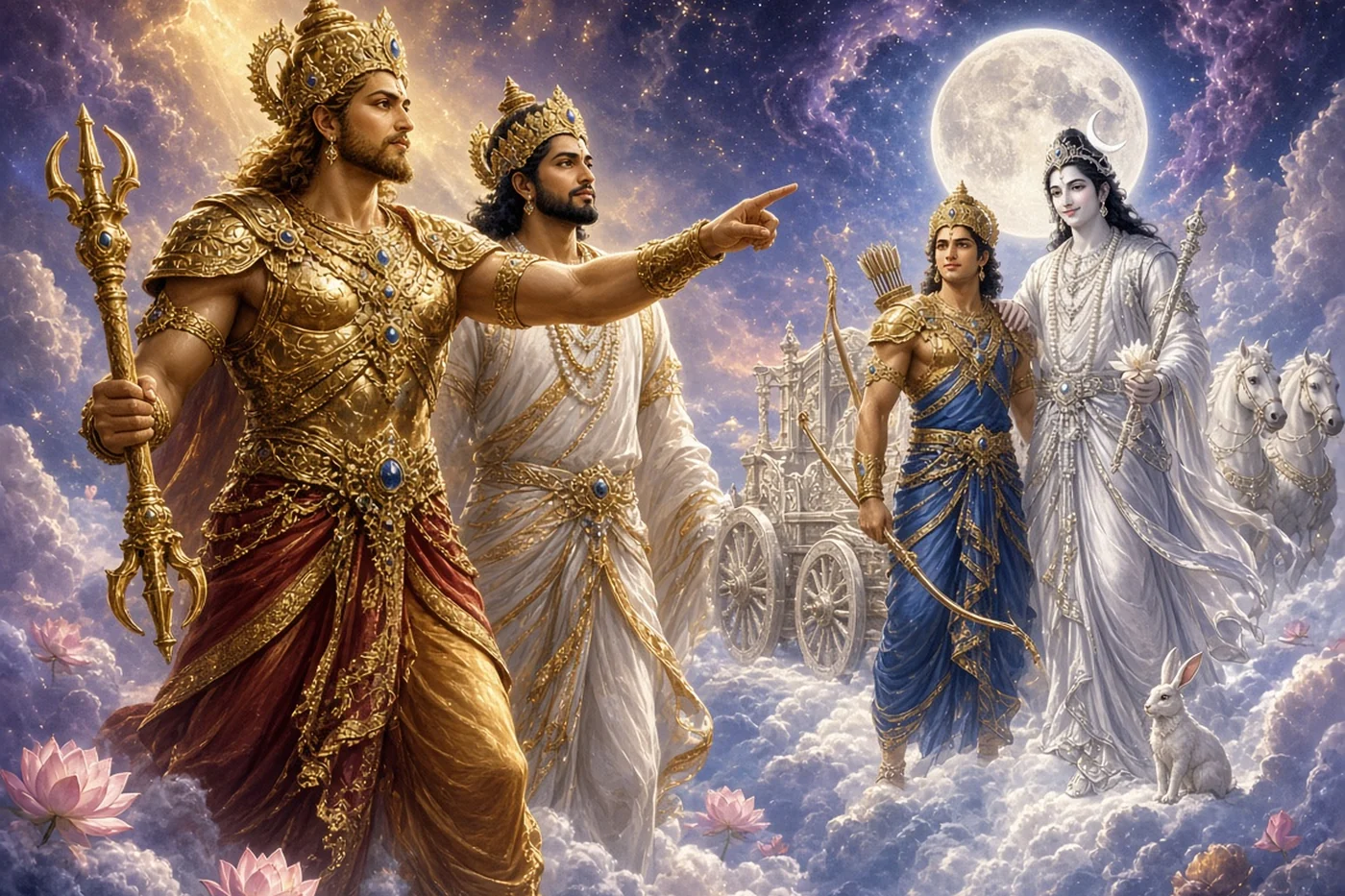
Yudhishthira has come to heaven at the end of everything, after his brothers and his wife have fallen on the road, after the dark place he was made to see on the way. The gods and the Maruts and the seers praise him, and he goes on to the place where the heroes of his family now live. Indra walks with him and points them out.
There is Krishna in his own divine form, with the discus, and Arjuna beside him doing him honour. There is Karna, brighter than a dozen suns, moving with the Sun, whose son he was. Bhima sits among the Maruts beside the Wind. The twins shine in the place of the Ashvins. Draupadi is there in a form like the Sun, and Indra tells Yudhishthira that she is Sri herself. Bhishma stands among the Vasus, and Drona, their old teacher, beside Brihaspati.
"And there," says Indra, "is the son of Subhadra, whom no one could beat in battle. He lives with Soma now."
Yudhishthira looks, and the boy who went into the wheel array is a great archer still, and the mild light of the Moon is on him.
Later, when King Janamejaya asks where each of the heroes went at the last, the sage Vaishampayana answers him plainly. Varchas, the mighty son of Soma, was born as Abhimanyu, the son of Arjuna. He fought as a warrior should, with a courage no one else had shown, and when his body died he entered Soma, and was his father's again.