As the Jataka tells it (Buddhist)
Sasa Jataka, No. 316 · 3 min read
A rich landowner once gave the Buddha and his monks everything they needed for a whole week, and when the week was over the Buddha told him a story from long ago.
In those days a hare lived in a wood with a mountain on one side, a river on another and a village beyond. He had three friends: a monkey, a jackal and an otter. They came to hear him teach, because the hare was wise. One evening he looked up at the moon and saw that a fast day was near.
"Tomorrow is a holy day," he told them. "Keep the precepts. And if anyone comes begging, give him something from your own food before you eat."
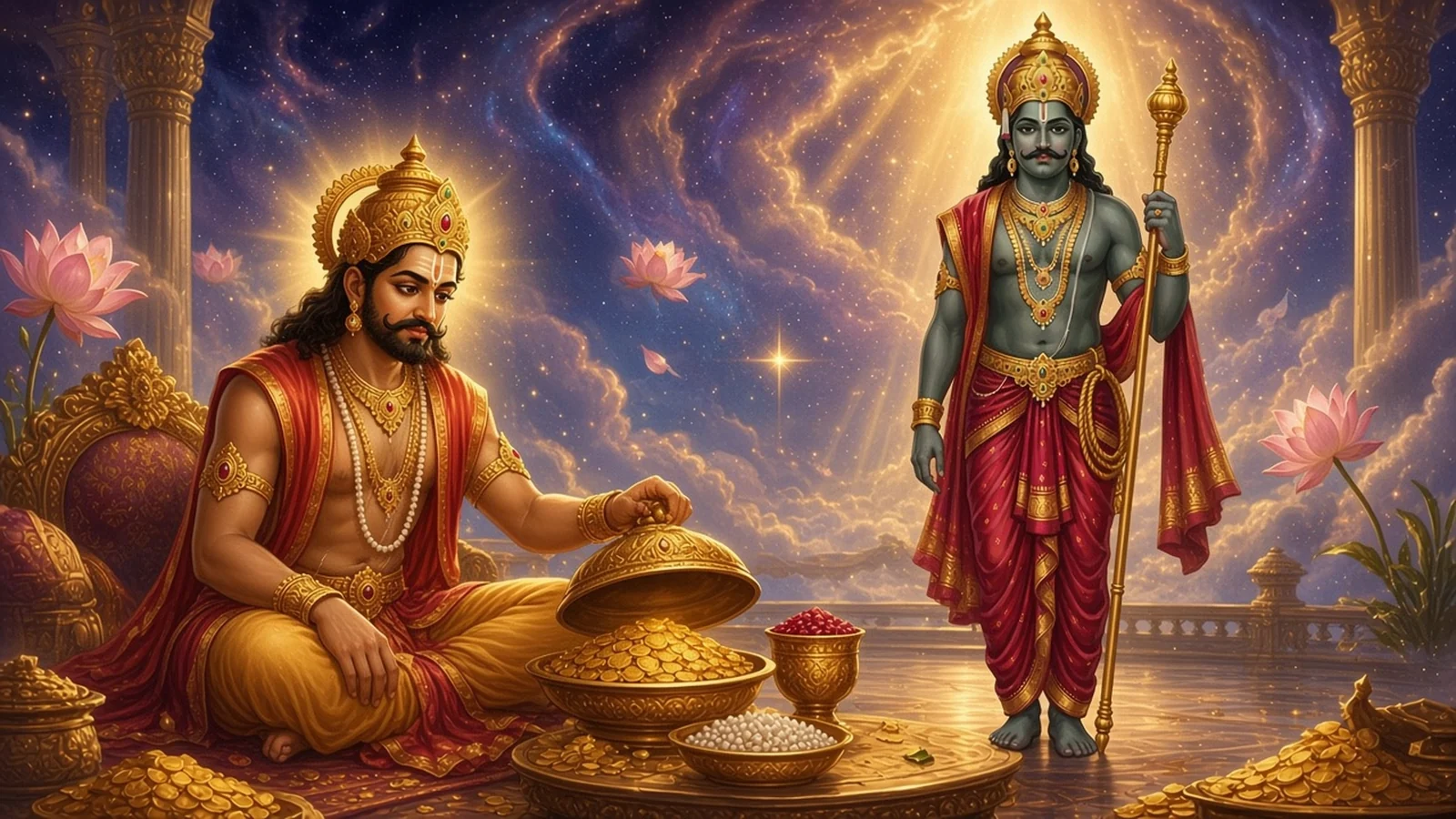
In the morning they went out. The otter found seven red fish buried in the sand by the river, where a fisherman had hidden them. He called out three times, "Whose fish are these?" and when nobody answered he took them home. The jackal found a field-watcher's hut with two spits of roast meat, a lizard and a pot of curds in it. He called out too, and nobody answered, so he took them. The monkey climbed a tree and brought down a bunch of mangoes. Each of them lay down in his own place, pleased with himself.
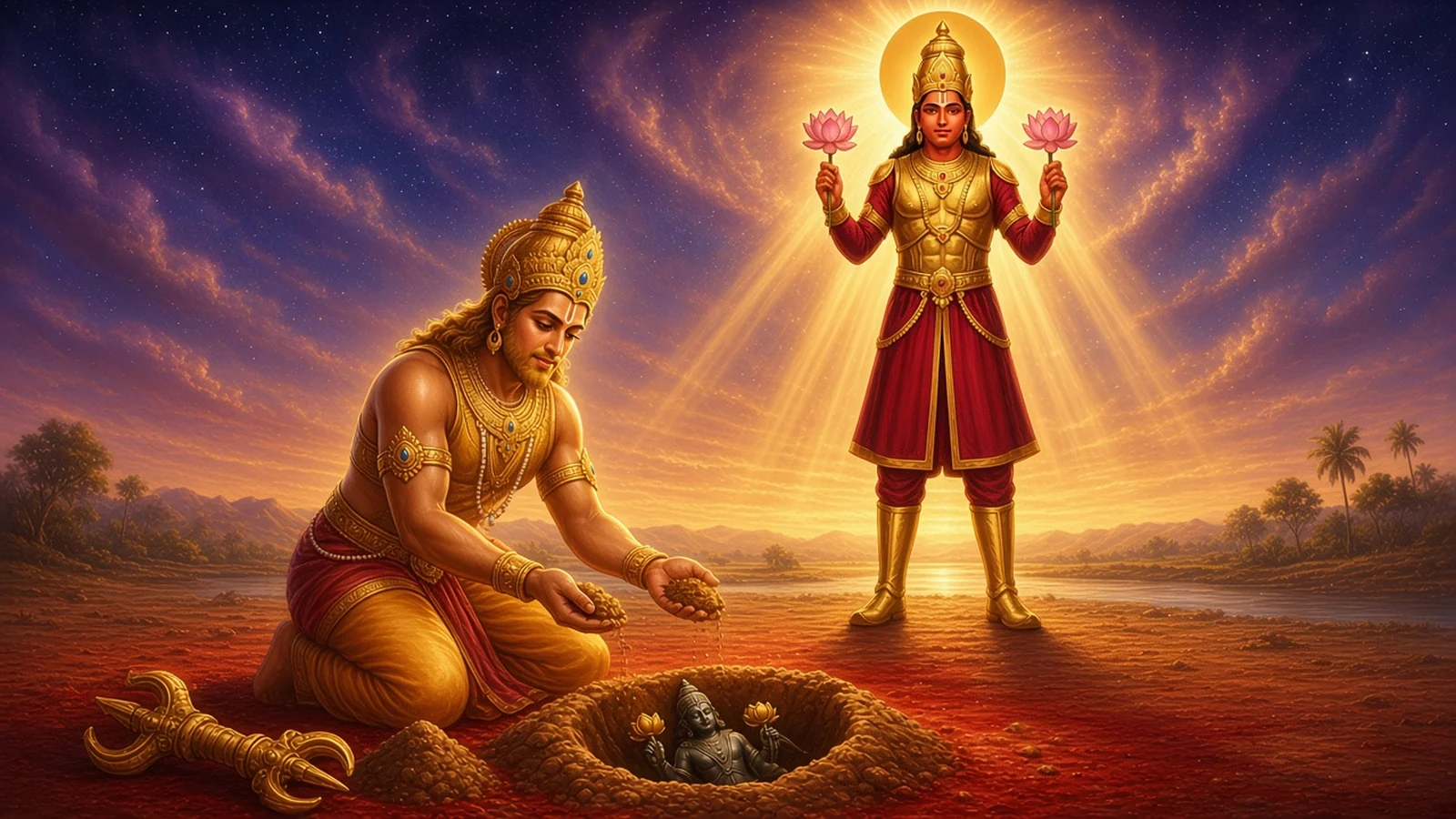
The hare lay down too, and thought. All he had was grass. "I cannot give a guest grass," he said to himself. "I have no sesame, no beans, no rice. If anyone comes to me, I will give him myself."
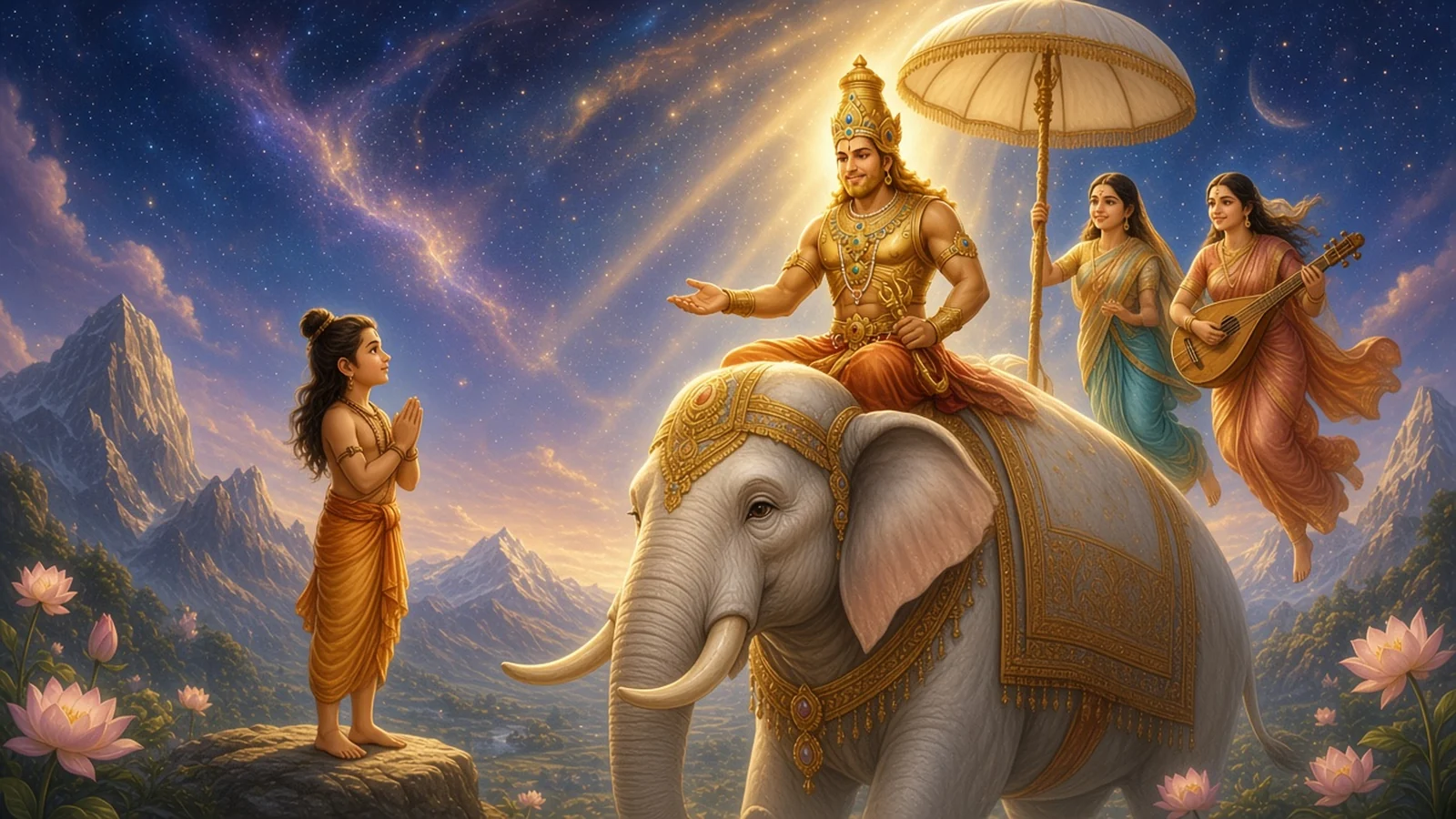
Far above, in heaven, the marble throne of Sakka, king of the gods, grew hot under him. That always meant something on earth needed his eyes. He looked down, saw the hare, and decided to try him. He came down to the wood dressed as a poor brahmin.
He went to the otter first. "I am hungry," he said. "If I had food, I could keep the fast and then do my holy work." The otter offered him the fish at once. The brahmin thanked him and said he would come for it tomorrow. The jackal offered his meat and curds, and the monkey his mangoes, and to each the brahmin said the same.
Then he came to the hare.
"You have come to the right one," said the hare, delighted. "I have something to give you that I have never given before. You keep the precepts and would not take a life, so gather wood and light a fire, and tell me when it is burning. I will throw myself into it. When my body is roasted, eat it and do your holy work."
Sakka, by his own power, made a heap of glowing coals and told the hare it was ready.
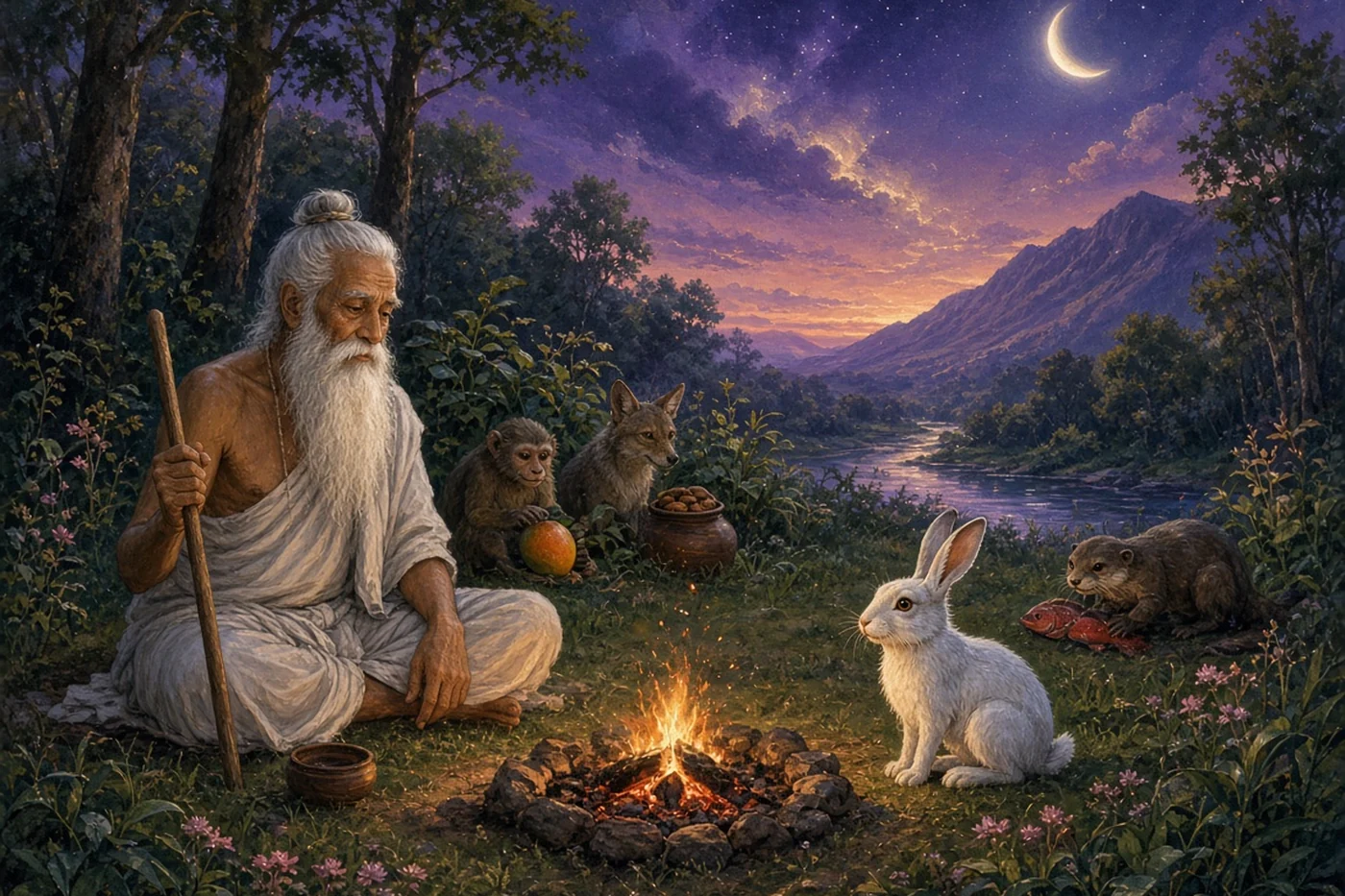
The hare got up. He shook himself once, twice, three times, so that any small creature living in his fur could get out and not die with him. Then he leapt into the fire, as happily as a swan drops onto a pool of lotuses.
The fire did not burn him. It did not even warm the hairs on his body. It was cold, as cold as frost.
"Brahmin," said the hare, "your fire is cold. What is this?"
"I am not a brahmin," said Sakka. "I am Sakka, and I came to see what you would do."
"You need not have troubled," said the hare. "If every creature in the world came to try me, they would all find me ready to give."
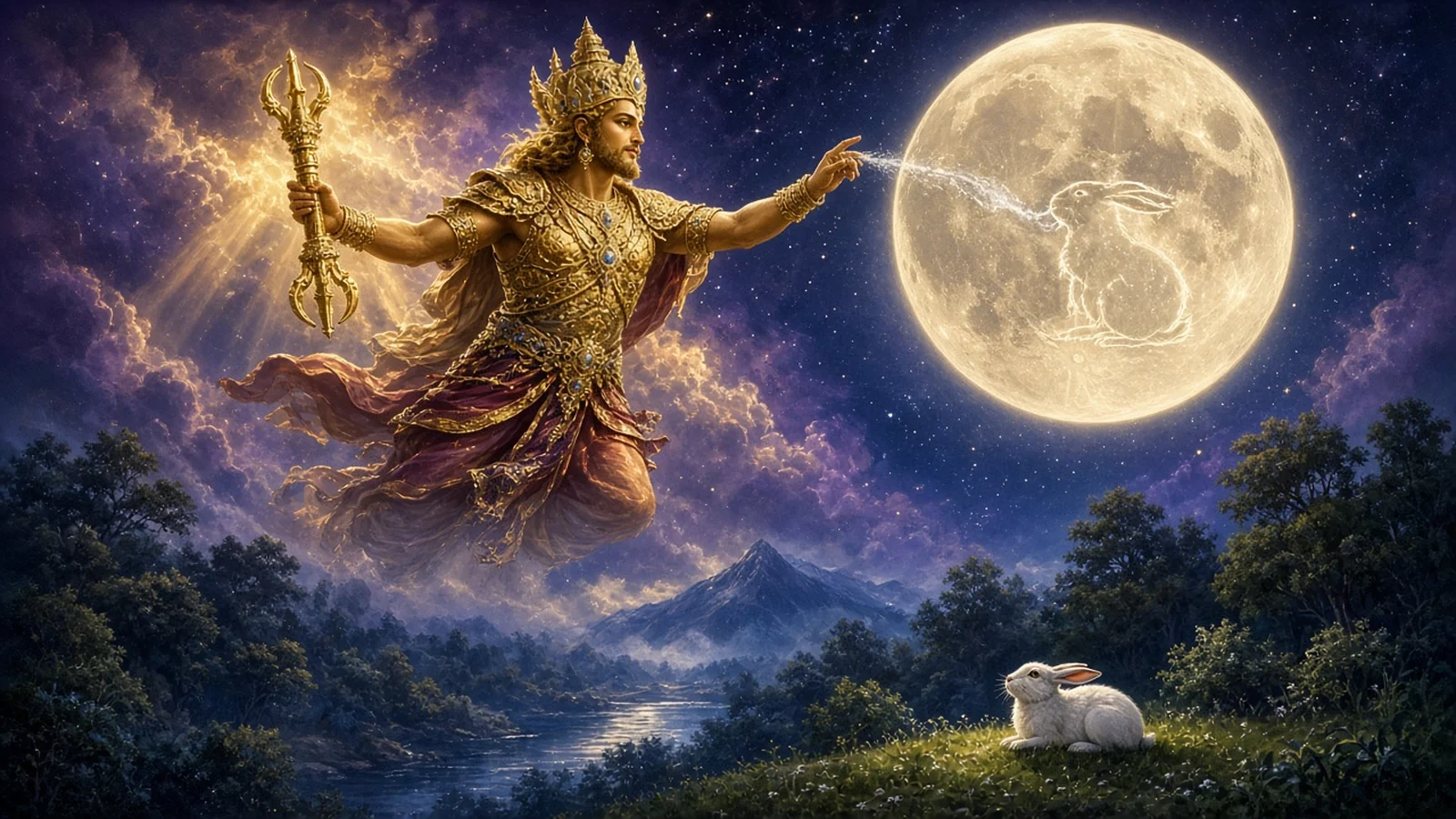
Sakka was so moved that he wanted the whole world to know it, for as long as the world lasted. He squeezed a mountain until its juice ran, and with that juice he drew the shape of the hare on the face of the moon. Then he laid the hare down on a bed of fresh grass in the wood and went back to heaven.
The four friends lived on together in peace and kept the holy days until the end of their lives. And the Buddha told the landowner who they had been. The otter was Ananda, the jackal Moggallana, the monkey Sariputta. The hare had been the Buddha himself.
As the Panchatantra tells it
Panchatantra, Book III · 2 min read
The birds of the forest were about to crown the owl as their king when a crow spoke up. A real king's name alone keeps the weak safe, he said, and to show them, he told a story.
Once a drought lasted twelve years and every pond and lake dried up. The elephant king Four-Tusk sent scouts in every direction to look for water, and the ones who went east came back with news of a lake by a hermitage, brimming and cool, called the Lake of the Moon. The whole herd went there. As they plunged in, they crushed thousands of rabbits who had made their homes on its banks long before.
The rabbits who were left held a meeting. The elephants would come back every day. A rabbit named Victory stood up. "Leave it to me," he said. The rabbit king sent him as envoy.
Victory did not go near the elephants. He climbed a heap of rocks too high for any trunk to reach, and called down.
"Who are you?" said Four-Tusk.
"An envoy of the blessed Moon. That lake bears his name, and the rabbits you have killed were under his care, kin of the rabbit he holds in his lap. Have you never seen the rabbit in the moon? Stay away from his lake, and his light will keep you cool. Come back, and he will take his light from you, and the summer will burn you all."
The elephant's heart shook. He asked how he could be forgiven. That night the rabbit led him alone to the lake and showed him the full moon lying in the water among the stars. Four-Tusk dipped his trunk in to purify himself and worship, and the water rocked, and the moon broke into a thousand moons.
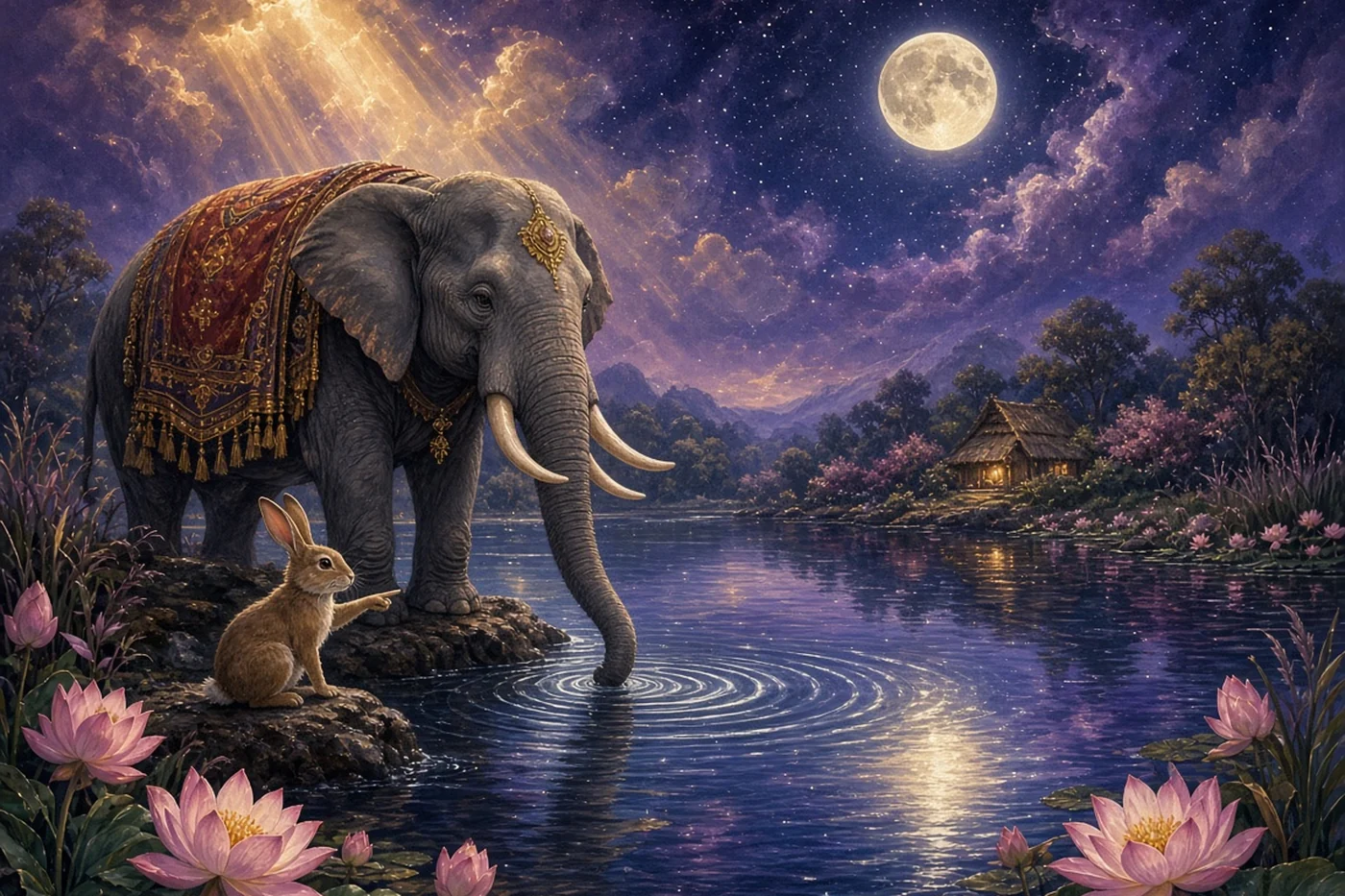
"Now you have done it," cried Victory. "You have touched his water. He is twice as angry."
Four-Tusk bowed his head to the ground, begged the Moon's pardon, and went away. He never came back.