As the Kurma Purana tells it
Purva Bhaga, chapter 1 · the ocean of milk, beneath Mount Mandara · 3 min read
The sages of the Naimisha forest asked the bard Suta for a story, and he gave them the one Vyasa had given him. It begins in the middle of something else.
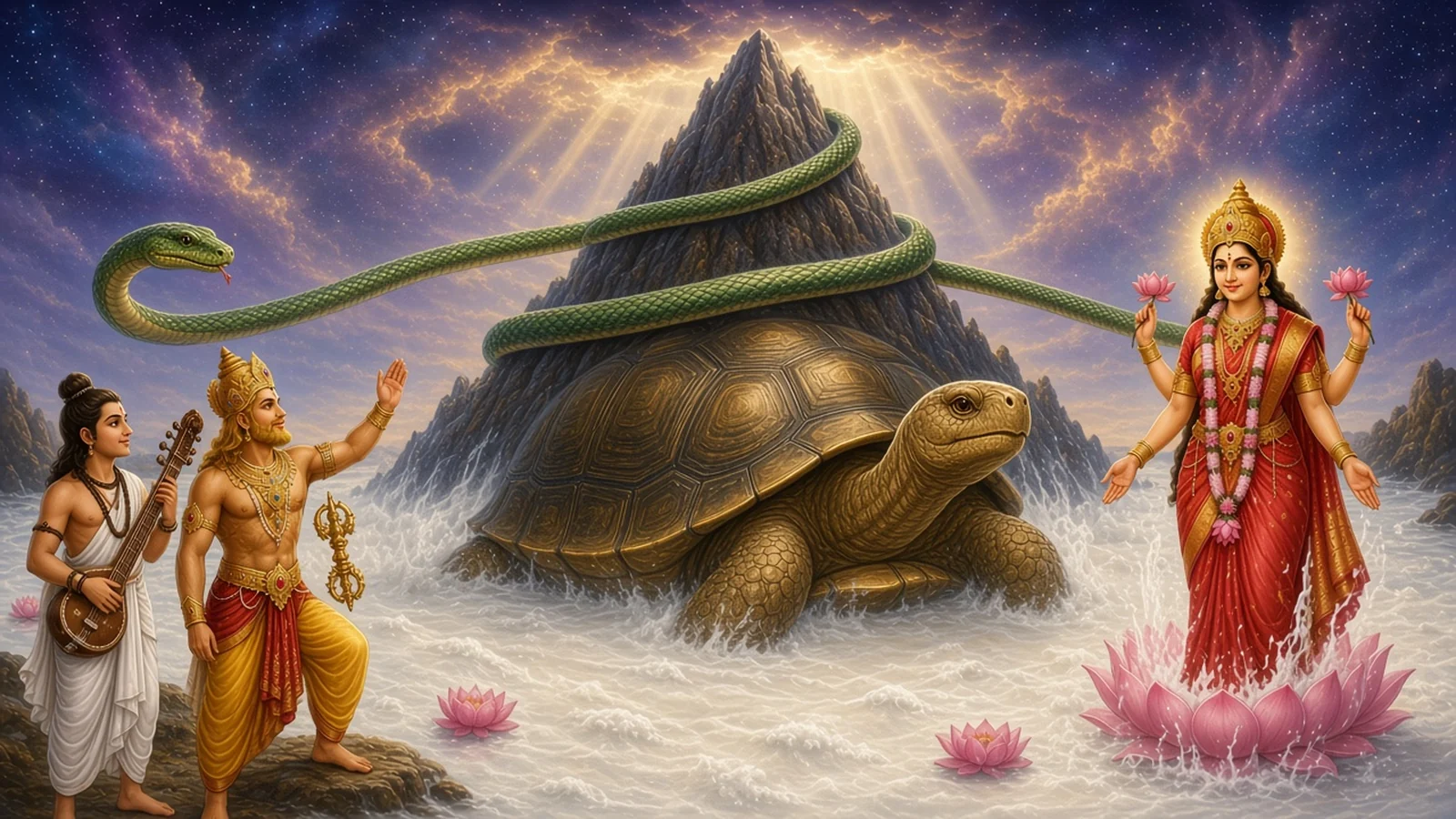
The gods and the Daityas had made Mount Mandara their churning stick and were churning the ocean of milk for the nectar. Under the mountain, holding it up on his back for the good of the gods, lay Vishnu in the form of a vast tortoise. Narada and the other sages came with the gods to praise him there.
As they churned, a goddess rose out of the sea, and Vishnu took her for his own. She was Shri. The sages had never seen anything like her.
"Lord," said Narada, with Indra beside him, "who is this goddess with the wide eyes? Tell us truly."
The tortoise looked at her before he answered.
"She is my own power," he said. "She is my Maya. Through her I bewilder the whole world, gods and asuras and men, and draw them back into myself and send them out again. Brahma and Shiva are strong only by a ray of her. She holds the conch and the discus and the lotus, and no one embodied, not even Indra, can get past her. Only those who truly understand how creatures come and go can cross her."
"Then what is left," the sages asked, "when even time has come to an end?"
"Let me tell you about a Brahmin called Indradyumna," said the tortoise.
In an earlier life, he said, Indradyumna had been a king whom even the gods could not stop. That king had seen him once in this very tortoise form and heard this teaching from his mouth with the sages, and had understood that every god rests on the Lord's power. He had asked for refuge.
"You will be born again as a Brahmin," the Lord had told him. "You will keep the name Indradyumna and remember who you were, and I will give you the knowledge no other creature has."
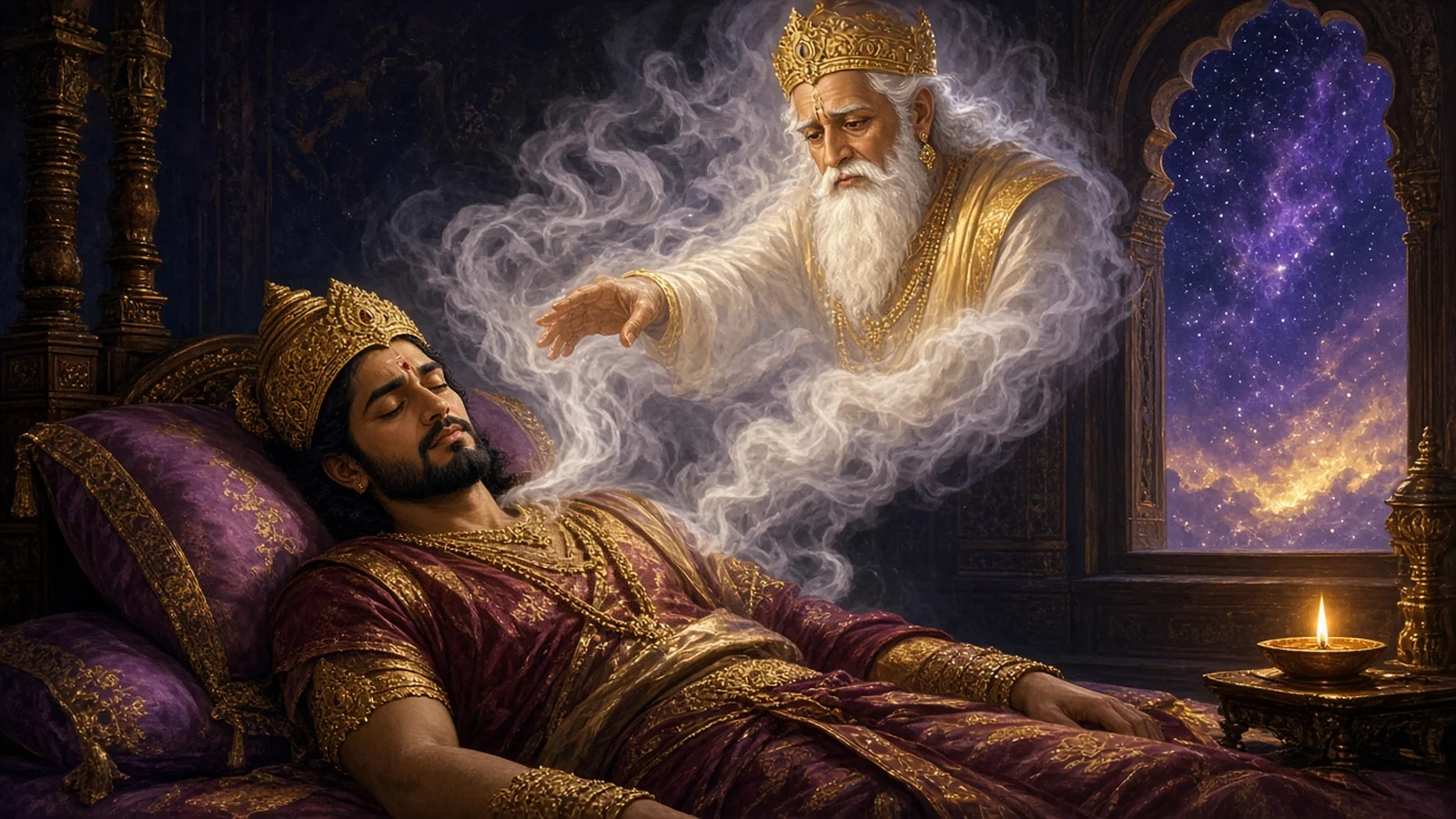
So the king went home and ruled the earth, died in his time, lived for a while with the Lord on the White Island, and was born again into a Brahmin's family. There he kept vows and fasts and tended the sacred fires. One day Shri herself stood before him, and he bowed and folded his hands.
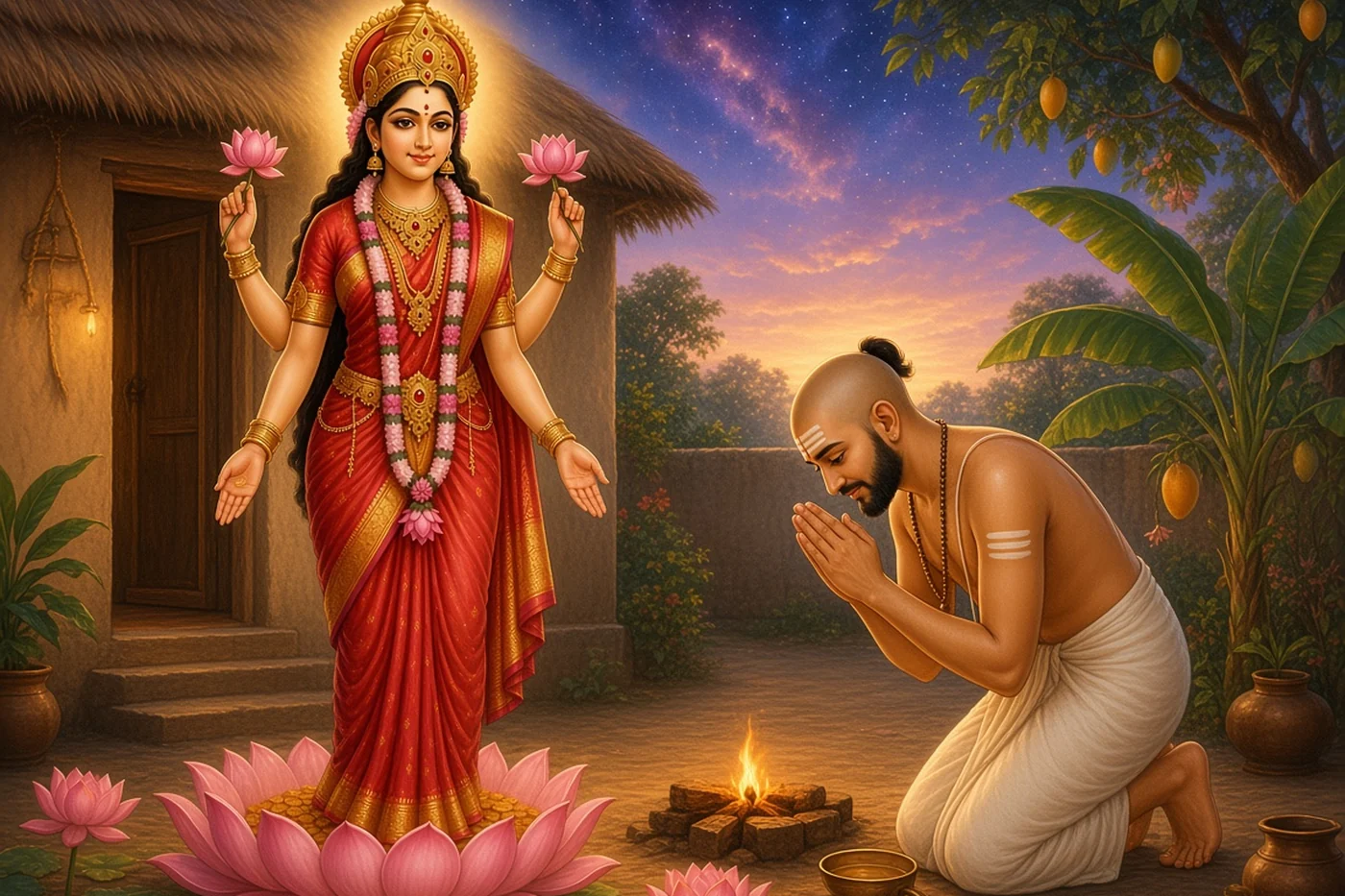
"Goddess," he said, "who are you?"
She smiled. "I am Maya, and I am not different from Narayana. Over those who worship him with knowledge, and work without wanting its fruit, I have no power."
"Then how is he to be known?"
"He will teach you himself," she said. She touched him with both hands as he bowed, and was gone.
He meditated for a long time, and at last Narayana came, dressed in yellow. Indradyumna knelt and sang his praise. The Lord smiled and touched him with both hands, and at that touch the Brahmin understood. Then he asked about everything: how the world is made and unmade, the dynasties and the ages, the sacred fords, the stars, the earth, its islands, seas, mountains and rivers. The Lord answered all of it and vanished.
Indradyumna gave up his house and his sons and every rite. Guided by the Sun, he went through the sky beyond the Manasa lake to the northern mountain where Brahma lives. A chariot bright as the sun went before him with gods and singers behind it. Brahma came forward and embraced him, a beam like moonlight passed out of his body into the Sun, and he reached the abode that does not perish.
"So he crossed her," said the tortoise, "and that is what is left."
"Then tell us," said the sages, and Indra with them, "all that you told him."
And so the tortoise, still holding the mountain up from the depths, told them the whole Kurma Purana.
As the Bhagavata tells it
Bhagavata Purana 1.3, 8.7 and 12.13 · the ocean of milk · 2 min read
The Bhagavata gives the tortoise no speech at all. It counts him as the eleventh of the Lord's appearances, the one who held up Mount Mandara on his back while the gods and the asuras churned the sea.
When the churning began, it says, the mountain had nothing under it. Strong arms held the rope, but the whole weight of the rock went down through the water, and the churners stood there with their faces fallen. The Lord saw what had happened and took the shape of a tortoise. He went down into the sea and came up beneath the mountain and lifted it on his back.
Then they churned again with heart. His shell was so broad that it spread out under them like a great island, and the mountain turned on it, round and round. To the tortoise it was pleasant. The grinding rock felt like someone scratching an itch on his back.
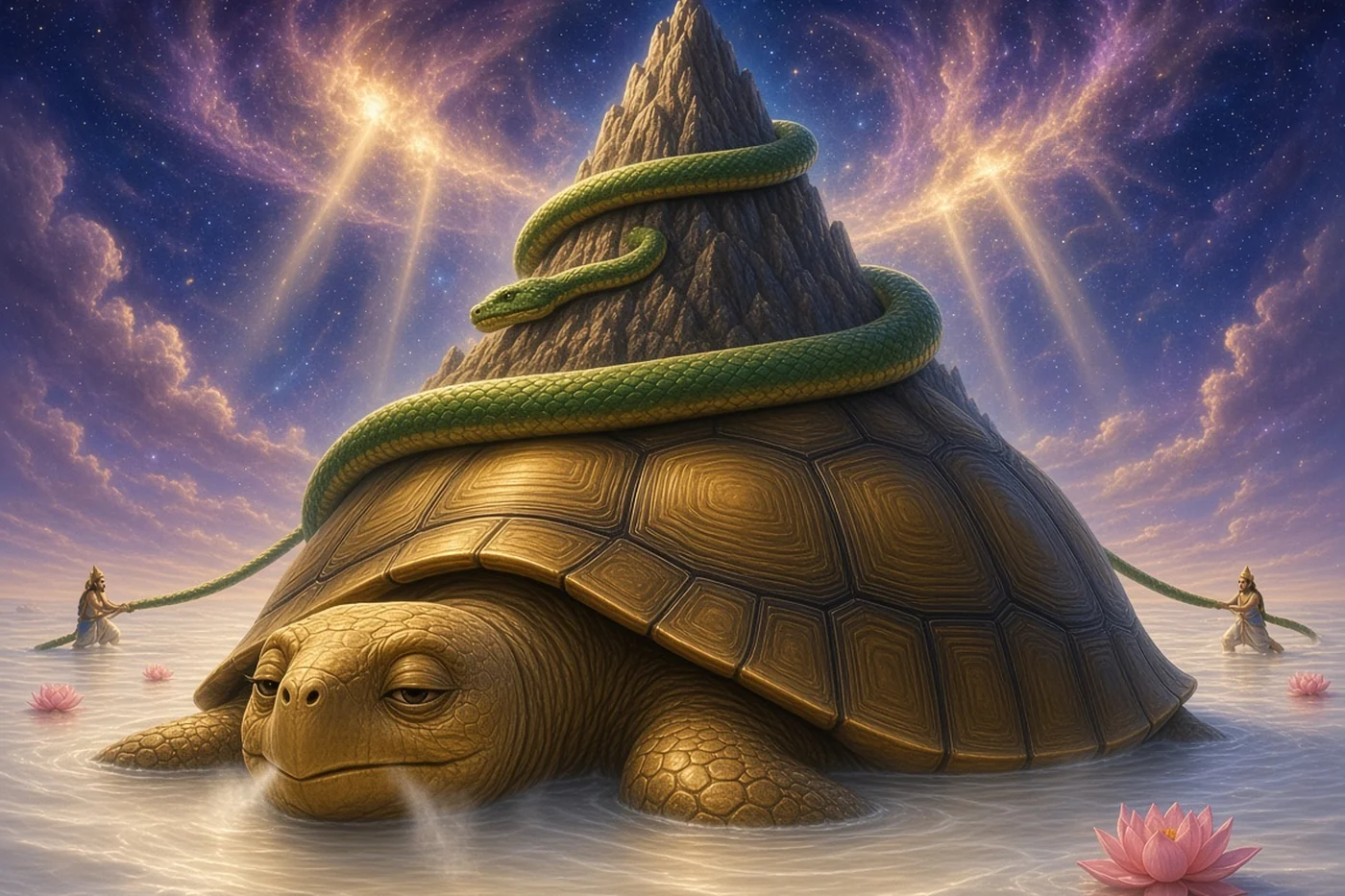
The Bhagavata will not let him be in one place only. In the same moment, it says, the Lord went into the asuras as restless passion, into the gods as clear goodness and into the serpent Vasuki as dull darkness. And on the summit of the mountain he sat in another form with a thousand arms, holding the peak steady with one hand, while Brahma, Shiva and Indra sang his praise and showered him with flowers.
At the very end of the Purana, in a blessing for those who have heard it, the poet comes back to the tortoise under the mountain. The stones turning on his back made him drowsy, it says, and he grew heavy with sleep down there in the deep. The sea still rises and falls in time with his drowsy breath, coming in and going out without rest, and that is the tide. May that breath protect you.