
Devalok ← All gods
Also calledKurmavataraKurmanathaKurma NarayanaKacchapaKamathaAkuparathe Tortoise

In short

Who is Kurma?
The tortoise, the second of Vishnu's ten avatars in the common list. When the gods and the asuras churned the ocean of milk, he went under the sinking mountain and held it up on his back.
Was the tortoise always Vishnu?
No. In the Vedic books of ritual the tortoise is Prajapati, the lord of creatures, and in the Mahabharata the tortoise at the churning is simply the king of tortoises. Only the Puranas make him Vishnu.
What is the Kurma Purana?
One of the eighteen great Puranas, named after him because it presents itself as what the tortoise told the sages while he held up the mountain.
Where is Kurma worshipped?
Above all at Srikurmam in Andhra Pradesh, where the god is a tortoise and faces west, and in a few smaller shrines in Andhra, Karnataka, Bengal and Kerala.

Artwork ›

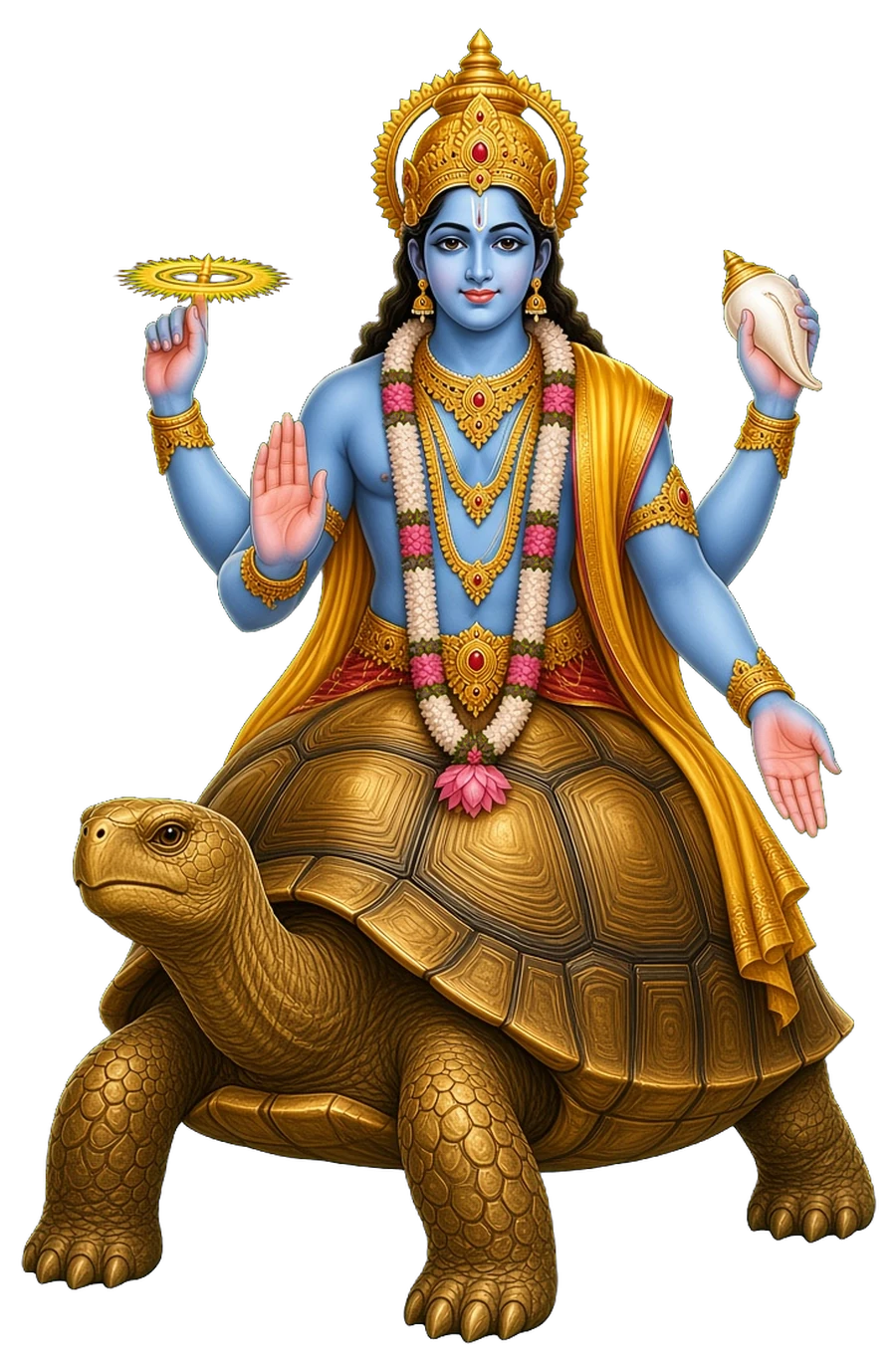
The tortoise who held up the mountain Kurma, the second avatar of Vishnu

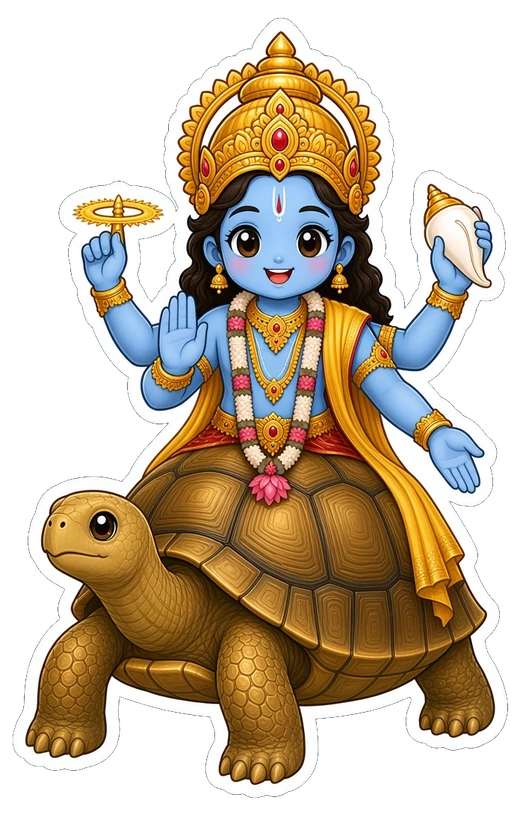
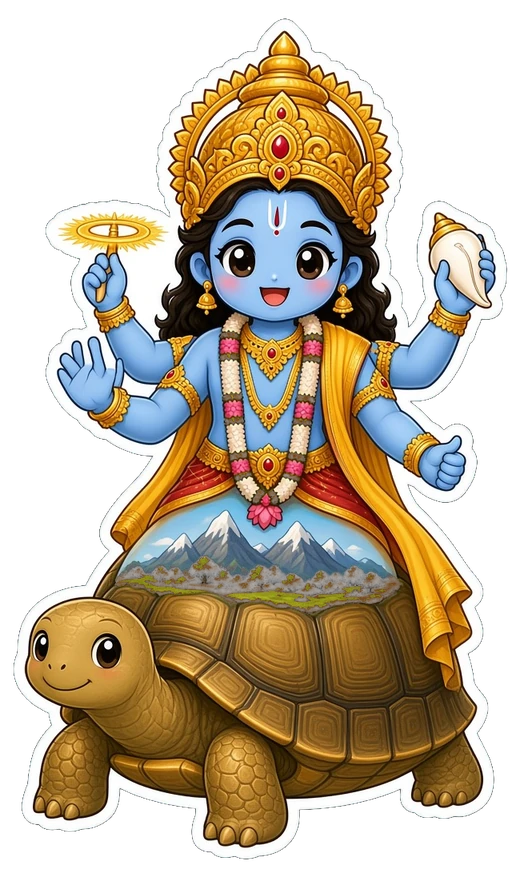
For kids

Slow and steady
Slow and steady
I have got this
I have got this

At a glance

TraditionVaishnava
FormA great tortoise

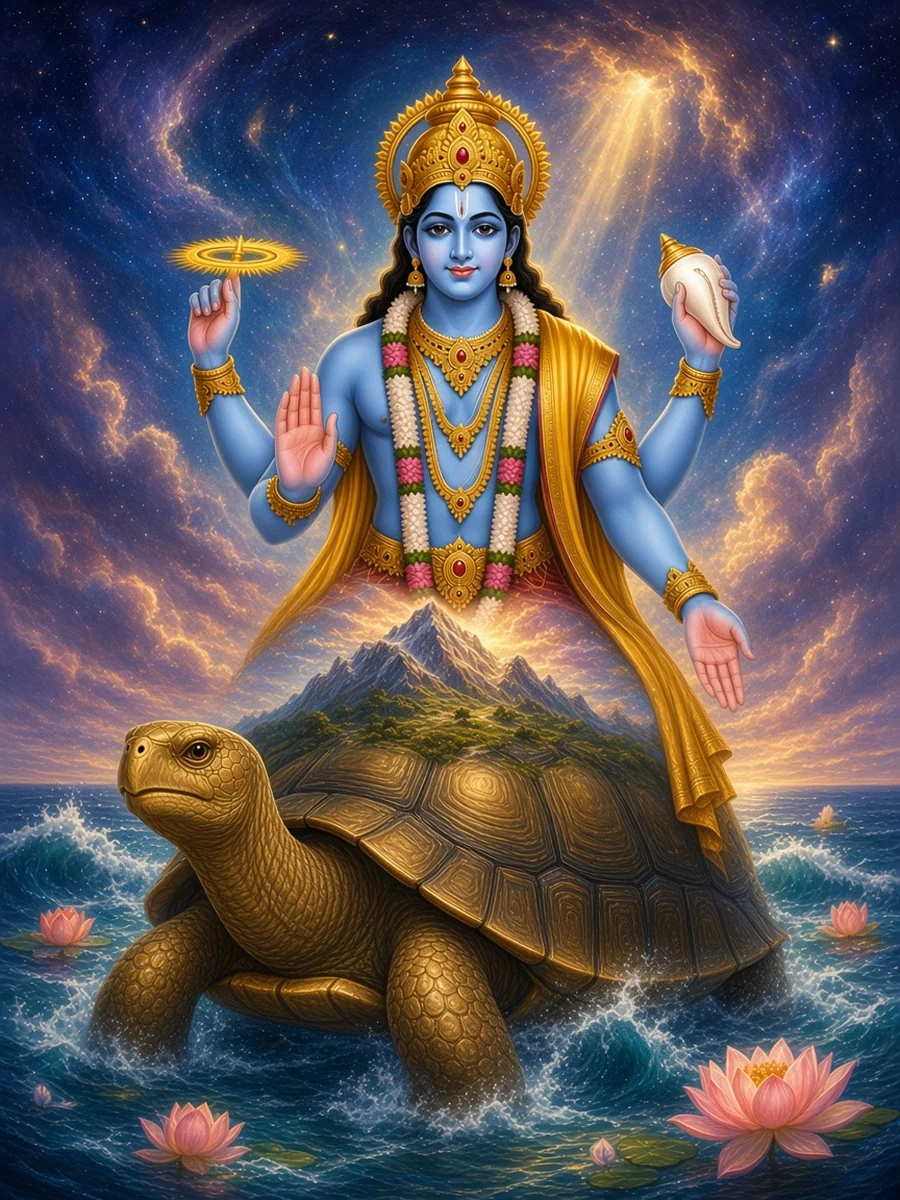
or Vishnu's four-armed body rising from a tortoise's shell or lower body

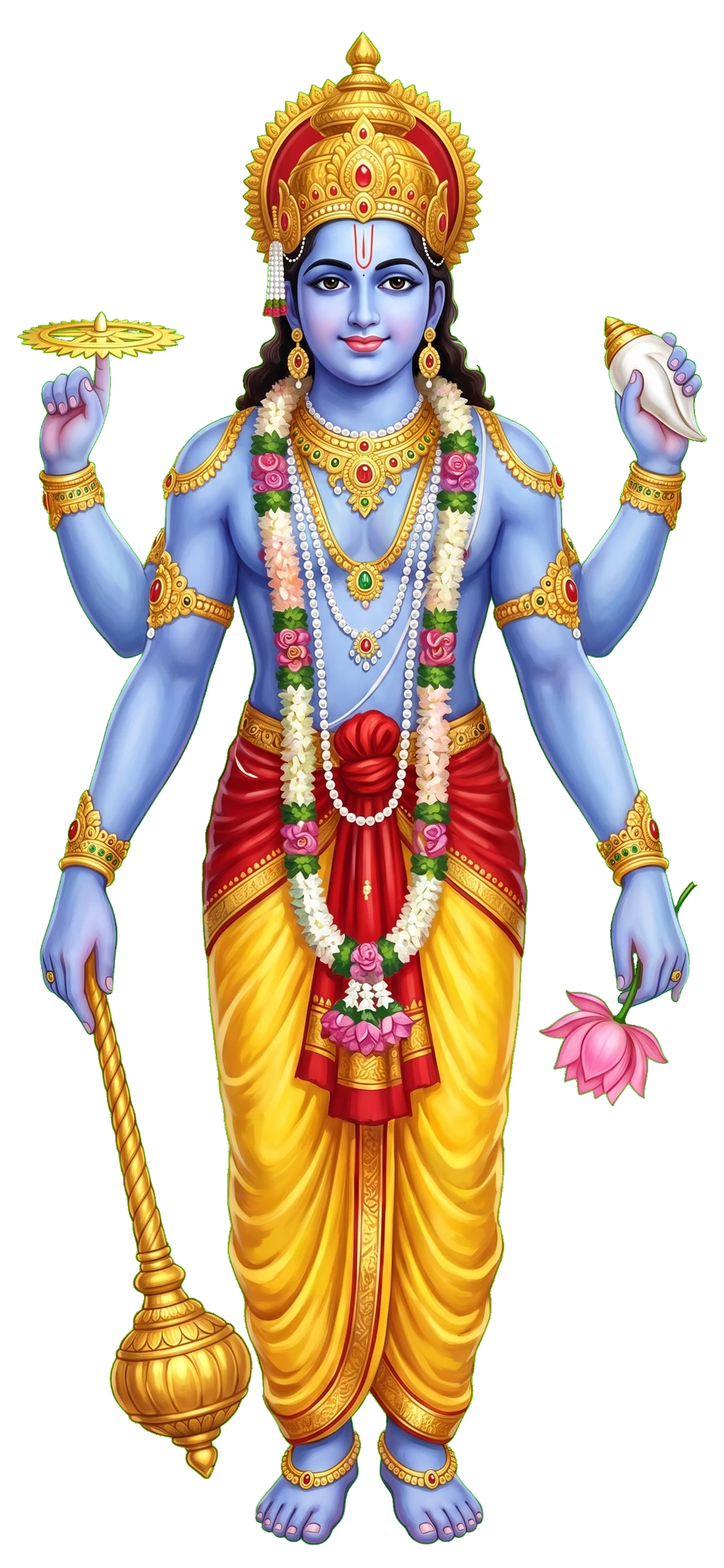
In his handsThe conch and the discus

the other two hands giving boons and saying "fear not"

Who Kurma is

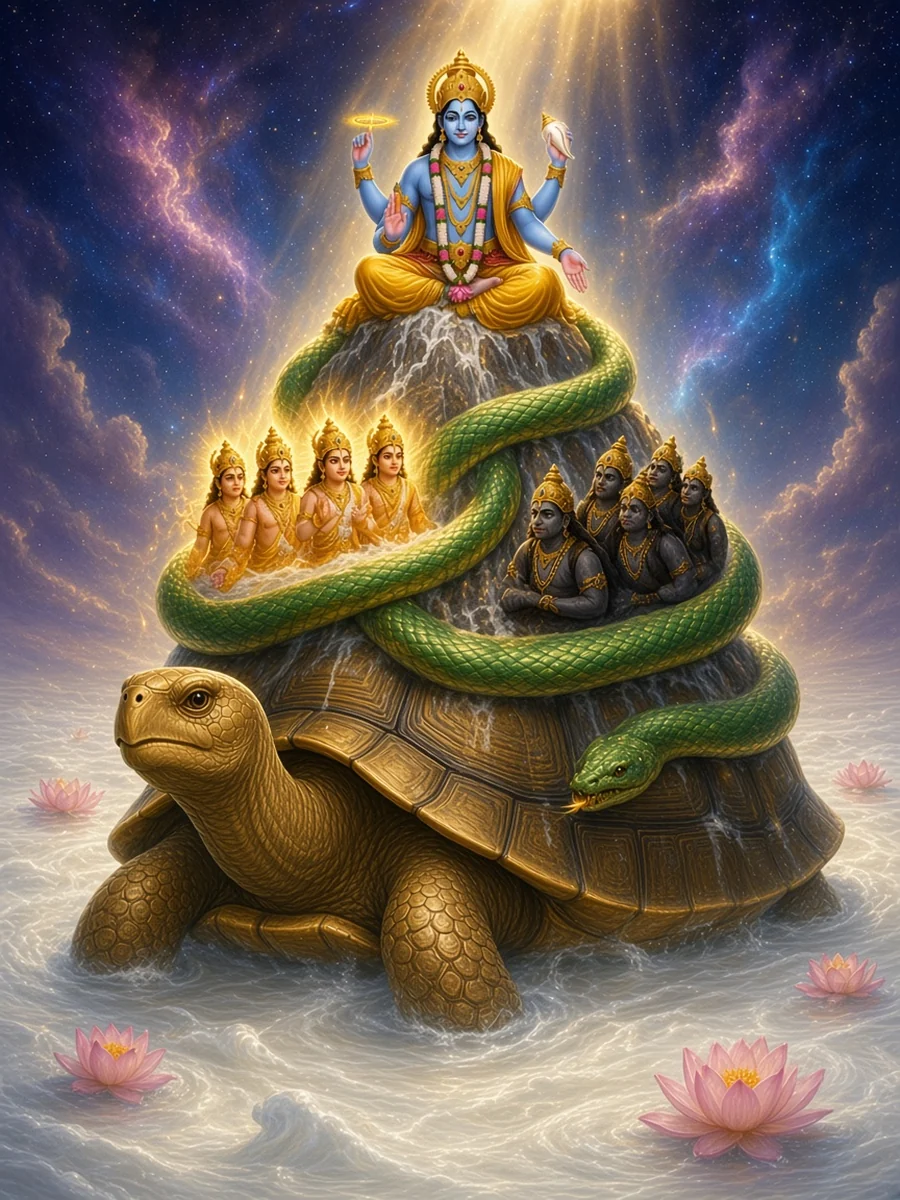
Kurma is the tortoise, the second of the ten avatars of Vishnu in the common list. When the gods and the asuras churned the ocean of milk for the nectar, they used Mount Mandara as their churning stick, and with nothing under it the mountain sank. Vishnu took the form of a tortoise so wide that his shell spread out like an island, went down beneath the mountain and held it up on his back while the serpent rope turned it.

The Bhagavata, which counts him as the eleventh of the Lord's appearances, liked to imagine how that felt. The rock grinding round on his shell was only a pleasant itch, and in its closing blessing the poet makes the tortoise fall asleep under the turning mountain:

Prishthe bhramyad amanda-mandara-giri-gravagra-kanduyanan nidraloh kamathakriter bhagavatah shvasanilah pantu vah: may the breath of the Lord in the tortoise's form, grown drowsy as the stones of the great Mandara turned and scratched his back, protect you (Bhagavata Purana 12.13.2). The verse goes on to say that the tides still come and go with that breath.

Another Purana gives the tortoise a voice. The Kurma Purana presents itself as what Vishnu said in this form while he held the mountain up, when the sages asked him about the goddess Shri rising from the waves; his answer is the story of Indradyumna, a king reborn a Brahmin, and then the whole Purana.

Older still is a tortoise who is not called Vishnu at all. In the Mahabharata a king fallen from heaven goes from the sage Markandeya to an owl and a crane, and is remembered at last by the tortoise Akupara of the lake, the oldest creature of all. Later lists give the name Akupara to the tortoise that holds up the earth.

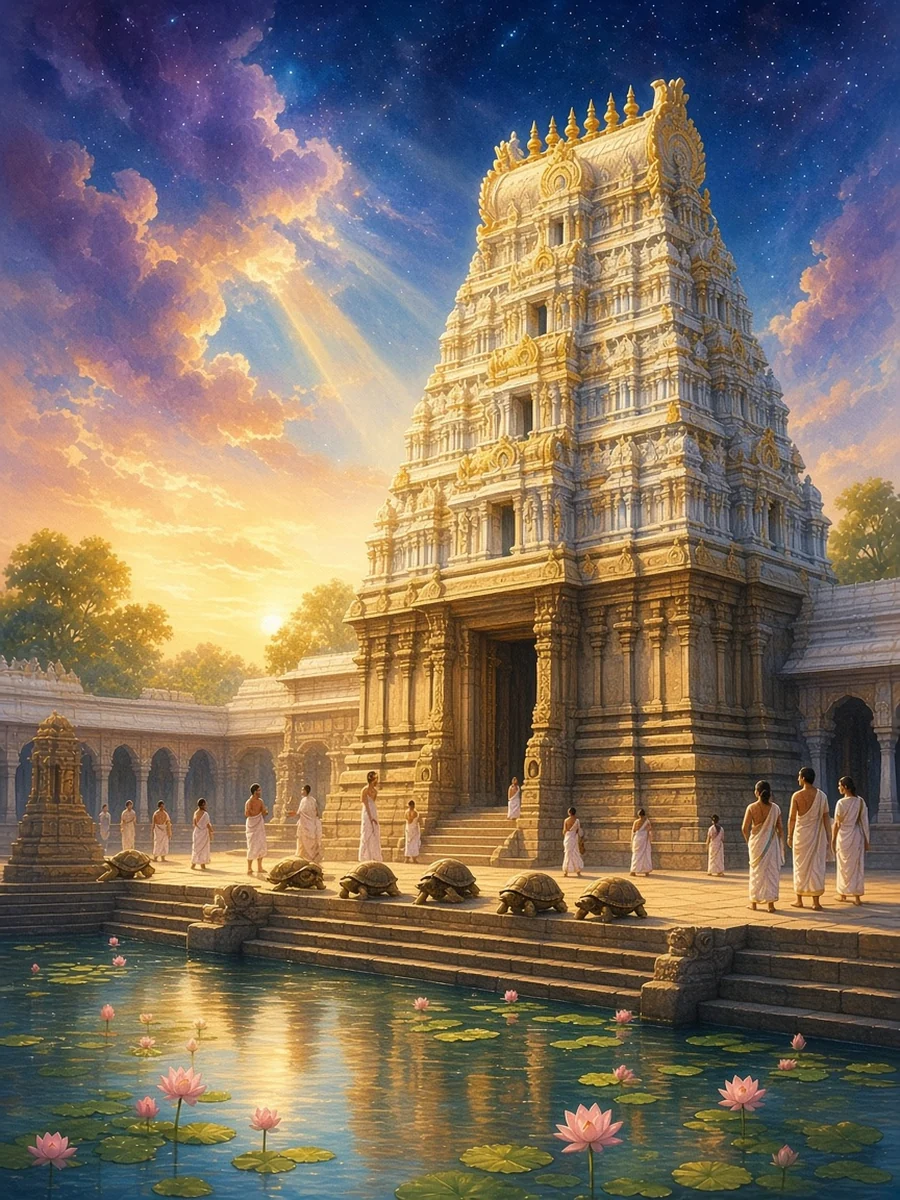
He is shown as a tortoise, or with Vishnu's four-armed body above a tortoise's shell. His great temple is Srikurmam in Andhra Pradesh, where devotees say Vishnu is worshipped as a tortoise nowhere else, the image faces west, and star tortoises live in the temple garden.

His stories on this site: The Oldest One in the Lake, What the Tortoise Said Under the Mountain and The Lake Cut by the Discus. The churning itself is told in Mohini and the Pot of Nectar, with The Garland in the Dust before it, The Blue Throat and The Twelve Days of the Pot after it. The Vedic tortoise who answered Prajapati back is in The Boar and the Tortoise.
Before the Puranas

The Vedic roots of Kurma

The Vedas know the tortoise, but not as Vishnu. In the Shatapatha Brahmana (7.5.1) a living tortoise is laid in the fire altar, its lower shell the earth and its upper shell the sky, and the text explains the word: Prajapati took that form when he made living creatures, and since kurma is the same as kashyapa, all creatures are called children of Kashyapa. In the Taittiriya Aranyaka (1.23) a tortoise born from Prajapati's body tells him that it was there before him.

The Rigveda does not name Kurma. The Wikipedia article on him notes that the Jaiminiya and Pancavimsa Brahmanas speak of Akupara Kashyapa, who gives firm footing for crossing the sea, and that Yaska's Nirukta discusses the word akupara.

The epics bring the tortoise to the churning without making him Vishnu. In the Mahabharata's Adi Parva (section 18 in Ganguli's translation) the gods ask the king of tortoises to bear Mandara on his back, and Indra has the mountain set there; the encyclopedia notes that the critical edition never calls him an avatar, and that only an interpolated passage of the Ramayana has Vishnu become the tortoise. The Vana Parva's tortoise Akupara, the oldest creature in the world, is not named as Vishnu either.

The Puranas tie the two together. The Vishnu Purana (1.4) says that in earlier ages the Lord had taken the shapes of a fish and a tortoise; the Bhagavata (1.3.16 and 8.7) puts the tortoise in its list of appearances and tells what he did under the mountain; the Agni Purana (3) gives him one line in its churning. The Kurma Purana takes its name from him. Its own first chapter, in G. V. Tagare's translation, presents the whole book as the tortoise's teaching to Indradyumna and the sages at the churning, and the Matsya Purana's list of the Puranas (53.46-47) agrees. H. H. Wilson noted in 1840 that the Kurma Purana's own account of its length does not match the lists. By the time of the ten-avatar lists the tortoise stood second, after the fish.

See how the Vedic gods became the Puranic ones →

Related gods