As the temple at Srikurmam tells it
Srikurmam, Srikakulam district · the Vamsadhara and the sea · 3 min read
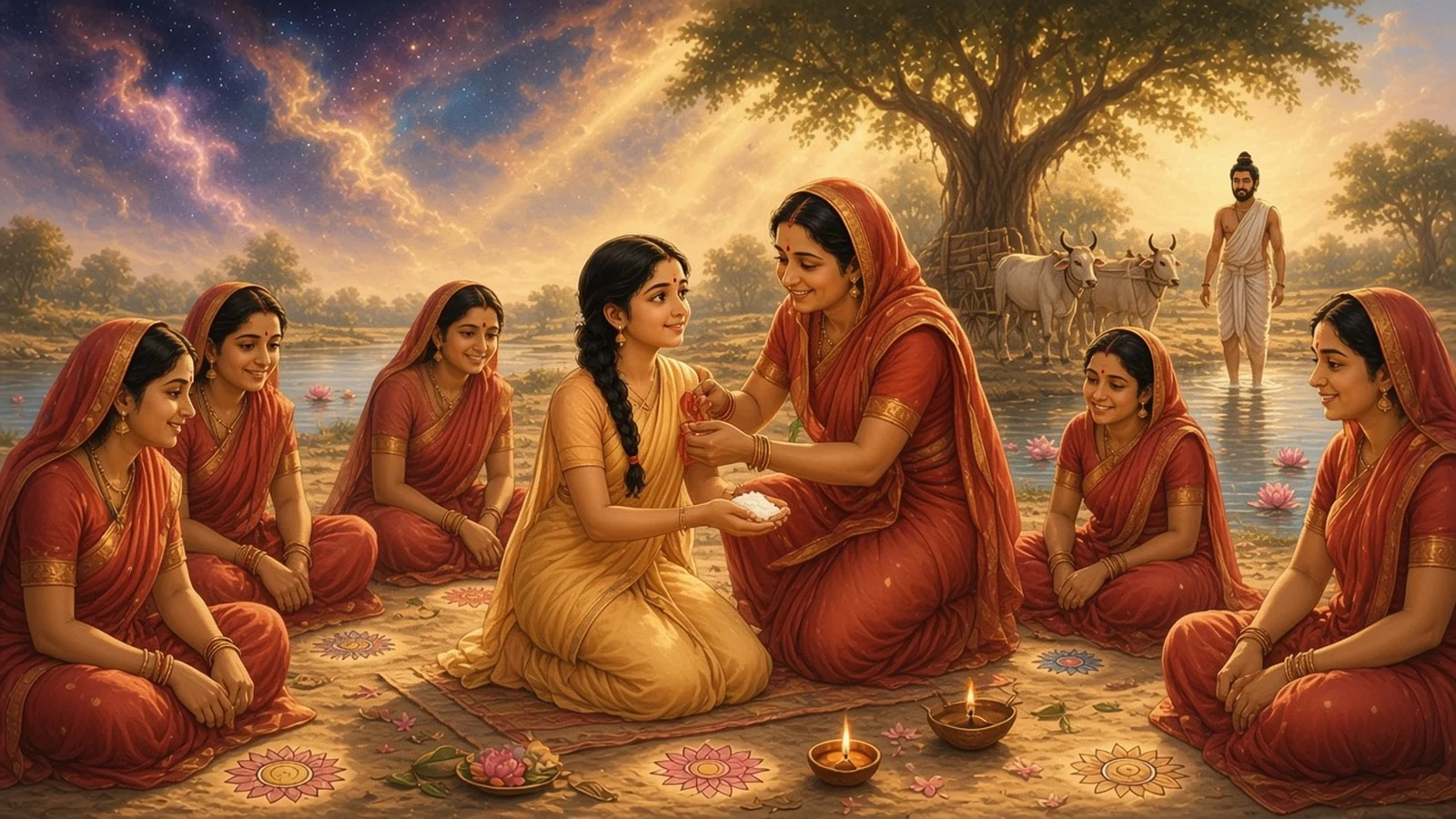
Long ago, the temple says, the country around Srikurmam was called Shvetagiri, the white hill, and its king was Shveta Chakravarti. His queen, Vishnupriya, was given to Vishnu with all her heart. Every month on the Ekadashi of the bright fortnight she fasted and kept her vow and her prayers.
On one such day the king came to her and wanted her company.
"Not today," she said. "Today I am keeping my vow."
He would not take the answer, and he pressed her again. So she turned away from him and prayed.
"Lord, let me finish my fast."
At once water came rushing across the ground between them, a whole river, and it carried the king away from her. The queen finished her fast in peace. The king found himself far off on the bank of the river Vamsadhara, and there he stayed.
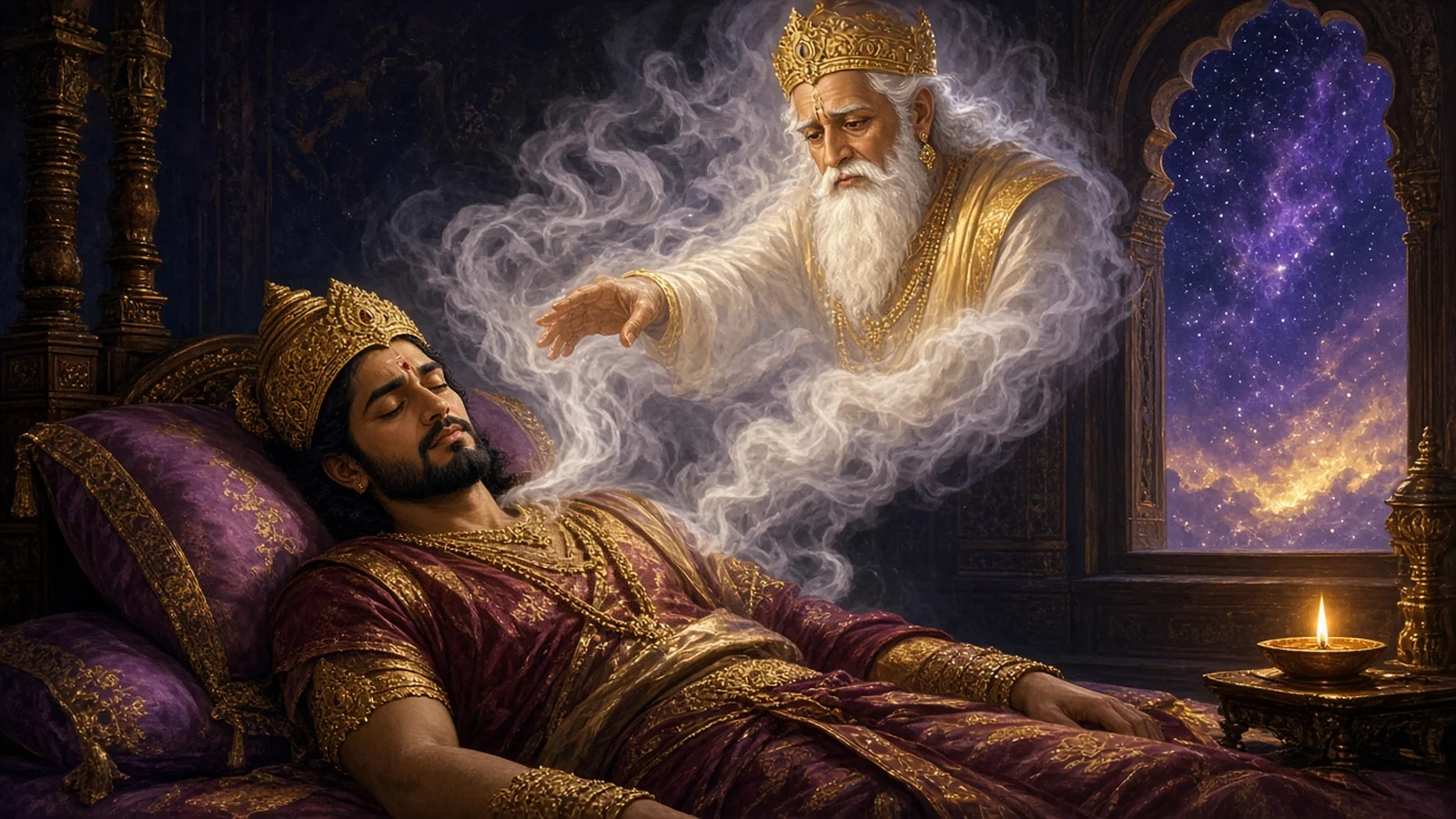
The sage Narada found him there, sorry and alone, and gave him a mantra to the Lord as the tortoise, Kurma Narayana.
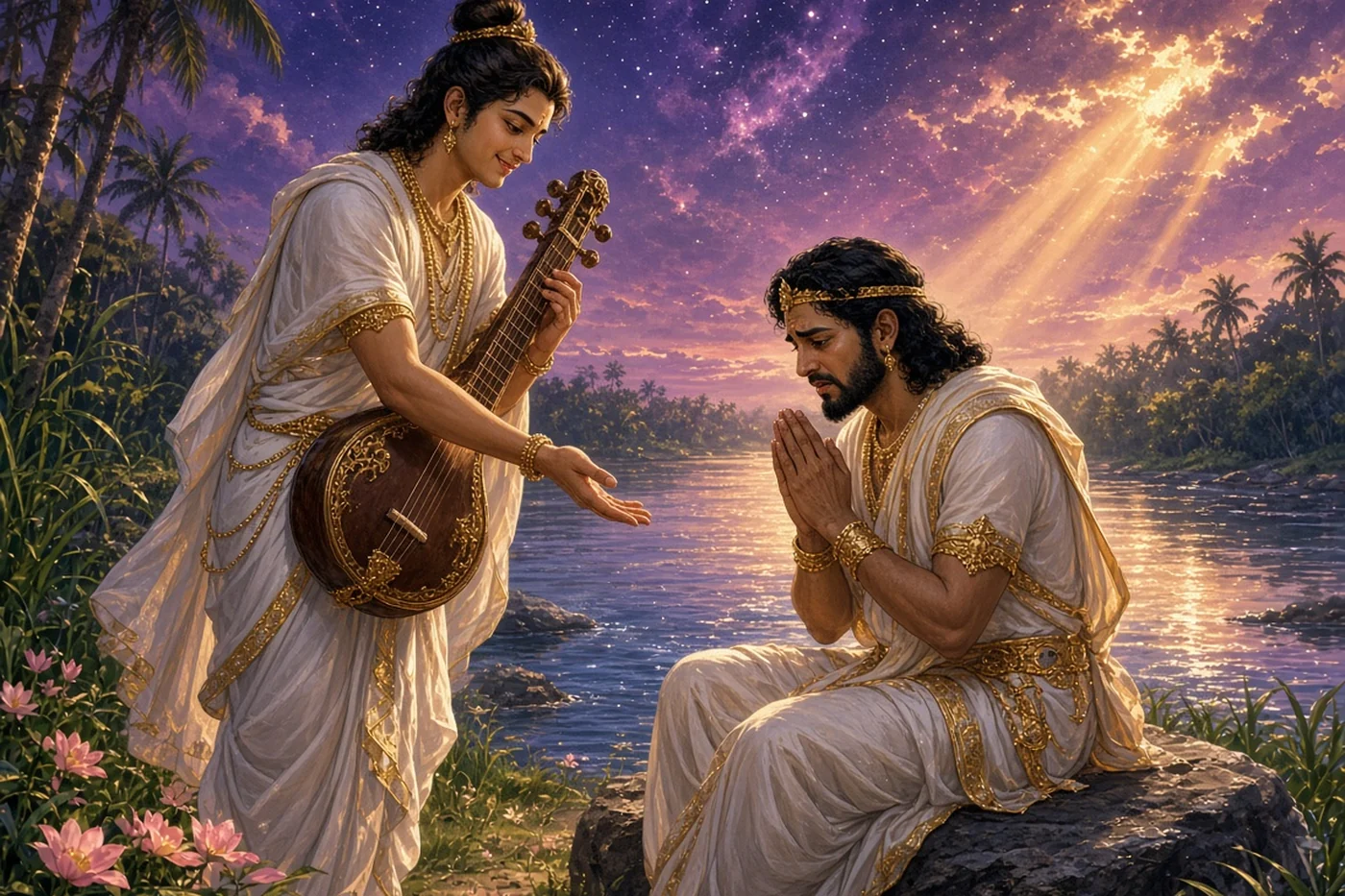
"Go to the place where this river meets the sea," Narada said, "and sit there and repeat it."
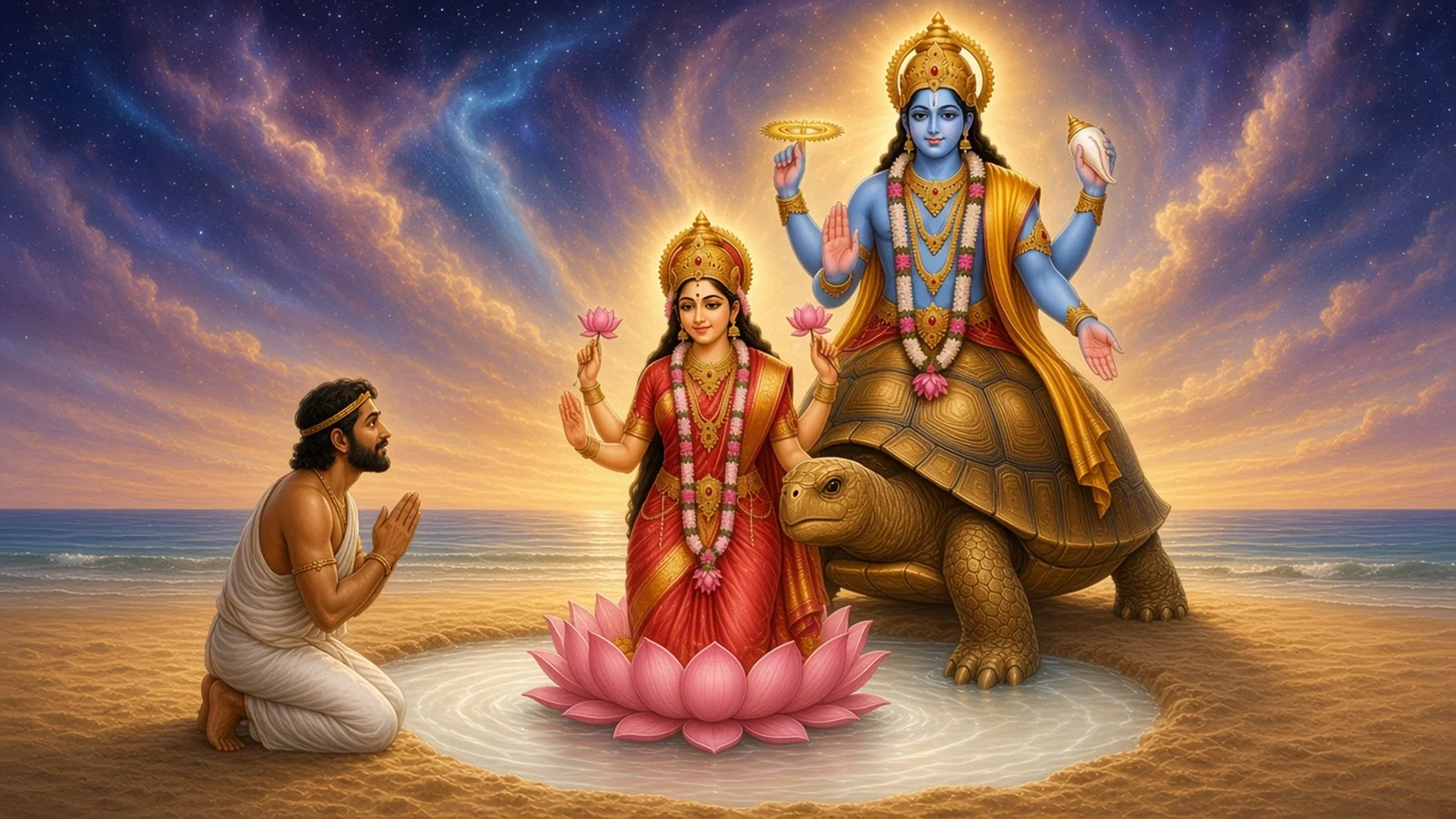
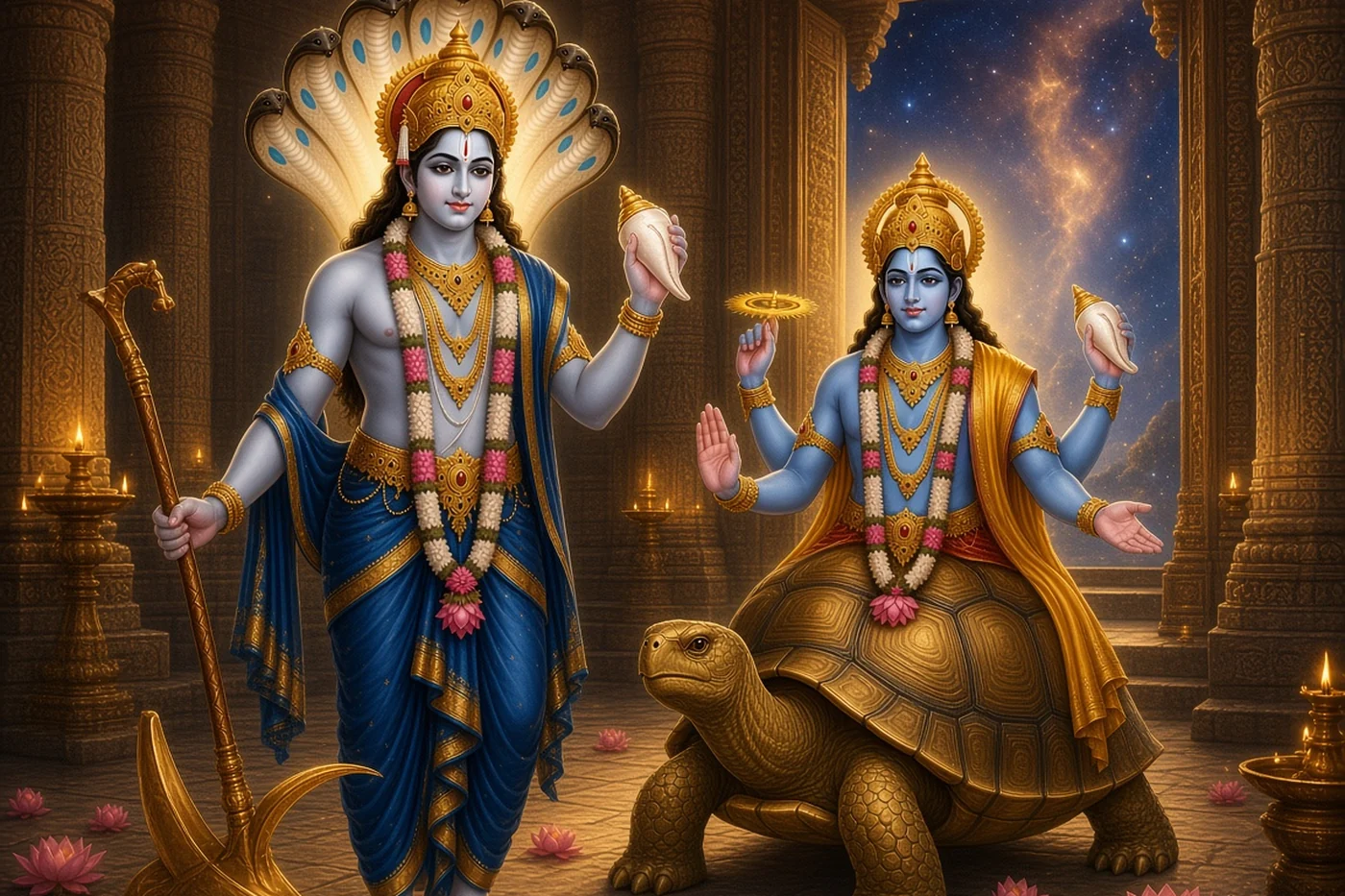
The king went and sat by the river mouth and did as he was told. He went on so long that his body wasted, and he was weak and sick by the time his prayer was answered. Then Vishnu came to him, as a tortoise, carrying his five weapons.
He saw how thin the king had grown. He took his discus, Sudarshana, and with it cut a pool out of the earth beside him, and it filled with water. The temple writers call it a sea of milk, and they say the goddess Lakshmi rose out of it, the one this temple worships as Kurmanayaki.
"Bathe," said the Lord.
The king went down into the water and came up well. The pool took his name and has been called Shveta Pushkarini ever since.
"Stay," the king begged. "Stay here, as you came to me."
So the Lord stayed, as Kurmanatha, the lord who is a tortoise. The temple holds, citing the Padma Purana, that Brahma himself came down to perform the rites for the new image and set it in place with the Gopala Yantra.
The pool is still there, and people say more of it. When a later king of the place, Shvetamahipati, died, they say, his bones were put into its water and became tortoises, and that is why the tank is holy. Families bring the ashes of their dead to it, as others take theirs to the Ganga at Kashi, and they say the ashes turn to shalagrama stones. Once a year, on the fourth day of the bright half of Magha, the Ganga herself is said to come and bathe here, to wash away the sins the pilgrims have left in her.
And the tortoises are still there too. Star tortoises, many of them found in the fields round about and left here by devotees, live in the temple's own tortoise garden, and devotees feed them leaves.
Why he is only here, and why he looks west
Srikurmam temple tradition · Dvapara Yuga to the twelfth century · 1 min read
The temple tells a second story, about its door.
In the age before ours, Balarama came here on pilgrimage. The guardian of the place in those days was Bhairava, and Bhairava stood in the doorway and would not let him in. Balarama took hold of the guardian and threw him clean out of the temple grounds.
The god inside saw it all, and he called Balarama in. But Balarama's temper had not cooled, and as he stood before the tortoise he spoke a curse on the place: that from then on this would be the only temple in which Vishnu is worshipped in the form of the tortoise. And so, the temple says, it is.
With Bhairava gone, the place needed a new guard. At Vishnu's asking, Hanuman agreed to keep it.
The god's face has its own story. The rule is that the chief image of a temple faces east, to the rising sun, and this one faces west. Once, the encyclopedia records, a king of the hill people came here and stayed at the hermitage of the sage Sampangi, on the west side of the temple. He loved the god and wanted to worship him without pause from where he lived, and he asked the god to turn and face him. Kurmanatha turned, and he has faced west ever since.
The temple writers give another reason as well: that he turned to bless the teacher Ramanuja when he came here. Whichever is told, the temple keeps a flagstaff on its west side as well as its east, one for each way the god has looked.