Devalok ← All gods
Also calledKala BhairavaKaal BhairavBhairabBhaironBhairavnathKshetrapala

Artwork ›

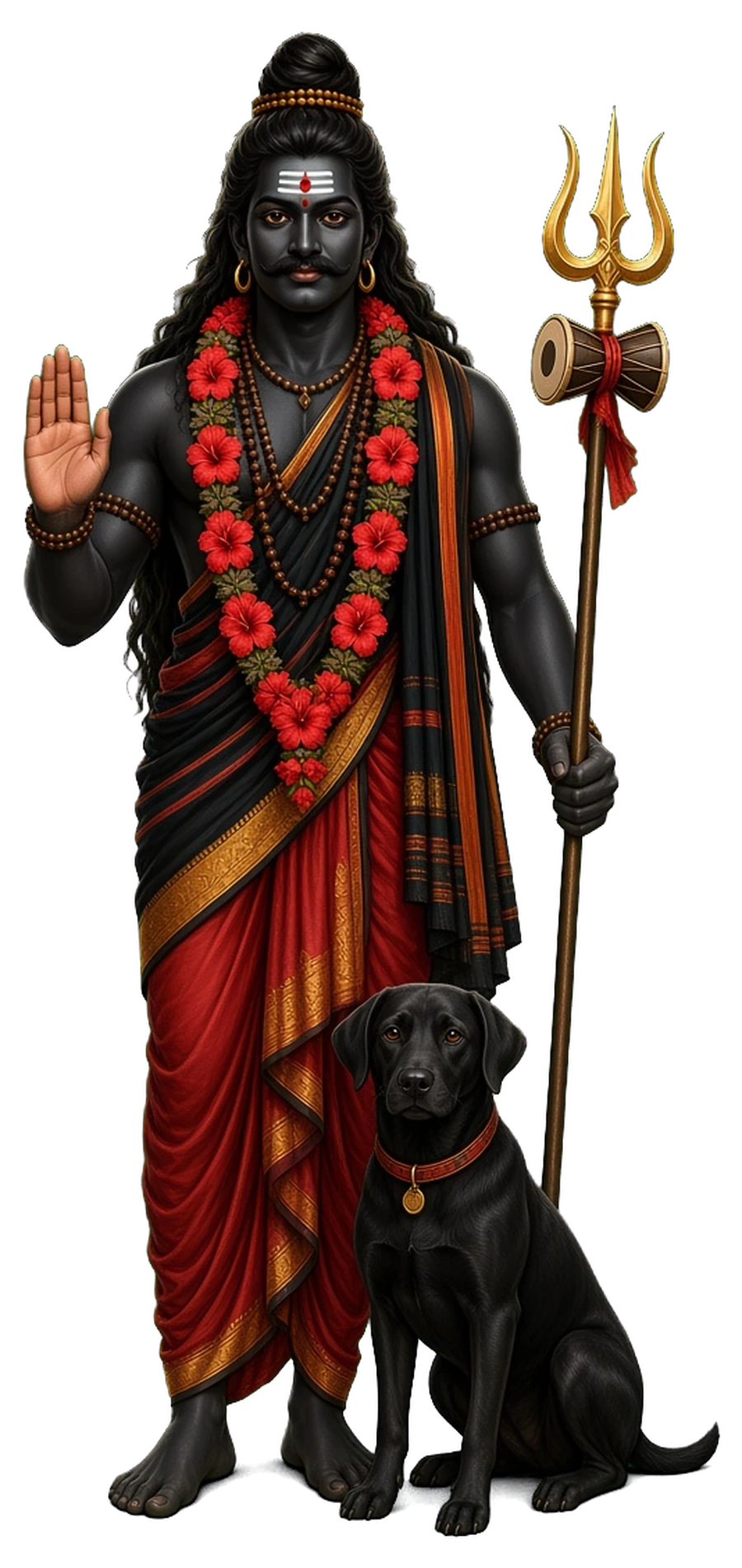
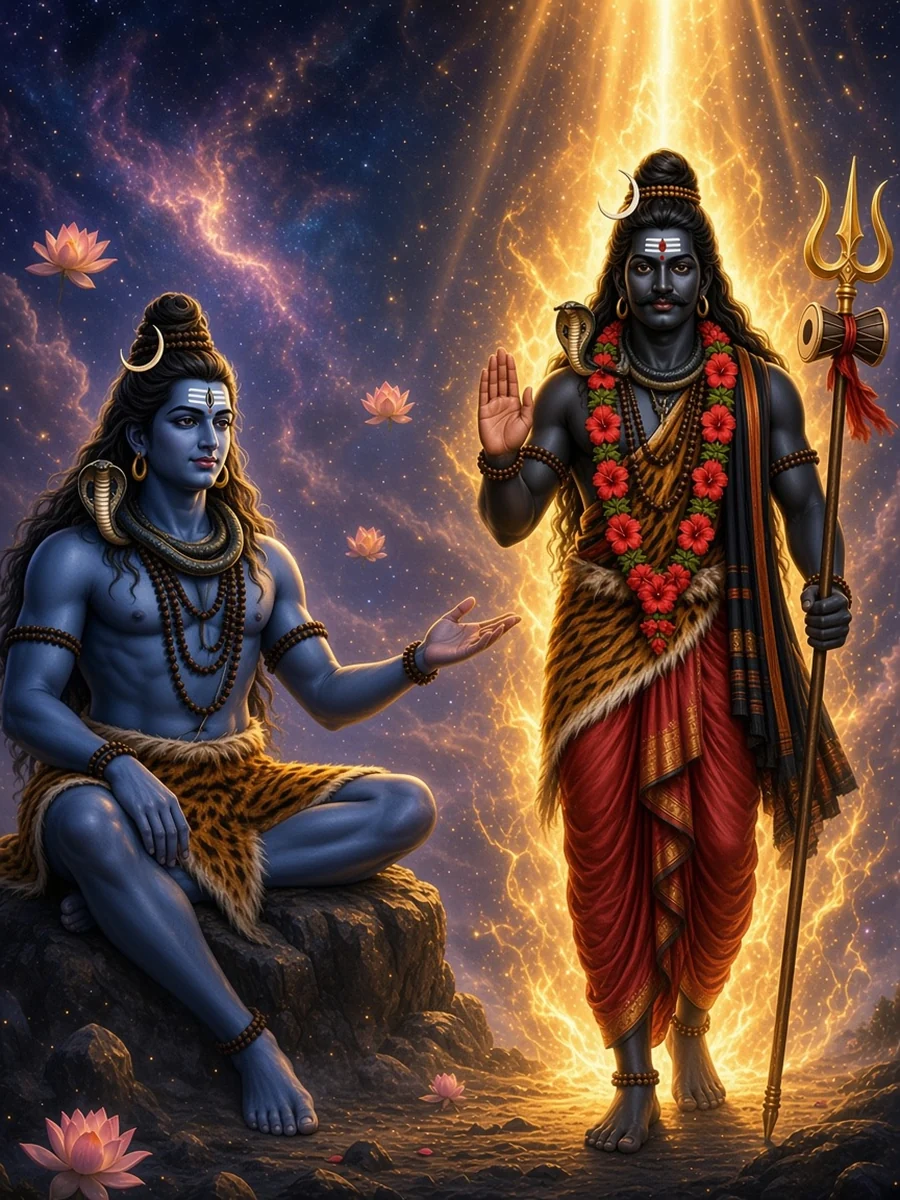
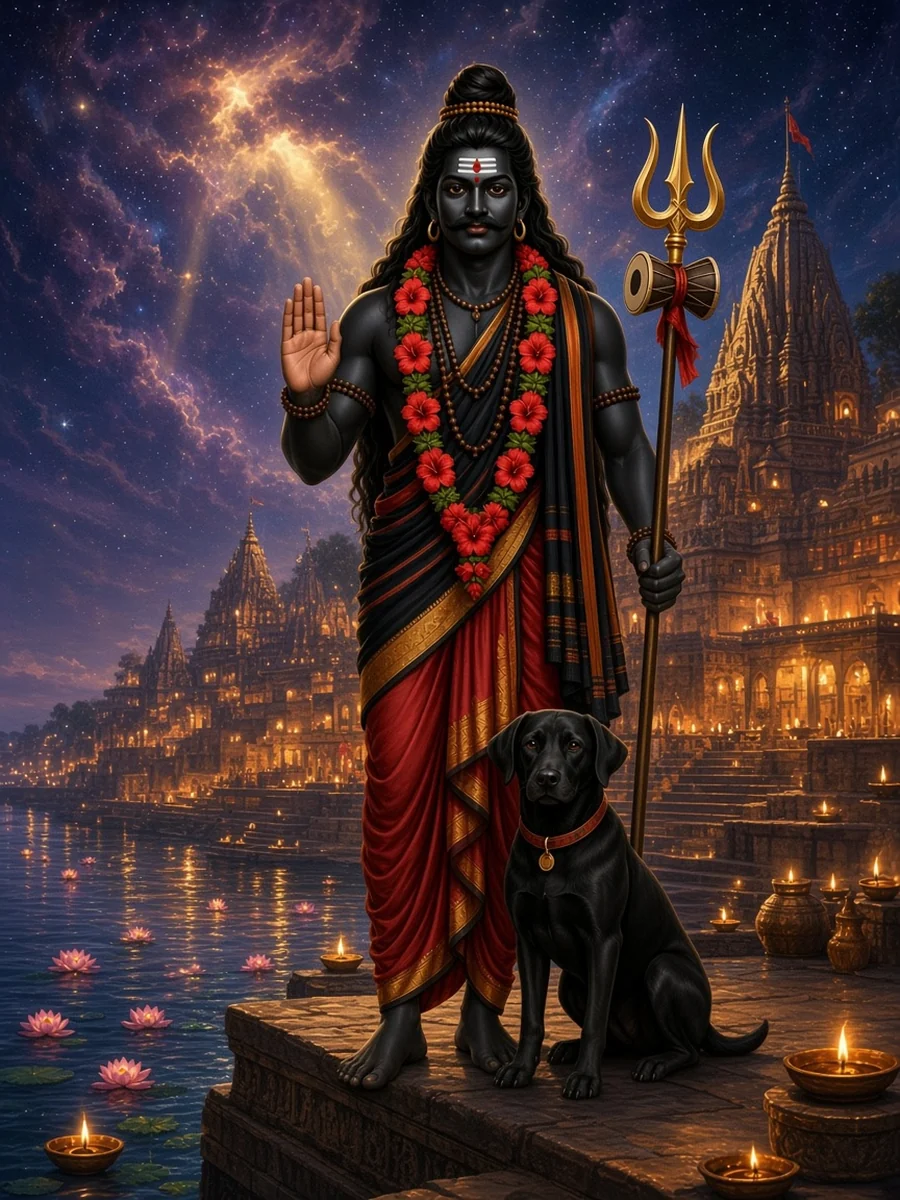
Bhairava steps out of a column of fire before Shiva, who made him from his anger Bhairava and his dog keep watch over the lamplit ghats of Kashi at night

For kids

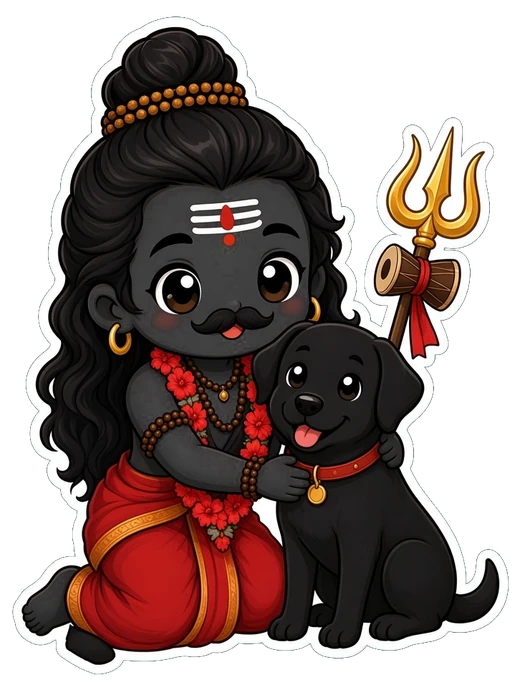
A little Bhairava hugs his happy black dog
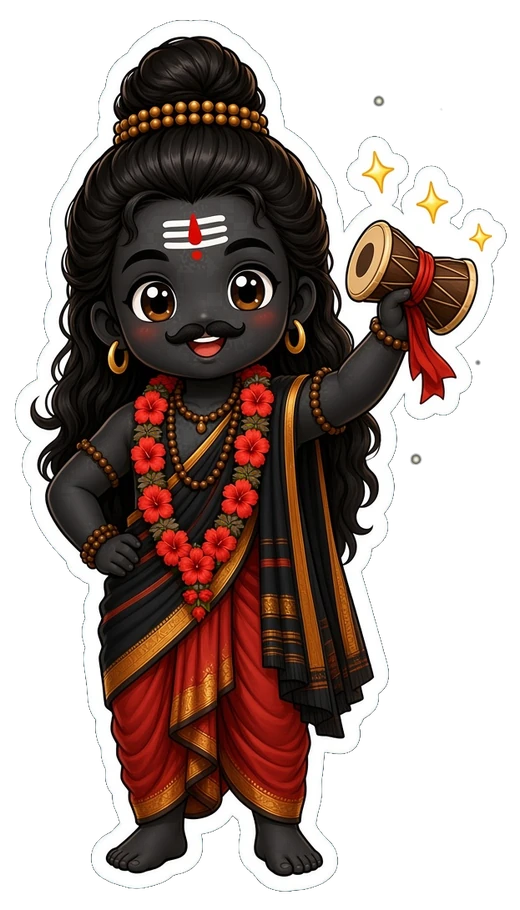
A little Bhairava happily shakes his tiny damaru drum

At a glance

TraditionShaiva
FormA dark

naked or skin-clad figure with fangs, wild hair and a garland of skulls

In his handsA skull bowl

a trident, a drum, a sword or a severed head

Who Bhairava is

Bhairava is Shiva at his most terrifying. He was made out of Shiva's anger, the Puranas say, when Brahma boasted that he was the greatest of the gods, and his first act was to pinch off Brahma's fifth head with a fingernail.

The skull stuck to his hand. For killing a brahmin he had to wander the world as a beggar, the skull as his begging bowl, until he came to Kashi and it fell from his palm. Shiva made him the lord of the city, its kotwal, the officer who keeps its peace. Pilgrims to Varanasi still go first to Kaal Bhairav, to ask his leave.

Kashika puradhinatha Kalabhairavam bhaje: the refrain of the Kalabhairavashtakam, I worship Kalabhairava, lord of the city of Kashi.

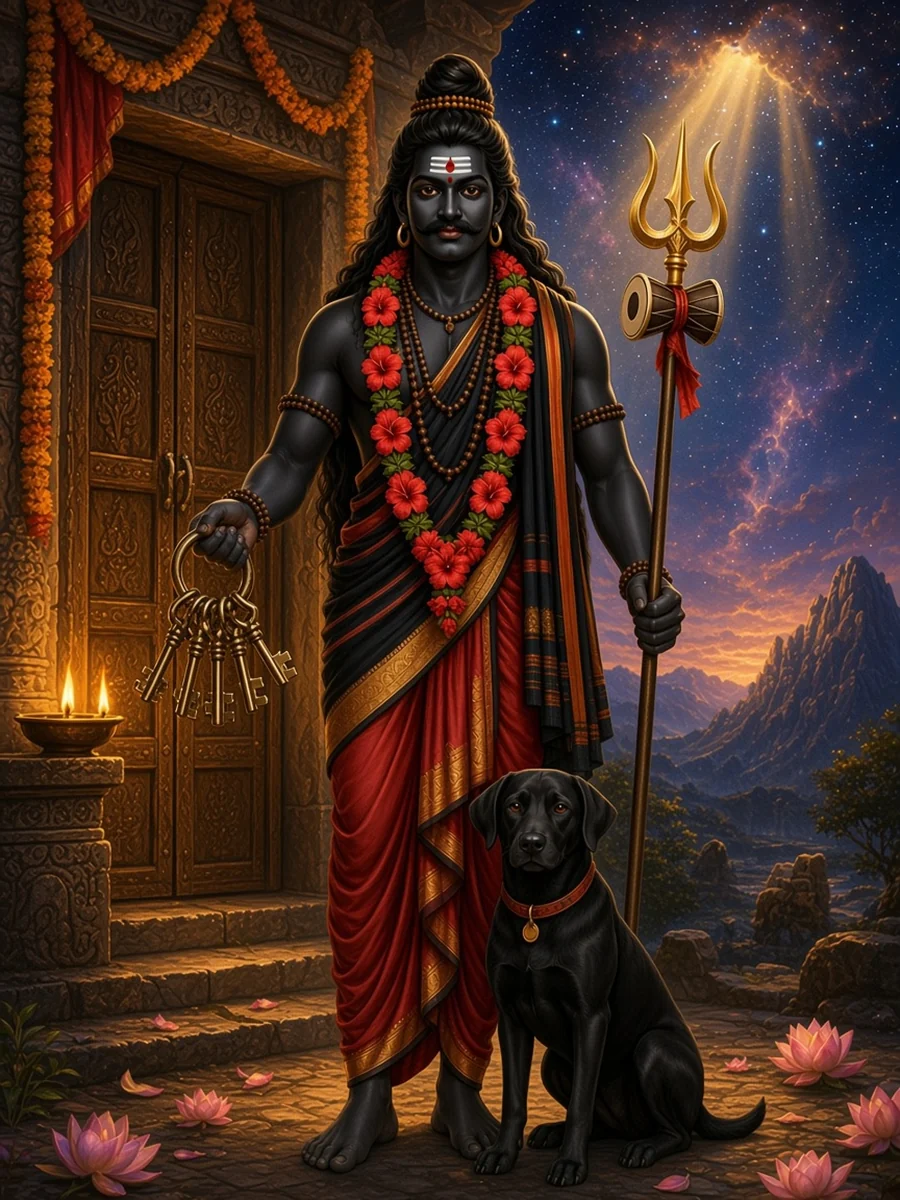
His name means the frightening one, and he is shown dark and fanged, with a garland of skulls, and always with a dog. He is the guardian of places. A Bhairava stands beside every shrine of the goddess among the Shakti Peethas, and many temples have one at the gate, who holds the keys at night. In north India, under the name Bhairon, he is a village god, offered liquor and sweets.

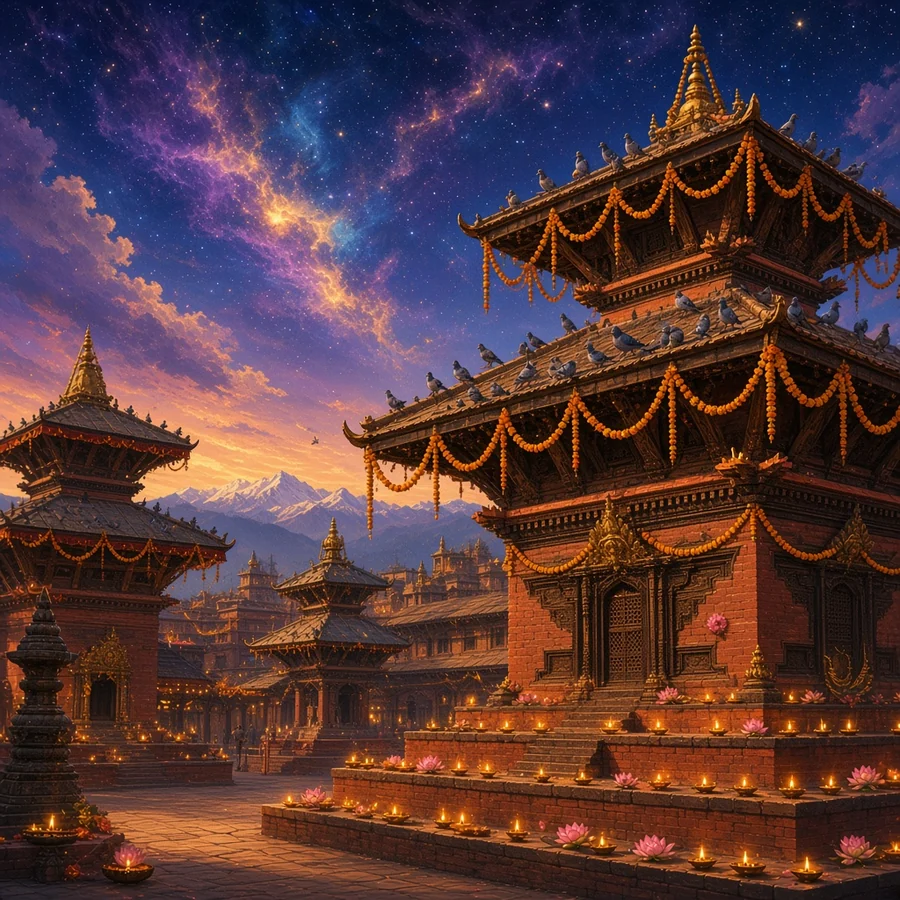
He has many forms. The tradition counts eight Bhairavas, the Ashta Bhairava, and each of those has eight more, sixty-four in all. At Ujjain he drinks liquor from a saucer. In Kathmandu, a great black Bhairab watches the royal square, and a white one pours beer for the crowd once a year.

Before the Puranas

The Vedic roots of Bhairava

Bhairava grew out of the fierce side of Rudra and the skull-bearing ascetics of early Shaivism. The Kapalikas, who carried skull bowls and lived on cremation grounds in imitation of Shiva's penance for the fifth head, worshipped him, and the tantric Shaiva traditions of Kashmir and elsewhere made him the supreme form of Shiva.

The Puranas tell the beheading of Brahma several ways. The Shiva, Kurma, Skanda and Varaha Puranas each give a different reason, but they agree on the skull falling at Kashi. The Kashi Khanda of the Skanda Purana, chapter 31, gives him his names, Kalabhairava because even Time fears him and Papabhakshana, the eater of sins, and makes him the lord of Kashi, where Chitragupta writes nothing in Yama's book.

As the guardian of the goddess he travelled wherever her shrines did. Each of the Shakti Peethas, the places where pieces of Sati's body fell, has its Bhairava, a form of Shiva who keeps her company and her gate. On the hill of Vaishno Devi in Jammu, the pilgrimage is not complete until the pilgrim has climbed on to the shrine of Bhairon, the god the goddess killed and then forgave. The Kashi Khanda also asks for a fast and a night's vigil before him on the dark eighth of Margashirsha.

The eight Bhairavas are named Asitanga, Ruru, Chanda, Krodha, Unmatta, Kapala, Bhishana and Samhara, each with his own direction.

His temple in Varanasi was rebuilt by the Peshwa Baji Rao II in 1817. In Kumaon, Bhairav is called into the body of a medium in the night-long jagar, sung by a jagariya to the beat of the hudki drum.

See how the Vedic gods became the Puranic ones →

Related gods