As Kathmandu tells it
Durbar Square and Hanuman Dhoka · 2 min read
In the seventeenth century Kathmandu was ruled by Pratap Malla, a king who loved building, and poetry, and his own name in inscriptions. He wanted water brought into the palace quarter, so he had workmen dig a channel through the ground near the royal square.
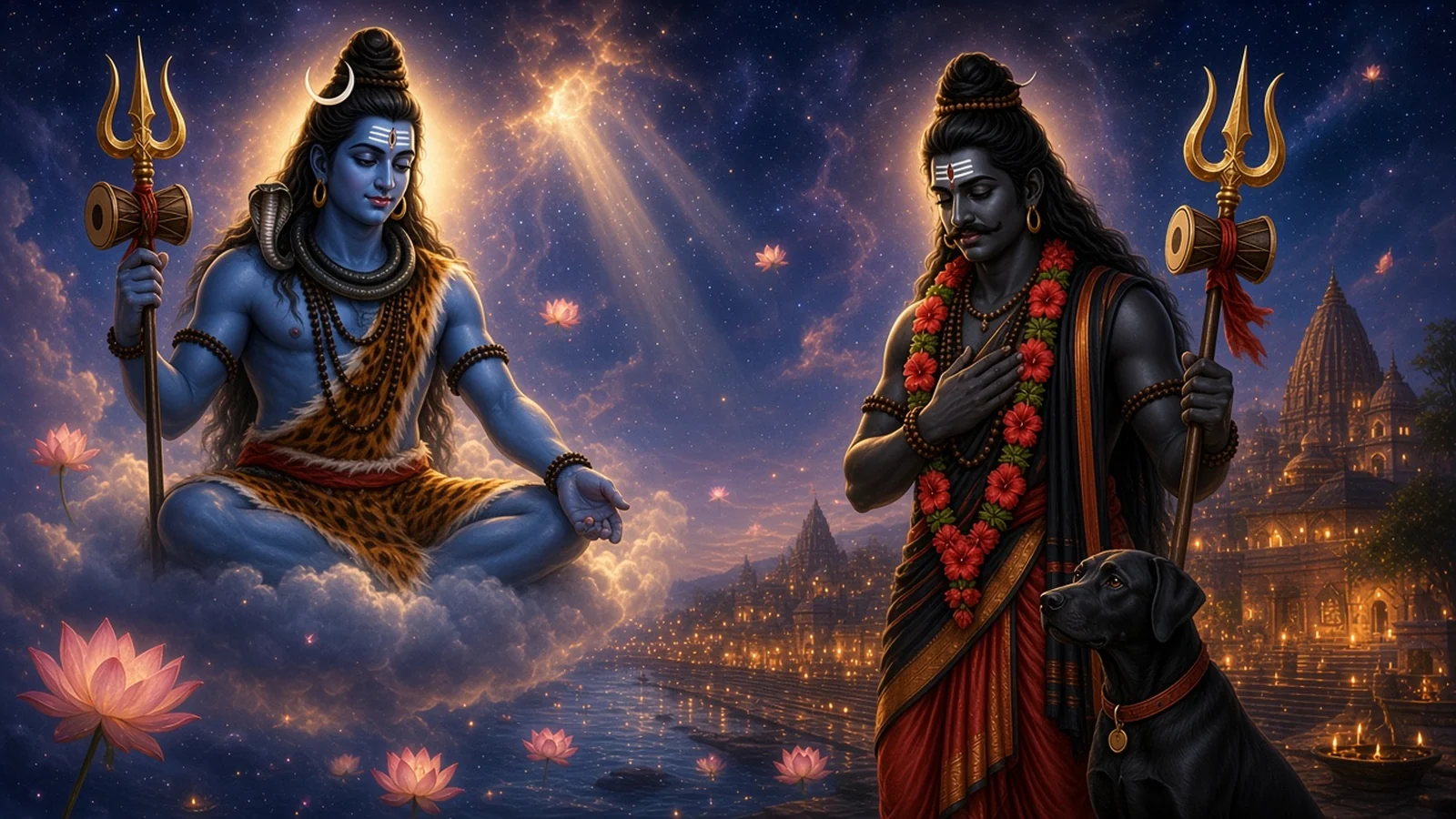
One day the diggers struck stone. They scraped the earth away and found a face, and then a body, a huge figure carved in black stone, many-armed, with bulging eyes and bared teeth, trampling a figure under its feet.
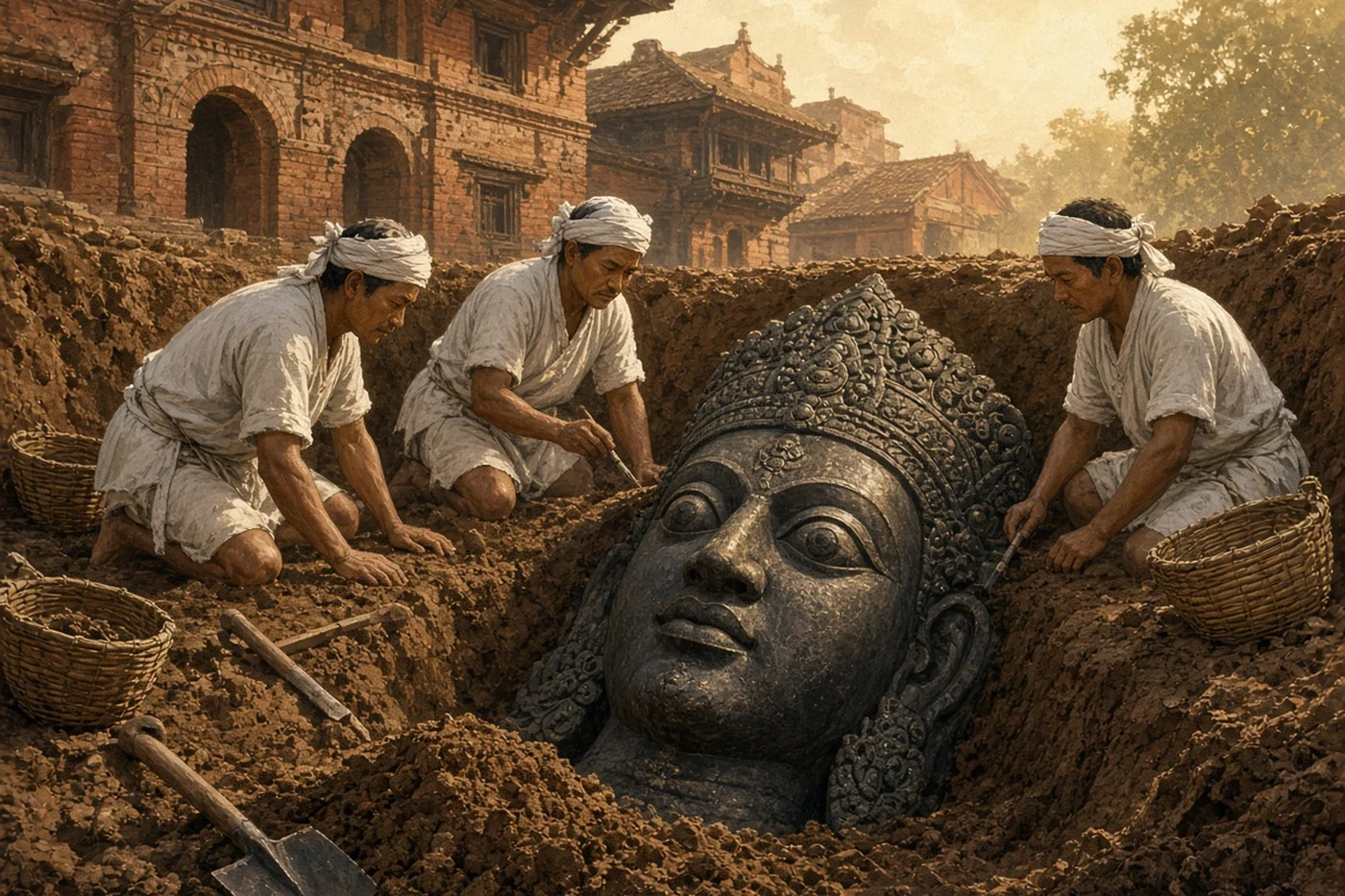
"It is Bhairab," said the men, and stopped digging.
It was very old. Scholars now date it to the Licchavi kings, a thousand years before Pratap Malla. Someone long ago had carved it, and someone had buried it, and no one knew why.
The king came to look at it.
"Set him up in the square," he said. "Where everyone can see him."
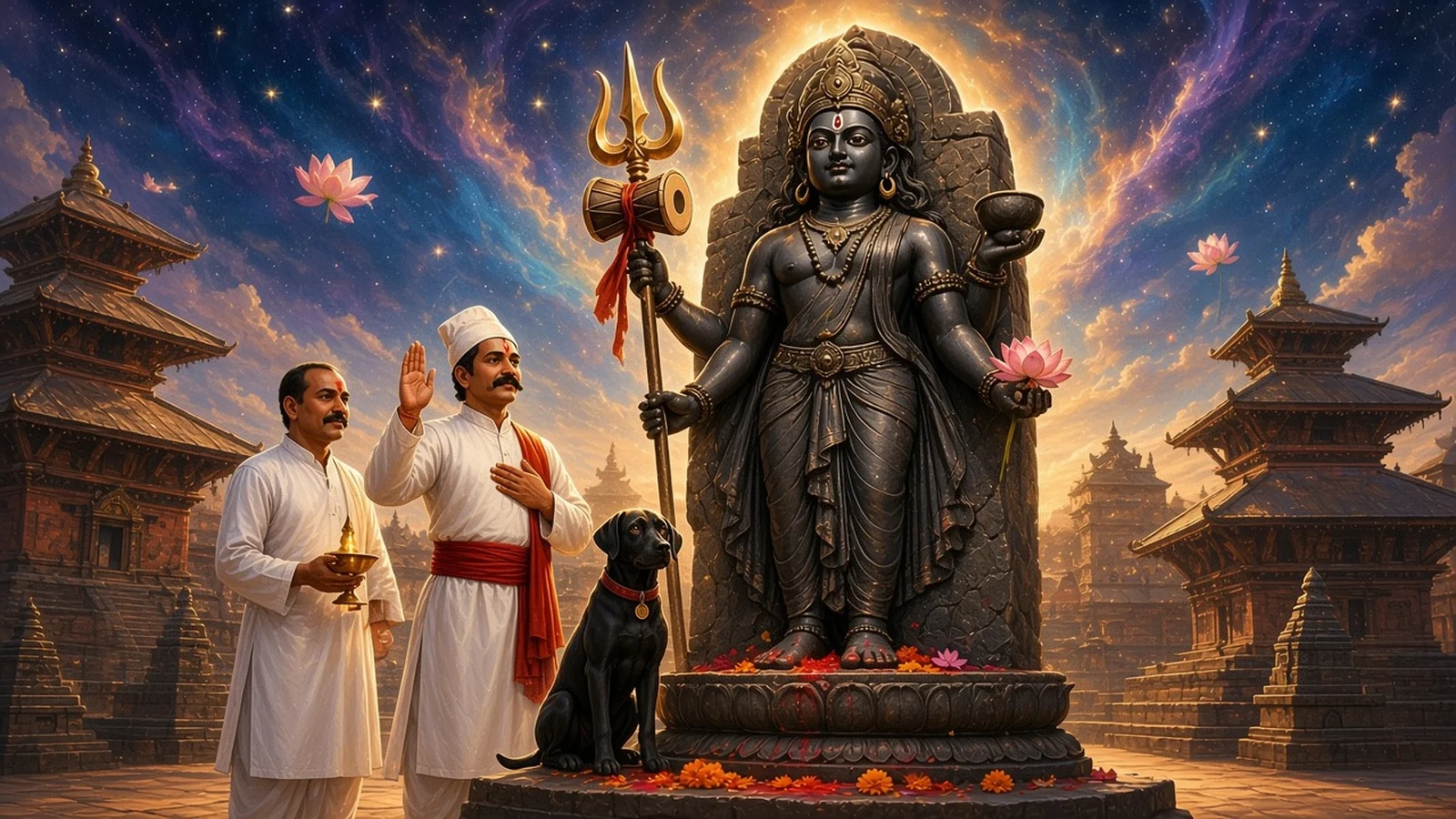
So Kal Bhairab, the black Bhairab, was raised up in the open square in front of the palace, and there he stands.
He became, in time, the king's court of truth. When an official of the kingdom took office, he was brought before Kal Bhairab to swear his oath. He swore to serve faithfully and to speak the truth, and he swore that if he lied, the god could take him, by a violent death.
"Do you swear it?" the officials were asked, before the god.
"I swear it," they said, with Bhairab's eyes on them.
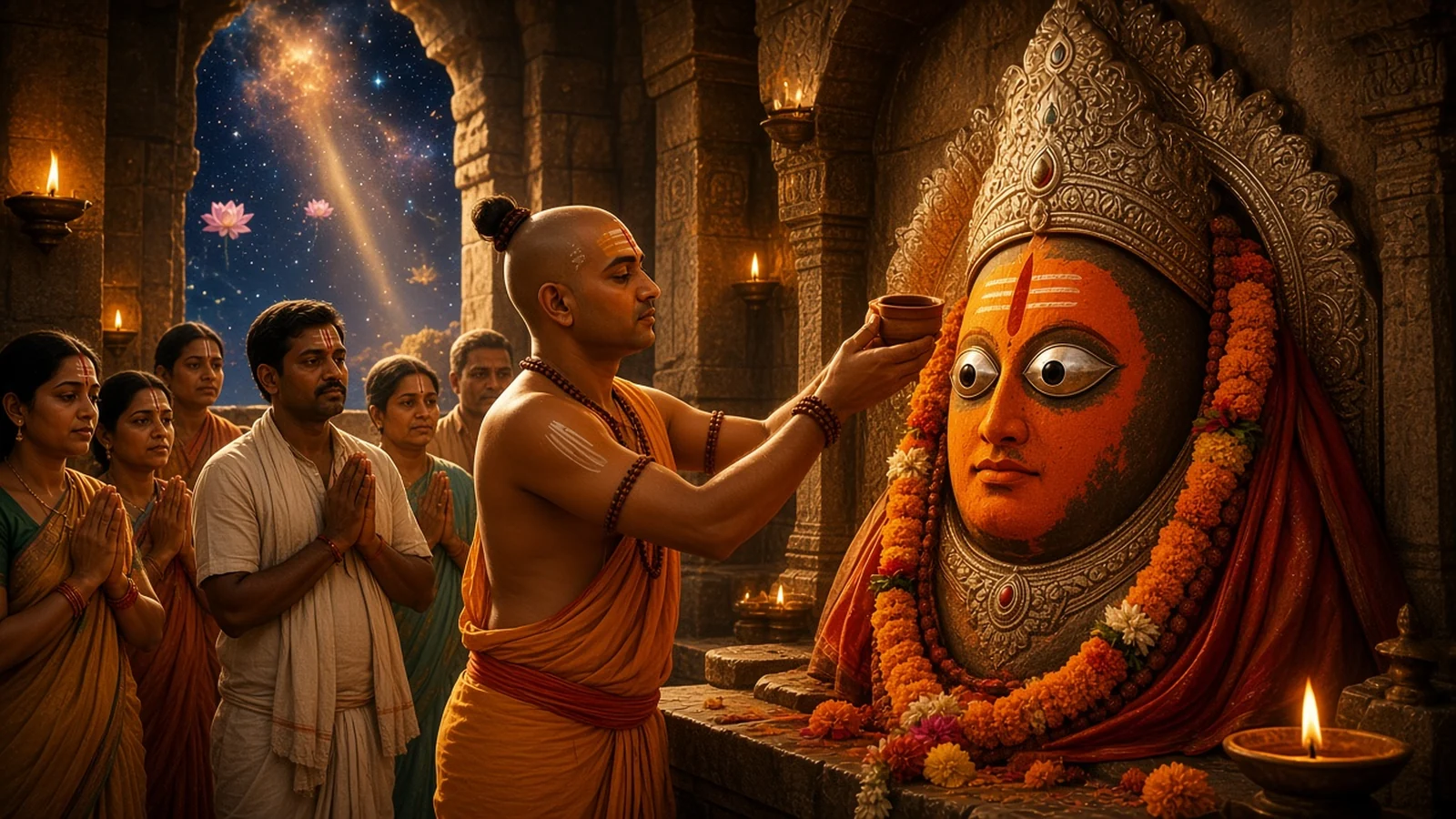
So Kathmandu calls him the court Bhairab, and people still bow before him, and leave flowers and coins at his feet, and walk past him a little carefully.
A few steps away, in the palace of Hanuman Dhoka, there is another Bhairab, very different. He is a great mask, gilded, with a white face, Sweta Bhairab, the white Bhairab, and for most of the year he is hidden behind a lattice of carved wooden windows, so that people passing can only make out his shape.
Once a year, at the festival of Indra Jatra, the lattice is opened. The white Bhairab's face is shown to the square, garlanded and lit, and a pipe is set in his mouth.
Then rice beer runs out of his mouth, down through the pipe, into the crowd.
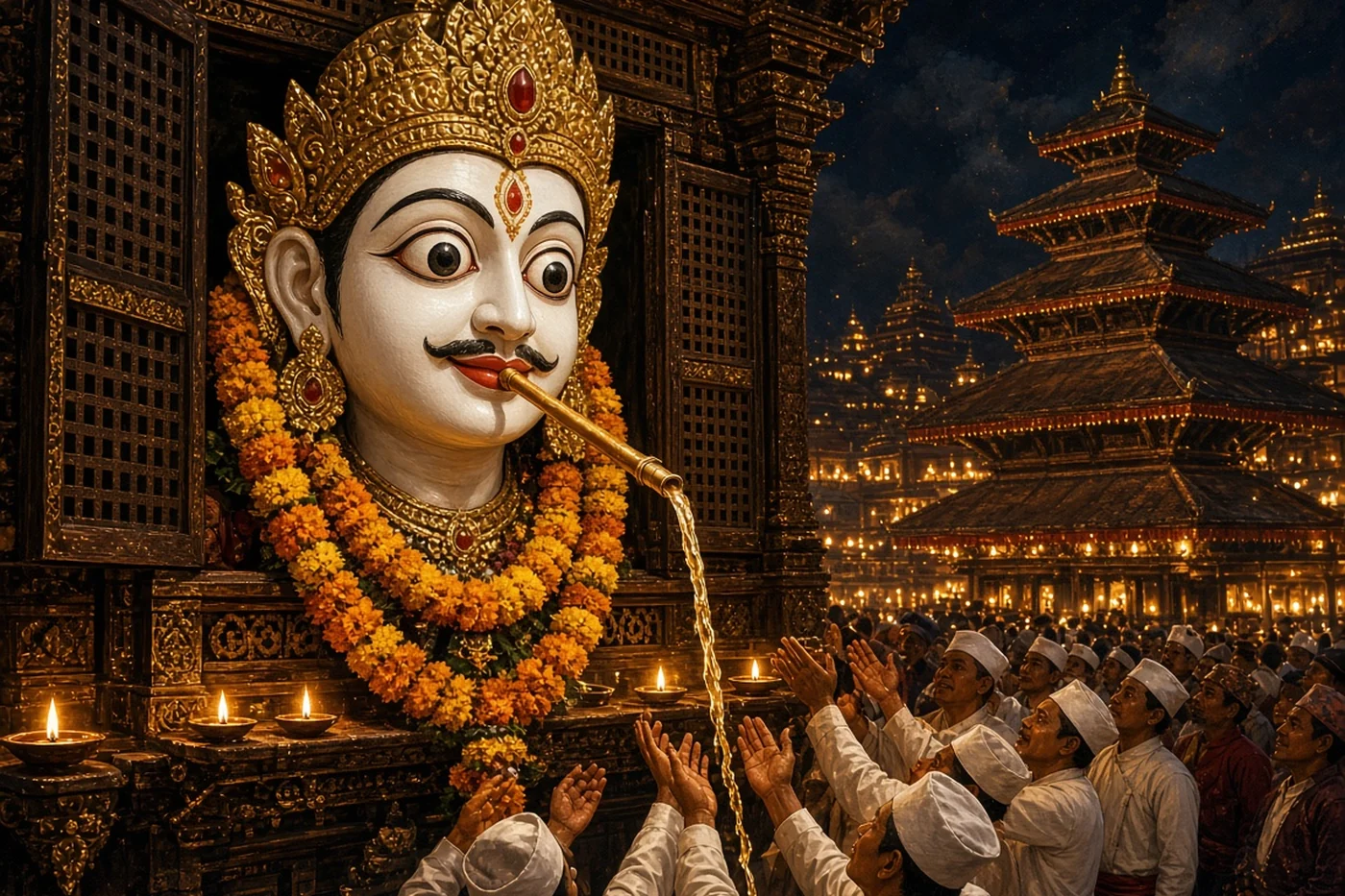
People push to the front with their hands and mouths open. Whoever catches the beer is lucky, they say, and it is believed to cure illness.
"Did you get some?" the young men shout to each other.