As the Kashi Khanda tells it
Skanda Purana, Kashi Khanda 31 · 2 min read
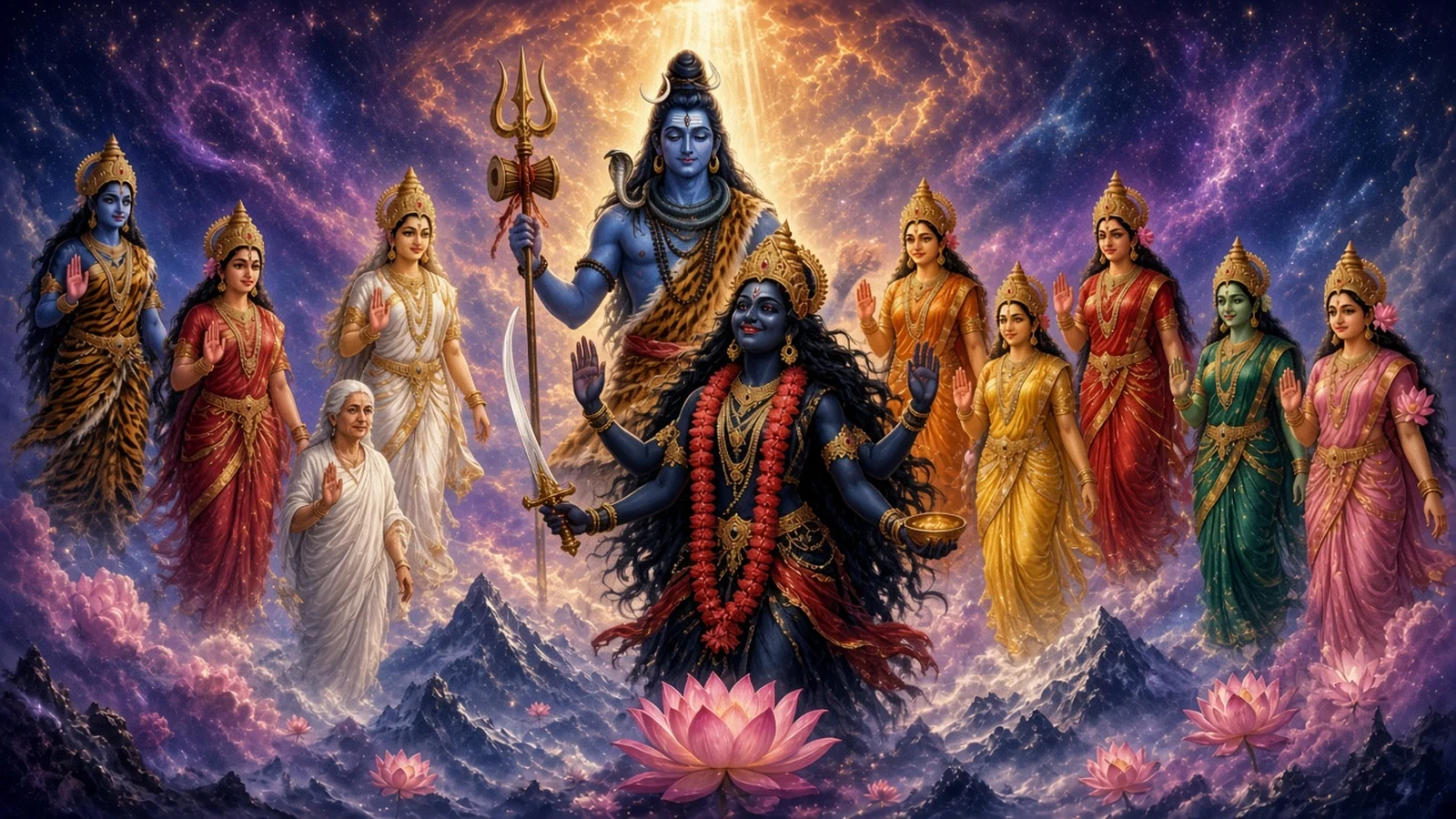
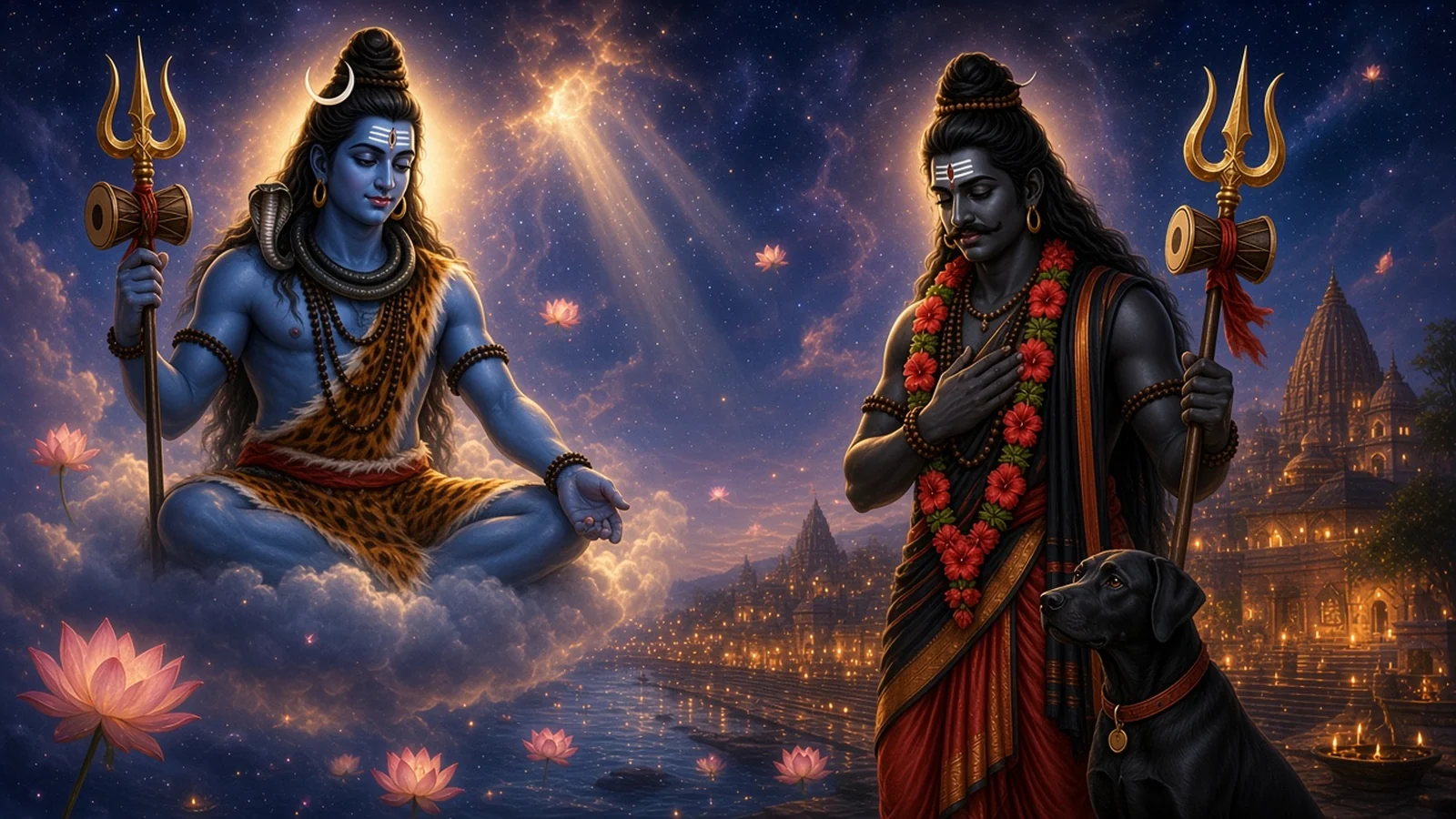
Brahma, in his pride, had spoken against Shiva. And Shiva, in his anger, made a being out of himself, black and blazing, with fangs and a garland of skulls, so fearsome that the sky darkened around him.
The being stood before Shiva with his hands joined, waiting to be told what to do.
Shiva looked at him, and gave him his names.
"You are fearful to look on," he said, "so you are Bhairava. Time itself will be afraid of you, so you are Kalabhairava. You will crush the wicked, so you are Amardaka. And you will eat up the sins of those who come to you, so you are Papabhakshana, the eater of sins."
Then he gave him a gift greater than the names.
Kashi is the city Shiva loves above all others. The Kashi Khanda calls it Avimukta, the place that is never forsaken, because Shiva never leaves it, not even at the end of the world. A city like that needs a keeper, someone who stands at its gate while its lord sits within.
"And Kashi is yours," said Shiva, "for ever. You will be its lord. Whoever does wrong in Kashi, you alone will punish. No one else will touch them."
"Not even Yama?" said Bhairava.
"Not even Yama," said Shiva. "In Kashi, Chitragupta will write nothing in his book. The messengers of Yama will not come near anyone who is yours."
So Bhairava went and did what he had been made to do, and nipped off Brahma's fifth head with a fingernail. The skull stuck to his hand, and he carried it through every holy place in the three worlds until he came to Kashi, where it fell from his palm. He danced for joy there, and that place is Kapalamochana.
And then he stayed, as Shiva had told him to. He took up his post as the kotwal of Kashi, the officer who keeps the city's peace, watching who comes in and who goes out.
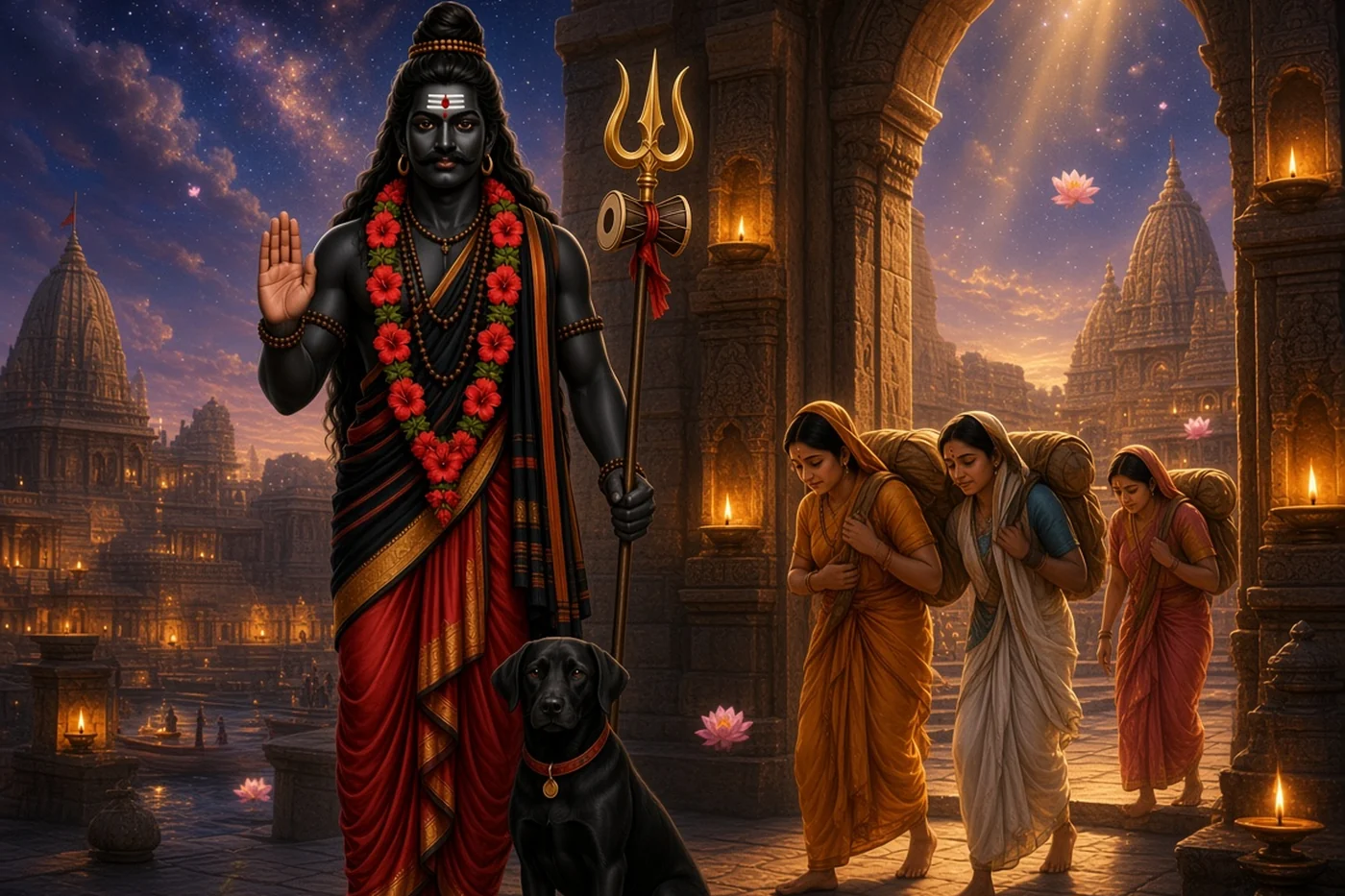
The Kashi Khanda promises a great deal to those who come to him. Whoever remembers Kapalamochana, it says, is freed from sin. Whoever fasts and keeps awake before Bhairava on the eighth night of the dark half of Margashirsha, the month of his appearance, is freed from great sins. And whoever is devoted to him need never fear the messengers of death.
Those who sin in Kashi itself do not escape. They answer to Bhairava, and to no one else. Yama's book has no page for them.
As Varanasi keeps it
the Kaal Bhairav temple · 1 min read
His temple stands in the lanes of Vishweshwarganj. The building is not ancient; it was rebuilt by the Peshwa Baji Rao II in 1817.
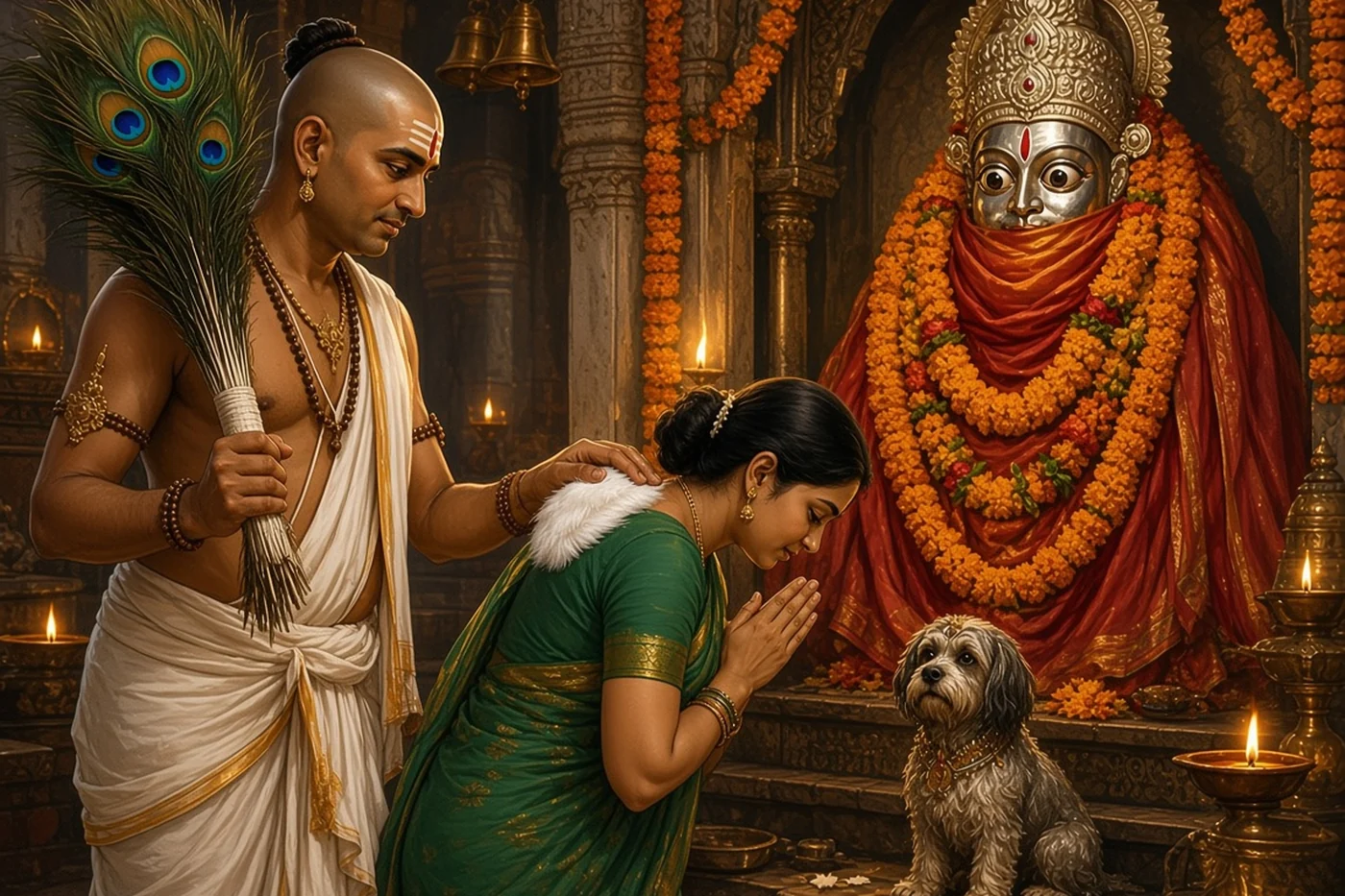
Inside, the god is almost entirely covered. Only his face shows, a face of silver with wide eyes, and the rest of him is draped in cloth and garlands. He sits on a dog, which is his animal, the creature that guards the door.
Pilgrims come to him first. They believe that no one may live in Kashi without his leave, and so a newcomer to the city, or a pilgrim who has just arrived, goes to the kotwal to ask for permission, and goes back to him again before leaving, to say goodbye.
At the shrine a priest stands with a thick bundle of peacock feathers bound into a club. As each pilgrim bows, he taps them with it on the back or the head, a light stroke, the kotwal's touch, which is said to drive away whatever is troubling them.
The people of the city also say something stranger about him. Kashi is where the dying come, because whoever dies in Kashi, it is believed, is set free and never born again. But a sinner who dies there does not slip through unpunished. He passes first through Bhairava's hands, a punishment short and very fierce, called the Bhairavi yatana, and only then is he released. The kotwal lets no one past the gate without a reckoning.
Then a black thread is tied round the wrist. People leave the temple wearing it, and it stays on, sometimes for months, a sign that the guardian of the city has seen them.