As the Mahabharata tells it
Mahabharata, Adi Parva 28 to 34 · 3 min read
Garuda's mother Vinata was a slave. She had lost a wager to her sister Kadru, and now she served Kadru and her thousand serpent sons. The serpents had told Garuda the price of her freedom: bring them the amrita, the nectar of immortality, which the gods kept in heaven.
"I will go," said Garuda. "But I am hungry. What shall I eat on the way?"
"On the shore of the sea there are Nishadas, a whole people of them," said his mother. "Eat them. But never eat a brahmin. A brahmin in your throat would burn like a coal."
Garuda swept down on the Nishadas and swallowed them by the thousand. One of them, though, stuck in his throat and burned.
"Whoever you are," said Garuda, "come out. You are a brahmin."
"My wife is a Nishada," said the brahmin. "Let her come out with me."
Garuda let them both go and flew on, still hungry. He found his father, the sage Kashyapa, in his hermitage.
"There is a lake," said Kashyapa. "In it an elephant and a tortoise are fighting. They were brothers once, who quarrelled over their inheritance and cursed each other into those shapes. Eat them both. It will do them good."
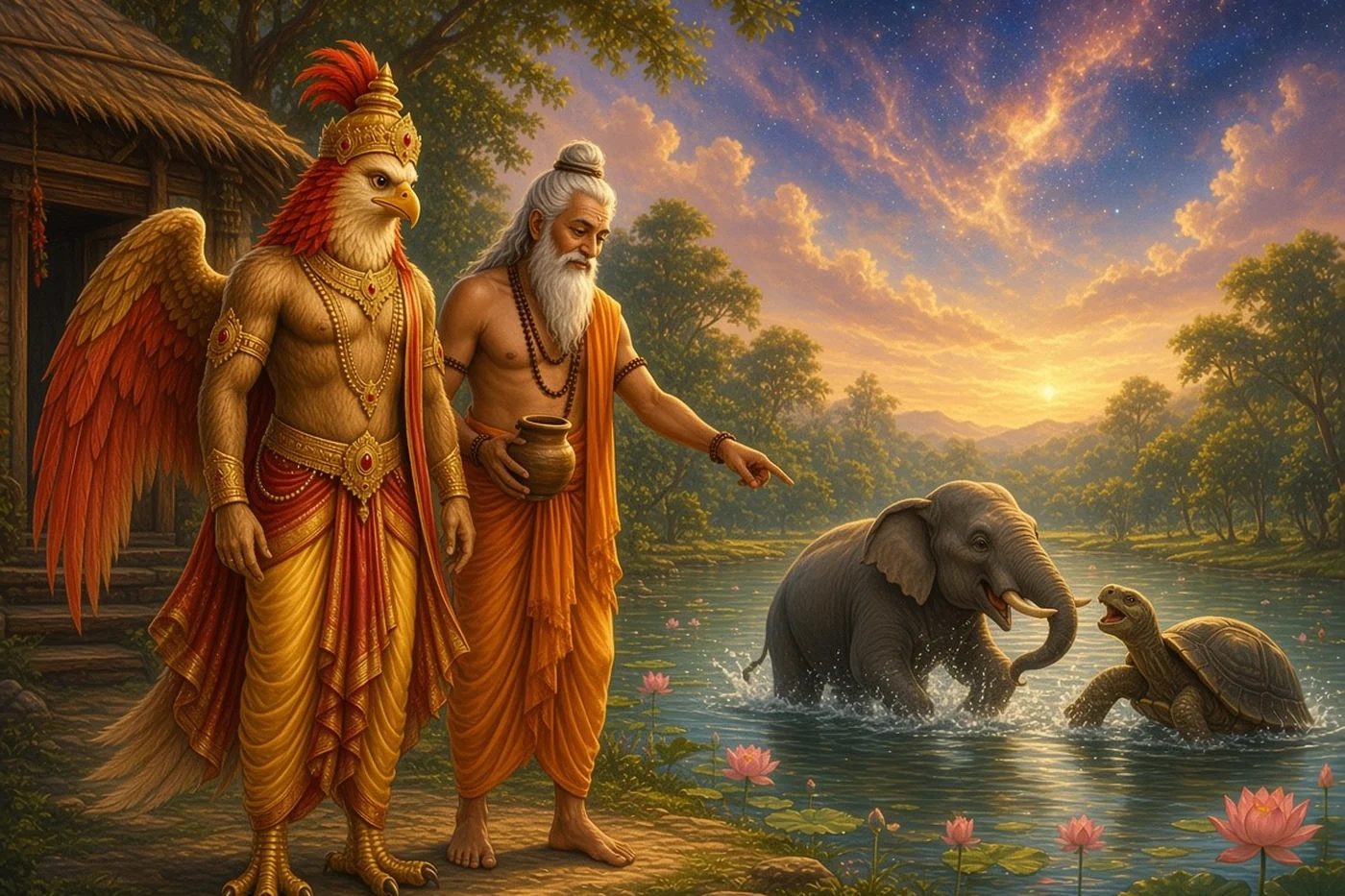
The elephant was six yojanas high and the tortoise three. Garuda took one in each claw and flew off looking for a place to eat. He came to a gigantic banyan tree and landed on one of its branches, a hundred yojanas long.
The branch broke.
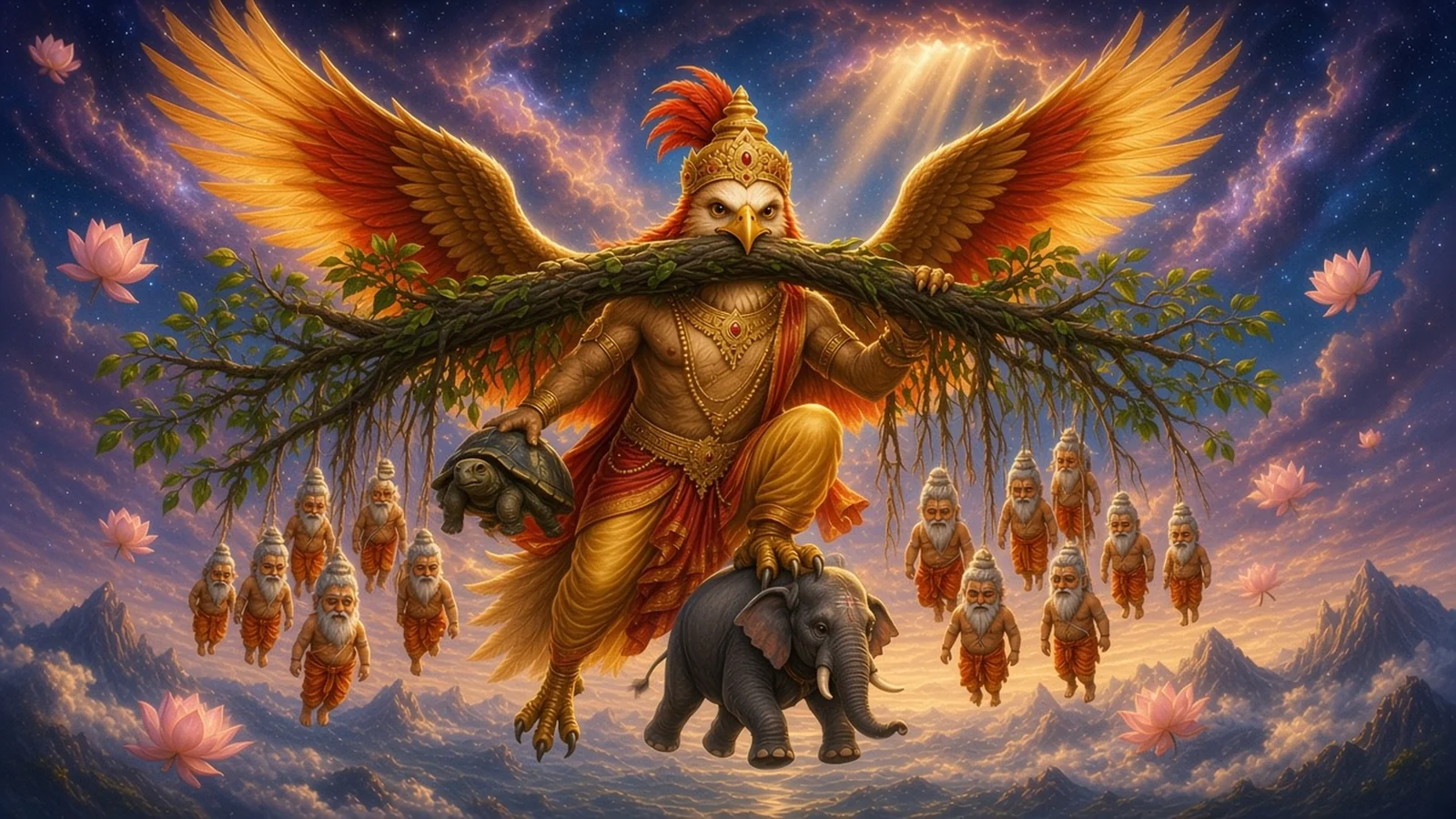
As it fell, Garuda saw that tiny sages were hanging from it, head down, the Valakhilyas, each no bigger than a thumb, doing their penance. If the branch hit the ground they would die. So he caught it in his beak, and flew on, holding the branch in his beak and the elephant and the tortoise in his claws.
He flew for a long time. Nowhere would take the weight. At last he came back to his father.
"Spare my son," Kashyapa begged the sages. "He means you no harm."
The Valakhilyas let go of the branch and went away to the Himalayas to go on with their penance. They had given him a name before they left: Garuda, the bearer of the heavy load. He dropped the branch on an empty mountain, ate the elephant and the tortoise on its peak, and flew to heaven.
The gods had heard he was coming and stood armed around the nectar. Garuda scattered them with his wings. Around the amrita a wheel of razor-edged steel was turning, and he made himself small and slipped through the spokes. Beyond it were two snakes with fire in their eyes. He blinded them with dust and tore them apart, seized the nectar and flew out.
He had not tasted it. Vishnu saw that, and came to meet him.
"You held the nectar of immortality in your beak," said Vishnu, "and did not drink it. Ask me for a boon."
"Let me be above you," said Garuda. "And let me be deathless without the amrita."
"Granted," said Vishnu. "Now give me a boon."
"Ask."
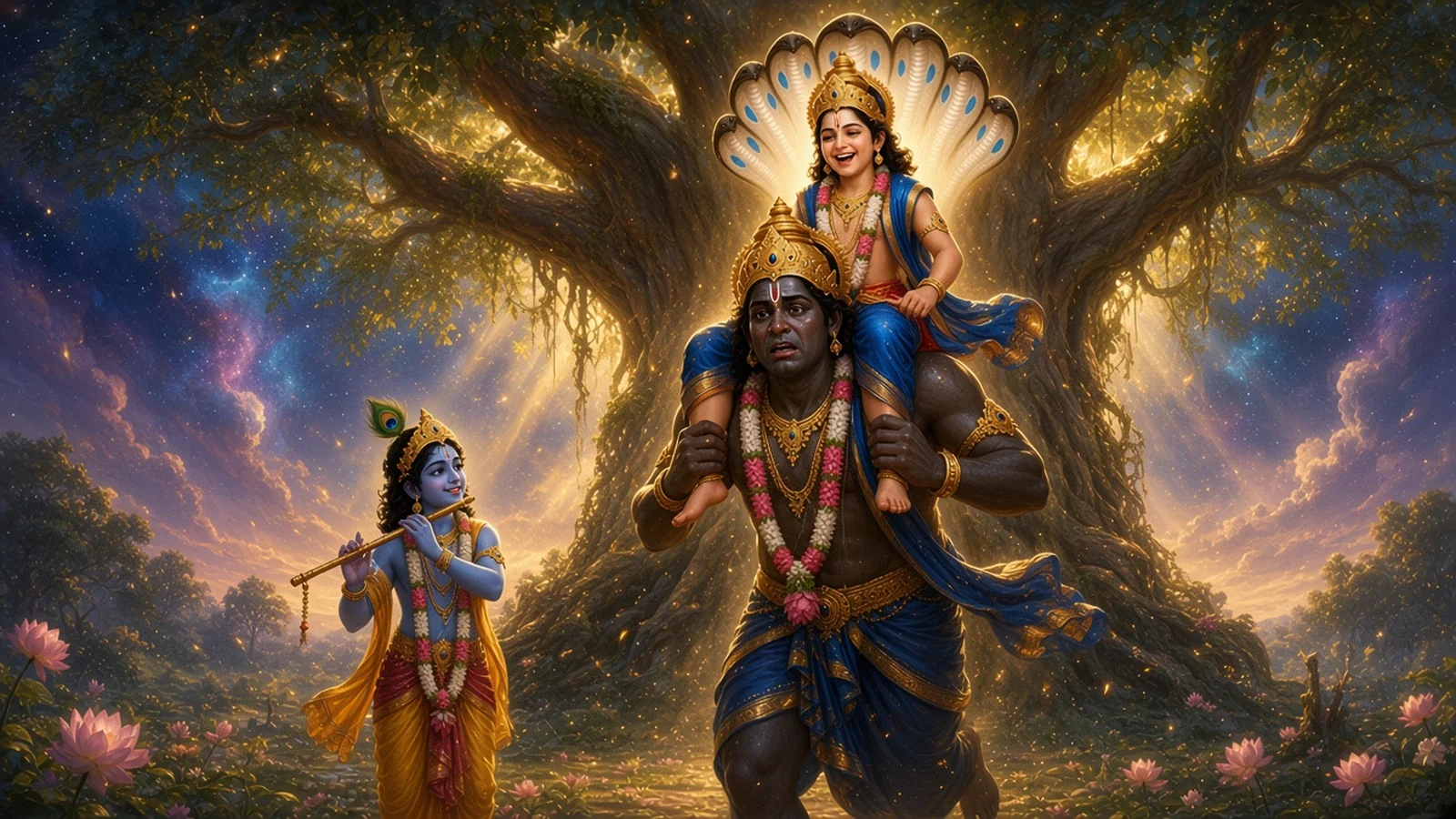
"Be my carrier," said Vishnu. "And so that you are above me, I will put you on the flag of my chariot."
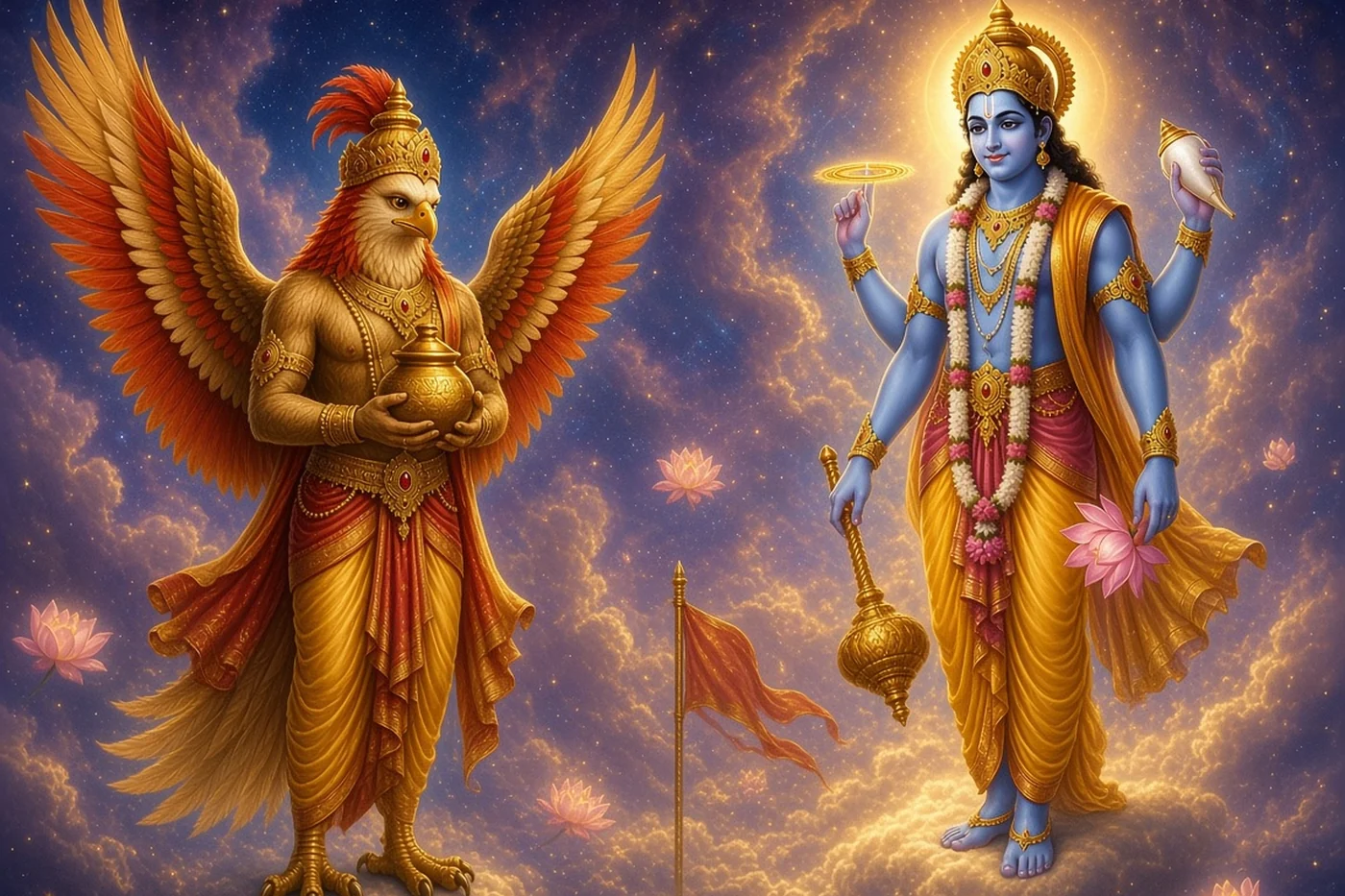
Indra came after him and threw his thunderbolt. It struck Garuda, who laughed. The thunderbolt was made from the bones of the sage Dadhichi, and out of respect for the sage he let one feather fall. The feather was so beautiful that everyone who saw it named him Suparna, the bird with the lovely feathers. Indra, seeing what kind of creature he was dealing with, asked to be his friend instead.