Devalok ← All gods
Also calledGarutmanSuparnaVainateyaTarkshyaPeriya TiruvadiKhagendra

Artwork ›

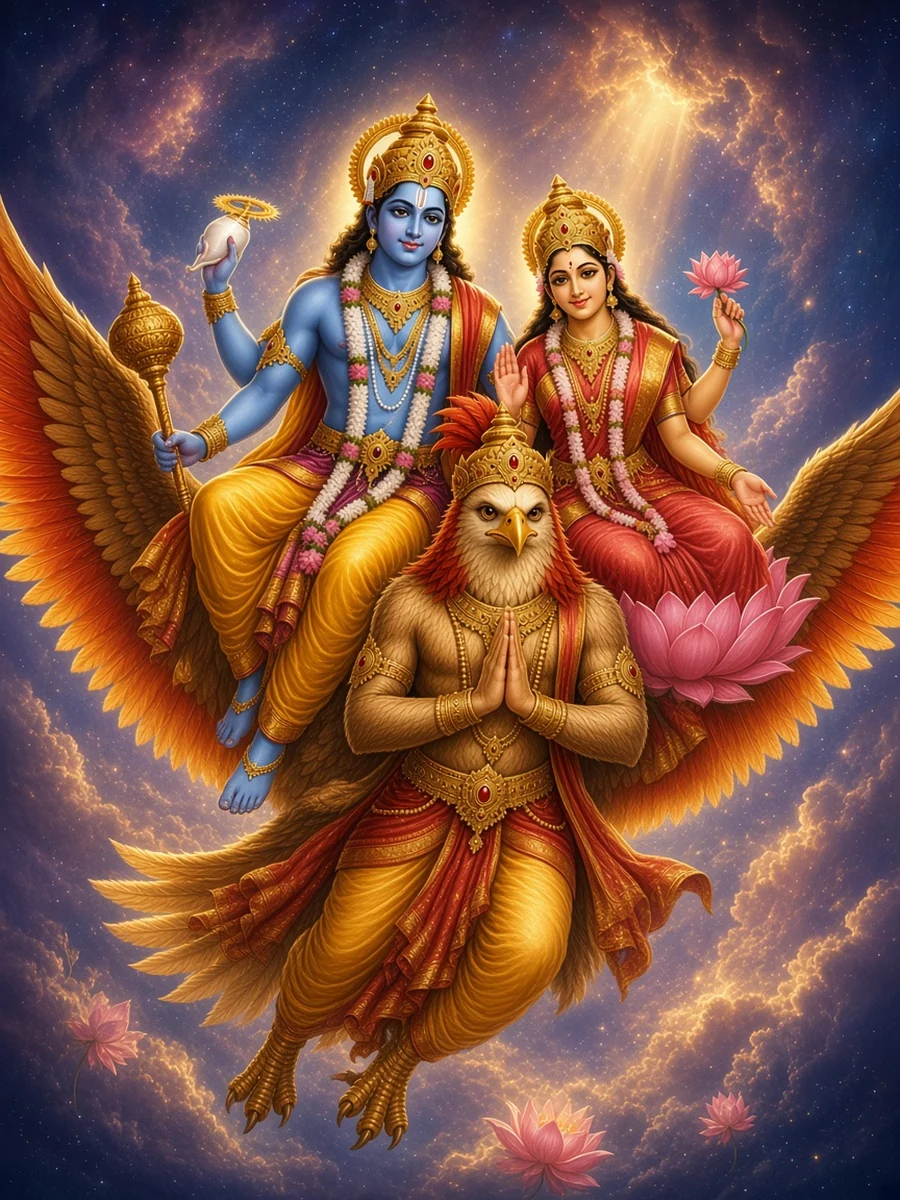
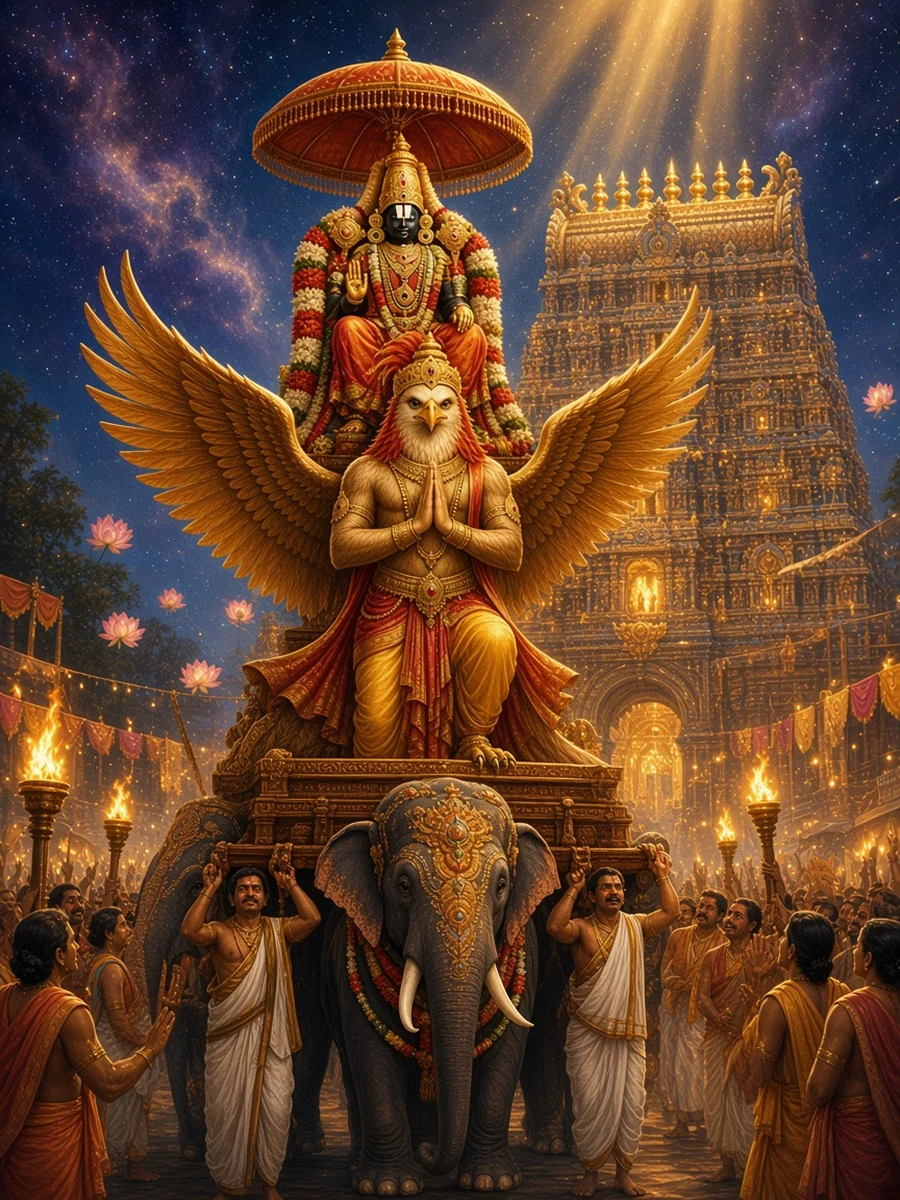
Garuda flies across the night sky carrying Vishnu and Lakshmi on his shoulders The golden Garuda mount carries the god through the streets of Tirumala at night

For kids

A little Garuda flies with his fluffy wings spread wide
A little Garuda folds his hands in a namaste and smiles

At a glance

TraditionVaishnava
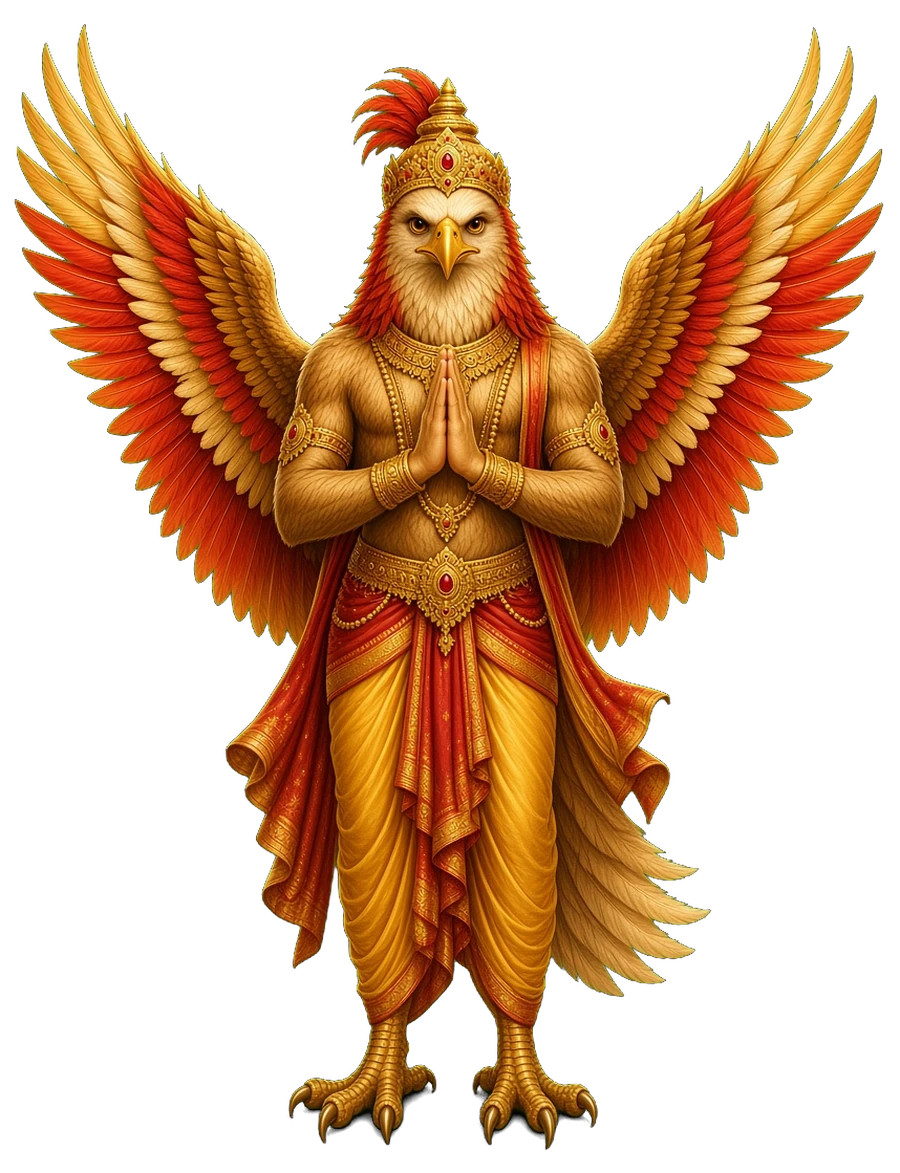
FormA man with a hooked eagle's beak

great wings and talons; or a great eagle

ColourGolden or flaming red

Who Garuda is

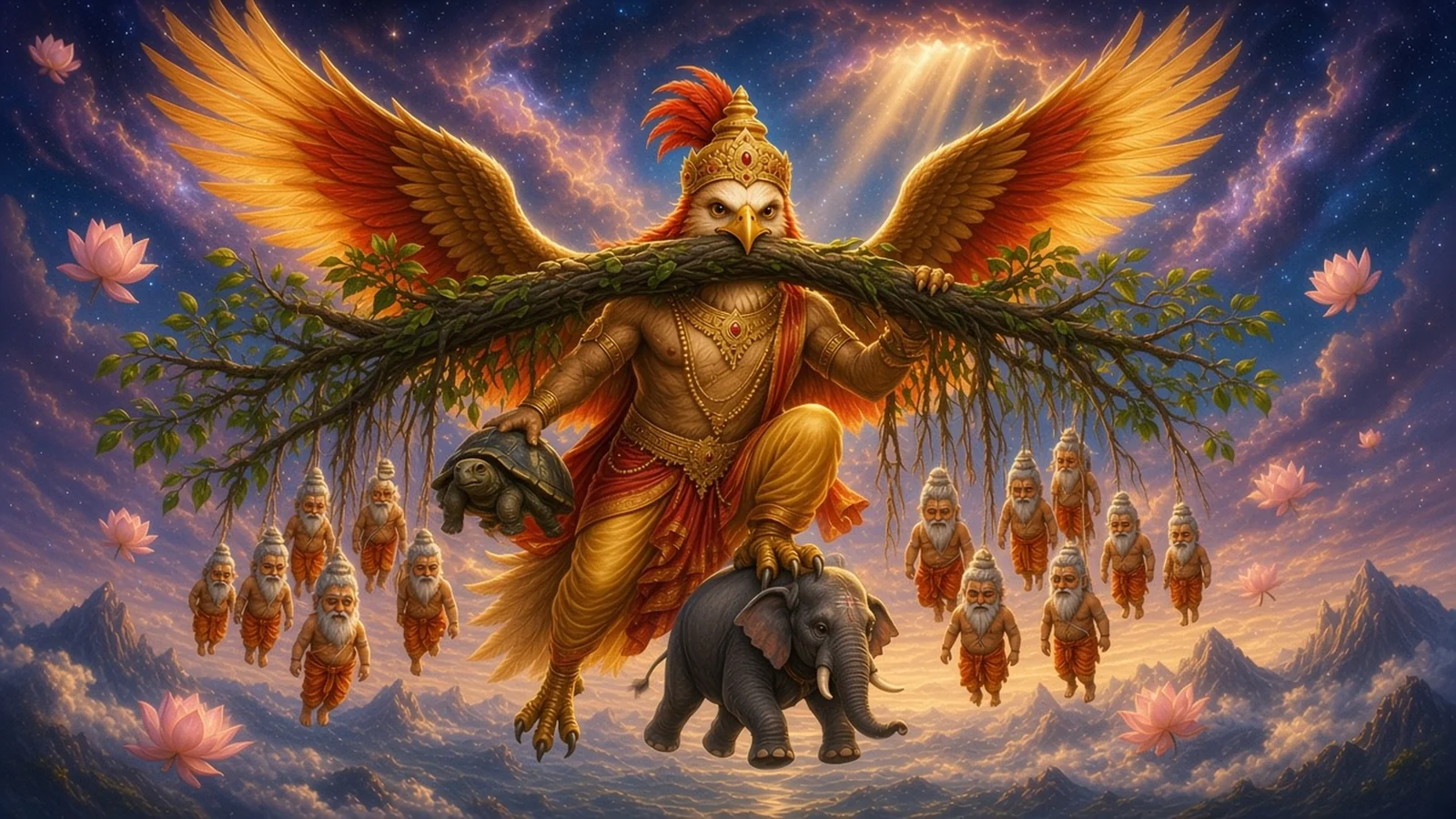
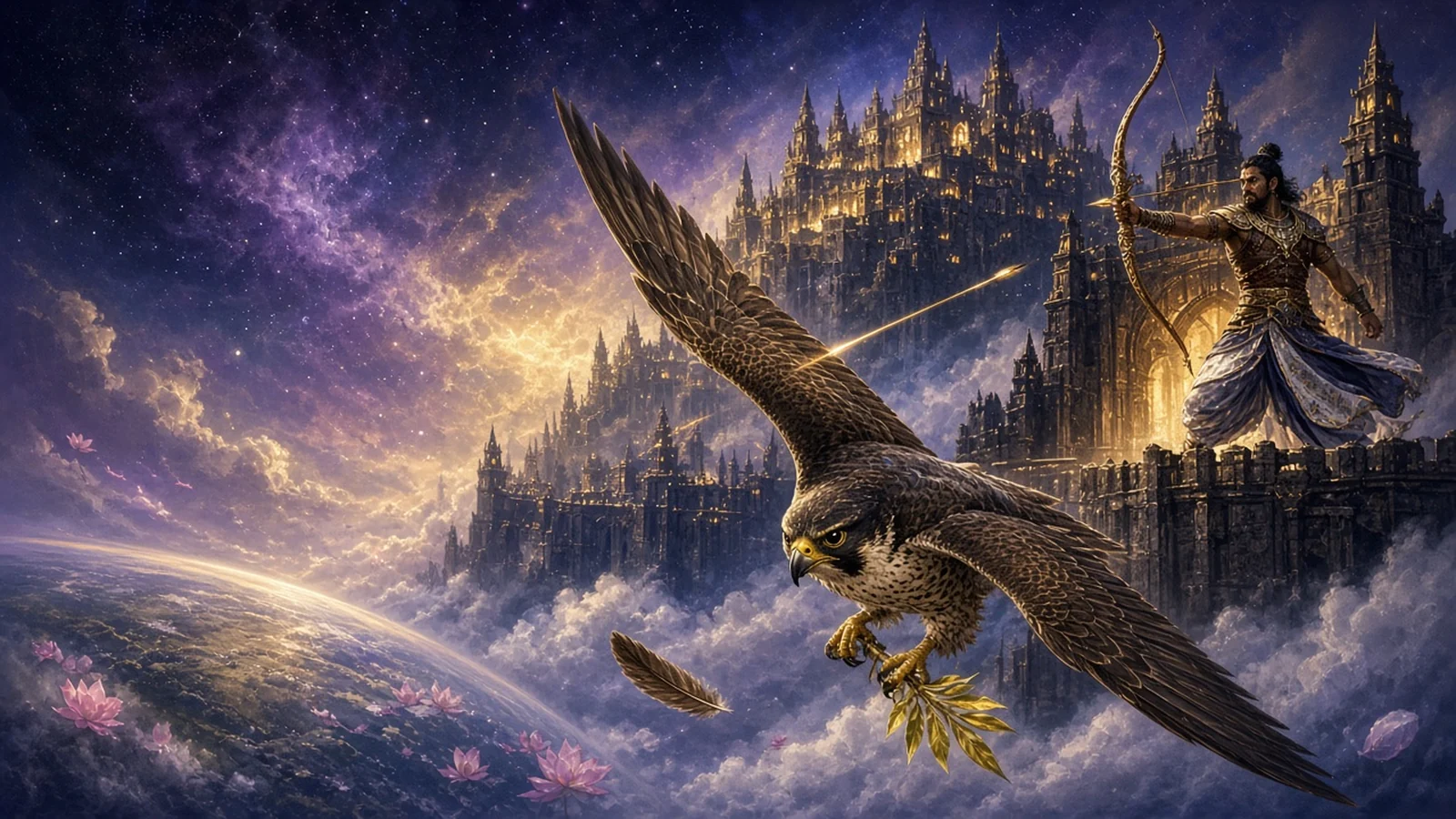
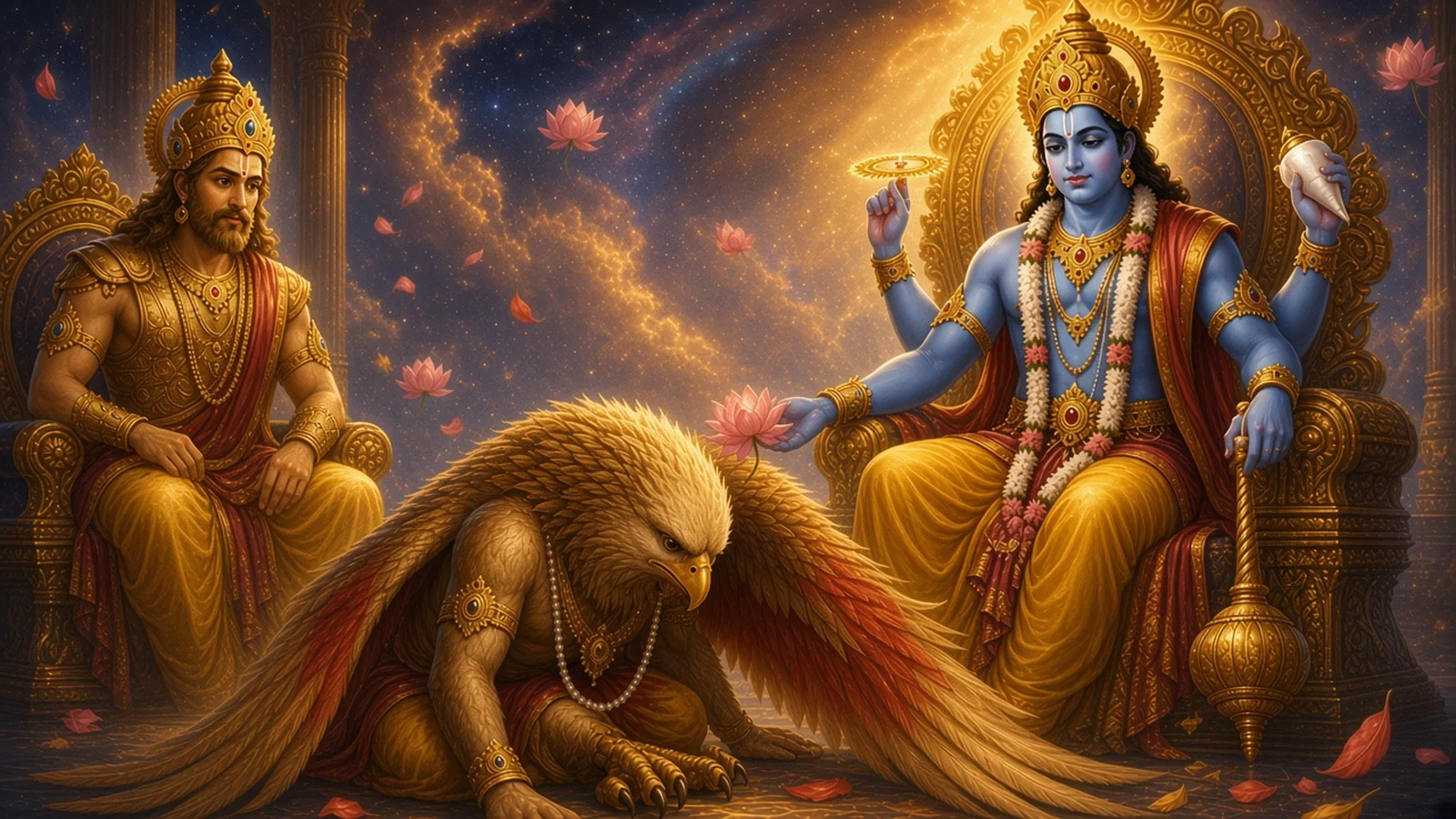
Garuda is the king of birds and the mount of Vishnu. He is shown as a great golden eagle, or as a man with an eagle's beak and wings, carrying Vishnu and Lakshmi across the sky on his shoulders.

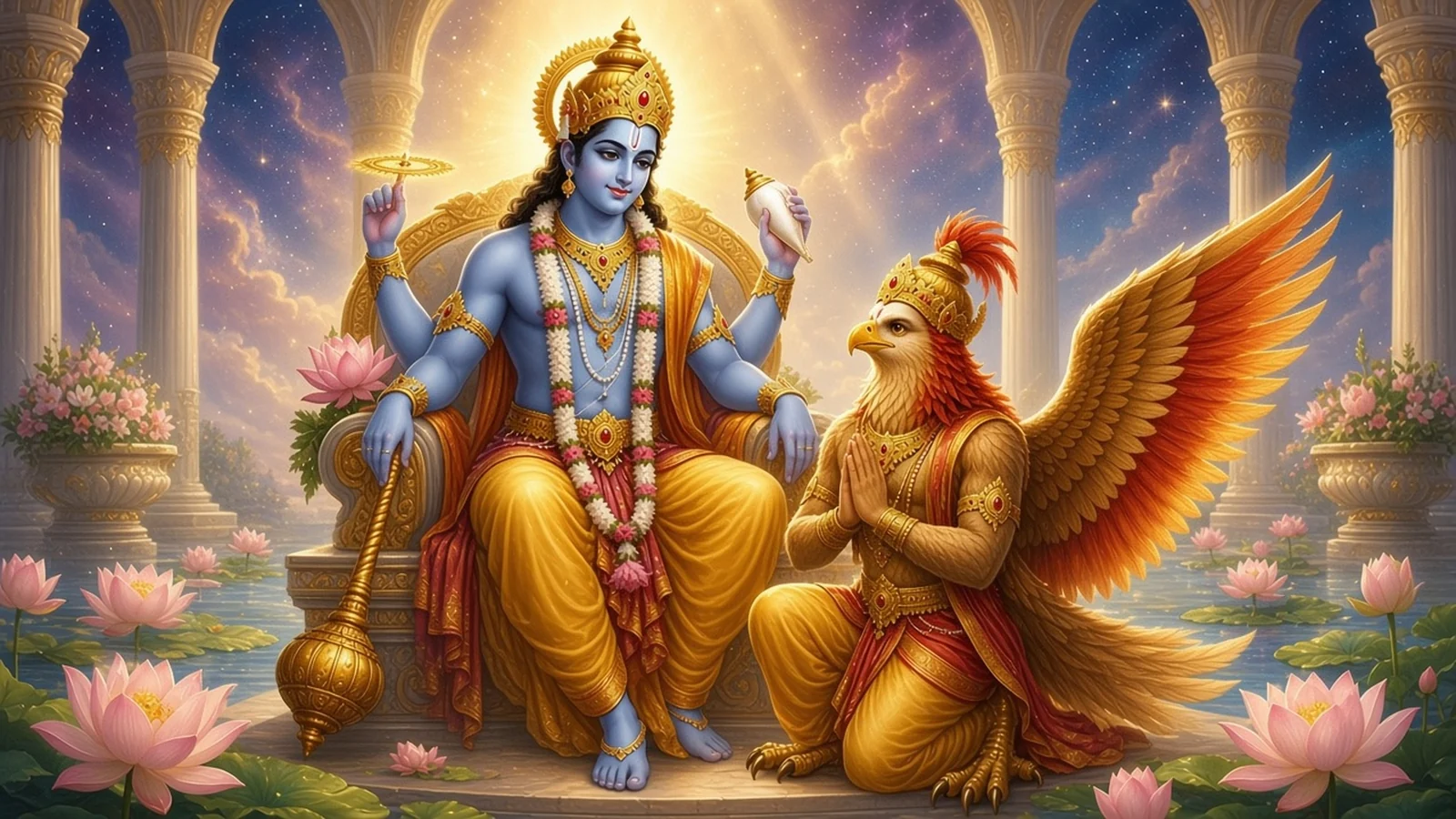
He was the son of the sage Kashyapa and Vinata, and he was born blazing so bright that the gods took him for the fire at the end of the world. His mother had lost a wager to her sister Kadru, the mother of the serpents, and been made her slave. To free her, the serpents demanded the nectar of immortality. Garuda flew to heaven, fought the gods, took it, and carried it away, and on the way Vishnu met him and they made a bargain: Garuda would be his mount, and would sit above him on his banner. Garuda freed his mother and tricked the serpents out of the nectar, and they have been enemies ever since.

Om Tatpurushaya vidmahe, Suvarnapakshaya dhimahi, tanno Garudah prachodayat: the Garuda Gayatri, to the bird with golden wings.

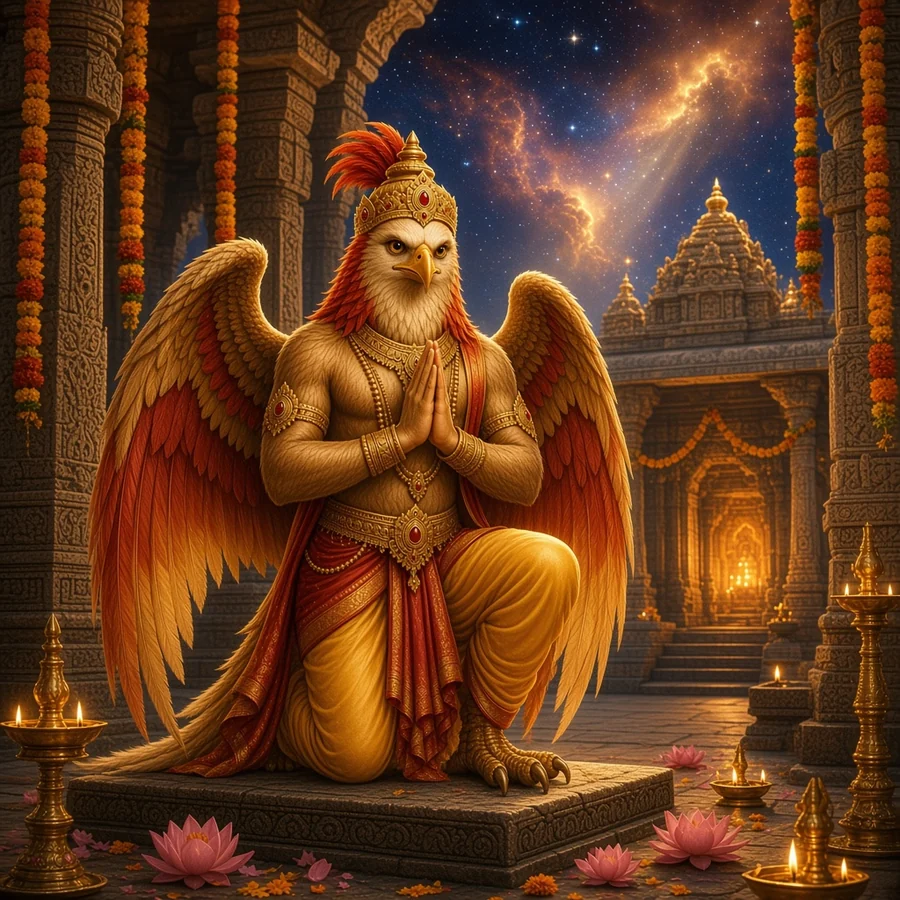
In the temples of south India he stands or kneels facing Vishnu's shrine with his hands folded. Tamil Vaishnavas call him Periya Tiruvadi, the great servant. His name is called on against snakebite, and a Purana that bears his name, the Garuda Purana, is read in Hindu homes after a death, because in it Garuda asks Vishnu what happens to the dead.

Garuda has flown far beyond India. He is the national emblem of Indonesia and of Thailand, and he gave his name to Indonesia's airline.
Before the Puranas

The Vedic roots of Garuda

The Rigveda knows a heavenly bird, Garutman, the beautiful-winged, and one hymn says that the wise call the one truth by many names, Indra, Mitra, Varuna, Agni, and the heavenly bird Garutman. Suparna, the fair-winged, brings Soma down from heaven in other hymns. The epic Garuda grew from these birds.

The Mahabharata tells his story at length in its first book, the Adi Parva: his birth, his mother's slavery, the theft of the nectar and his bargain with Vishnu.

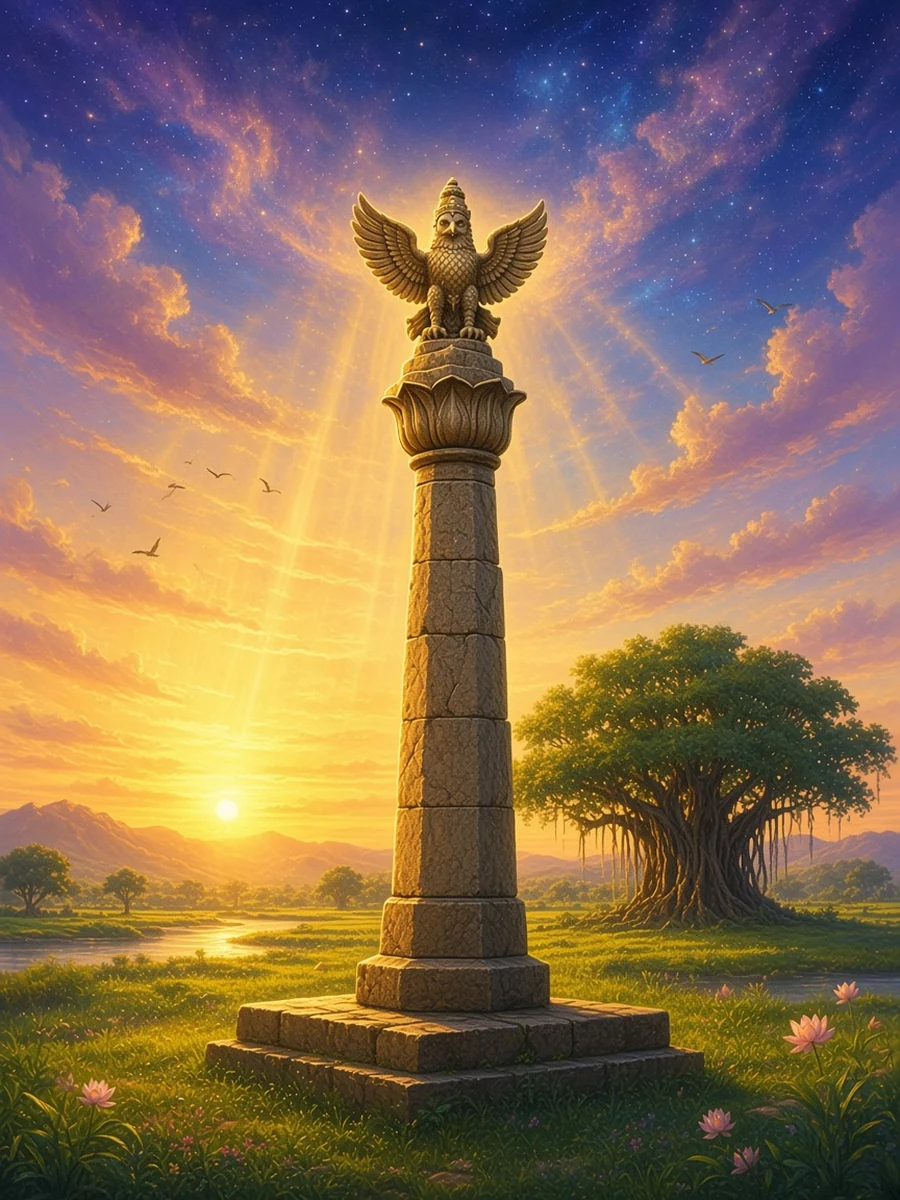
He was Vishnu's sign very early. Around 113 BCE Heliodorus, a Greek ambassador from Taxila, set up a pillar at Vidisha in central India and called himself a devotee of Vasudeva; the pillar was a Garudadhvaja, the banner of Garuda, and once carried his image.

The Garuda Purana is framed as Vishnu's answers to his questions. Its later part, the Preta Khanda, and the short digest called the Saroddhara tell what happens to the dead: the body made from the rice balls of the first ten days, the long road south to Yama, the river Vaitarani. Garuda's place in the temple grew in the south, where he faces Vishnu's shrine, and at Tirumala he carries the god through the streets on the fifth night of the Brahmotsavam.

Kings of many dynasties used his figure on their seals and coins, the Guptas above all. From India he travelled with Hinduism and Buddhism to Southeast Asia. Thailand made the Garuda, the Phra Khrut Pha, its royal emblem in 1911. Indonesia adopted the Garuda Pancasila as its national emblem in February 1950.

See how the Vedic gods became the Puranic ones →

Every story about Garuda

Related gods