Devalok ← All gods
Also calledNagaNaginiSarpathe serpent peopleNagaraja

Artwork ›

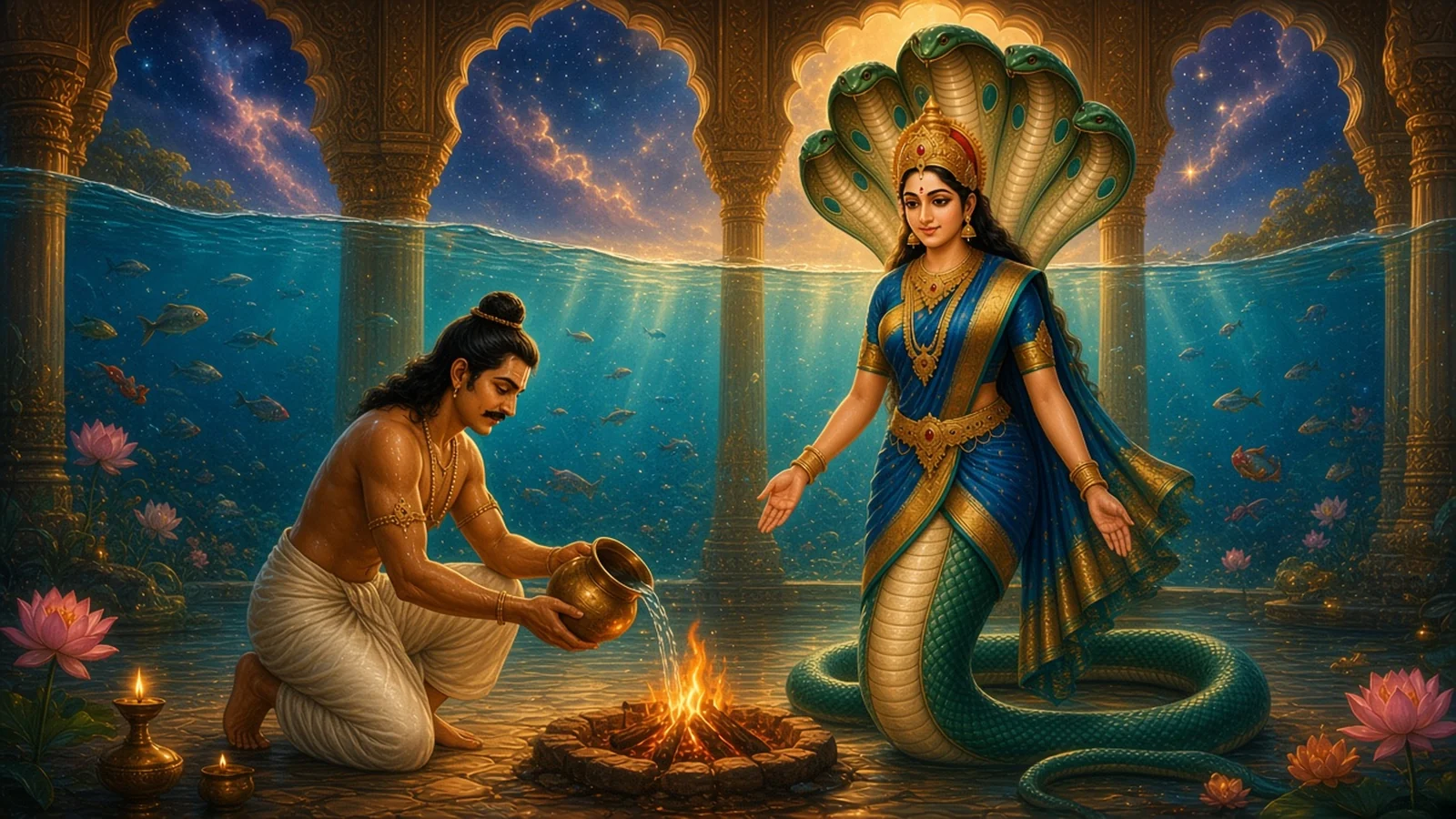
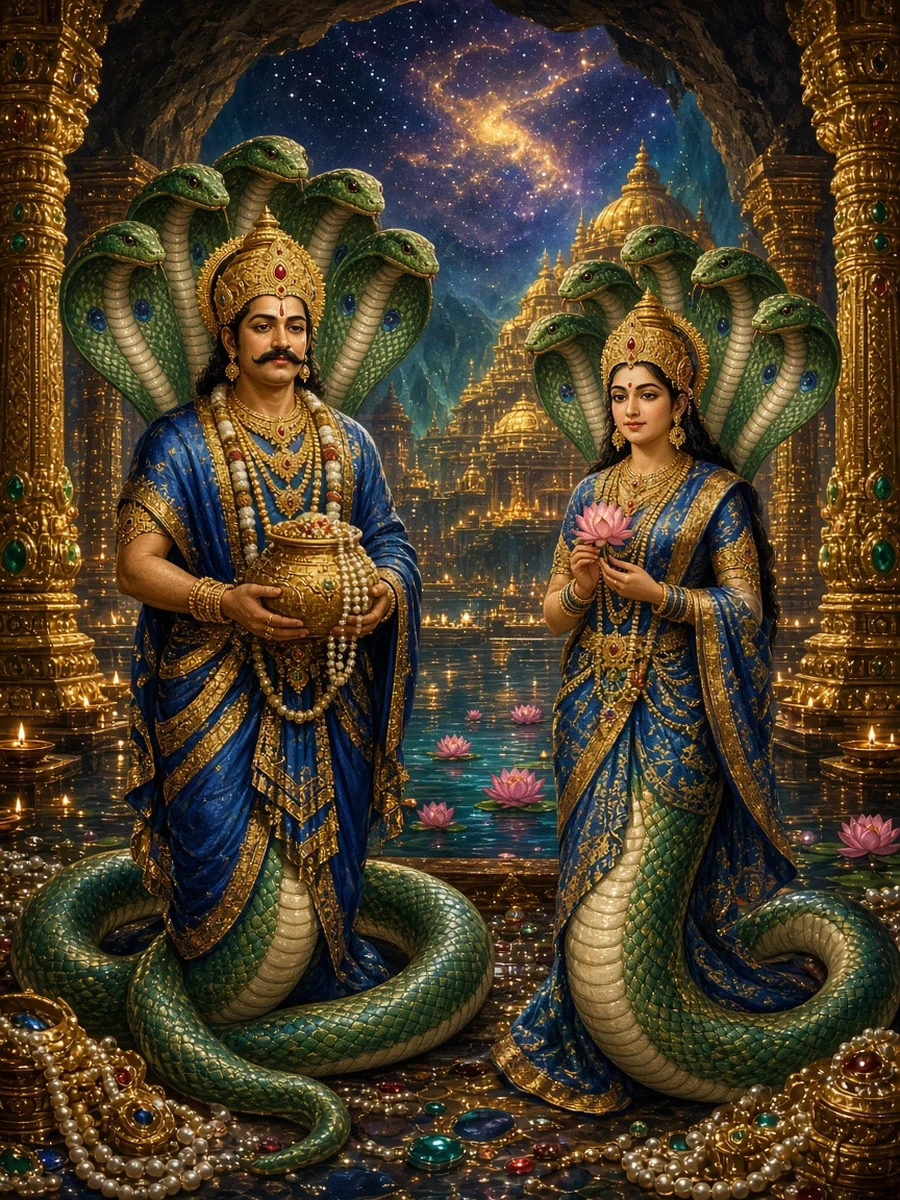
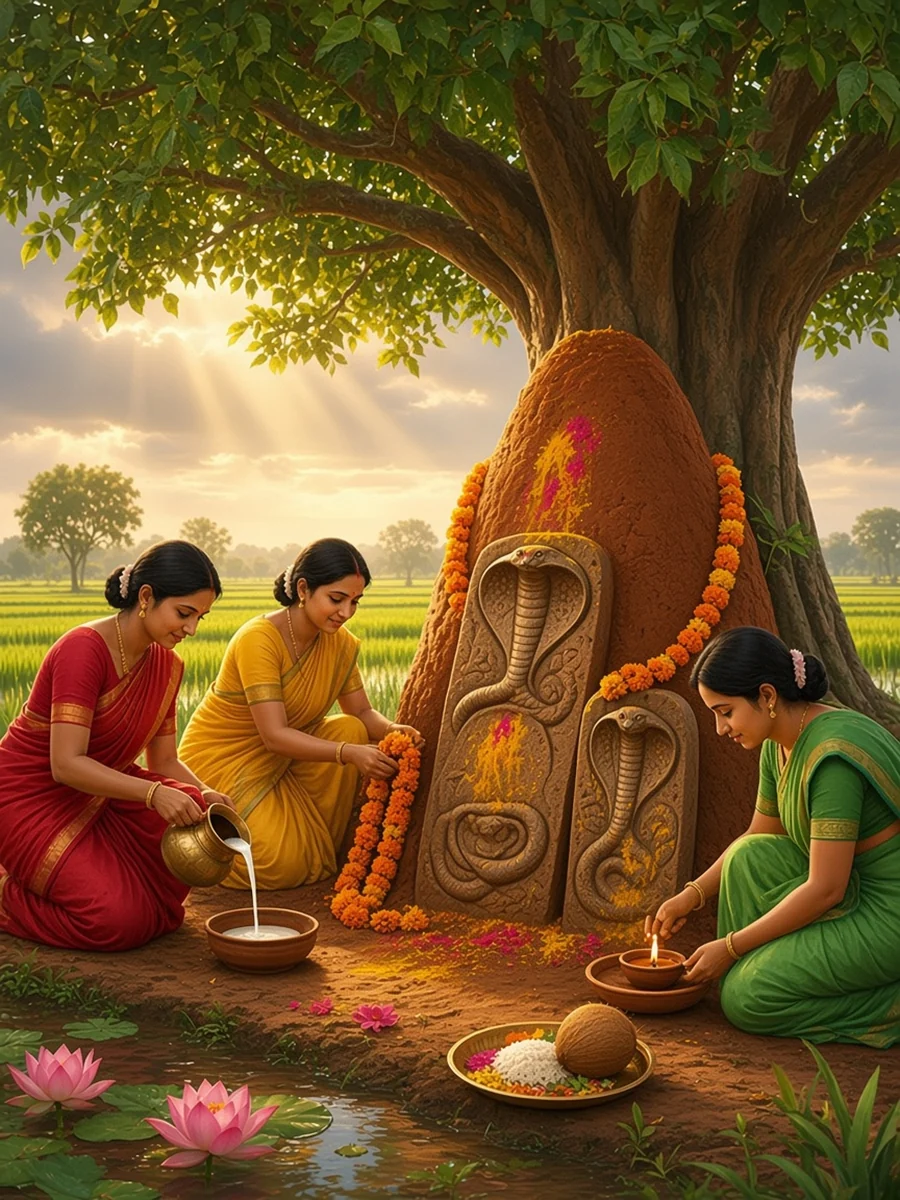
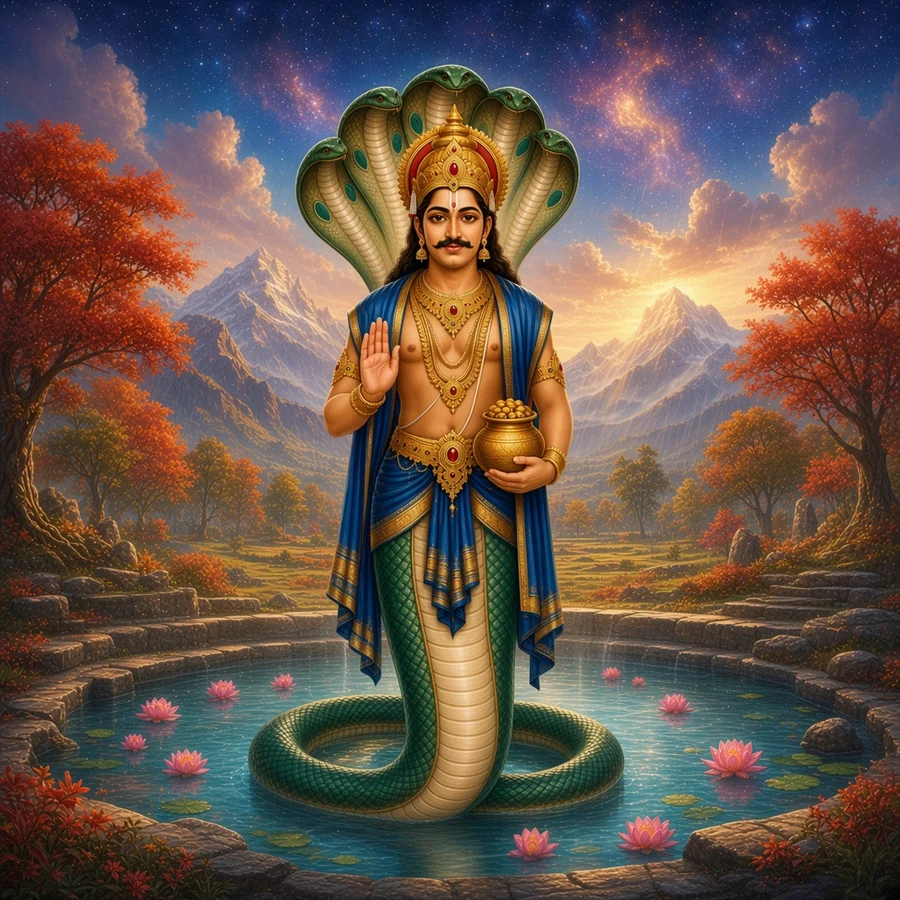
The Naga king and queen in their jewelled city of Bhogavati beneath the earth Village women pour milk at an anthill and a carved snake stone on Nag Panchami

For kids

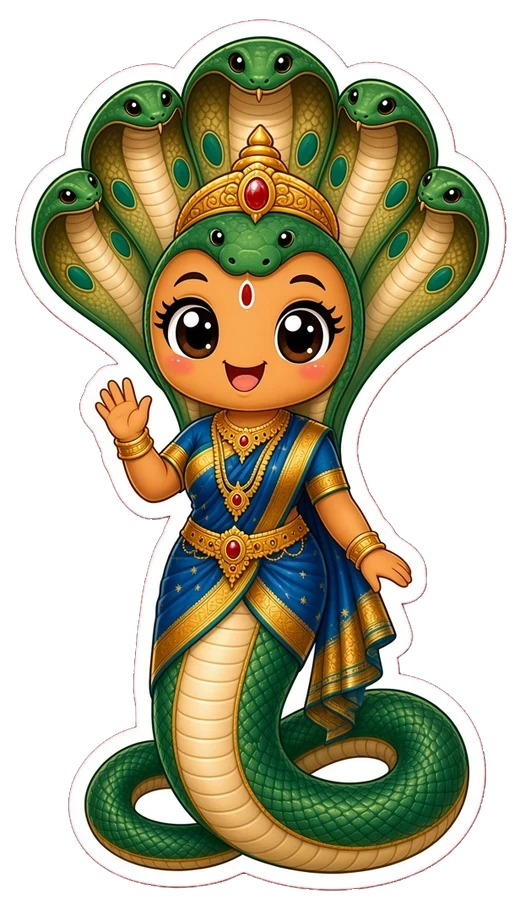
A little naga waves hello with its curly green tail
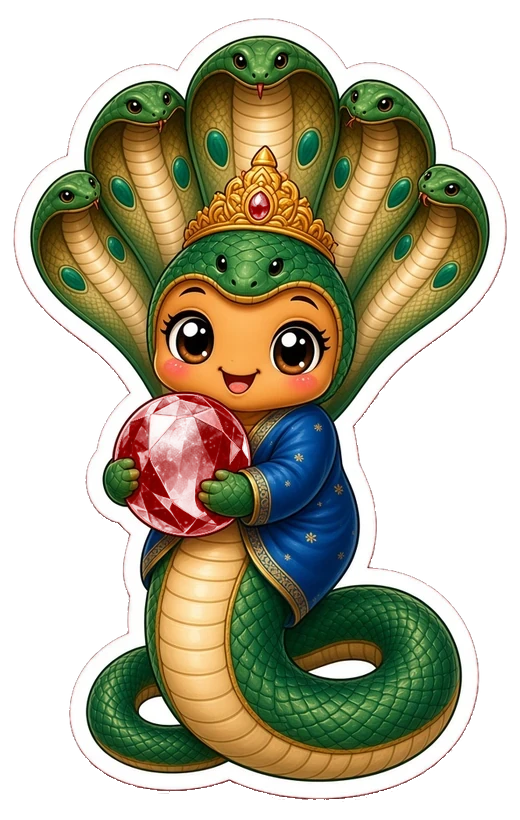
A little naga hugs a shining red jewel

At a glance

TraditionHindu, Buddhist and Jain
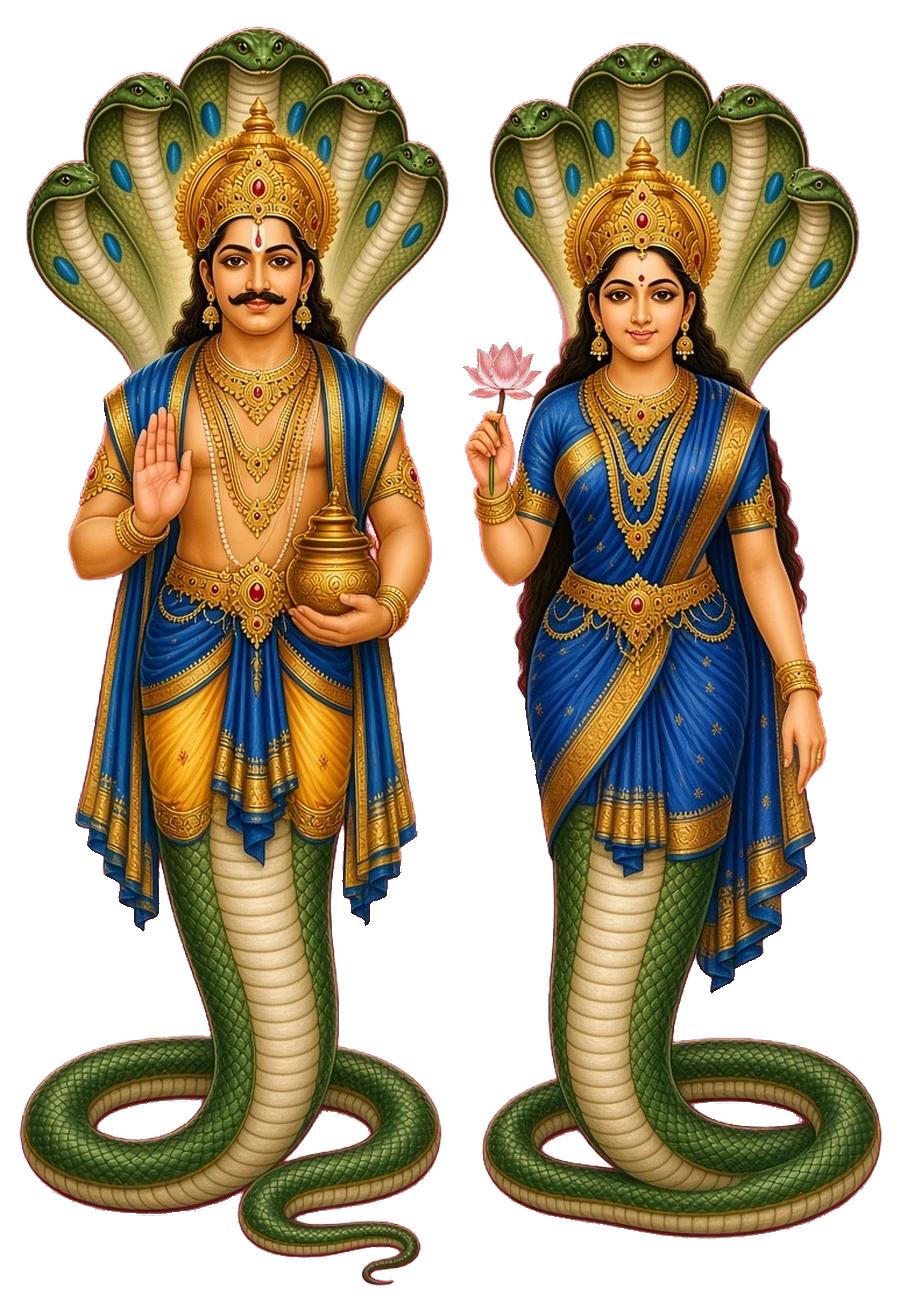
FormA cobra with many hoods

or a person from the waist up, a serpent below, with a hood of cobras over the head

KingsShesha (Ananta)

Vasuki, Takshaka, Karkotaka

Who The Nagas is

The Nagas are the serpent people. They are not gods exactly, and not animals; they are a race of beings who live beneath the earth and in the waters, who can take the form of a cobra or of a man or woman, and who guard treasure, springs and the rain.

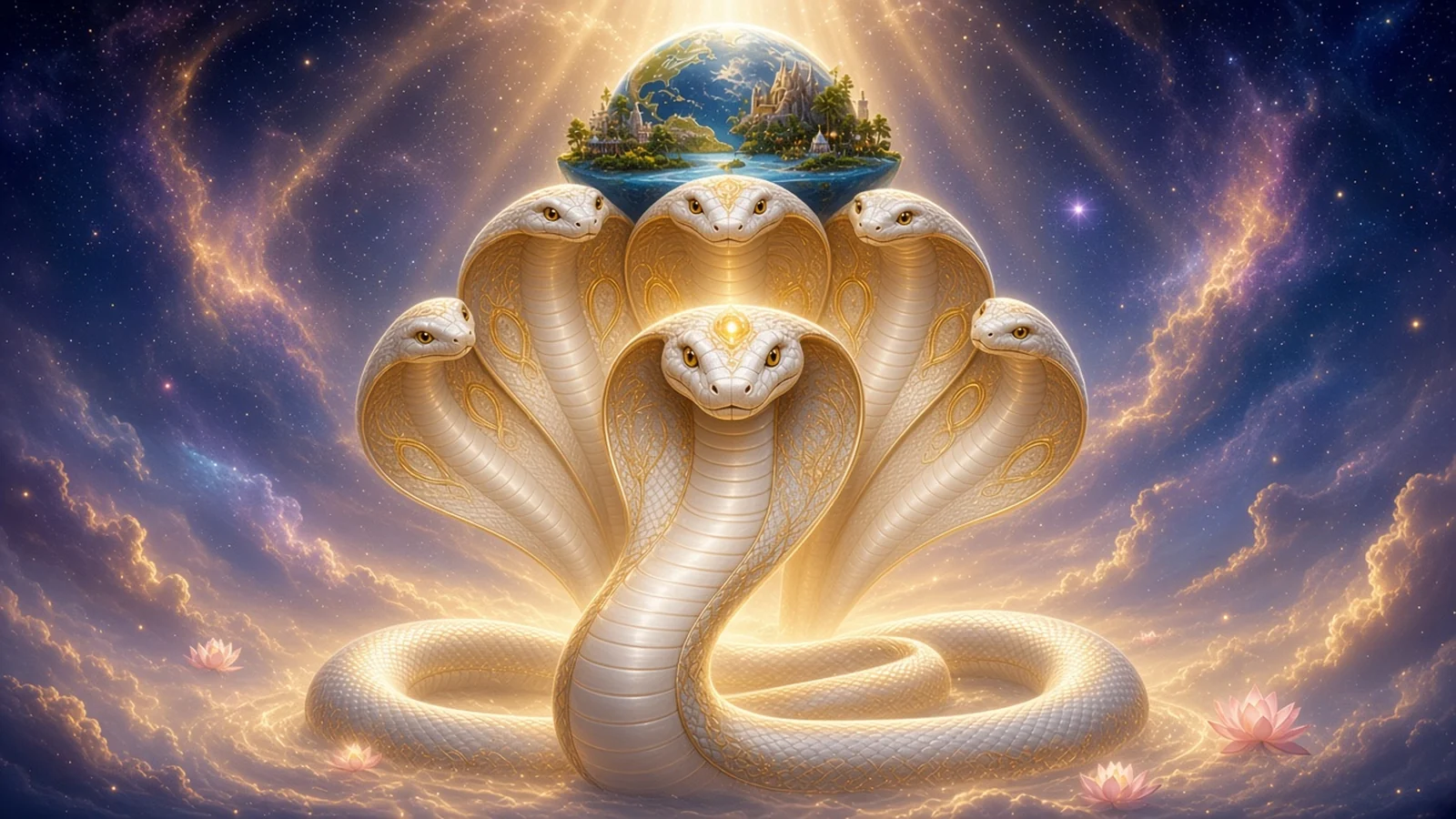
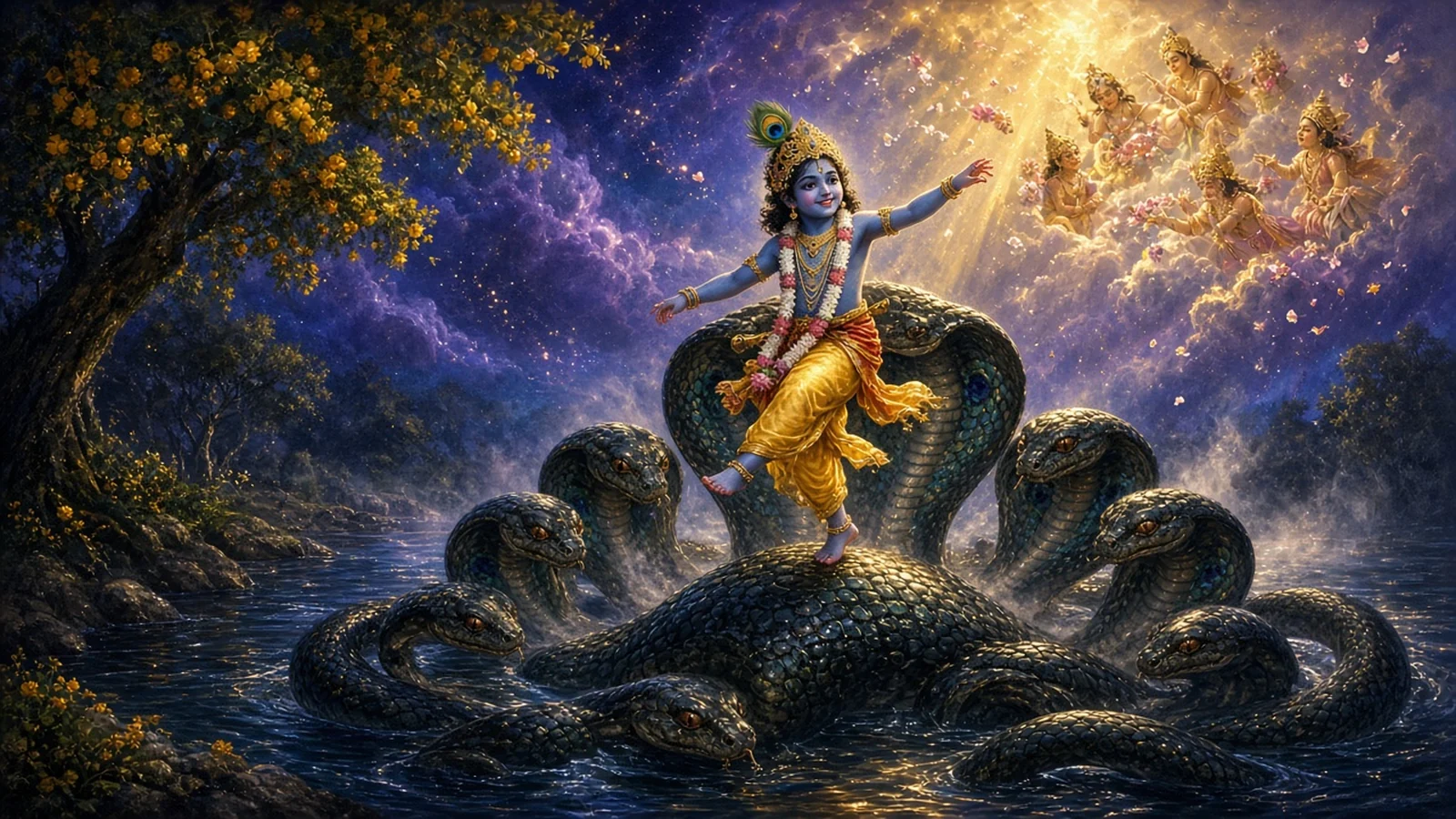
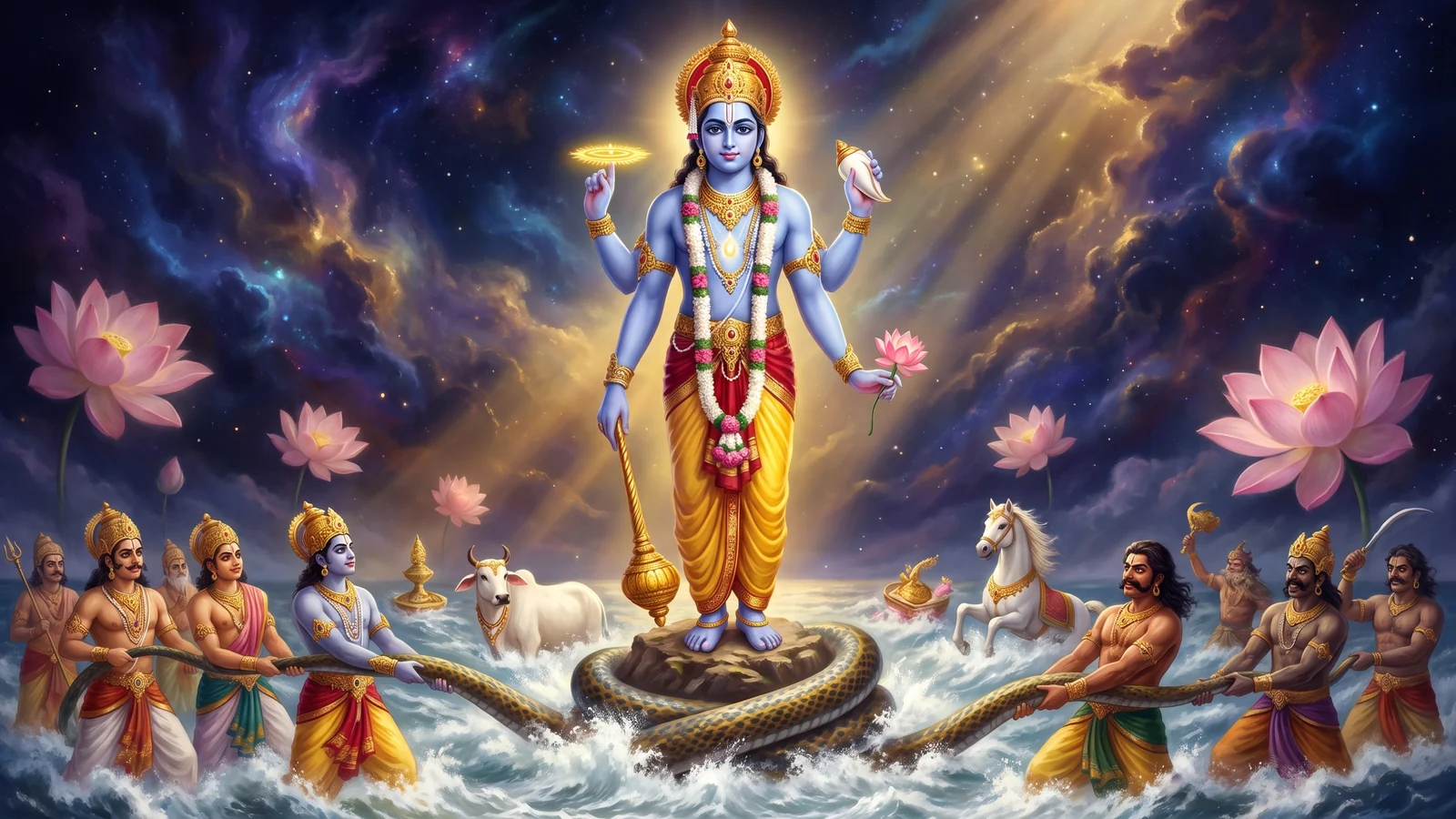
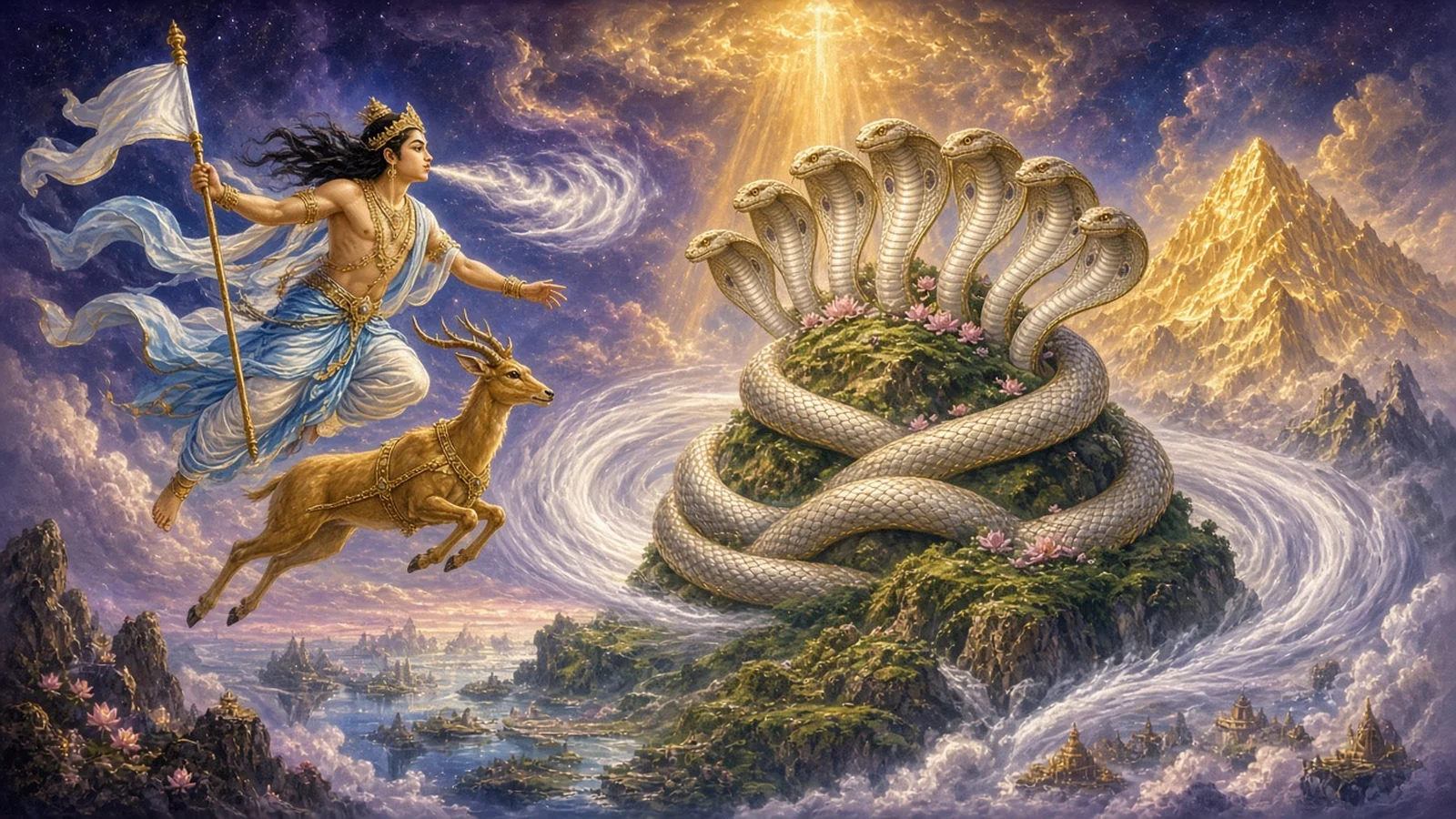
The Mahabharata gives their story. Kadru, a wife of the sage Kashyapa, asked for a thousand sons, and laid a thousand eggs, and after five hundred years serpents hatched from them. The greatest are their kings: Shesha, the endless one, who holds up the earth; Vasuki, who was the rope at the churning of the ocean; Takshaka, who killed a king. They live in Patala, the world under ours, in a city of jewels called Bhogavati.

Anantam Vasukim Shesham Padmanabham cha Kambalam, Shankhapalam Dhritarashtram Takshakam Kaliyam tatha: the prayer that names the nine great serpents.

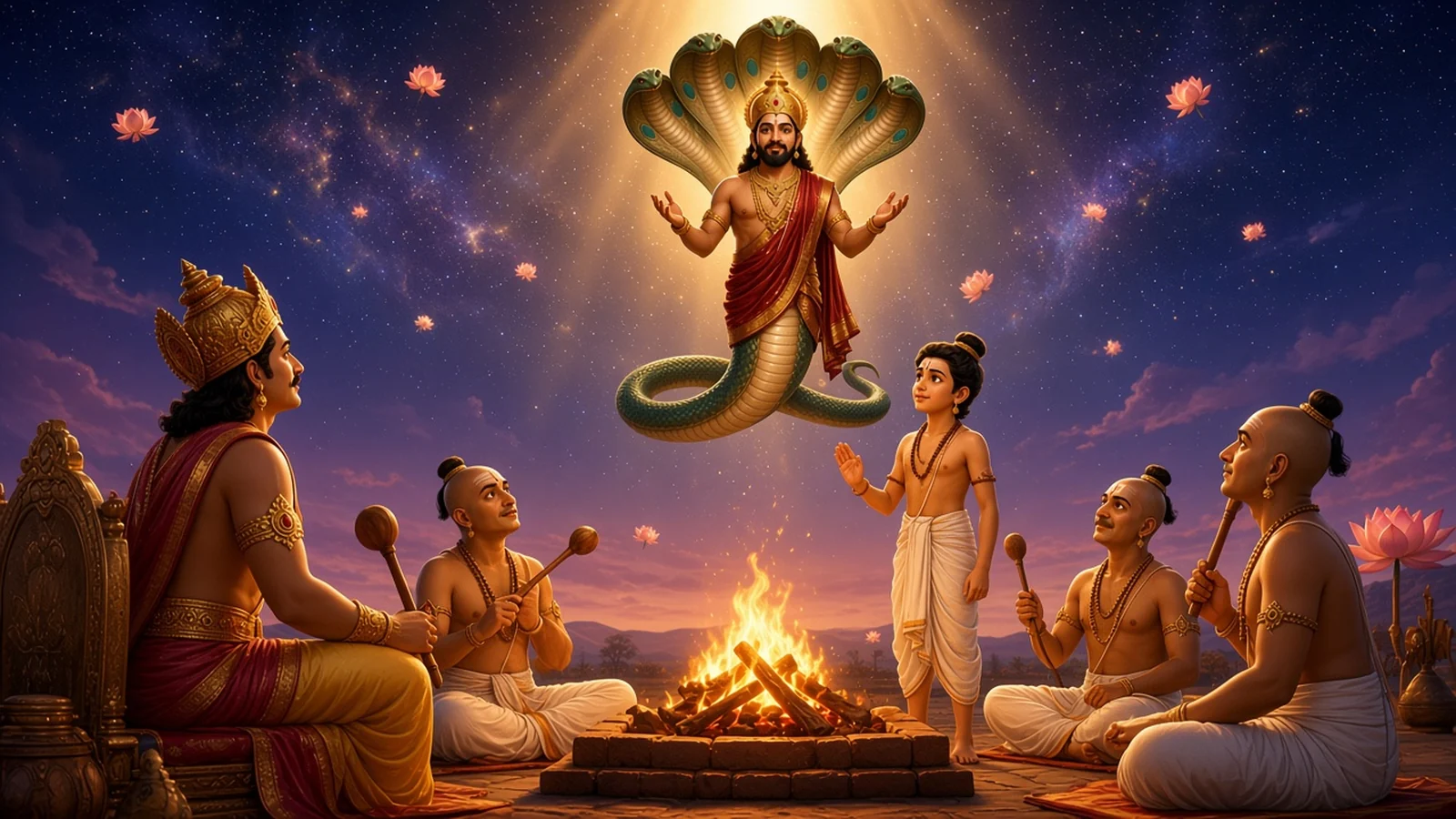
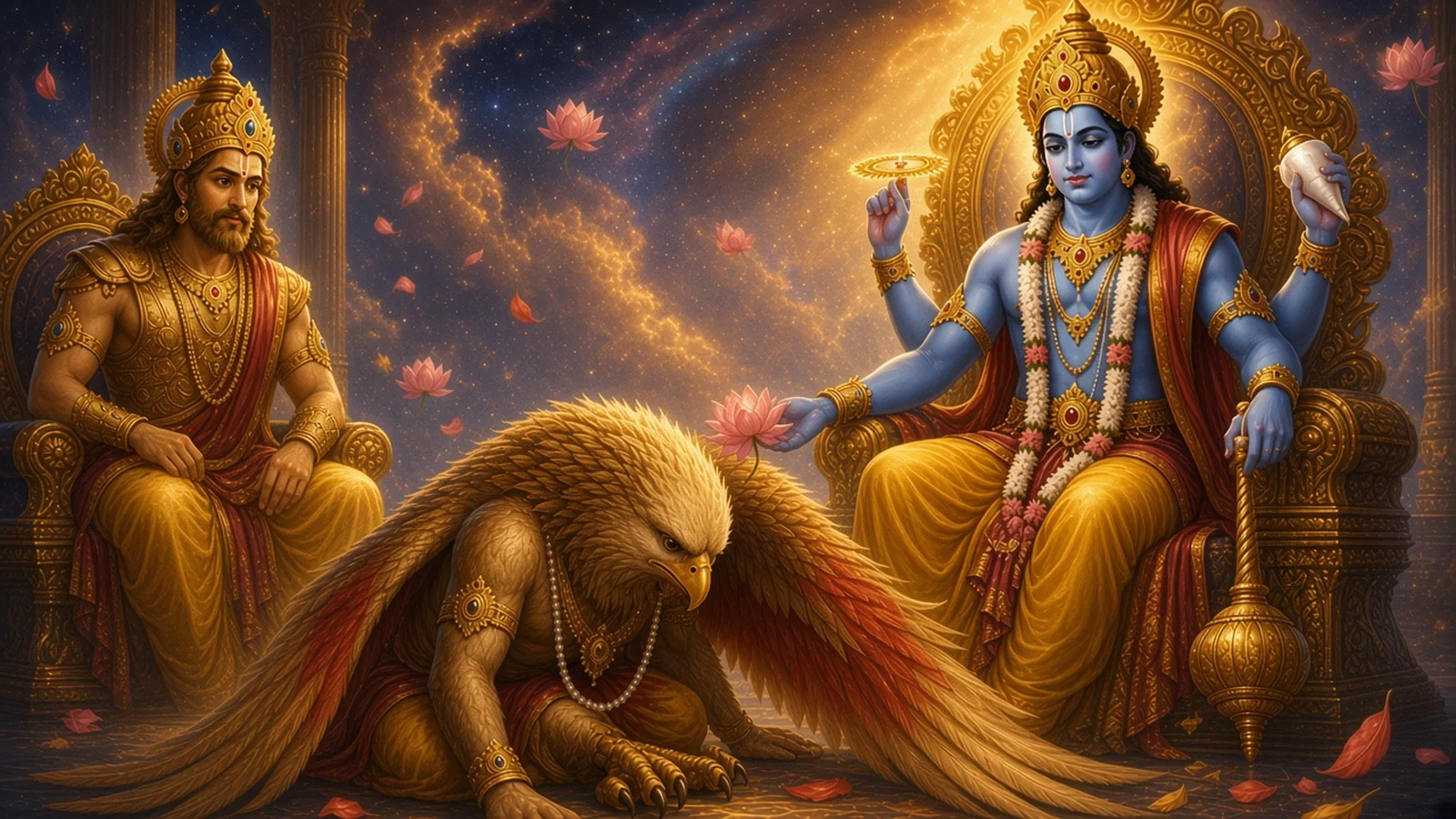
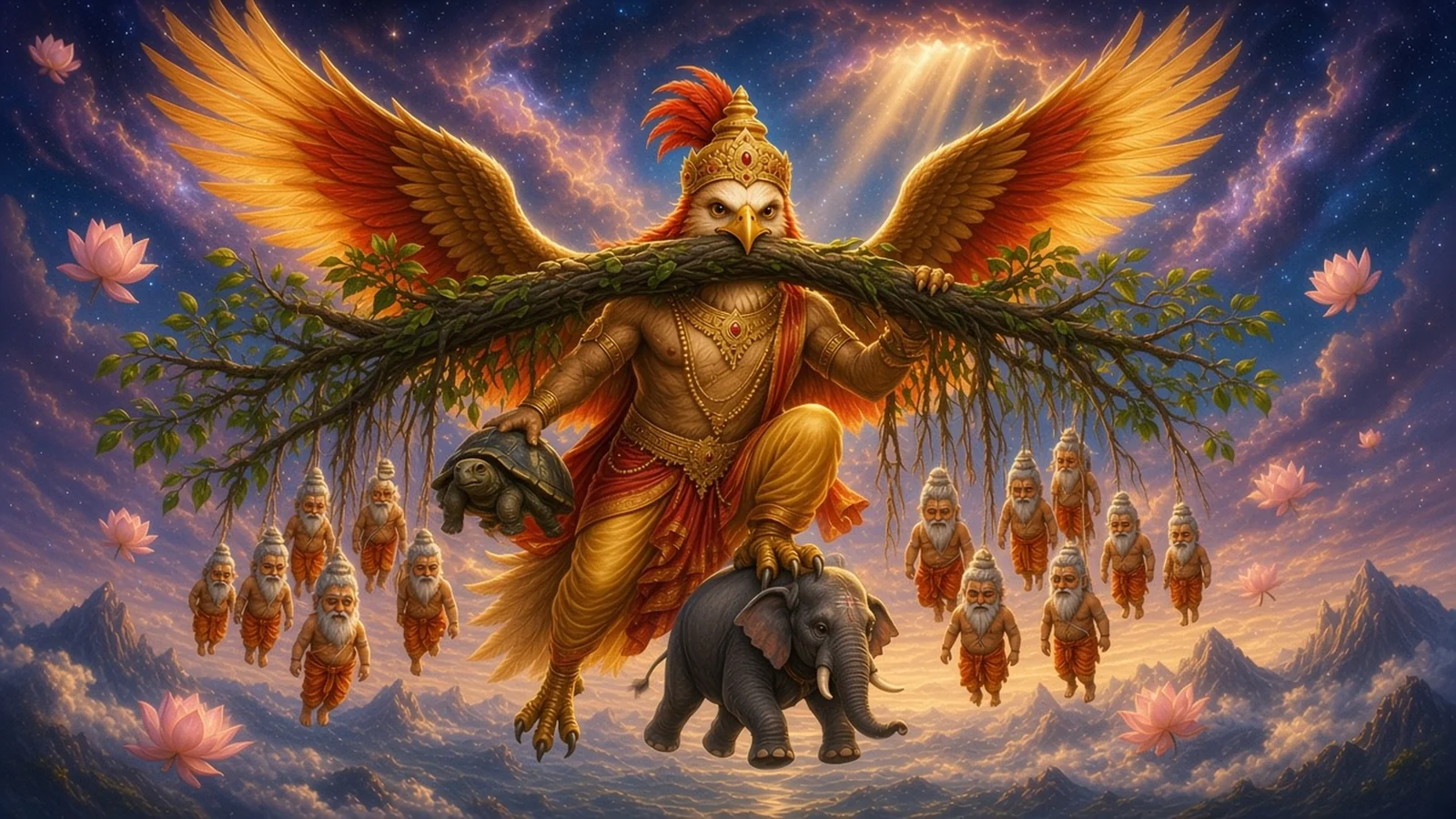
They were Garuda's enemies from birth, and they nearly perished in King Janamejaya's snake sacrifice. But they married into human families too. Arjuna married a naga princess, Ulupi, and Balarama, the epics say, was Shesha himself.

In the villages of India the Nagas are near at hand. People pour milk at anthills on Nag Panchami. In Kerala, old houses keep a sarpa kavu, a grove left wild for the serpents, and in Karnataka and Tamil Nadu carved snake stones, nagakal, stand under the trees, where women pray for children.
Before the Puranas

The Vedic roots of The Nagas

Serpents are in the Rigveda as Ahi, the dragon Indra kills to free the waters. The later Vedic texts already know the sarpas as a kind of being to be honoured, and the household rites of the sutras include offerings to them in the rainy season.

The Nagas belong to all three Indian religions. On the Buddhist railings of Bharhut, carved in the second century BCE, the naga king Erapata kneels before the Buddha. The naga Mucalinda spread his hoods over the Buddha in a storm after his awakening, and early carvings at Pauni show it. Among the Jains, the twenty-third Tirthankara, Parshvanatha, is always shown under a canopy of serpent hoods, the gift of the naga king Dharanendra and his queen Padmavati.

The Mahabharata gathers the Hindu stories, opening with the snake sacrifice of Janamejaya, which the boy Astika stopped. The Puranas make Shesha the bed of Vishnu.

Kashmir remembers them in its place names. The valley's springs were held to be the homes of nagas, and towns such as Anantnag and Verinag still carry the word. The Nilamata Purana makes the naga king Nila the valley's lord, and lays down the rites owed to him.

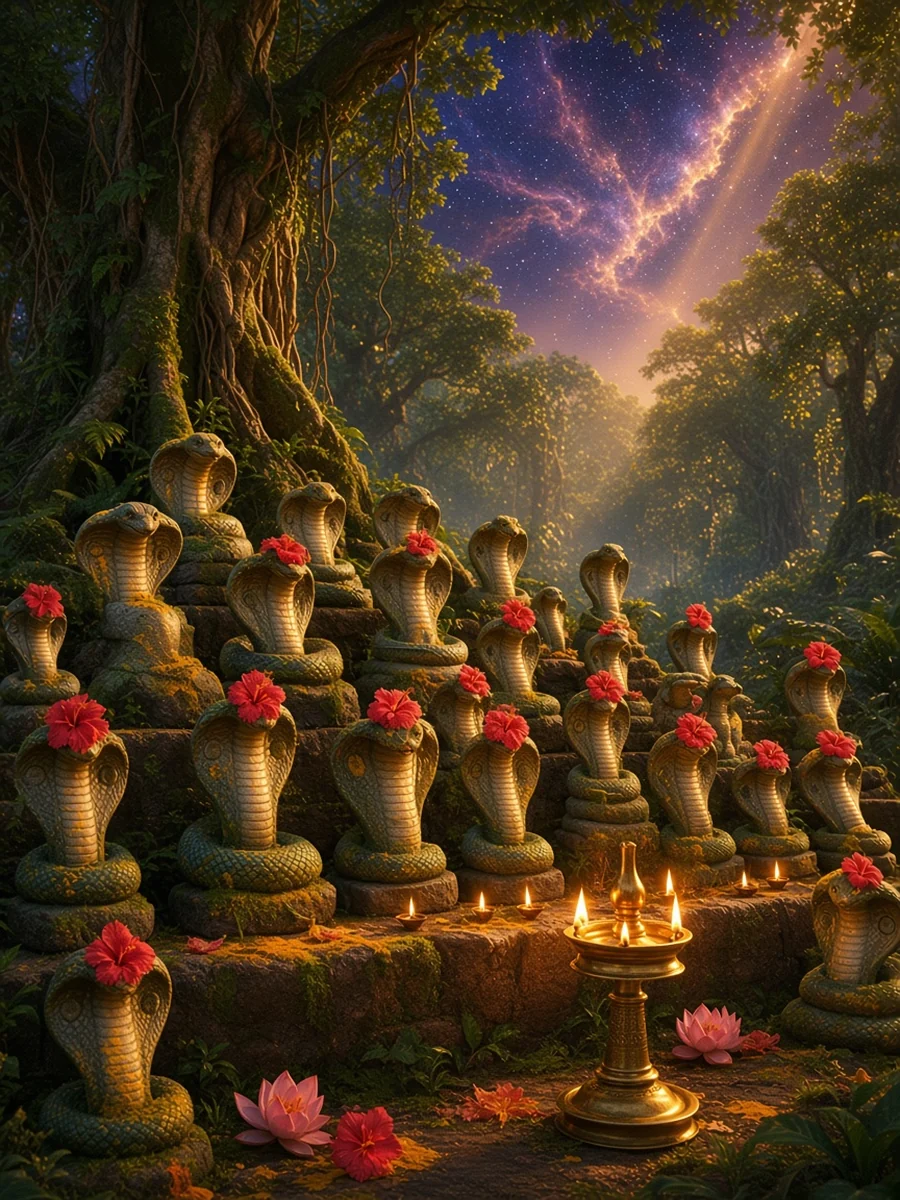
Living naga worship is strongest in the south and the Himalaya. At Mannarasala in Kerala more than a hundred thousand serpent images fill the groves, and the festival falls on Ayilyam. At Kukke Subramanya in Karnataka the serpent Vasuki is honoured with the god Subrahmanya. Nag Panchami is kept across India in the monsoon, when snakes come out of their flooded holes.

See how the Vedic gods became the Puranic ones →

Every story about The Nagas

Related gods