As the Mahabharata tells it
Mahabharata, Adi Parva 13 to 58 · 3 min read
Long before, Kadru, the mother of the thousand serpents, had laid a curse on her own children. They would not help her win a wager, and in her fury she told them they would all burn one day in the fire of a king called Janamejaya.
Generations passed. Janamejaya's father, King Parikshit, the grandson of Arjuna, was out hunting and lost a deer. He met a sage sitting in silence and asked him which way it had gone. The sage, under a vow of silence, did not answer, and the angry king hung a dead snake round his neck and rode off. The sage's son cursed Parikshit for it: in seven days the naga Takshaka would bite him and he would die.
Parikshit shut himself in a tower on a single pillar, with guards and doctors and charms. On the seventh day some ascetics came to the gate with a gift of fruit. The king took one, and in it was a tiny copper insect with black eyes.
"The sun is setting," he said, "and the sage's word has failed. Let this be Takshaka, then."
He put the insect on his neck and laughed. It grew into a serpent and struck him, and he died.
His son Janamejaya grew up and became king, and when he learned how his father had died, he called his priests.
"I want a sacrifice," he said, "that will burn Takshaka and all his kind."
The priests built the fire and began. As they spoke the mantras, the serpents came. They came from everywhere, out of the ground and the rivers and the trees, pulled through the air by the force of the words, and fell into the fire screaming. Their fat ran from the altar in streams.
Takshaka fled to Indra, king of the gods, and hid in the folds of his garment. Vasuki, the king of the nagas, sent for his nephew.
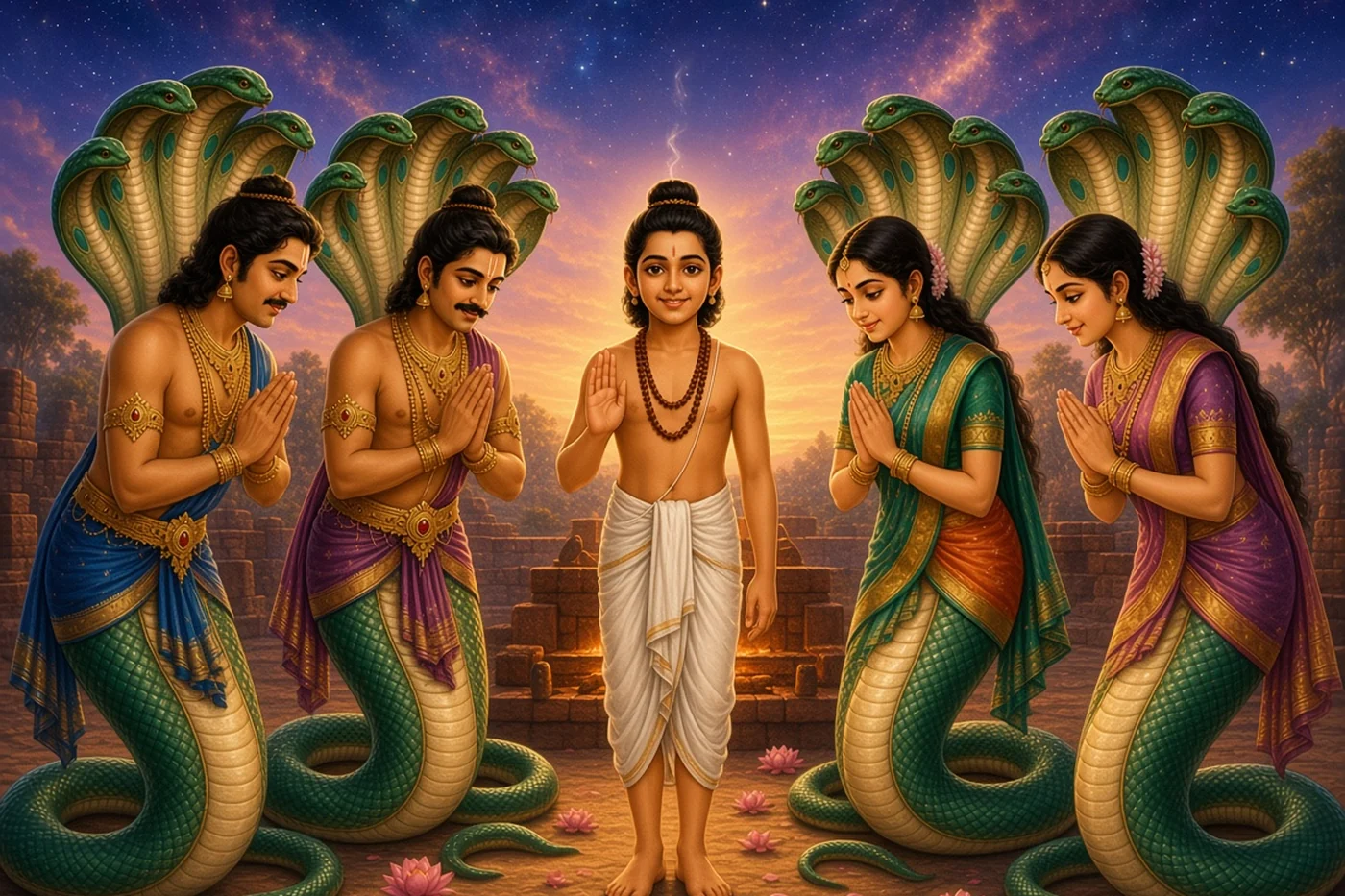
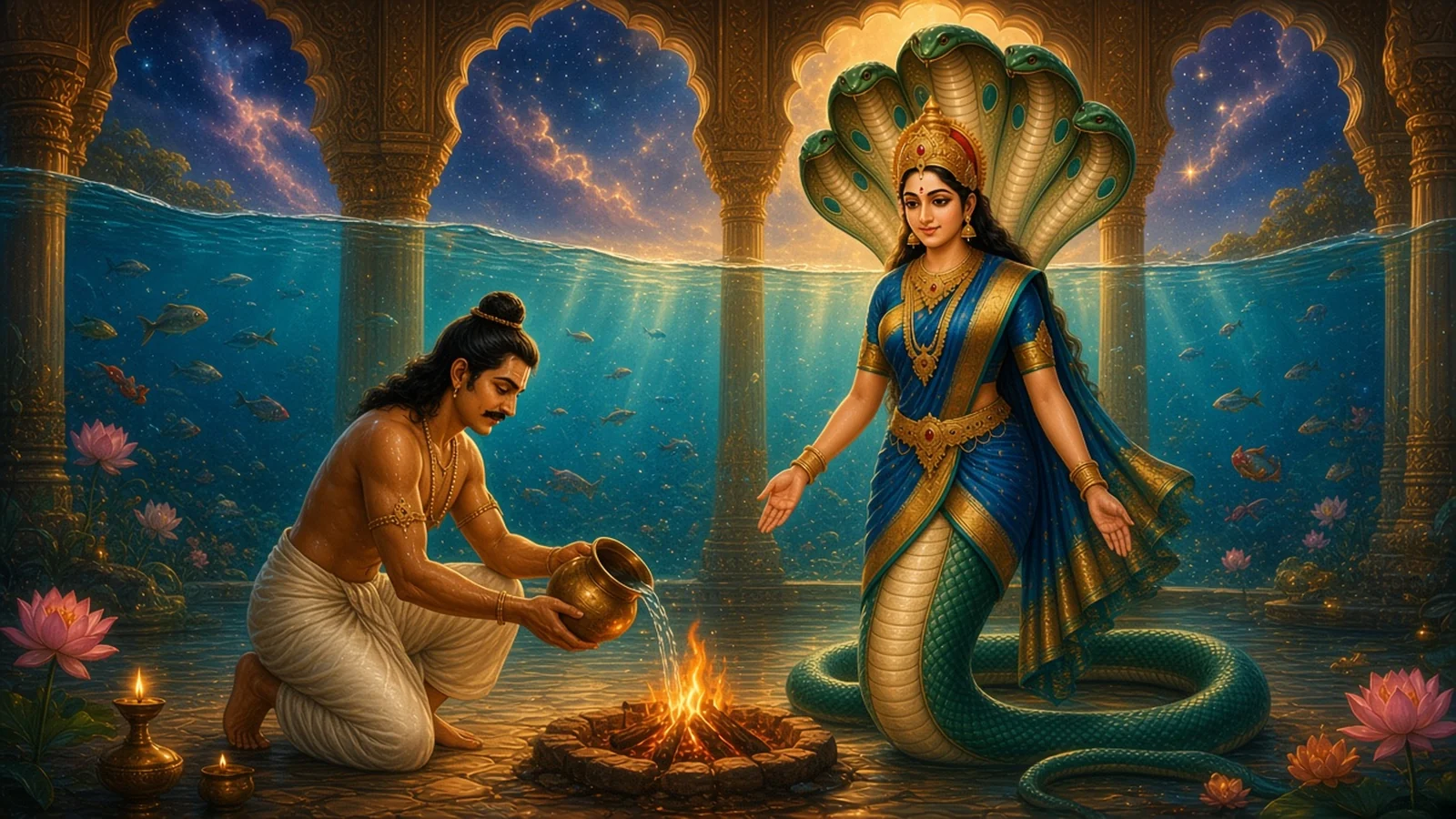
His nephew was Astika. He was the son of Vasuki's sister and a wandering sage named Jaratkaru, and he had been raised by holy men.
"Go to the king," said Vasuki. "Only you can stop it."
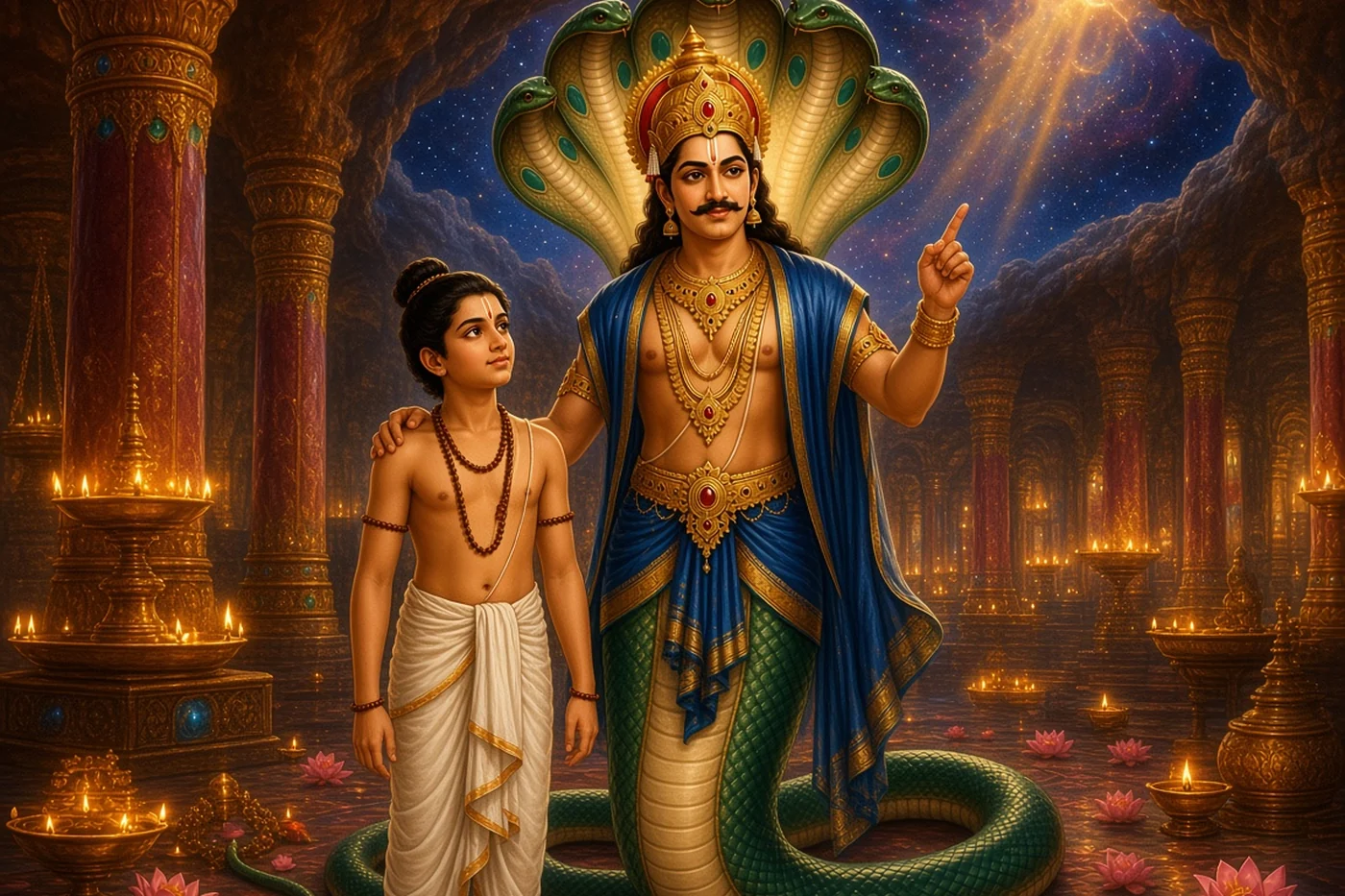
Astika went to Hastinapura and stood at the edge of the sacrifice, and praised the king and his priests in words so beautiful that Janamejaya was moved.
"He is only a boy," said the king, "but he speaks like an old sage. Let him have whatever he asks."
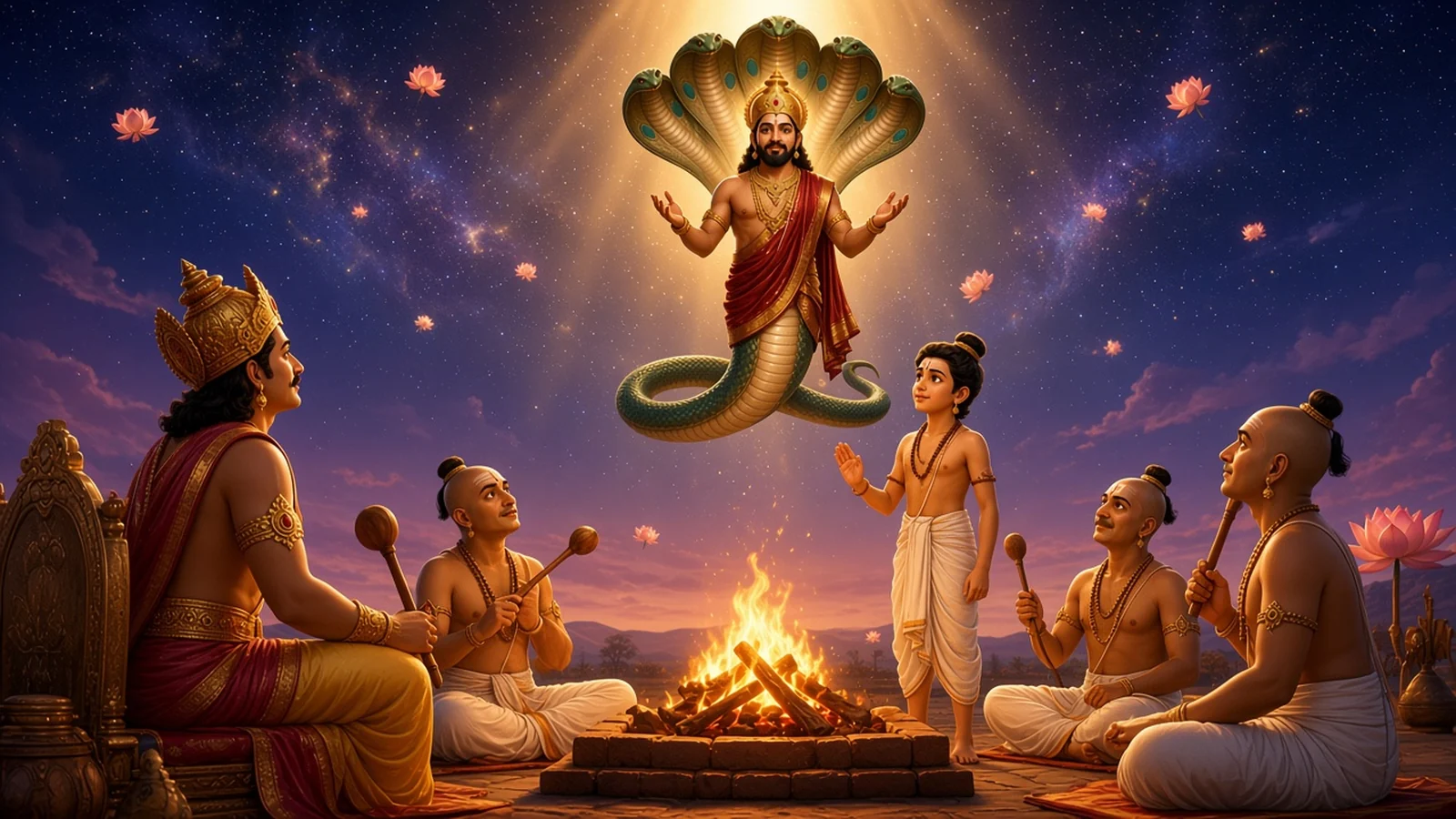
At that moment the mantras reached Indra in his heaven. The force of them dragged him down towards the fire with Takshaka still clinging to his cloak. Indra, frightened, shook the naga off and fled, and Takshaka came falling through the air, dizzy, toward the flames.
"Stay," said Astika. "Stay. Stay."
Three times he said it, and Takshaka stopped, and hung in the air above the fire.
"My gift," said Astika to the king, "is this. Let your sacrifice end."
Janamejaya begged him to ask for gold or cattle, anything else. Astika would not.
So the fire was put out. The priests stopped. The nagas who were left were saved, and in their gratitude they made a promise.
"Whoever remembers Astika," they said, "whoever says his name and tells his story, need never fear us."