As Sita tells it to Anasuya
Valmiki Ramayana, Ayodhya Kanda 118 · 2 min read
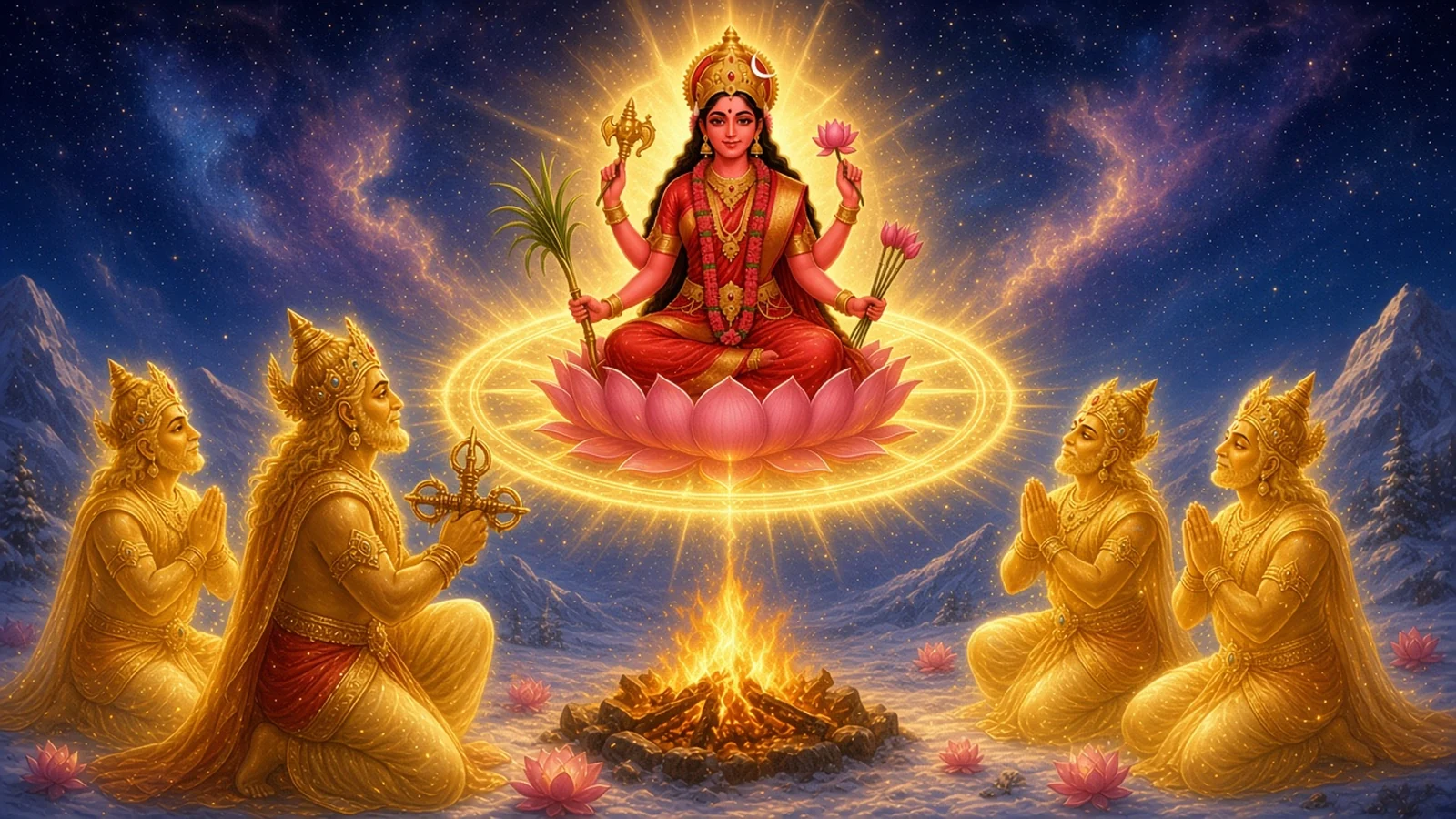
On their way south into exile, Rama, Sita and Lakshmana stopped at the hermitage of the sage Atri. His wife was Anasuya, very old and very holy, a woman whose penance was said to have once brought the river Ganga down to the forest in a drought.
Anasuya took Sita aside, the way old women do with young brides, and gave her ornaments and garlands and a fine cloth, and blessed her for following her husband into the forest.
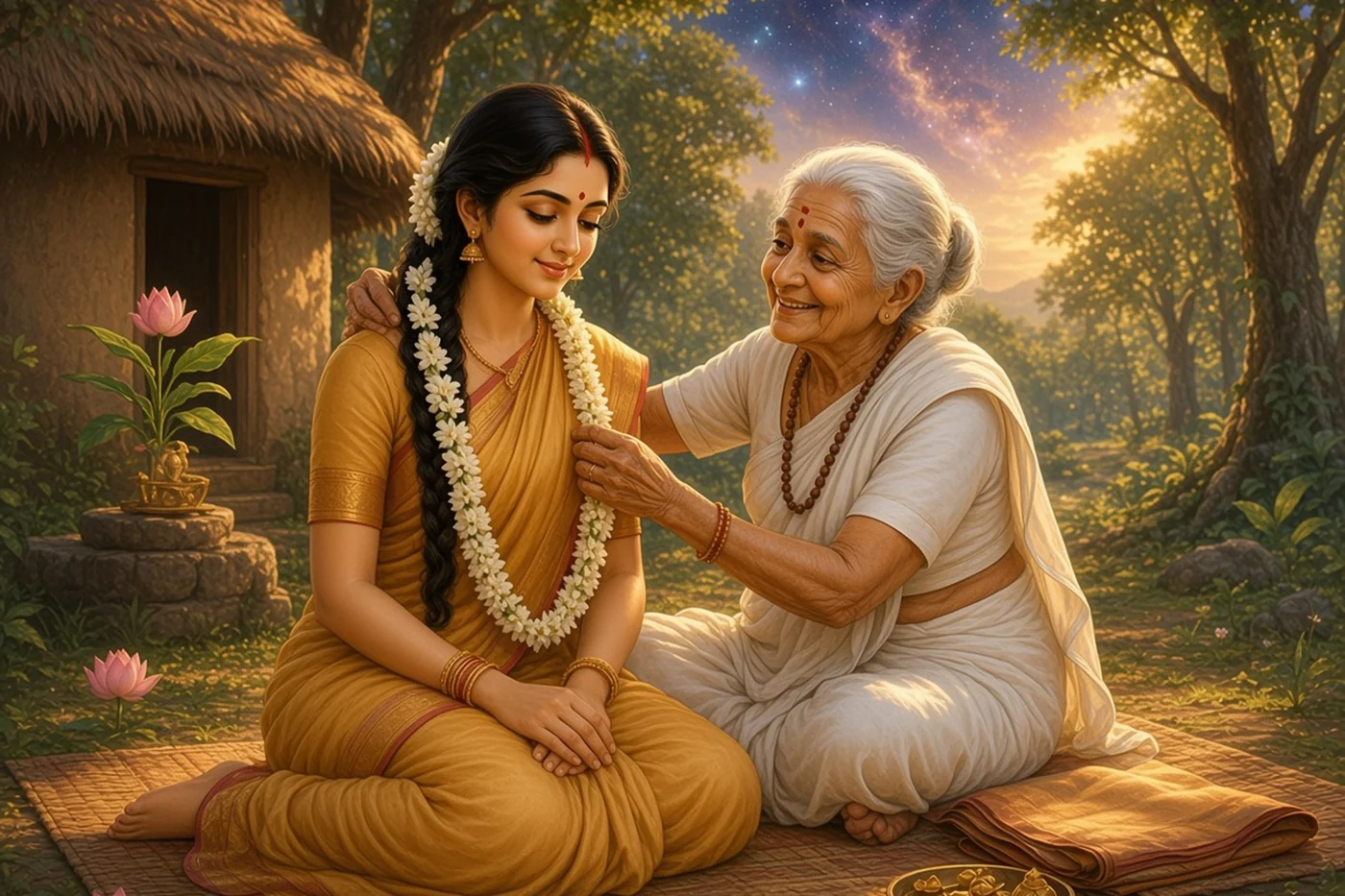
"Now tell me," she said, sitting her down. "I have heard that you were won at a swayamvara. Tell me how it happened, from the beginning."
So Sita told her.
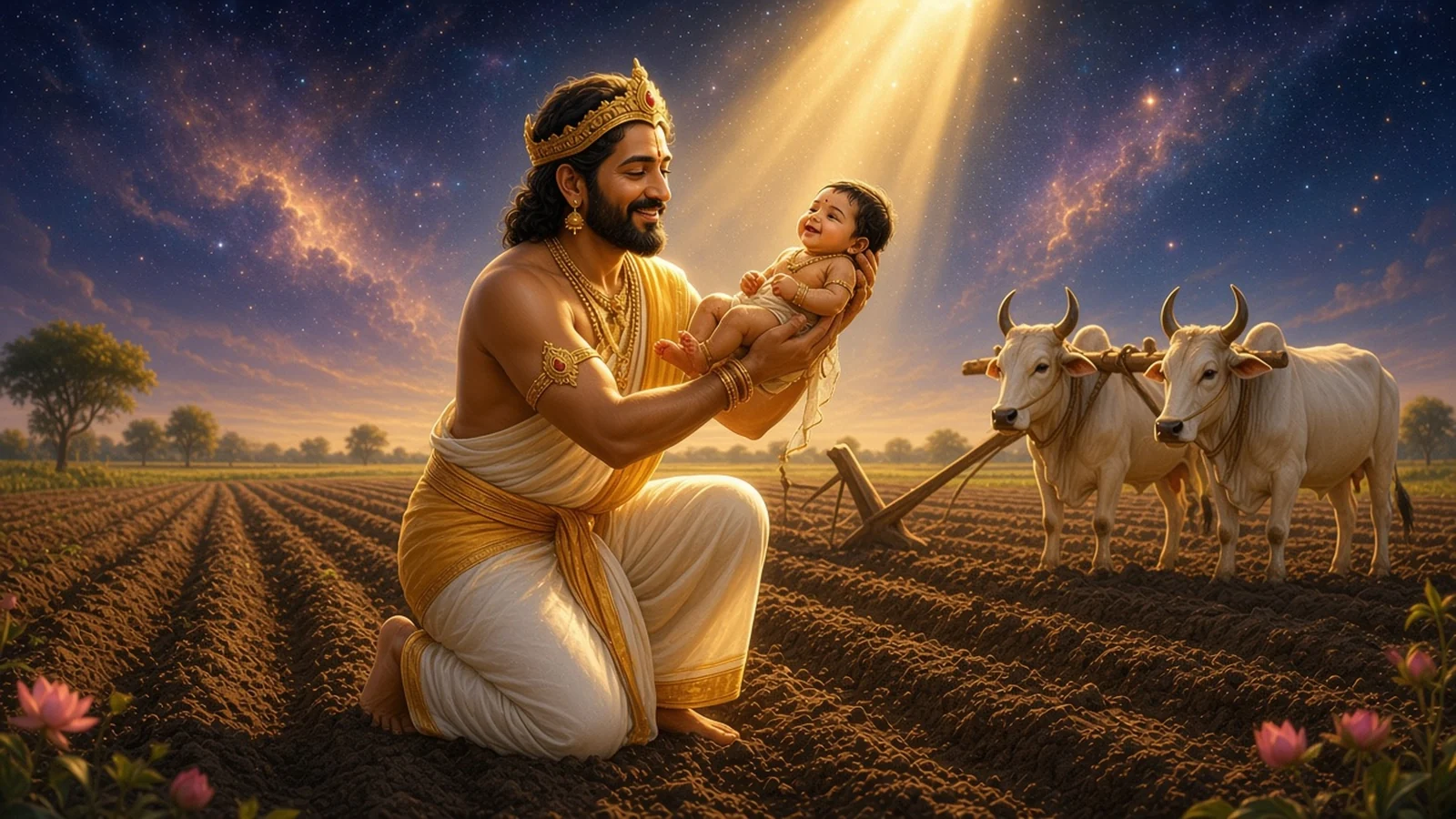
"My father is Janaka, king of Mithila," she said. "He is a good king, and he keeps the law. One day he was ploughing a field, to make the ground ready for a sacrifice, with the plough in his own hands. And the ploughshare turned up the earth, and there I was in the furrow, a baby, lying in the soil."
"In the earth itself?" said Anasuya.
"In the earth itself. He saw me there, covered in dust, and he was amazed. He had no child of his own. He picked me up in his arms and said, 'This is my daughter.' And a voice came out of the sky, not a human voice, and said, 'Yes, O king. She is your daughter, by right.'"
Anasuya nodded slowly.
"So my father took me home," Sita said, "and gave me to his chief queen, and she brought me up with all the love a mother has. But when I grew up, he began to worry. A girl born of no woman, with no family to speak of, whom could she marry? He worried the way poor men worry when a daughter comes of age."
Then she told how her father had been given a great bow of Shiva's long before, so heavy no one could lift it, and how he had promised her to the man who could bend it. Kings came, and could not even move it. Then the sage Vishvamitra came with two young princes from Ayodhya.
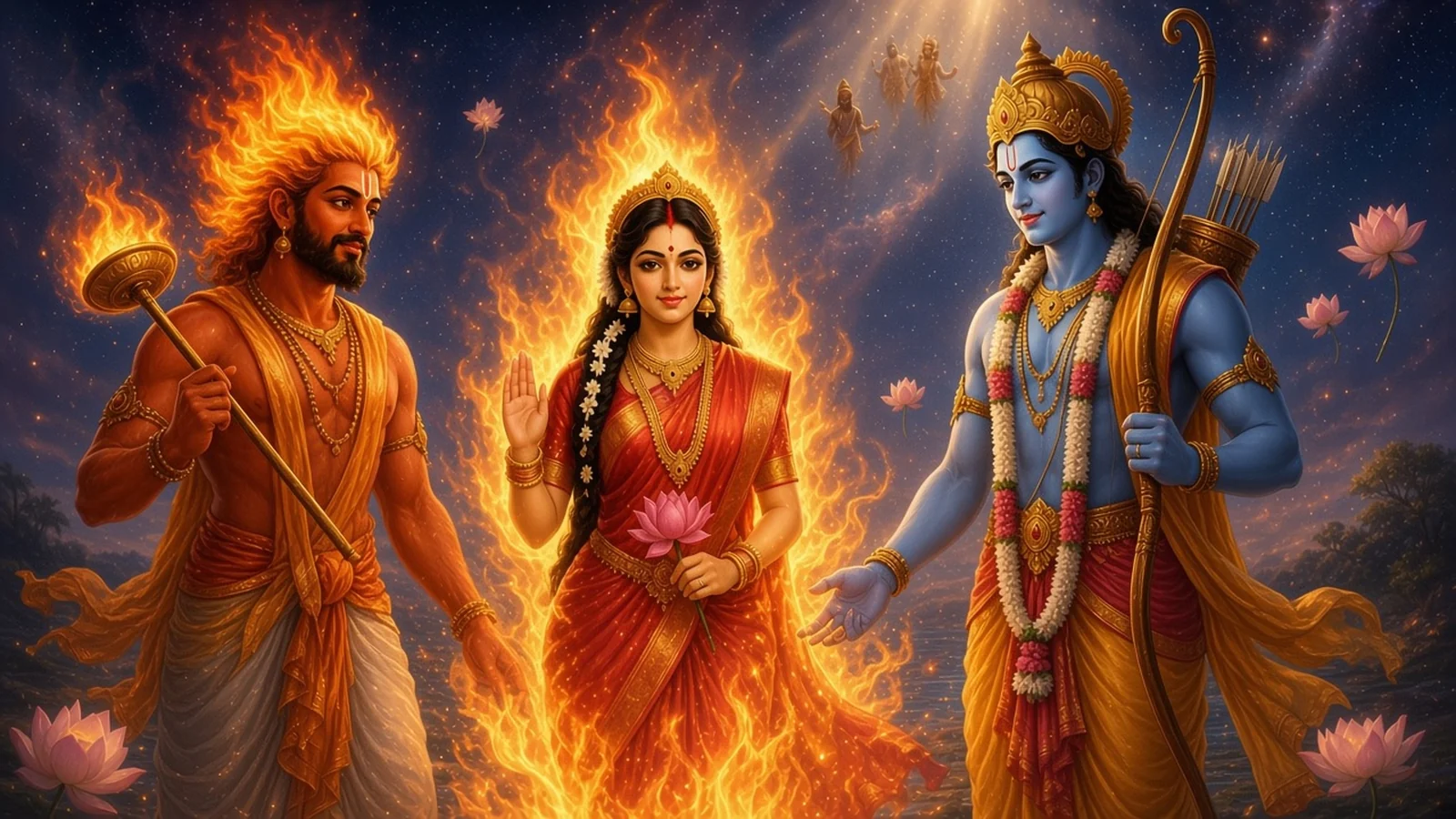
"Rama lifted it," said Sita, "and strung it, and bent it until it broke in two. And my father gave me to him with water poured on our hands."
She looked at her husband across the clearing.
"I have loved him ever since," she said, "as I love him now."
Anasuya was delighted with the story. It was evening by then, and she sent Sita back to Rama dressed in the new clothes and the jewels, shining.
As the Rigveda calls her
Rigveda 4.57 · 1 min read
Long before anyone told the story of Rama, long before there was a princess of Mithila, there was Sita.
In the Rigveda, the oldest of the Vedas, there is a short hymn for the farmers' fields. It calls on the lord of the field, and on the plough and the ploughmen, and on the oxen, to work well and bring good things. And then it turns to the furrow, the long line cut into the soil where the seed goes, and speaks to her as a goddess.
Auspicious Sita, it says, come near. We praise you so that you will be kind to us, and give us good harvests, and be fruitful for us.
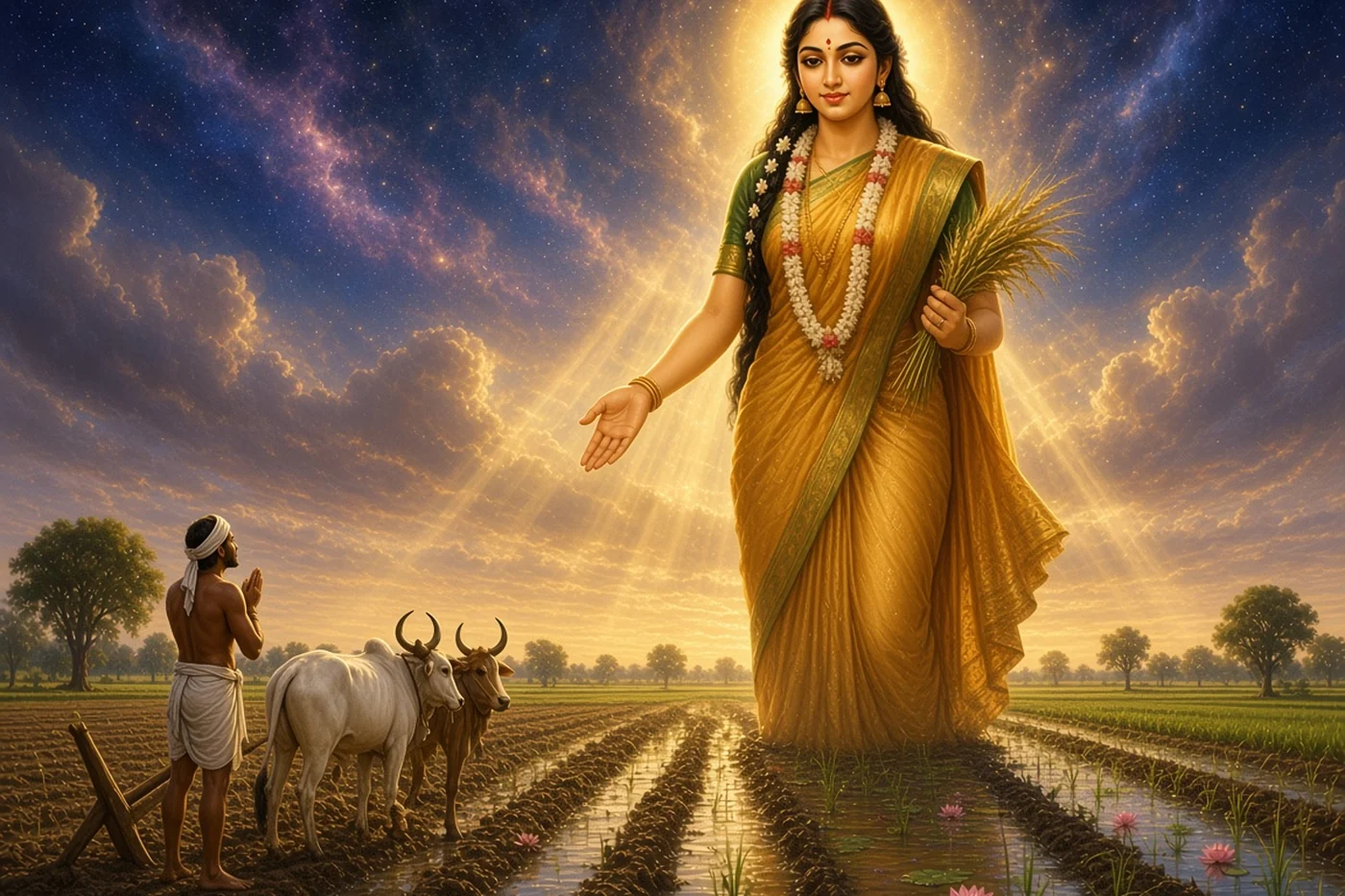
It asks Indra to press her down, and Pushan to guide her, and then asks her to give milk, year after year. It is a prayer for rain and grain. The furrow is a woman, and she is the earth opened to receive the seed.
Later ritual texts carry this Sita on. They make her the wife of Indra, or of Parjanya the rain god, the one who fills the furrow. Farmers offered to her at the time of ploughing.
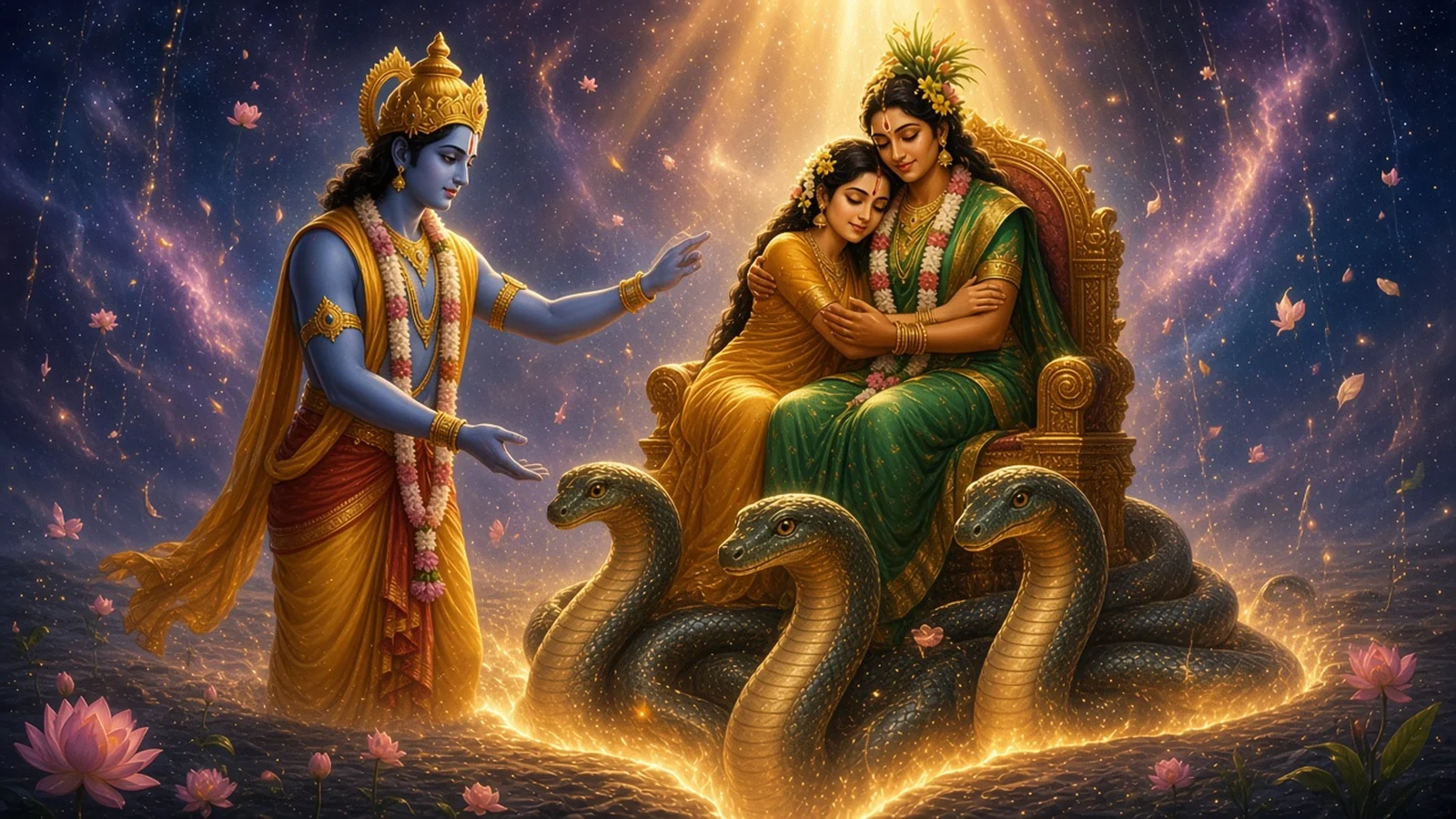
When the poets of the Ramayana named their heroine, they named her after this furrow. The epic's Sita is found in the earth, lives on it as a woman, and at the very end goes back into it. The old goddess of the field never quite leaves her.