As Valmiki tells it
Valmiki Ramayana, Yuddha Kanda 117 to 120 · 2 min read
Ravana was dead. Vibhishana was king of Lanka. And Rama sent for Sita.
She came out of the grove where she had been kept prisoner for so long, bathed and dressed, and they brought her through the crowd of monkeys and bears and demons to where Rama stood. She looked at his face, and her own face lit up.
Rama did not smile.
"I have won you back," he said, in front of everyone. "I have done what a man must do, and wiped out the insult. But understand this. I did not fight this war for you. I fought it for my own good name, and the name of my family."
Sita stared at him.
"You lived in another man's house," Rama went on. "You were in his power for months. How could a man of my family take you back? I give you leave. Go wherever you like. Go to Lakshmana, or Bharata, or Vibhishana, or whoever you choose."
Sita wept. Then she wiped her eyes, and when she spoke, her voice was steady.
"Why do you speak to me like this," she said, "like a common man to a common woman? What he did to my body, I could not stop. My heart was always yours. If you meant to leave me, you should have sent word with Hanuman when he found me. I would have died then, and you would have been spared all this war."
She turned to Lakshmana.
"Build me a pyre," she said. "I will not live with this."
Lakshmana looked at his brother, and Rama said nothing. So Lakshmana built the fire.
Sita walked round Rama, with her eyes lowered. Then she stood before the flames, joined her hands and prayed.
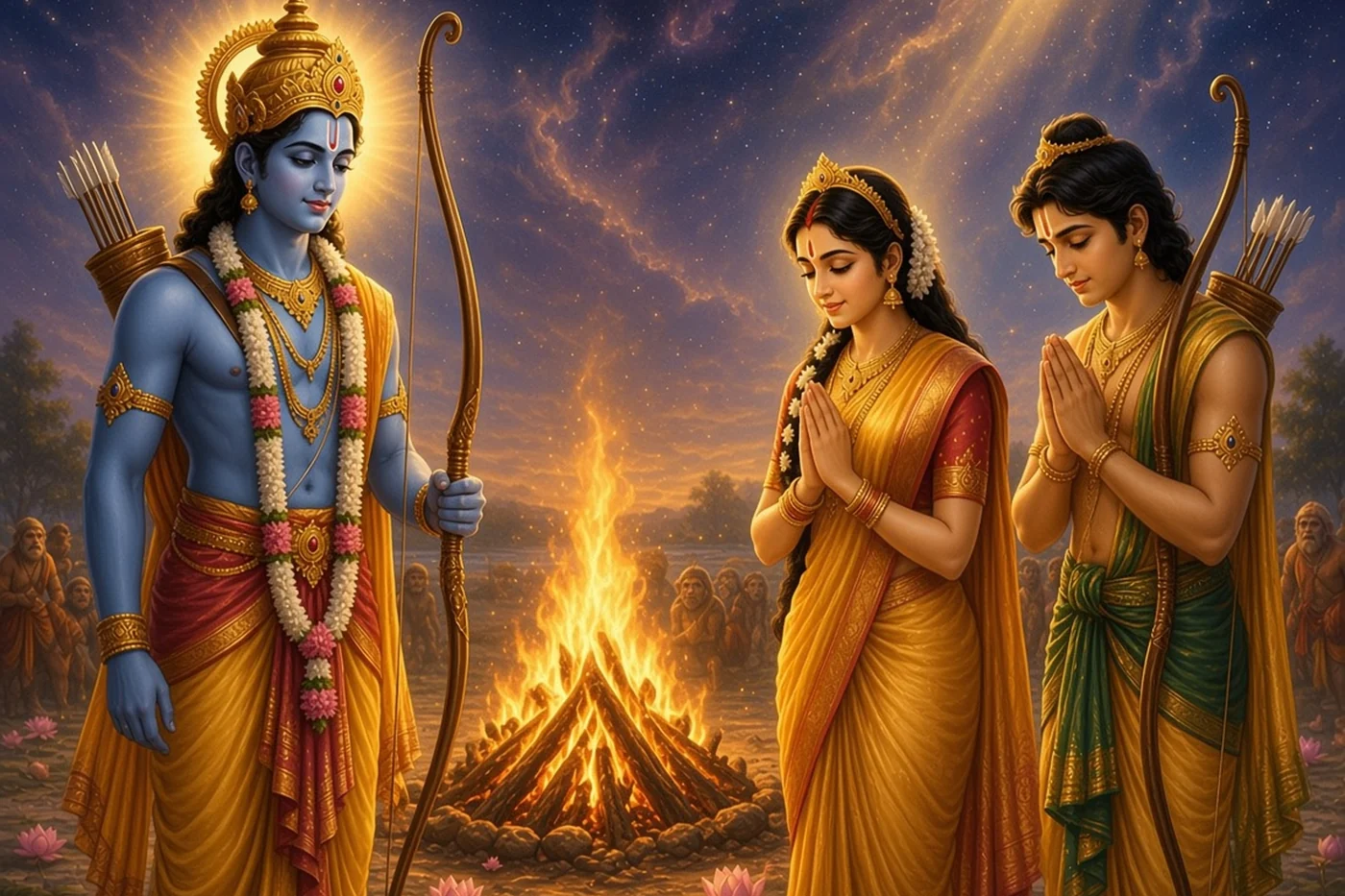
"If my heart has never turned from Rama," she said, "then let Agni, who sees everything, keep me safe."
And she walked into the fire.
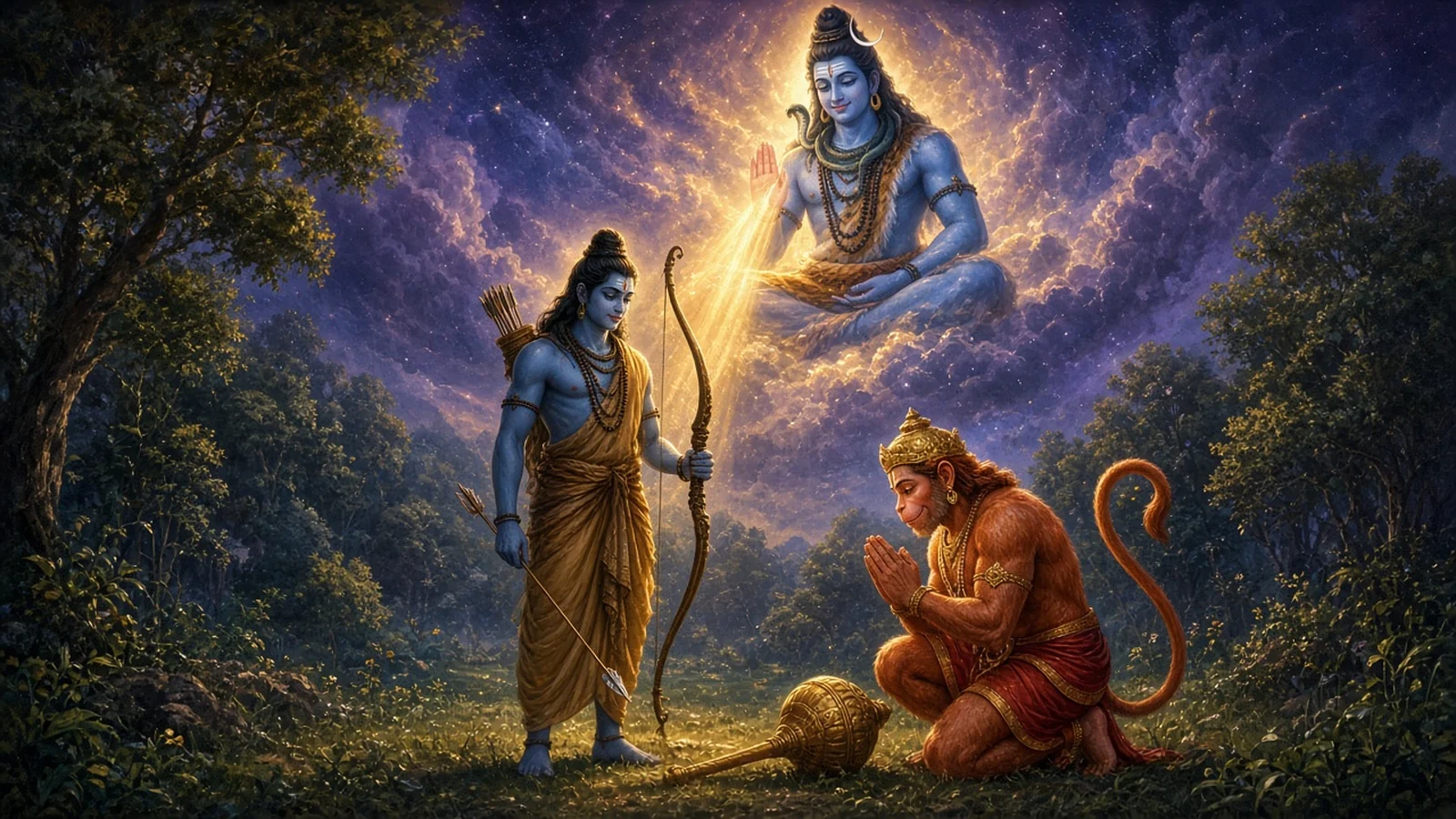
A great cry went up from the whole army. Then the gods appeared in the sky, all of them, and Brahma spoke to Rama.
"How can you not know yourself?" he said. "You are Narayana, and she is Lakshmi."
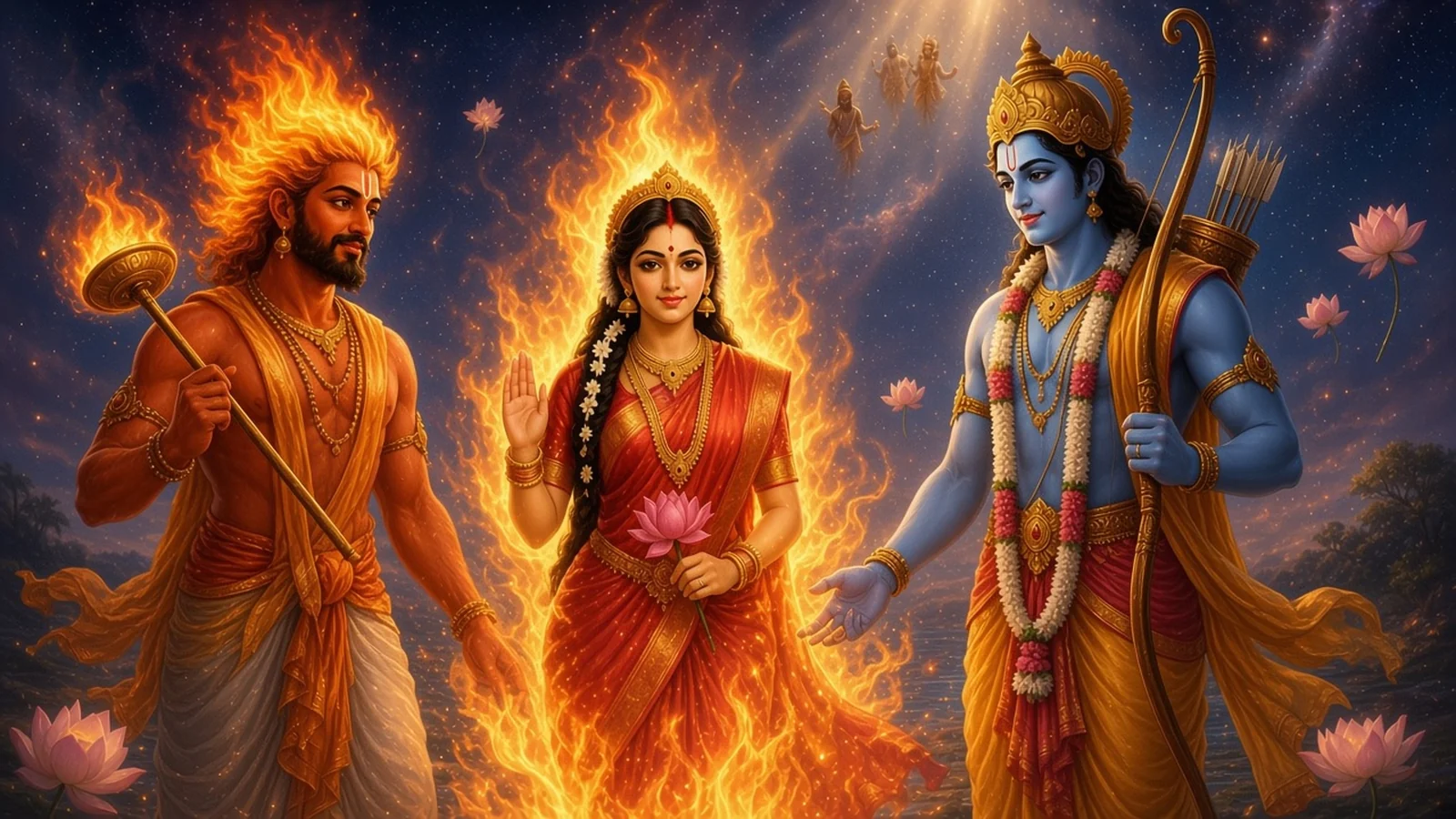
Out of the fire rose Agni, the god of fire himself, in his own body, holding Sita in his arms. She was untouched. Her clothes were red and fresh, her hair was dark and glossy, and the garland on her neck had not even wilted. He set her down before Rama.
"Here is your queen," said Agni. "She is pure. She never failed you, not in thought, not in word."
Then Rama took her back, gladly.
"I never doubted her," he said. "I knew. But the world had to see it for itself."
As the later tellings have it
Maya Sita · 1 min read
Many who loved the Ramayana found this scene hard to bear, and the later tellings changed it.
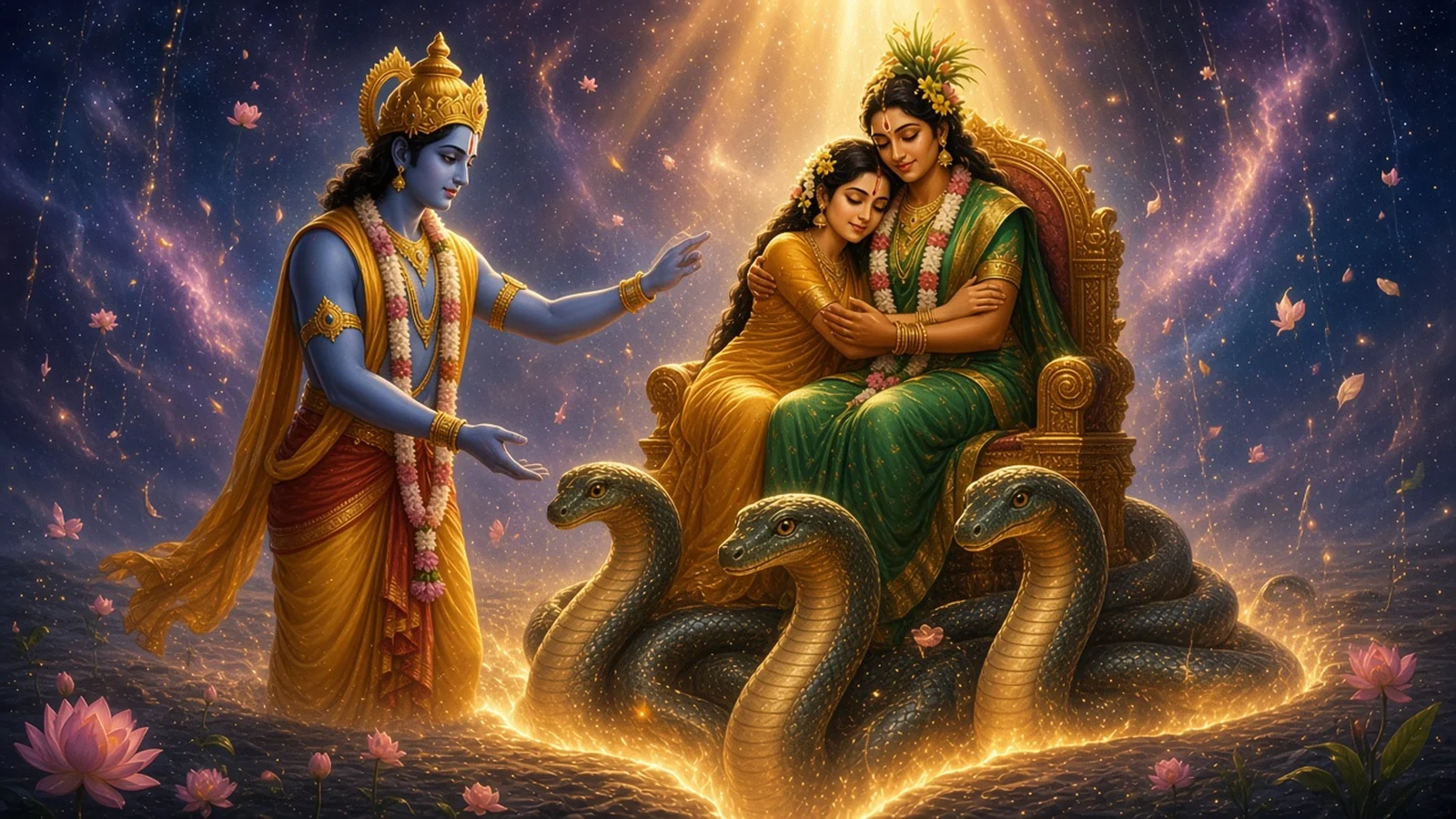
In the Kurma Purana, Agni knew what was coming before Ravana ever reached the forest. Just before the demon arrived, the fire god took the real Sita away and hid her within himself, and left a double in her place. It was the double that Ravana carried off to Lanka, the double that sat under the tree, the double that Rama's army fought for. When she walked into the fire, it was the double that burned away, and Agni gave back the true Sita, who had never been touched at all.
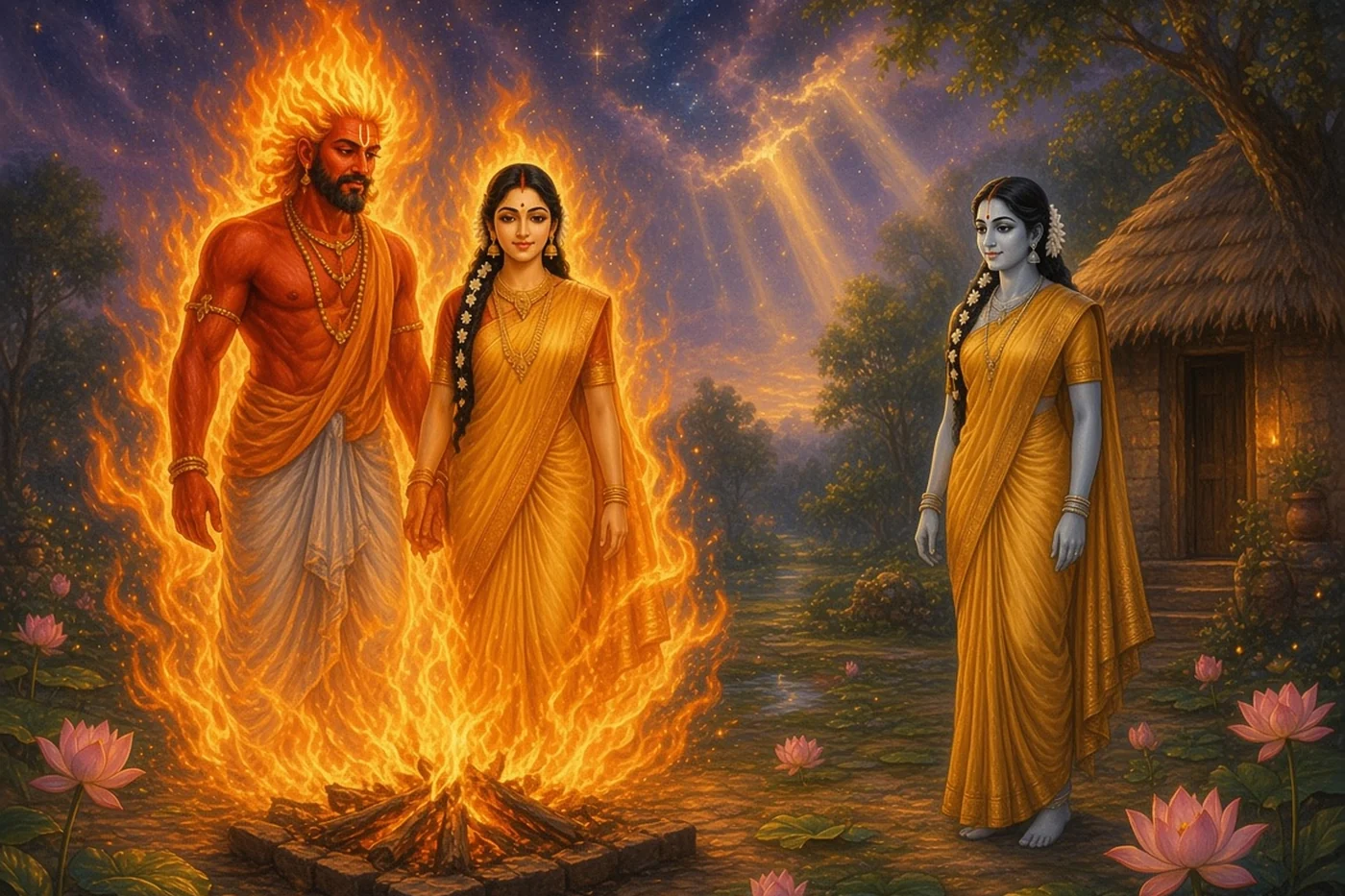
The Adhyatma Ramayana gives the plan to Rama. Long before the golden deer appeared, Rama himself told Sita what was going to happen.
"Ravana will come to the hut disguised as an ascetic," he said. "Leave your shadow here for him. Go into the fire yourself and live there for a year, hidden. When he is dead, you will come back to me."
So she did, and the shadow stayed in the hut. The fire ordeal is simply the moment when the shadow and the real Sita change places again.
Tulsidas, in the Ramcharitmanas, follows this telling, and so the Ramlilas of north India follow it too.
Some Puranas will not let the shadow simply vanish. She too had suffered, and she is given a life of her own. In one telling she was born again, from a fire altar, as Draupadi.