As Narada tells it to Vyasa
Bhagavata Purana 1.5 and 1.6 · a hermitage of sages, and the forest to the north · 4 min read
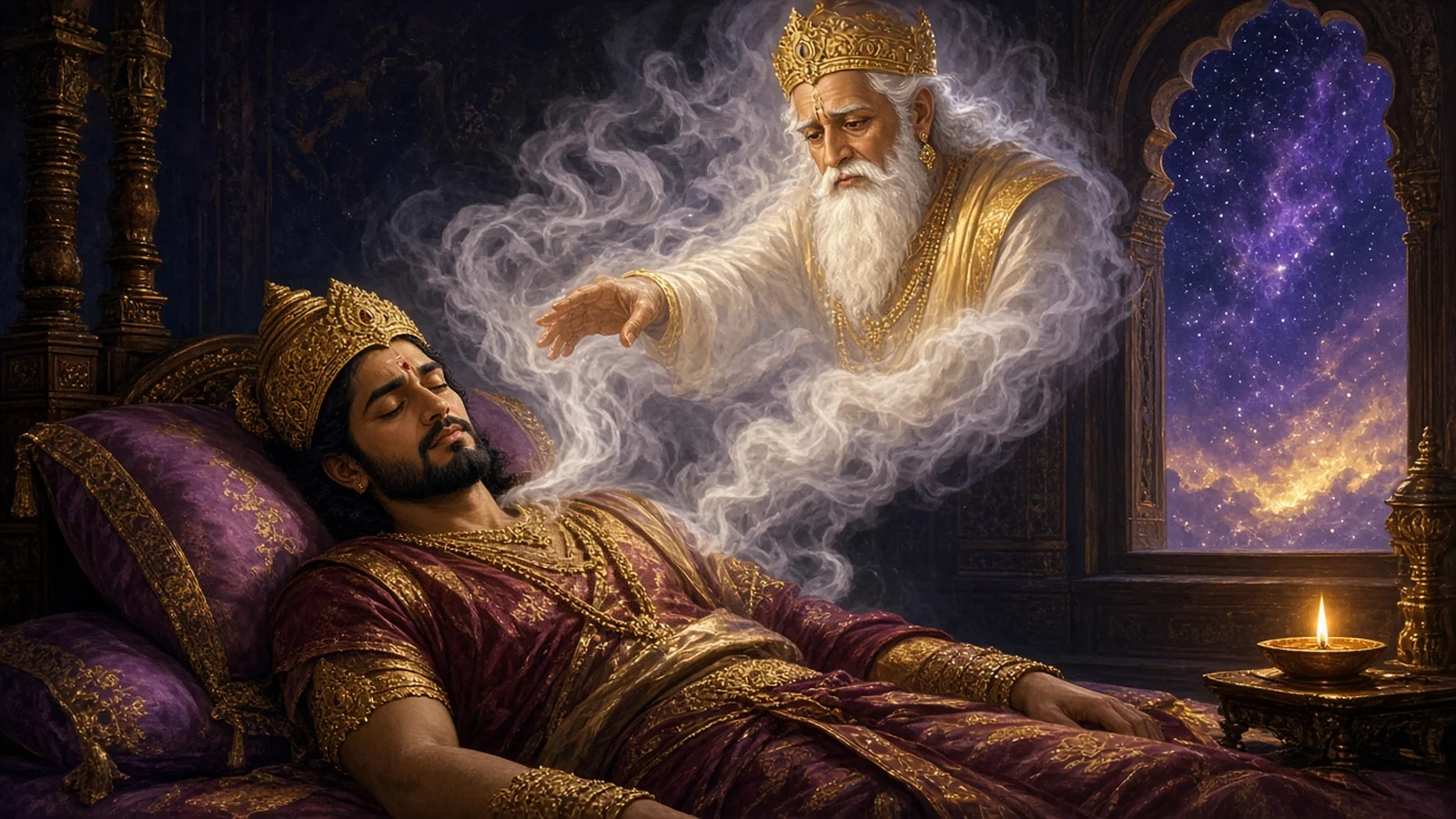
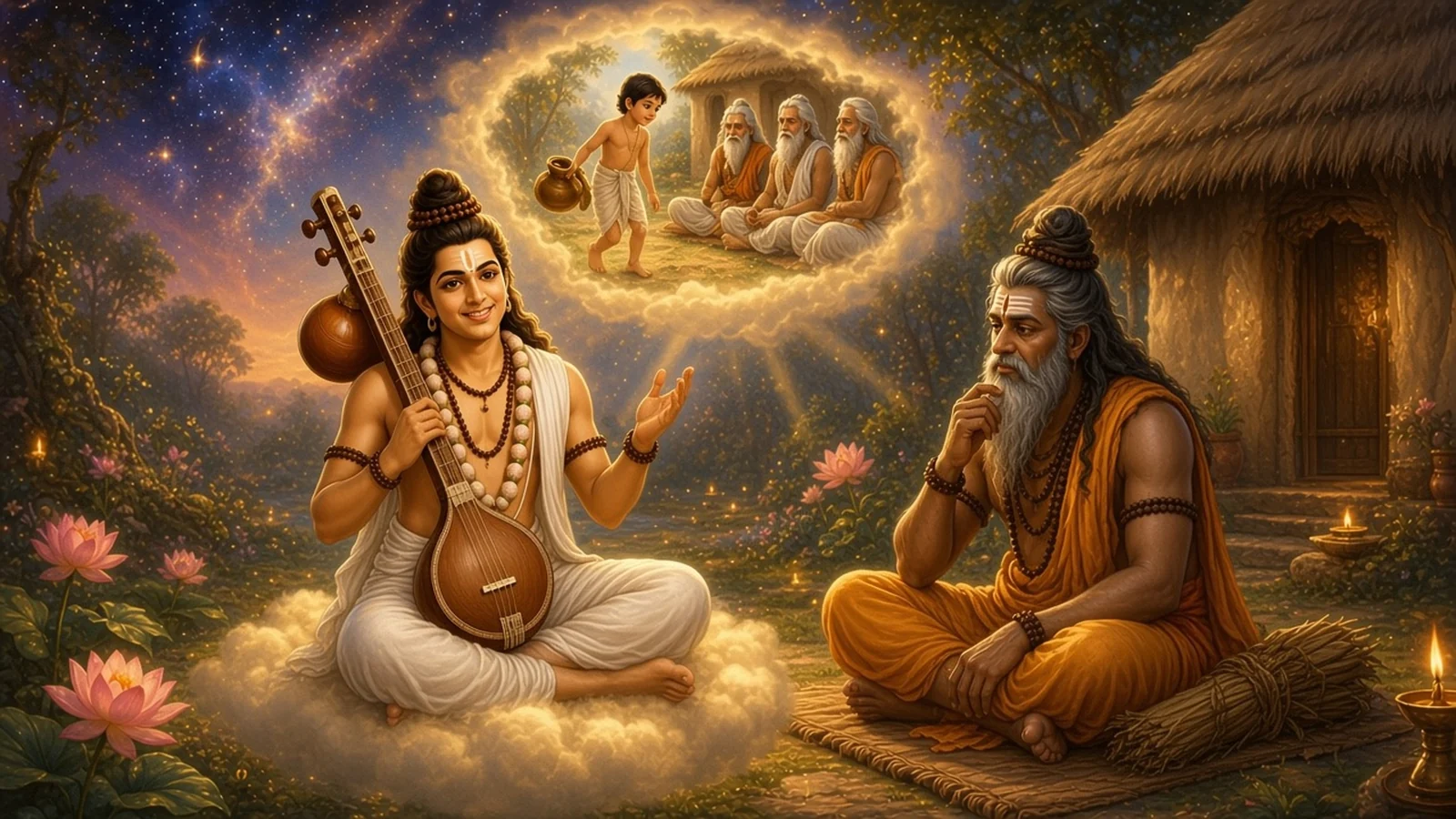
Vyasa had divided the Veda and finished the Mahabharata, and he sat in his hermitage with everything done and nothing settled. Narada came and sat down beside him, smiling a little, as if he already knew what the trouble was.
"You have written of duty and wealth and pleasure and freedom," said Narada, "and written them well. So why do you look like a man who has lost?"
"I do not know," said Vyasa. "You are Brahma's son and you go everywhere. Tell me what is missing."
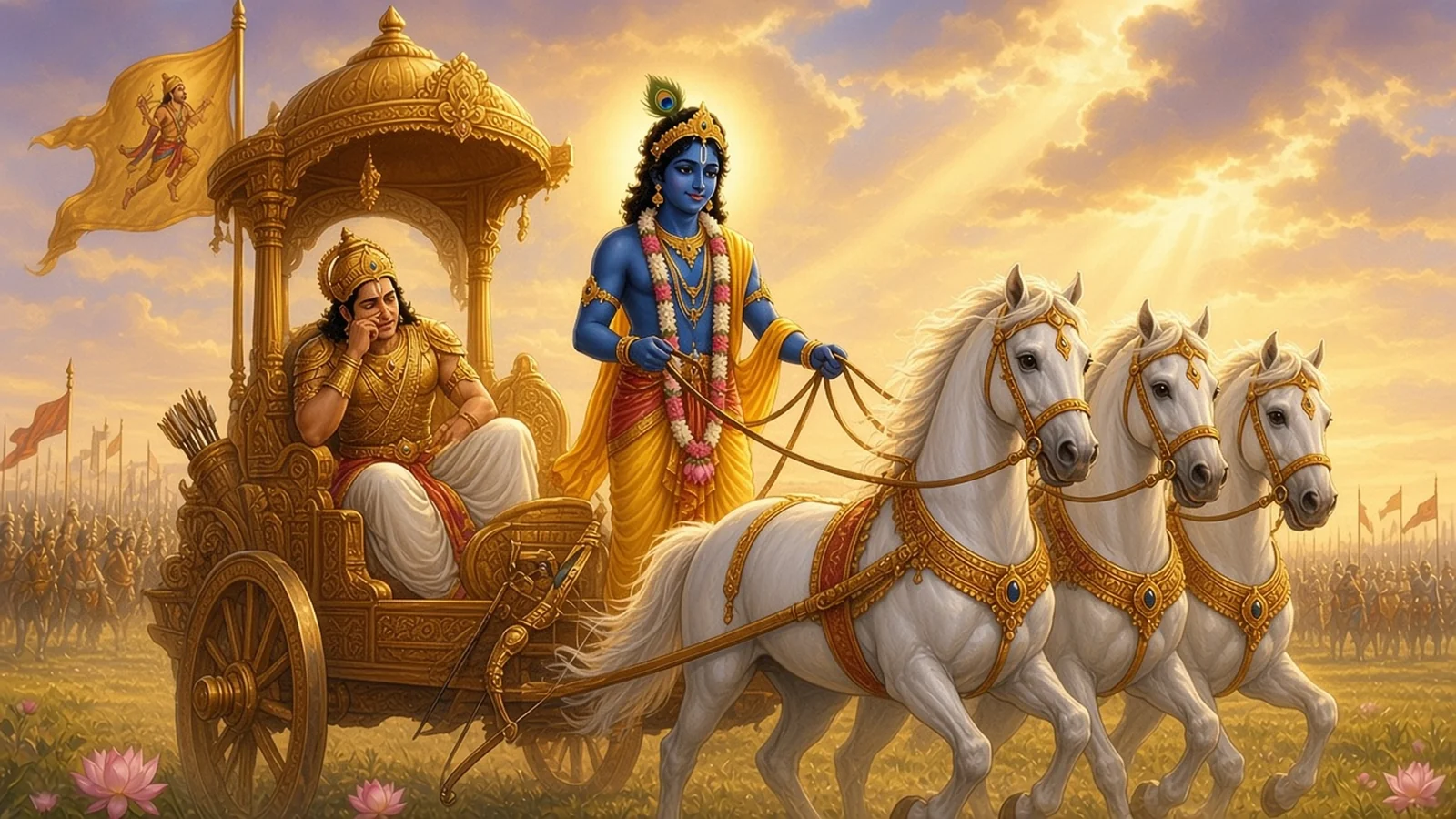
"Him," said Narada. "You have told the world how to live, and hardly told it about Vasudeva. Words that leave him out are a place where only crows gather."
Vyasa still looked doubtful, so Narada told him a story about himself.
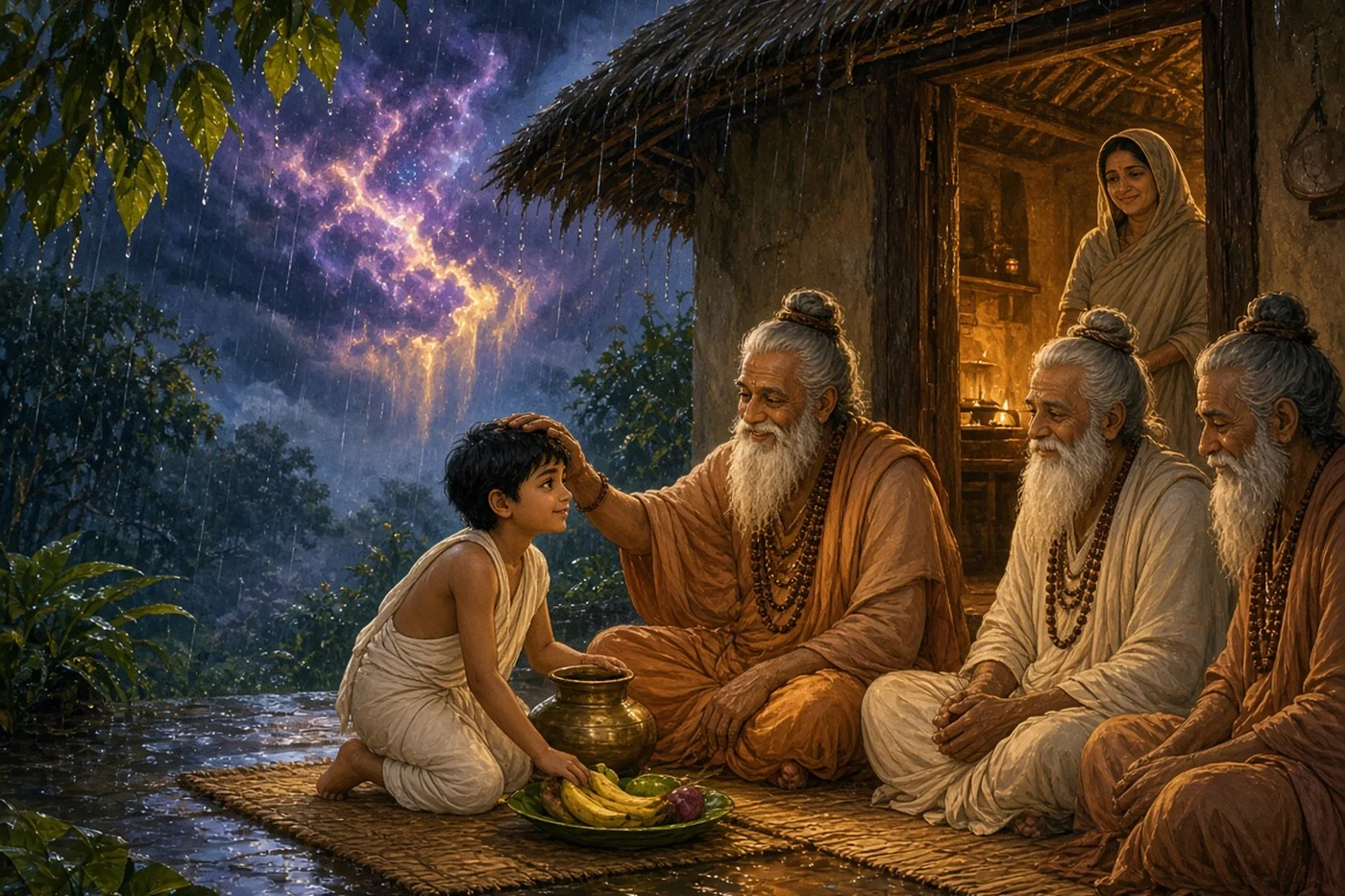
"In another age of the world," he said, "I was the son of a serving woman. She worked for a company of sages who knew the Upanishads, and one year they stayed with us for the four months of the rains. I was a small boy, and I was set to wait on them."
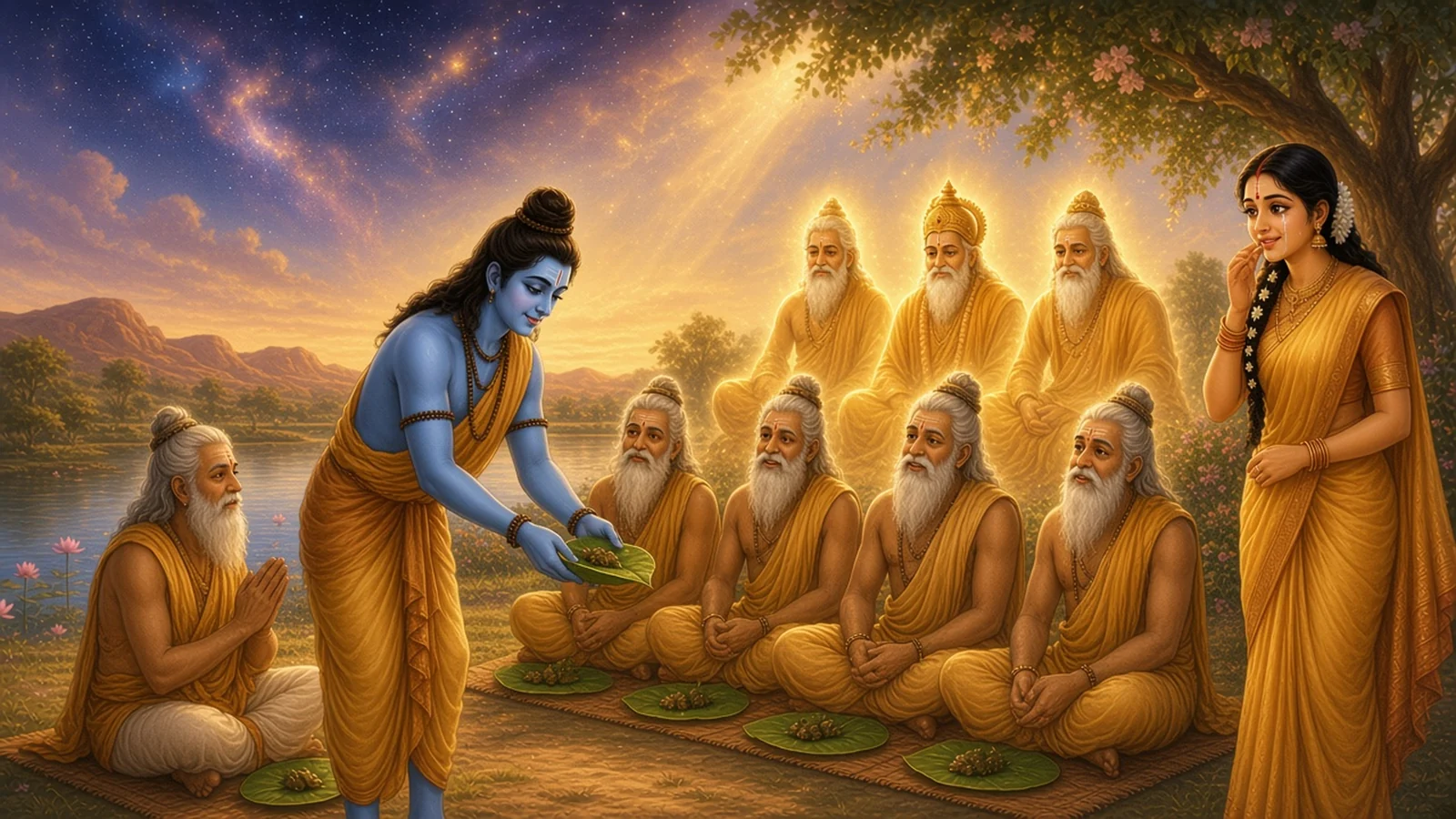
"I was not a noisy child," he went on. "I fetched and carried and kept quiet, and they were kinder to me than they had any need to be. Once, with their leave, I ate what was left on their plates, and something in me changed. After that I listened. Every day they talked of Krishna, and every day I wanted more. They stayed through the rains and through the autumn, and when they left they taught me the thing they knew best, which was how to know him."
"And then?" said Vyasa.
"Then I stayed with my mother. I was all she had, and she kept me close. She would have done more for me if she had been her own mistress, but she was not. I was five years old. One night she went out to milk the cow, and a snake bit her on the leg, and she died."
Narada was quiet for a moment.
"I took it as his mercy," he said, "and I walked north."
He had gone through towns and villages and fields, past mines and gardens, over hills with gold and copper in them, beside lakes full of lotuses and bees. He had gone through reed beds and bamboo, and dark forest where owls called and jackals cried. When he was too tired and hungry to go on, he bathed in a river and drank, and sat down under a banyan tree in a forest where nobody lived.
"I did what the sages had taught me," he said. "I thought of his feet. And he came. He was there in my heart, and I could not tell where I ended and he began. Then he was gone."
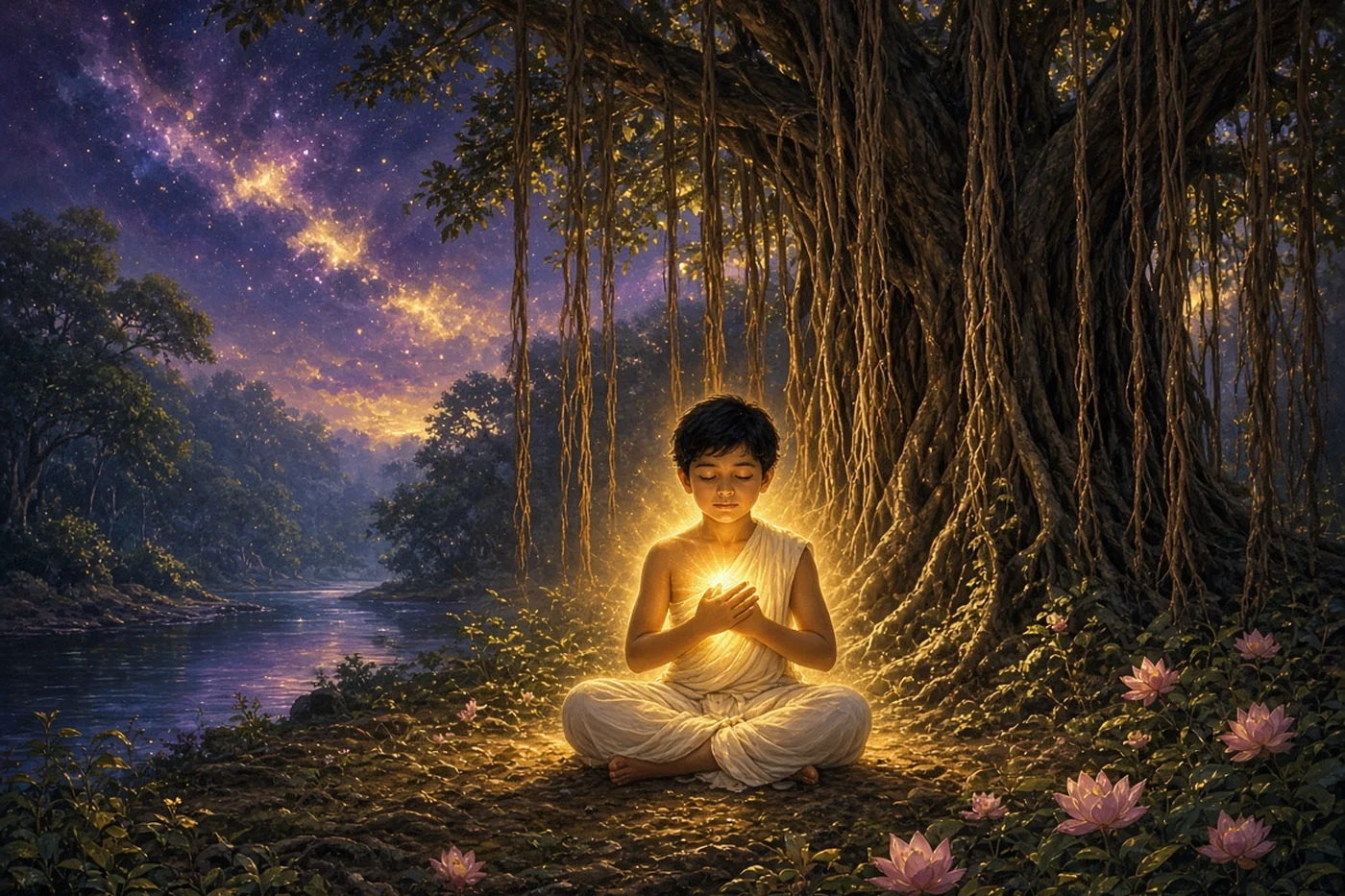
The boy had jumped up and looked for him, sat down and tried again, and nothing came. He was a child alone in an empty forest, and he wept.
Then a voice spoke out of nowhere, deep and gentle.
"You will not see me again in this life. Those who are not yet ripe can hardly see me at all. I showed myself once so that you would long for me, and the longing will burn the rest away. You will not lose me. You will remember me when this world ends and begins again."
The voice stopped. The boy bowed to the empty air.
"After that," said Narada, "I wandered the earth singing his names, and needed nothing. When my time came, the body went out the way lightning goes. At the end of that age, when the Lord lay on the waters of the flood, I went into him with Brahma and everything else. When Brahma woke to make the world again, I came out with Marichi and Atri and the other sages. And he gave me this."
He touched the vina on his shoulder.
"I go where I like now, and I sing. When I sing of him, he comes and sits in my heart as if I had called him by name. Write that, Vyasa, and you will be at peace."
He stood up, played a few notes, and walked off wherever he pleased.
As the Brahma Vaivarta tells it
Brahma Khanda 4 to 6 · Brahma's hall, the city of the Gandharvas and a cowherd's house · 2 min read
The Brahma Vaivarta goes further back, to the day Narada said no to his father.
Brahma had let the four Sanaka brothers return to their penance. This son, he said, would marry and help him people the world.
"A household is poison," said Narada. "Who would leave the nectar of Krishna for that?"
Brahma was angry. "Then learn it. Be born fond of music and of pleasure, a talker and a wanderer with a vina in your hands, and be born a serving woman's son. Krishna will bring you back to me in the end."
"I have done nothing but love Krishna," said Narada. "Grant me this much: that I go on loving him in every birth, and remember who I am." Brahma granted both. Then Narada cursed his father in return: for three ages of the world no one would sing his hymns, worship him, or give him a share of the sacred fire.
So he was born among the Gandharvas. Their king had no son and had prayed to Shiva for one, and Shiva gave him a boy who would serve Krishna. Vasishtha named the child Upabarhana. He grew up beautiful and musical, married the fifty daughters of the Gandharva Chitraratha, and was happy.
One day in Brahma's hall the apsara Rambha danced, and Upabarhana could not look away. Brahma saw.
"Leave that body by yoga," he said, "and be born low."
Upabarhana drew his life up through his body as the yogis do, and was gone. His eldest wife, Malavati, would not have it. She called on Krishna, Vishnu, Shiva, Brahma and Dharma, and swore she would die there and leave the gods to answer for it. Vishnu came to her as a young brahmin, called Death and Time and Yama to account, heard each deny it, and showed her that her husband had gone of his own will. Then the gods gave him back to her for the years he still had.
When those years were spent he died, and Malavati gave up her life at Pushkar and was born again a king's daughter, waiting to marry him in his next life.
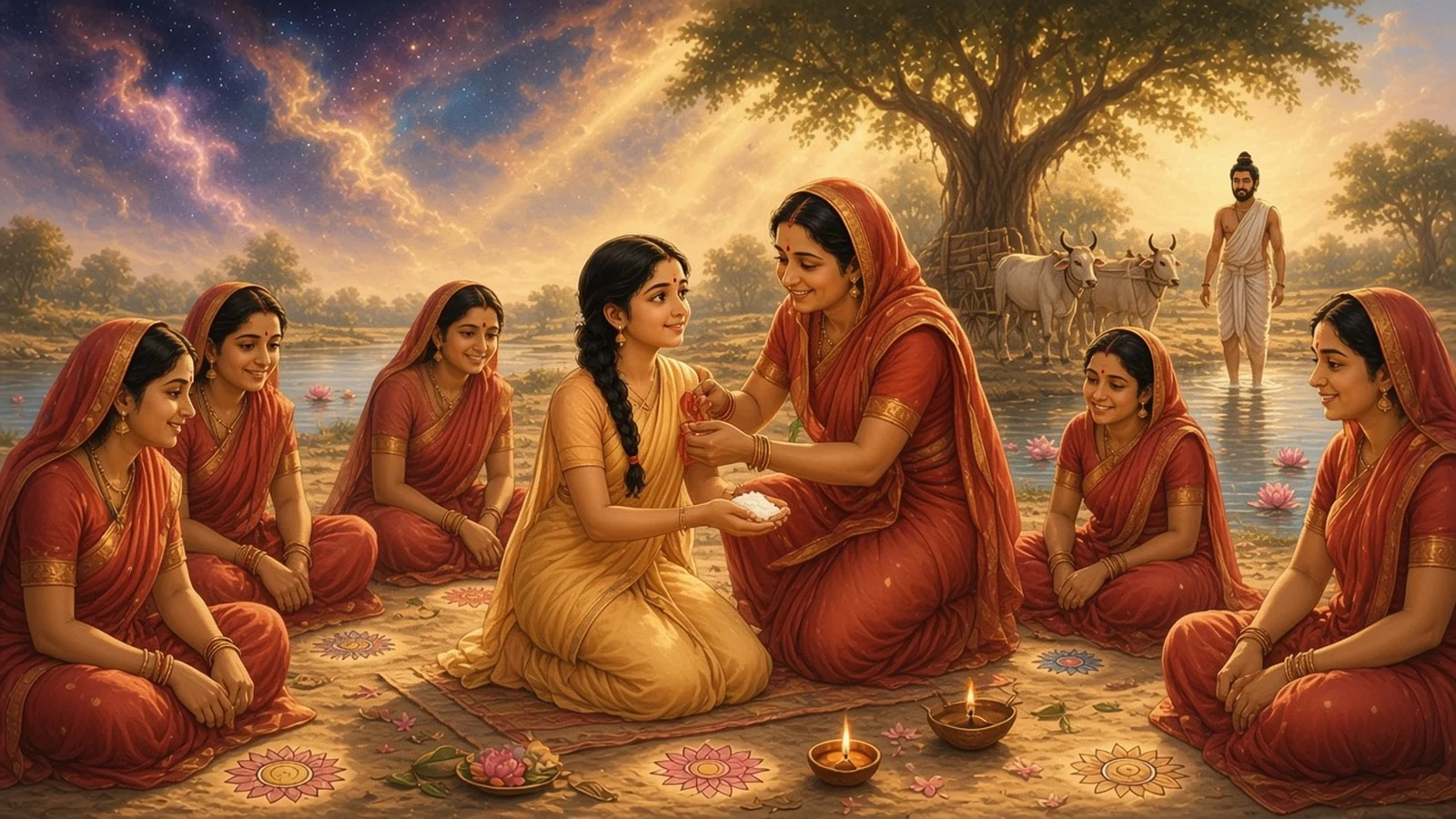
He was born to Kalavati, the wife of a cowherd chief, in a year of drought, and they called him Narada, the giver of water. He remembered everything. The sage Sanatkumara gave him a mantra of Krishna, and he grew into an ascetic and laid that body down as well.
Ages later Brahma brought him forth again, from his own throat, beside Marichi and the rest. And the first thing he did was ask him, once more, to marry.