Devalok ← All gods
Also calledNarada MuniDevarshi NaradaUpabarhanaRishiraja

In short

Who is Narada?
The sage of the gods, a son of Brahma, who walks through every world with his vina, singing the name of Vishnu and carrying news from one court to the next.
Why does he never stay in one place?
Daksha cursed him to wander after Narada talked Daksha's sons out of starting families. The Bhagavata adds that he goes wherever he likes by Vishnu's grace.
Is he a troublemaker?
His news often starts a quarrel, a test or a wedding, and his own pride gets him into trouble more than once. The Puranas still count him the greatest of Vishnu's devotees.
Where did his vina come from?
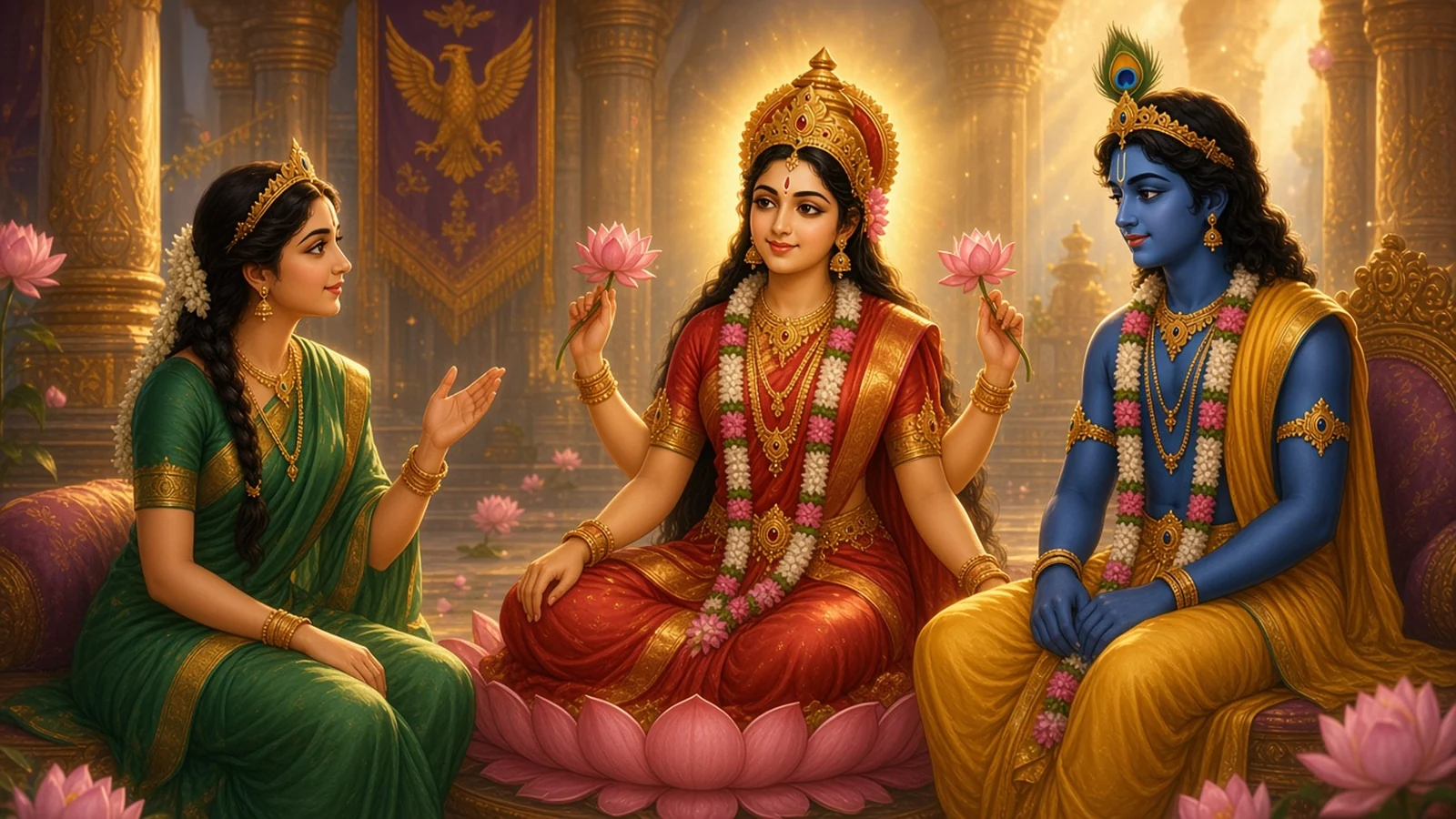
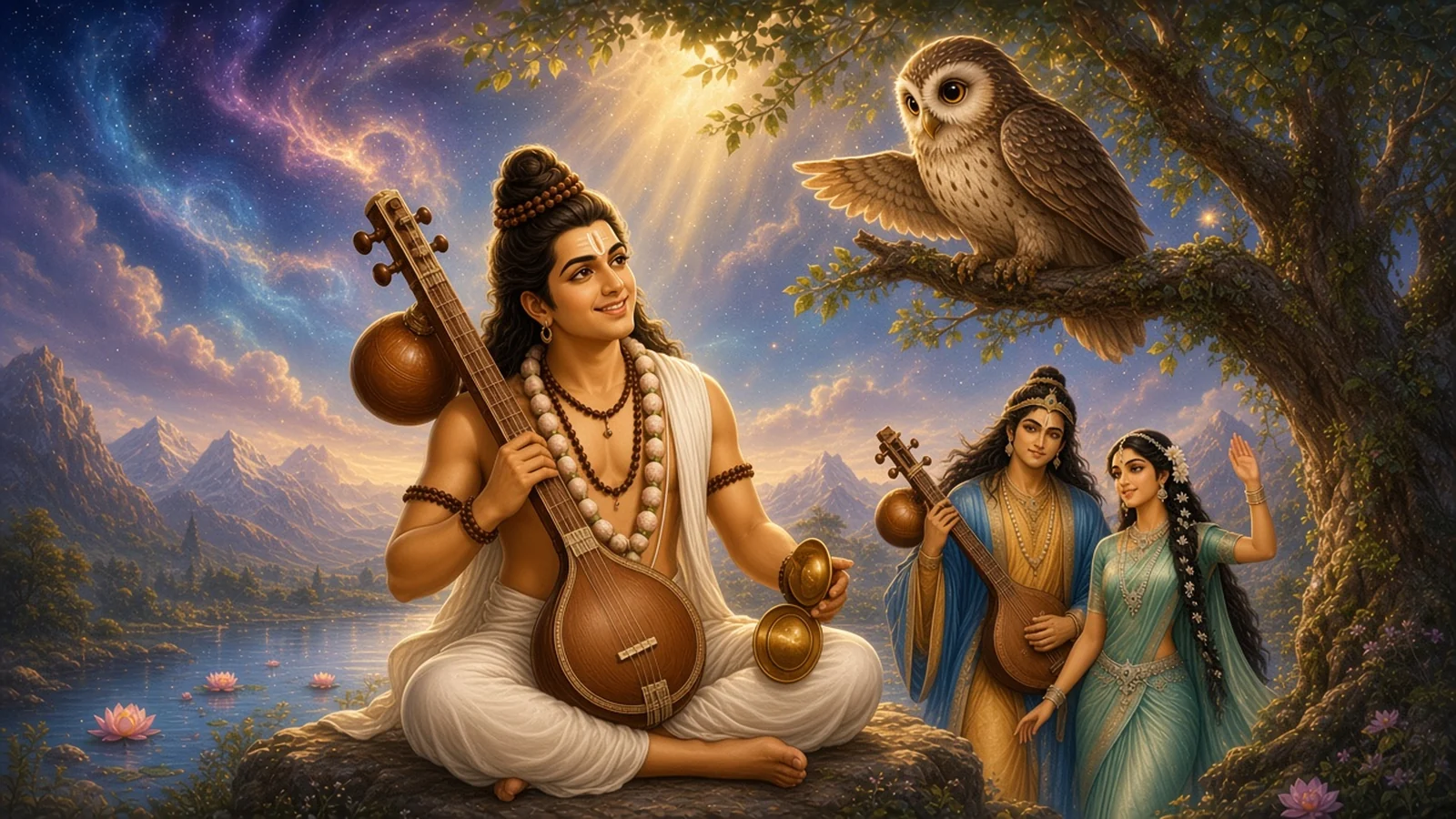
The Bhagavata says Krishna gave it to him. The Linga Purana says he had to learn to play it properly, from an owl and from Krishna's queens.

Artwork ›

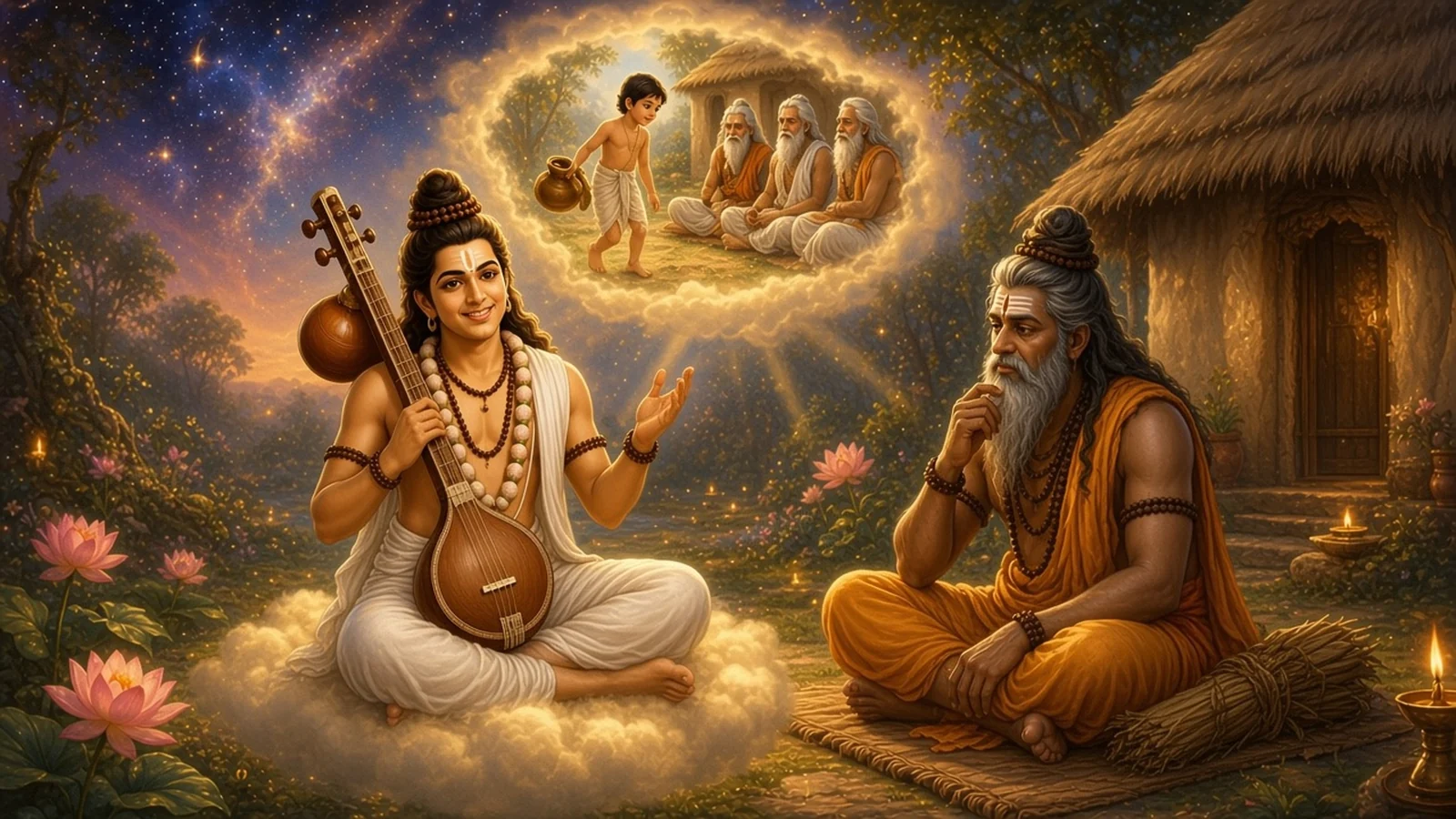
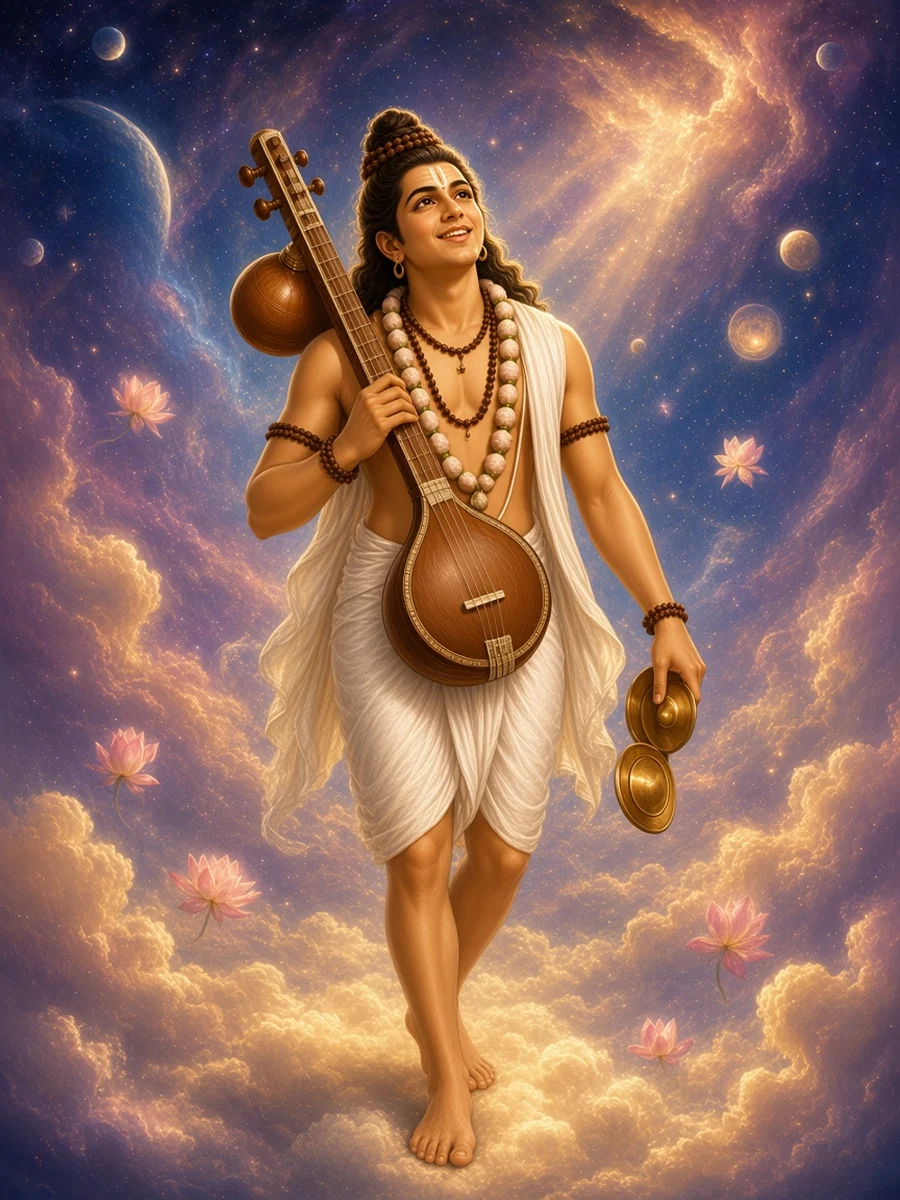
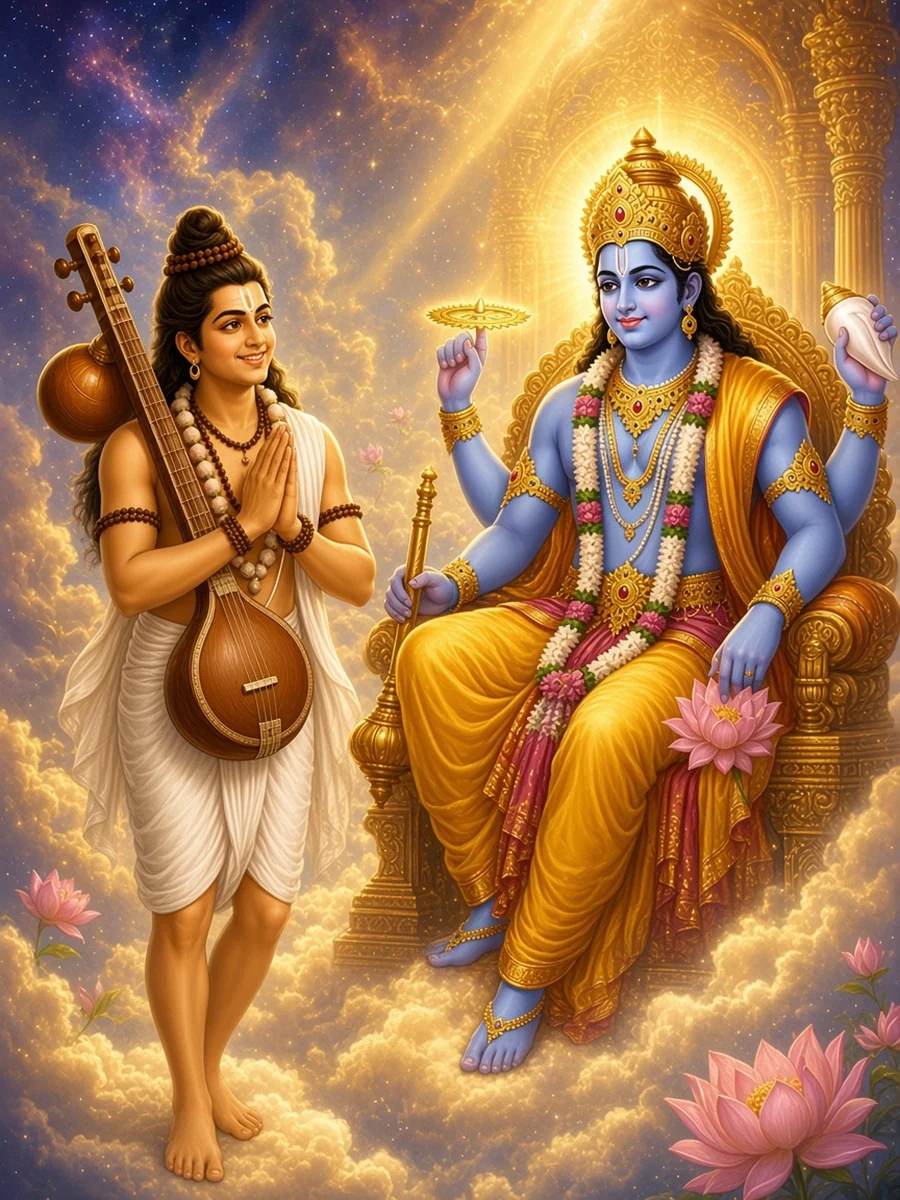
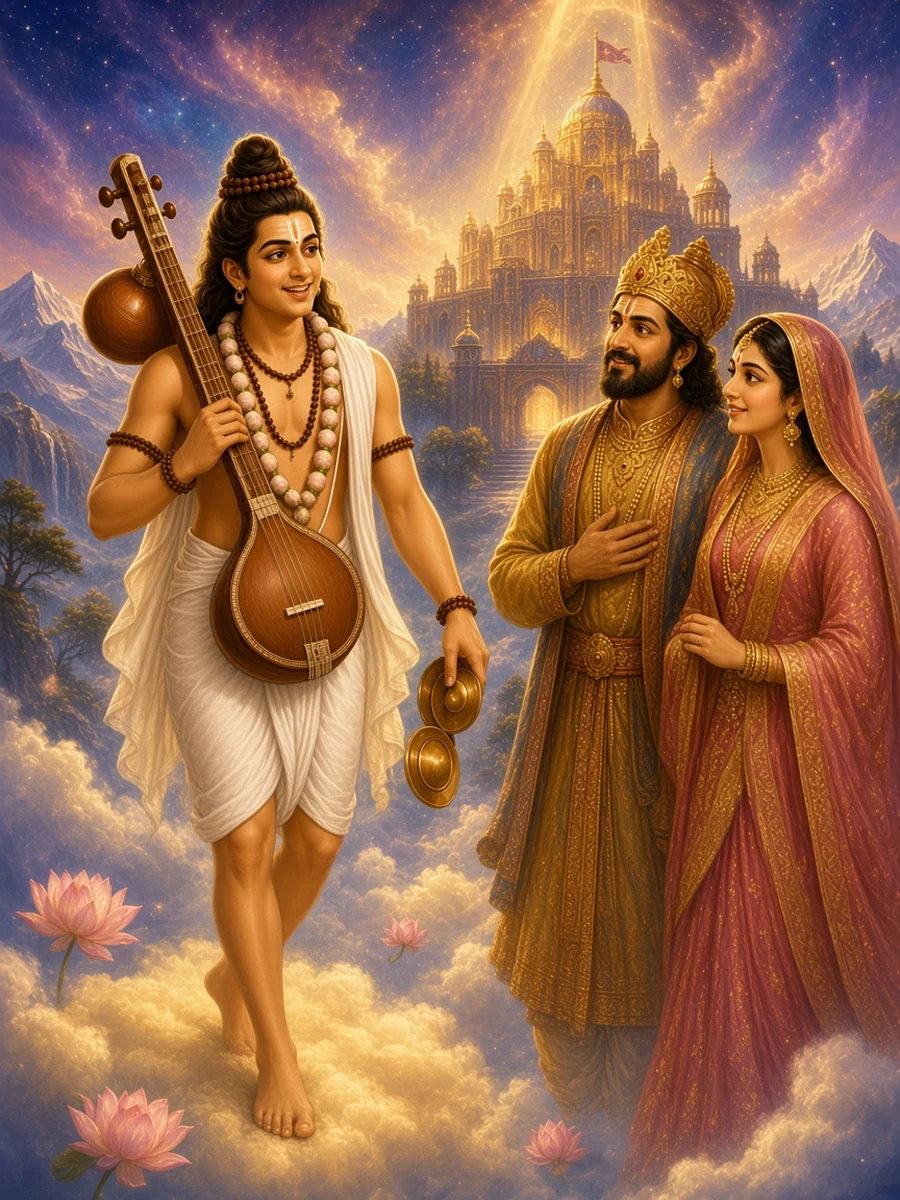
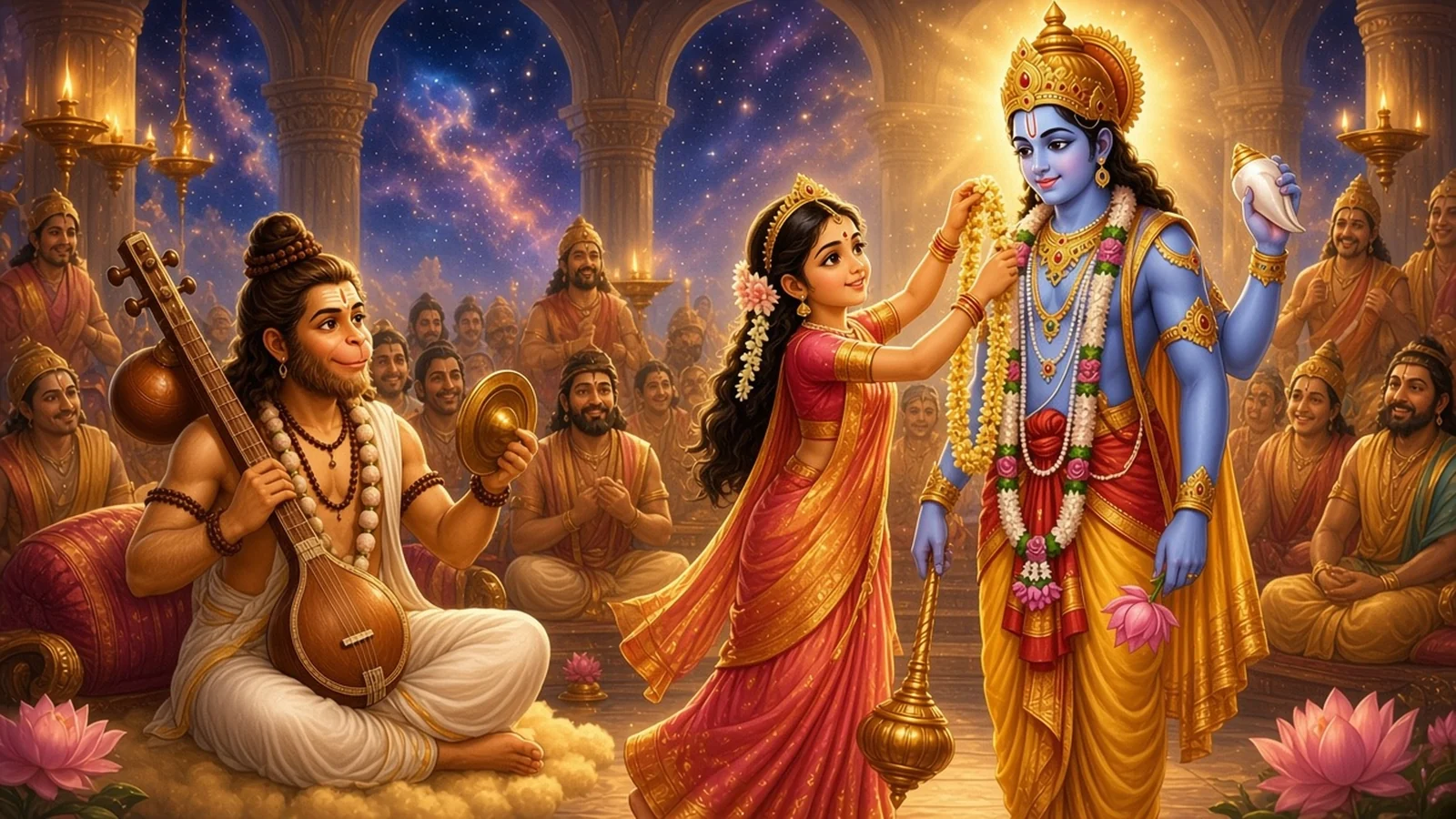
Narada singing through the worlds Narada before Vishnu

For kids

Narayana Narayana
Narayana Narayana
Have you heard?
Have you heard?

At a glance

TraditionPan-Hindu, Vaishnava at heart
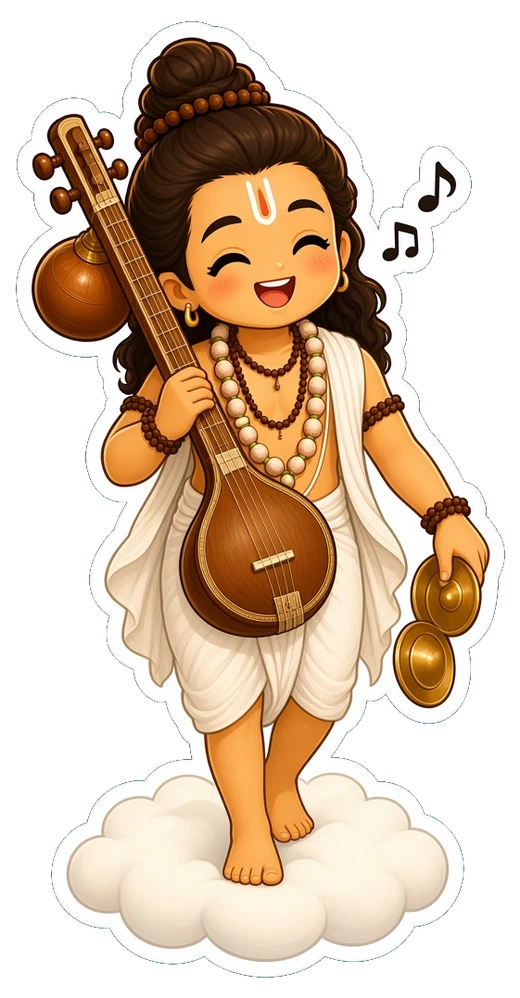
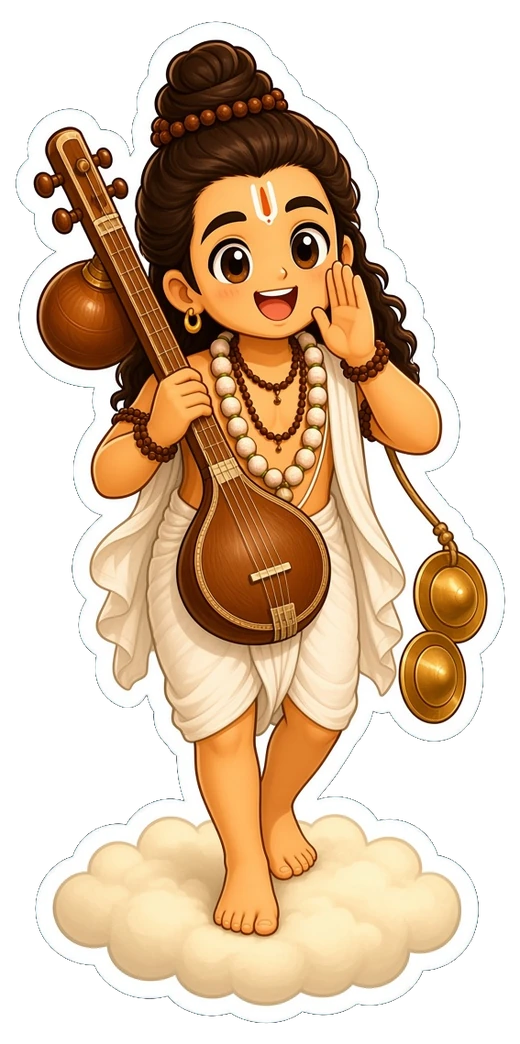
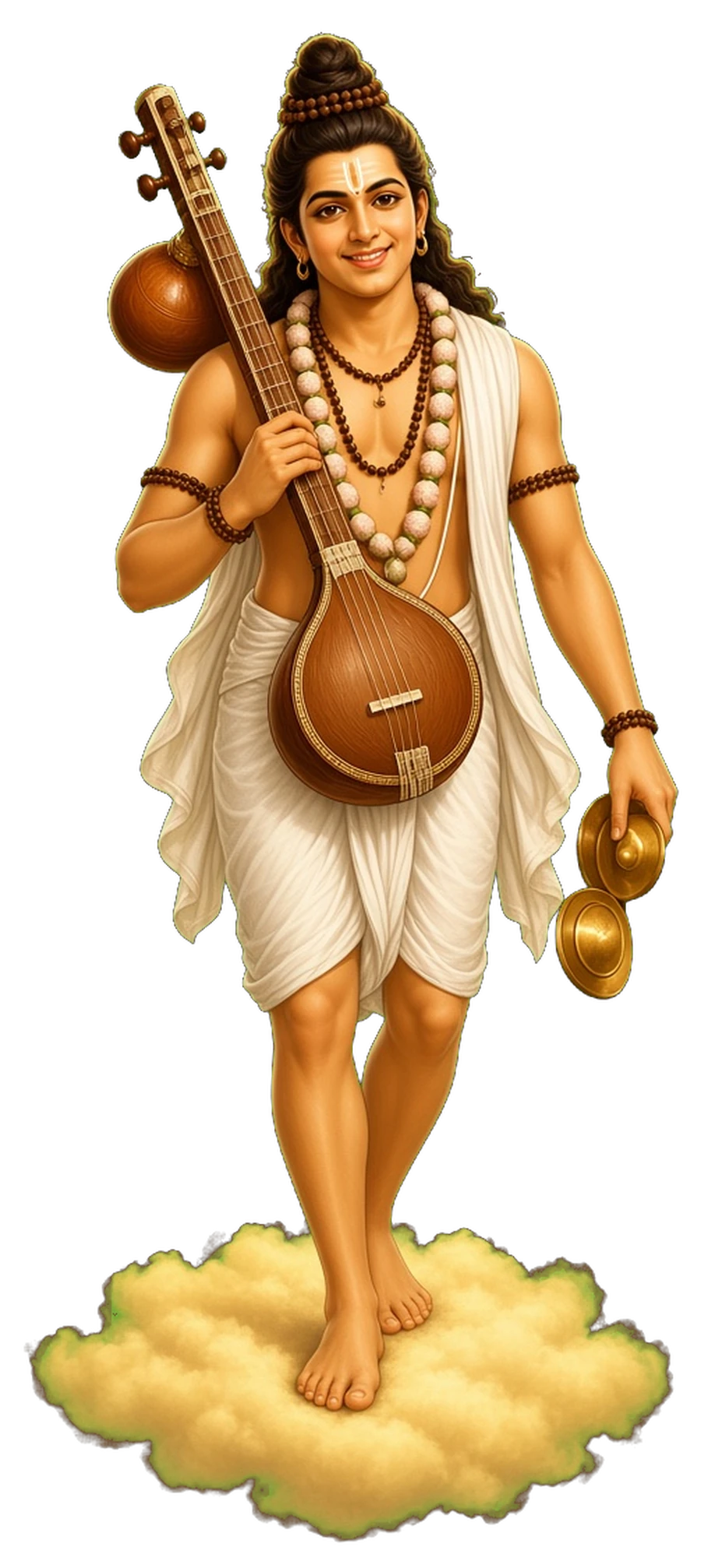
FormA sage with a topknot and a simple cloth, always on the move, walking or riding the clouds
HoldsThe vina over his shoulder

often with small cymbals in the other hand

Who Narada is

Narada is the sage of the gods, the devarshi. He is a son of Brahma, born from his father's mind, and he belongs to no single place: Daksha cursed him to wander after he talked Daksha's sons out of filling the world with children, and ever since he has turned up everywhere, on Kailash and in Vaikuntha, in the courts of kings and in forest hermitages, with his vina on his shoulder and a piece of news.

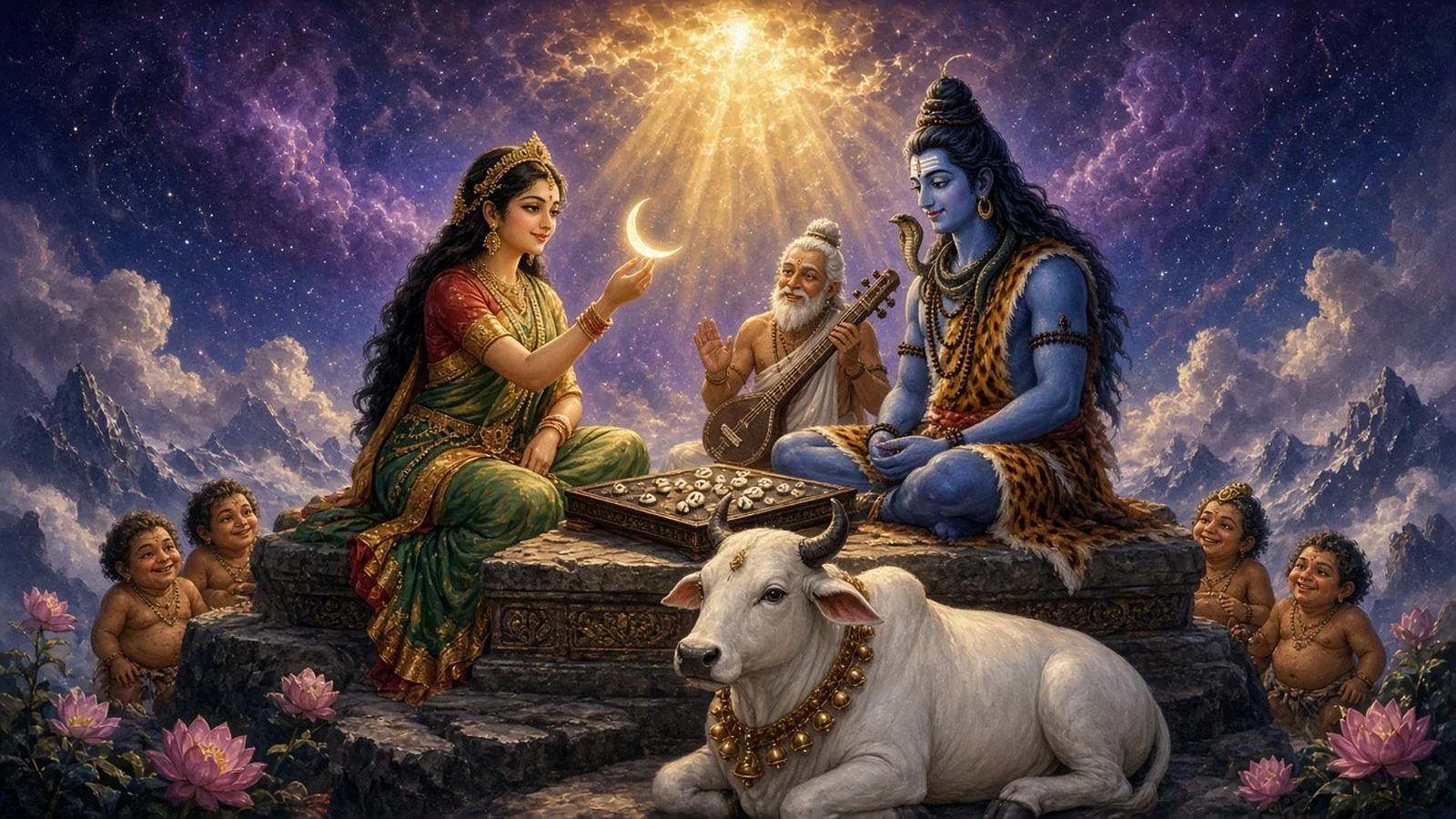
The news is often the start of a story. He tells Himavat that his daughter will marry Shiva, tells Savitri's father that her chosen husband has a year to live, and sets Parvati and Shiva to their game of dice. Many people know him best as a meddler. The Puranas know him as Vishnu's first devotee, who sings the god's name wherever he goes, and who is himself humbled again and again: he was turned into a woman to learn what maya is, given a monkey's face when he grew proud, and sent to an owl to learn to sing.

He is a teacher as well as a messenger. In the Bhagavata he tells Vyasa how he began, as a serving woman's son who heard travelling sages talk of Krishna, and sends him off to write that Purana. In the Ramayana he tells Valmiki, in a hundred verses, the story of a man called Rama. In the Chandogya Upanishad, long before any of this, he is a learned man who comes to the sage Sanatkumara and admits that all his learning has not brought him peace.

So'ham bhagavo mantravid evasmi natmavit: Sir, I know the mantras, but I do not know the Self (Chandogya Upanishad 7.1.3).

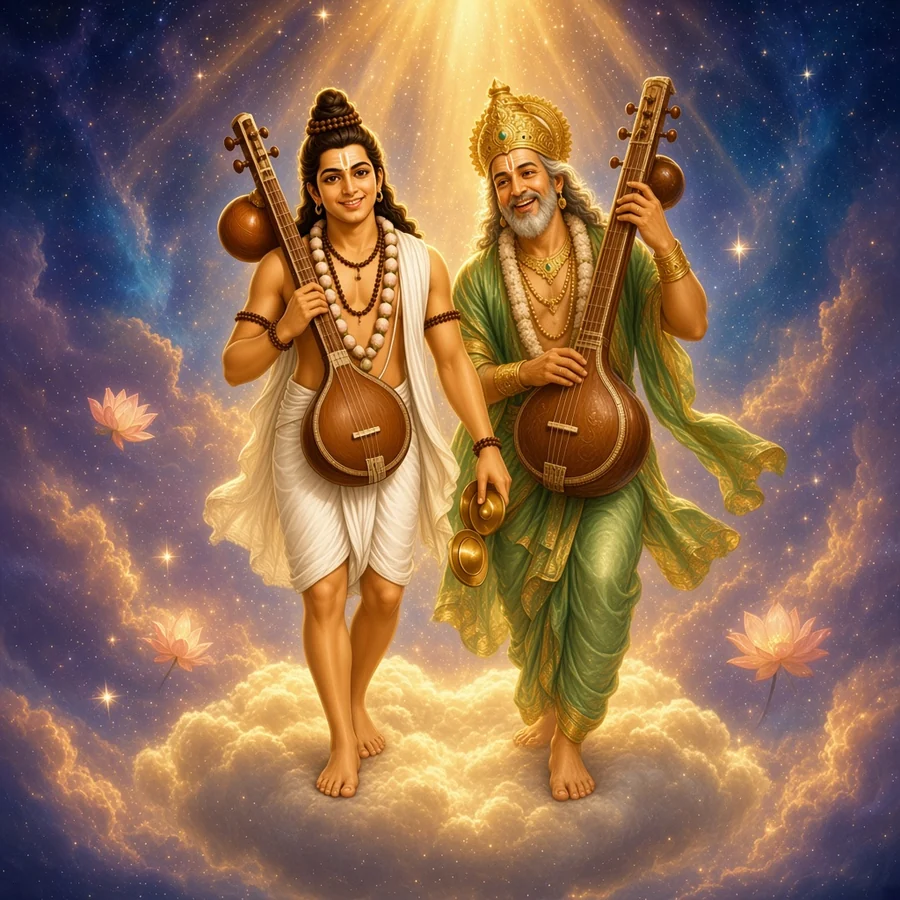
The Narada Bhakti Sutra, a short book on loving devotion, carries his name, as do a law book and a Purana. Tumburu, the Gandharva singer, is his partner and his rival.

His stories on this site: The Maid's Son, The Face of Hari and The Owl Who Taught Him to Sing. He also walks through The Sixty Sons Who Became the Years, The Sons Who Never Came Back, The Daughter of the Mountain, The Game of Dice, The Badri Tree, Who Is Awake? and Savitri and the Lord of Death.
Before the Puranas

The Vedic roots of Narada

Narada stands right at the edge of the Vedas. No hymn tells his story, but the tradition's lists of Vedic seers name him, with Parvata, as one of the poets of the Soma hymns of the Rigveda's ninth book. The Aitareya Brahmana makes him the adviser who tells King Harishchandra how to win a son from Varuna, and the Chandogya Upanishad gives him a whole teaching: he comes to Sanatkumara knowing the Vedas, the old histories and every science, and learns that all of it is only name.

The epics turn him into the traveller everyone knows. In the Mahabharata he comes to the Pandavas with stories of earlier kings and devotees, among them the story of Prahlada, which he tells Yudhishthira. In the Ramayana he opens the whole poem, answering Valmiki's question about whether a perfect man is alive in the world. Here he is still mostly a sage among sages, though a sage who knows the three worlds.

The Puranas give him a life of his own, and more than one. The Bhagavata, in its first book, has him born in an earlier age as the son of a serving woman, and in its seventh as the Gandharva Upabarhana, cursed by the prajapatis for singing among women. The Brahma Vaivarta makes Brahma the one who curses him, for refusing to marry. The Bhagavata and the Shiva Purana have Daksha curse him to wander, after he talks Daksha's sons out of having families, and that curse is the reason he cannot stay anywhere.

The same Puranas use him to show what pride and maya can do even to the wisest of the devout. The Shiva Purana and Tulsidas tell how he boasted of beating desire and was given a monkey's face; the Devi Bhagavata, how he was turned into a woman. The Linga Purana and the Adbhuta Ramayana make him a musician who had to learn humbly, and the Vaishnava traditions made him the model devotee whose vina never stops.

See how the Vedic gods became the Puranic ones →

Every story about Narada

Related gods