The Bhavishya Purana's telling
Uttara Parva 94, as Krishna tells it to Yudhishthira · 4 min read
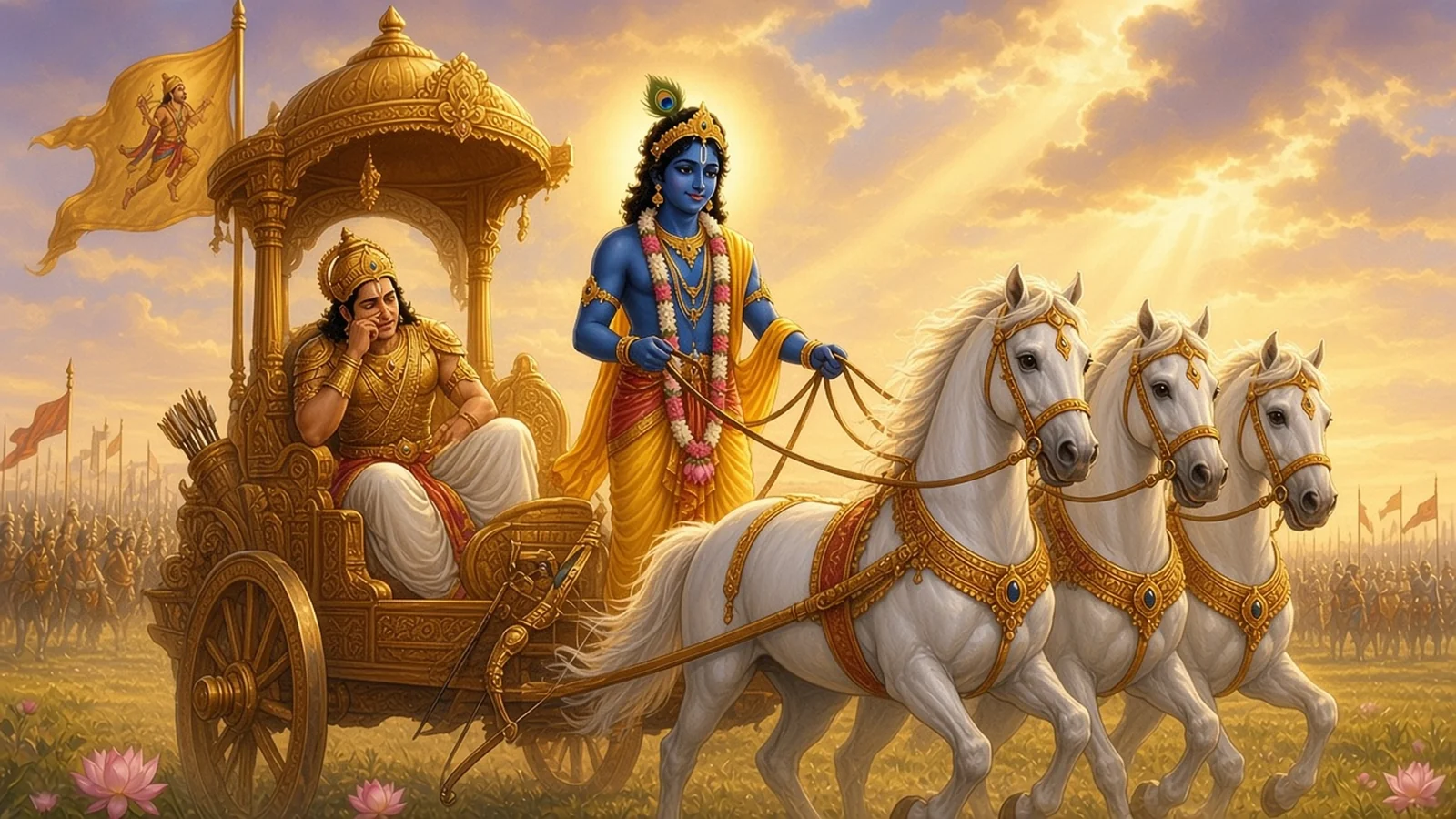
In the forest Yudhishthira asked Krishna about the vow of the fourteenth day. "You call it the vow of Ananta. Who is Ananta? The serpent Shesha? Takshaka? The Self beyond everything?"
"Ananta is my own name," Krishna said. "I am time, from the moment to the aeon. I am Vishnu, and Shiva and Brahma and the sun, and Shesha as well. Hear what happened to a man who scorned me."
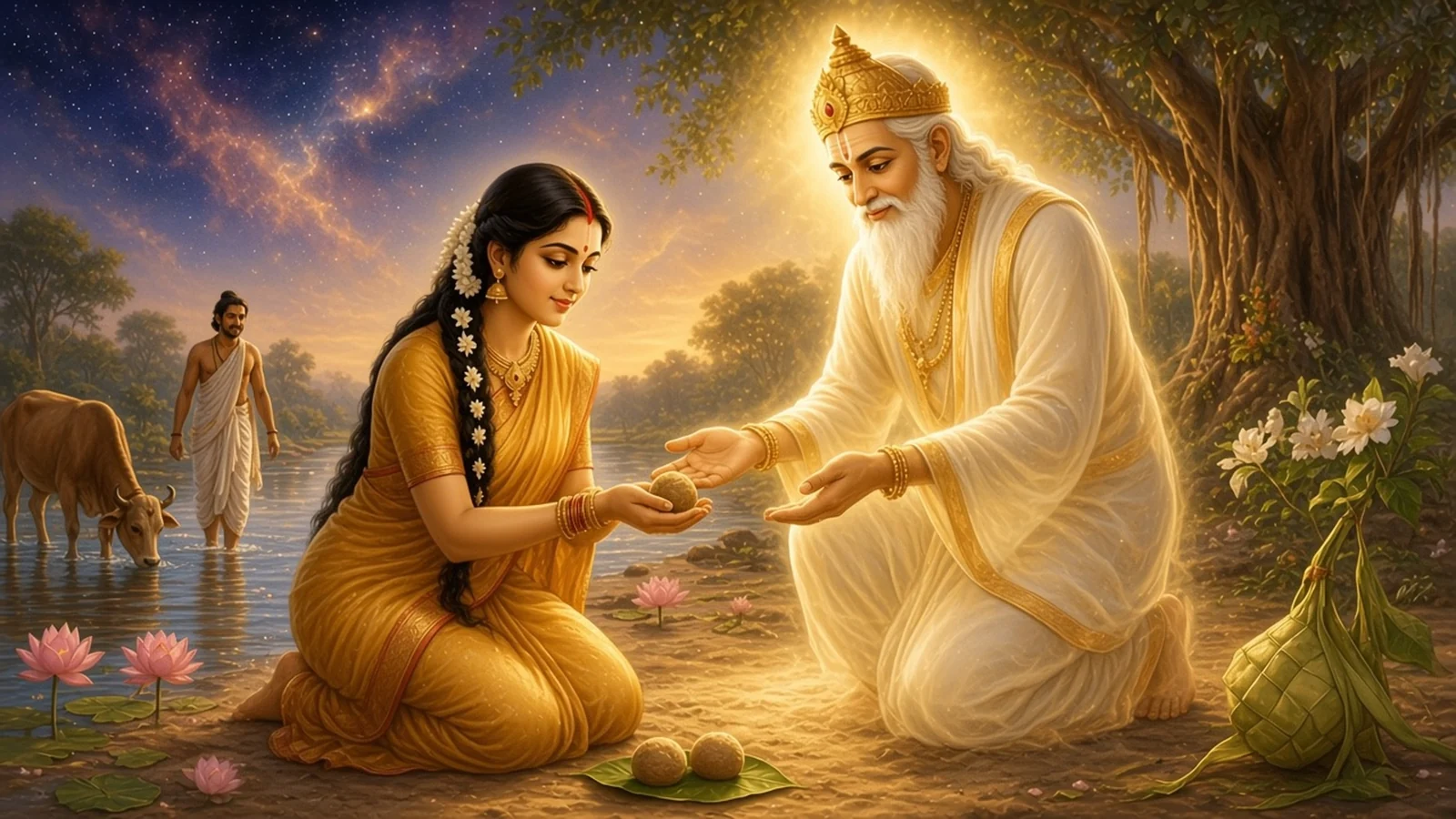
In the first age a Brahmin named Sumantu, of Vasishtha's line, had a wife, Diksha, of Bhrigu's family, and a daughter, Shila, called Sushila. Diksha died of a fever on a riverbank, and Sumantu married Karkasha, who was as harsh as her name.
Sushila grew up quietly, painting svastikas, conches and lotuses on the walls, doorsteps and pillars, and worshipping them. When she was grown, Sumantu gave her to a sage named Kaundinya, and then turned to his wife.
"We should send the boy off with something."
Karkasha pulled down the wedding pavilion with her own hands, went inside, bolted the door and called through it, "Go." What came out for the road was the flour left over from the feast.
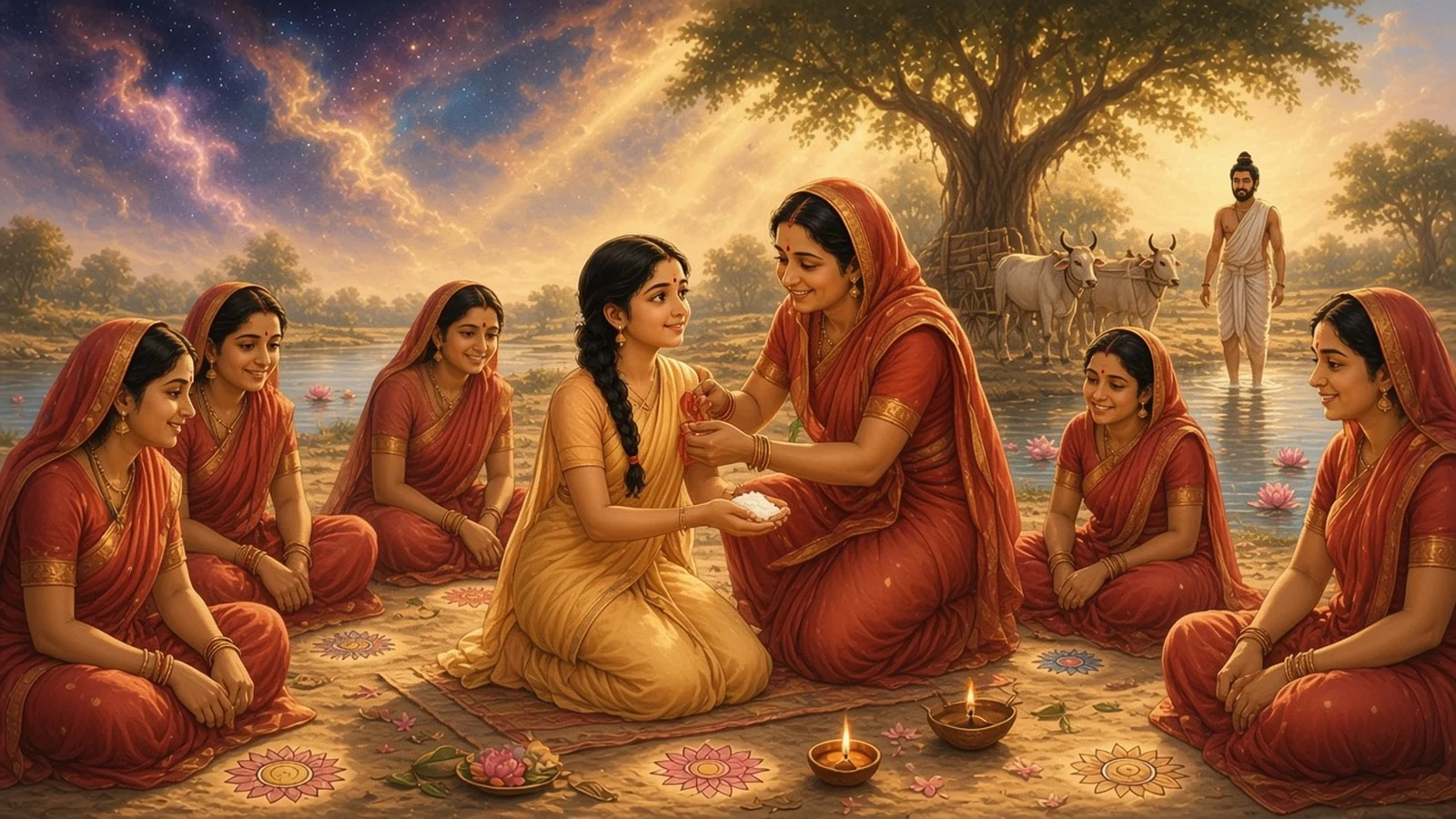
The couple set off slowly in an ox cart. At noon Kaundinya stopped by a river to bathe and eat, and Sushila saw a crowd of women in red, each worshipping a god on her own. She went to them.
"Sisters, what worship is this?"
"The vow of Ananta," they said. "Today is the fourteenth." They showed her. A measure of cooked food, half for a Brahmin and half to eat. The god worshipped in a drawn mandala with scent, a lamp, incense and flowers. A strong cord reddened with kumkum and tied in fourteen knots, worn on a woman's left arm or a man's right until the year came round. As they tied it they begged Vasudeva to pull them out of the endless sea of the world, where they were drowning.
Sushila had only the leftover flour, and she gave it. By the time the cart reached Kaundinya's hermitage, it was full of cattle, money and grain, and she moved through it shining like Savitri.
One day Kaundinya, sitting at his ease, noticed the knotted cord at the root of her hand. Angry and sneering, he broke it.
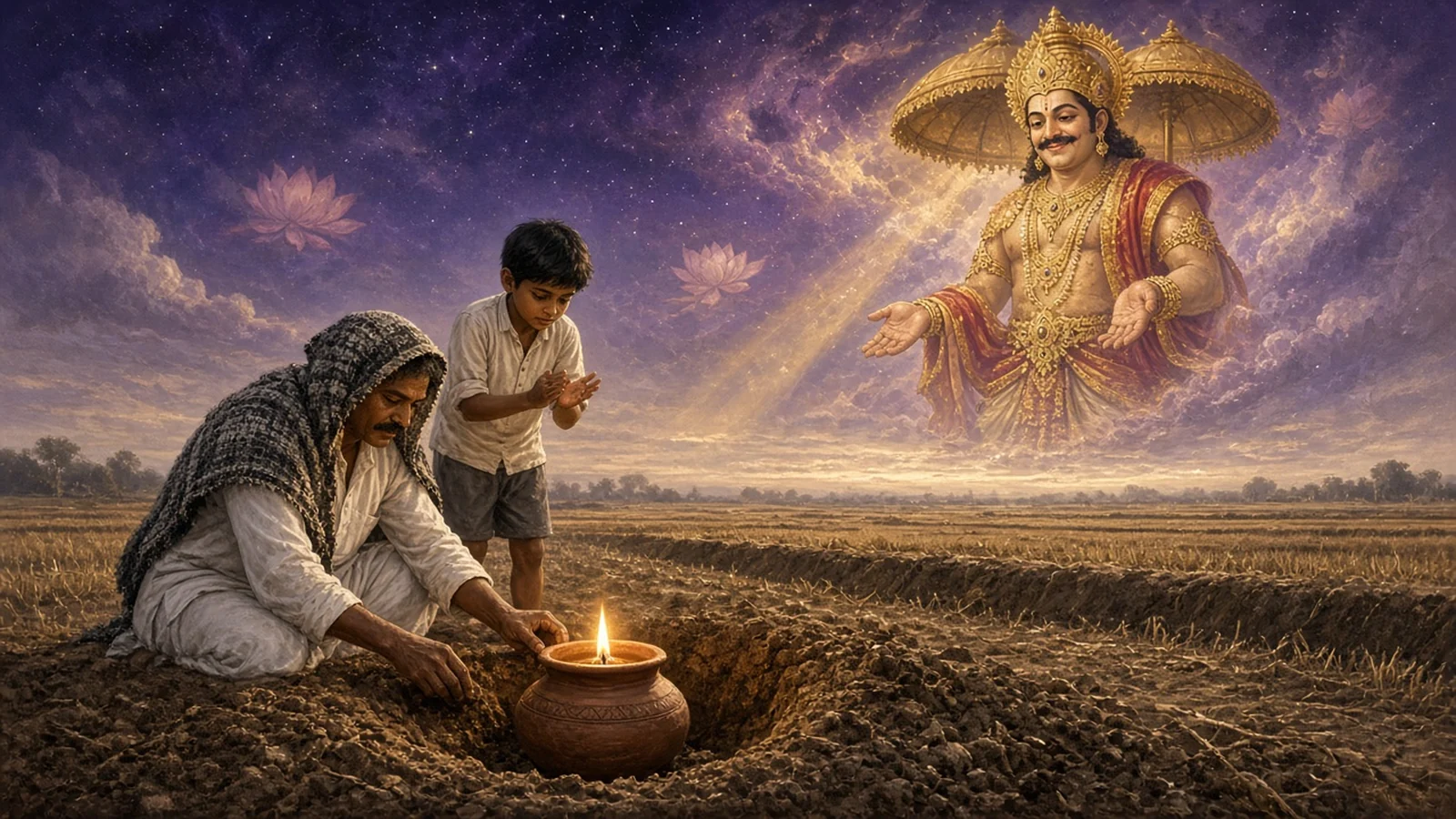
Thieves drove off the cattle. The house burned down. He quarrelled with his kinsmen and his friends, poverty moved in, and in the end nobody would speak to him at all. Then he understood whom he had insulted. He went into the forest, eating nothing, keeping himself chaste, repeating the name of Hari.
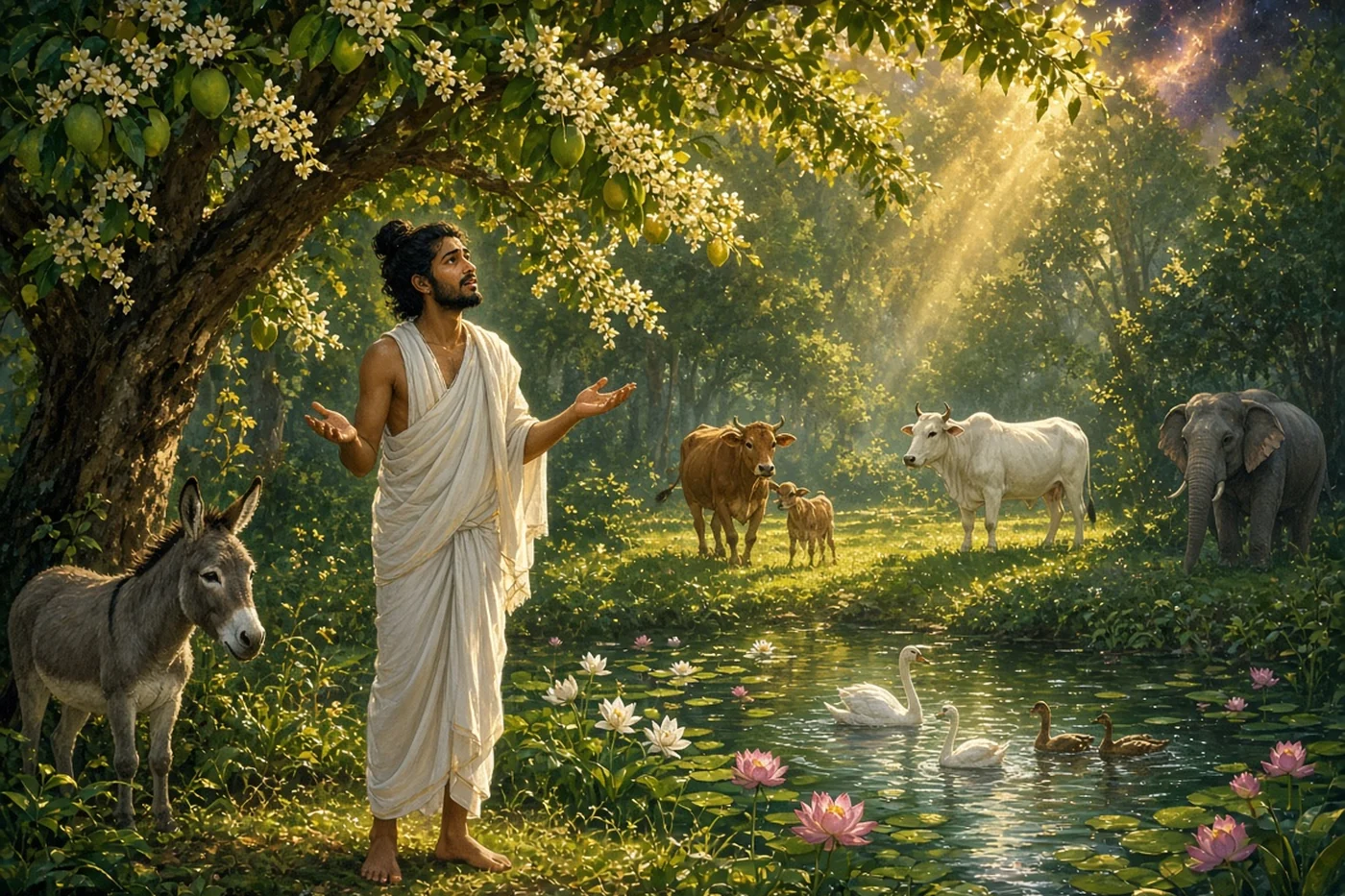
He came to a great mango in flower and fruit. "Have you seen Ananta?"
"I do not know him," said the tree.
He asked a cow running through the grass with her calf, and a bull standing in a meadow. He asked two lovely ponds whose waves ran into each other among lilies and lotuses, swans and geese, and a donkey, and an elephant. None of them knew. At last he sank to the ground.
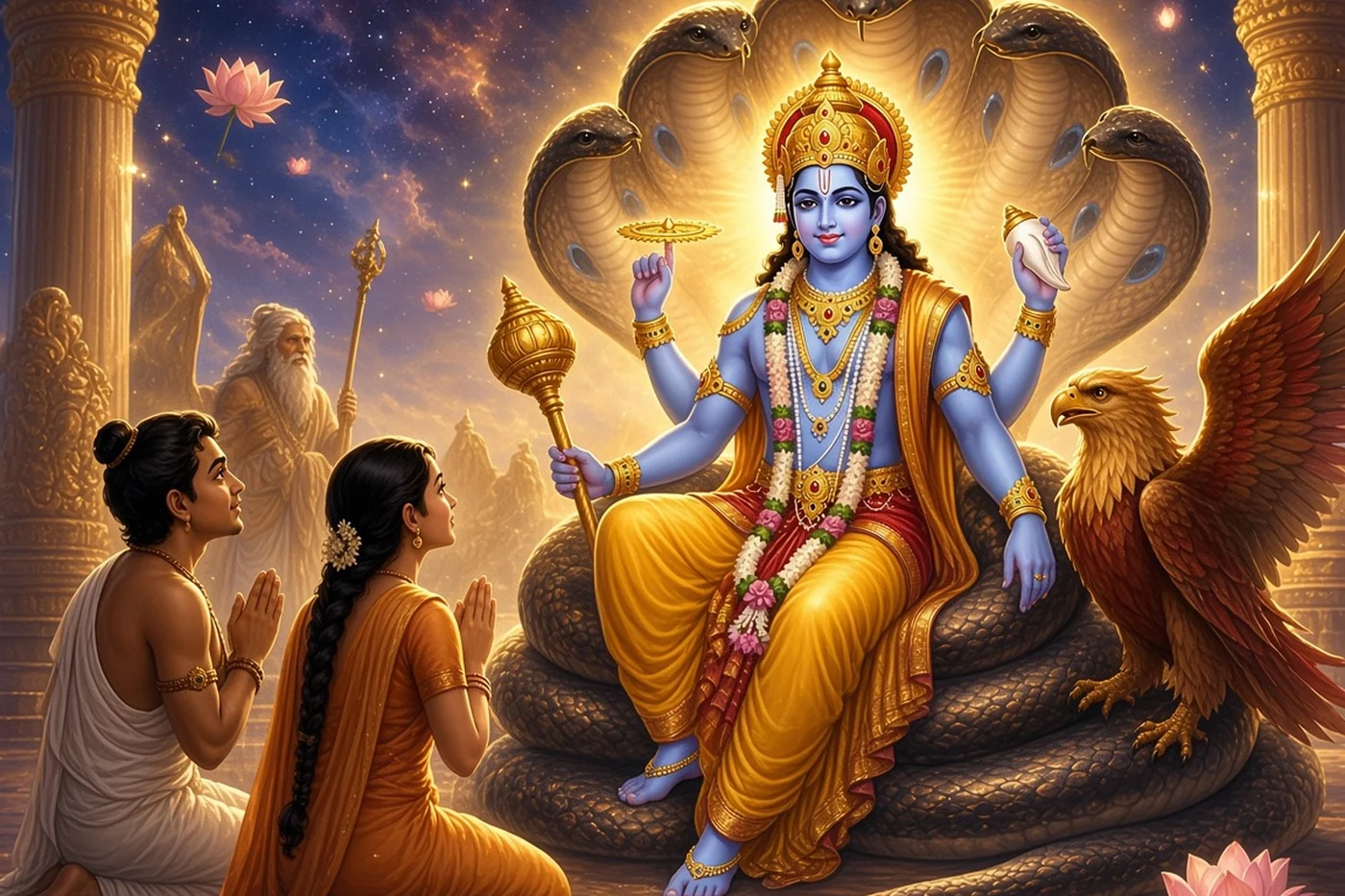
An old Brahmin stood over him. "Come this way," he said, and led him by the right hand into his house. Inside was a city full of shining men and women, and on a throne sat the god himself, with conch, discus and mace, Garuda before him, filling every direction.
"I am a sinner and my deeds are sin," Kaundinya said, "but today my birth has borne fruit."
Then the god explained what he had seen. The mango had been a learned Brahmin, proud of his Veda, who never taught a pupil. The cow was the earth, which had borne nothing. The bull was Dharma. The ponds were two sisters who argued all their lives about right and wrong and gave nothing to anyone, and their waves still clash. The donkey was anger, and the elephant a man who corrupted dharma. "And the old Brahmin was I, Ananta, hidden in the cave of the world."
"Keep my vow for nine years and five," he said, "and you will have sons and grandsons, and at the end a place among the stars."
Kaundinya went home and kept it with Sushila. At the end they became the star Punarvasu, which can still be seen shining.
The Guru Charitra's telling
Ganagapur, Karnataka · the Marathi life of Narasimha Saraswati, chapter 42 · 2 min read
At Ganagapur, Narasimha Saraswati told this to his devotee Sayamdev, as Krishna had once told it to the Pandavas in exile.
Here Koundinya stayed on at Sumantu's house after the wedding, through Ashadh and Shravan, and Karkasha never stopped quarrelling. Sumantu sighed. "Where there is no peace, a home is a forest." They stayed twelve more days. On the thirteenth Karkasha shut herself in the inner room and propped stones against the door, so Sumantu could only give the couple a bundle of wheat bran for the journey.
The next morning, by a river, Sushila saw women in red silk saris worshipping Anant on the sand. She did as they did. She shaped Anant and Shesha out of darbha grass, worshipped them with the sixteen offerings, and tied a red string with fourteen knots on her wrist. Their luck turned, and in time they had a kingdom.
Then one day Koundinya caught sight of the string. "Did you tie this on to keep me under your thumb?"
"It is Anant," she said. "By his grace we have this kingdom."
"By my penance, you mean." He threw it into the fire. Sushila snatched it out and laid it in milk.
Everything they had was gone soon after. Koundinya vowed that he would neither eat nor drink until he saw Anant, and went into the forest with Sushila. A tree whose fruit no bird would touch called after him, "If you find him, ask him about me." So did a cow and her calf who could not eat the grass, a great bull, two lakes whose water no goose would drink, and an elephant and an ass who could not speak.
An old Brahmin led them to a splendid city, seated Koundinya on a jewelled throne, and showed himself as he truly was. He granted three boons: dharma, an end to poverty, and a home in Vaikuntha at the last. Then he explained. The tree was a proud scholar who would not teach. The cow had given barren land as a gift. The bull was a rich Brahmin who gave nothing. The lakes were sisters who gave alms only to each other. "The elephant is your anger and the ass your vanity. All of them are freed now."
Koundinya ruled for many years. Sayamdev went home and had his son Nagnath keep the Anant puja.