As the Kalika Purana tells it
Chapters 38 and 39 · Pragjyotisha and the Nilakuta hill · 3 min read
When Naraka, the son of the Earth, was sixteen, Vishnu brought him east by the river road of the Ganga to the country of Kamarupa. A Kirata king named Ghataka ruled there. Naraka killed him in battle and drove his people east as far as the seat of the goddess Dikkaravasini.
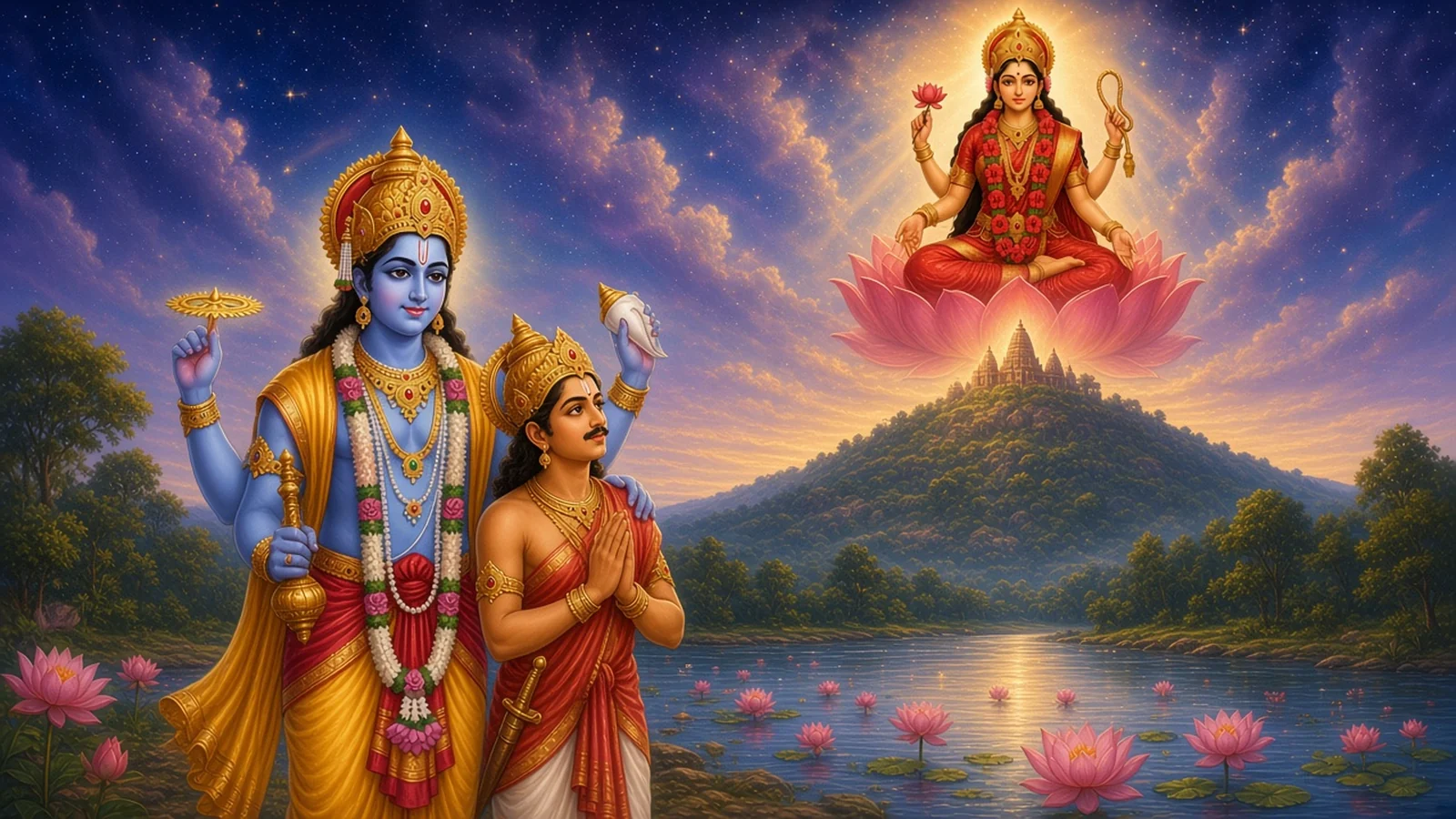
Then Vishnu gave him the land, from the river Karatoya in the west to the seat of Lalitakanta in the east, and made him king of Pragjyotisha.
"The mother of the world lives here," Vishnu told him, "in the form of Kamakhya. Worship her and no one else, no other god and no other goddess. Keep that promise and you will prosper. Break it and you will die."
For a long time Naraka kept it. He worshipped the goddess on her hill, Nilakuta. He settled brahmins in his kingdom, the sacrifices smoked, and he ruled like Indra in heaven.
Then, at the end of an age, a new king rose in Shonitapura: Bana, the son of Bali, with a thousand arms, the friend of Shiva. Bana and Naraka visited each other and sent each other presents, and their friendship burned like the wind and the fire together. Little by little Naraka grew like his friend. He no longer honoured the brahmins. He stopped going to Vishnu, stopped praying to his mother the Earth, and stopped climbing the hill.
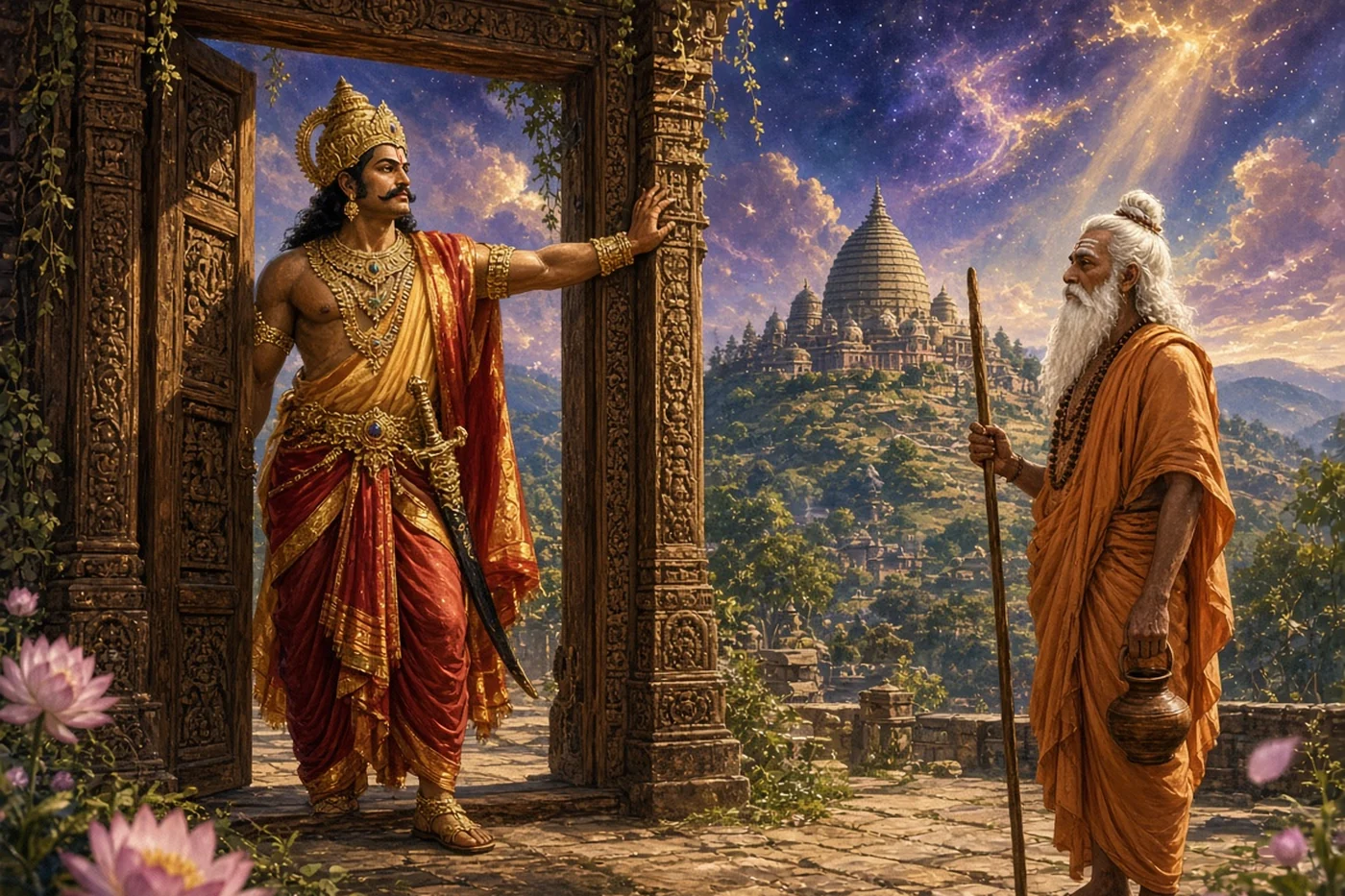
One day the sage Vasishtha, the son of Brahma, came to Pragjyotisha to worship the goddess. Naraka would not let him through the gate.
"You are the son of Varaha and the Earth," said Vasishtha. "Is this how your family behaves, keeping a brahmin from the goddess? Let me pass. I have come to worship the mother of the world."
Naraka answered him with insults and barred the way.
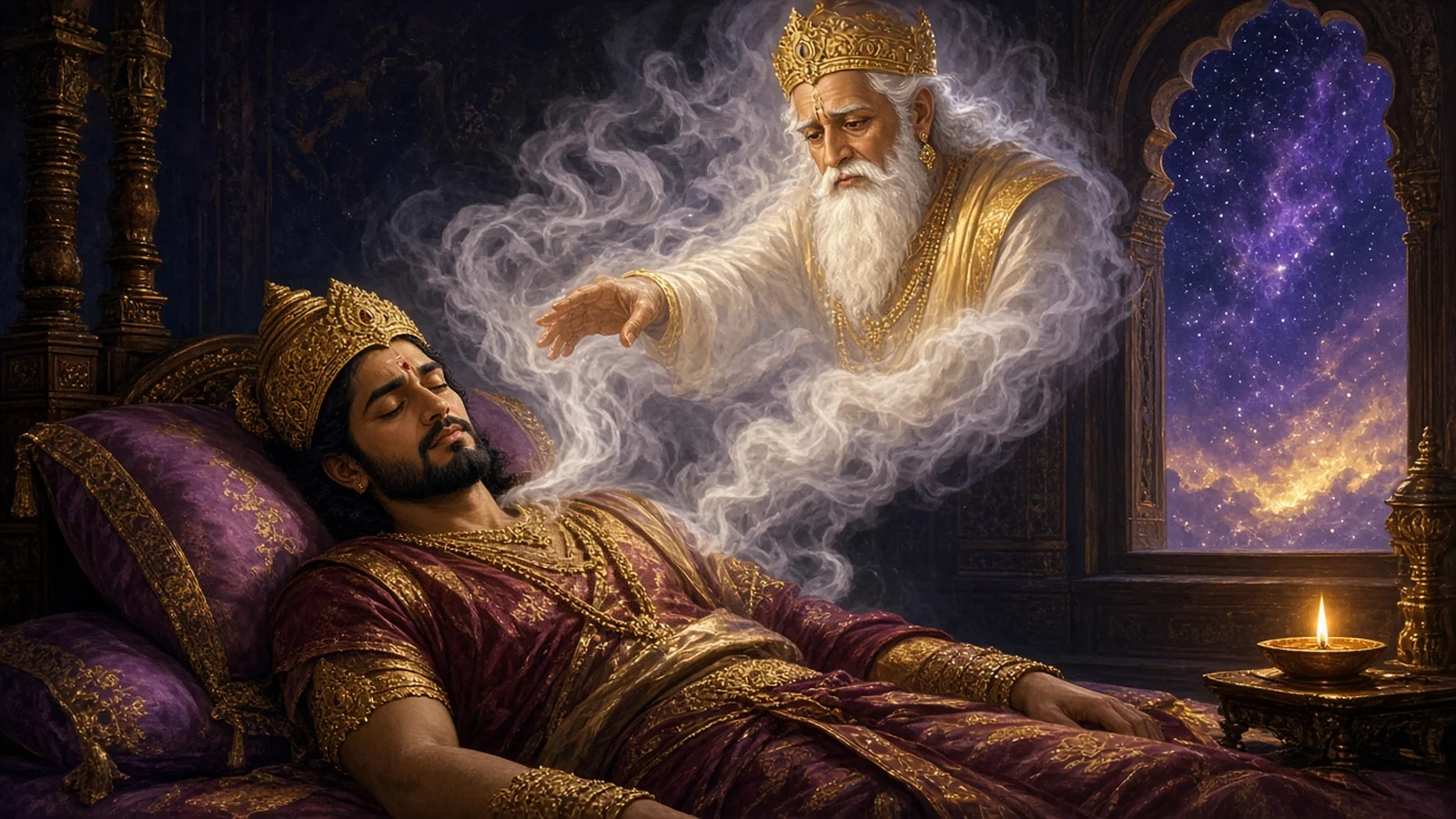
Then Vasishtha cursed him.
"You disgrace your father's line," he said. "Before long you will be killed by the one who gave you life, born as a man. I will not worship Kamakhya until you are dead. I am going home. And let the goddess and all her attendants vanish from this place for as long as you live."
He turned and went.
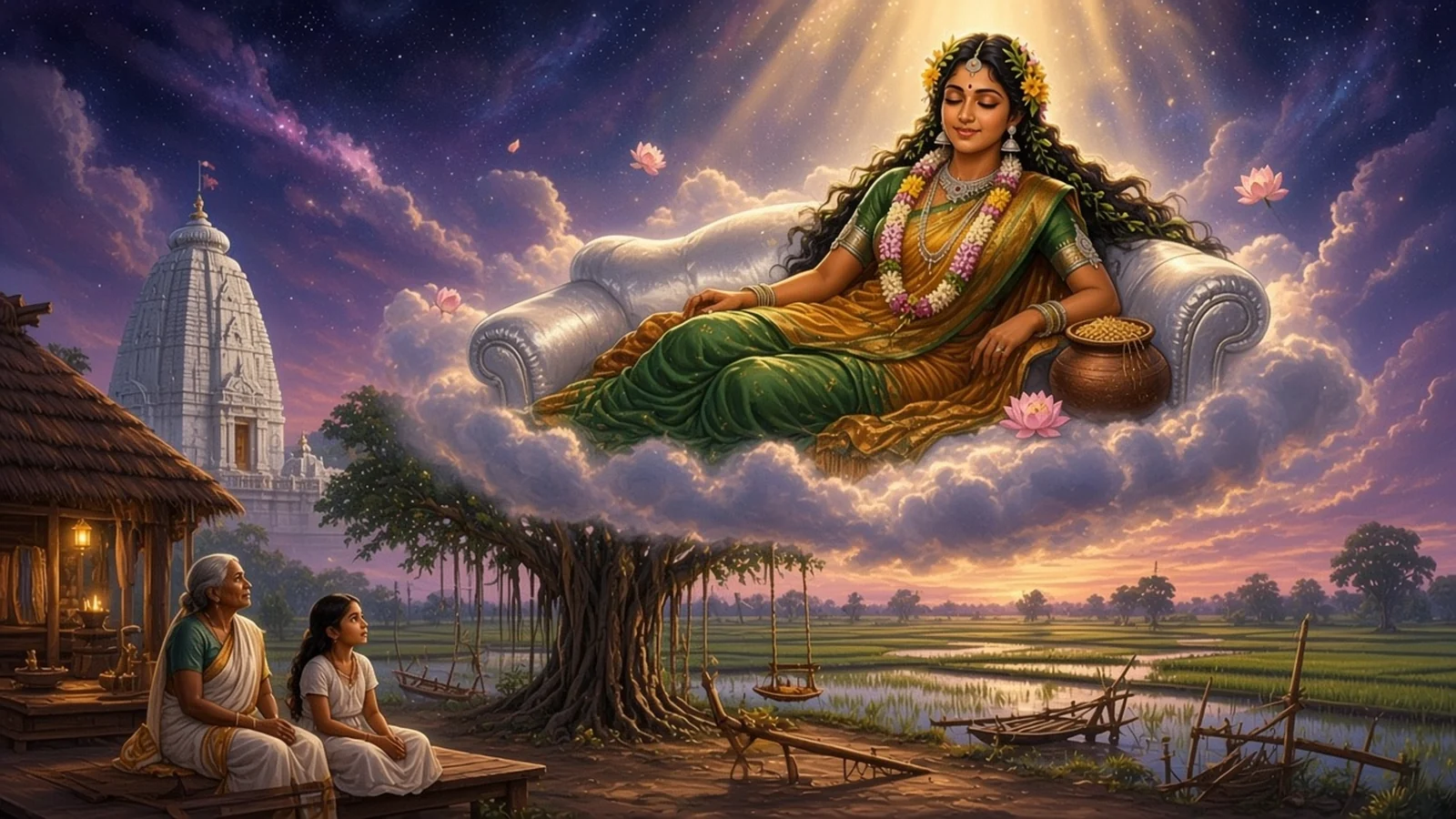
Naraka hurried up the hill. Where the goddess had been there was nothing: no goddess, no seat, no attendants. He called for his mother, the Earth. He called for his father. Neither came. He had broken his promise, and they would not show themselves to him.
He went down to his city, and it was not the city he had left. No Vedas were chanted. No gods came, and no sages, and no one held a festival. Troubles came instead, people died, and the great river, the Lauhitya, ran shallow in its bed.
Naraka sent for Bana, and Bana came in a chariot drawn by three hundred horses.
"Do not trust Vishnu," said Bana. "He was never on your side. Win Brahma's favour instead."
So Naraka sat for a hundred years on Brahma's hill above the Lauhitya, until Brahma came to him and offered him boons. Naraka asked for five, and Brahma granted every one.
There was one thing he forgot to ask. The Purana says he was so bewildered that he never asked to be freed from the curse. His city grew rich again. The goddess did not come back.
As Assam tells it: the stair before cockcrow
Assamese tradition · Nilachal hill and Kukurakata · 2 min read
In Assam they tell a different story of how Naraka lost her, and it begins not with a sage at the gate but with a king who wanted a bride.
Naraka, they say, worshipped Kamakhya so long and so well that one day he asked her to marry him.
The goddess did not refuse. She set him a task.
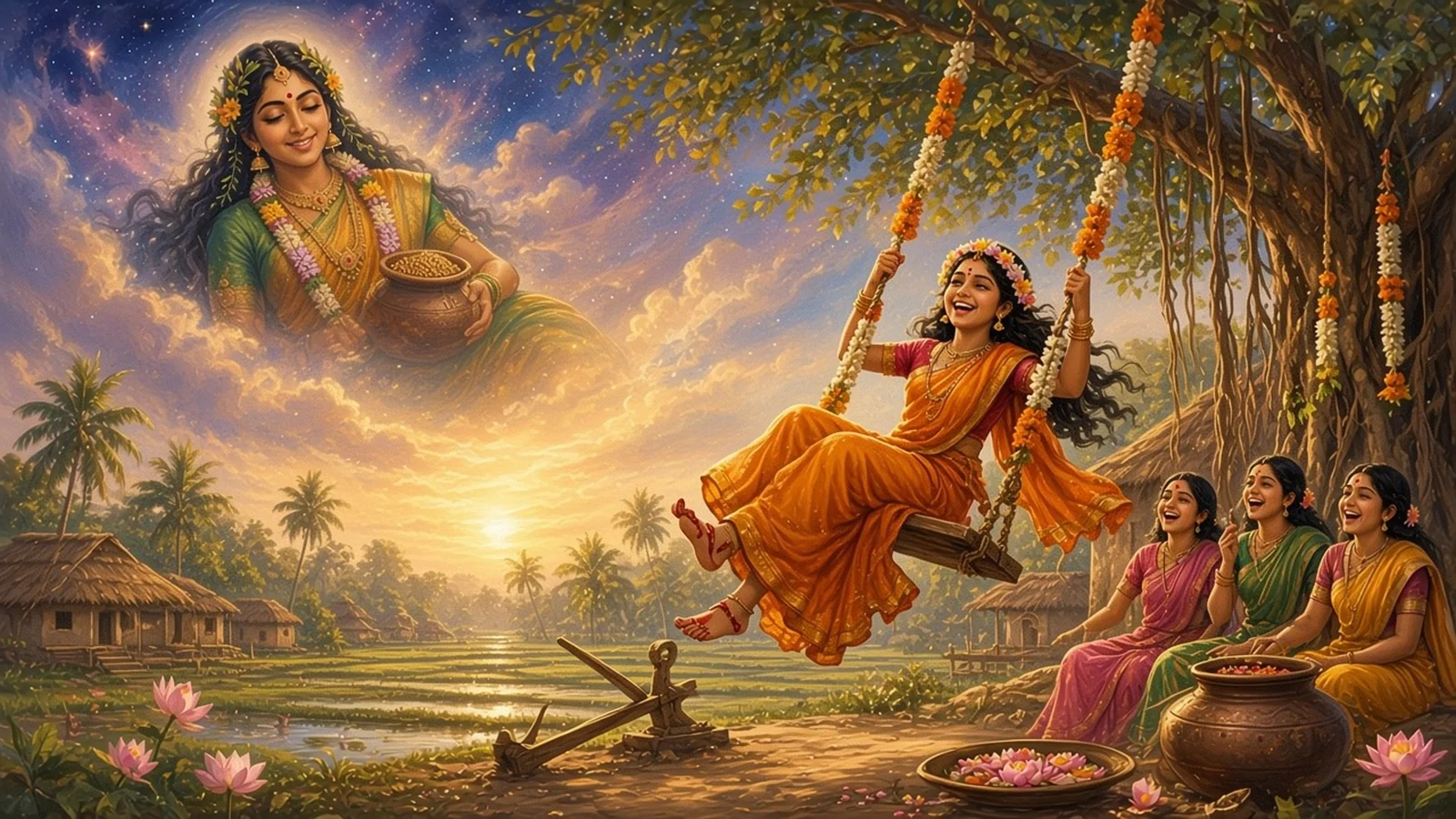
"Build me a stair," she said, "from the foot of this hill up to my temple, all in one night. If it is finished before the cock crows, I will be your wife."
Some tellers ask more of him: a temple on the hill, a tank, and a stone road up from the river side, all in a single night.
Naraka began at dusk. He was a demon king, strong and quick, and the stones went up the slope one after another. In the last hours of the night the stair was nearly at the top.
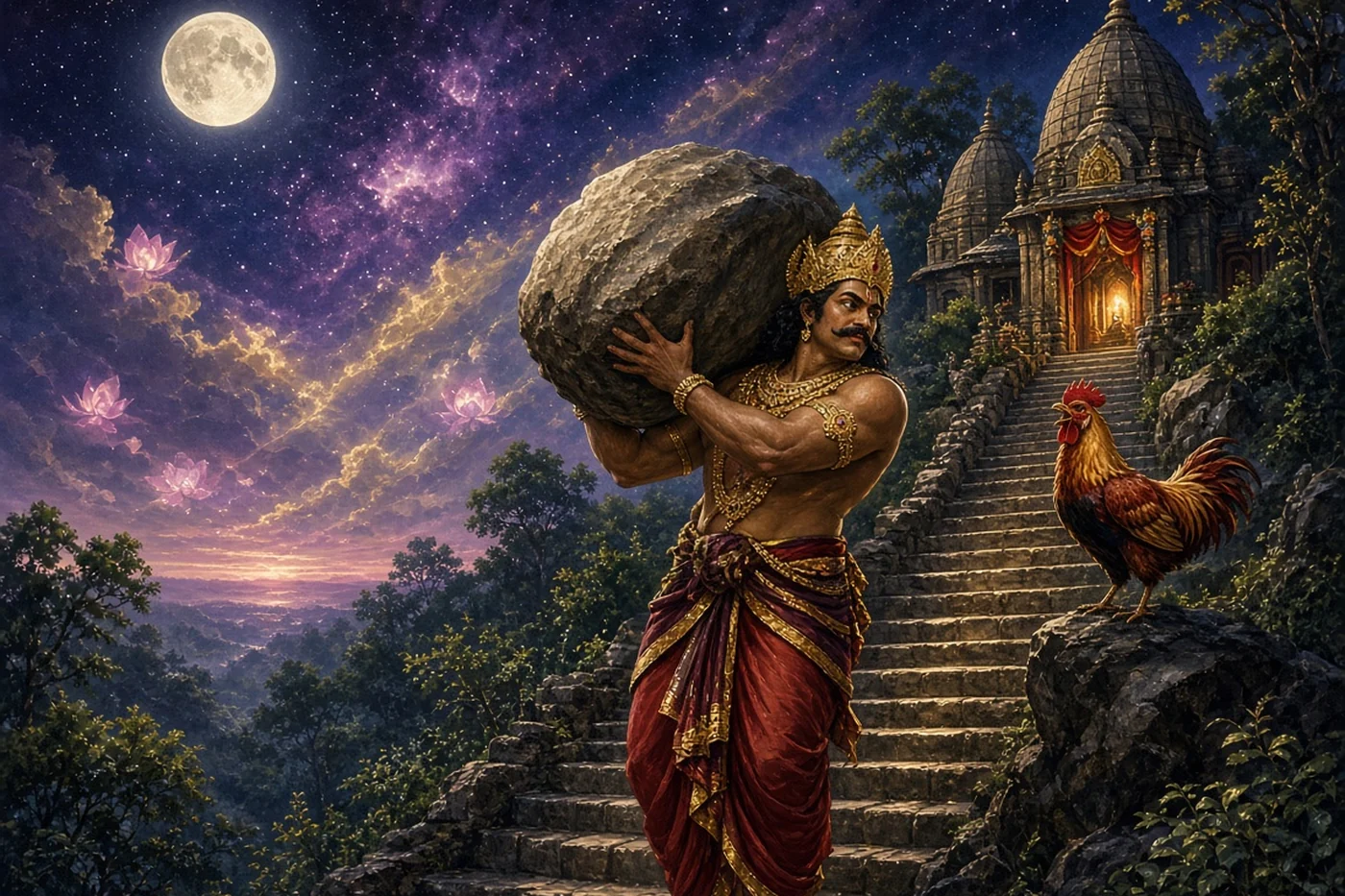
Then a cock crowed.
It was not morning. The goddess had made the bird crow early. But Naraka heard it, thought the night was gone and the task lost, and threw down his work.
When he found out how he had been tricked, he was furious. He chased the cock and killed it. The place where it died is still called Kukurakata, and the old stone path up the hill, never finished, is pointed out as his. Some call it the Mekhelauja path.
After that, writes E. A. Gait in his History of Assam, Naraka lost her favour for ever. Gait puts the quarrel with Vasishtha afterwards, as his crowning misfortune, and in that telling the curse falls on the shrine as well: no one who prayed there would see a wish fulfilled, until Shiva stepped in and limited the curse to three hundred years.