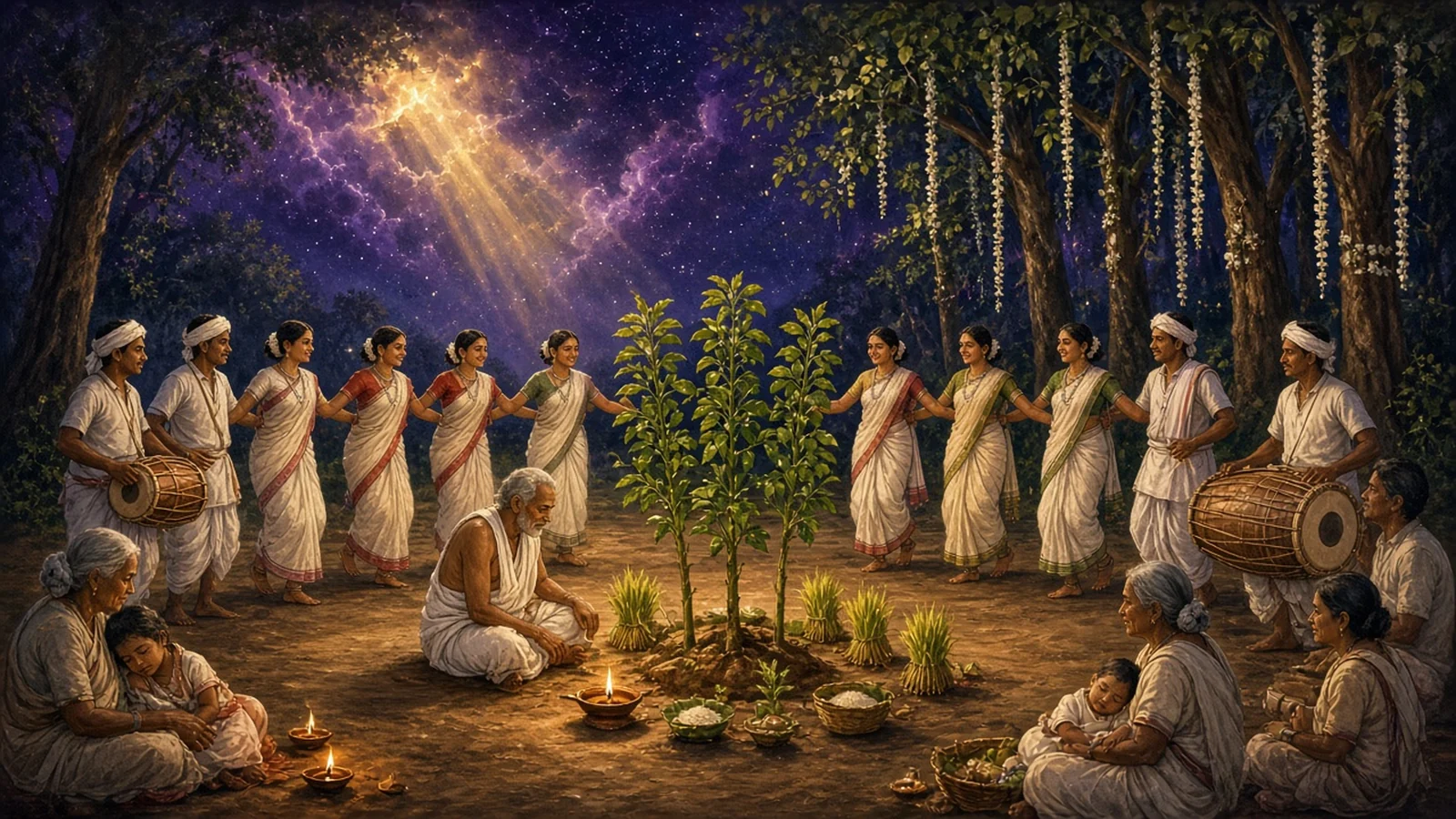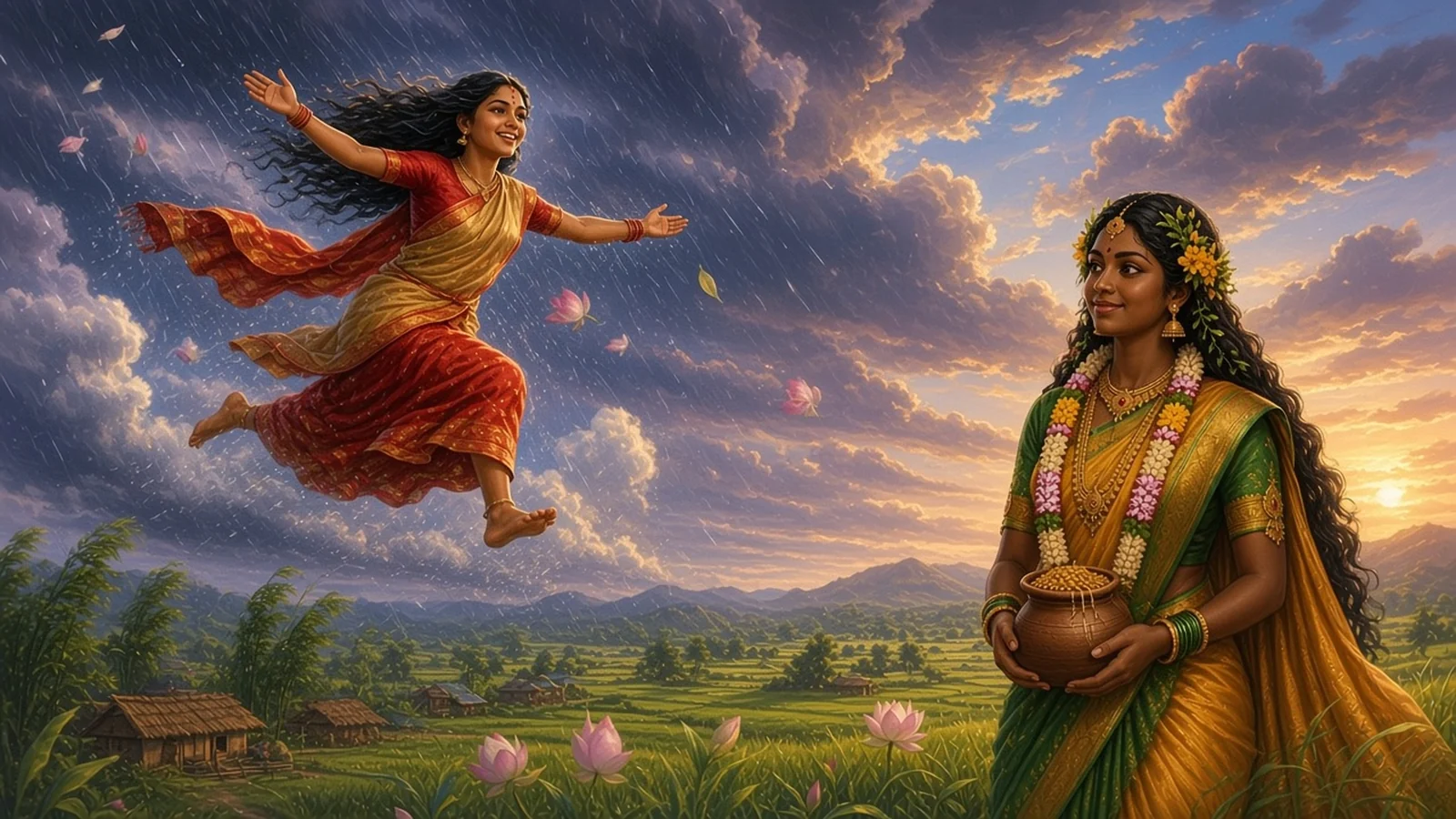
As a Cuttack village keeps it: four days in one house
East India · a village near Salipur, Cuttack district, in the middle of June · 3 min read
On the evening of Sajabaja, Mini's mother lined an earthen pot with sal leaves and poured in the batter she had left to rest since the night before: rice and black gram ground fine, with coconut and jaggery folded through. She laid more leaves on top, sealed the lid, and heaped coals on it.
"Don't lift it," she told Mini. "Not to look, not to smell. It comes out when it is ready."
"What if it burns?"
"It is meant to burn. Only on the outside."
Across the yard Bapi was packing a basket for their sister Rupa, who had been married two years and lived across the river. A new sari, a bottle of alata, a little pot of sindoor. Every married daughter of the village would get one from her mother's house tomorrow, and usually a brother carried it.
"Tell her that her mother has not forgotten her," said their grandmother.
"She knows that," said Bapi. "That's why the basket is so heavy."
Before light on Pahili Raja, Mini went with the girls of the lane to the tank, rubbed with turmeric and oil, and from there to the Raja Ghara, the room in Sabita's house where they dressed each other. This was the first year Mini was counted among the older ones. Sabita's aunt drew sandal and kumkum along their foreheads in small careful dots. Somebody's alata spilled on the mat and nobody was scolded for it.
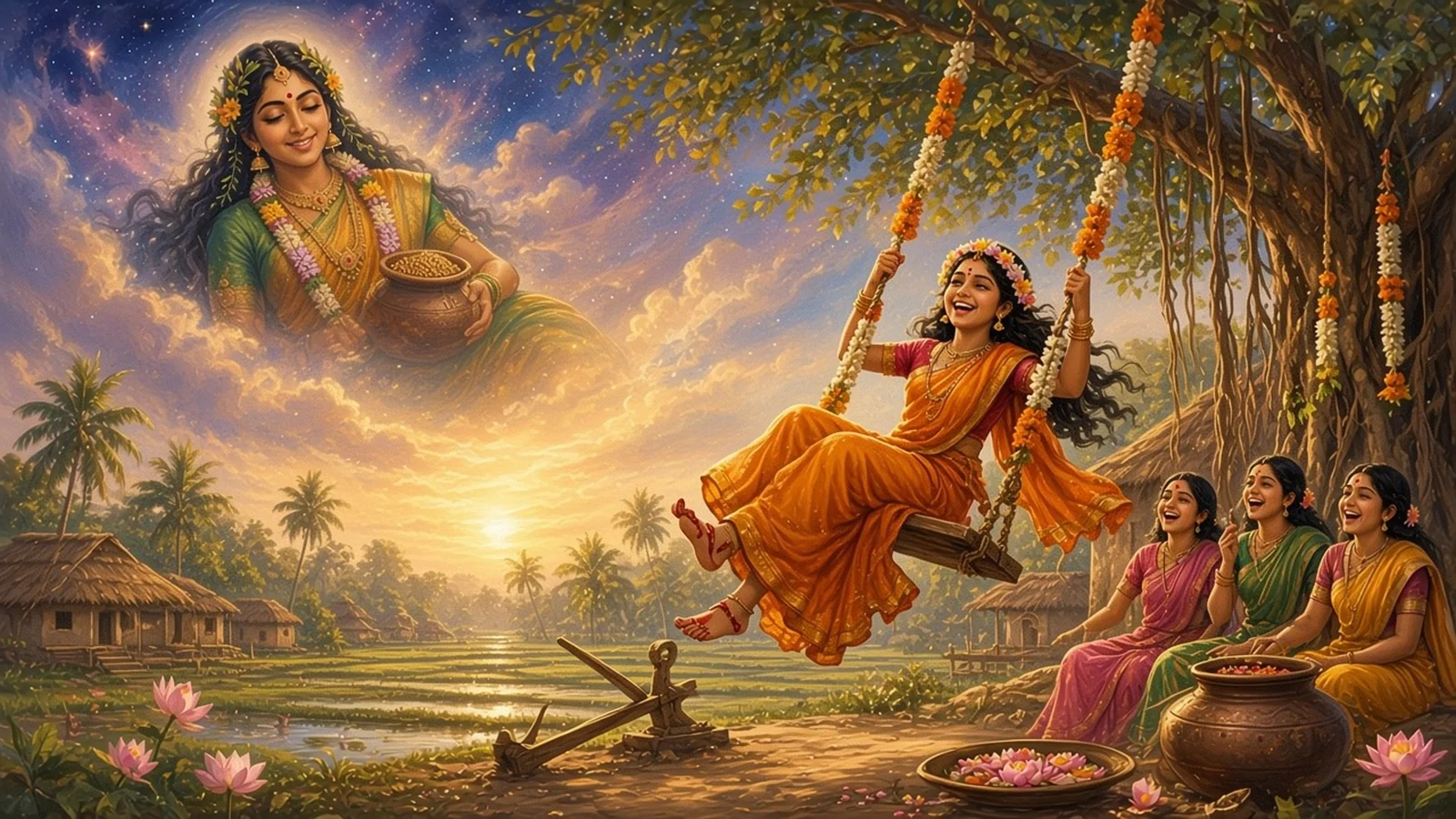
The plank swing hung from the great banyan by the tank. The girls held a short, loud argument and made Mini the Dolirani, queen of the swing, and three of them pushed her till her feet touched the leaves. They sang the old one first, the one everybody's grandmother knew: "Barasake thare asichi Raja." Once a year, Raja has come.
Then Tuni sang about her brother's crown of gold, and Mini sang back that Tuni's brother had matted hair, because he was down in the field playing kabaddi and looked it. The boys moved on to bagudi. The men sat on the veranda with cards and a ludo board and did not move all afternoon.
On Raja Sankranti nobody bathed and nobody combed. Mini's hair went stiff and wild by noon.
"I look like a ghost," she said.
"You look like a girl at Raja," said her grandmother. "Leave it alone. No comb, no broom, no needle. Not till the Earth has had her bath."
The kitchen belonged to her father for three days. He cooked dal, rice and vegetables with great seriousness and some smoke. The girls took no rice at night, so they ate poda pitha in dark wedges, and the sweet raja pana Bapi had bought before he left. In the afternoon they squatted in a row for Puchi, hopping and swinging their arms to a chant until the last girl fell over laughing. Then they played kaudi with a handful of shells.
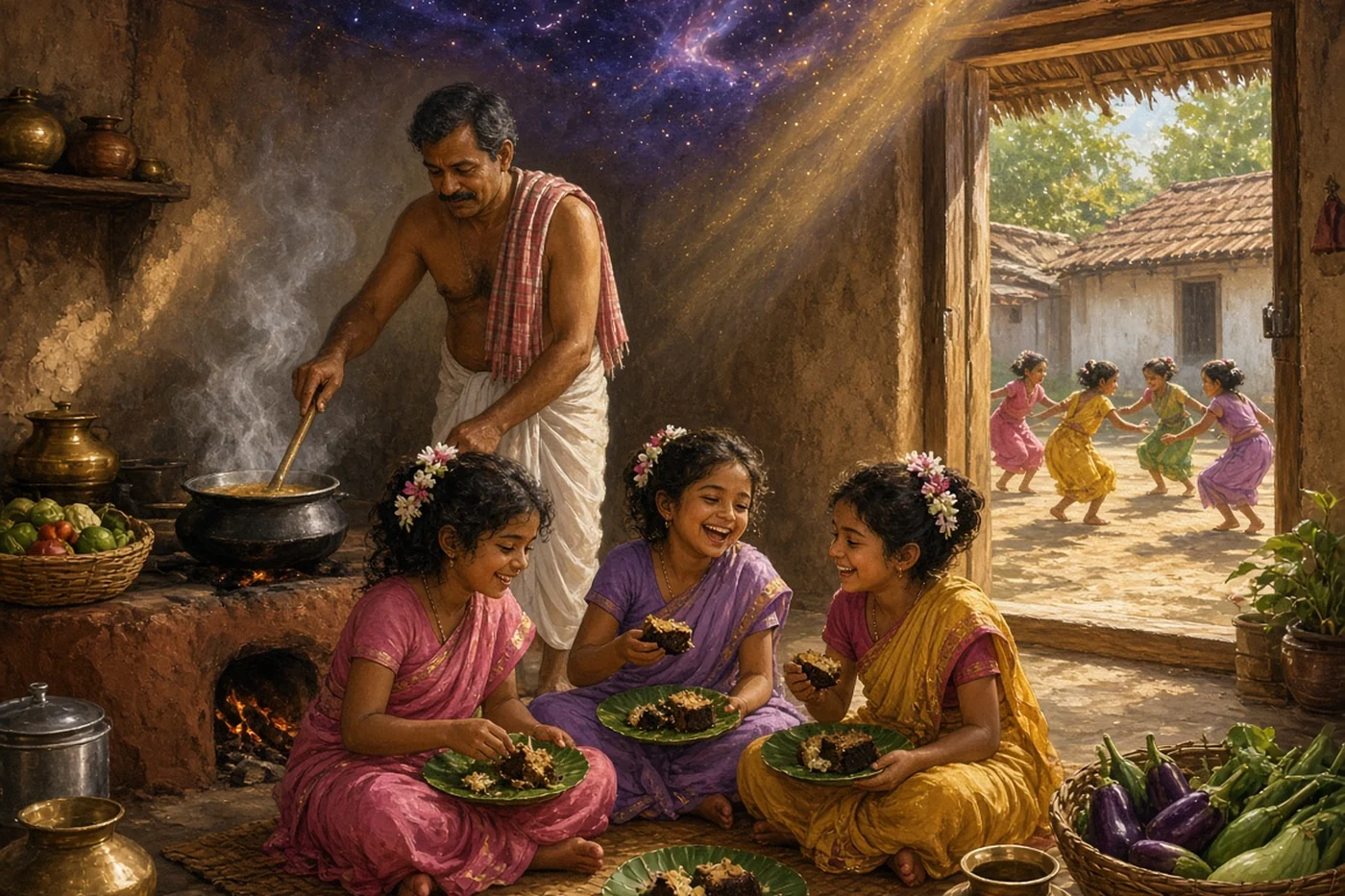
On Bhudaha evening Bapi came home, dusty to the knees. "She cried," he reported, "and then she put the sari on and went straight to their swing."
On the fourth morning Mini's mother washed her hair, and then she bathed the grinding stone for the Earth. Mini was allowed to place the sindoor. Afterwards she sat on the step for a long time, combing out three days of knots.
As the grove of Harachandi keeps it
East India · Dekudi and the hill of Harachandi, south of Puri, in June 1990 · 2 min read
In the villages around the hill of Harachandi, some twenty kilometres south of Puri on the coast, the men leave home on the evening before Raja. One man goes from each household. The men of about sixty villages pitch long tents in the goddess's grove and stay four days, feasting and keeping the mela. The village lanes are left to the women, who walk from house to house visiting, and who go to the temple and come home again on the same day.
On the first morning, in June 1990, the anthropologist Frédérique Apffel-Marglin went with the girls of Dekudi to the village tank. The small ones were dressed by their mothers with ribbons in their hair, powder on their faces, alata on their feet and kajal round their eyes. Later a girl of thirteen in a new sari sat on a decorated swing and sang of Sita choosing her husband. The last line gave the poet's name. It was Hamid.
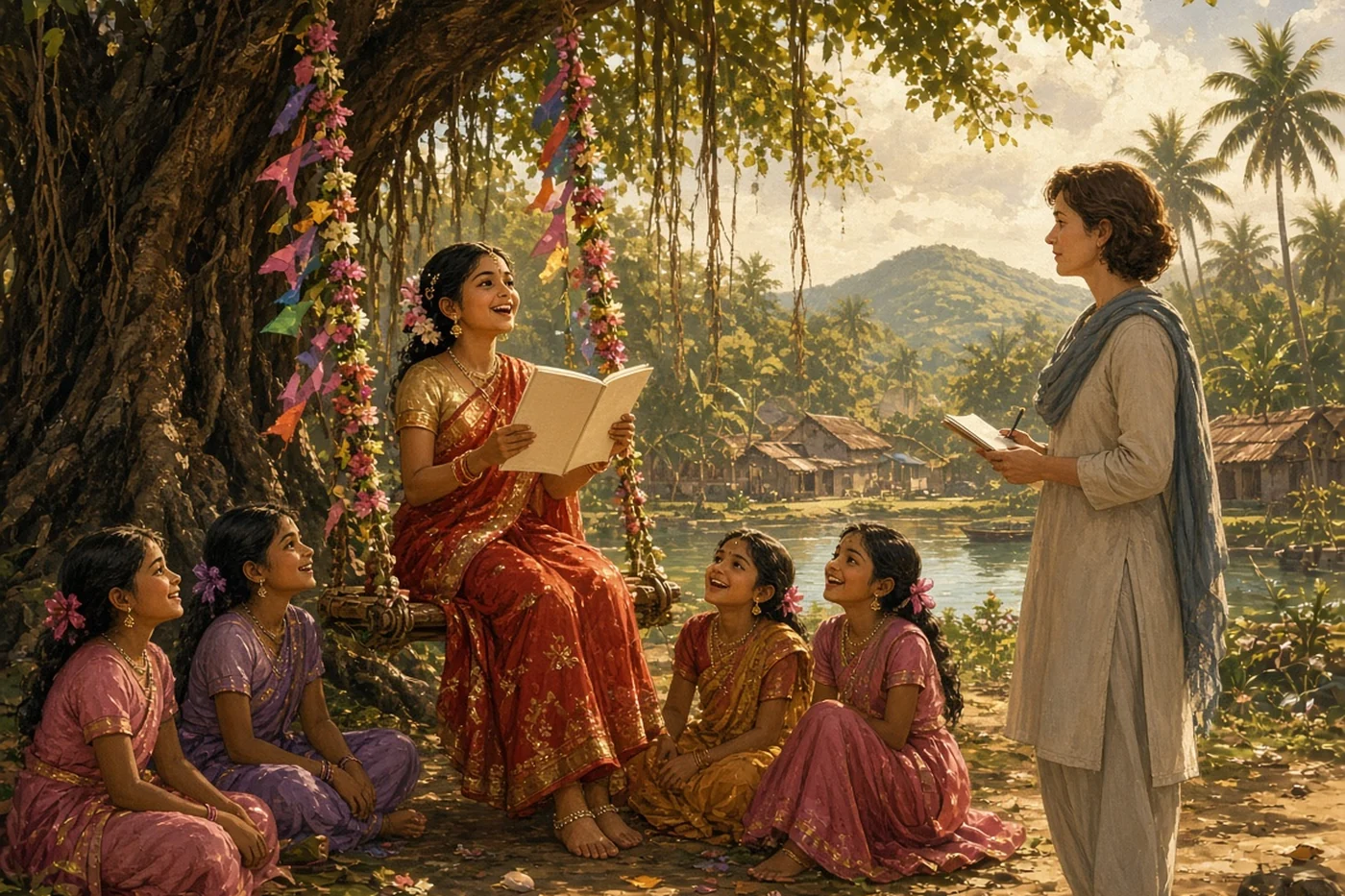
The scholar asked the girls whether they knew Hamid was a Muslim name. They only laughed. The song was in a pamphlet called Raja Doli Gita, swing songs of Raja, which sold for two rupees at the mela. Its poet, S. A. Hamid, had put the events of his day into verse, and his friend Aminul Islam had printed them at the Kohenoor Press in Cuttack, which also prints the Puri Panjika, the almanac that dates Raja.
At the mela, youth clubs from the surrounding villages kept order in place of the police, and one of the three clubs was Muslim. In a Muslim village two kilometres from the grove, a farmer told her that his people also stop their ploughs for Raja and make pithas. The Hindus say the earth bleeds, he said, and his own book says no such thing. But the earth is a mother, so they give her rest. And a Hindu's plot lies right beside his. If he ploughed, his neighbour would be hurt.