In an Oraon village
The Gumla and Ranchi country, Jharkhand · 3 min read
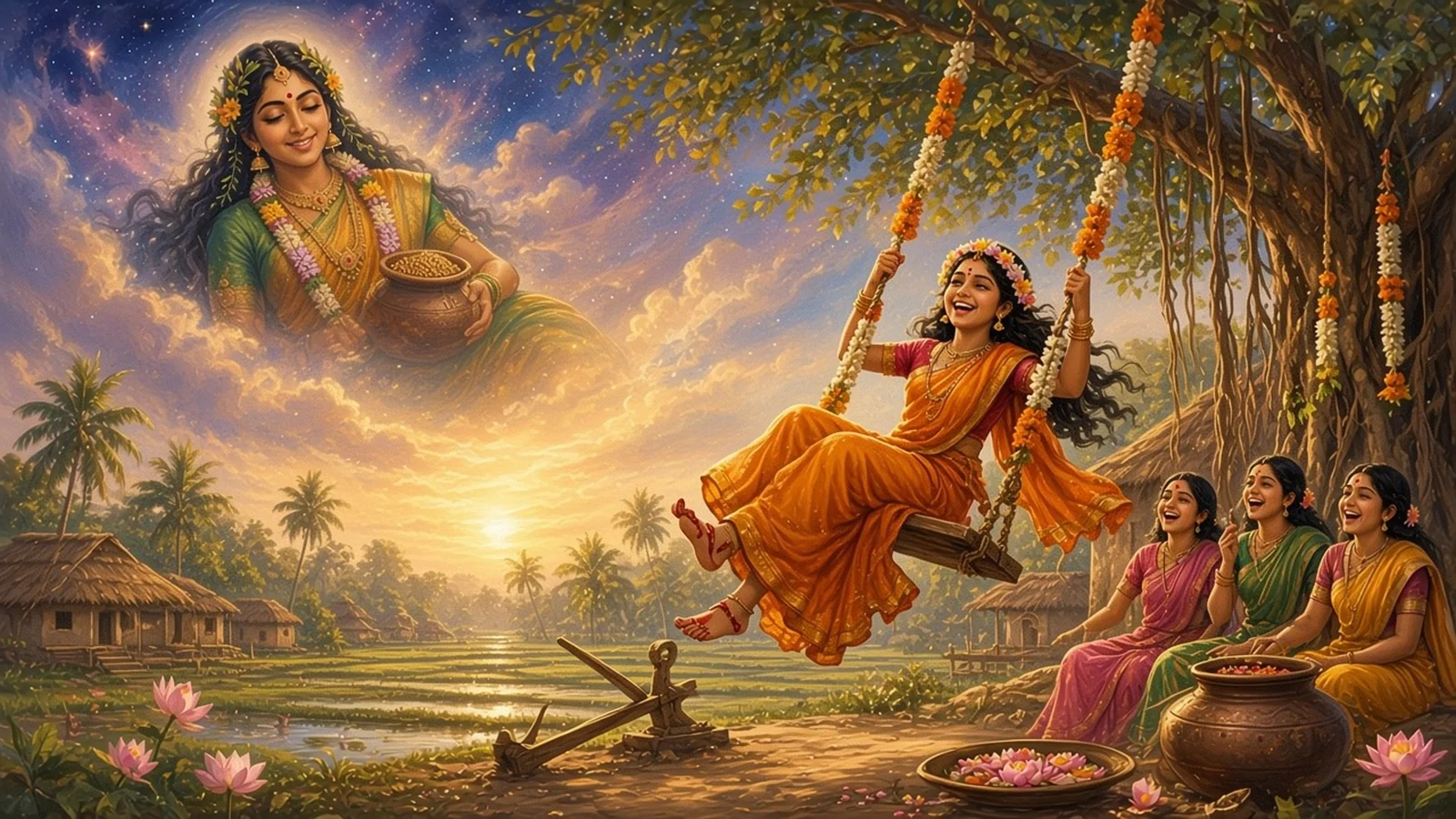
Nine days before Karam the unmarried girls of the village go down to the river with baskets and bring back clean sand. In the girls' dormitory they spread it out, sow barley in it, and sprinkle it with water stained yellow with turmeric. Every night they sit up late beside it, singing. While the jawa grows they eat no meat, no fish and no crabs.
"Look," says the smallest girl on the third morning, crouching over the sand. "It is coming up."
"Then sing louder tonight," says her elder sister. "It has to be tall by Karam."
The boys are busy too. They carve wooden clappers, make fans of palm leaf and peacock feathers, and plait ornaments out of grass.
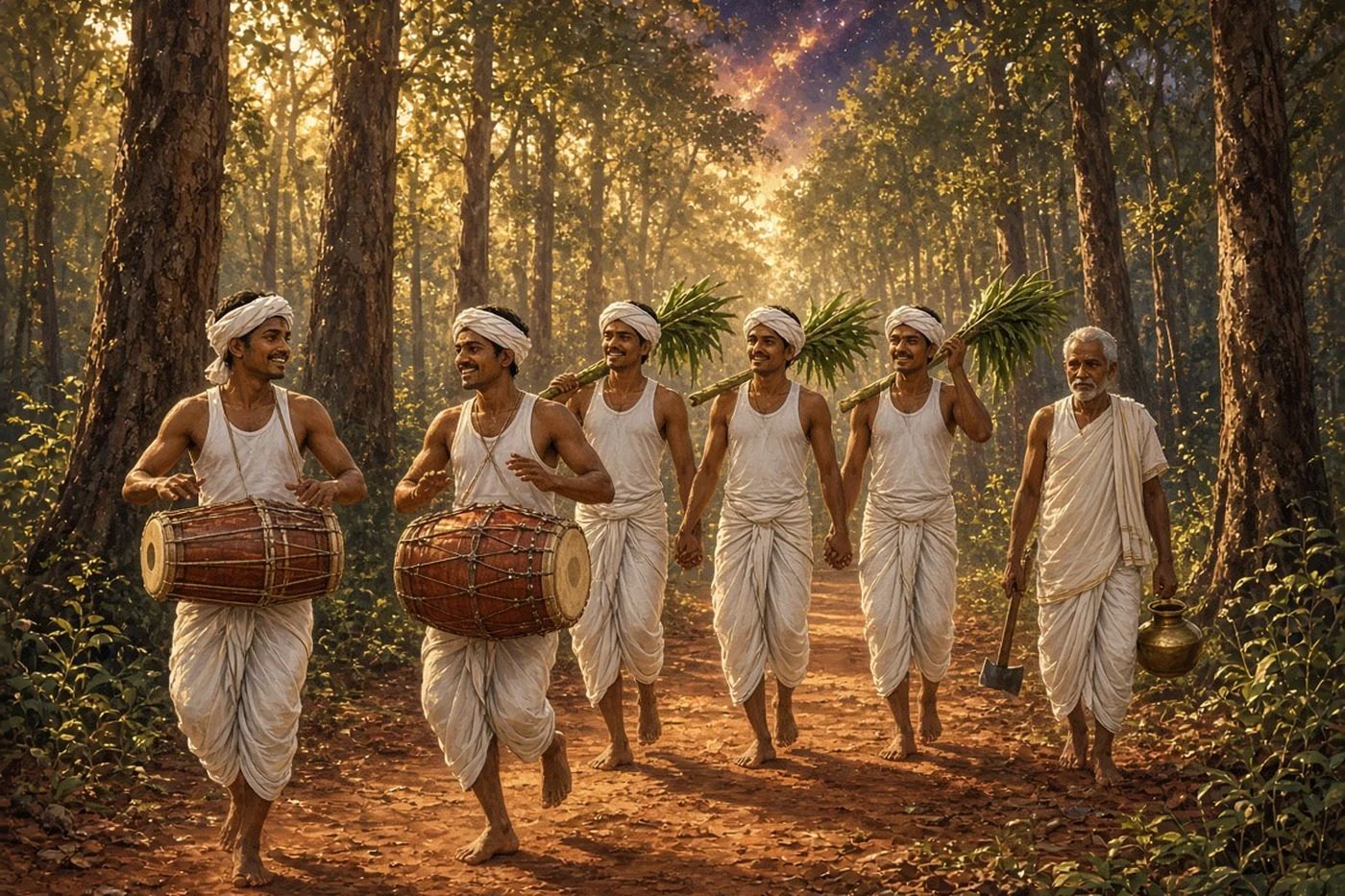
On the day of Karam the girls fast. In the afternoon the young bachelors gather at the akhra with their drums, and the Pahan comes with a little oil, a pinch of vermilion and an axe. They go out to the forest together, dancing and beating the drums all the way.
At the Karam tree the Pahan chooses the branches. They must be straight, with no blemish. He touches each one with oil and vermilion and gives the axe to a boy.
"Cut cleanly," he says. "And remember, it must not touch the earth."
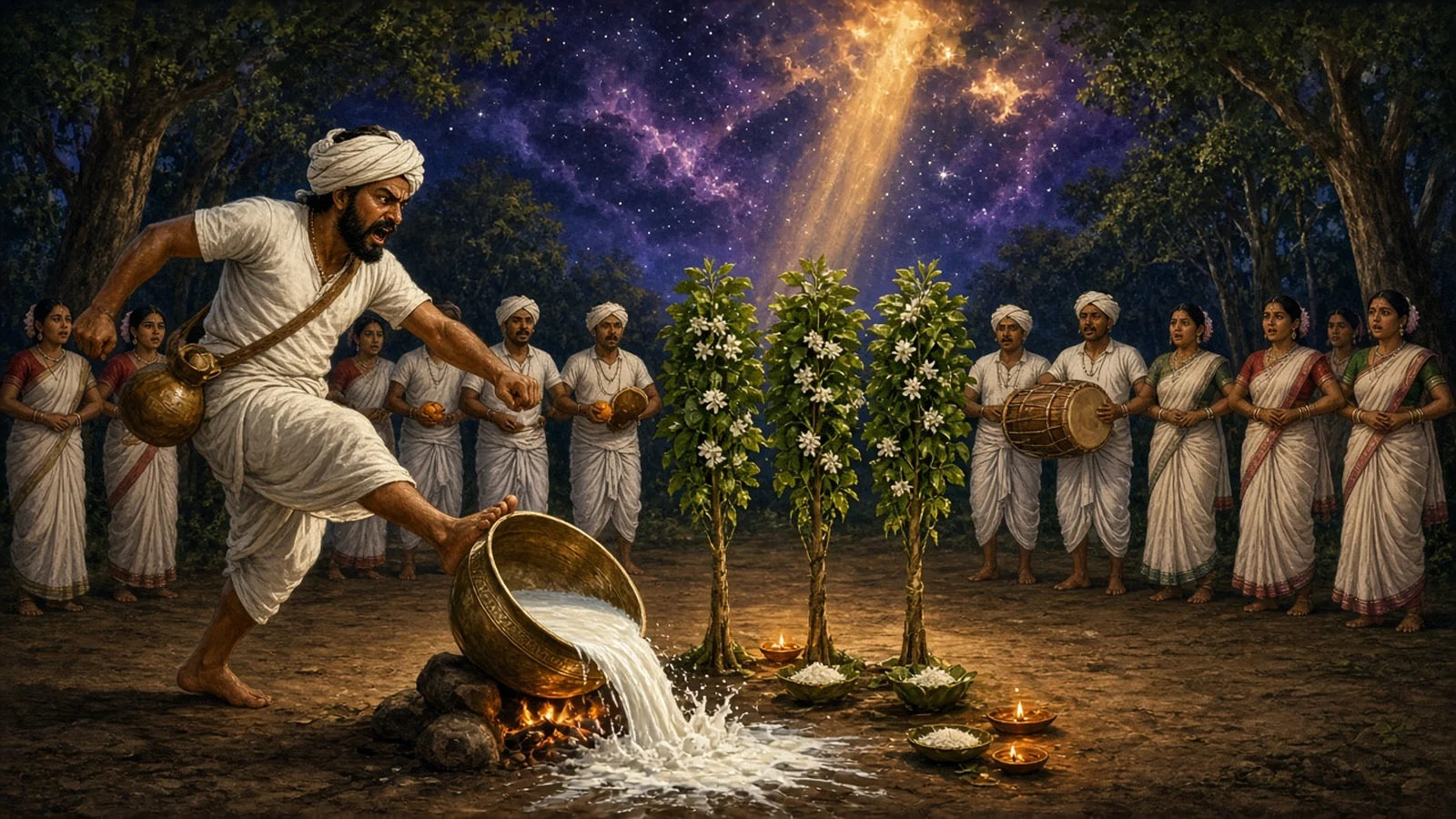
Three branches come down, and other hands catch them before they reach the ground. Three young men take one each, link hands, and carry them home between them while the drums go ahead. Meanwhile the girls have gone into the fields and gathered white flowers, and they have filled the red Karam baskets with grain.
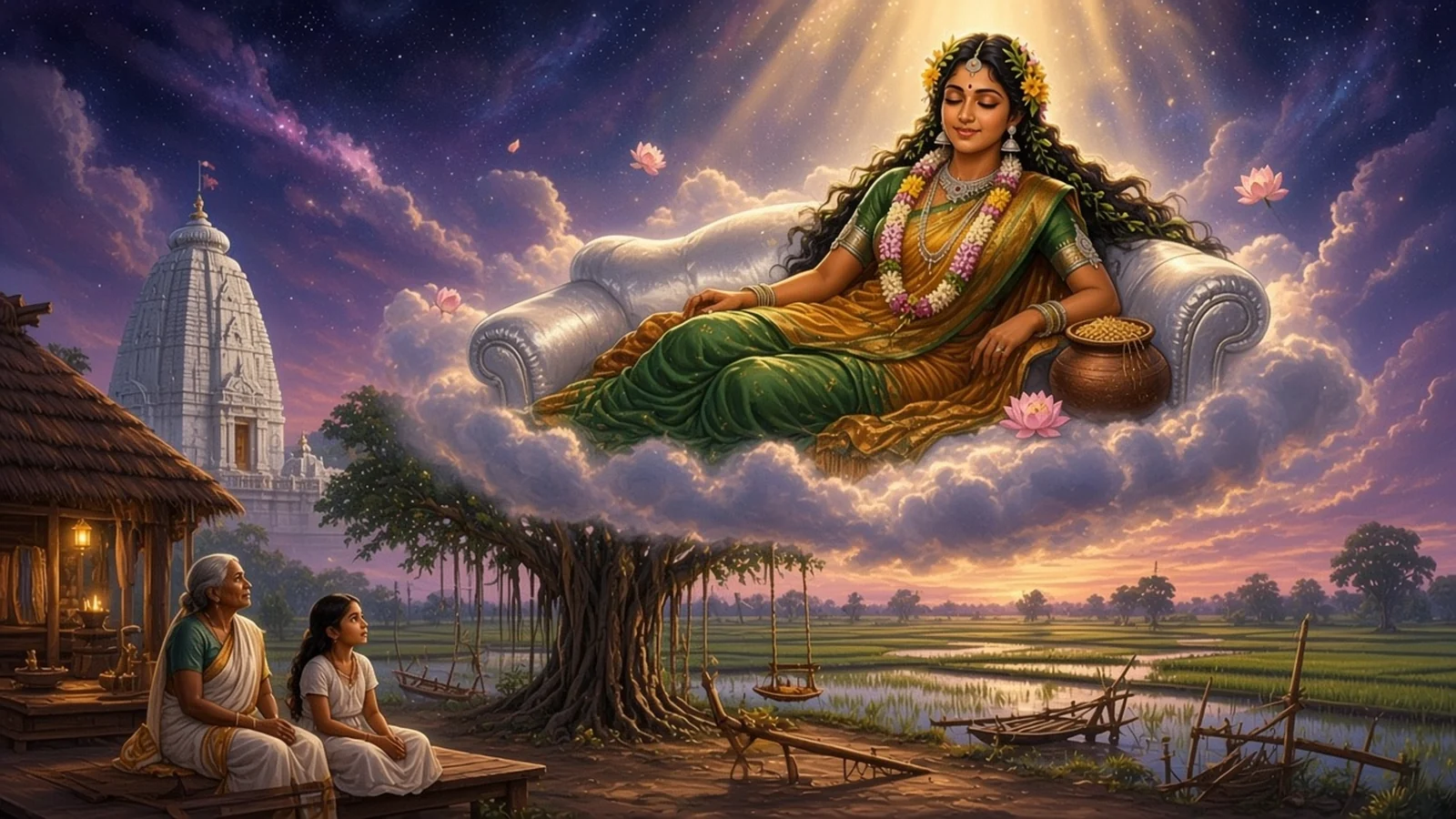
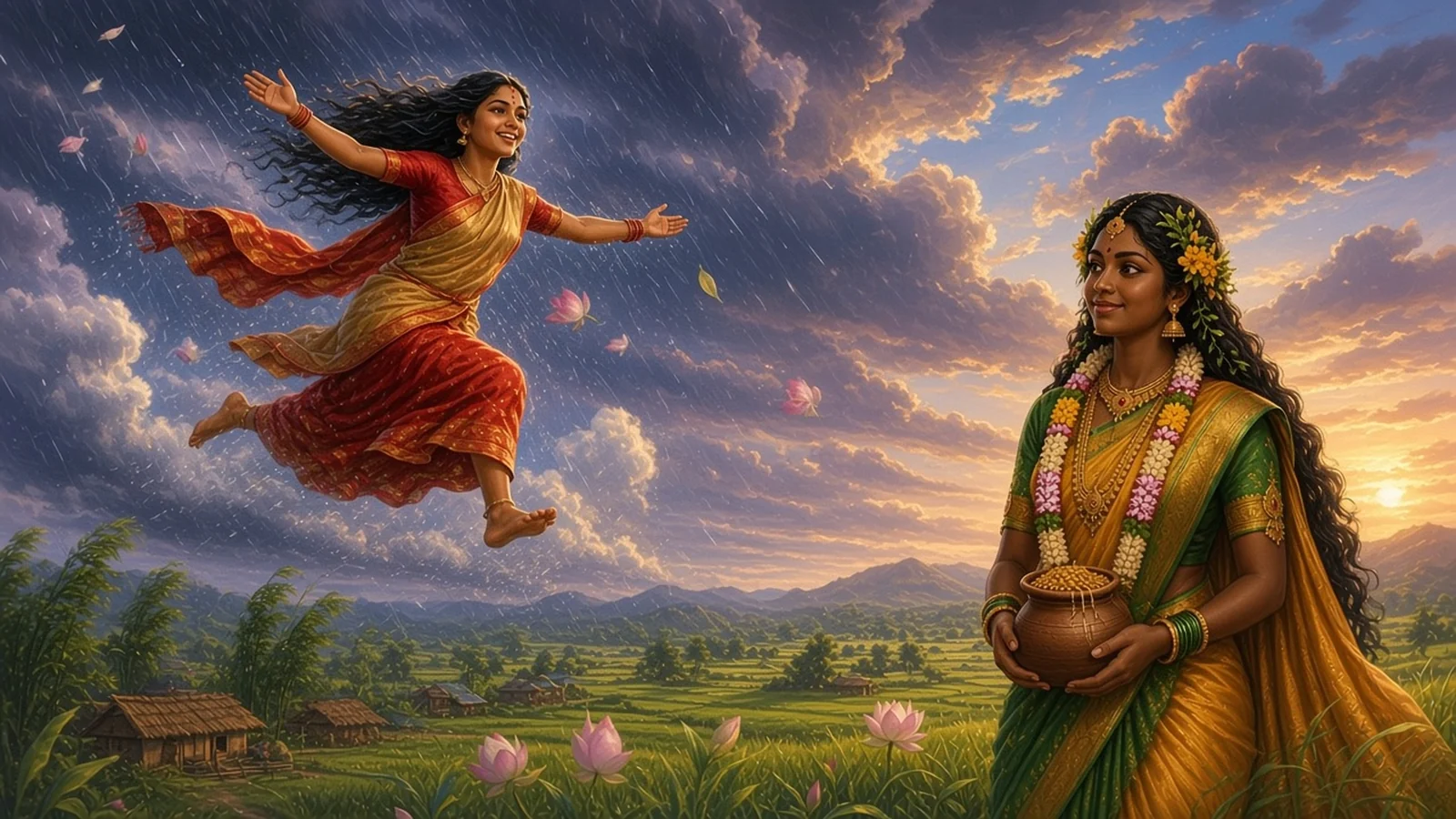
At the akhra the three branches are planted side by side. Now they are Karam Raja. The Pahan sits before them and offers the sprouted grain, a cup of rice beer and a fowl. Then the whole village sits down around him, and he tells the story of the brothers who forgot their errand and danced, and of the one who kicked the milk.
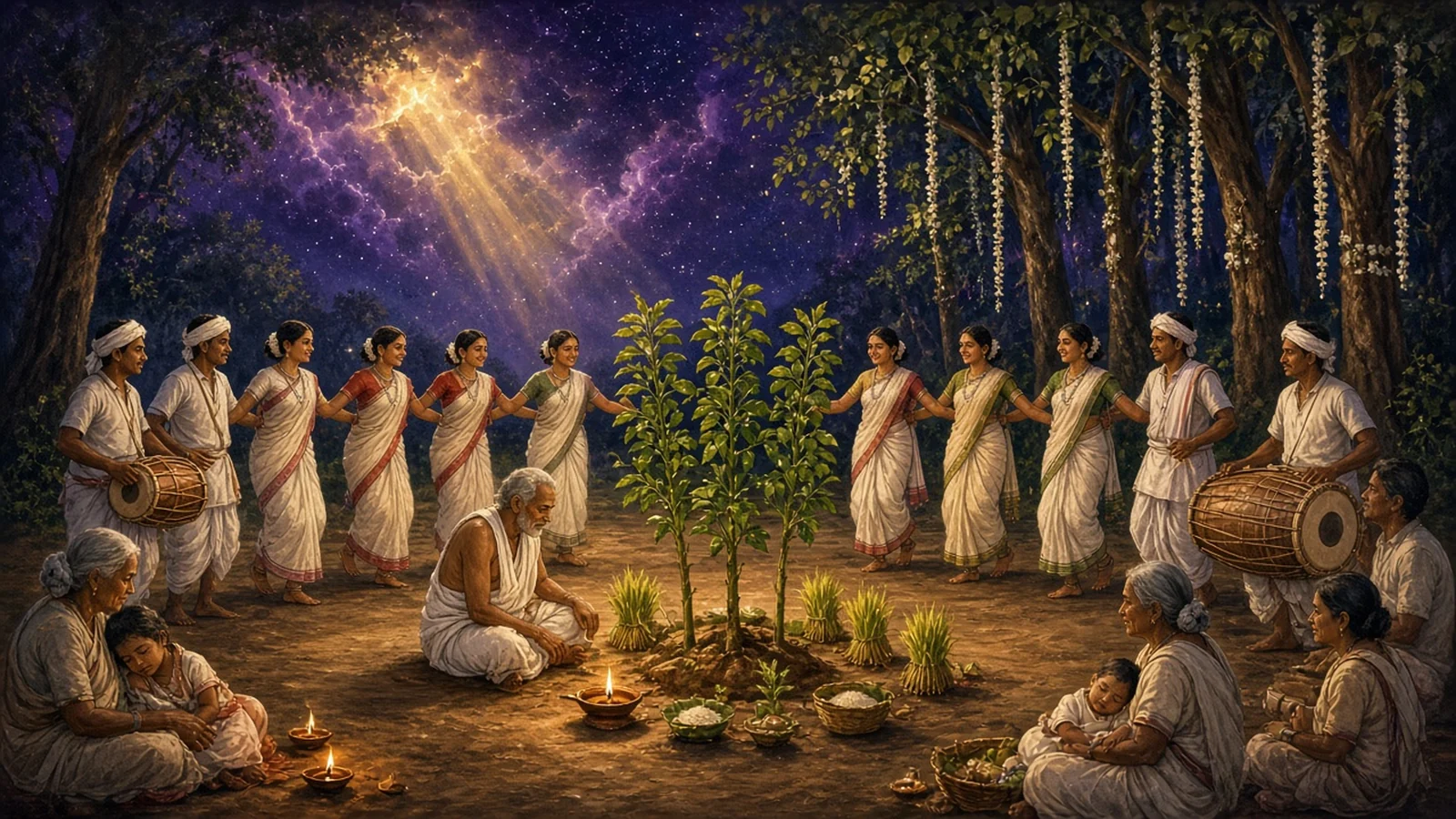
When he has finished the girls break their fast. The drums start, the mandar and the big nagera, and the young men and women link arms in a long ring and dance around the branches. The ring turns all night. When one singer tires another takes up the song. Old women sit at the edge with sleeping children in their laps.
Morning comes. The branches are garlanded. Cucumbers lie in the girls' baskets, and mothers take them home for the babies. The young people throw petals at Karam Raja.
"Polio! Polio!" they cry.
Curds are offered, and grain. Then the girls pull up their pale barley shoots and give them to the young men, who tuck them into their hair. In some houses sisters give their jawa to their brothers.
At last the branches are lifted out of the akhra. The young people carry them to the stream, singing, and let the water take them. On the way back they push twigs of sal and bhelwa into the edges of the rice fields.
"Karam has gone," says an old man, watching them go. "Now we wait for him next year."
In the tea gardens of Upper Assam
Tea estates near Dibrugarh, Assam · 1 min read
The tea garden families of Upper Assam came from Chota Nagpur, Odisha, Bihar and Bengal in colonial times, and they brought Karam with them.
Before the festival the unmarried girls, the Karamati, carry two new bamboo baskets down to the riverbank. They wash their feet and sow six kinds of seed: rice, groundnuts, wheat, peas, soybeans and beans. This is the Jawadhara. Until the festival they touch no cooked food, no oil, no garlic and nothing sweet, and they do not comb or scratch their hair.
"Not even a little scratch?" a cousin teases.
"Not even that," says the Karamati, and sits on her hands.
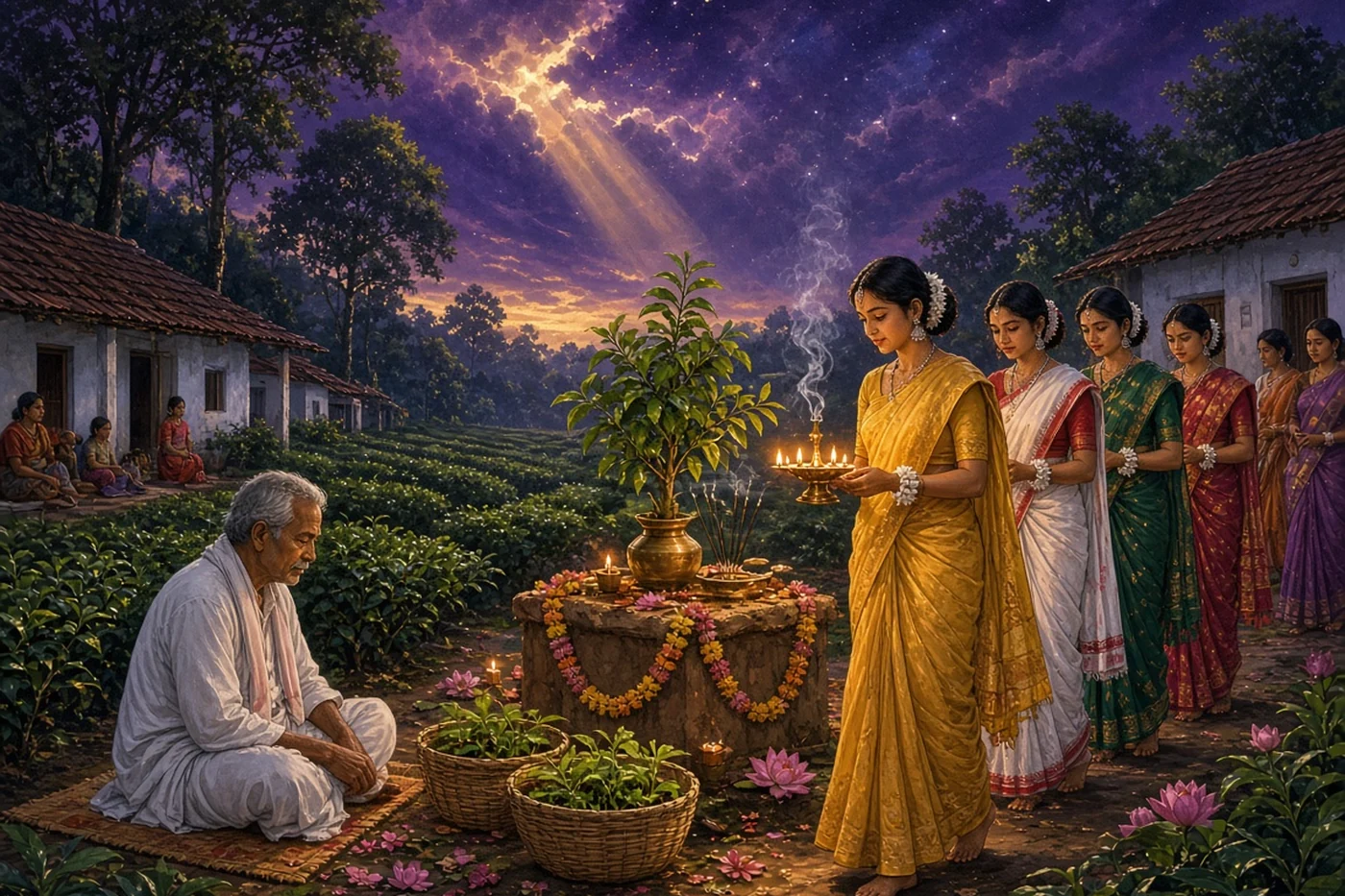
On the eleventh of bright Bhadrapada a branch goes up on an altar in the garden lines at dusk. It is a Karam branch where one can be found, and bamboo or Jari where it cannot. Candles and incense are lit. The priest tells the story of Karma and Dharma. Then the Karamati, in new clothes, with threads of garlic beads on their wrists, walk around the altar seven times and wave the lamp.
After that the Jhumur begins, and the songs and the dancing go on until dawn. In the morning the branch is carried to a pond and let go. That evening the women light candles where it stood and lay fresh earth over the place. This is called the Ghara Bhata.
In 2024 the state gave tea workers a paid holiday for Karam, and that Saturday the garden lines danced. For these families it is the first of three Karams in the year. Budhi Karam follows at Dashami, and Ras Jhumur on the full moon of Aghon.