As Puri tells it: the Lord lies ill, and his wife rests
East India · a house in a lane of Puri, in a year when Raja falls inside the fortnight of fever · 2 min read
That year the great bath of the gods came a few days before Raja. By Pahili Raja the Lord had been shut away in his sick room for days, and pilgrims who had come for a sight of him walked round the temple walls and went home.
Lipi was nine and had never minded the closed doors before. This year she minded. Her older cousins had been sent to dress together in the front room, she had been told she was too young to sit with them, and nobody would explain anything.
"Who is looking after him?" she asked her grandmother on the veranda. "If the Lord has fever, somebody must sit with him."
"His own servants sit with him," her grandmother said. "They know their work. Ask me something harder."
"Then where is his wife?"
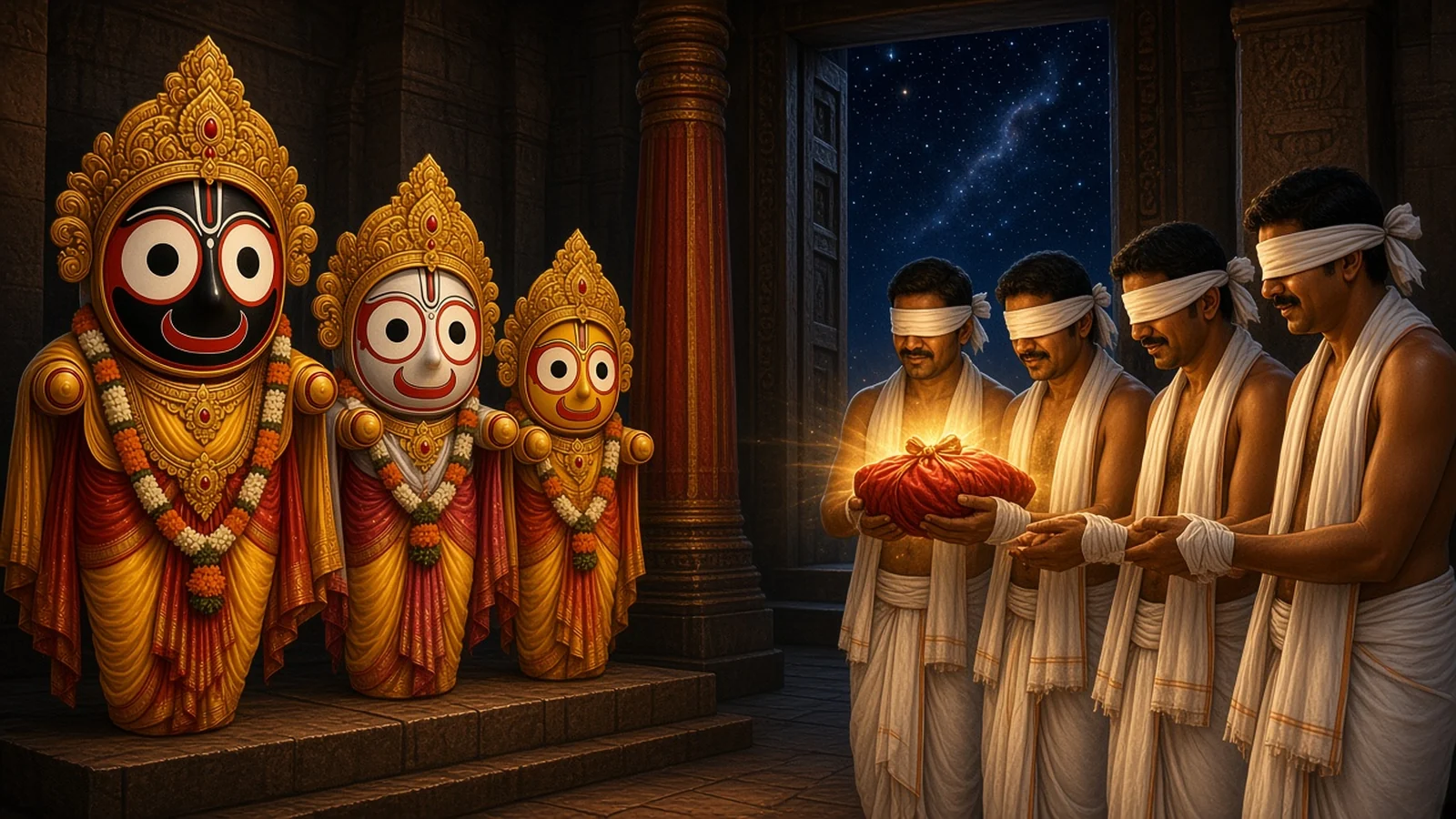
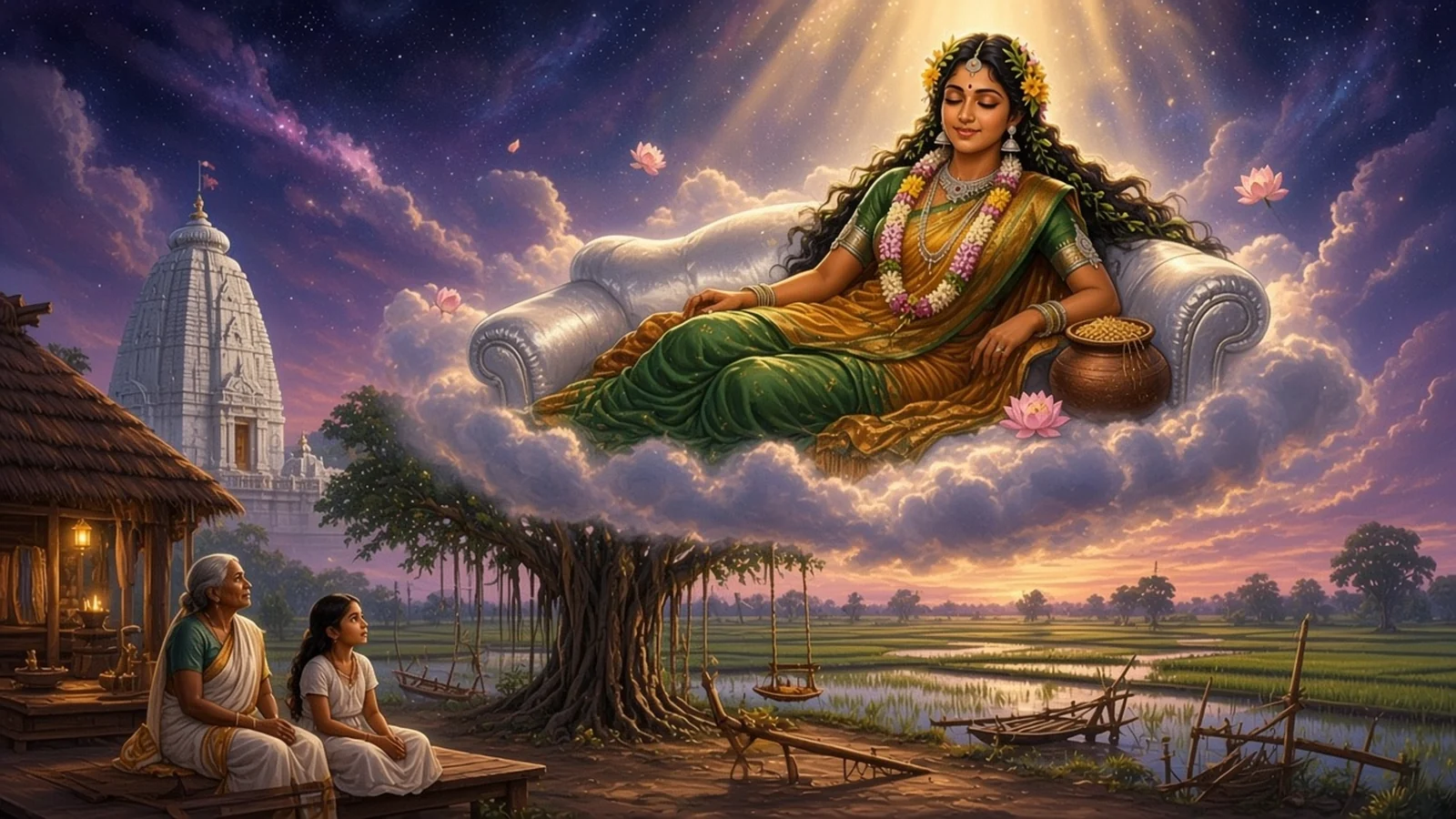
The grandmother set down her betel box. "Which one? He has two. Count properly next time you are inside. On the jewelled platform there are seven: the Lord, his brother, his sister, the wheel, little Madhaba, and two wives. Sridevi is gold. Bhudevi is silver."
"Bhudevi is the Earth."
"She is the Earth, and in Puri she is the Lord's wife." The old woman lowered her voice, the way she did for stories that were not quite for children. "And this is what our people say. While he lies ill, she has her three days, like any woman of this house. That is the name of the festival. Rajas is the blood. A woman in her days is rajasvala."
Lipi thought about it with her chin on her knees. "So nobody looks after her either."
"Nobody has to. That is the whole of it. Nobody asks her for anything. No field is cut and no ground is dug. Your uncle's spade is behind the kitchen door and it stays there. Your cousins will not grind or sweep or sew, because they are of her kind and they are resting with her."
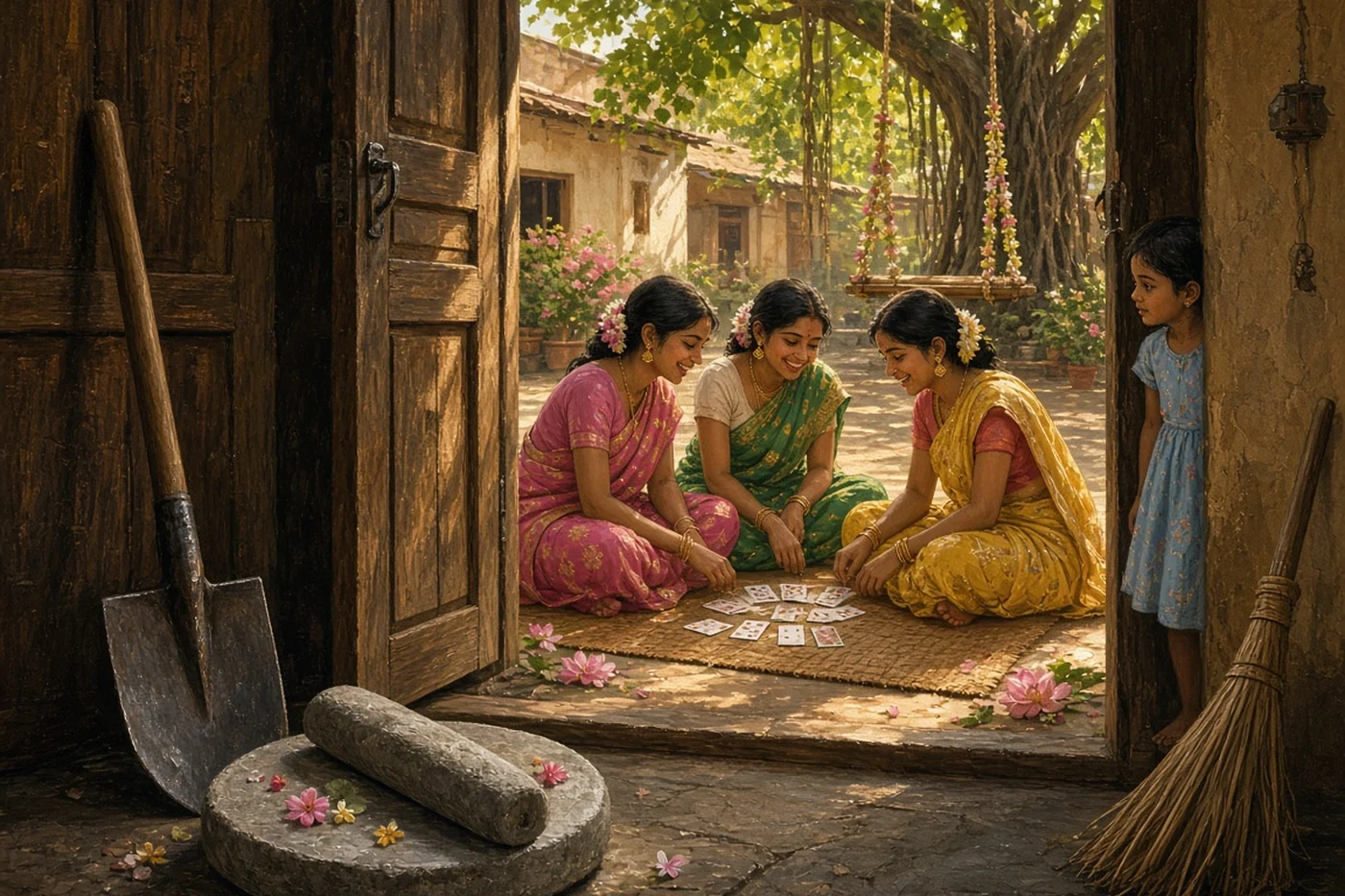
"And me?"
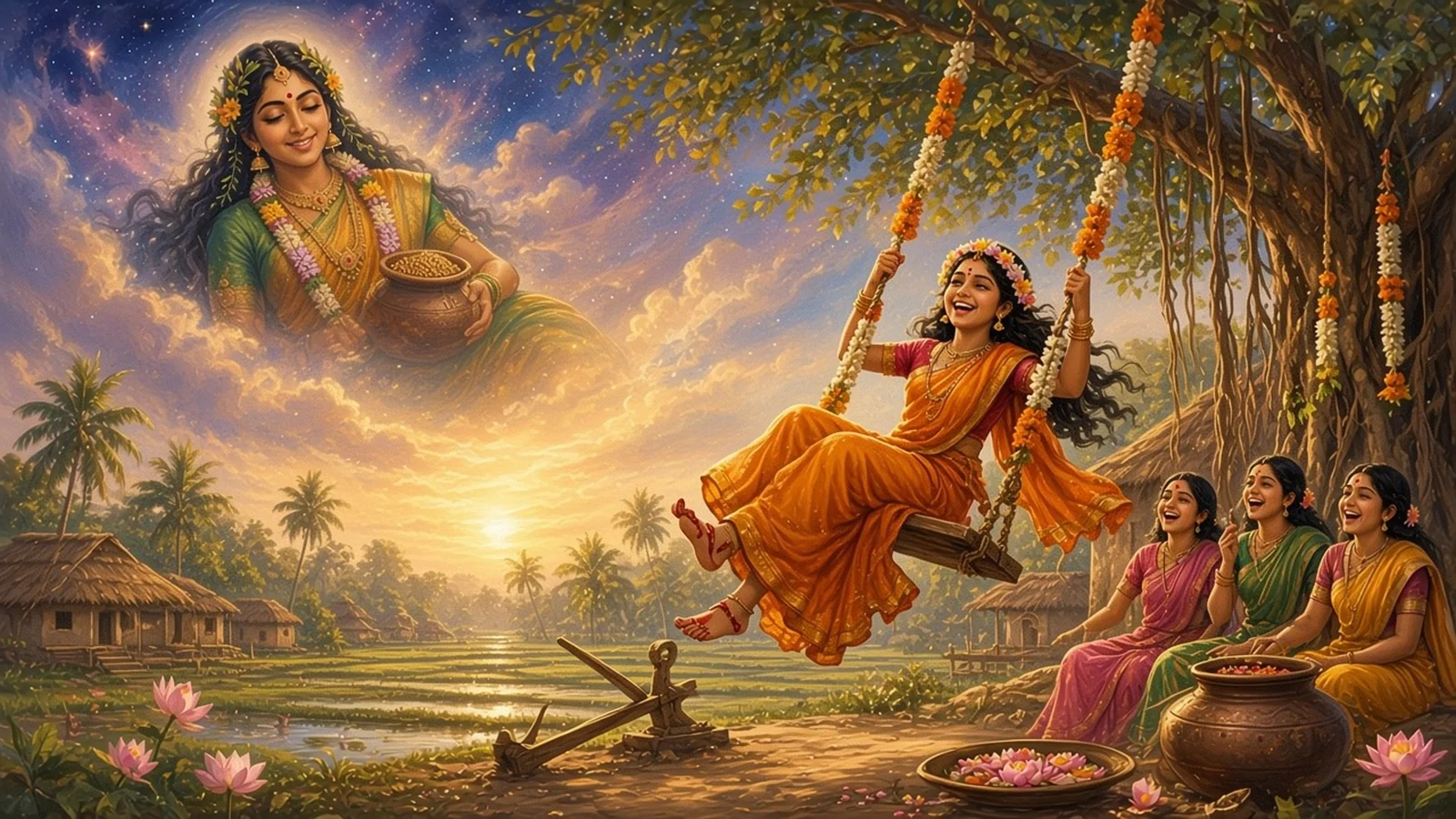
"You are nine. You may swing."
"When does she get up again?"
"On the fourth morning. She is bathed, the same as any woman after her days. Your mother will bathe the grinding stone in the kitchen for her, because in this house the stone is the Earth. After the bath she is clean, and then she can take seed again. Then let the rain come, and let your uncle find his spade."
Lipi was quiet for a while. From the courtyard came her cousins' voices, arguing over who would sit first on the swing.
"Does the silver one know?" she asked at last. "In the temple, when we bathe our stone here?"
Her grandmother laughed and picked up the betel box. "I have never asked the priests. I am telling you what my mother told me. The Lord is ill, his wife is resting, and the whole country keeps quiet so that both of them can get well. Now go and swing, before your cousins take every turn."
As the kitchen tells it: the stone who is Shasthi
Coastal Odisha · a household on the morning of Basumati Snana · 2 min read
In many coastal households the goddess who rests at Raja is not looked for in the temple at all. She is in the kitchen, and she is the flat stone on which the spices are ground. For three days nobody touches her. One of the swing songs says so plainly: cut nothing and grind nothing in Raja, for the grinding stone and the husking lever are being worshipped.
The stone has more than one name. The women call her Shasthi Buddhi, old Shasthi, who shapes every creature and fixes how long each one will live. She is a mother. Like the girls of the house she wears vermilion and kajal for the festival, and like them she does no work. She spends the days at leisure with Pua, the roller that crosses her face every other day of the year.
A village woman once told a visiting scholar that Sasthi is the goddess who keeps the blood inside a woman's womb, and that the child is made from it. So the stone that rests holds the power that makes children, the Earth that rests holds the power that makes crops, and in the kitchen they are one.
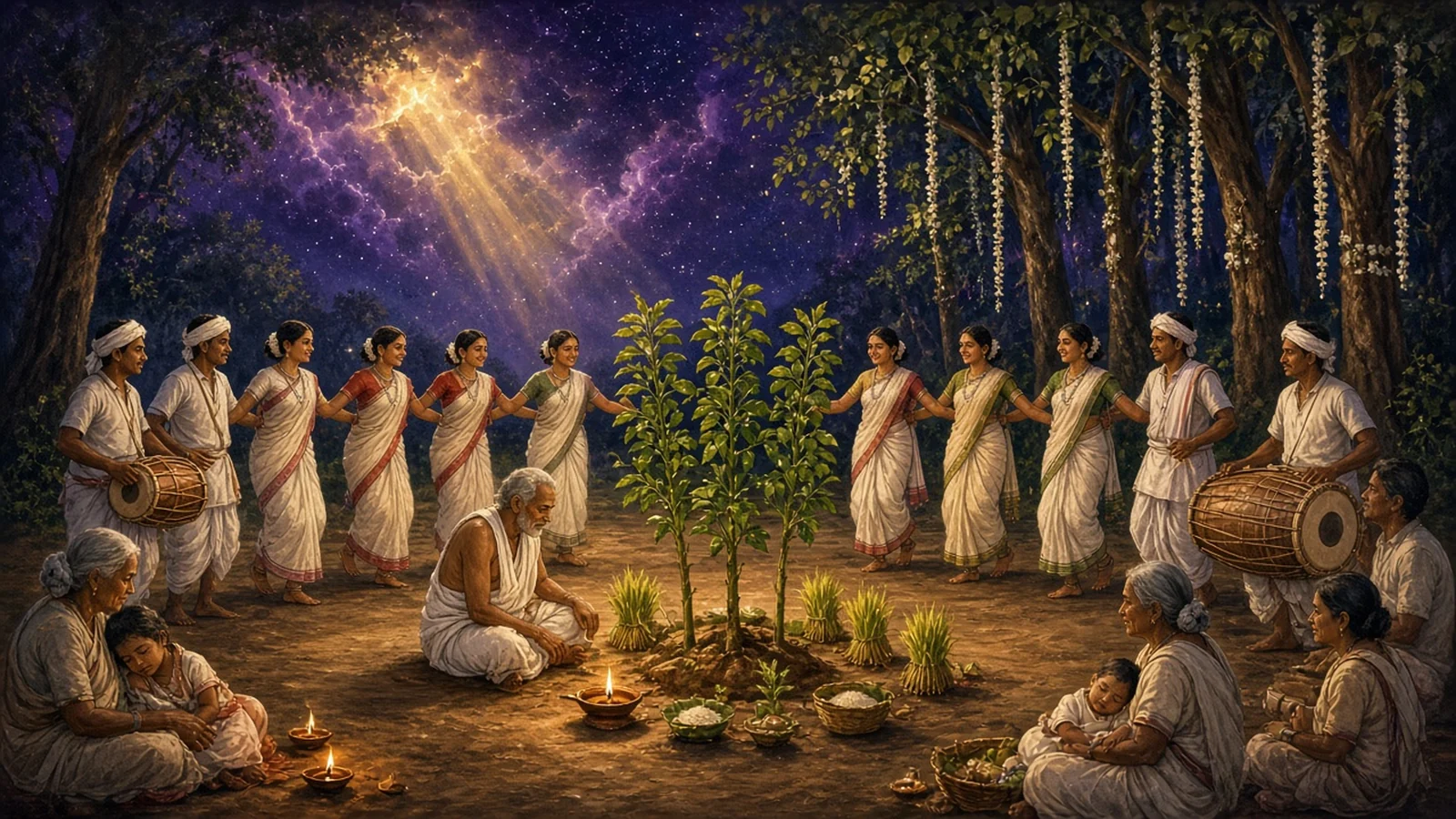
On the fourth morning, at sunrise, the woman of the house washes her hair and wipes clean a place by the tulsi plant or in the front yard. She draws a chita there, sets a water pot crowned with mango leaves, and lays a low stool with a red cloth. A new areca nut goes on it, marked with sandal and sindoor. The stone is wrapped in a cloth dyed with turmeric, given sindoor and kajal like a bride, set down, and bathed from the pot.
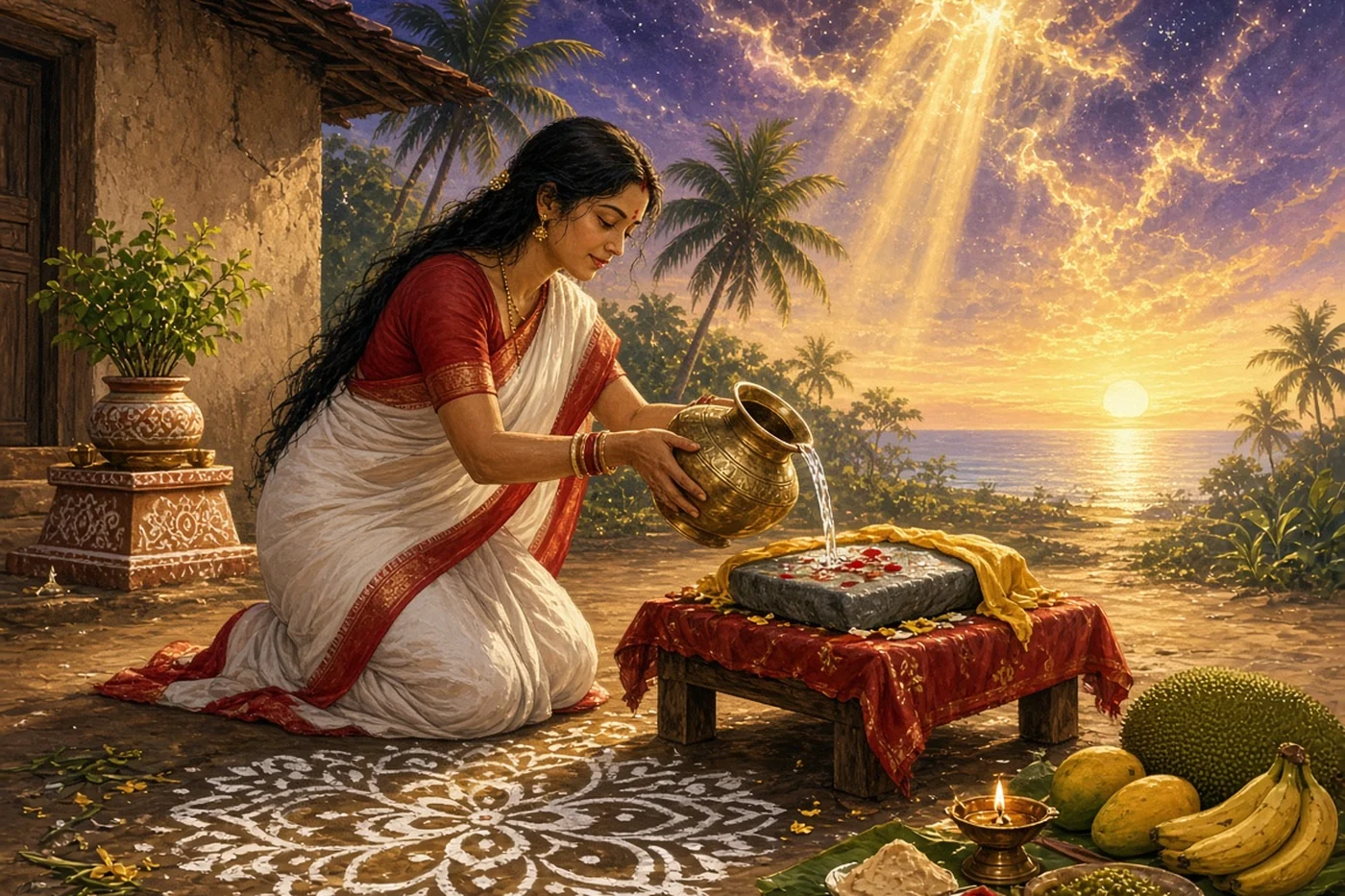
Then come sandal, durba grass, flowers, a little box of sindoor, and the last fruits of the summer: mango, jackfruit, banana, soaked mung. She waves the lamp in Mahalakshmi's name, because this bath is also called the Mahalakshmi snana, and the Earth here is Lakshmi herself. When it is done the stone may work again, the ground may take seed, and whatever good work was waiting for Raja to pass can begin.