As the servitors walked it in 2015
Puri, Kakatpur and the villages of Jagatsinghpur · March to May 2015 · 3 min read
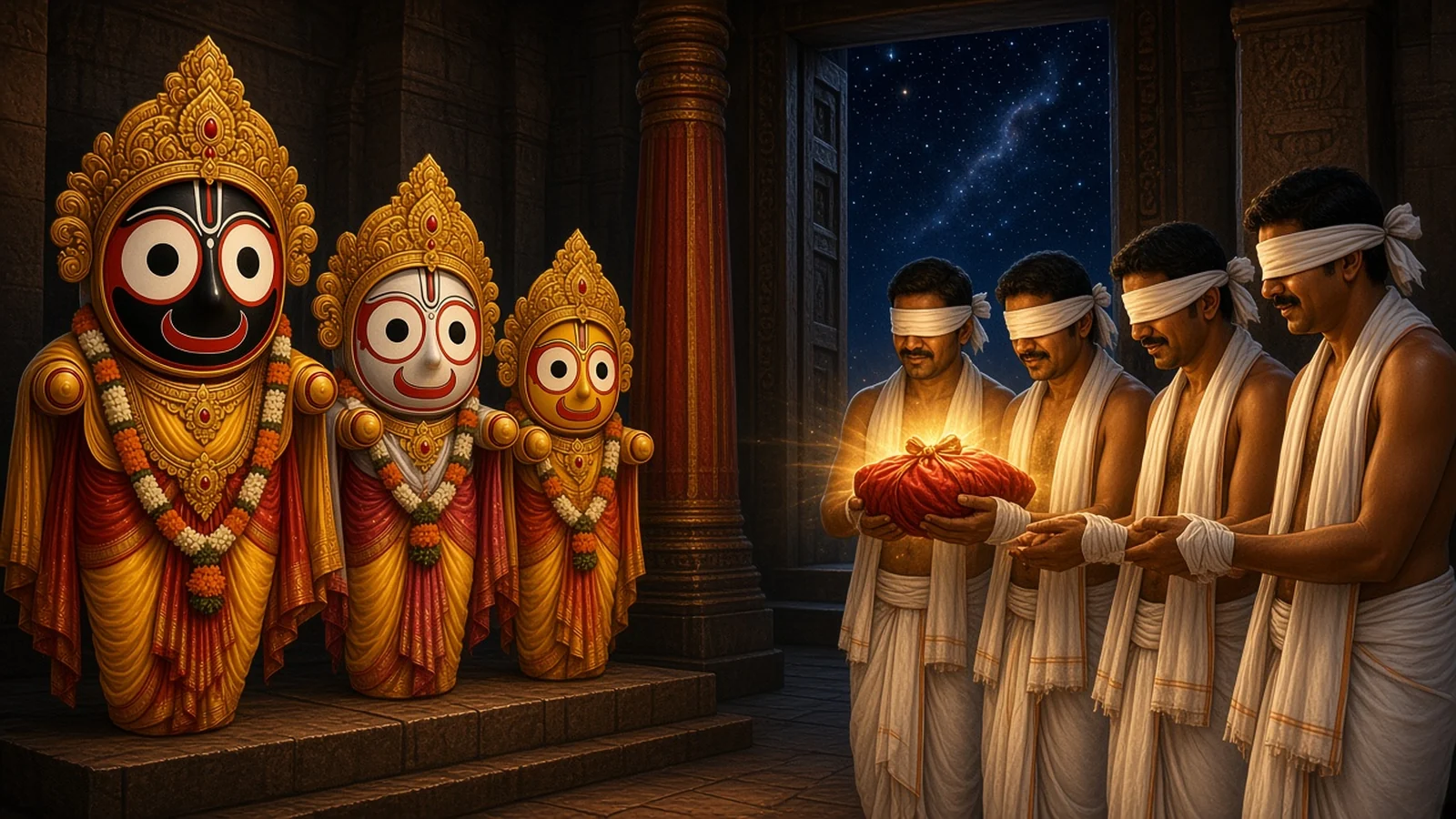
On the tenth day of the bright half of Chaitra in 2015, after the god's midday meal, a garland twelve feet long was handed to the Pati Mahapatra family. It was the agyan mala, the garland of command, and the people who walked behind it were going to find Jagannath's next body.
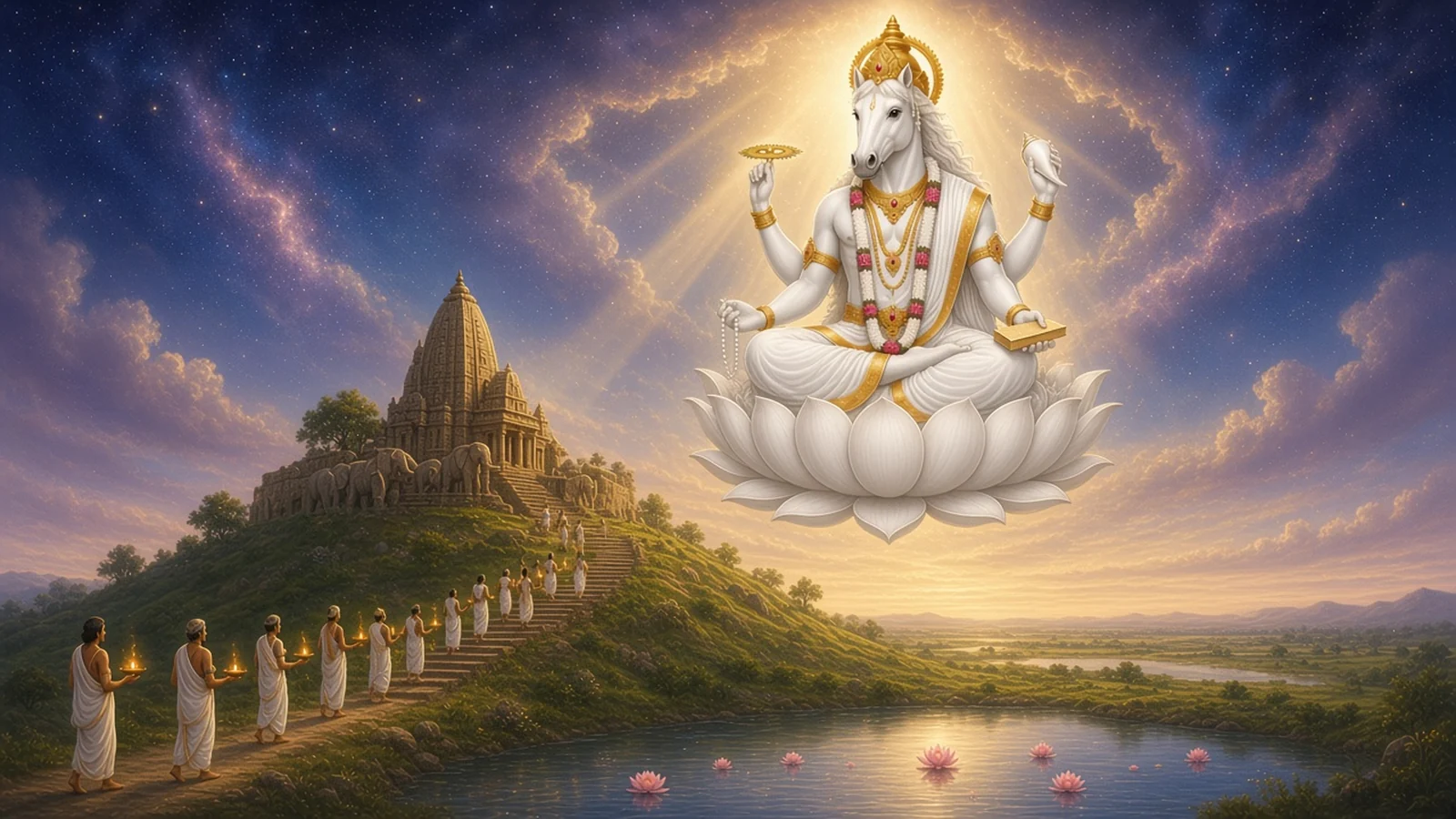
There were about a hundred of them: Daitas, the servitors who call the god their kinsman, with Brahmin priests, carpenters, a man carrying Sudarshana, the temple's accountants and its police. At the palace the king sent them on with betel and the god's food, as kings of Puri always have. Then they went down the Grand Road barefoot.
A young Daita walked near the back beside his uncle, who had made the same walk nineteen years before.
"Where do we sleep?" the young man asked that first night, at the Jagannath Ballav Math.
"Here tonight. After this, under trees and beside tanks. One meal a day. Nobody goes home until the last log is inside the temple."
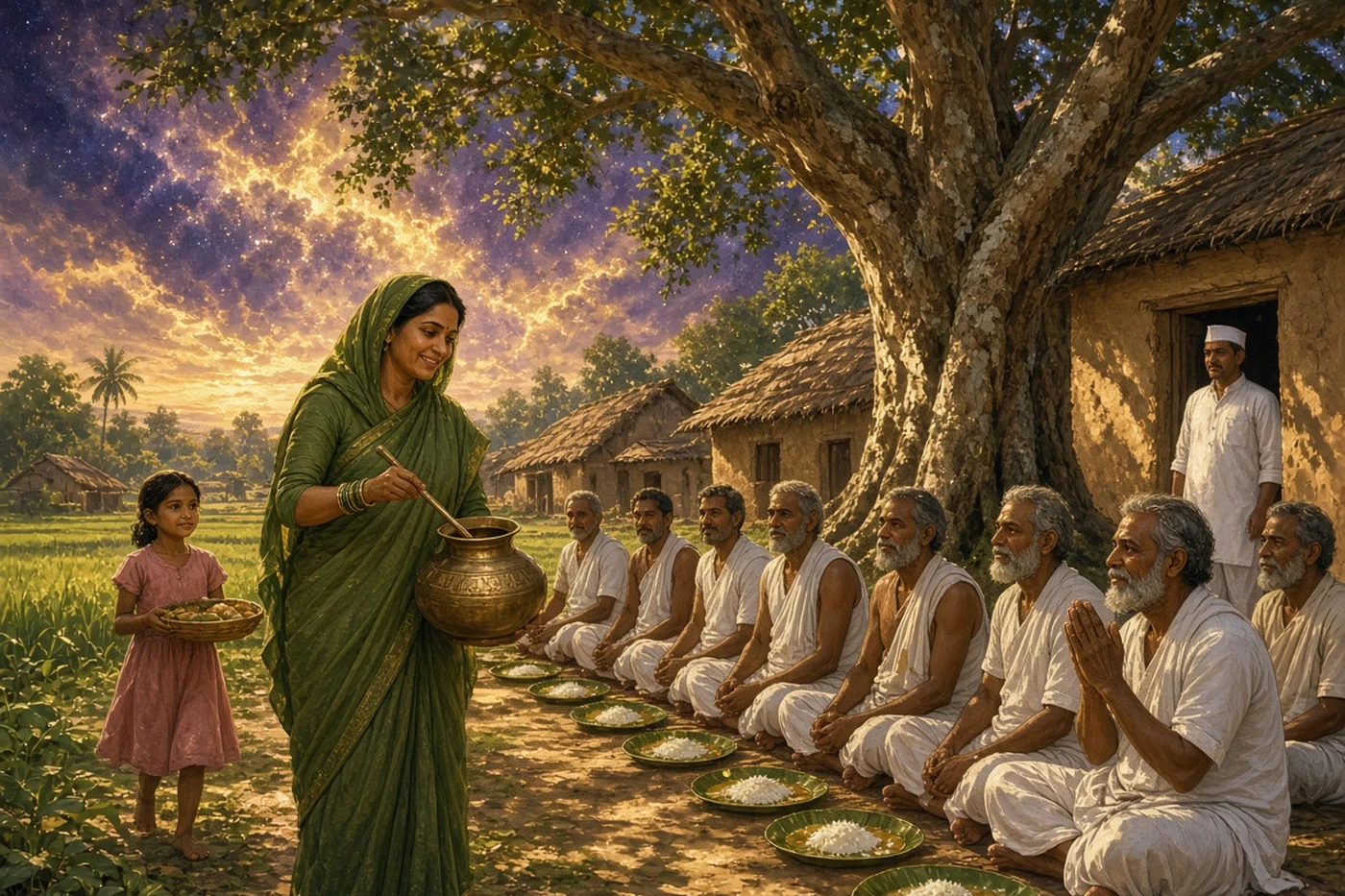
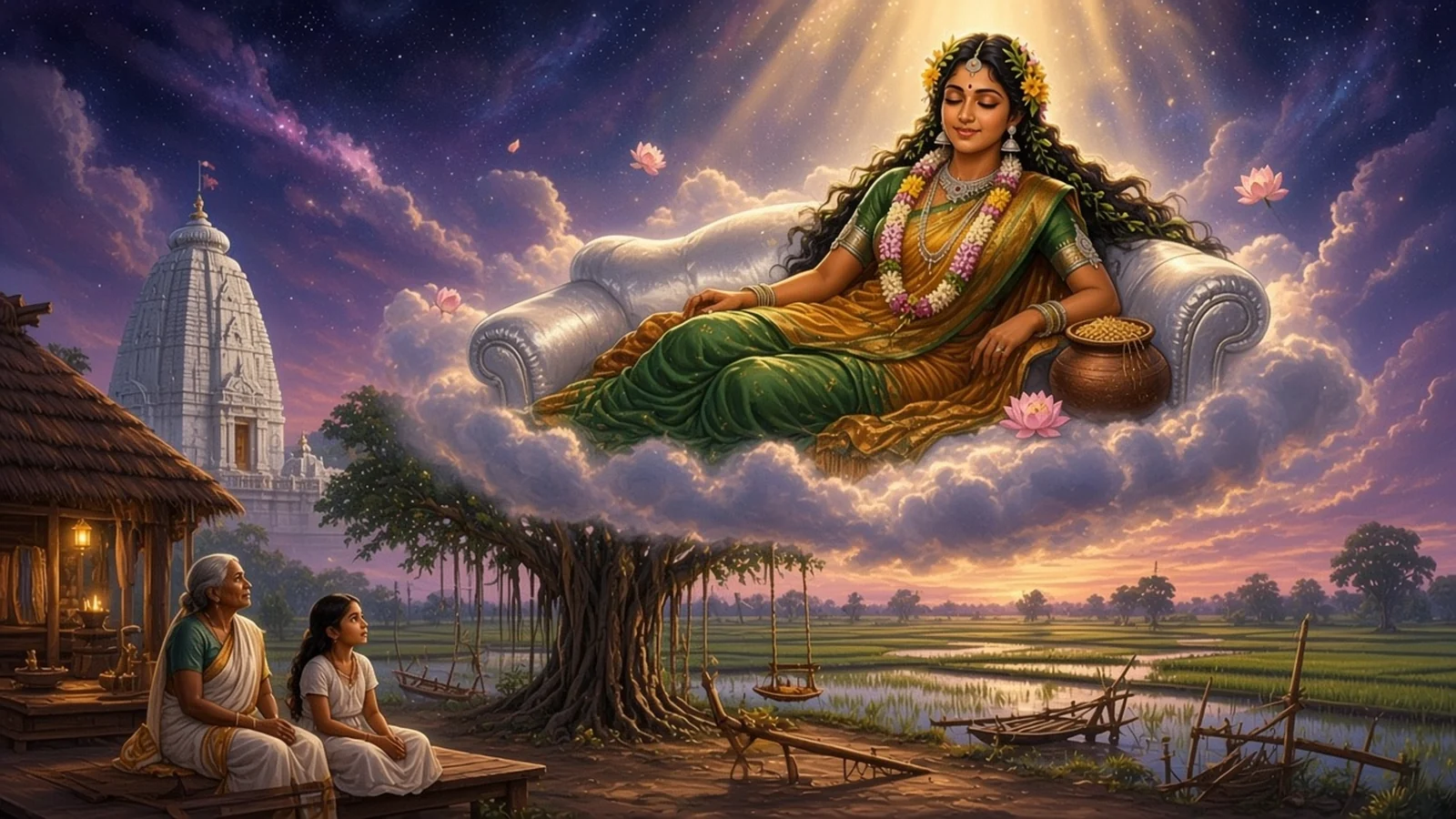
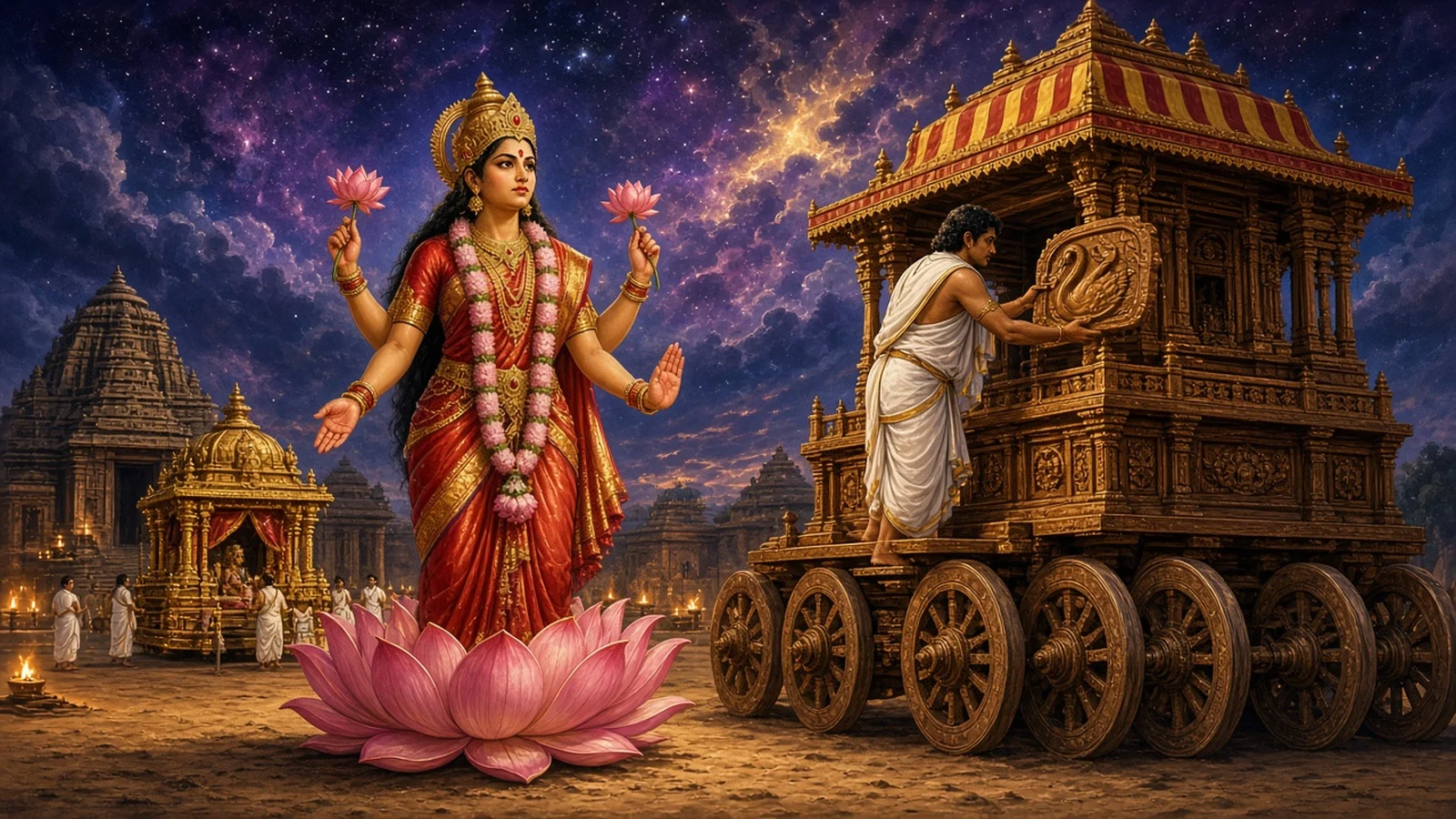
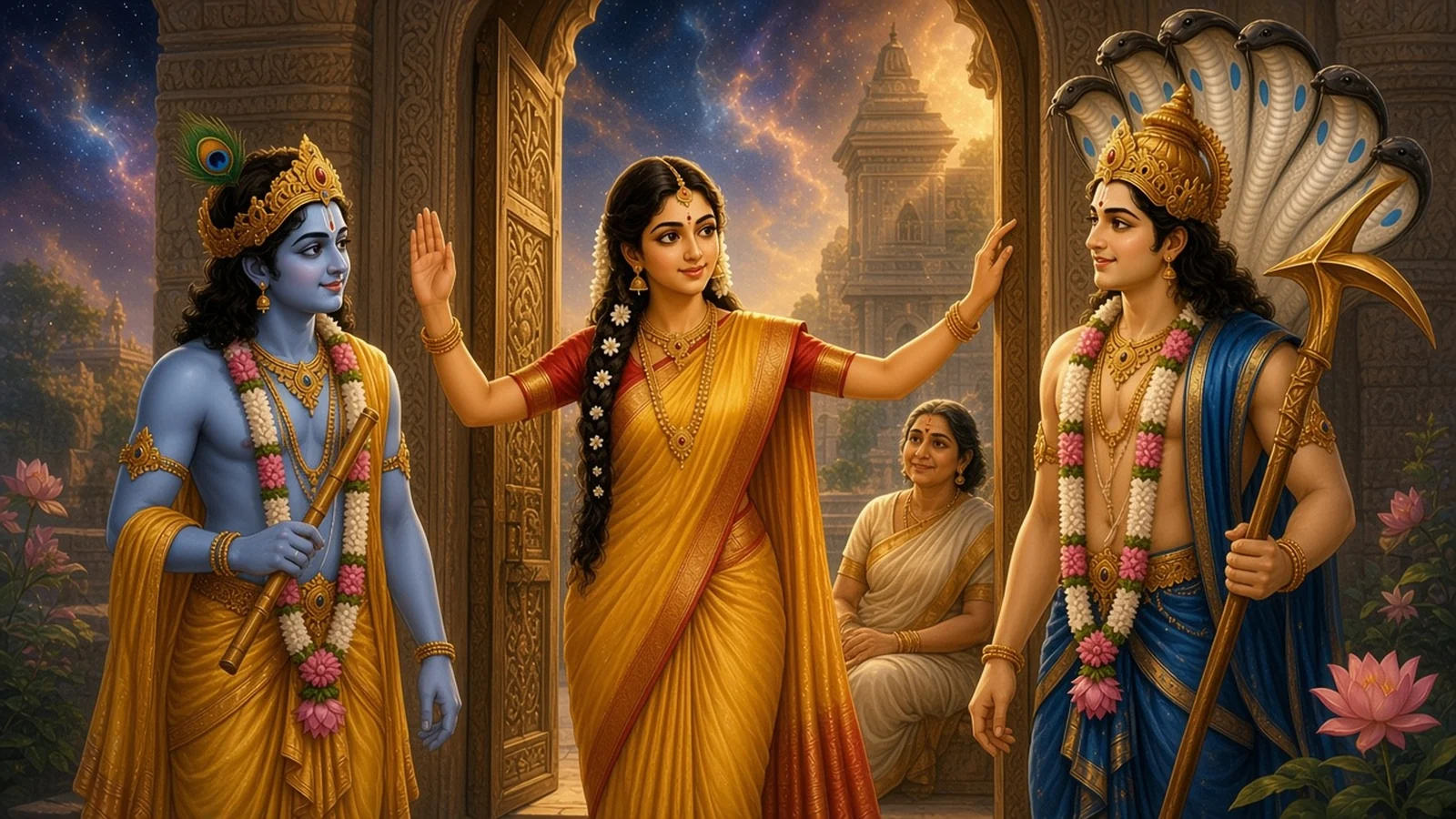
They went by way of Konark, and on the fifth day reached the Deuli Math on the Prachi at Kakatpur, some sixty kilometres from Puri. Next morning the priests of the goddess Mangala came to the math with her own garland and led them to her temple. The Daitas brought her the Lord's mahaprasad, new saris, bangles and vermilion. In the courtyard the Brahmins sat down to recite the Chandi.
"Why her?" the young man asked. "There are goddesses all round Puri."
"Eight of them guard the Lord's country," said his uncle. "She is the one who knows where his trees stand."
That night the searchers repeated the Swapnabati mantra a hundred and eight times before they slept, and the eldest of the Daitas lay down inside her temple. What she showed him was his to tell.
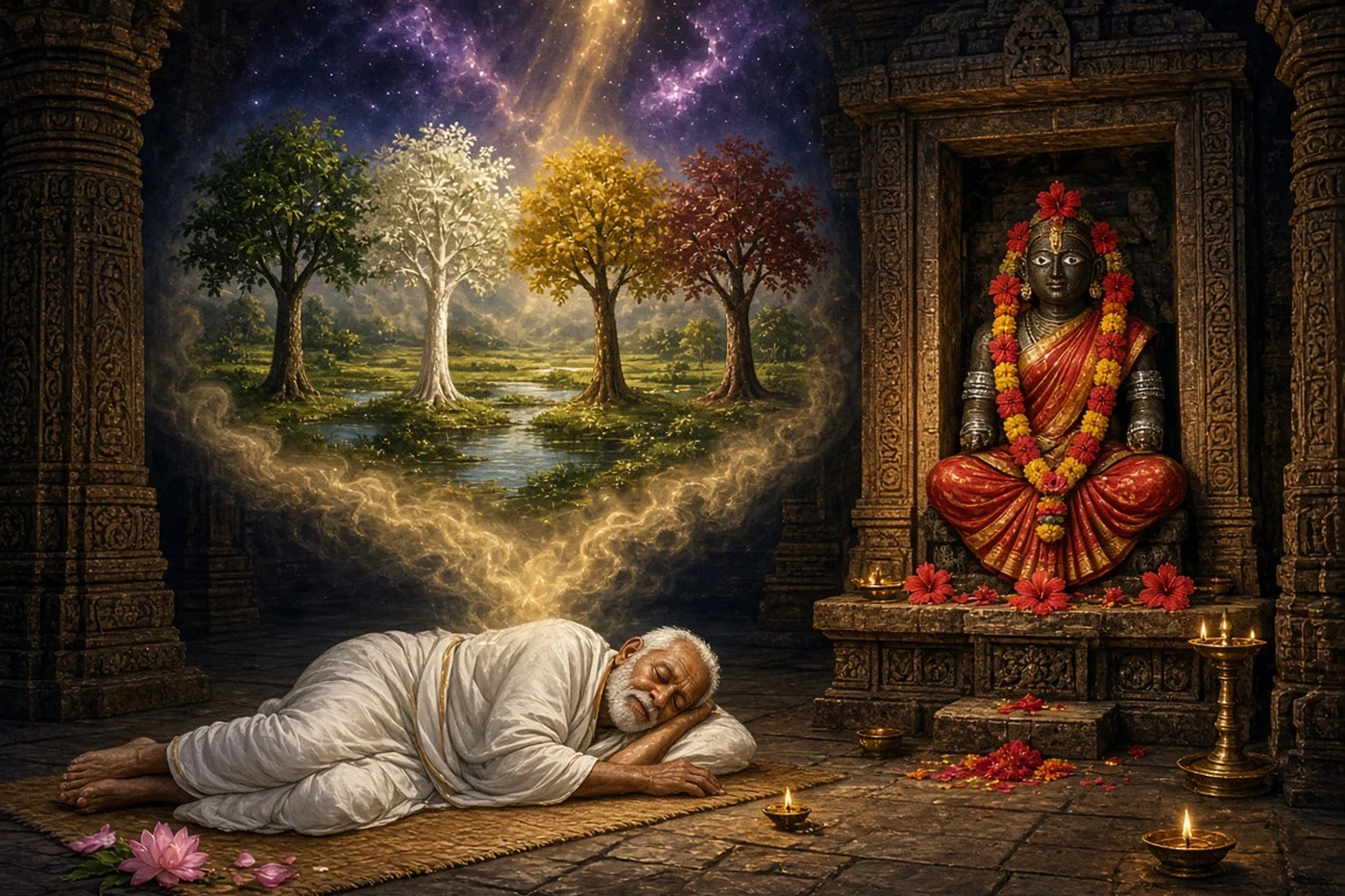
"And if she shows nothing?"
"Then they cover her in flowers and wait. The side the first flower falls from is the way we walk."
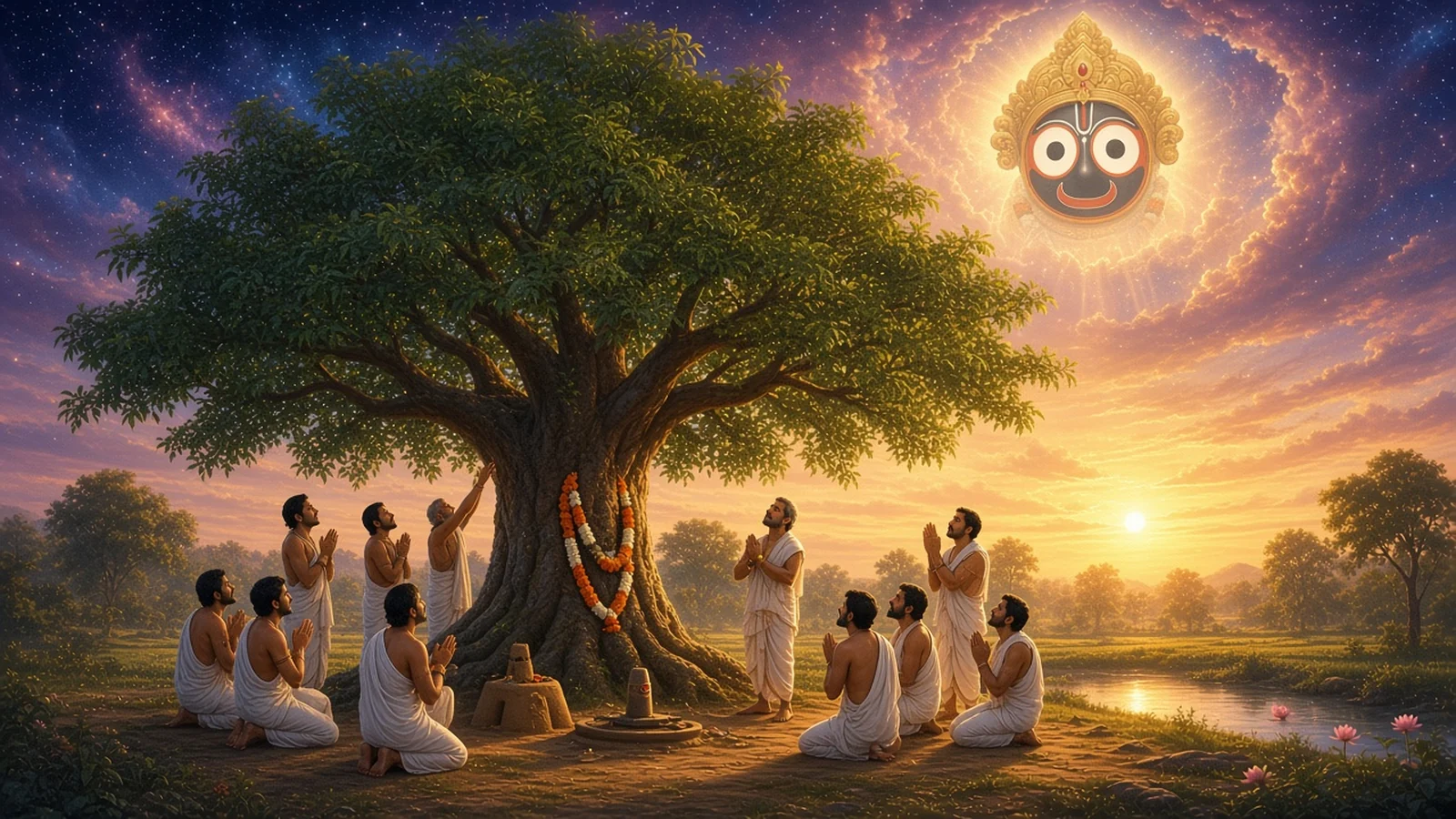
On the road the uncle taught him the signs. The Lord's neem has dark bark and four great branches, with the conch and the wheel showing on the trunk. Water stands near it, and a cremation ground, and a Shiva shrine. There is an anthill at its foot and a snake's hole at the root, and no nest in it, no creeper on it, no branch broken. Balabhadra's tree is pale, with seven branches and the plough and pestle; Subhadra's is yellow, with five branches and a lotus; Sudarshana's is red, with three branches and a wheel.
The trees were found in the order they are always found. Sudarshana's was announced on 12 April at Gadakuntunia, near Balakati. Balabhadra's followed beside the Sarala temple at Jhankad, Subhadra's at Adhangagada, and on 29 April the Lord's own, at Kharipadia in Jagatsinghpur.
At Kharipadia a fire burned for days beside the tree while the searchers fasted without water. On 9 May the axes were blessed: gold for the man of the Bidyapati line, silver for the man of the Biswabasu line, iron for the carpenter. The first two only touched the trunk. The iron went in a little after four, to the hundred and eight names of the Lord, and near a quarter past eight the tree came down. Villagers pressed its soil to their foreheads.
"What happens to the rest of it?" the young man asked.
"Branches and leaves go into a pit beside the stump. Only the trunk comes with us."
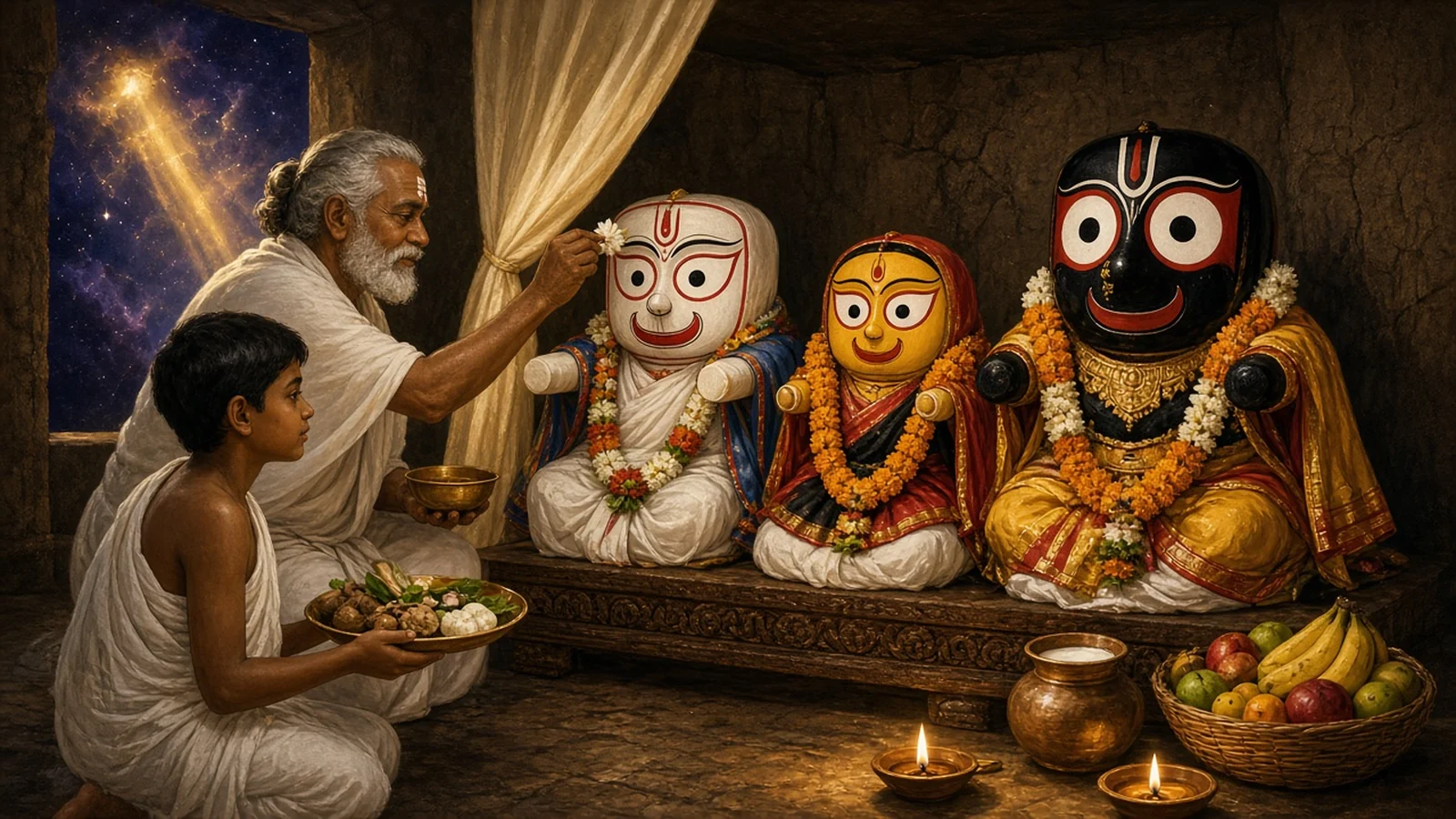
Wrapped in silk, the log rode to Puri on a cart of banyan, tendu and tamarind wood, pulled by ropes. On 22 May it went in at the north gate to the Koili Baikuntha, where the other three already lay.
"Now," said the uncle, "we can go home."
As Nilamani Senapati set it down in 1969
Puri, Kakatpur and Champajhar near Khurda · 1969 · 2 min read
Nilamani Senapati thought too many muddled notions were going round about the renewal of the gods, so in 1969 he wrote down what was actually done that year.
The party left Puri on 28 March, forty-five strong. Twenty-eight were Daitas; with them went one Pati Mahapatra, four Brahmin priests, four carpenters, five men of the temple police, a Lenka bearing Sudarshana's wheel, a bugler and an accountant. Their ritual goods filled two bullock carts. At Kakatpur they camped at the Deuli Math.
The story ran that the Pati Mahapatra dreamt there where the four trees stood. Senapati was careful about this. The dream may have come or it may not, he wrote, but word of a promising tree for Jagannath at Champajhar, near Khurda, had reached the Daitas before they set out, and the men looking for that tree went straight to it. Had it failed the tests, they would have searched elsewhere.
He listed the ten signs he was given and noted that a tree needed at least five. The Champajhar neem stood near a cremation ground, with the wheel and conch plain on its bark. Three cobras had been seen coming out of the anthill at its foot. It held no nest and no creeper, and it was old and huge, eleven feet round with no branch for the first twelve.
Fire offerings went on there for three days. Nobody had told the crowds of the old rule against looking at the tree before it fell, so people pressed in and chipped off its bark while the priests begged them to stop. The cutting began at three in the afternoon on 16 May. The Pati Mahapatra touched the trunk with a golden axe and a Daita with a silver one, and the four carpenters set to work. They soon tired, and villagers who had held back at first came forward and took turns.
A tamarind had grown up into the neem's crown. It was cut as well, and its wood gave solid wheels, without spokes, for the cart that took the log to Puri.
Senapati added one memory from the renewal before. In 1950 Balabhadra's tree had been found at Jalalpur near Kakatpur, on land that belonged to a Muslim, who refused it. His wife overruled him. She gave the tree, hired the men who cut it, and fed the whole party while they stayed.