As the servitors of Puri tell it
Puri · the bathing platform and the sick room · 4 min read
Every year, on the full moon of Jyeshtha, the gods of Puri are carried out of their temple for a bath, and every year they catch a chill.
That is how an old Daita put it to a boy of his own family, the night before the Snana Purnima, as the two of them sat on the steps by the temple kitchen.
"Tomorrow we carry them out," he said. "You will walk at the front with me. Watch, and say nothing."
"Carry them where?"
"To the bathing platform by the outer wall, where the whole town can see them. A hundred and eight pots of water, drawn from the golden well in the corner of the courtyard, with sandal and herbs and flowers in it. Then the king comes and sweeps the platform with his gold-handled broom. Then we dress them."
"As what?"
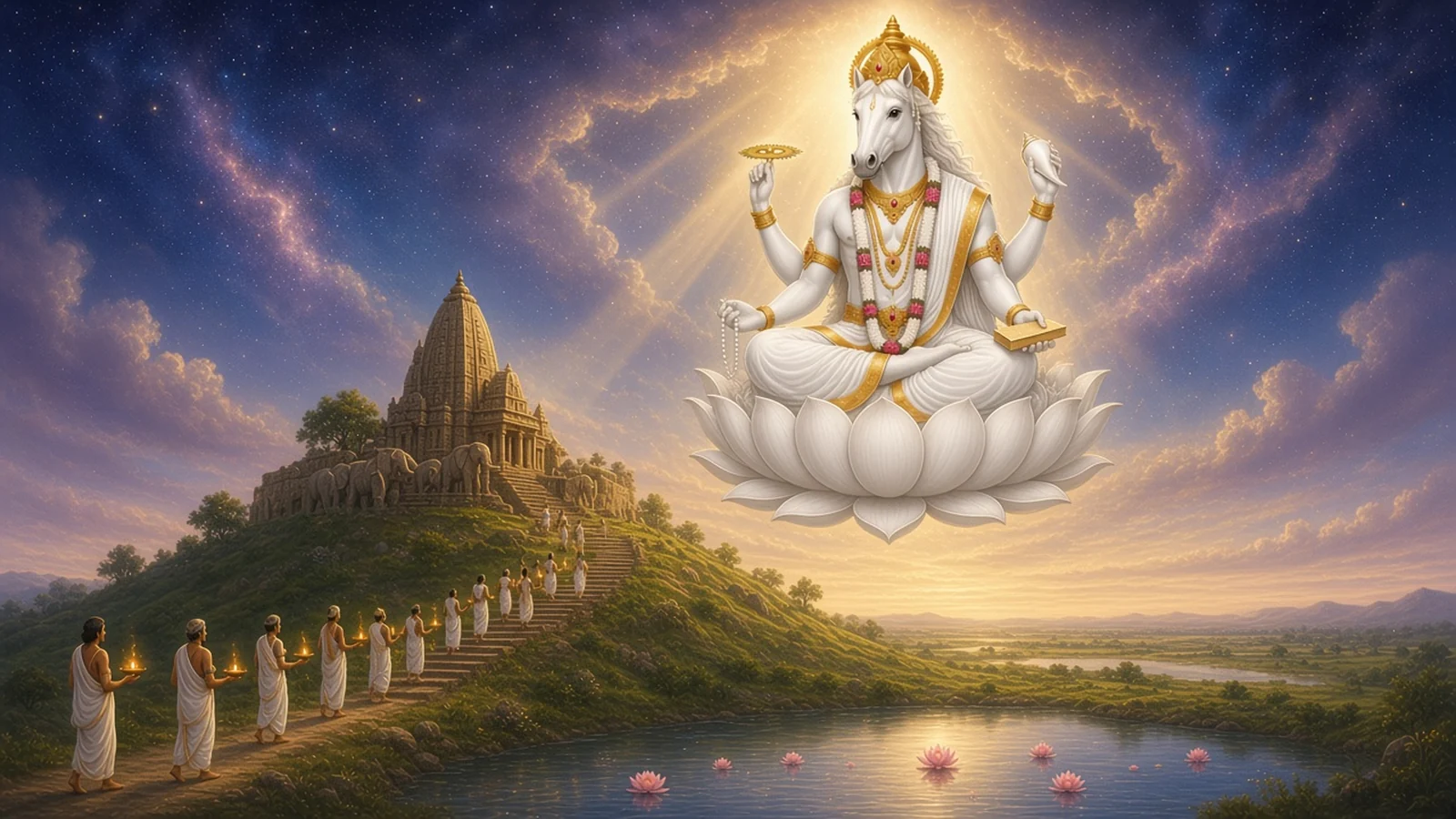
"As elephants." The old man smiled at the boy's face. "A pandit from the south came here once, a worshipper of Ganesha, who would bow to no other god. He stood before the Lord on this very day, saw no elephant's head, and turned to leave. The king's man stopped him and made him look again, and this time the Lord had a trunk. Since then, on bath day, the Lord and his brother wear the elephant's face and their sister wears a lotus, so that nobody goes away unhappy."
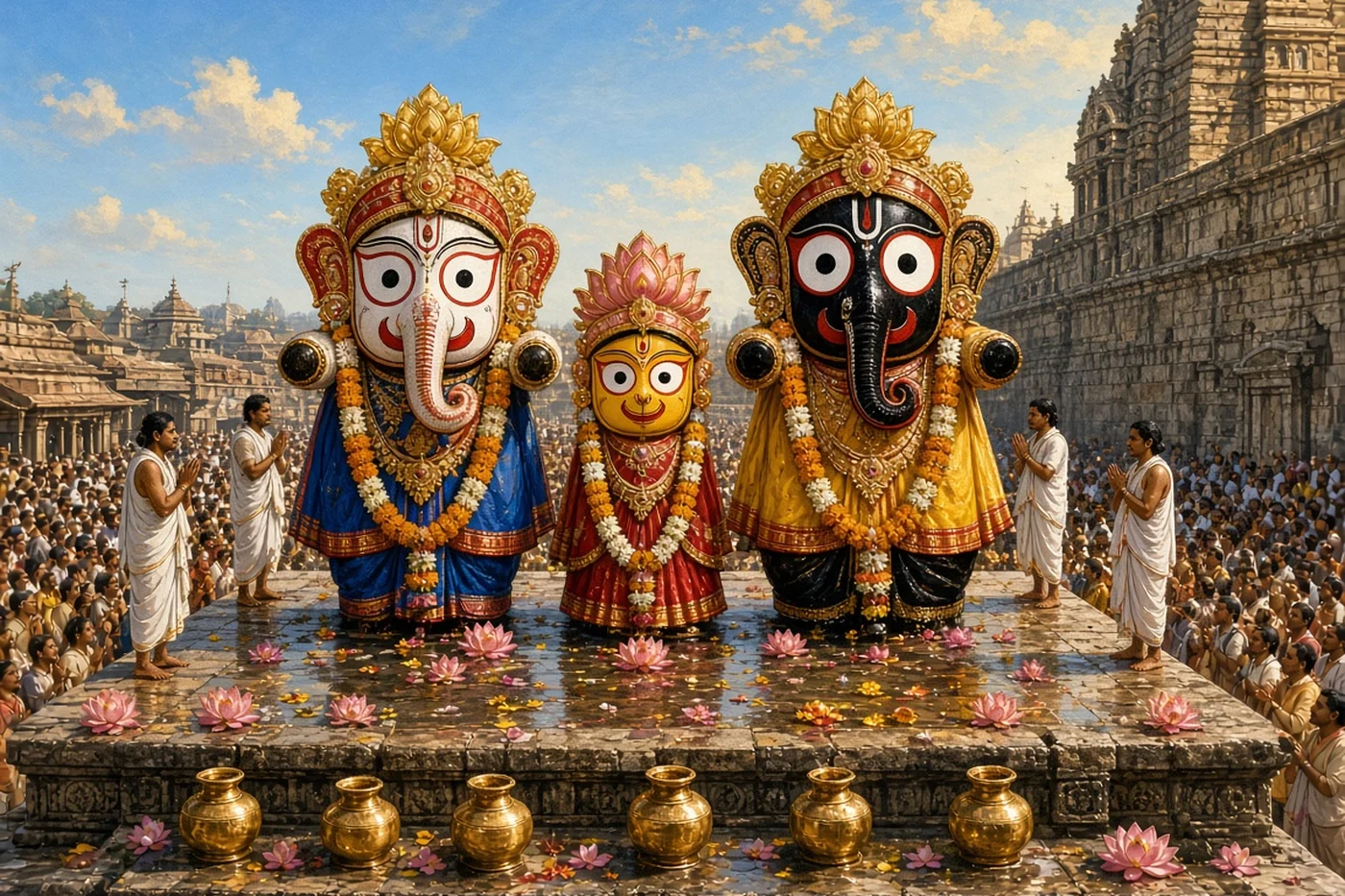
The bath was done by noon. In the night the masks came off, and when the three were carried back inside, the old Daita's face had changed.
"Now they are ill," he said quietly. "Too much cold water on a hot day. Fever. From tonight the doors are shut."
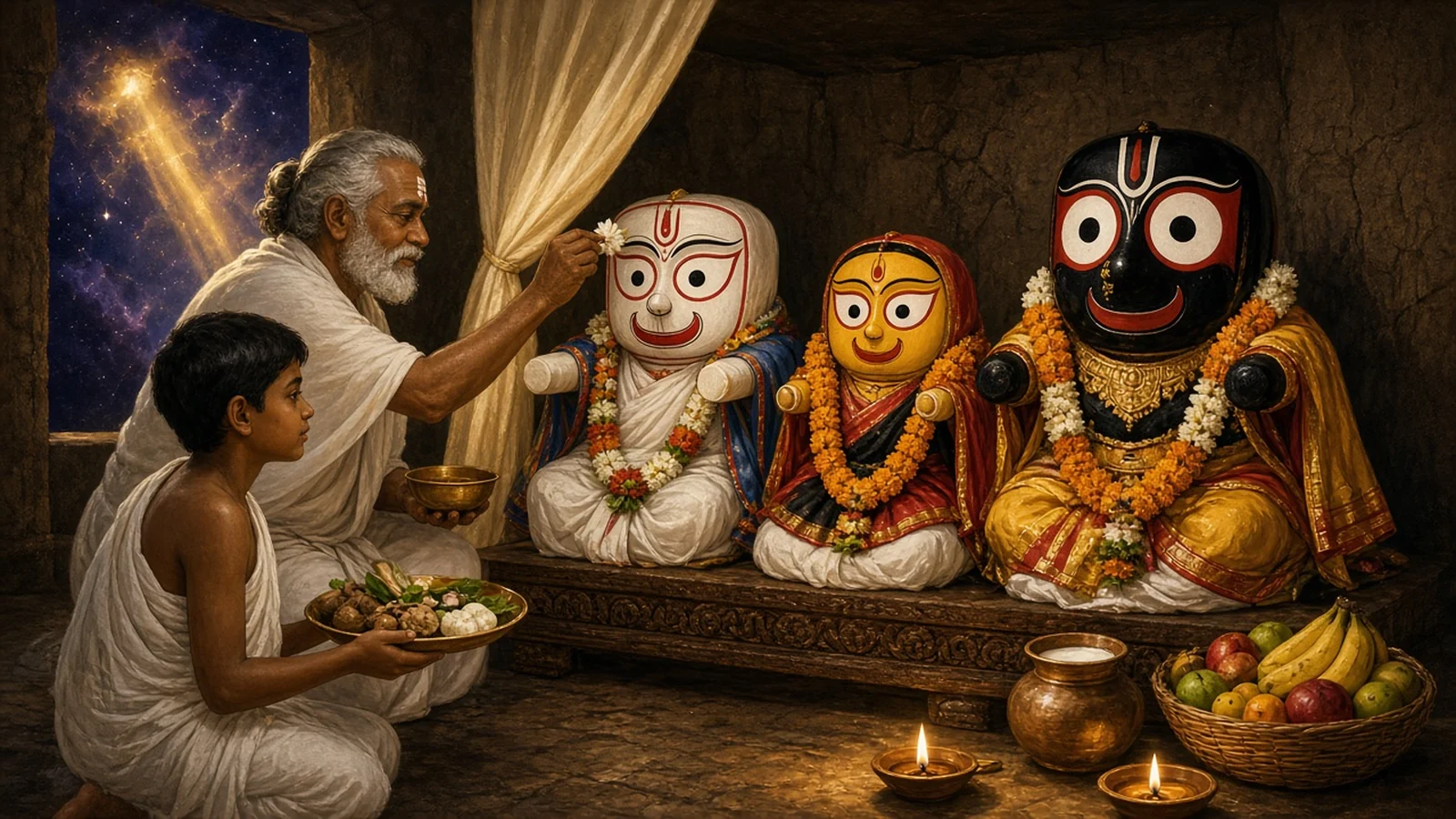
For fifteen days the temple was a house with a sick family in it. The great kitchen stopped cooking its fifty-six dishes; nothing cooked went in to the gods, only fruit, roots, milk, a sweet drink and the medicines. The royal physician came. The Daitas rubbed the gods with the phuluri oil, which is made of flowers and herbs on the fifth day of a Rath Yatra and buried in the earth for a whole year before it is used, and gave them the dasamula, ten roots pounded and shaped into balls. No Brahmin priest went into that room. Only the Daitas did.
"Why only us?" the boy asked.
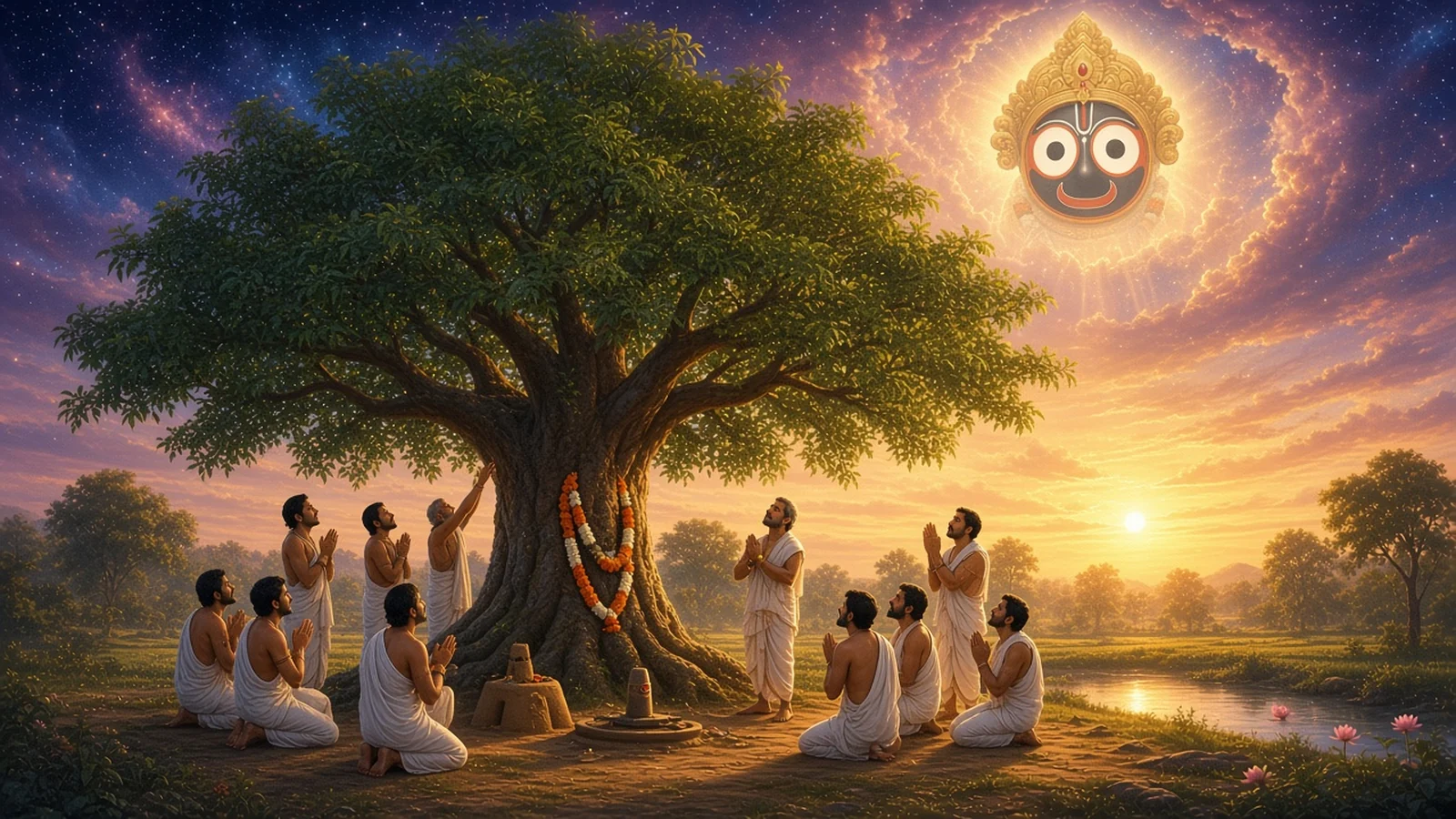
"Because we are family," said the old man. "Before the temple, before any king, our forefather Vishvavasu worshipped him in the forest, and the Lord was his. When a man is sick, his own people nurse him."
Outside, the pilgrims who had crossed India found the sanctum empty. In its place hung three painted cloths: the Lord as Ananta Narayana, his brother as the serpent Vasudeva, their sister as Bhuvaneshwari, in black, white and yellow. The painters' families had made them, the Chitrakaras of Raghurajpur, from cotton and tamarind glue and powdered stone. Those who could not pray to a painting walked twenty-five kilometres to Alarnath at Brahmagiri, where the Lord is said to show himself when Puri cannot.
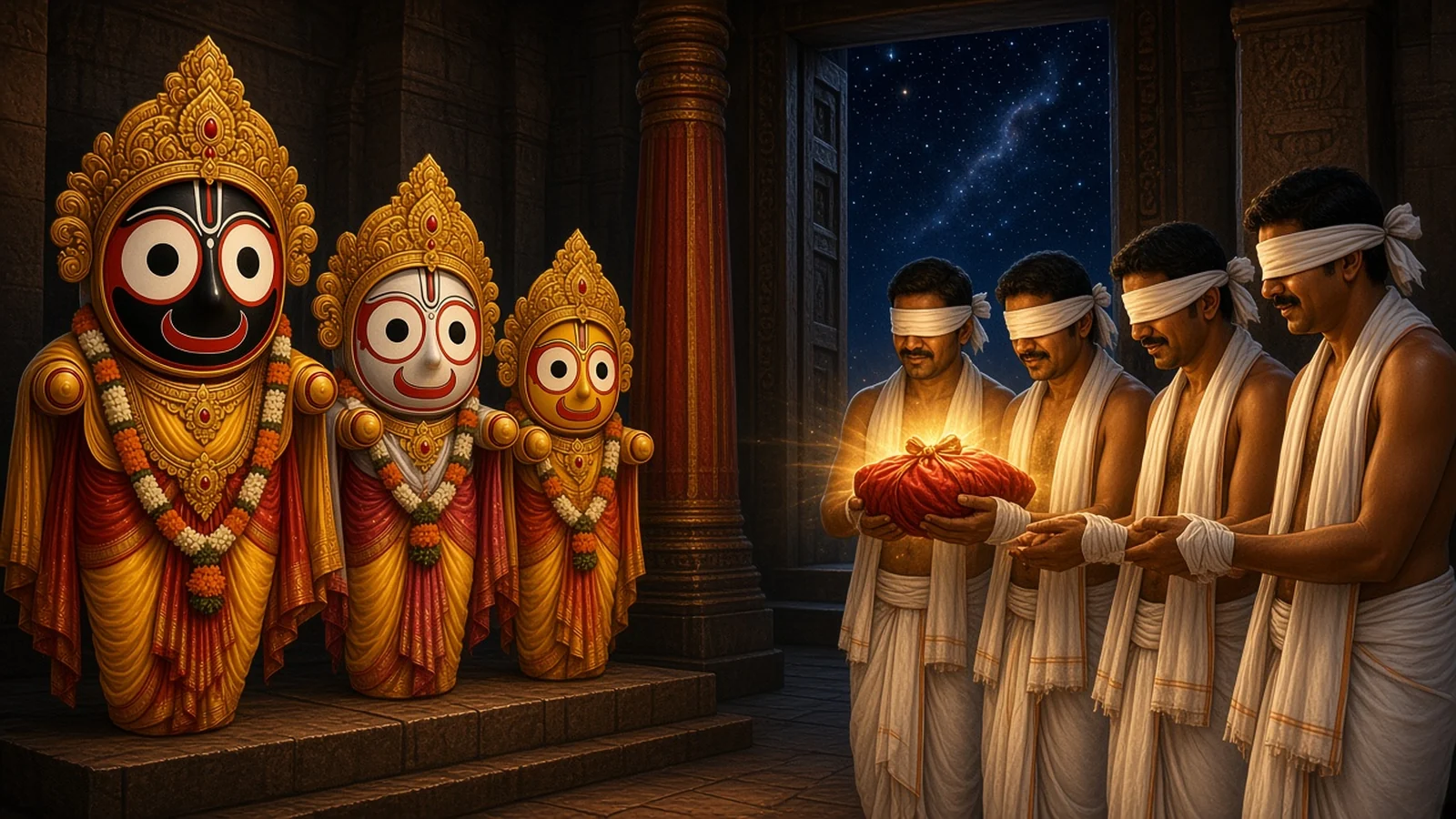
On the last nights the sick room became a painter's room. The old colours had come away in the bath, and the Daitas and the Datta Mahapatra servitors laid new ones on from the palm-leaf book called the Banaka Pothi: red from hingula, yellow from haritala, musk, saffron, kaitha gum, line by line, eyebrows and nose and lips, by lamplight and in secret. The eyes were painted last.
"Why last?"
"Because when the eyes are done, he is awake," said the old Daita. "That is the festival of the eyes. Tomorrow the doors open and the town sees him new. The day after, we carry him out again, and this time three chariots will be standing at the gate."
The boy had watched the chariots growing on the Grand Road since the third day of bright Vaishakha, when the first log was cut. Only now did he see that it was all one thing: the bath, the fever, the fortnight in the dark, the new paint, and then the journey.
"He is well now," said the old man. "A man who has been ill and is well again wants to go out."
As Bengal keeps it: Mahesh, and Chaitanya's friends
West Bengal · Mahesh on the Hooghly, and Puri in the Chaitanya Charitamrita · 2 min read
On the Hooghly above Kolkata, at Mahesh in Serampore, Jagannath has ridden a chariot since 1396, and he falls ill there too.
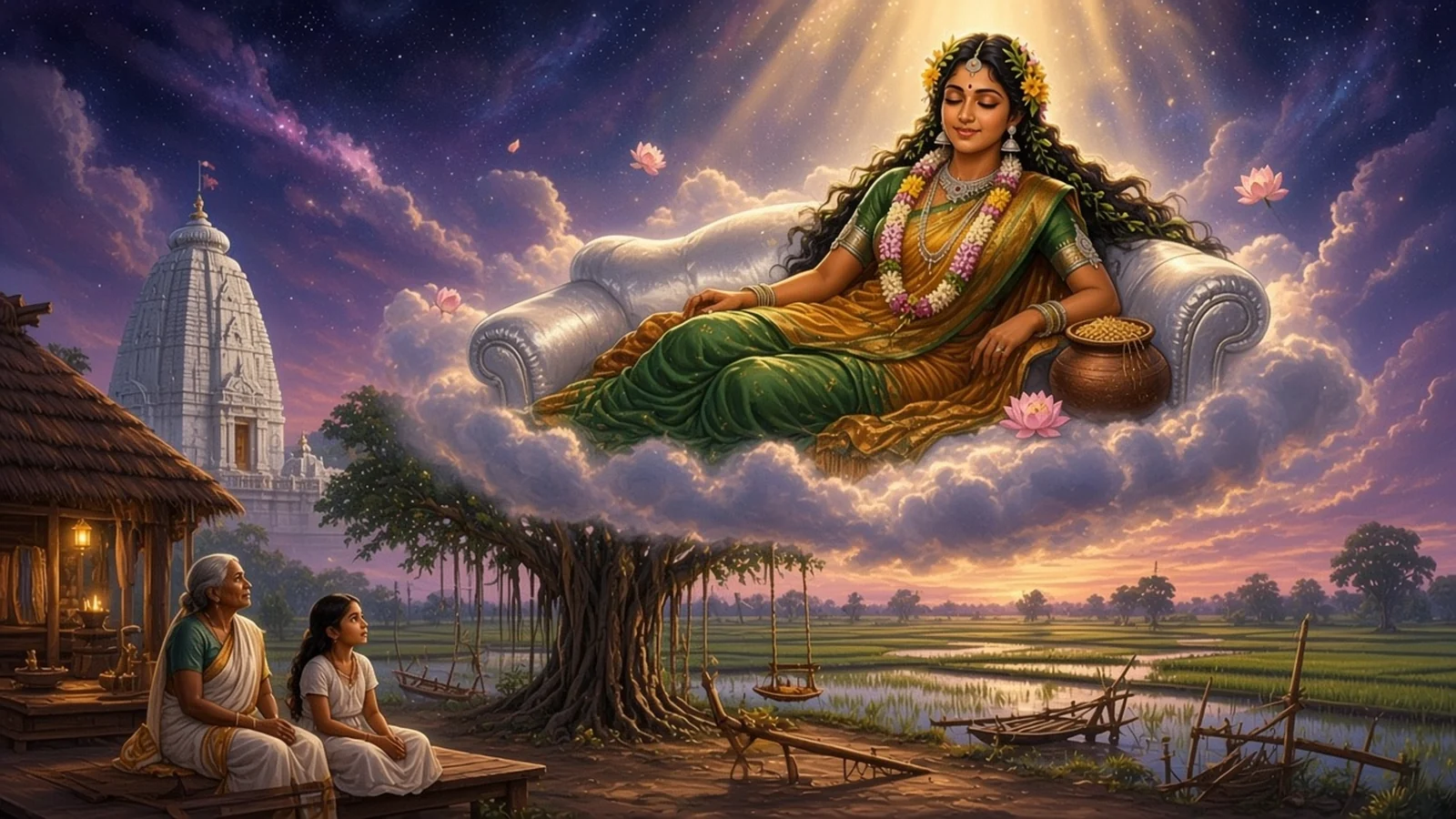
Mahesh tells how it got its god. A sadhu named Dhruvananda went to Puri wanting to feed the Lord with his own hands and was turned away. He fasted, and in a dream he was told to go to Mahesh on the river, where a log of neem would come to him. On a night of storm the log came. He pulled it from the water and carved three figures from it, a brother, a sister and the dark Lord between them. When Chaitanya passed that way on his road to Puri he sat before them and went into a trance, and called the place the new Nilachala, a new Puri.
So Mahesh keeps Puri's year. On the full moon before the chariot festival the three are bathed in milk and Ganga water, and they fall ill. Three physicians come, one each from Arambagh, Goghat and Ghatal, and treat them with a herbal liquid. Two days later a painter shuts himself in with them for three days to renew their colours. He covers his face and his hair while he works, eats one vegetarian meal a day, and takes no money. The day before the journey Jagannath is sworn in as king. On the day itself a blue-throated nilkantha bird is set on the top spire of the great iron chariot, and when it flies, the ropes are pulled.
"Why do the doctors come from so far?" a child in the crowd asks.
"Because they always have," is the answer Mahesh gives.
The followers of Chaitanya, who spent the last years of his life at Puri, read the fortnight another way. When the Lord was hidden they did not wait in Puri. The tradition of Brahmagiri says that Chaitanya went out to Alarnath in those days, and that when he fell on his face before the god there the stone softened under him, and keeps the print of his body still.
And when the doors opened, Chaitanya asked the Gaudiyas' question. Why does the Lord of the Universe, who has everything in his own house, go every year to a garden up the road?
He answered half of it himself, pointing at the groves round the Gundicha temple. "Look at them. They are Vrindavan. That is why he longs to see them again."
His friend Svarupa Damodara gave him the other half. "And that is why the goddess of fortune does not come. She has no part in the pastimes of Vrindavan. There the cowherd girls are his only companions, and nobody else can draw his mind."
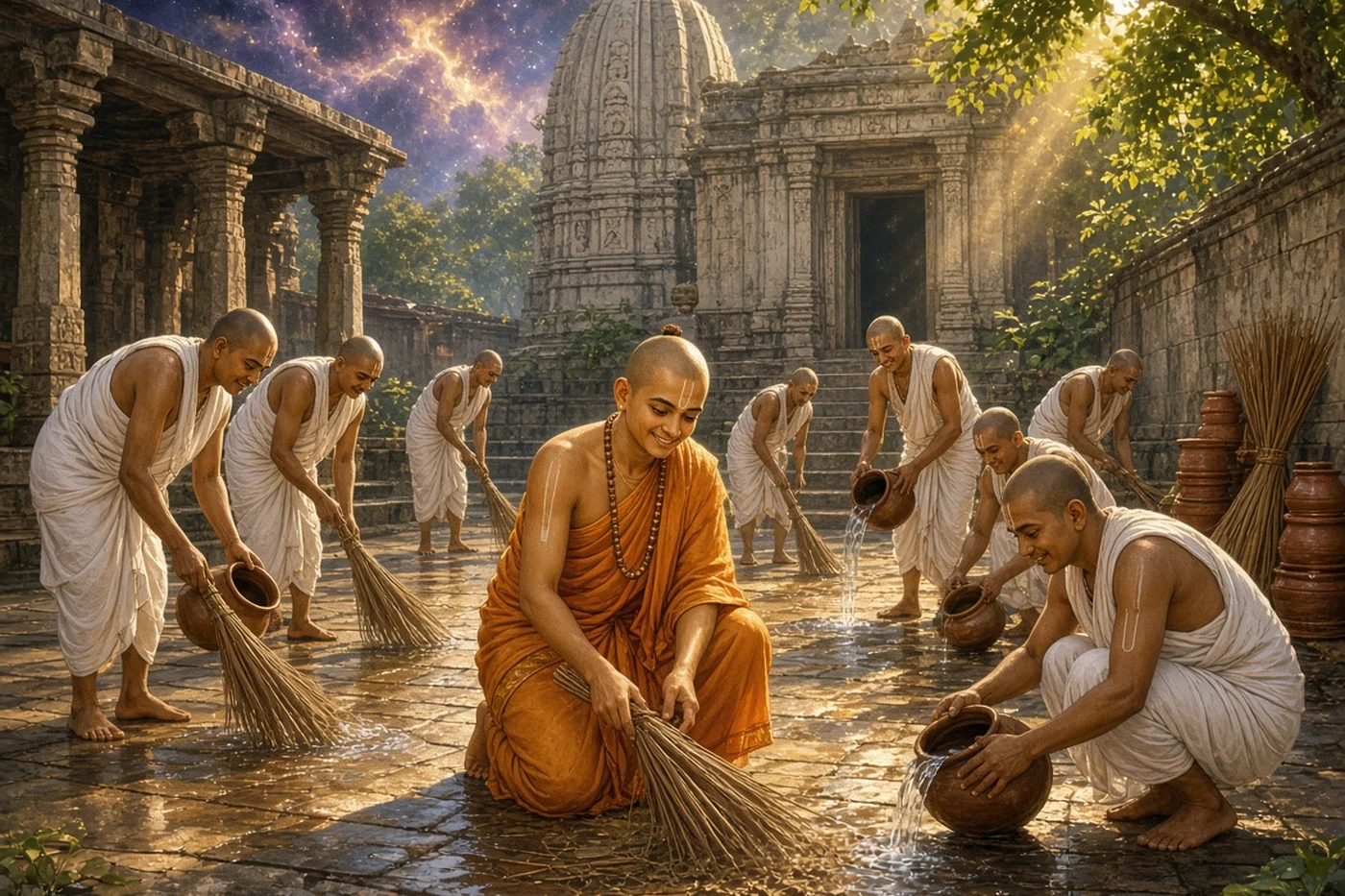
So before the journey Chaitanya took a hundred brooms, a hundred new water pots and all his companions, and washed the Gundicha temple himself, gathering the straw and the dust in his own cloth and carrying it out, until the house was fit for Krishna to sit in.