As a Daita household keeps it
Puri · the night of the change and the days after · 3 min read
On the night the gods of Puri change their bodies, the whole town is asked to put out its lights.
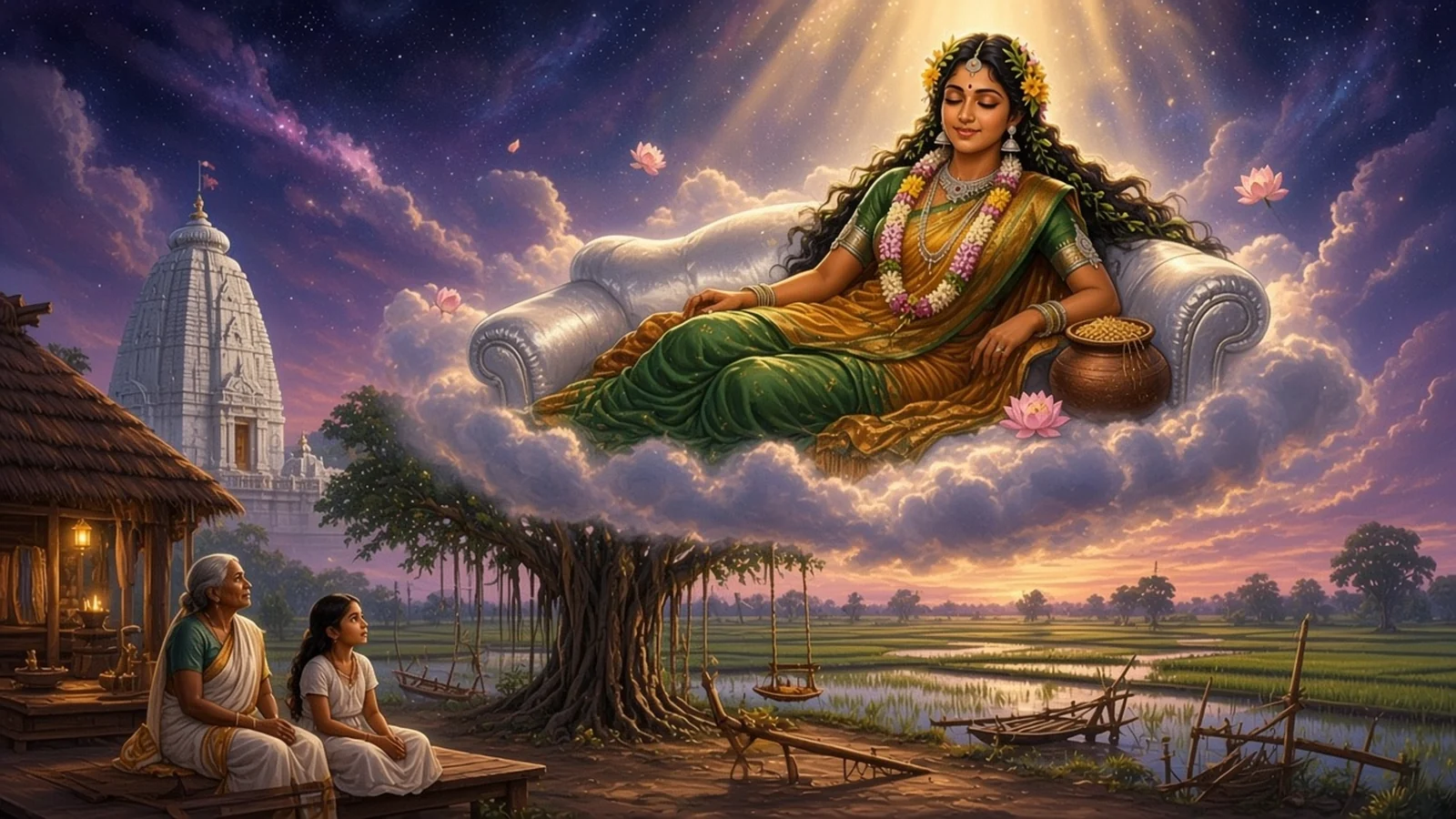
In one Daita house a short walk from the temple, the mother had put the lamp away before nine. Her daughter, who was eleven, stood in the doorway and watched the street go dark: the houses, then the streetlights, then the temple itself.
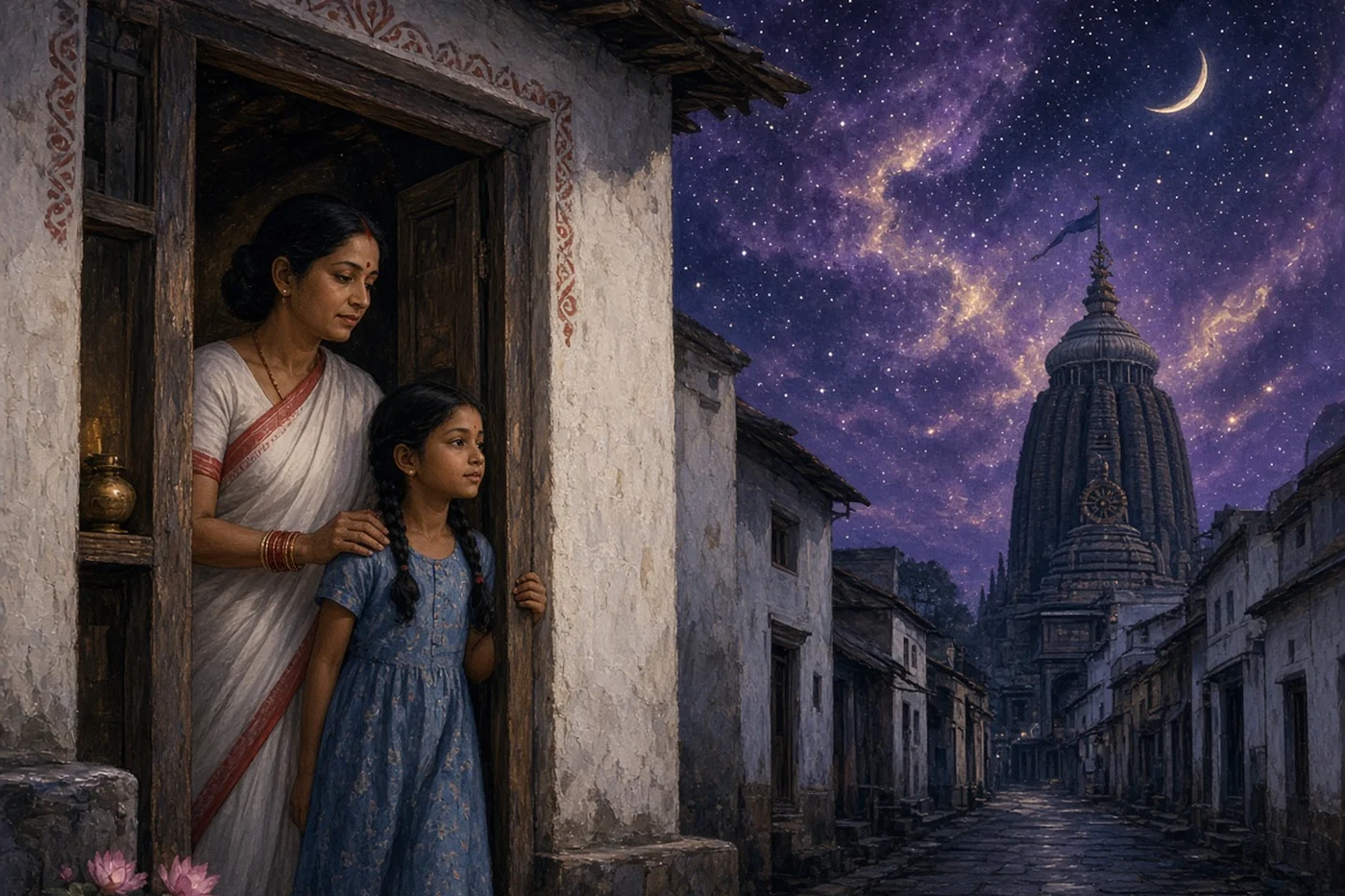
"Even the temple?"
"Even the temple. Tonight nobody sees. Not the town, not us, not your father."
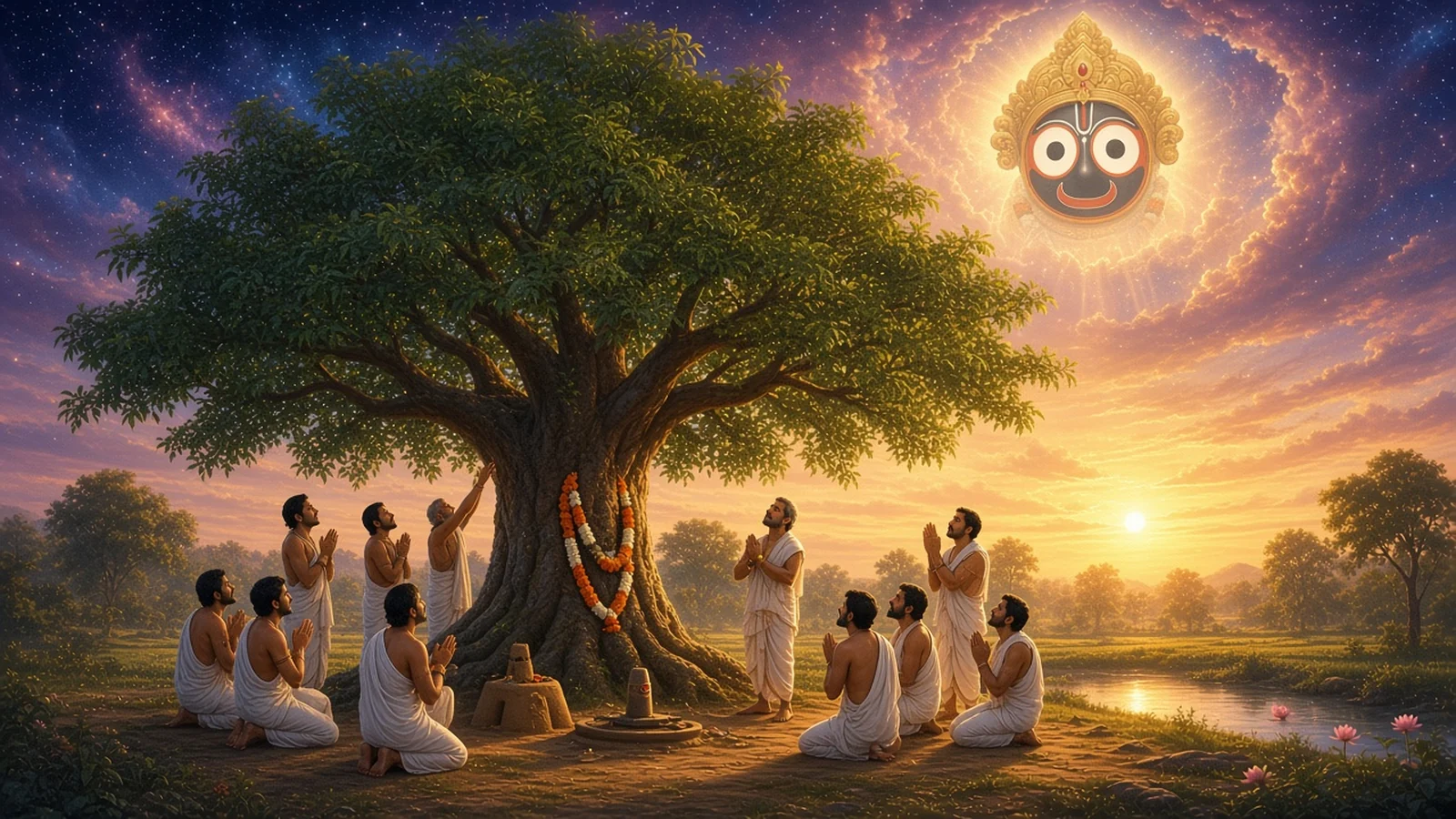
Her father had gone at dusk. Inside the walls the fire the Brahmins had tended for days was finished; the king had poured the last offering into it and left, and the Brahmins and the carvers of the new bodies had been sent out. Only the Daitas and the Pati Mahapatra stayed, with guards holding swords at the doors.
"What are they doing now?"
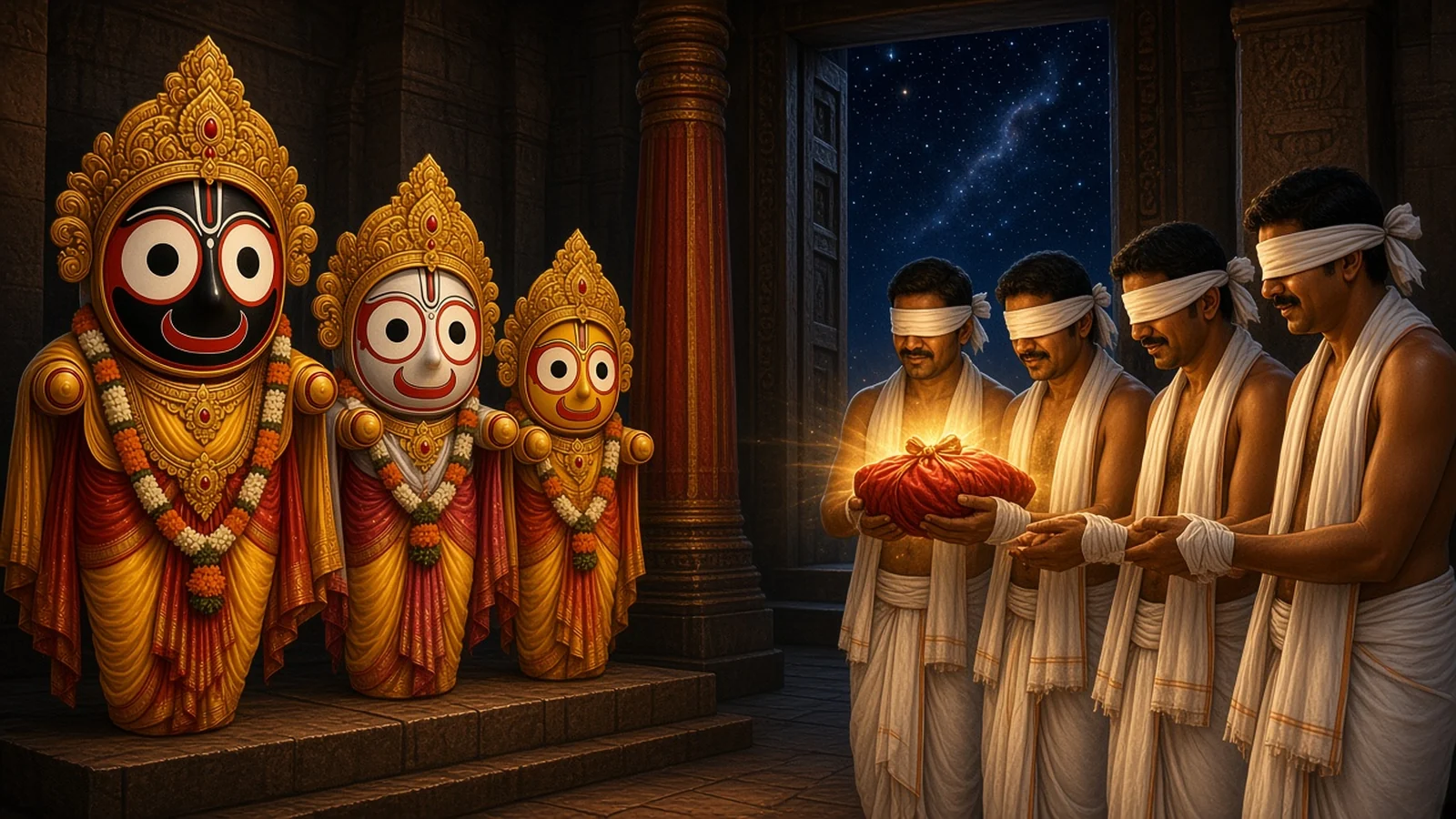
Her mother told her what every Daita child is told, and no more. In the dark the new bodies are bathed, dressed in silk and set down facing the old, so the Lord can look at himself. Then four men go in, one for each of the four: the chiefs of the Daita lines for Jagannath, Balabhadra and Subhadra, and the Pati Mahapatra for Sudarshana. Their eyes are bound and their hands wrapped. Each opens a small door in an old body, lifts out what lives there and sets it on a little stool. It is bathed with tulsi water and given food. Then it goes into the new body, the door is closed, and the place is bound with silk.
"What is it?"
"The Brahma." Her mother shook her head before the next question came. "The four never say. Their fathers never said."
"Is it true the one who moves the Lord's does not live long after?"
"That is what the old people say. Pray for him."
Before dawn her father came home grey with sand and sat on the step without washing.
"We have laid them down," he said. "All four, and the wooden horses and charioteers from the chariots with them."
He had carried the old Jagannath on his shoulder with the others to the Koili Baikuntha, the garden inside the north wall, and lowered him into a pit. There the old Jagannaths lie one above another, each on the last.
"Then he has died," said the girl.
"His body has. And he is the head of our family, so we mourn him as we would mourn my own father."
For ten days the house kept a death. On the tenth the four chiefs and the men of the Bidyapati and Biswabasu lines had their heads shaved at the Markandeya tank, bathed, and went to the Lion Gate to finish the rites. Then the Daitas fed the town as a family feeds its people after a funeral, and the Lord's mahaprasad was served along the Grand Road to anyone who came. Lakhs came.
All that month the new bodies lay in the sickroom. They were wrapped in seven coverings, sandal paste, musk, resin and silk among them, and the painters laid on the colour. The eyes were left for last. On the day of the Netrotsava the Brahmins painted in the pupils.
The next morning was the Nabajauban, the new youth. The girl stood on the Grand Road with her mother when the four were brought out to the chariots, and looked up into a face she had known all her life.
"He looks young," she said.
"He is," said her mother. "He was born this summer."
As the papers reported it in 2015
Puri · 15 to 16 June 2015, and after · 2 min read
In 2015 the change was set for the night of 15 June. The power to Puri was cut at nine. Around ten the Gajapati, Dibyasingha Deb, made the final offering at the fire, and the Brahmins and carpenters left the temple as the rite requires.
It was meant to be done before dawn. It was not. The gates stayed shut through the morning of 16 June while lakhs waited outside, and opened only that evening, about half a day late, to shouts of praise for the Lord. A senior Daita told reporters that everything had been done as scripture lays down. The temple's chief administrator said the rites could take up to twelve hours, and that in 1996 too they had ended in the afternoon.
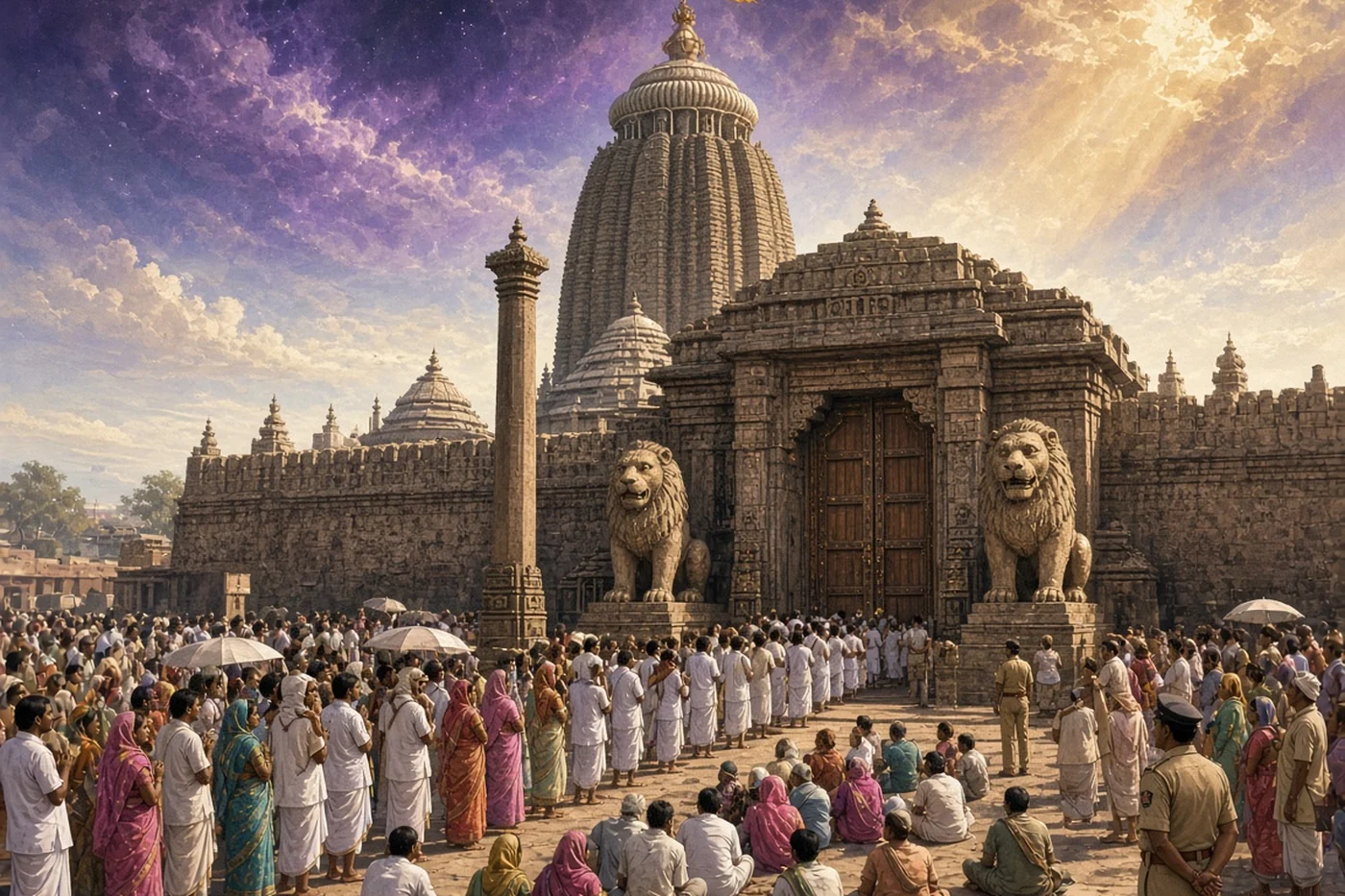
Odisha was not reassured. Reports spoke of a dispute among servitors over who might enter the closed room, and there were protests and bandhs in Puri and across the state. On 24 June, with armed police along the route, the Daitas walked to the Markandeya tank for the tenth-day rites of the old bodies.
On 25 June the three Daita chiefs of Jagannath, Balabhadra and Subhadra spoke to the press. They admitted the delay, said nothing in the secret rite had been broken, and asked people to forgive and forget. The keys of the room, they said, had reached them at 4.20 in the morning, not at eight the evening before.
One elderly servitor, not one of the four, was suspended for a time, and said more men had been in the room than the rite allows. The others denied it. His suspension was lifted on the eve of the next year's Rath Yatra.
The chief administrator held an inquiry and handed in his report on 5 August 2017. In September 2018 the temple's managing committee, chaired by the king, said action would follow and that the report would stay confidential.