As the Yogini Tantra tells it
Yogini Tantra, second part, chapter 9 · Manikuta hill, Hajo · 3 min read
The Yogini Tantra is a book of Kamarupa, the old country of Assam, and like many tantras it is told as a conversation. Shiva is speaking, and Parvati is listening. In its last chapter she asks him about the stone image on Manikuta, the hill of jewels, and he tells her where it came from.
"Its story begins far to the south," Shiva said, "by the eastern sea, with a king called Indradyumna."
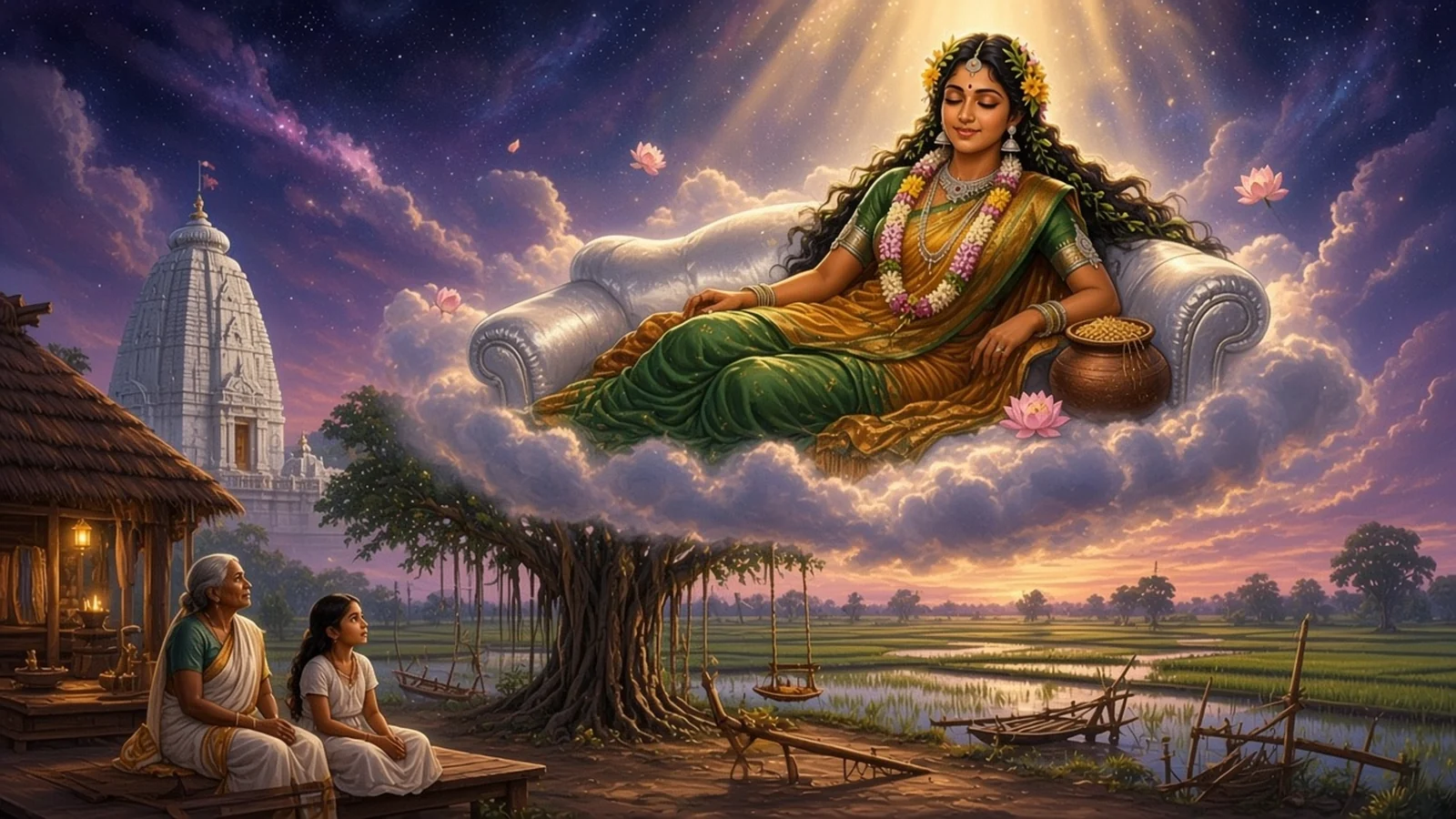
Indradyumna ruled in the land of Orissa, and he had set his heart on one thing. He wanted an image of Vishnu that was perfect, an image fit to hold the god himself. He thought about it until he could think of nothing else. He stopped sleeping. He stopped eating. He forgot to bathe.
"Where is such a thing to be found?" he asked. "A stone, a tree, a holy place with the right signs on it. Where?"
Then one night Vishnu came to him. He sat on Garuda, and he held the conch, the discus, the mace and the lotus in his four hands.
"I am pleased with you," the god said, "with your worship and with your sacrifices. Now listen. Take an axe and go down to the shore in the early morning. There you will find a great tree standing in the water, and the waves will not move it. Cut it. Make my image from it."
And he was gone.
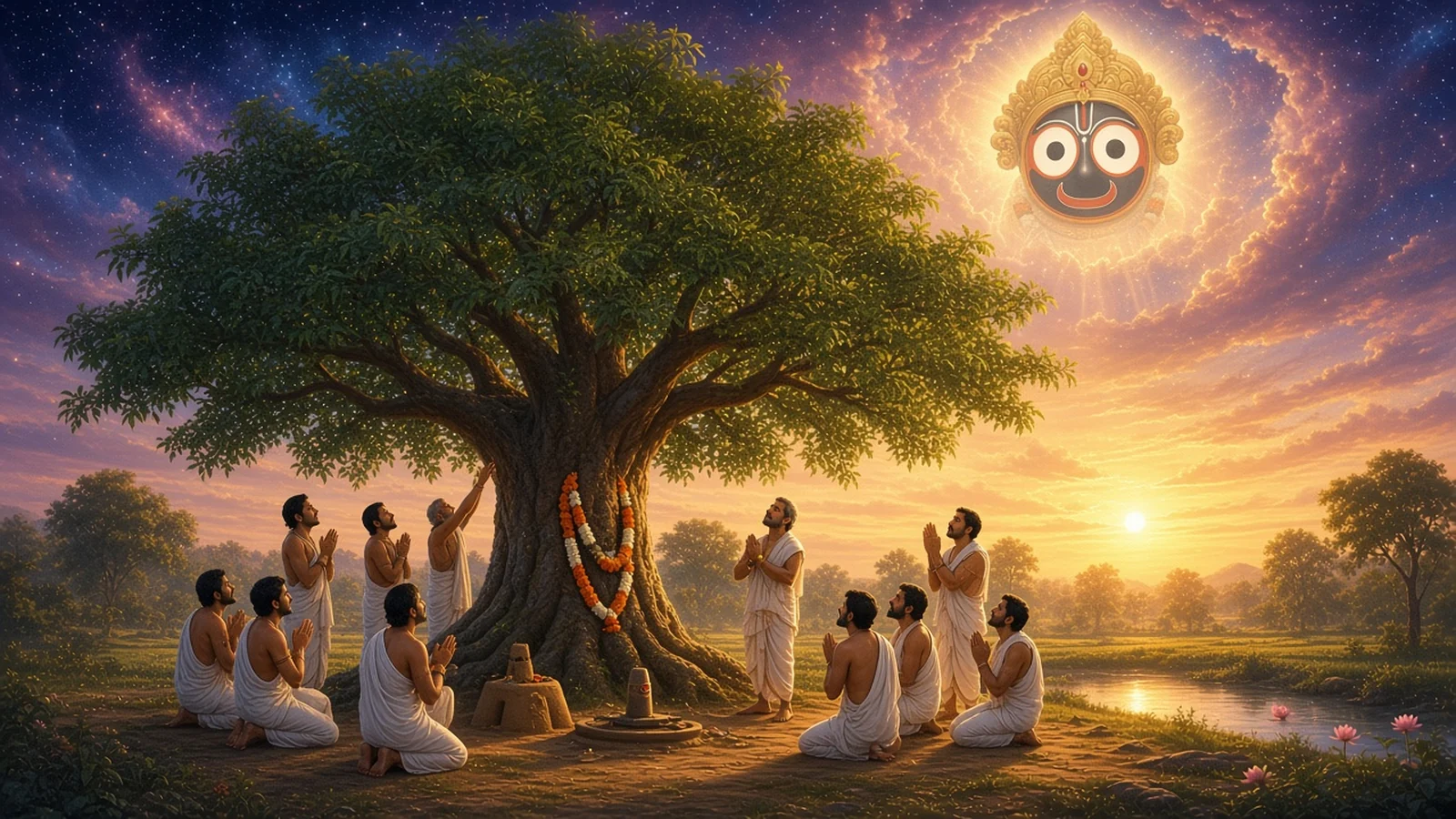
The king woke before dawn. He went down to the sea and bathed, and when he came up out of the water he saw it: a tall tree at the edge of the waves, so high that no one could have climbed it, with no fruit on its branches. The water broke against it and it did not stir.
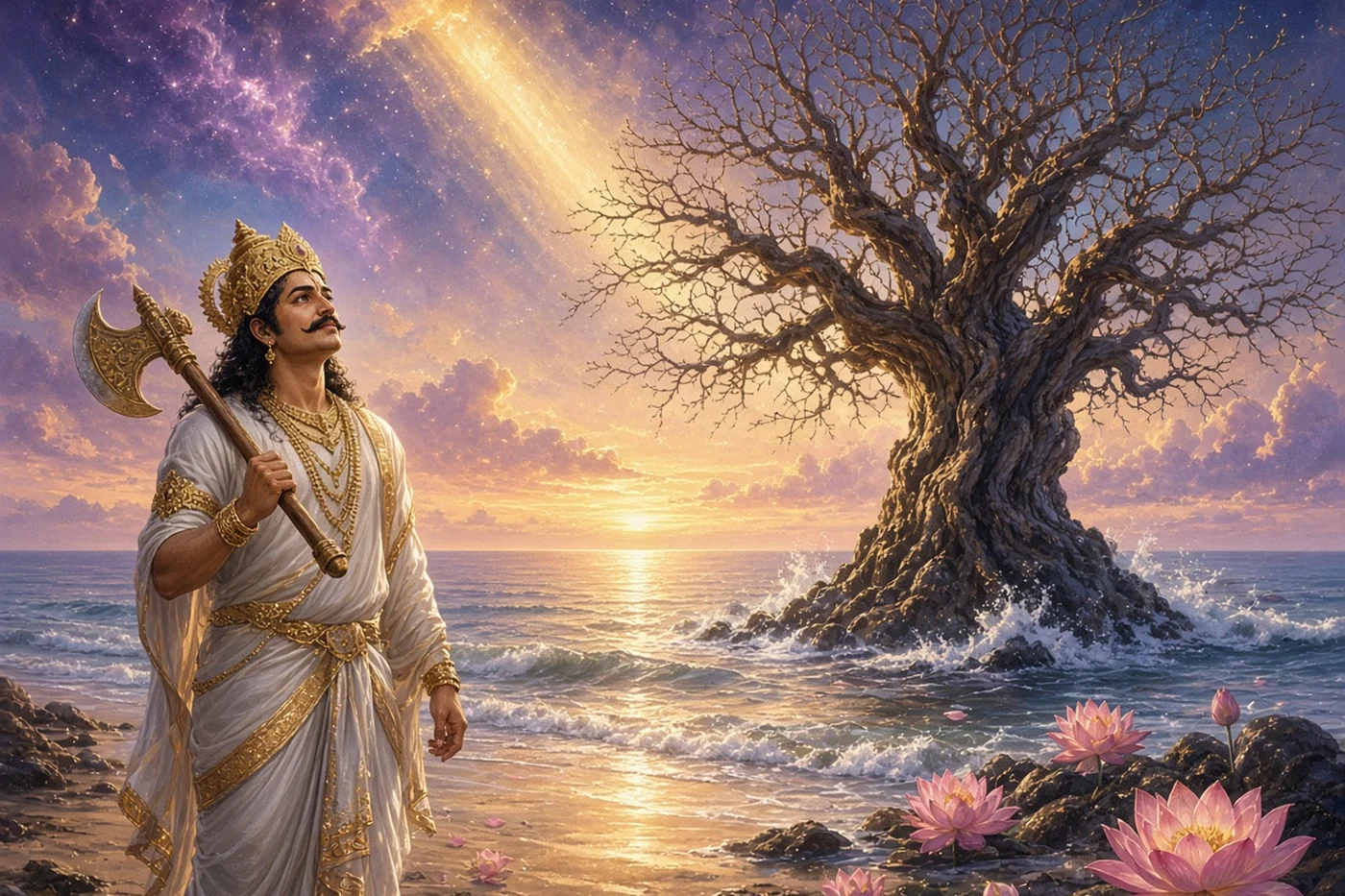
Indradyumna lifted the axe. At his blows the tree came down, and it fell in seven pieces.
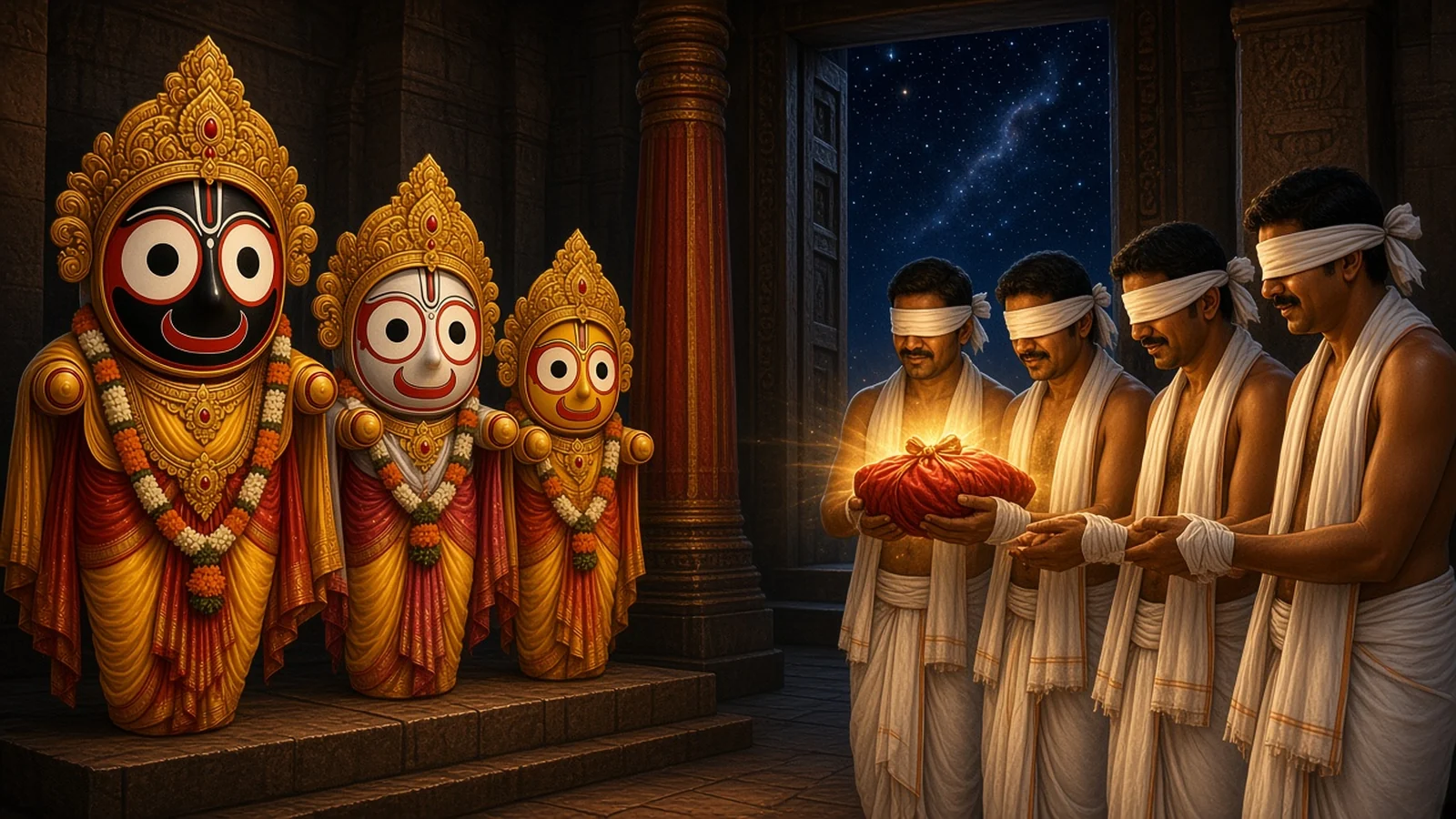
"The greatest part stayed where it fell," Shiva told Parvati. "It is Jagannatha, in Orissa. But the others went out over the land, and two of them came to Kamarupa."
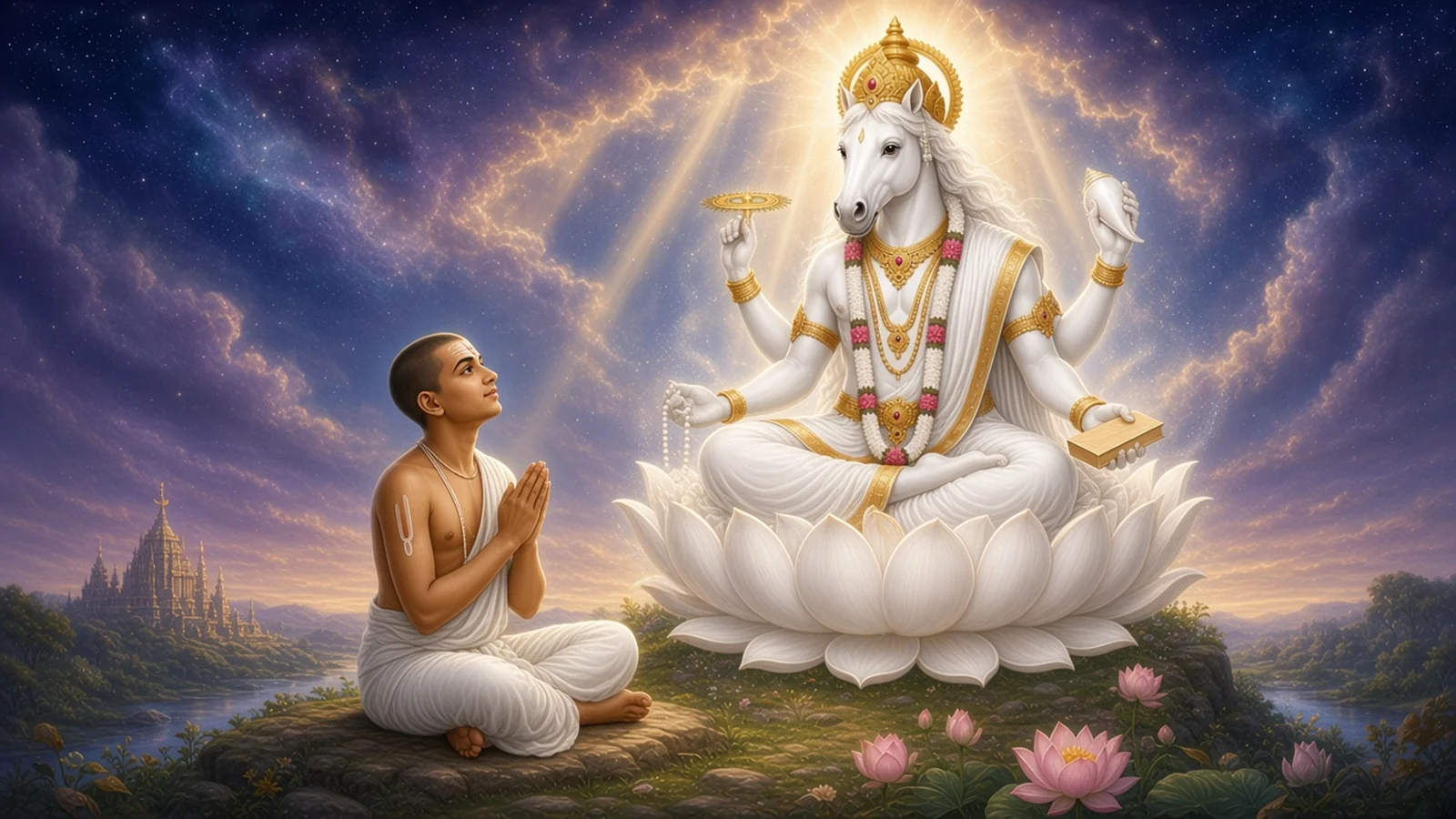
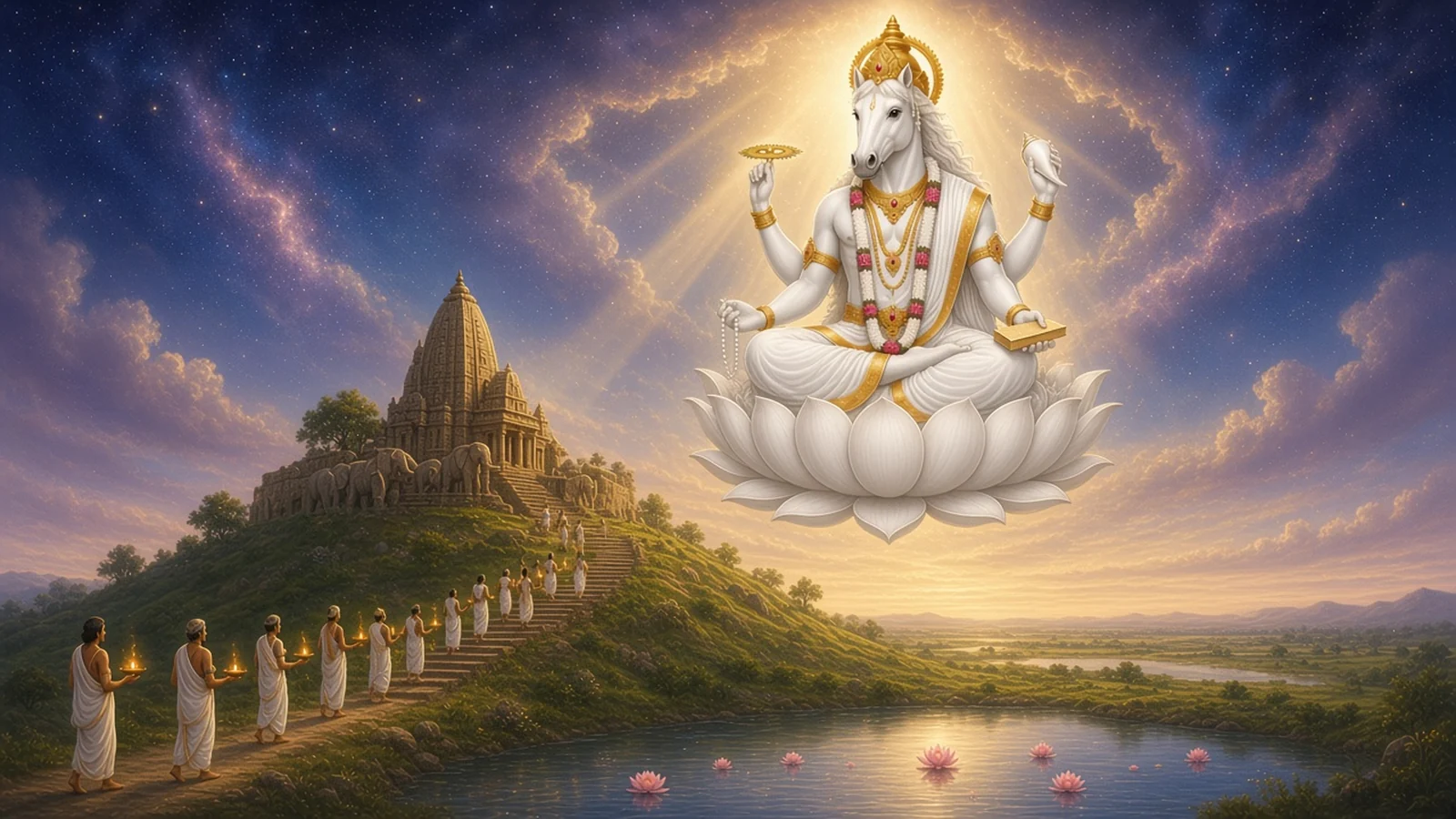
One of those two came to rest on the hill called Manikuta. There, in time, it became the image that the people of the hill worship as Hayagriva Madhava, Vishnu with the horse's head, the lord who carries the Vedas.
"So the god of the hill and the god of the eastern sea," said Shiva, "are one wood and one tree."
The text does not say how the piece crossed the country, or who first saw the god in it. It only lists where the pieces went, and their places and their keepers are hard to count; the scholar Anindita Adhikari, who quotes the verses, notes that the Tantra borrowed this story from the Brahma Purana's account of Puri and has bent it to bring Puri's god and the god of Manikuta together. The image in the temple today is of stone.
The temple that stands on the hill now was raised in 1583 by Raghudeva, a king of the Koch line, on older foundations; a row of carved elephants runs round its base. Below it lies a great tank, the Madhab Pukhuri, and the hill keeps the festival of Doul, the Bihu new year and Krishna's birthday every year.
As the pilgrims from the hills tell it: the Great Sage
Buddhist pilgrims from Bhutan and Tibet · Hajo · 2 min read
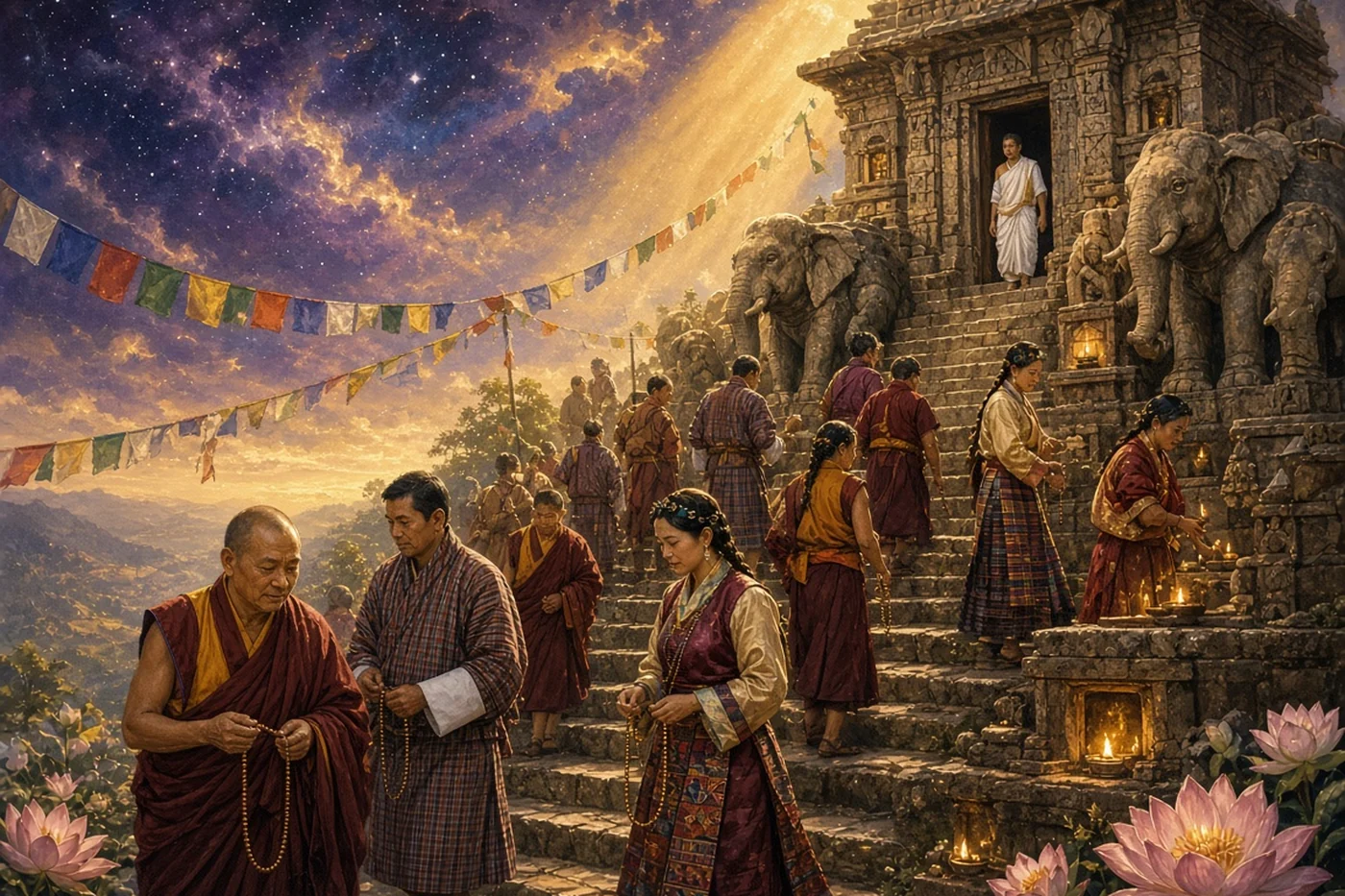
For a long time Hajo had a second set of pilgrims. They came down from Bhutan and from Tibet, and they climbed Manikuta not to see Hayagriva Madhava but to see someone else.
Their lamas looked at the image in the shrine and said it was the Mahamuni, the Great Sage, the Buddha himself. Near it, they pointed out, the old words were carved: Om mani padme hum, the great prayer of their own faith. To them the hill was holy for a plain reason. It was where the Buddha had passed out of the world.
Some of them said more. The image, they told the travellers who wrote down their beliefs, had once stood in a monastery at Lhasa, and a Brahmin had carried it down from the high country to Hajo. Others said that a great stupa had once stood here, raised over the ashes of the Tathagata, and that the temple was built on what was left of it. Some held that Padmasambhava, the teacher who carried the dharma to Tibet, had died at Hajo too, and they gave one of the images his name, calling it Nomo Guru.
So they came, and worshipped in their own way, with their own prayers. They did not go into the inner shrine, where the temple's priests serve the god, but they did not need to. The Great Sage was there for them, on the hill of jewels, as he had always been.
The British writer L. A. Waddell went further still and argued that the Buddha had died not far from Hajo, at Saulkuchi, rather than at Kushinagar, where the old books place his passing. The pilgrims' Hajo stands beside the Tantra's, and Adhikari calls the place a meeting ground of three faiths, for a Muslim saint's shrine stands at Hajo too.