As the Sode Matha tells it
The Vadiraja Matha at Sode · Uttara Kannada, Karnataka · 3 min read
There was a goldsmith who had been asked for an image of Vighnesha, the remover of obstacles. He melted five metals together, poured the bright alloy into his mould, and waited for it to cool.
When he broke the mould open, a different god looked back at him. The figure had four arms and the head of a horse, and it still glowed red from the fire.
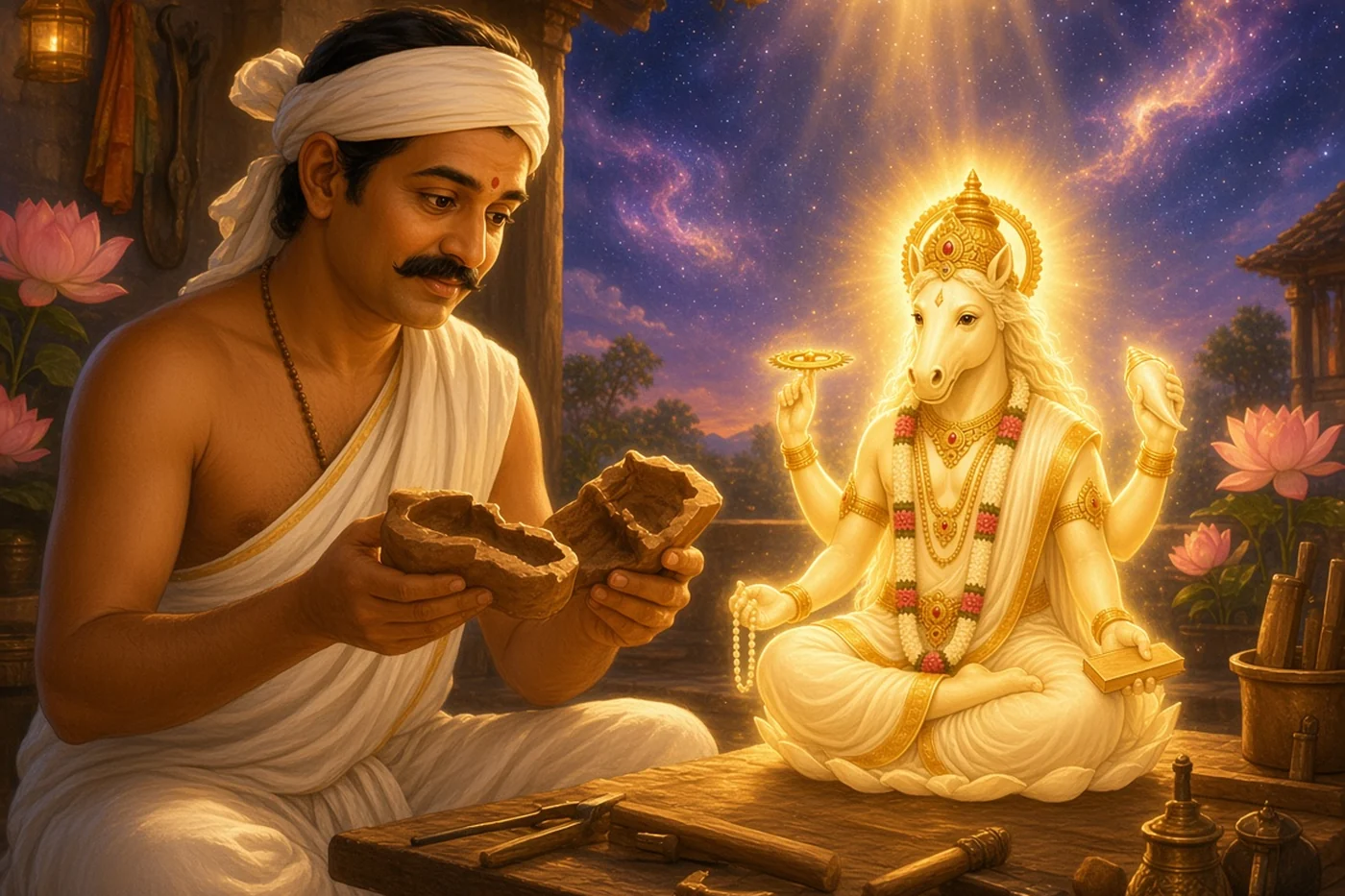
"I have made a mistake," the goldsmith said, and he poured again. The mould gave him the horse-headed god again. However often he tried, the elephant face would not come.
"Tomorrow I will melt it down," he said at last, "and start from the beginning." He set the glowing image aside and went to sleep.
In the night a voice came to him in a dream.
"Do not melt it. Take it to Vadiraja."
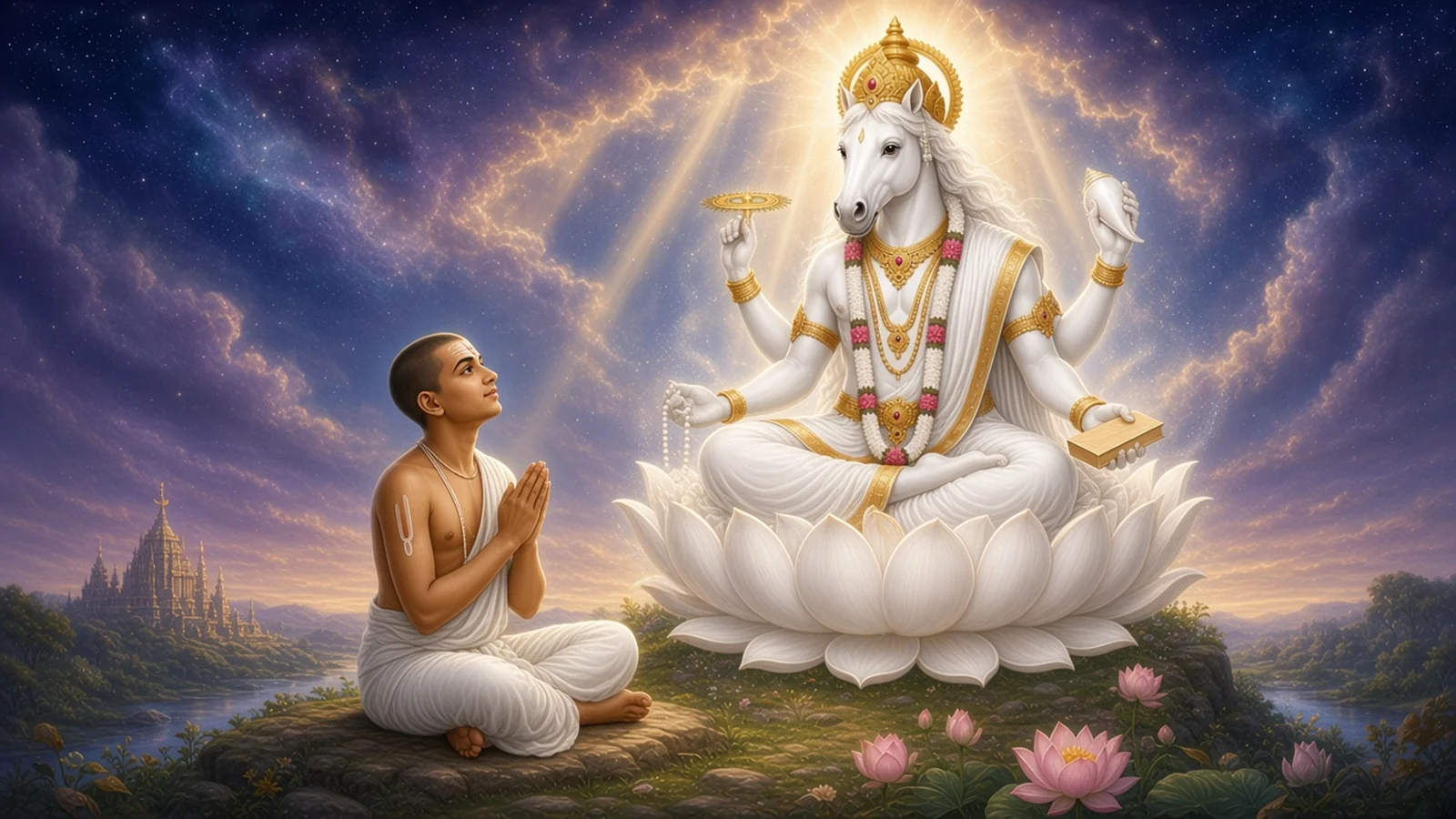
The same night Vadiraja, the young head of the matha, dreamed too. He saw that a special image of Hayagriva was coming to him. He woke happy, because of all the forms of Vishnu, Hayagriva, the horse-faced lord of learning, was the one he loved most.
In the morning a group of goldsmiths came to him carrying the image. They told him the dream, and then they told him their troubles, how they had lived without a teacher and without a place among the devout.
"Then let me be your teacher," Vadiraja said, "and let this matha be yours." He took them as his disciples, and they counted him their guru from that day. The image he set on the matha's seat beside its image of Bhuvaraha, Vishnu as the boar who raised the earth, and he worshipped it every day of his life.
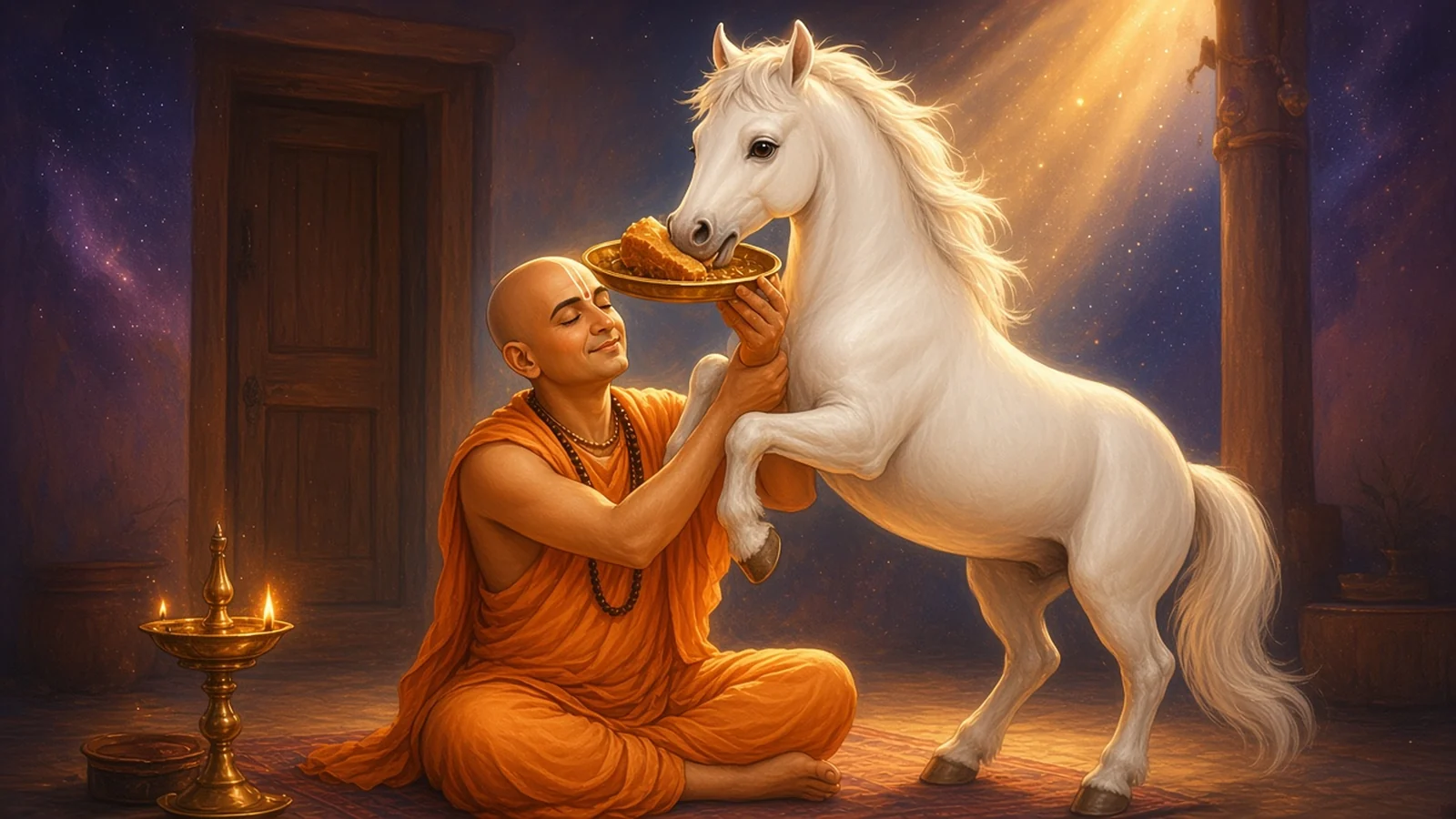
His offering was a sweet. He cooked Bengal gram soft and mixed it with jaggery, ghee and almonds, and the people of the matha still make it and call it by the god's name. After the worship he went into a room alone and shut the door. He sat down, closed his eyes, and lifted the plate of sweet above his head with both hands.
Then a white horse stood before him. It rose on its hind legs, set its forelegs on his shoulders, and ate from the plate over his head. It always left a little at the bottom, and that little was Vadiraja's own share.
Sometimes, the matha says, Vadiraja sang his hymn on the ten avatars while the horse ate, and the Lord danced to hear it.
Not everyone believed in the horse. The door was always shut, and the plate always came out nearly empty.
"He eats it himself," some said. "Who has ever seen this horse?"
"Then let us see what he eats," said others, and one day they stirred a little poison into the sweet.
Vadiraja lifted the plate as always. The horse came and ate, and when he lowered the plate there was nothing on it. Not one grain had been left for him.
He closed his eyes and asked his Lord why.
"The sweet was poisoned today," Hayagriva told him. "So I ate all of it. You were not to have any."
"And you, Lord?"
"Look at my image. It will turn a bluish green, so that people can see what was done. Offer me the gulla, the brinjal that bears your name, for a time, and the colour will fade. Only a streak of green will stay on my neck, so that no one forgets."
So it happened. The colour faded day by day, and the streak of green at the throat of the image, the matha's people say, is there to this day.
As Udupi tells it: the brinjal of Mattu
Udupi and the village of Mattu · coastal Karnataka · 1 min read
In the telling that is told around Udupi, the sweet is called hoorna, and Vadiraja sets it on a broad plate called a harivana before he lifts it above his head. The white horse comes, eats, and leaves him his little share, as in the Sode telling.
What is different is the plot. The doubters did not mix the poison themselves. They paid one of the cooks to put it in. And the god's warning goes further. When Vadiraja found the plate empty and saw the image turning from white to green, Hayavadana told him that those who had planned it would not live past the next noon.
Then he gave him an errand.
"Go to Mattu," he said, naming a village a few miles from Udupi. "Its people have lost their way. Speak to them sharply, and set them to grow a brinjal, white and round, the kind they call gulla. Bring it to me as my offering for forty-eight days, and the poison will leave me."
Vadiraja went. He rebuked the people of Mattu, and they grew the white brinjal as he told them. For forty-eight days it was offered, and the poison went, leaving only a green mark at the throat.
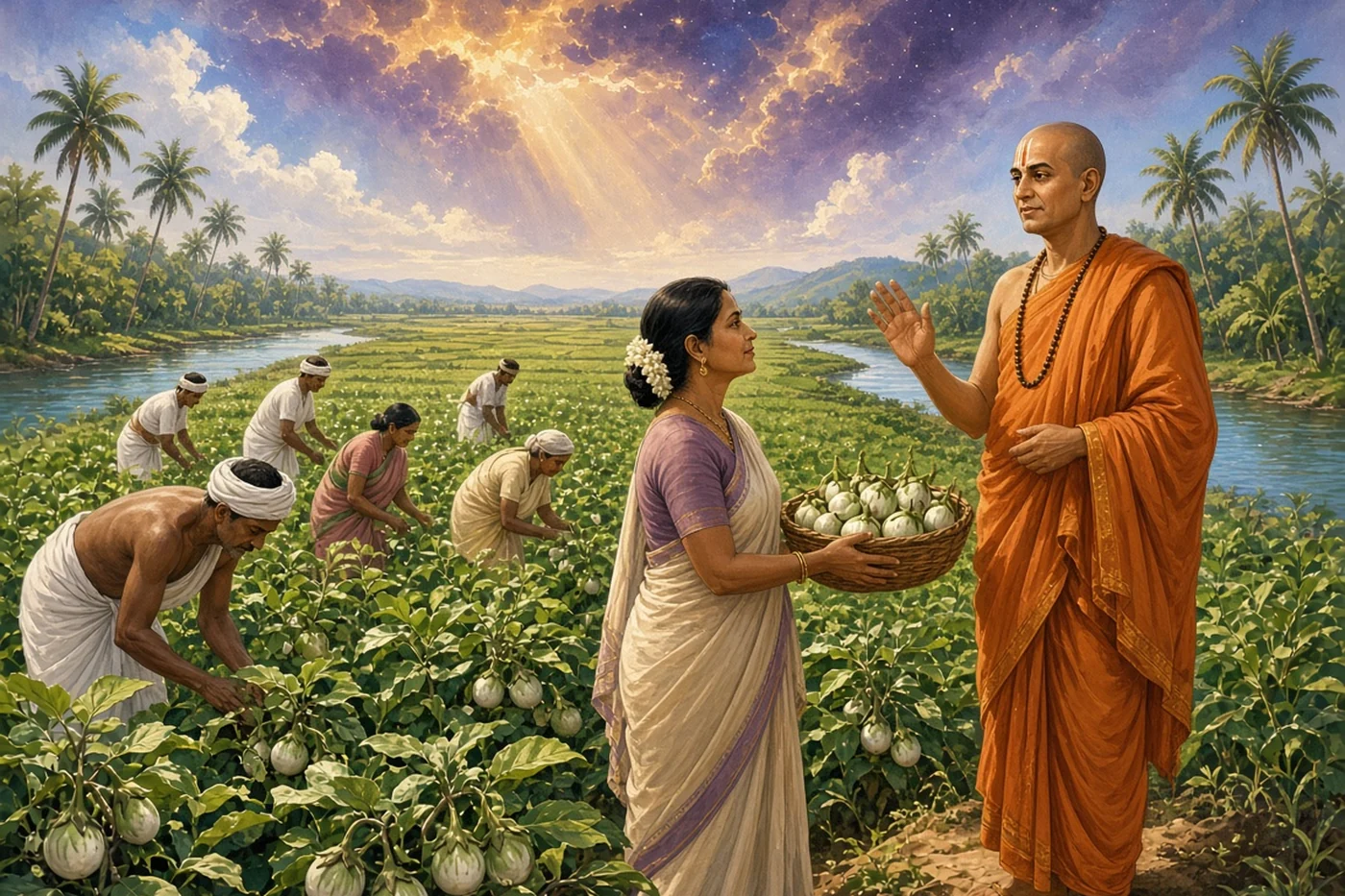
The telling adds that Brahmin custom kept away from brinjal, and that the followers of Madhva eat this one, the Mattu gulla, because it once healed their Lord. It is still grown in and around Mattu, by the local account for about four hundred years, on the land between the Udyavar and the Swarna rivers. In 2011 it was given a geographical indication tag, and the growers send it to Udupi for the great handing-over of the temple's worship.