
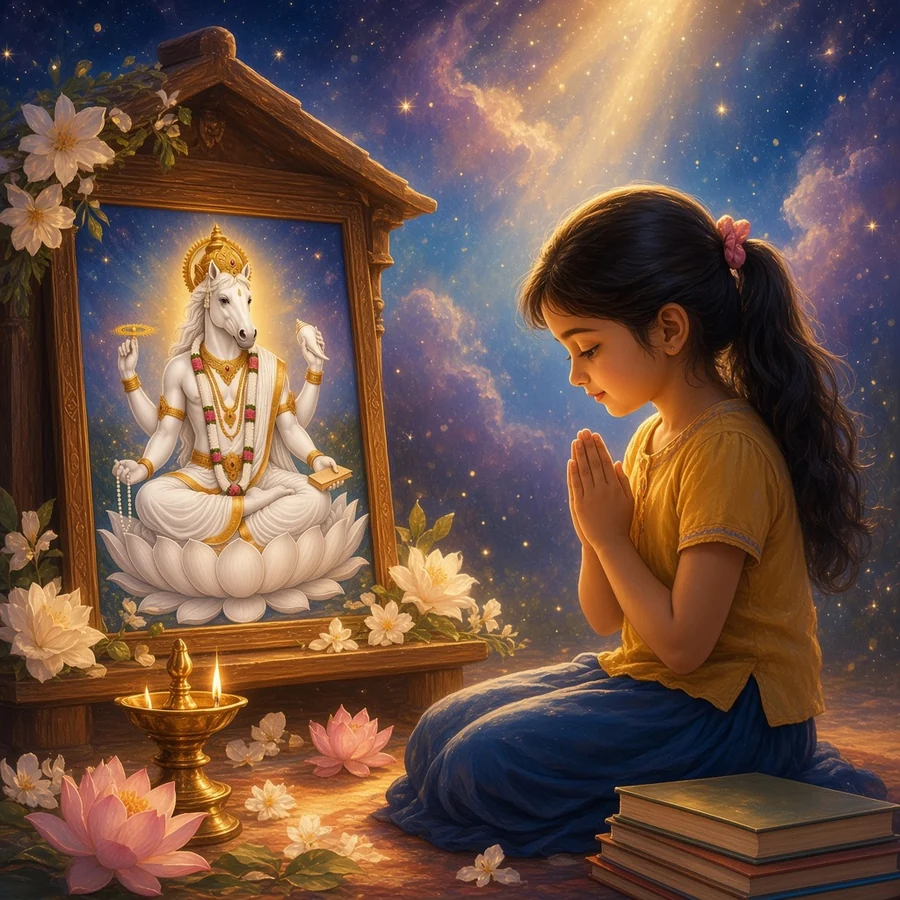
Who Hayagriva is
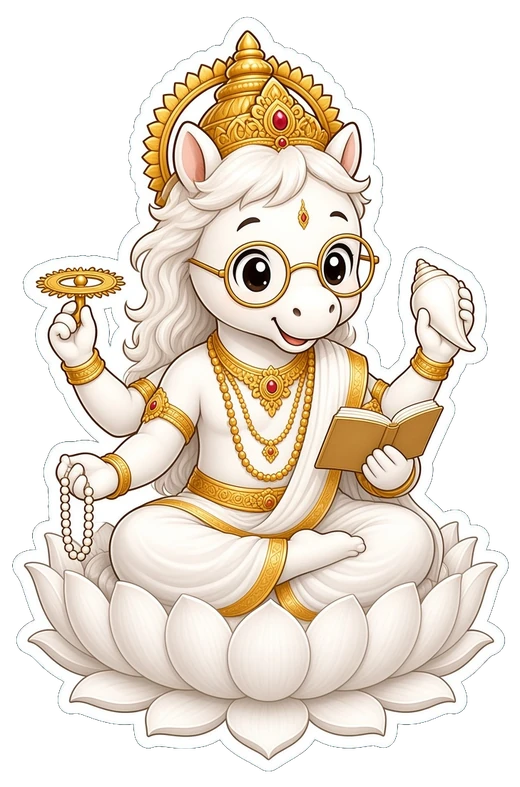
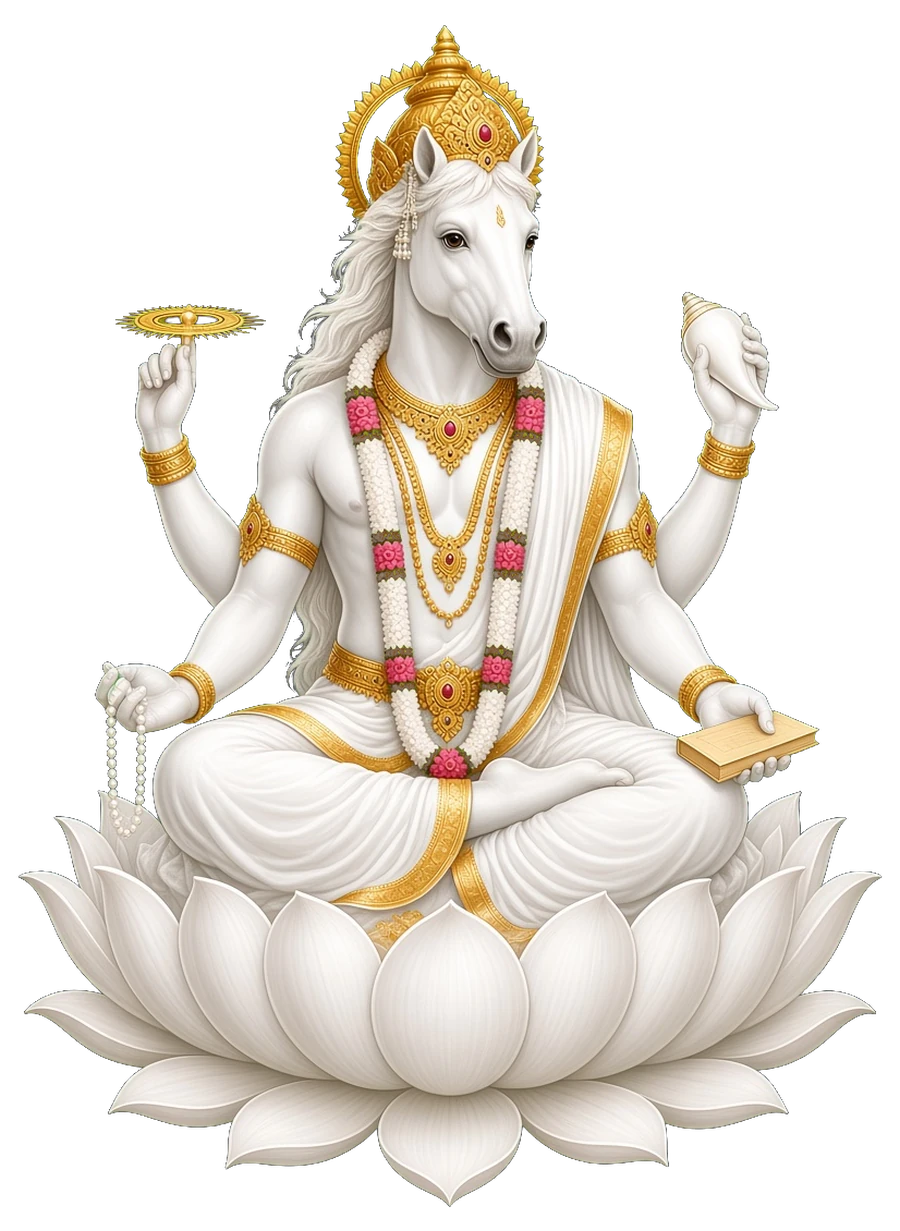
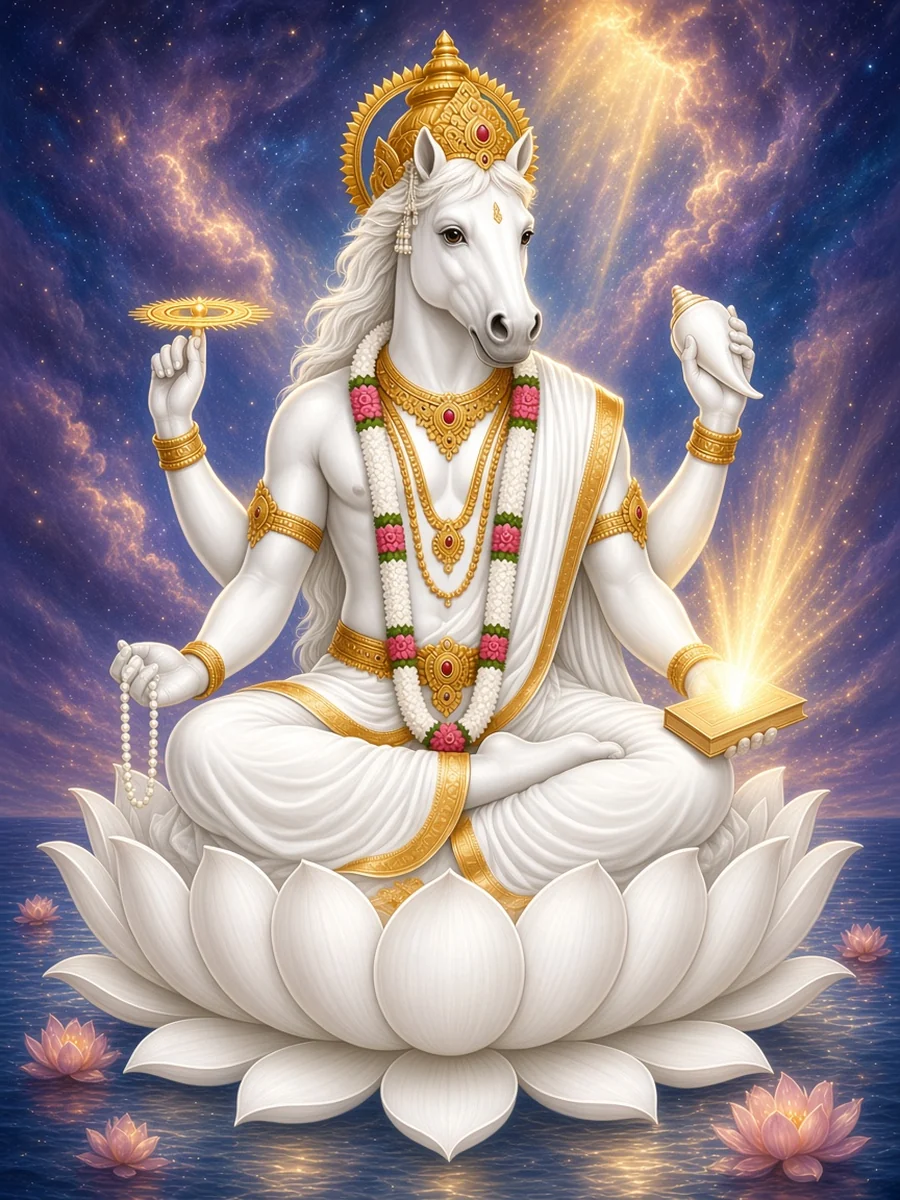
Hayagriva is Vishnu with the head of a horse, the form in which he is worshipped as the lord of knowledge. His name means the horse-necked one. He is not fierce. He sits on a white lotus, his body as clear as crystal, with a book in one hand and the other raised in teaching, and his devotees ask him for learning and for mastery of words, as Vedanta Desika asked him to sit on the tip of his tongue.
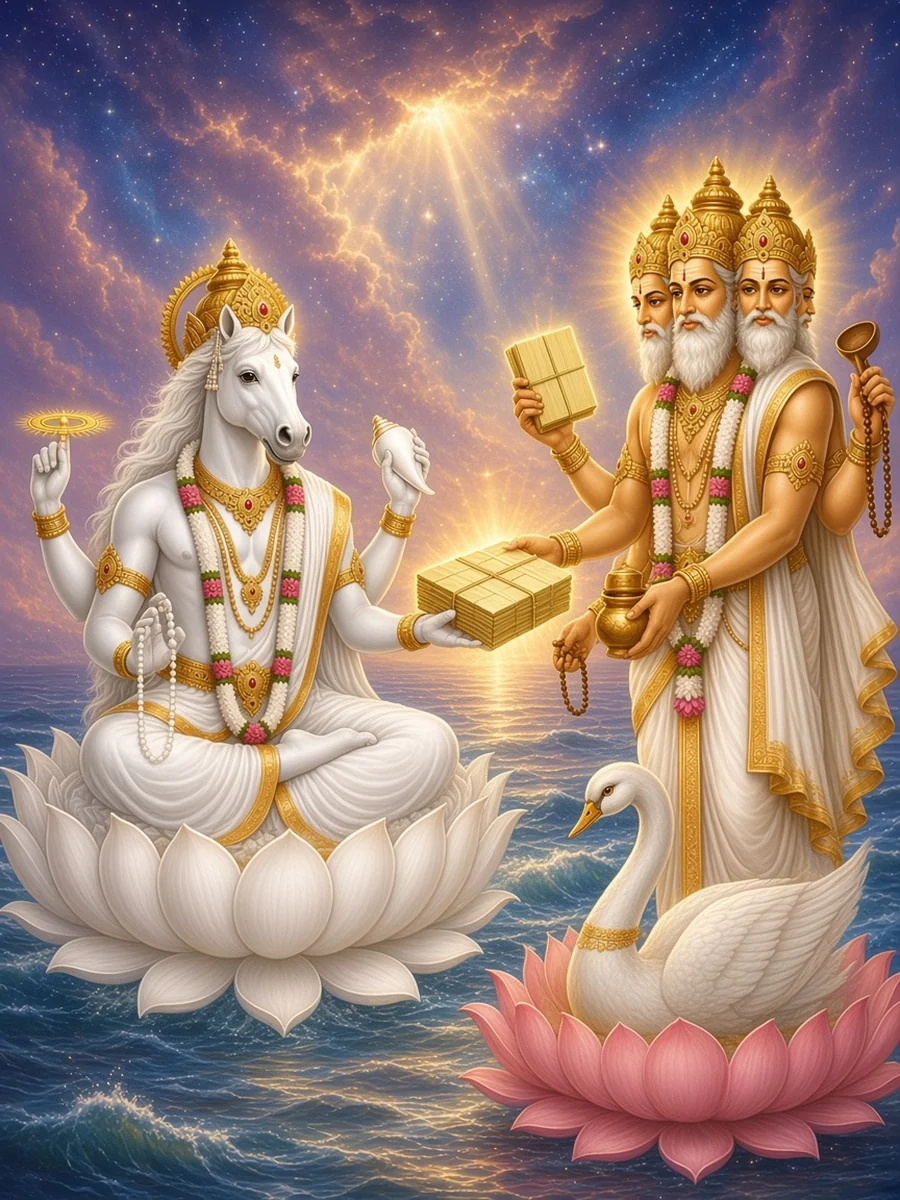
His great deed is the rescue of the Vedas. In the Mahabharata two demons, Madhu and Kaitabha, steal them from Brahma at the beginning of the world and carry them to the bottom of the ocean. Vishnu takes a horse's head, the sky for its crown and the sun and moon for its eyes, and goes down after them; he chants the Vedas so beautifully that the thieves run toward the sound, and while they run he carries the Vedas back to Brahma. A different story, in the Devi Bhagavata, says how Vishnu came to have a horse's head at all: it was put there to kill a demon who could die only at a horse-faced one's hands.
Keep the two apart. The demon Hayagriva is another being who shares the name, and in the Bhagavata it is he who steals the Vedas from the sleeping Brahma and Matsya, the fish, who kills him.
The best-loved words to the god are a single verse that Vedanta Desika set at the head of his hymn:
Jnanandamayam devam nirmala sphatikakritim, adharam sarva vidyanam hayagrivam upasmahe: we worship the god Hayagriva, made of knowledge and joy, clear as spotless crystal, the ground of every kind of learning (Hayagriva Stotra, verse 1).
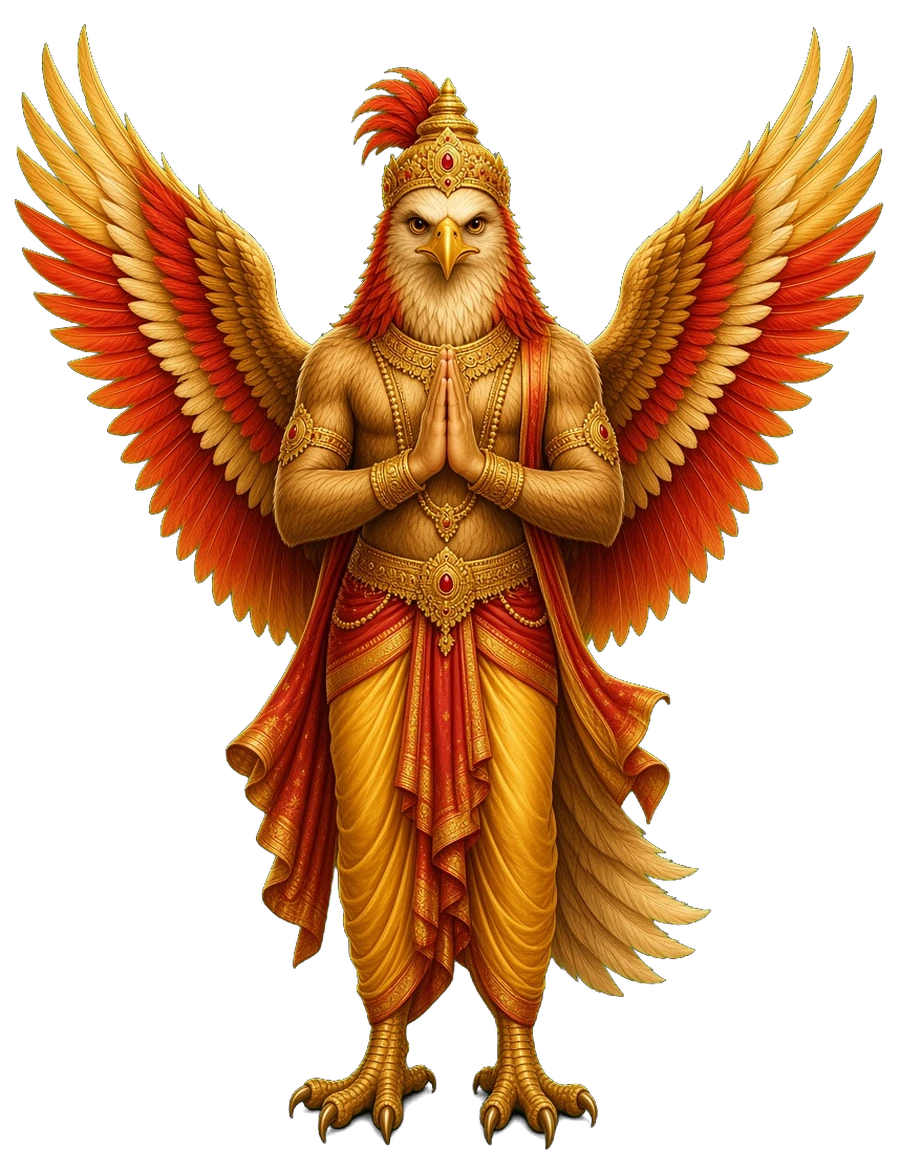
In the Lalita tradition he is a teacher: the Brahmanda Purana has him tell the sage Agastya the whole story of the Goddess and her thousand names. In Karnataka the saint Vadiraja held a plate of sweet gram over his head for him every day. In Tamil Nadu Garuda gave his mantra to the young Desika. In Assam he stands on a hill that Buddhist pilgrims also climb.
His stories on this site: The Plate Held Over His Head, The Stone on the Hill of Jewels and The Mantra Garuda Gave; with Vishnu, The Thieves of the Vedas and The Bowstring and the Ants; with Lalita, The Names Agastya Was Not Told; and as the teller of The Sage Who Envied the Mountain. The demon of the same name is killed by the fish in The Vedas That Hid in the Sea.