Devalok ← All gods
Also calledMatsyavataraMatsya NarayanaVeda NarayanaMinathe Fish

In short

Who is Matsya?
The fish, the first of Vishnu's ten avatars in the common list. He warned Manu of the flood at the end of an age and towed his boat through it by the horn on his head.
Why did Vishnu become a fish?
To carry Manu, the sages and the seeds of every living thing through the flood, and to bring back the Vedas, which a demon had stolen and hidden in the water.
Is the fish in the Vedas?
The Shatapatha Brahmana tells of a fish that saves Manu from a flood but never says who it is. The Mahabharata's fish calls itself Brahma, and only the Puranas make it Vishnu.
Where is Matsya worshipped?
At the Vedanarayana temple at Nagalapuram in Andhra Pradesh, in a few shrines in Kerala, and on Matsya Jayanti, the third day of the bright half of Chaitra.

Artwork ›

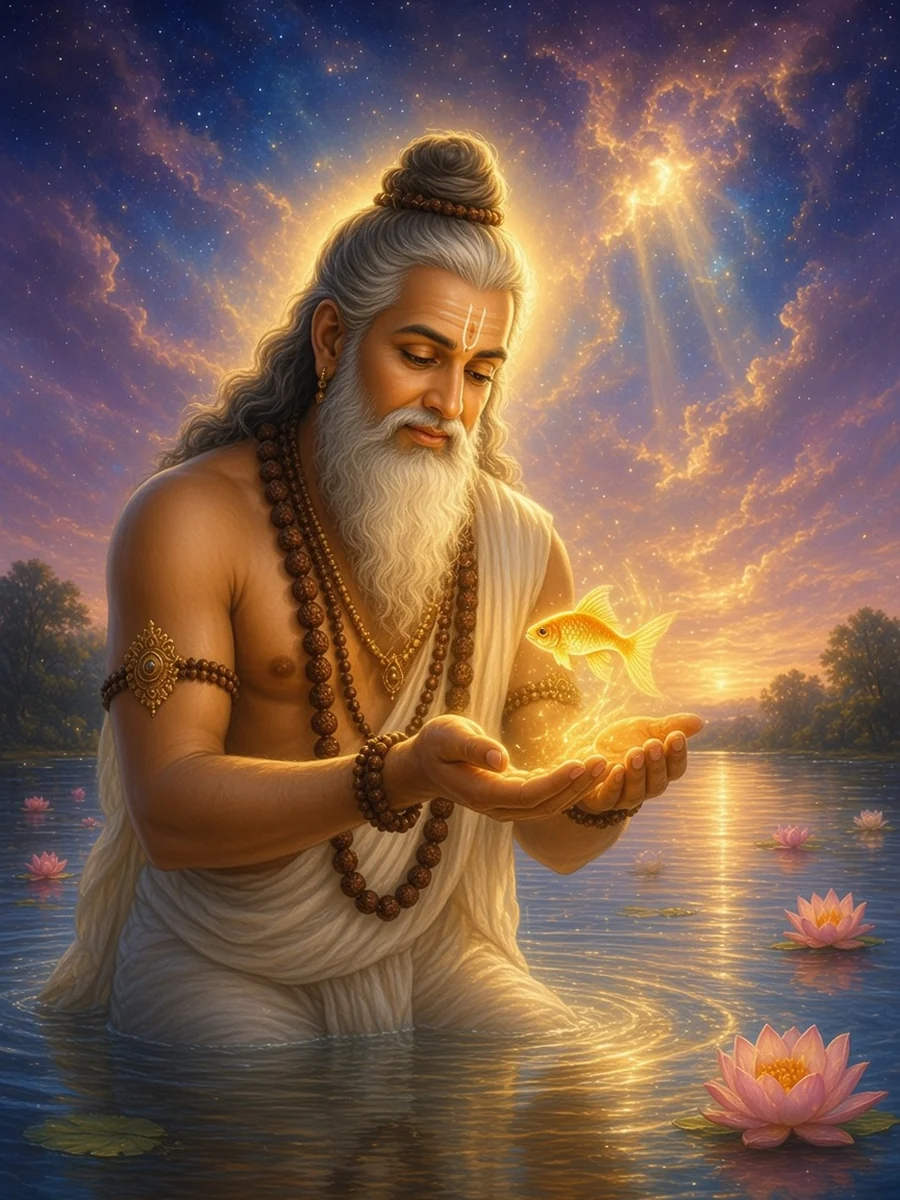
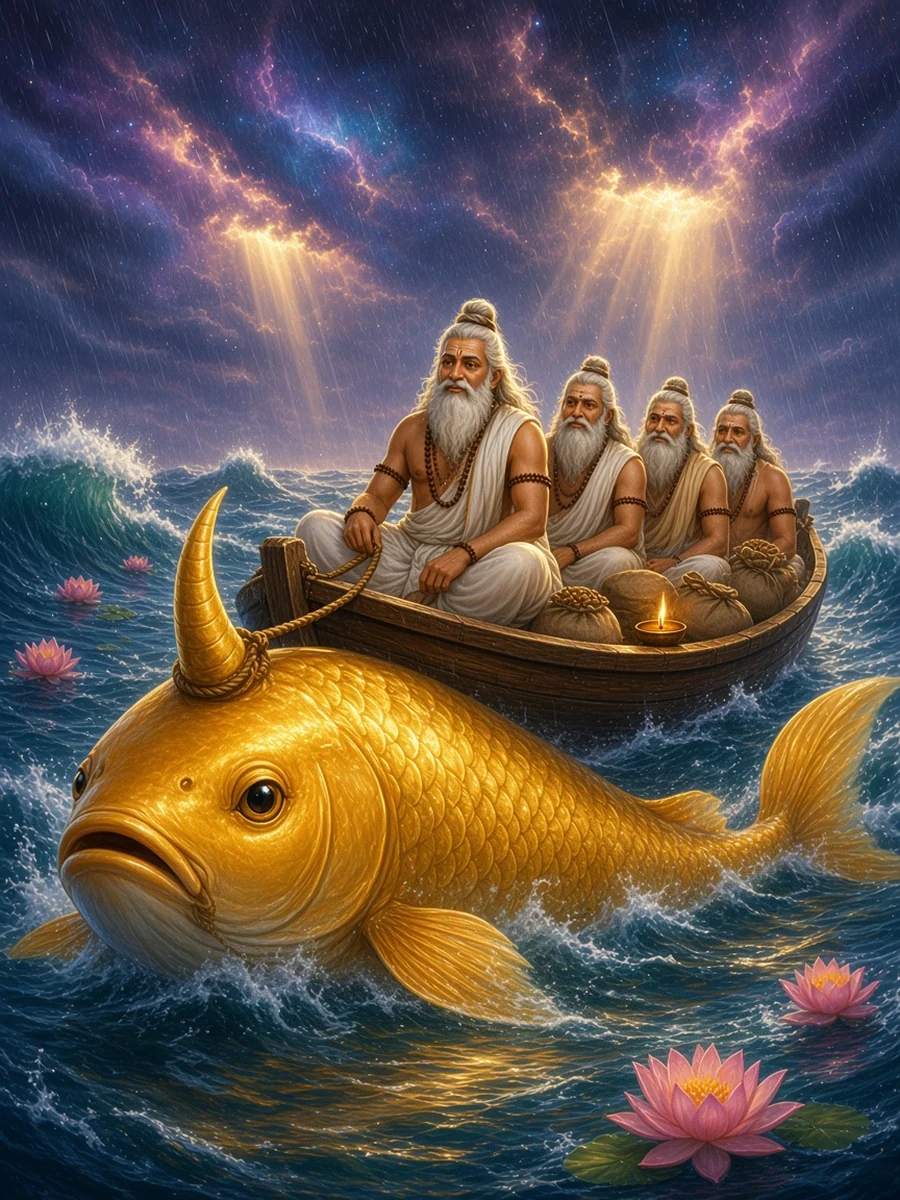
A tiny fish in Manu's cupped palms Towing Manu's boat through the great flood

For kids

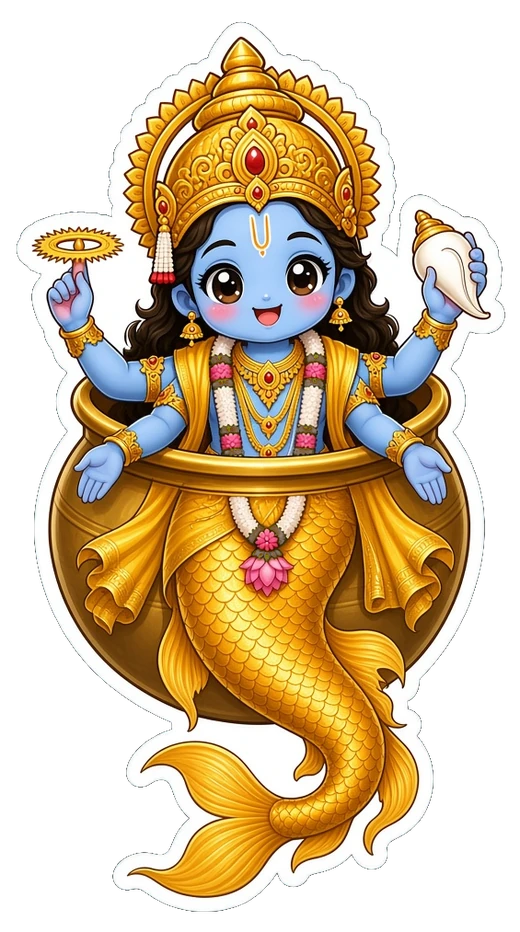
This pot is too small
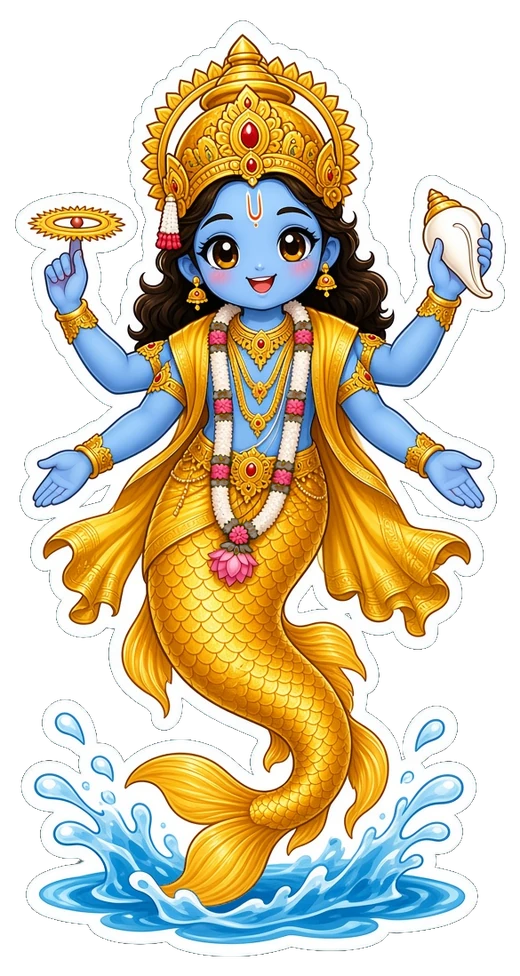
Splash!
Splash!

At a glance

TraditionVaishnava
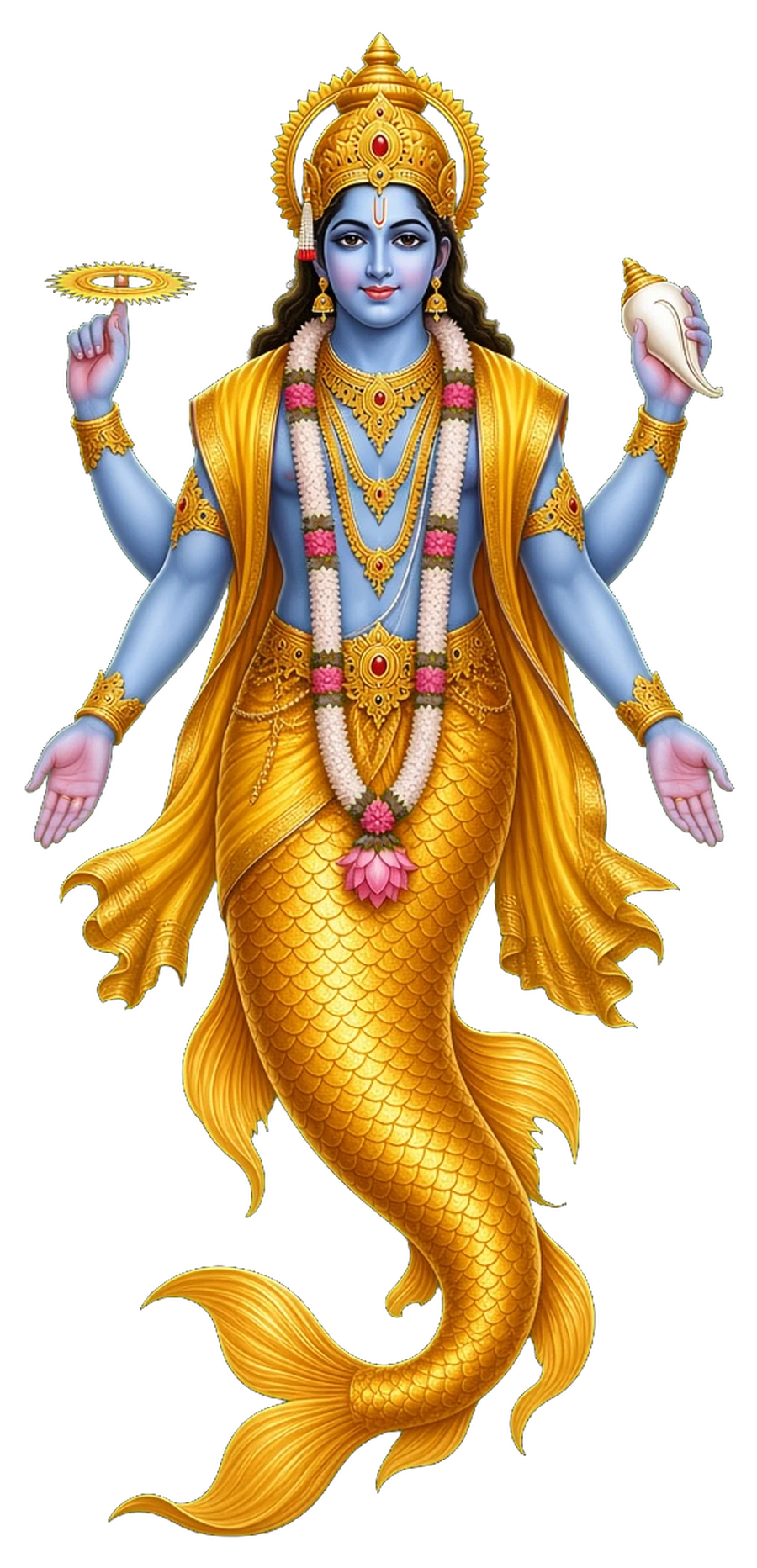
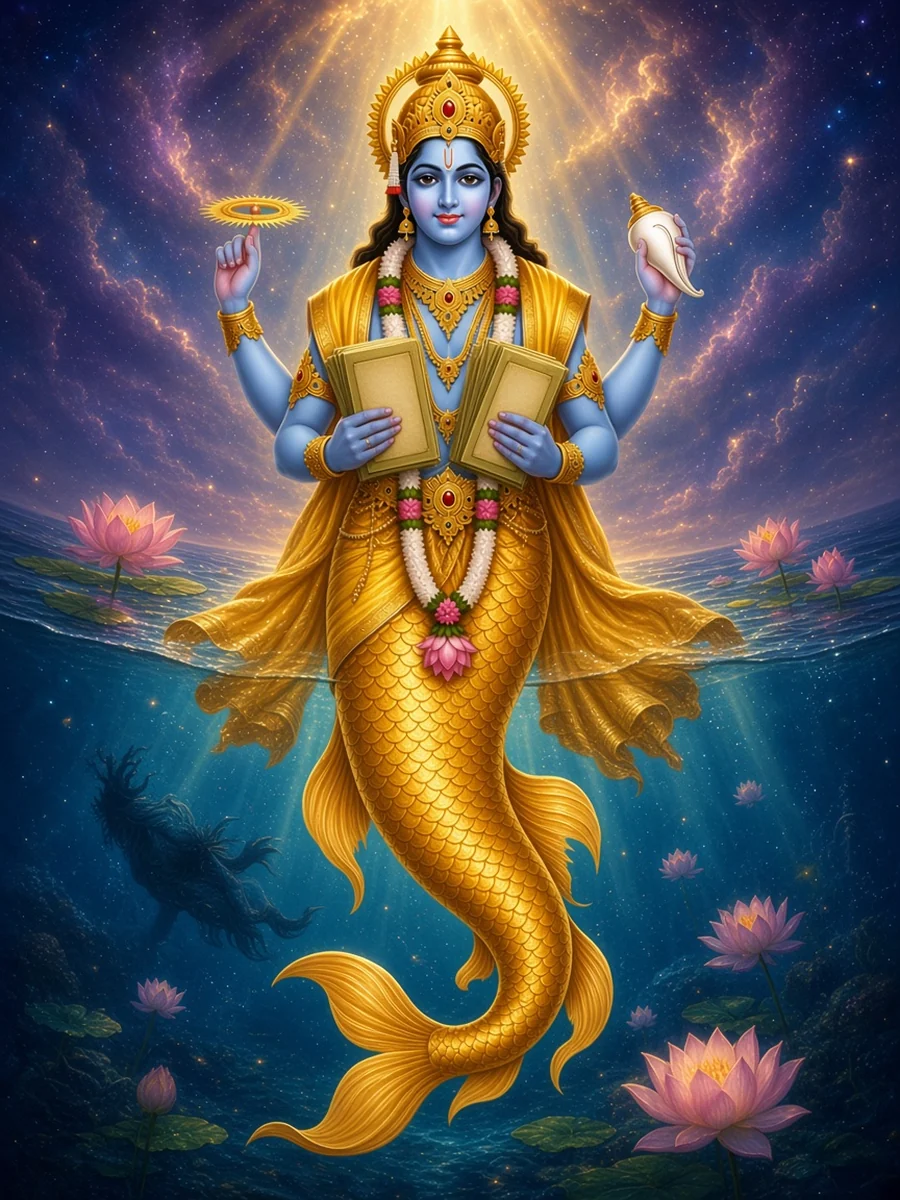
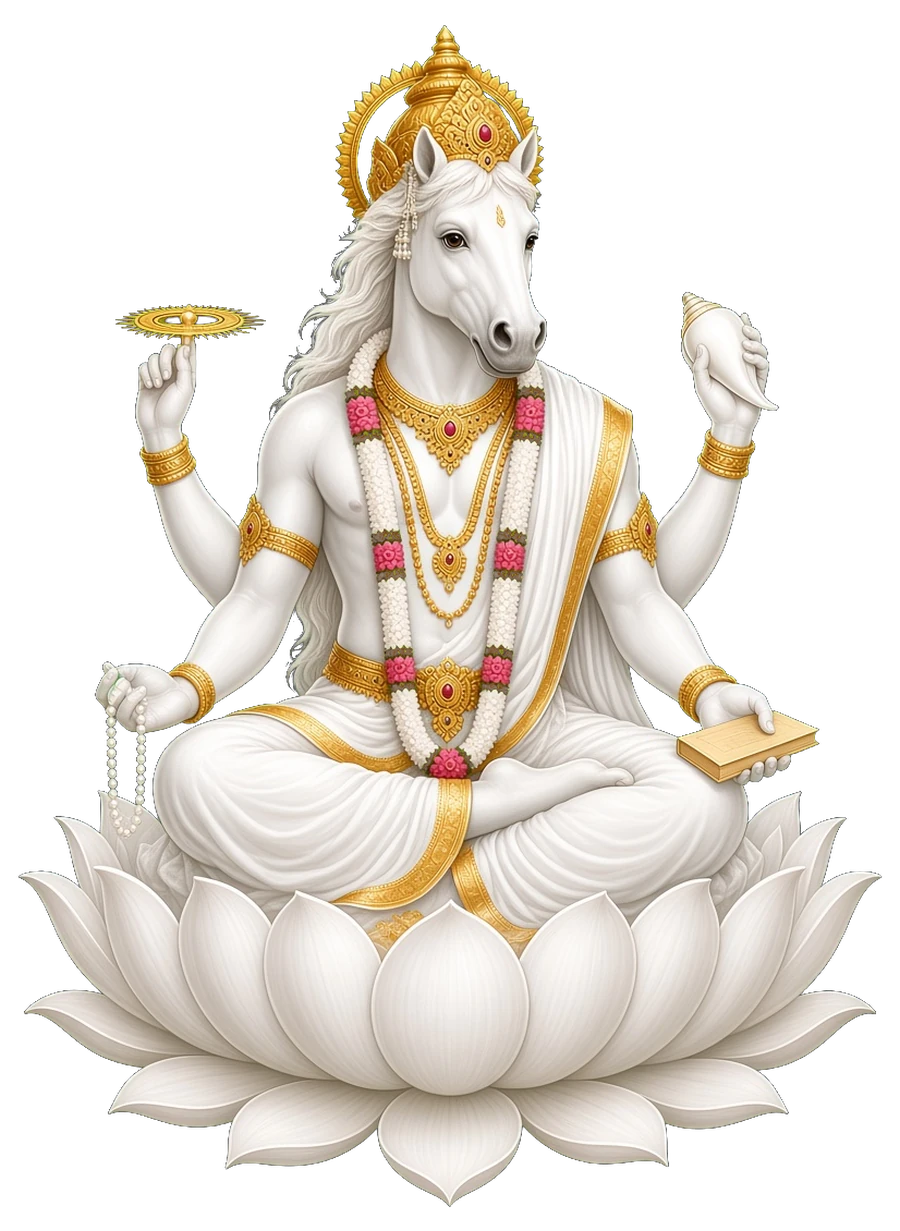
FormA great golden fish with a single horn, or Vishnu's four-armed body rising from a fish's tail
In his handsThe conch and the discus

the other two hands giving boons and saying "fear not"

Who Matsya is

Matsya is the fish, the first of the ten avatars of Vishnu in the common list. He came as a tiny fish into the cupped hands of a king who was making an offering of water, begged to be kept safe, outgrew every pot and pool and river he was put in, and at last filled the sea. Then he warned the king of the flood that would end the world, and when it came he towed the king's boat through it, tied to the single horn on his head.

The Puranas tell the rescue more than once. In the Bhagavata the king is Satyavrata of the Dravida country, the flood is seven days away and the rope is the serpent Vasuki. In the Matsya Purana he is Manu, son of the Sun, who had asked Brahma for the power to save every creature at the end, and the rope is Shesha. In both the king lives to become the Manu of our age, the father of the human race, and in both the fish talks with him on the water. The Matsya Purana is that conversation, and takes its name from the speaker.

The fish has a second task, the Vedas. A demon steals them, Hayagriva at Brahma's yawn in the Bhagavata, Shankha the son of the Ocean in the Padma Purana, and the fish kills the thief and brings the sacred words back. Jayadeva put both deeds into one line when he set Matsya at the head of the ten:

Pralayapayodhijale dhritavan asi vedam, vihitavahitracharitram akhedam, keshava dhritaminasharira jaya jagadisha hare: In the waters of the flood at the world's end you held the Veda safe and did the work of a boat without tiring; Keshava, who took the body of a fish, victory to you, Hari, lord of the world (Gita Govinda).

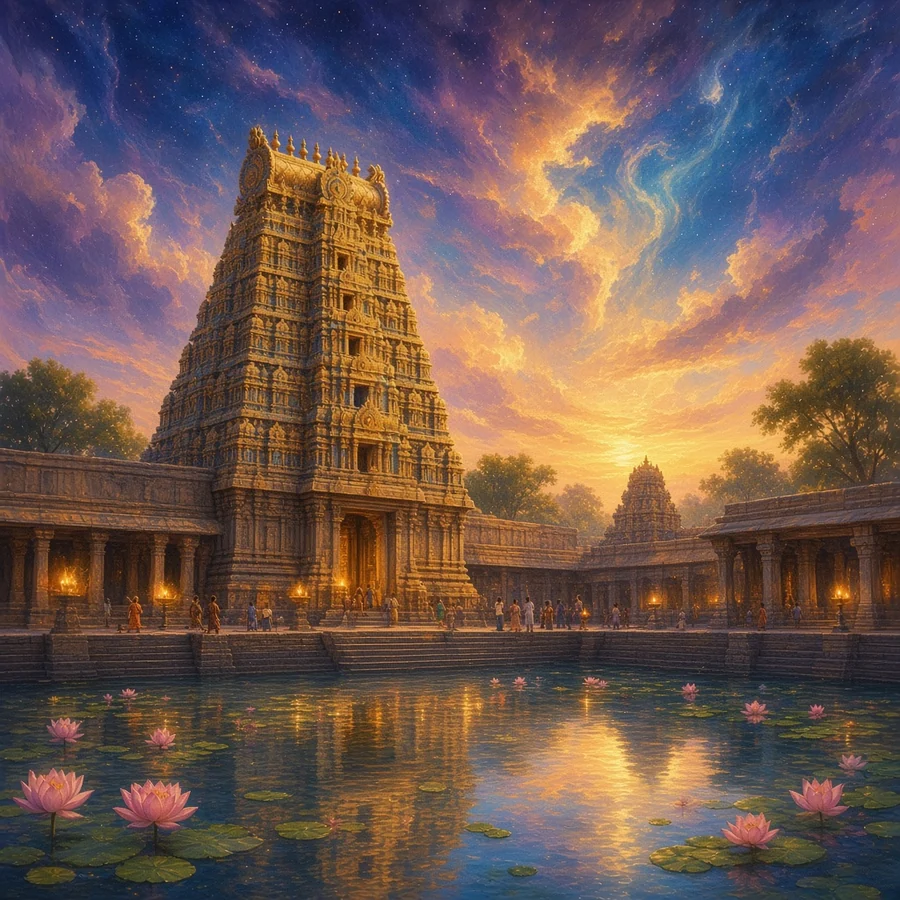
He is shown as a great golden fish with one horn, or with Vishnu's four-armed body rising from a fish's tail, holding the conch and the discus. Few temples are his own. At Nagalapuram in Andhra Pradesh he is worshipped as Veda Narayana, and for three evenings a year the setting sun reaches into his west-facing sanctum, touching his feet, then his navel, then his crown. Kerala keeps three Matsya shrines, and at one of them, Kakkur, the rite called minut, the feeding of the fish.

His stories on this site: The Fish That Outgrew the Sea, The Vedas That Hid in the Sea and The Questions Asked on the Flood. The oldest telling of all, where the fish has no name or calls itself Brahma, is Manu and the Fish.
Before the Puranas

The Vedic roots of Matsya

The Vedas know the fish, but not as Vishnu. The Shatapatha Brahmana (1.8.1), a prose book of the Yajurveda, tells how a small fish came into Manu's hands as he washed, asked to be kept safe from the bigger fish, warned him of a flood and towed his ship by its horn to the northern mountain. It never says who the fish was, and the Vishnu of the Vedas has no part in the story.

The scholar A. A. Macdonell counted this fish, with Prajapati's tortoise, among the germs of two later avatars that the Brahmanas hold before they are tied to Vishnu. He read a line of the Atharvaveda (19.39.8), which speaks of a golden ship resting on a Himalayan peak, as a sign that the flood story was known even then; he noted that the Avesta has a flood too, and thought the common view that India borrowed the story from a Semitic source unnecessary. Later writers, among them Roy in 2002, set the fish beside Ea, the Mesopotamian god who warns of the flood.

The Mahabharata (Vana Parva 186) tells the story again through the sage Markandeya. It puts the seven sages and the seeds of every kind on board, moors the ship on a Himalayan peak, and lets the fish name itself: Brahma, lord of creatures, the old title of Prajapati. Macdonell traced the line from there, a form of Prajapati in the epic becoming an incarnation of Vishnu in the Puranas.

The Matsya Purana, which P. V. Kane dates to about 200 to 500 and Wendy Doniger to 250 to 500, makes the fish Vishnu and the whole Purana its speech to Manu. The Bhagavata names the king Satyavrata and adds the demon Hayagriva, who steals the Vedas as Brahma falls asleep; the Agni Purana follows it closely. The Padma Purana puts the fish into the hands of the sage Kashyapa and makes the thief Shankha, or in another chapter Makara, with no flood at all. By the time of the lists of ten avatars and Jayadeva's song in the twelfth century, the fish stood first among them.

See how the Vedic gods became the Puranic ones →

Related gods