As the Padma Purana tells it
Padma Purana, Uttara Khanda 90 and 91 · Meru, the sea, the Vindhya and Prayaga · 3 min read
Satyabhama once asked Krishna why the month of Kartika should be holier than any other, and why the eleventh day of the moon should be dearer to him than the rest. Krishna answered with a story the sage Narada had once told King Prithu.
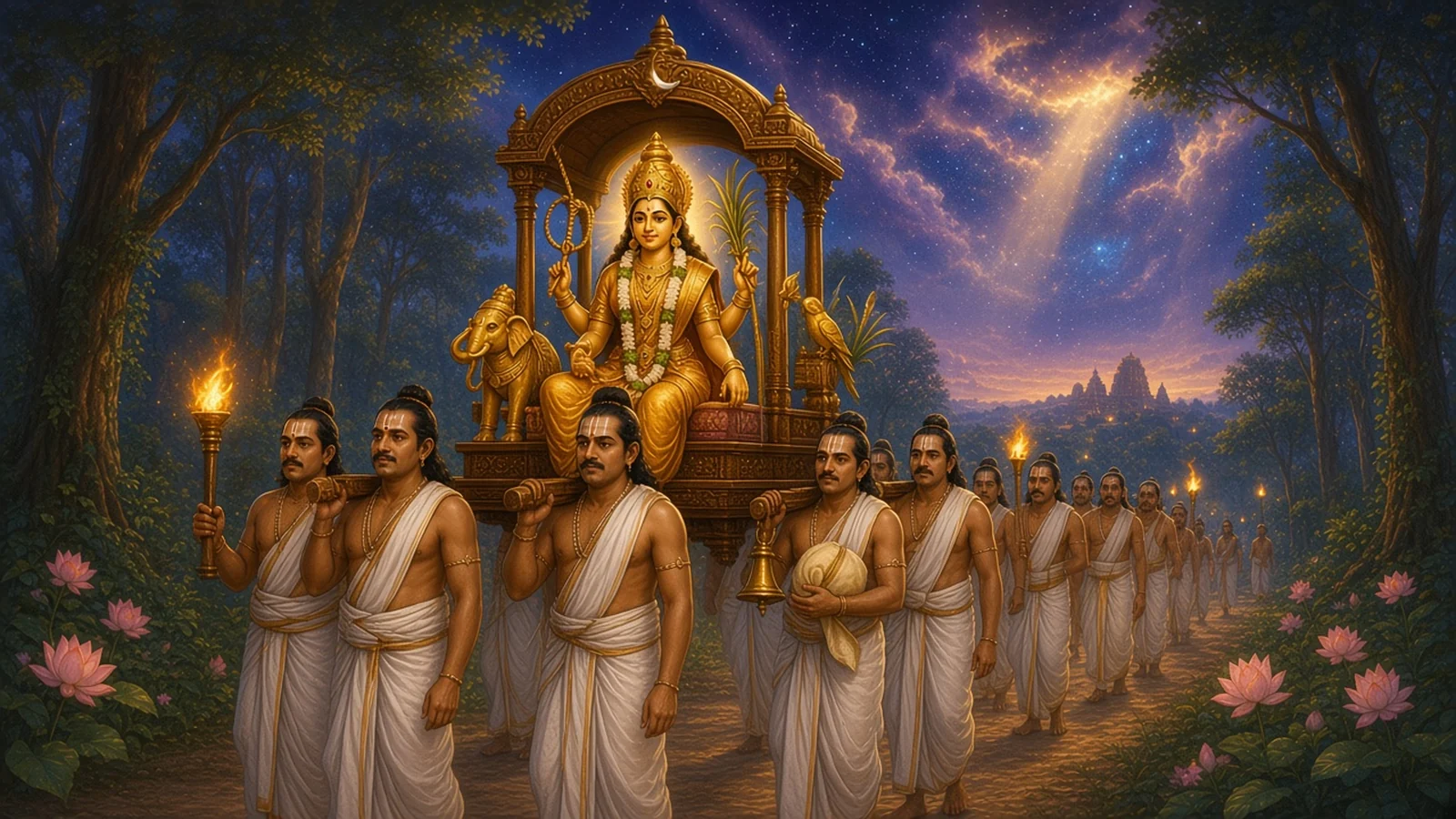
There was a demon called Shankha, a son of the Ocean, strong enough to wreck the three worlds. He beat the gods in battle, drove them out of heaven and took for himself the powers of Indra and the other guardians of the world. The gods fled with their wives into a cave on Mount Meru and stayed there, hidden, for many years.
Shankha could not get at them, and it gnawed at him.
"They are beaten, and still they are not finished," he said. "Why? Because of the hymns. All their strength comes from the Vedas. Take the Vedas away, and there is nothing left of them."
Vishnu was asleep. Shankha saw it, went up to the world of truth where the Vedas were kept, and took them.
The Vedas were afraid of him. They slipped out of his grasp and went down into the water, and the sacrifices and the hymns went with them. Shankha dived after them and searched the depths of the ocean, but they never stayed in one place long enough for him to find them.
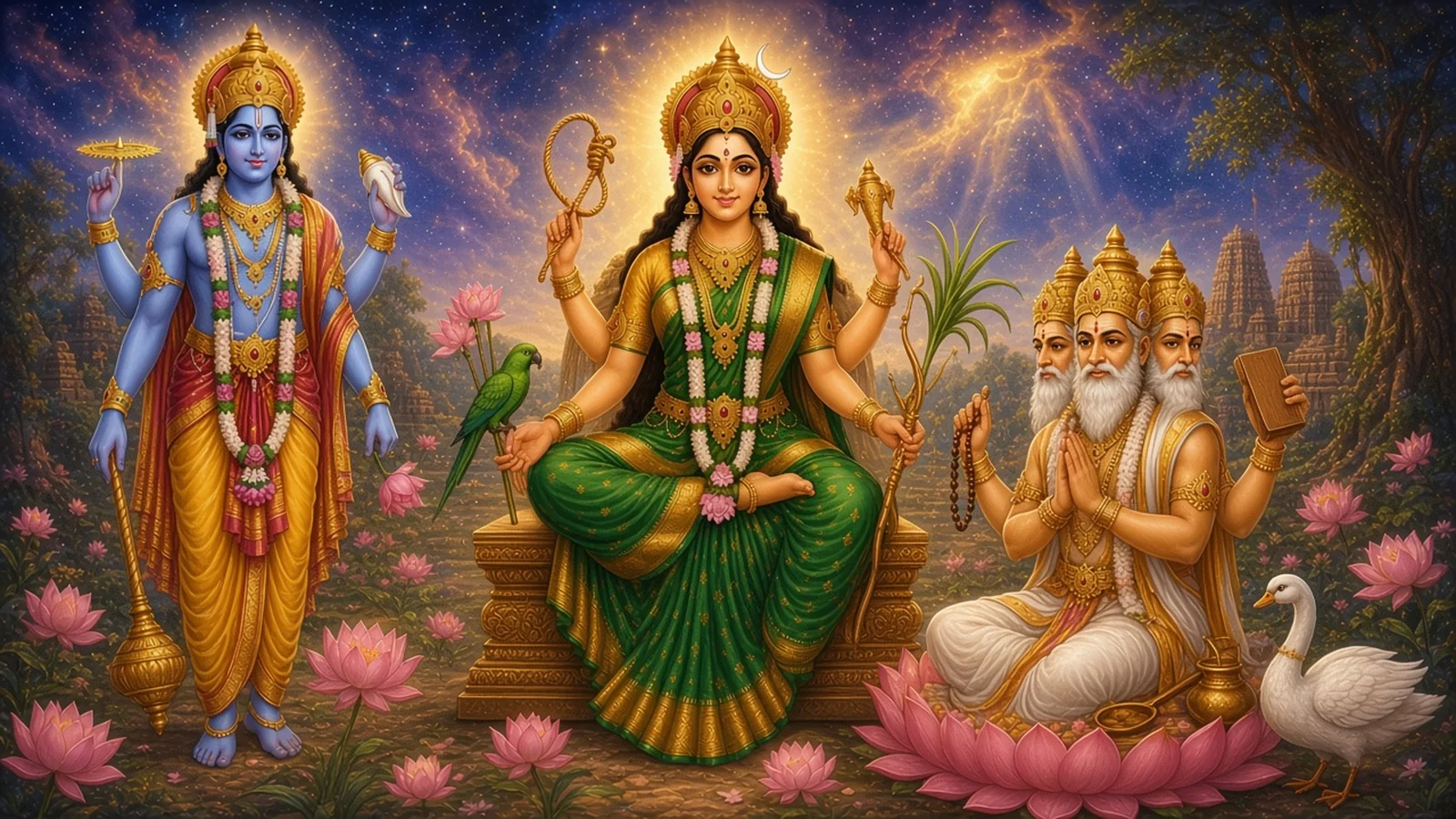
Brahma gathered the gods and went to Vishnu where he slept. They did not shout or shake him. They sang. They played their instruments, and they offered him sandal paste and flowers, incense and lamps, again and again.
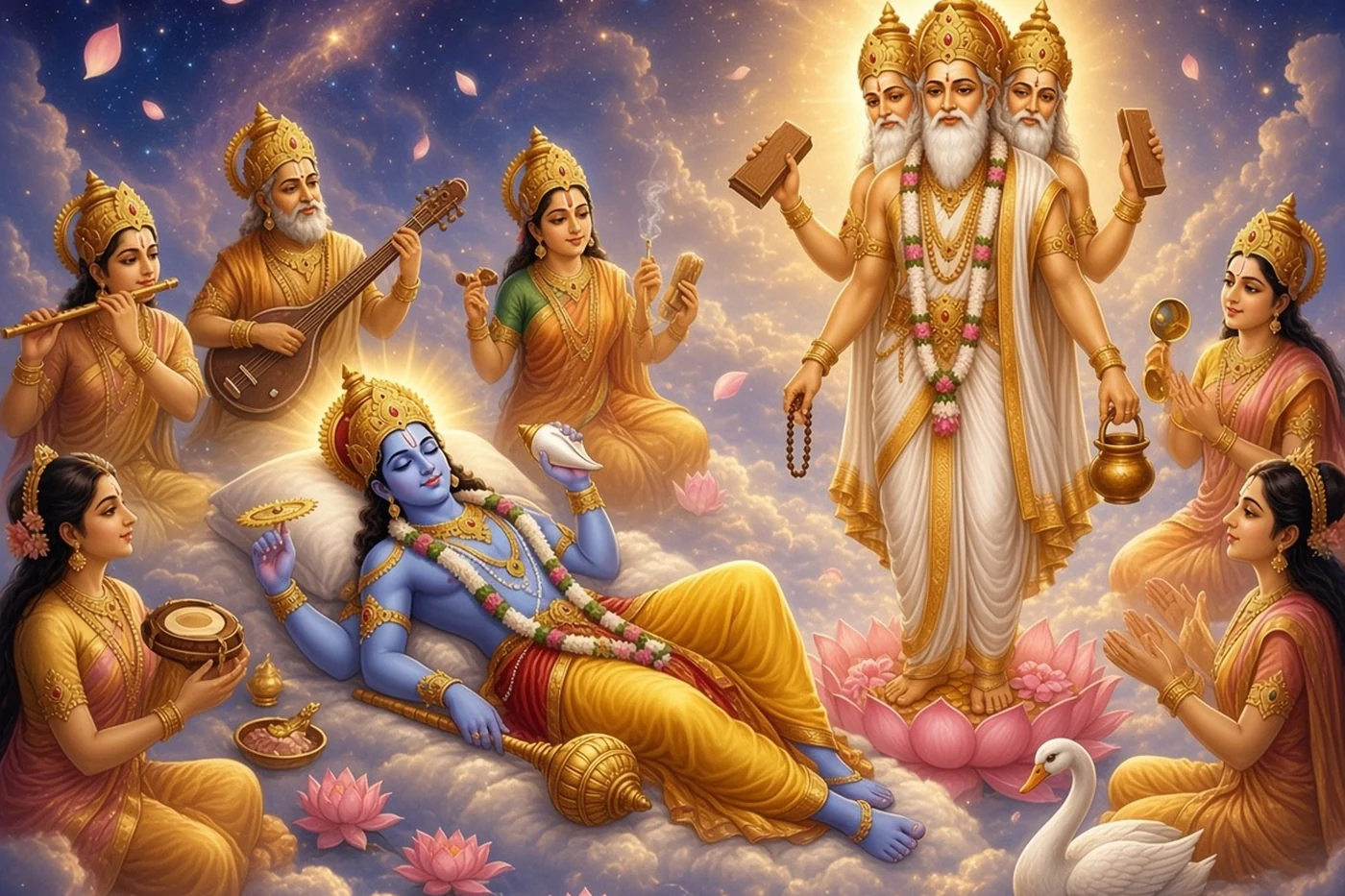
Vishnu rose, shining like a thousand suns, and the gods fell flat at his feet.
"Your music has pleased me," he said. "Ask, and you shall have it. And let people do as you have done. From the eleventh day of the bright half of Ashvina to the eleventh day on which I wake, let them sing and play for me every day, and they will be close to me."
Then he spoke of the Vedas. "They are in the water. I will kill the Ocean's son and bring them back. From now on, every year in the month of Kartika, the Vedas will rest in the water with their hymns and their sacrifices, and I will rest there with them. Whoever bathes at dawn in that month will have bathed as if at the end of a great sacrifice. And because you woke me on the eleventh day, that day will always be dear to me."
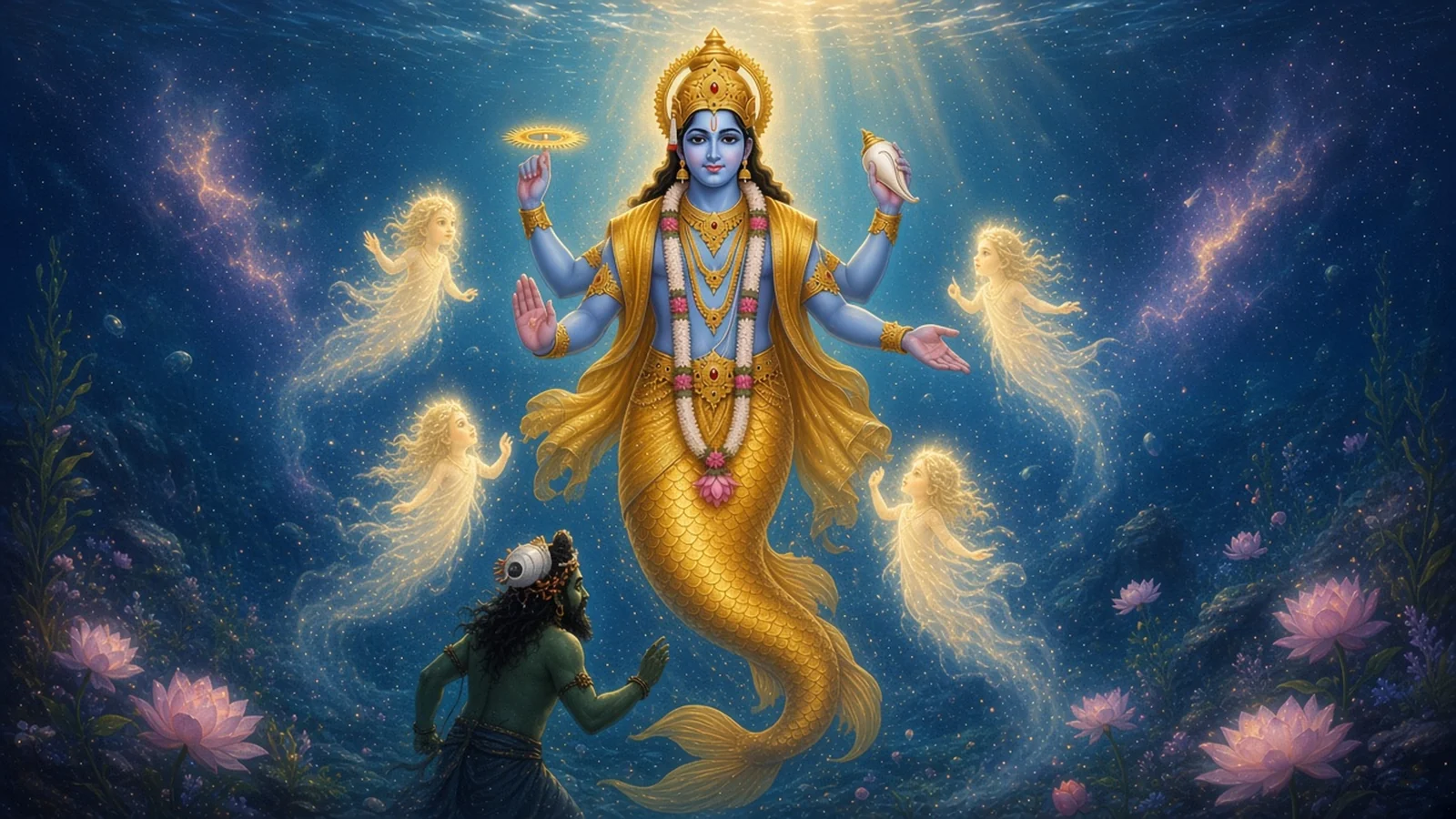
Then Vishnu became a fish, a small one that shone, and dropped into the cupped hands of the sage Kashyapa at his hermitage on the Vindhya mountains. Kashyapa put it in his water pot. It outgrew the pot, so he moved it to a well, then to a lake, then to the sea, and it was growing all the while.
In the sea the fish found Shankha and killed him. It carried the demon's body to the forest of Badari and called the sages there.
"The Vedas fell into the water," it told them, "and the Upanishads with them. Go down and bring them up. I will wait for you at Prayaga with the gods."
The sages had great power from their penance, and they went into the deep. They brought up the Vedas, the six limbs of the Vedas and everything that belongs to the sacrifice. Whatever portion a sage lifted out of the water, that sage became its seer.
They carried it all to Prayaga and gave it to Vishnu and to Brahma. Brahma was so glad that he held a horse sacrifice there, with the gods and sages round him. When it ended the gods bowed to the ground and asked that this place be the best on earth.
"So it will be," said Vishnu. "It will be called the field of Brahma, and the king of all holy places. One day a king of the Sun's line will bring the Ganga here to meet the Yamuna, and whatever is given or vowed or prayed here will bear fruit that never runs out."
As the Bhagavata tells it: the thief at Brahma's yawn
Bhagavata Purana 8.24, with the Agni Purana 2 · the night of Brahma · 2 min read
The Bhagavata gives the theft a different thief and a different hour. It happens at the end of one of Brahma's days. When the creator's day is over he sleeps, and while he sleeps the three worlds go under the water of the dissolution.
That evening Brahma grew drowsy and wanted to lie down. As he settled to sleep, the Vedas were flowing out of his mouth. Close by stood a powerful demon called Hayagriva, the horse-necked. He saw the Vedas coming out with no one to guard them, snatched them and was gone.
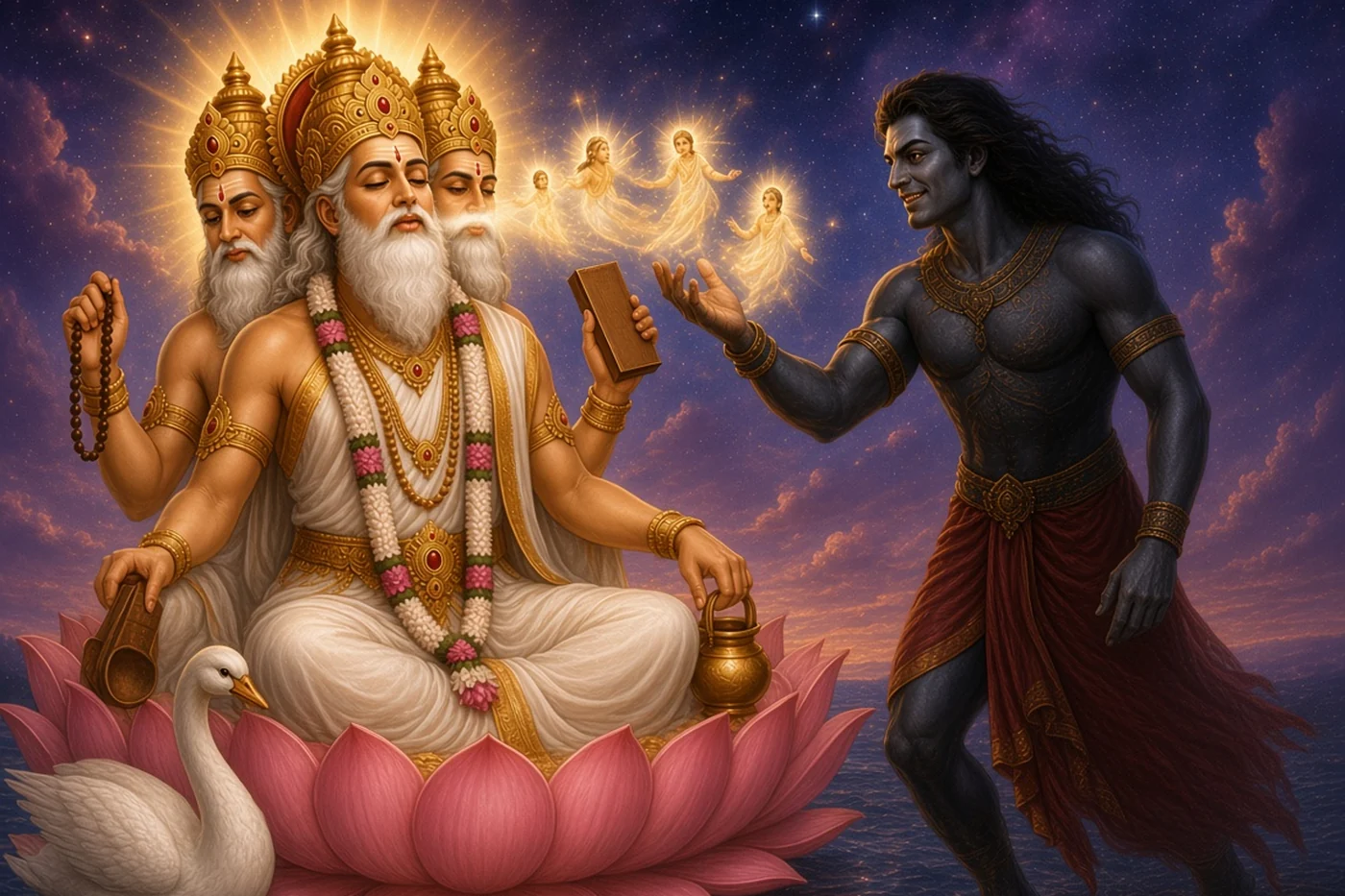
The Lord saw it. He took the body of a fish and went down into the flood.
The Bhagavata spends most of the chapter on what the fish did next: how it came to King Satyavrata in a river, outgrew every vessel and towed his boat through the long night of the flood, teaching him as it went. Of Hayagriva it says nothing more until the very end. When the dissolution had passed and Brahma rose from his sleep, the fish killed the demon and gave the Vedas back into the creator's hands, so that he could make the world again.
The Agni Purana tells it the same way and just as briefly. After Manu has been carried through the flood and has heard the fish's teaching, Keshava kills Hayagriva, whom it calls the destroyer of the Vedas, and the sacred words are safe.
The last verse of the Bhagavata's chapter remembers the fish for two gifts together. It gave the Vedas back to Brahma, and it explained what they meant to Satyavrata and the seven sages in the boat.
Neither text says where the Vedas were through the night of the flood, or how the fish found the thief. This Hayagriva is a demon. He has nothing to do with the horse-headed Vishnu of the same name, who brings back the Vedas stolen by Madhu and Kaitabha in The Thieves of the Vedas.