As Syama Sastri's family remembers it
the priests of the golden Kamakshi · Kanchi to Tiruvarur and Thanjavur · 3 min read
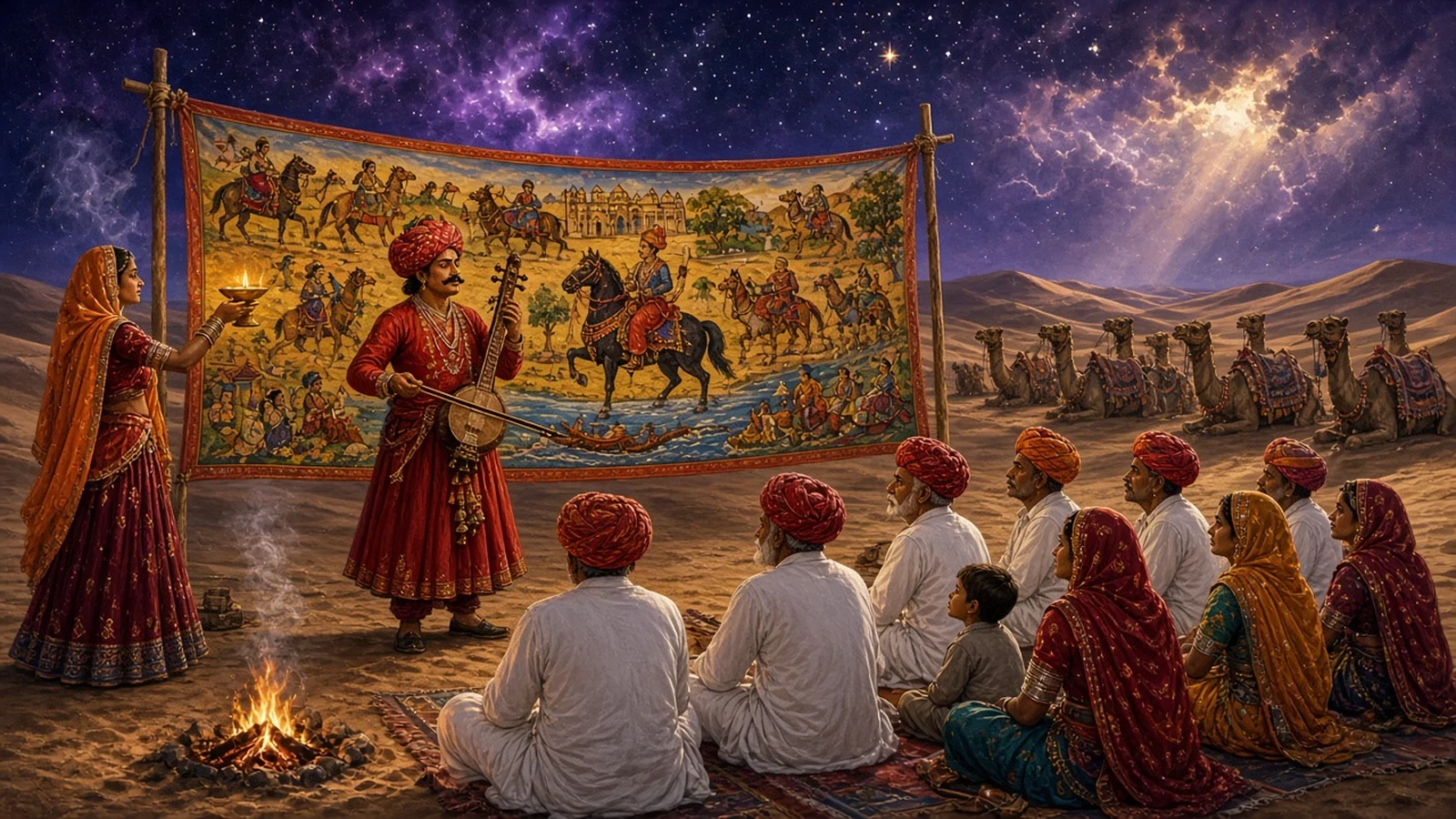
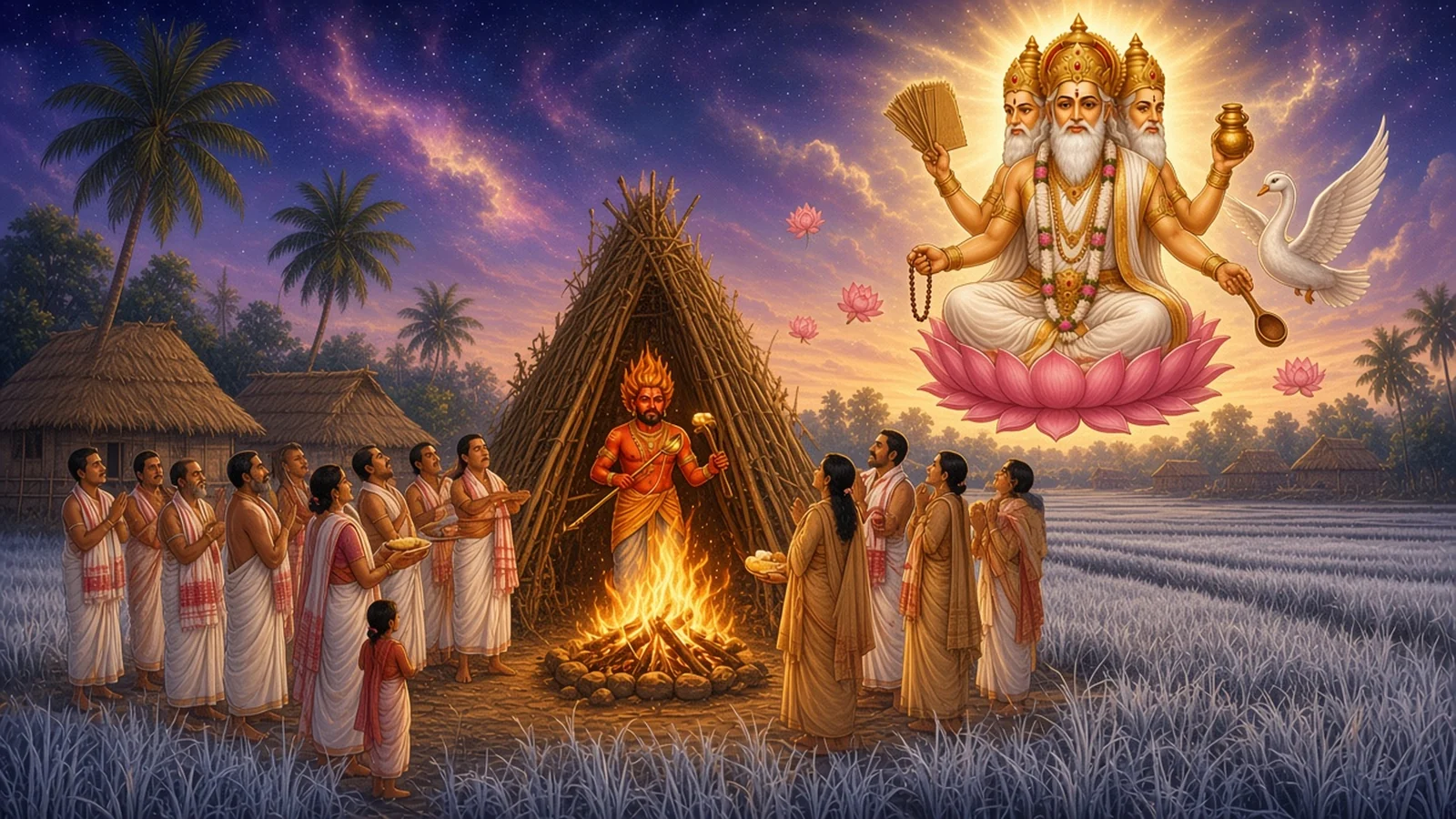
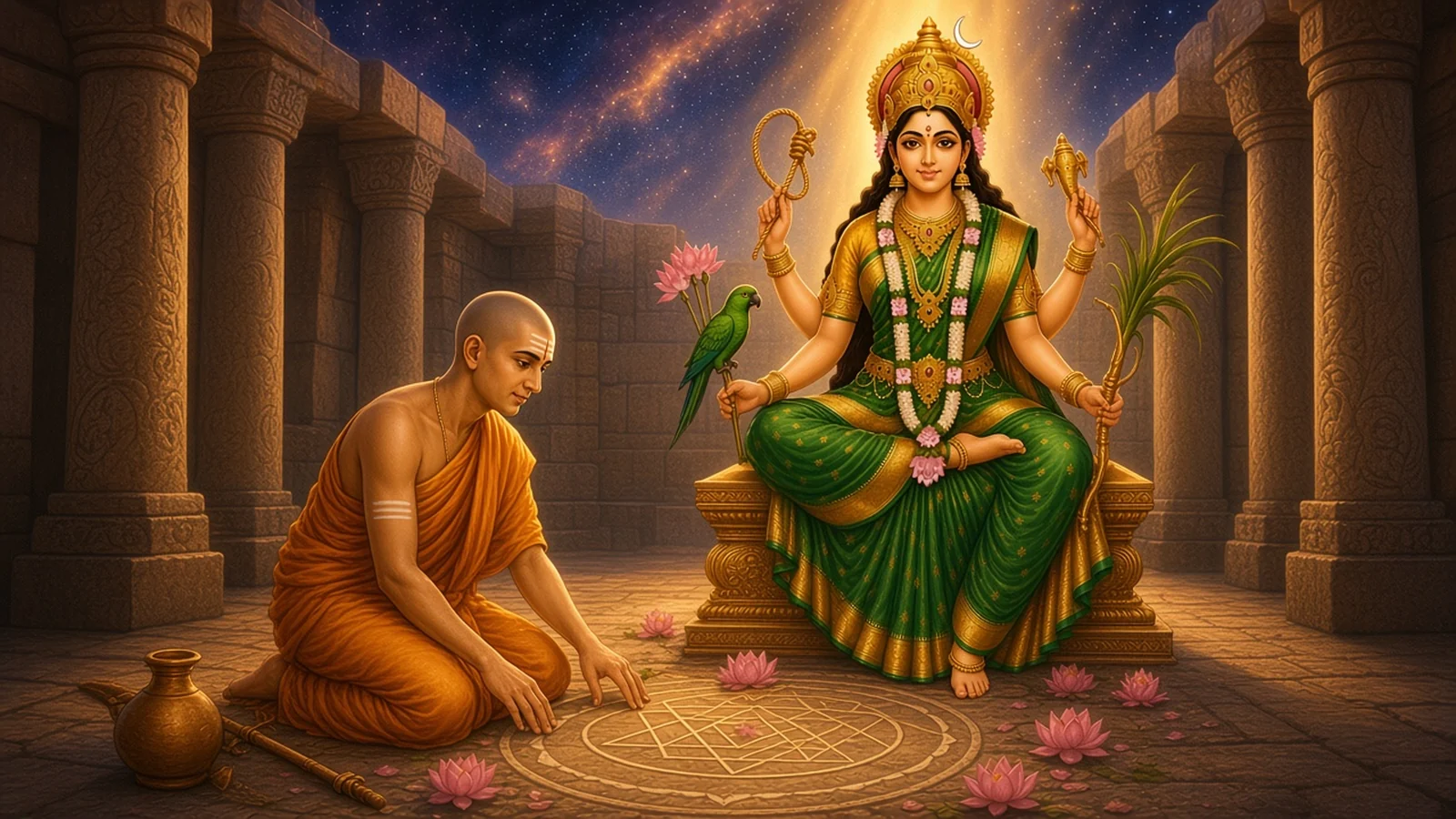
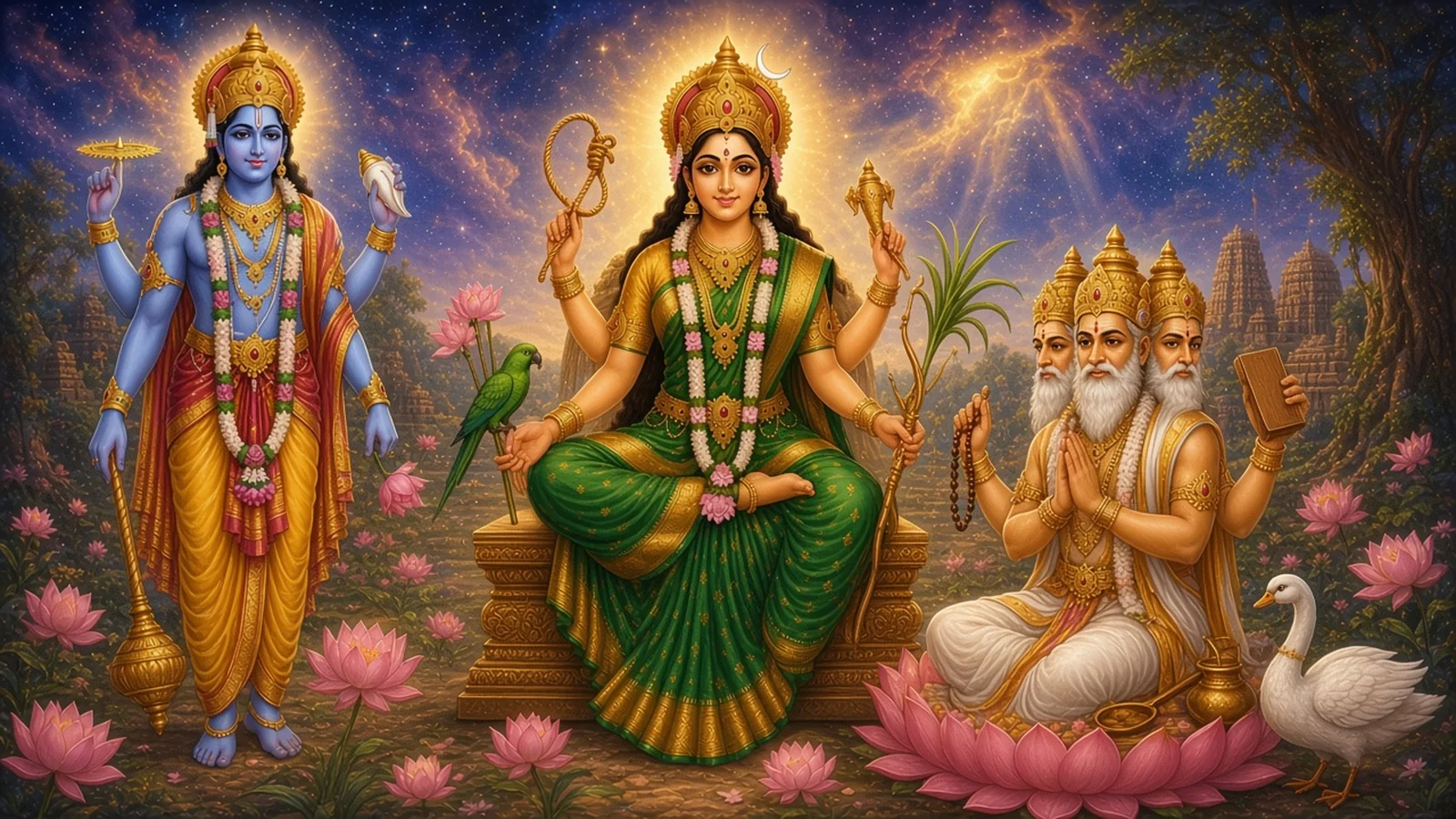
At Kanchi, the family says, there was once a goddess of gold. Brahma had seen the goddess there at the end of his penance, and to keep the sight for ever he made her image in gold, built a temple for it and set it up for all to worship. Long afterwards Shankara gave the care of this golden Kamakshi to a learned family of priests, to keep from father to son.
In 1565 the sultans of the Deccan joined forces and broke the Vijayanagara empire at Talikota, and the disorder spread far to the south, as far as Kanchi.
"We cannot keep her here," the priests said. "If the city falls, they will take the gold and break the goddess."
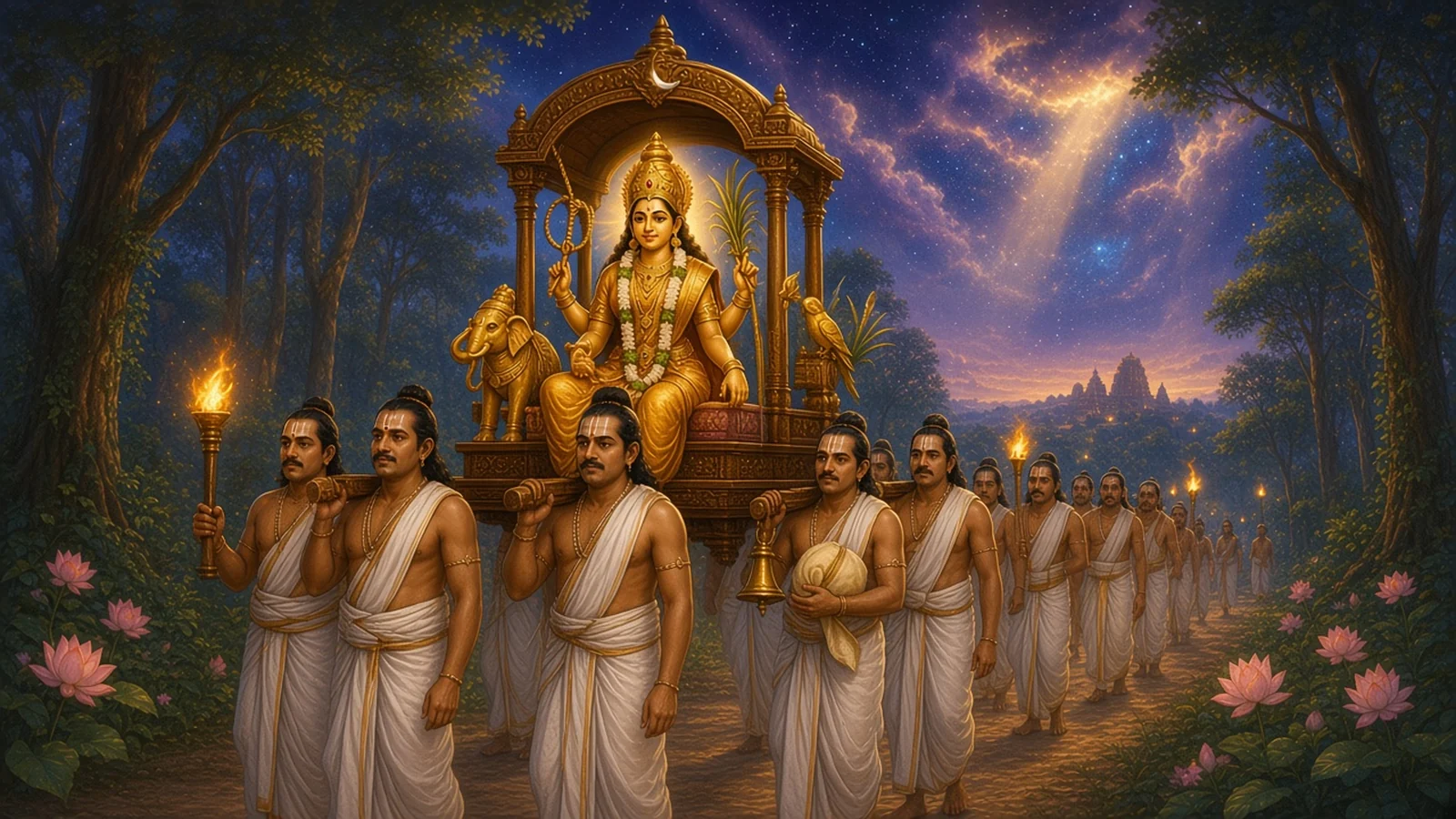
So they took up the image and the temple's wealth and left. The road was long. They went through thick forests and crowded kingdoms. For fifteen years they stayed at the court of the ruler of Gingee. For seventy years they lived at Udayarpalayam, because its lord asked them to stay. But they never felt free there to worship her as they should.
"Let us take her home," they said at last. "Back to Kanchi."
They never reached it. They stopped on the way at village after village, Annakudi, Vijayapuram, Nagur, Madapuram, Sikkil and more, for some thirty years, and at last they came to Tiruvarur and set the golden goddess down within the walls of the great temple of Tyagaraja, the Shiva of that town. The brothers of the family took turns at her worship.
Nineteen years after they came, the chief priest was Viswanatha Sastri, and he and his wife Vengalakshmi had no child.
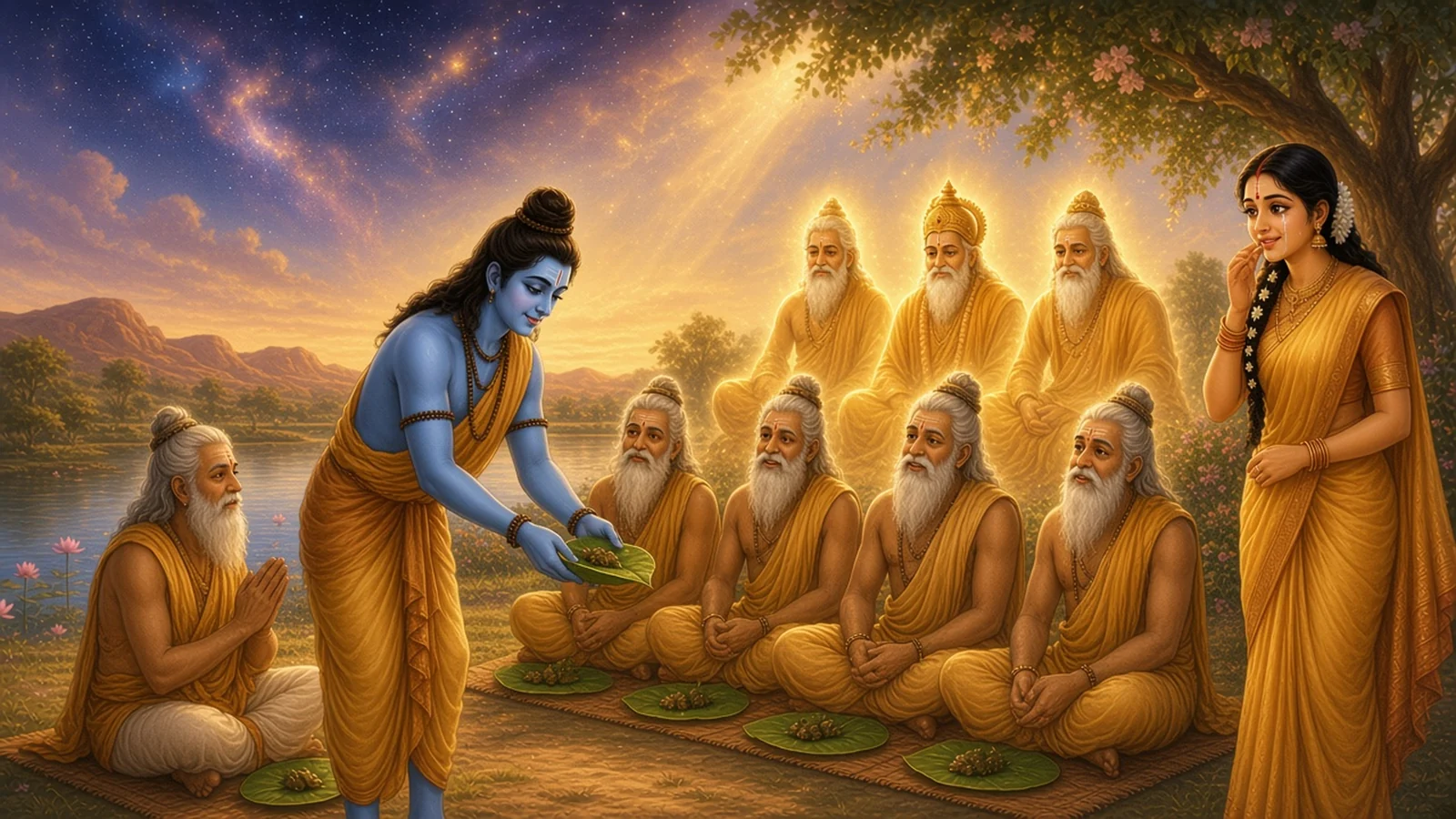
In the next street lived a devotee of Venkateshvara, who fed the Brahmins of the town on the last Saturday of every month. On one of those days, as the guests gathered, one of them was seized by the god. His voice shook. "Call Viswanatha Sastri's wife," he cried.
She came out from among the women and stood before him with her head bowed.
"Next year, in the month of Chaitra, under the star Krittika, you will have a son," he said. "Feed a hundred Brahmins for him."
"A hundred?" she began. "How could we ever..."
"A hundred? A hundred and twenty-five!" said the man.
She and her husband went home happy, and within a few weeks she was expecting. The boy was born in Chaitra under Krittika, as the man had said. They named him Venkata Subrahmanya. He was dark, like Krishna, and at home they called him Syama Krishna, dark Krishna, and the name stayed with him.
When Syama was eighteen, the soldiers of Haider Ali were raiding without warning, and Viswanatha feared for the goddess again. He went to Tuljaji, the Maratha king of Thanjavur.
"Give her a place inside your fort," he asked, "and we will come."
The king agreed. In 1781 the family moved to Thanjavur with the golden goddess, and she was kept in the Konkaneswara temple in the fort. Five years later Tuljaji built her a temple of her own, consecrated it and gave the temple and its priests lands and a street of houses.
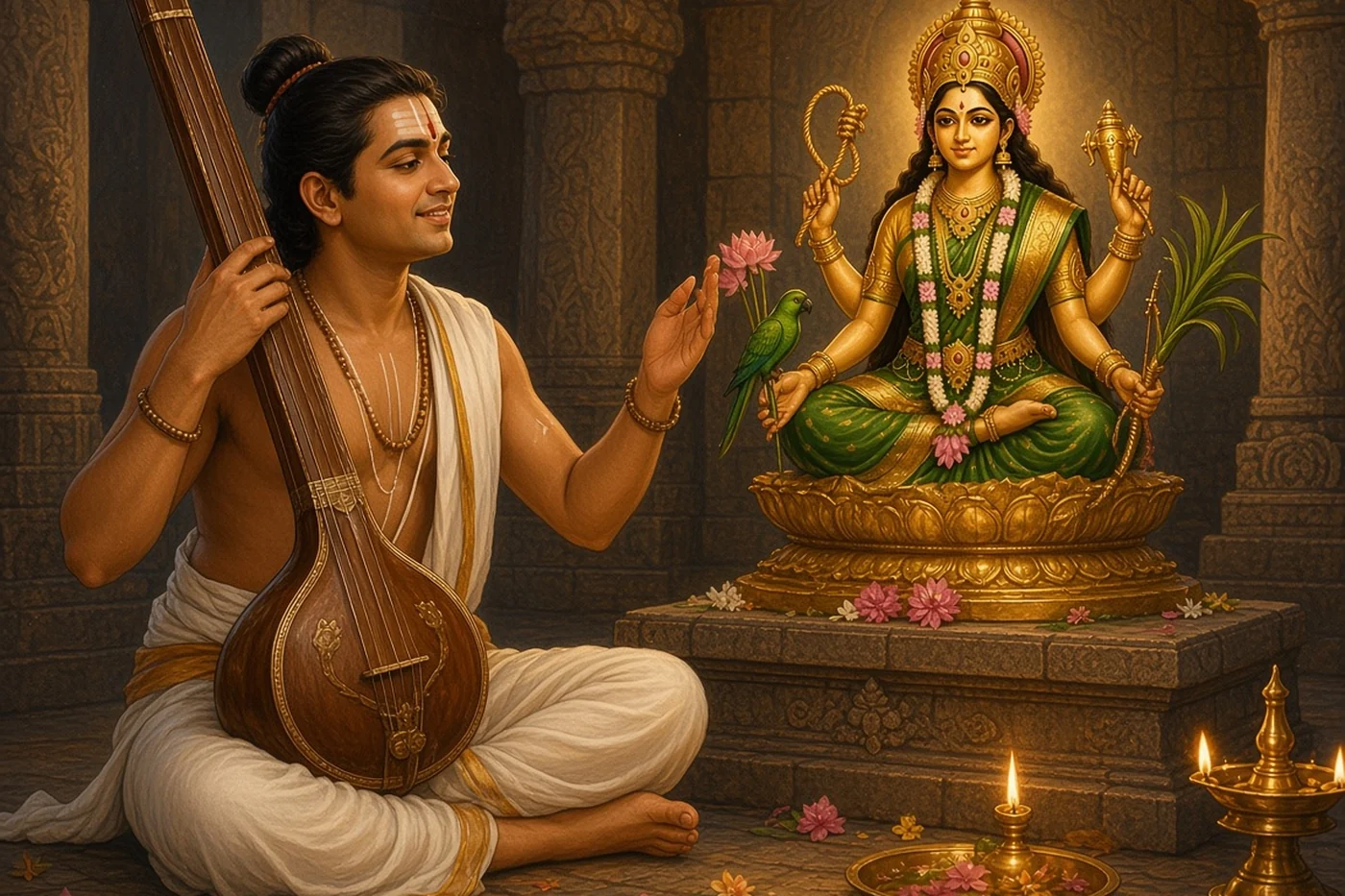
The boy who had been promised at a feast grew up in her service, as his fathers had. Syama Sastri made songs for her in Telugu, Sanskrit and Tamil. In one he calls her Bangaru Kamakshi, golden Kamakshi, and begs her to come to his rescue and not be late. In another he calls her bangaru bomma, the golden doll. He became the eldest of the three great composers of Carnatic music, and the other two, Tyagaraja and Muthuswami Dikshitar, were born in Tiruvarur too.
As Kanchi and Thanjavur tell it
the Kamakshi temple, the Kanchi Matha and the Bangaru Kamakshi temple · Kanchipuram and Thanjavur · 2 min read
Kanchi begins the story another way. In the Kamakshi temple it is said that the goddess made a golden form of herself from her third eye, to be the bride of Shiva as Ekambareswara, and that after the wedding she was called Elavarkuzhali. That golden Kamakshi stood in the temple, standing as she stood in her penance. When an attack was feared she was carried away, and the name the temple gives for the man who took her to Thanjavur is Kamakshi Dasar, the goddess's servant. The image of her that Kanchi keeps today is made of five metals, not gold.
The encyclopedia that reports this adds that attendants carried the golden image round the south after 1565, that it was at Tiruvarur from 1739 to 1781, and that its temple was built in 1783.
The Kanchi Matha's account, as a Thanjavur writer gives it from the palace records, sends her on a longer road. In 1677 the golden image was at Kashi, far in the north, in the care of the Shankaracharya, and unrest there brought it south. By 1742 it was worshipped every day at a matha in Madras, and from there it went back to Kanchipuram. Then Pratap Singh, the Maratha king of Thanjavur, met the sixty-second head of the matha, Chandrasekhara Saraswati, at Kumbakonam, and with his minister Dabir Chand begged him to bring the goddess to Thanjavur.
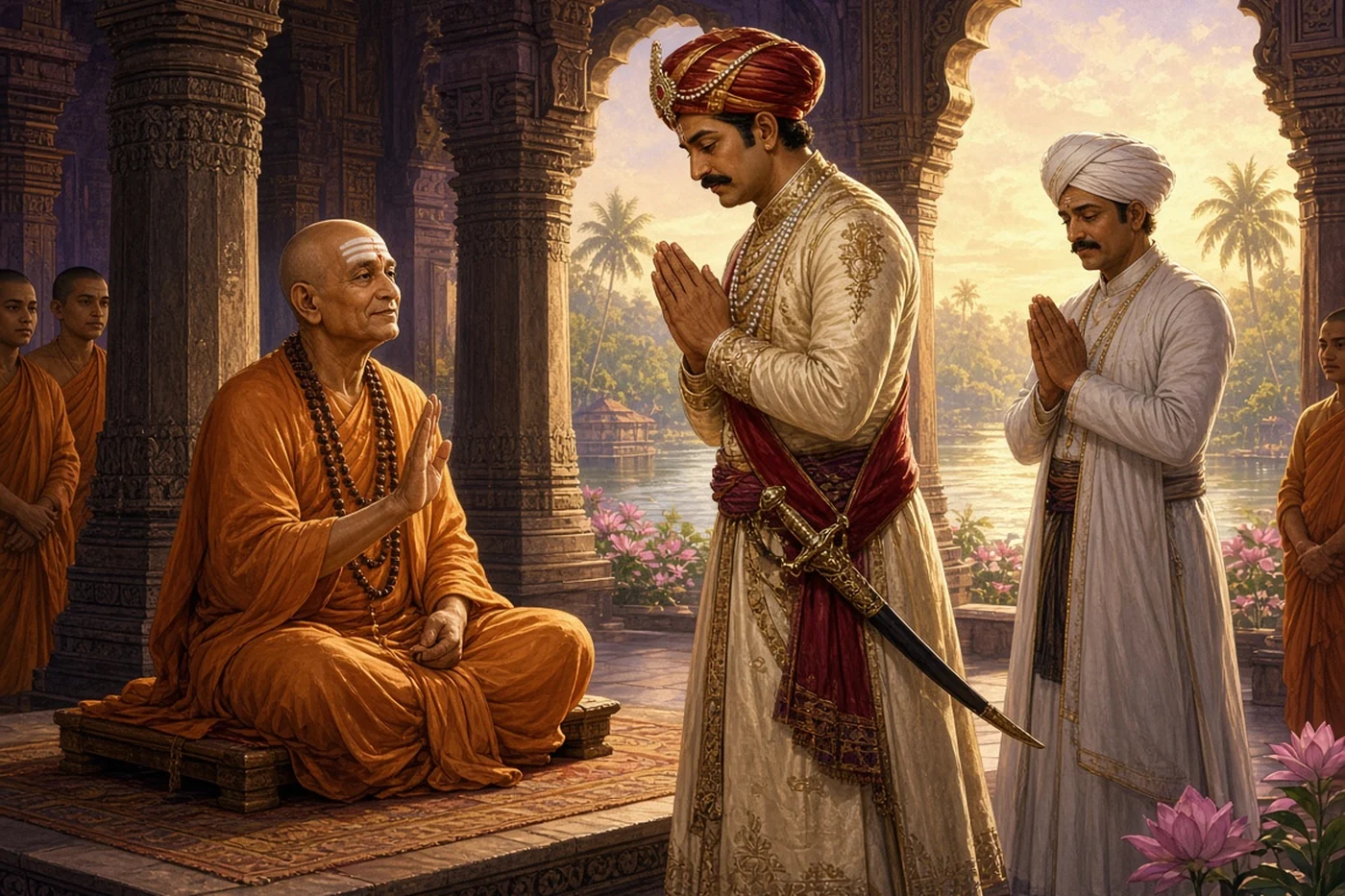
The matha settled at Kumbakonam by the Kaveri. The goddess was kept at Udayarpalayam, then in the Konkaneswara temple on West Main Street, and in 1771 she was given a temple of her own.
She is there still, on West Main Street, a standing figure facing east with a parrot in her right hand. She is gold, the writer says, but her face is dark, because it is anointed again and again with punugu, a fragrant musk.