As Kanchi tells it
Kamakshi Amman temple and its festivals · Kanchipuram · 3 min read
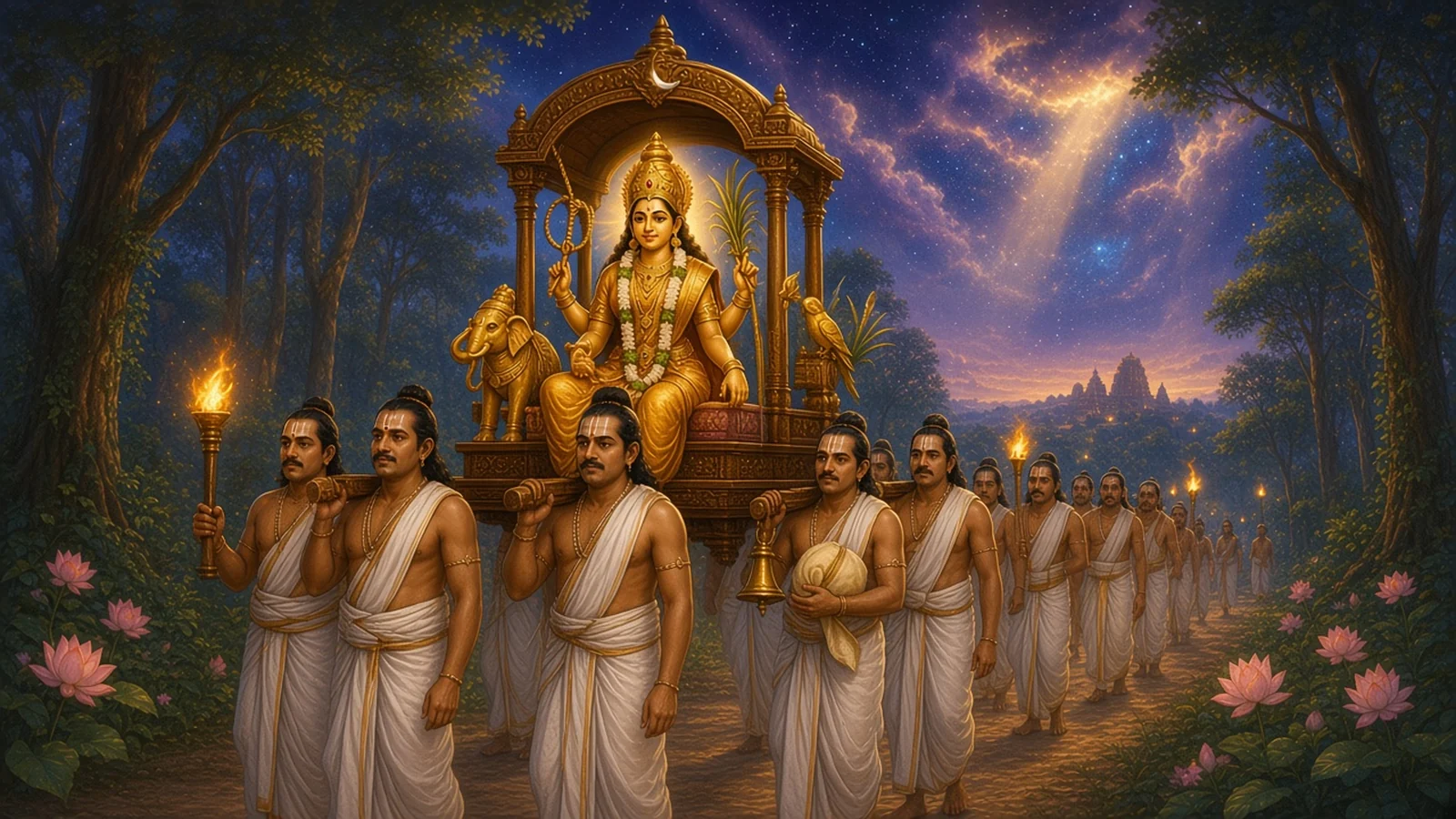
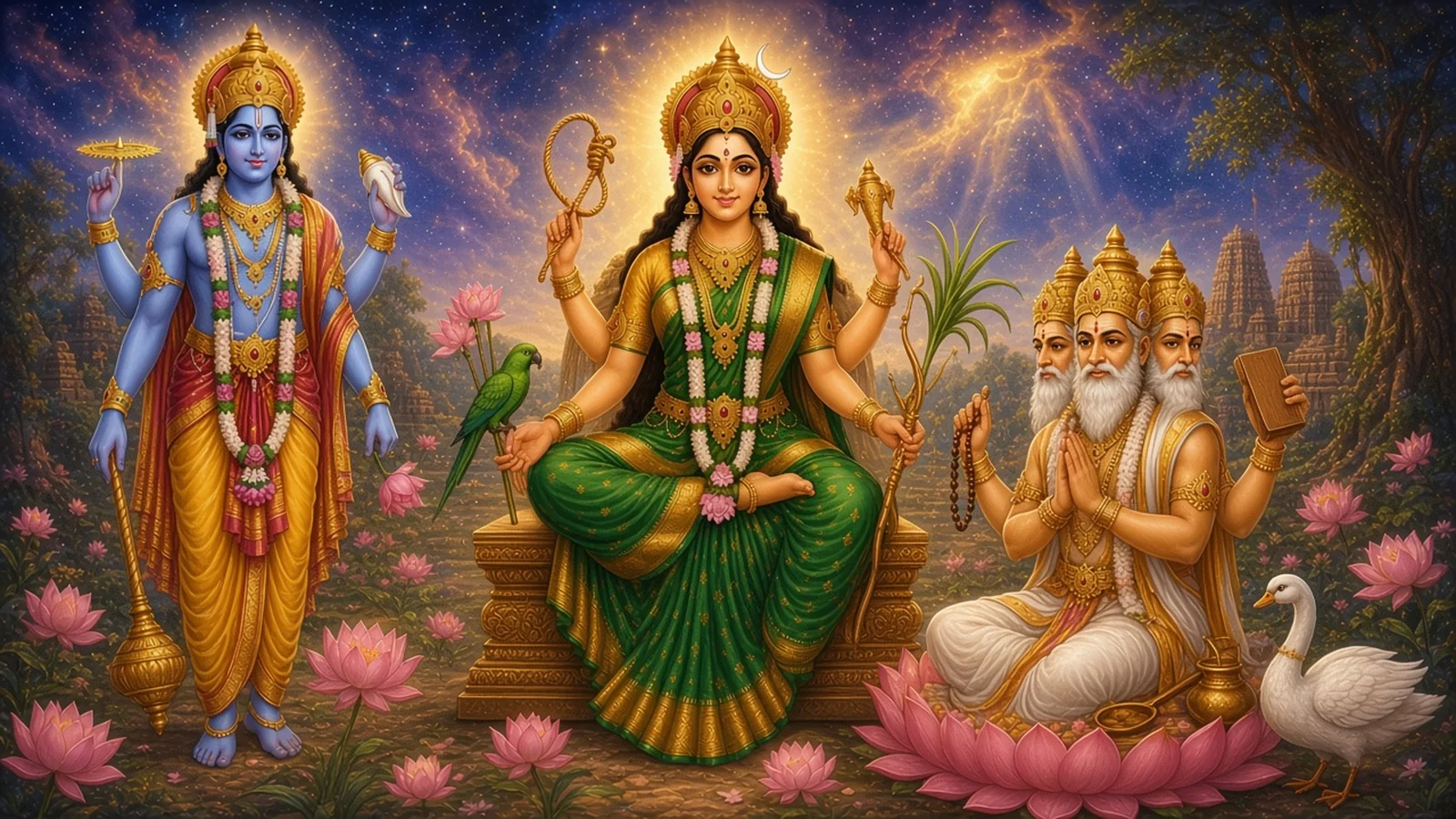
In the old days, Kanchi says, the goddess in the Gayatri Mandapam was not gentle. She sat in her fierce form, and the heat of her anger filled the sanctum, so that the priests could hardly bear to stand near her.
Then the teacher Shankara came to Kanchi, a wandering monk with a staff and a water pot, who had walked the length of the land teaching that all things are one.
"No one can stay in there for long," the priests told him.
"Then let me go in," said Shankara.
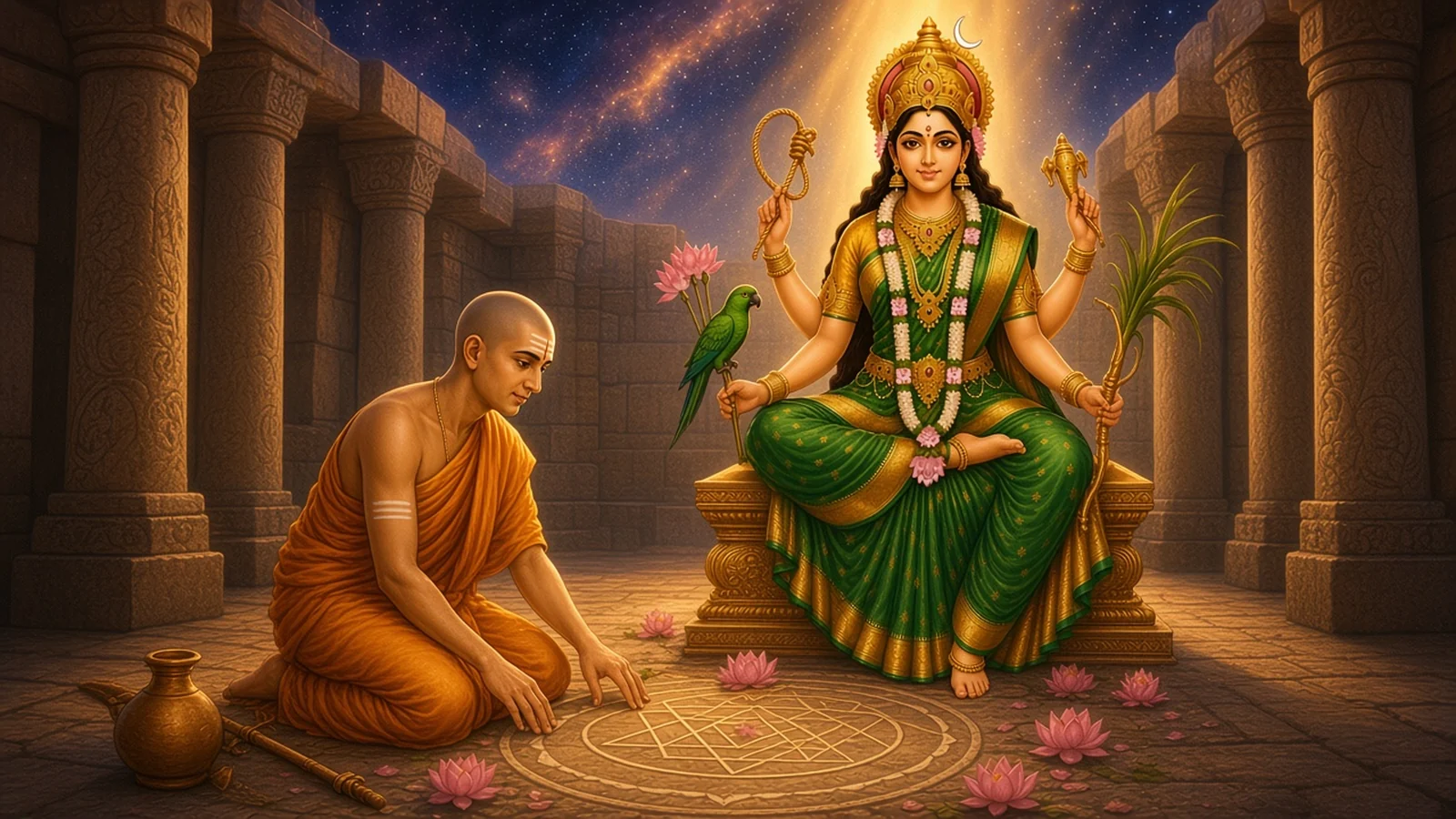
He went into the shrine and stood before her in the heat.
"Mother," he said, "the people who come to you are afraid of you. Let them come close."
He did not fight her and he did not argue with her. He set a Shri Chakra in front of her, the wheel of nine interlocking triangles that is the goddess's own form drawn as a diagram. And the heat went out of the shrine. The fierce goddess became the gracious one, Kamakshi of the kind eyes, and that is how she has sat ever since.
Devotees say that he sang to her here as well, and that the hundred verses of the Saundarya Lahari, the Wave of Beauty, were made in this place. The Shri Chakra is still at her feet, cut in stone and set in a carved trough, covered every day with fresh pink lotuses. Round it the temple shows the goddesses of speech who sit round the queen in her island of gems.
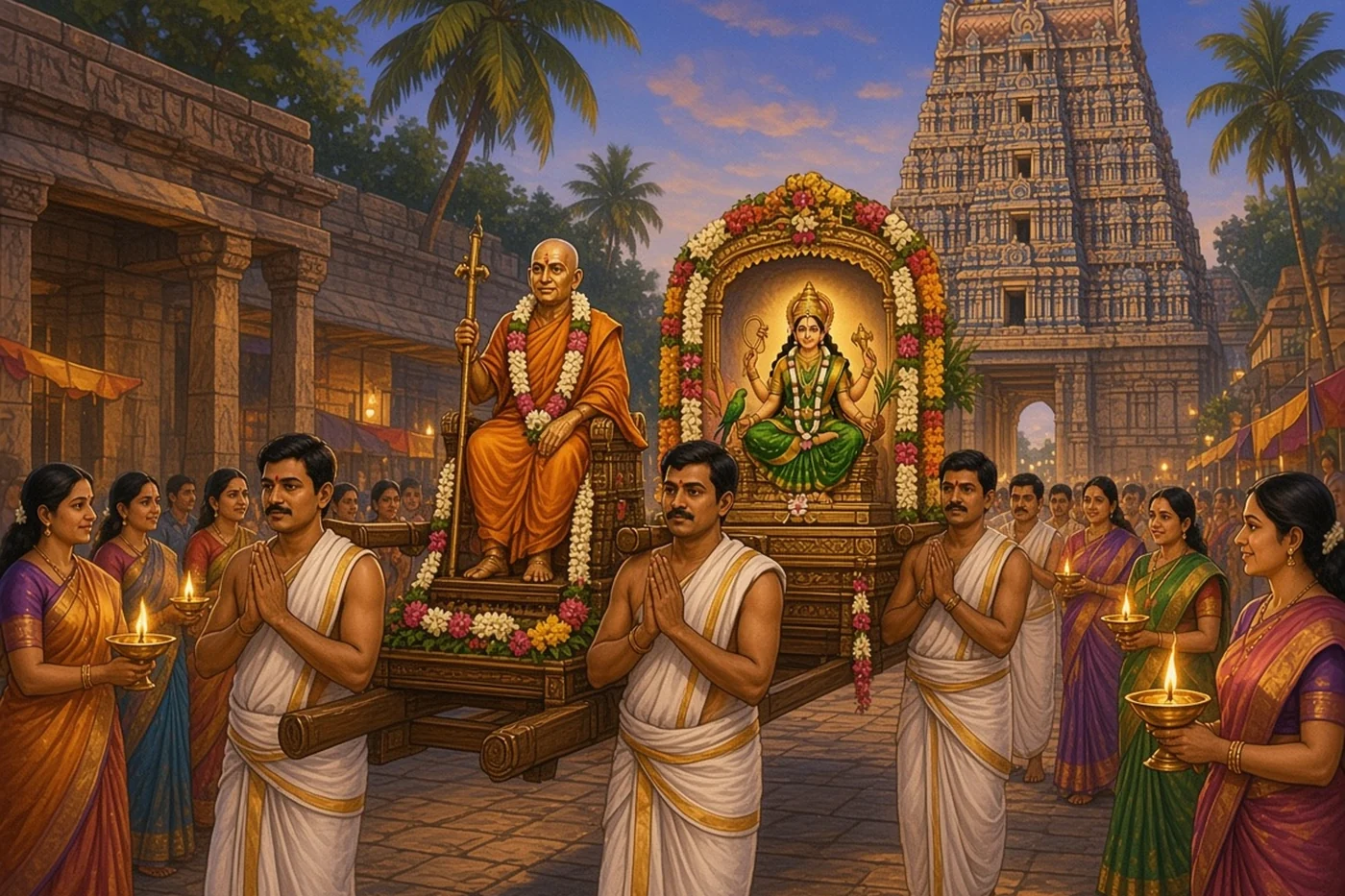
Kanchi has kept Shankara beside her. He has his own shrine inside the temple walls and his own festival image, and when Kamakshi rides out in her great festival in the month of Masi, his image goes with her in a palanquin. The temple's own reports of those nights say it is the custom for his image to lead her out. On the eighth day her chariot stays at the Shankara Matha from morning until evening.
His own festival comes in the bright half of Vaishakha, in April or May, and lasts ten days. Each evening the priests carry his festival image out of his shrine and set it before the goddess in her sanctum. The pandits recite ten verses of the Saundarya Lahari to her, and a lamp is waved after every verse.
On the tenth day the old story is played again. The legend the temple keeps says that Shankara asks her to come out with him.
"Come out, Mother," he asks. "Come round the city with me, and let everyone see you."
And she comes. The two go round the four royal streets together, and the procession ends at the Friday hall inside the temple, where the last ten verses are sung. The temple honours the teacher with a silk cloth tied round his head and with a garland. Then his image is carried three times round the goddess, and each goes home, Shankara to his shrine and Kamakshi to her sanctum.
As the Shankara Digvijaya tells it
Madhaviya Shankara Digvijaya 15 · the road south to Kanchi · 2 min read
The poem that tells Shankara's life as a conquest of the four quarters, the Shankara Digvijaya credited to Madhava, has no fierce goddess in it. It has a journey.
Shankara set out with his disciples and with Sudhanva, a king who had become his follower, to argue for the teaching that all is one against every school that denied it. He went first towards the far south, where the bridge to Lanka begins. On the way he met a sect that, the poem says, looked like worshippers of Shiva but used wine in their rites, as some worshippers of the goddess did. He argued with them hotly until they fell silent, and they took up the order of worship he gave them.
He bowed to Shiva as Ramanatha at Rameswaram, went on through the Pandya and Chola lands and came to Kanchi, which the poem calls the jewel of the Hasti hills. There he built a temple. He set up the worship of the goddess with rites that kept to the Vedas and led towards the highest knowledge, and he left out of them every trace of the Tantric way. Then he moved on to the Andhra country, bowed to Venkateshvara on his hill and travelled to Vidarbha.
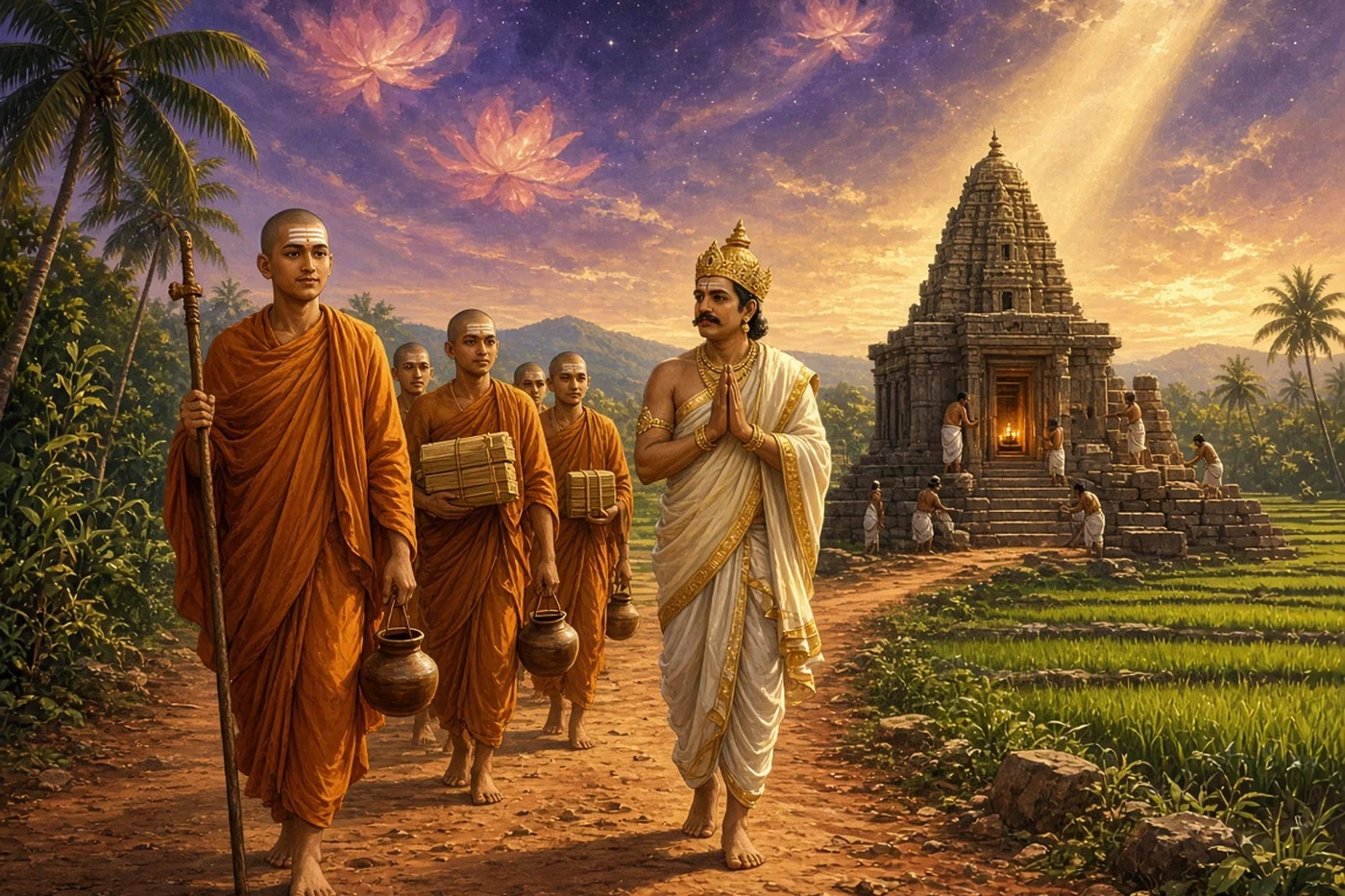
That is all. The verse does not name Kamakshi. It has no Shri Chakra, no fierce form and no procession. A short version of the same poem, the Shankara Digvijaya Sara, says that at Kanchi he had a temple built by Vedic rule, overcame the Tantrikas and had the goddess worshipped in the Vedic way. Its editor adds in a note that the Kamakshi temple was already old, and that Shankara renovated it.
Another life of Shankara, the one ascribed to Anandagiri, tells it otherwise again, as the translator Swami Tapasyananda notes. There Shankara comes to Kanchi at the end of all his travels and stays until he dies. He founds a temple of the goddess, or renews the one already there, and helps the two halves of the town to grow, Shiva Kanchi and Vishnu Kanchi, each round its own god.