As the Rajasthani katha books tell it: the two sprinklings
Rajasthan and the Hindi country · a village on Gauri Tritiya · 3 min read
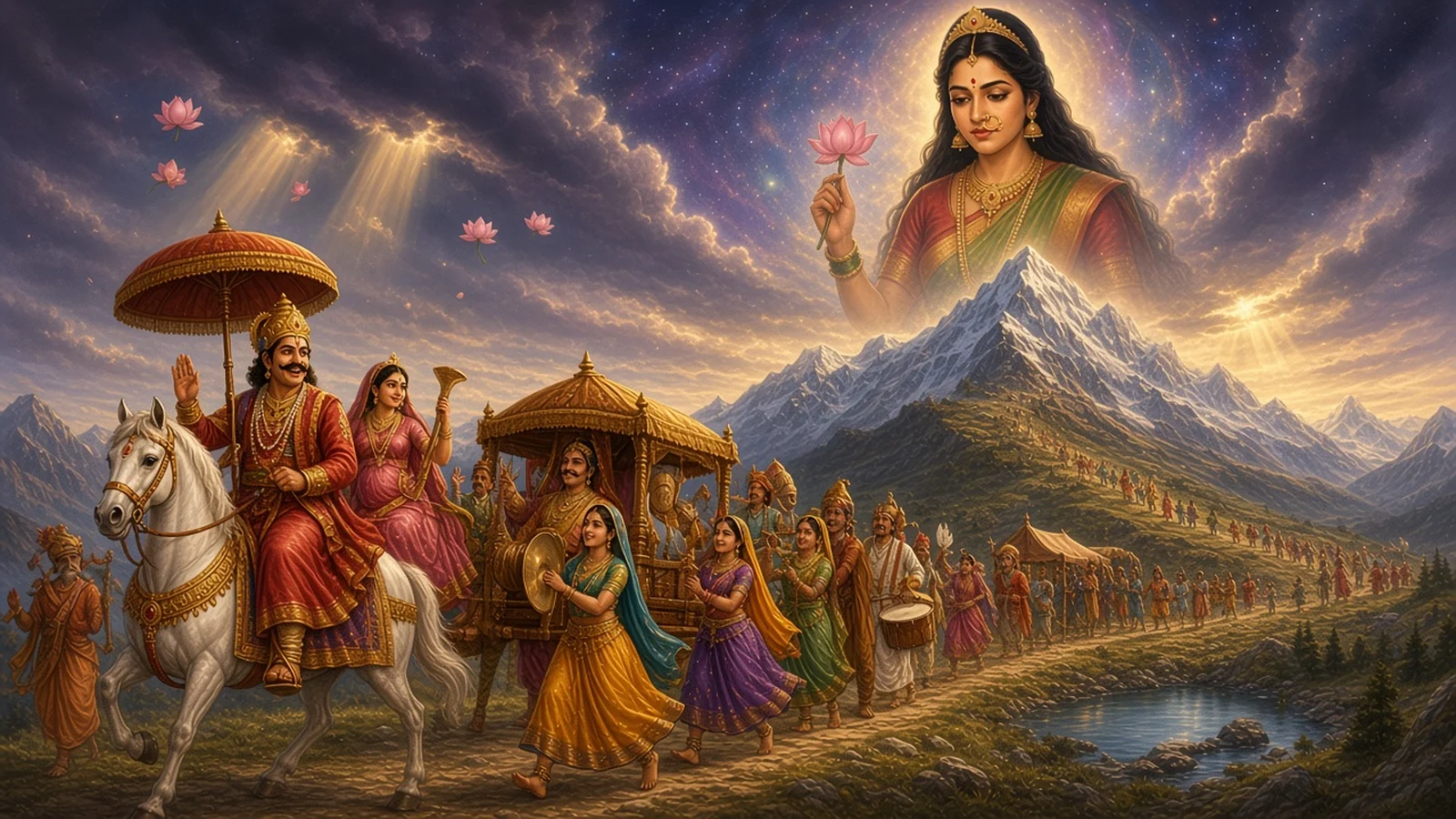
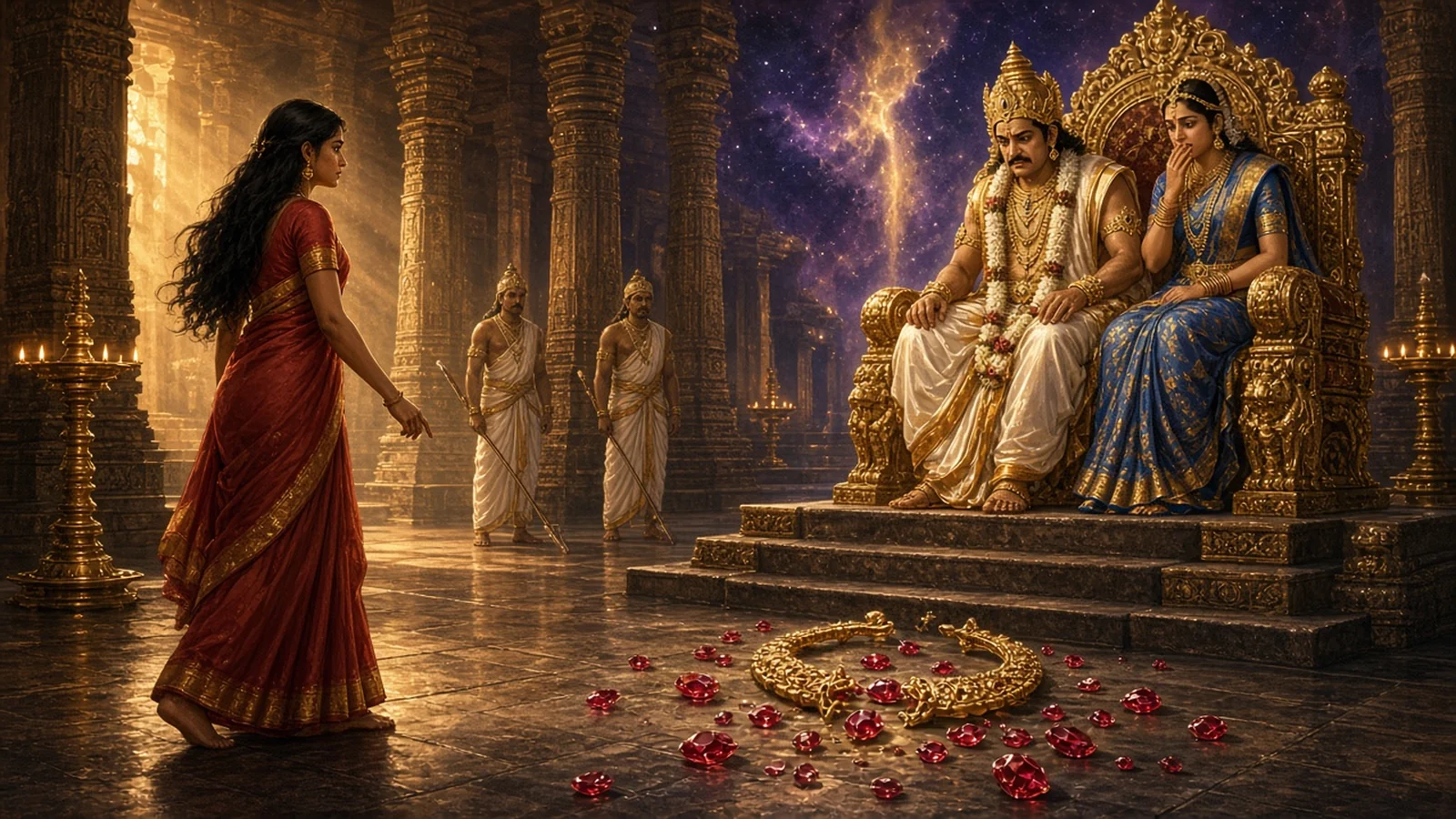
It was the third day of the bright half of Chaitra, and Shiva and Parvati had come down to walk the earth. Narada walked with them, his vina on his shoulder, glad of the company and of whatever the road might bring.
They came to a village at the edge of the fields. The news ran ahead of them faster than they could walk, from the well to the threshing floor to the last hut by the thorn hedge.
"It is Shankar and Gauri," a girl shouted. "They are on the road, coming here."
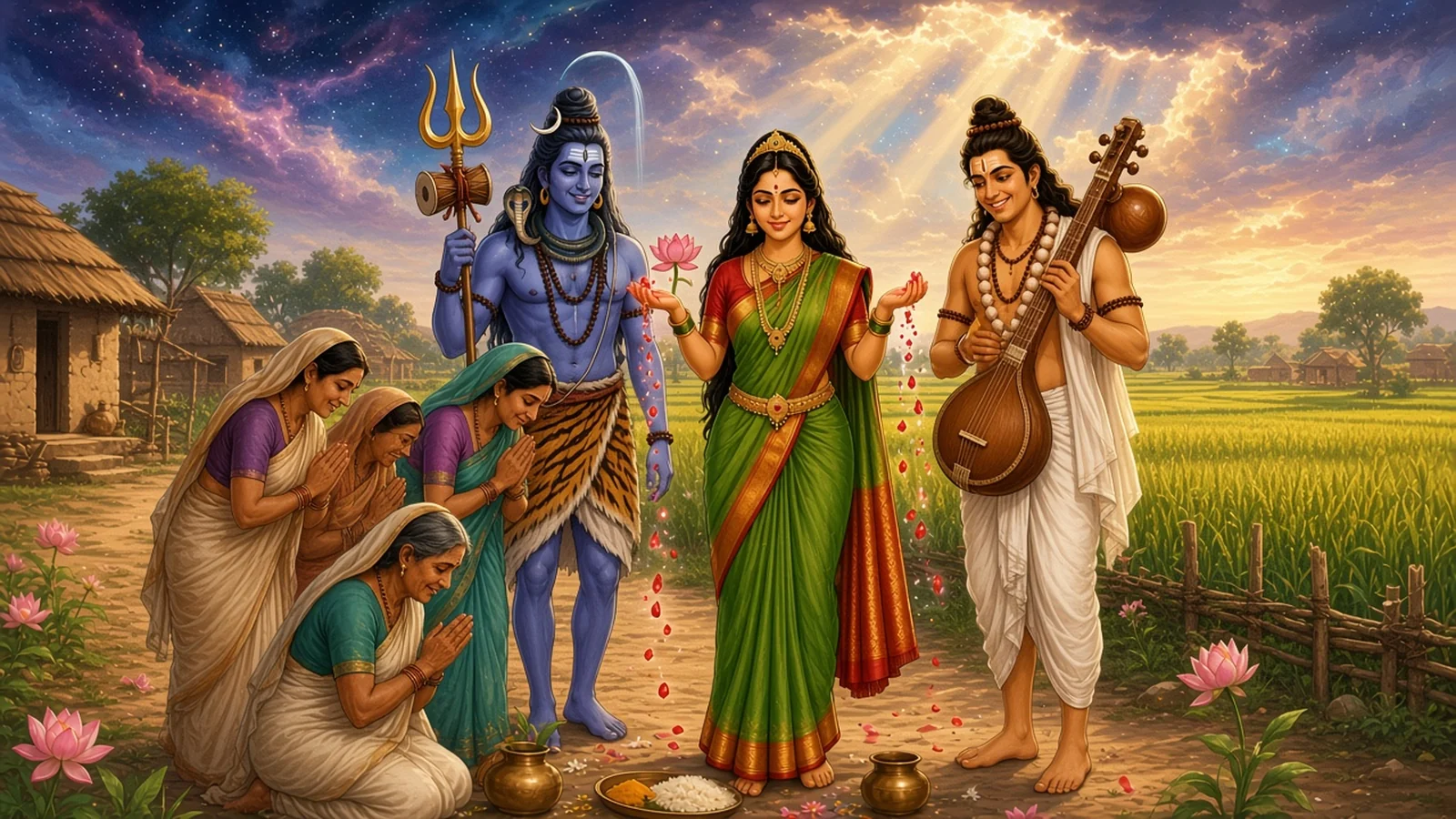
The women of the poor houses did not stop to think about what was fitting. One snatched up the brass pot she had just filled at the well. Another pulled flowers from the bush at her door, another a handful of wild fruit. An old woman had turmeric ground that morning and a little rice, and she put them on a plate and hurried out after the rest.
They reached the travellers first, because they had nothing to get ready. They set down their water and their turmeric and rice, marked the god and the goddess, and bowed.
"It is all we have, Mother," the old woman said. "Forgive us that it is so little."
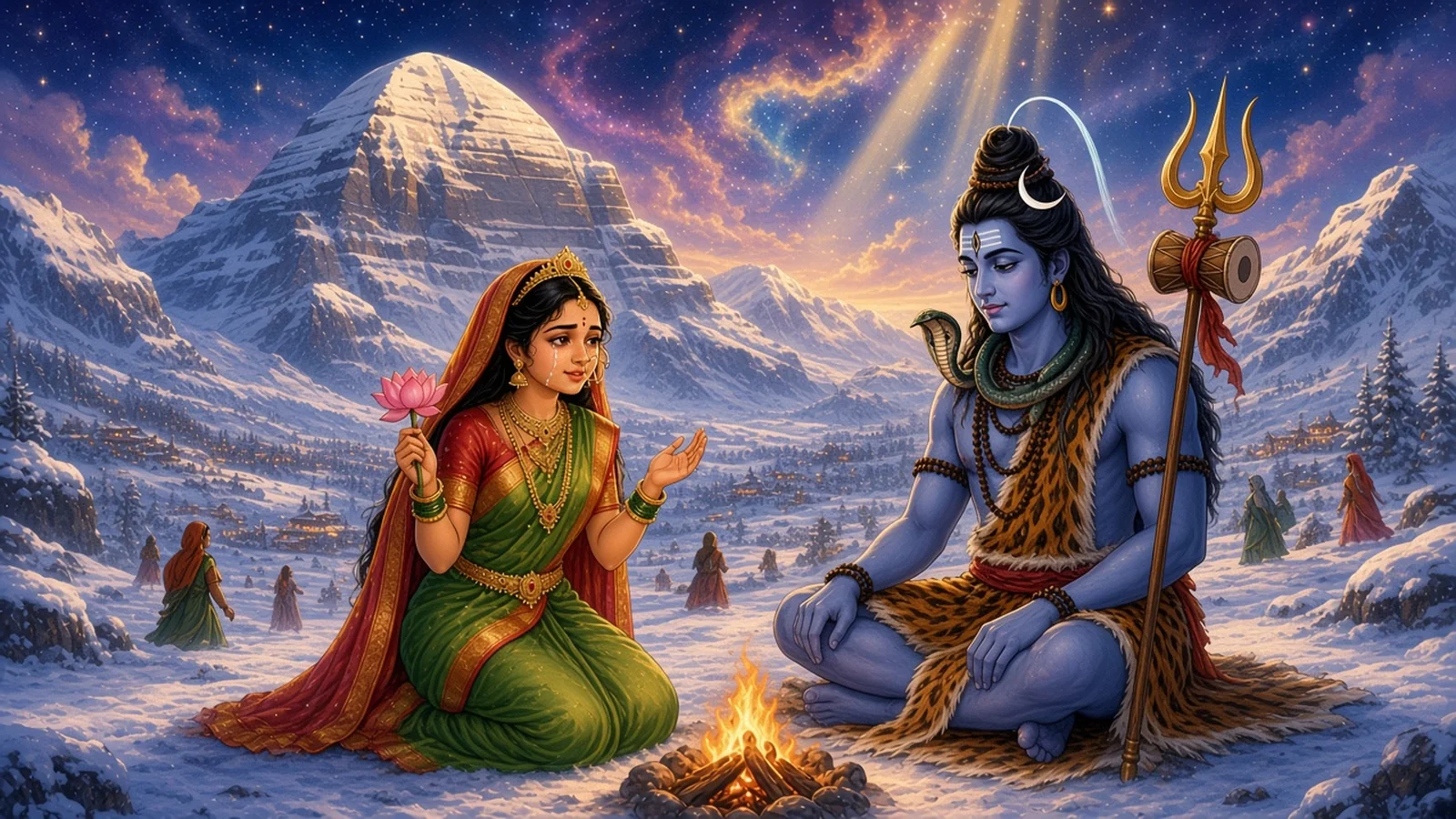
Parvati looked at their hands, cracked from grinding and carrying, and at the thin glass bangles on their wrists. She dipped her cupped palms into the water they had brought and lifted them.
"Little?" she said. "You came running. Hold still."
She scattered the water over them, and the tellings call what fell suhag ras, the essence of the married state, the blessing that keeps a husband living and a wife a wife.
"Go home," she told them. "As long as you live, your suhag will not break."
They went home singing. Not long after, a second party came up the road, more slowly, because what they carried was heavy. These were the women of the rich houses. They had heard the news as quickly as anyone, but they had gone first to their kitchens, and now they came in silk, with dishes of every kind laid out on plates of silver and gold under embroidered cloths.
They set it all down before the god and the goddess, uncovered the dishes one by one, and began their worship with great care.
Shiva leaned towards his wife. Narada, who missed nothing, leaned a little towards them both.
"Gauri," Shiva said quietly, "you poured your suhag over the first ones to the last drop. What is left for these?"
"What I gave them was a blessing from outside," Parvati said. "Water, and the turmeric they brought. These women shall have something else. I will make them as fortunate as I am."
The rich women finished their worship and stood waiting with their palms together. Parvati pressed the tip of one finger, opened it with her nail, and shook her hand over them. Her own blood fell on them in red drops, on a forehead, on a parting, on a shoulder, on a hem.
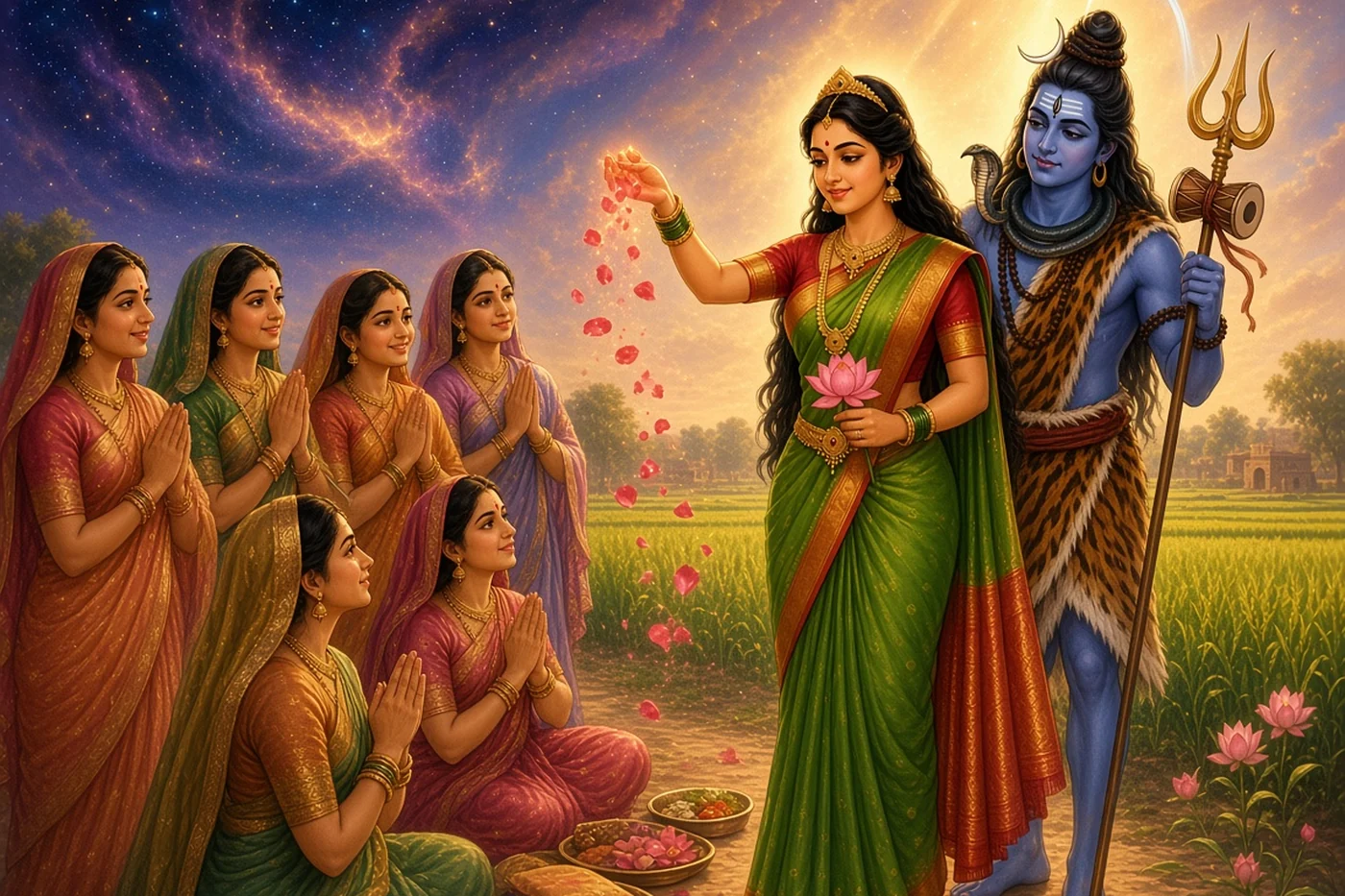
It did not fall evenly. The tellings say each woman received her suhag in the measure of the drop that reached her, a large share for one, a small share for another.
"Your married lives will be like mine," Parvati told them. "Keep them well."
Narada watched them go back down the road, holding their heads very still, as though the drops might spill.
"Mother," he said, "you had nothing left, and still you found something to give."
Parvati smiled and wiped her finger. Then she turned to Shiva and asked his leave to go down to the river and bathe, because the day was hot and it was not over yet.
As the almanac tells it: the palace on the river bank
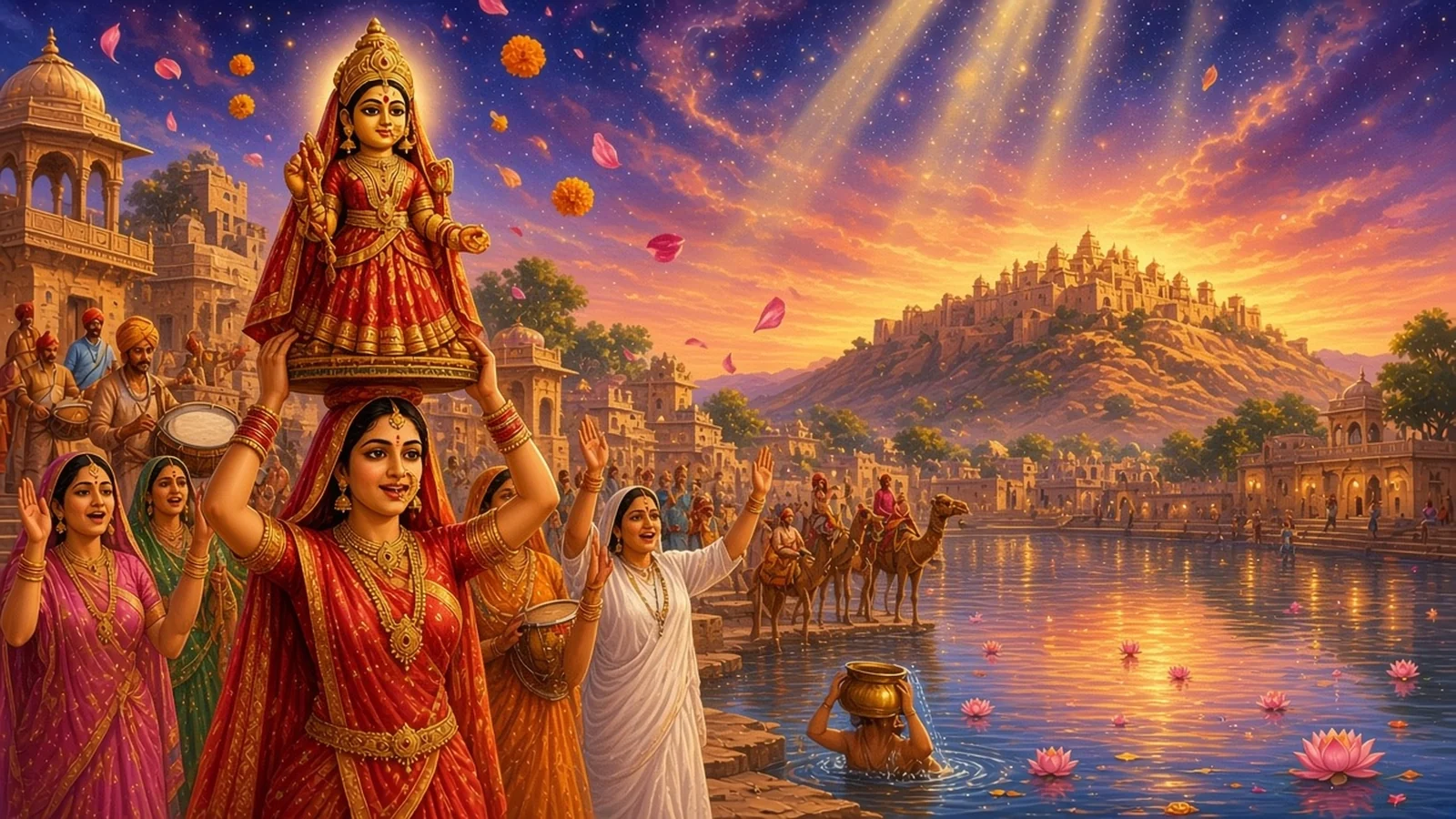
Rajasthan, Braj and Malwa · the river below the village · 2 min read
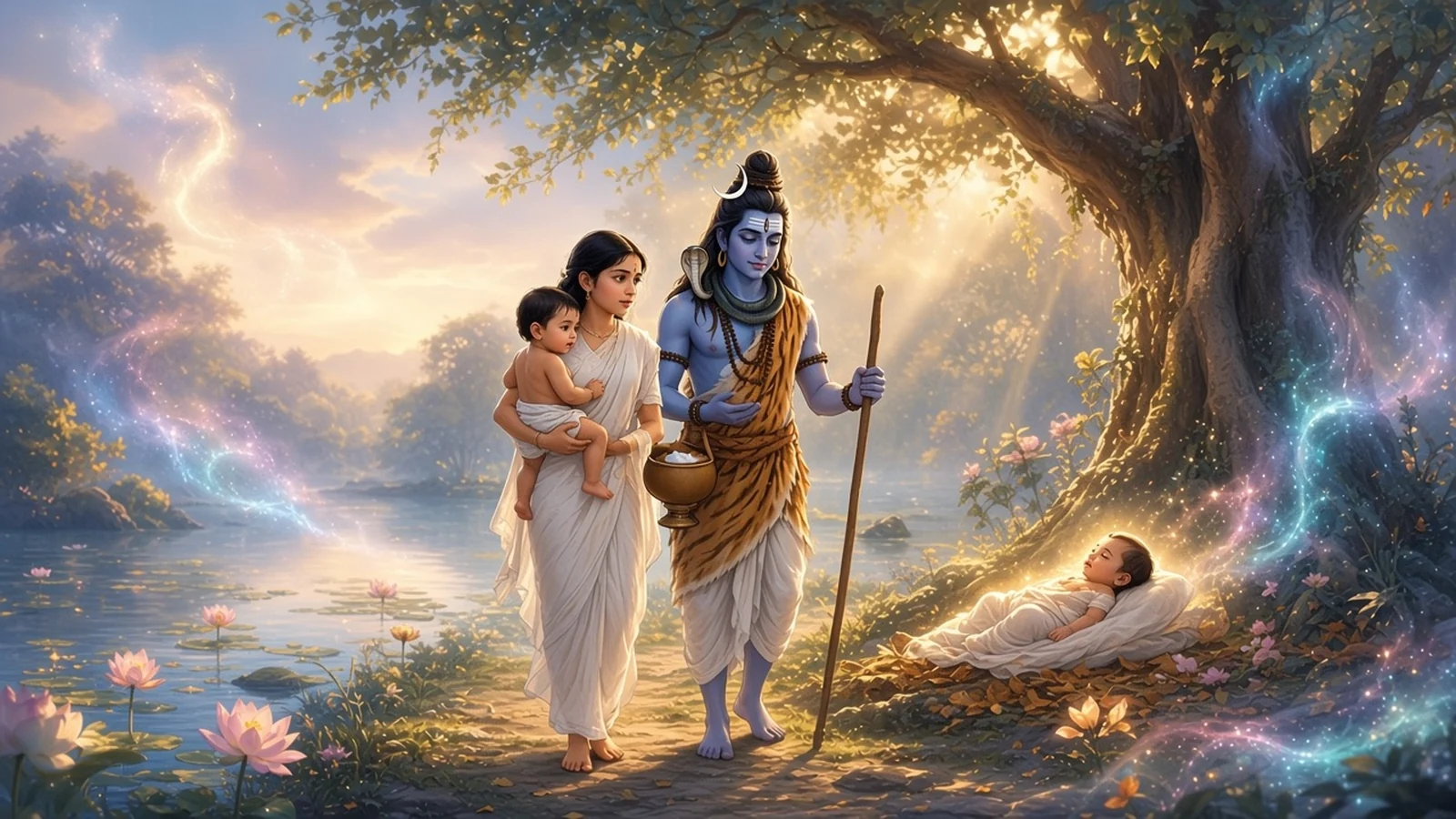
At the river Parvati bathed, and then, with no one watching, she heaped up the wet sand of the bank and shaped a linga from it, a Shiva of earth. She had brought nothing to offer, so she made her offerings of the same sand, little sweets and dishes of it, and laid them before him. When the worship was done she walked round the linga, put a mark from it on her forehead, and ate two grains of the sand as her prasad.
Shiva rose out of the sand before her, pleased. "Any woman who worships me on this day and keeps your fast," he said, "her husband will live long." Then he was gone.

It had all taken time. When she came back, Narada was sitting with Shiva, and Shiva asked where she had been so long.
She did not want to say. "My brothers and their wives were on the bank," she said. "They would not let me go until I had eaten milk and rice with them."
"Then I will go and eat milk and rice with them too," said Shiva, and set off for the river. Parvati followed, praying to him silently: let my word stand.
On the bank stood a palace that had not been there that morning. Her brothers and their wives came out to welcome Shiva, fed him and praised him, and would not hear of his leaving. He stayed two days. On the third Parvati asked to go, and when he lingered she set out alone, so he came after her with Narada.
They were far along the road when Shiva stopped. "My garland," he said. "I left it at your brothers' house." Narada went back for it. Where the palace had stood there was forest, dark and loud with animals, and only when lightning split the sky did he see the garland hanging from a branch.
"What game is this, Lord?" he asked when he brought it.
"Not mine," Shiva said. "Hers. She wanted her worship kept secret."
"It was your grace," said Parvati.
Narada bowed to her. Worship kept hidden, he said, bears the greater fruit, and the women who worship that way would keep their husbands and their happiness. That is why the women who keep Gangaur hide the fast from their husbands, and never give them its prasad.