The widow, the sage and the prince
Skanda Purana, Brahmottara Khanda 6 and 7 · 4 min read
The Shalvas came to Vidarbha with a great army, Durmarshana riding at their head, and shut the city in.
King Satyaratha rode out to meet them, and by evening he lay dead on the field among his ministers.
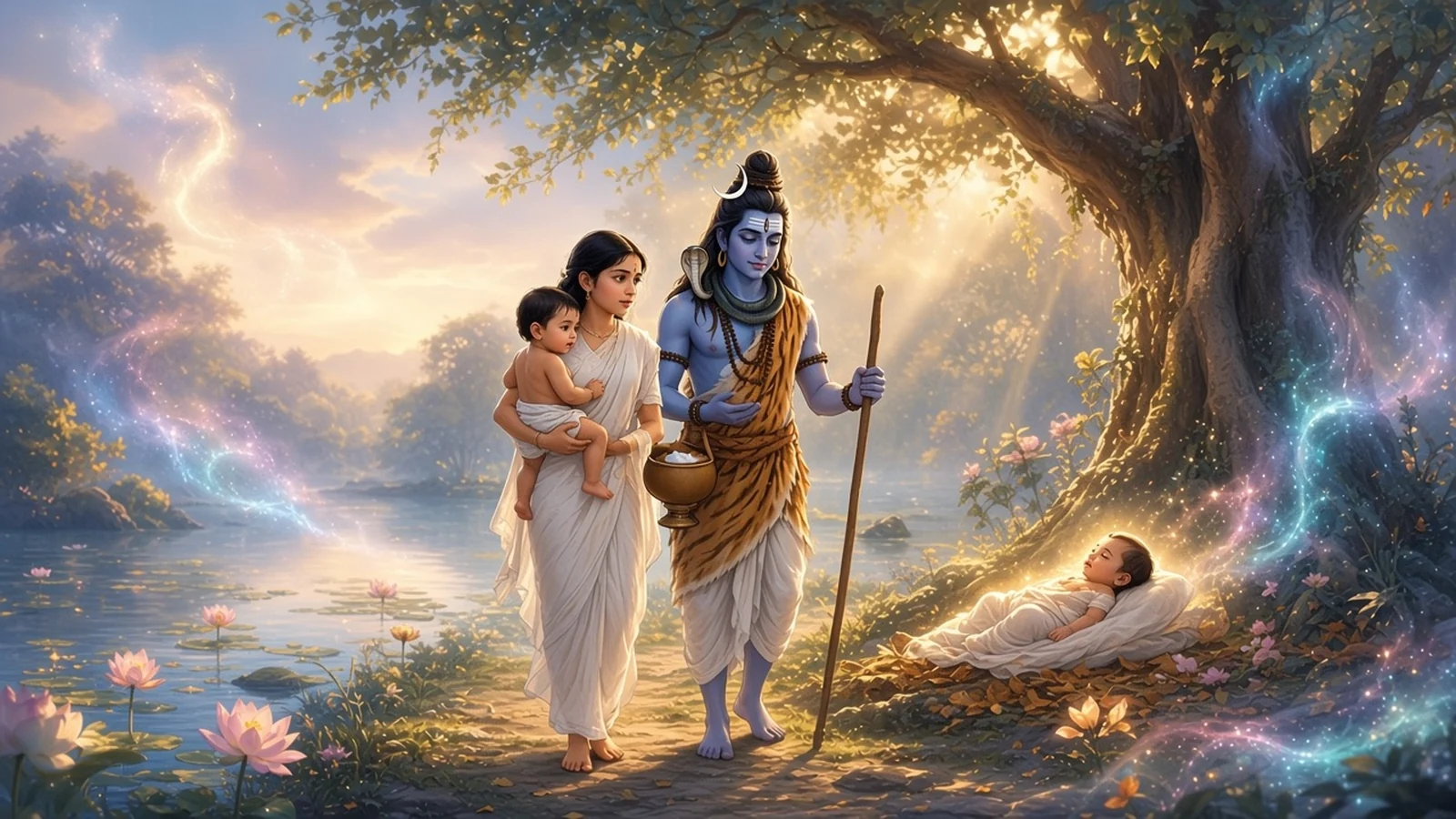
His queen slipped out in the dark, heavy with child. She walked west all night until she reached a clear lake, and there, alone under a tree, she gave birth to a son. Then, wild with thirst, she went down into the water to drink, and a crocodile took her.
A Brahmin widow named Uma came along the path, begging, with her own son of one year on her hip. She stopped and stared at the crying newborn.
"Whose are you?" she said. "How can I pick you up, when I do not know who your people are?"
A wandering beggar stood beside her, though she had not seen him come. It was Shiva himself, the Purana says.
"Do not be afraid," he said. "Take him and raise him. Good will come to you through this child."
He was gone before she could answer, and she picked the baby up.
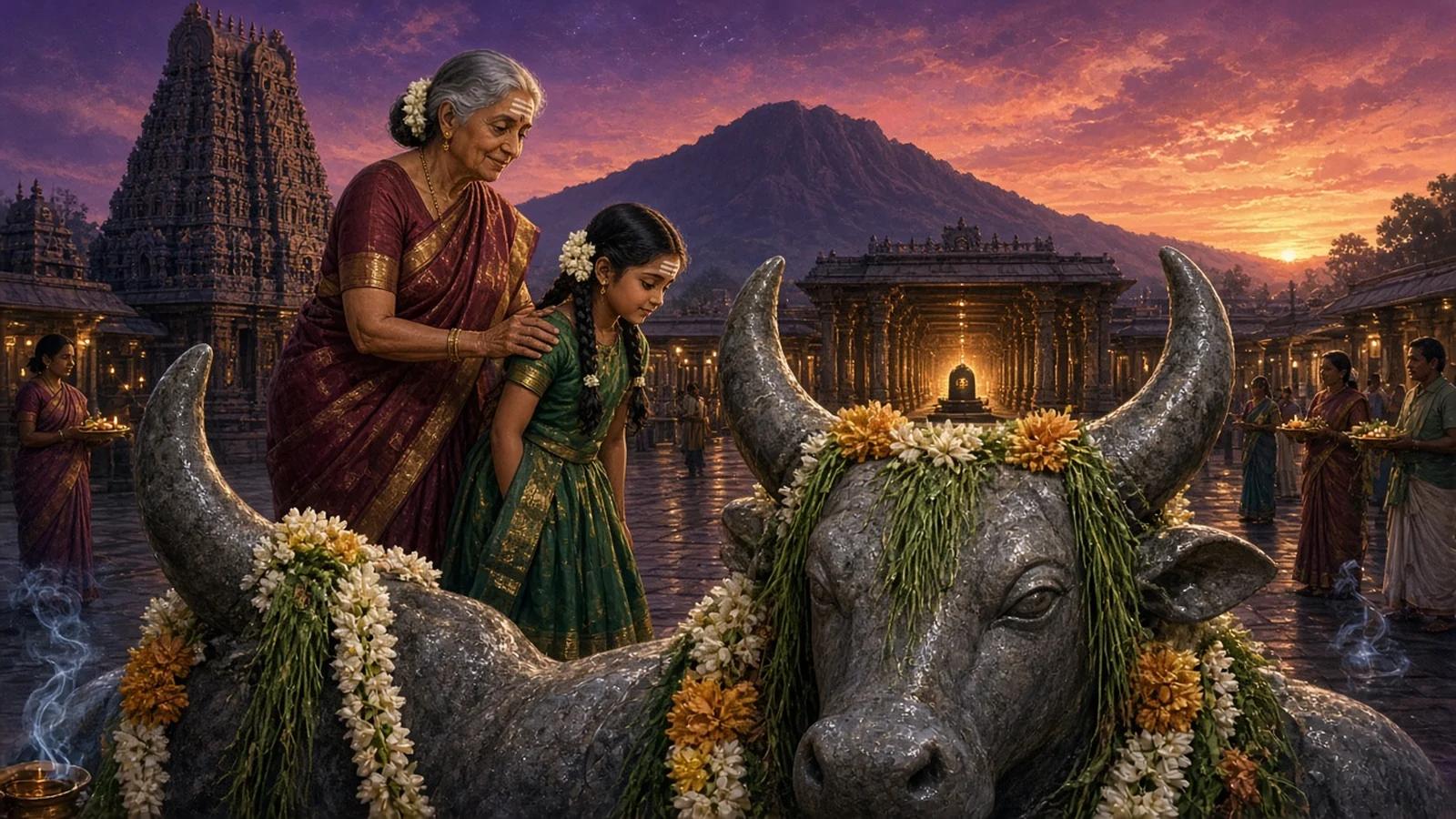
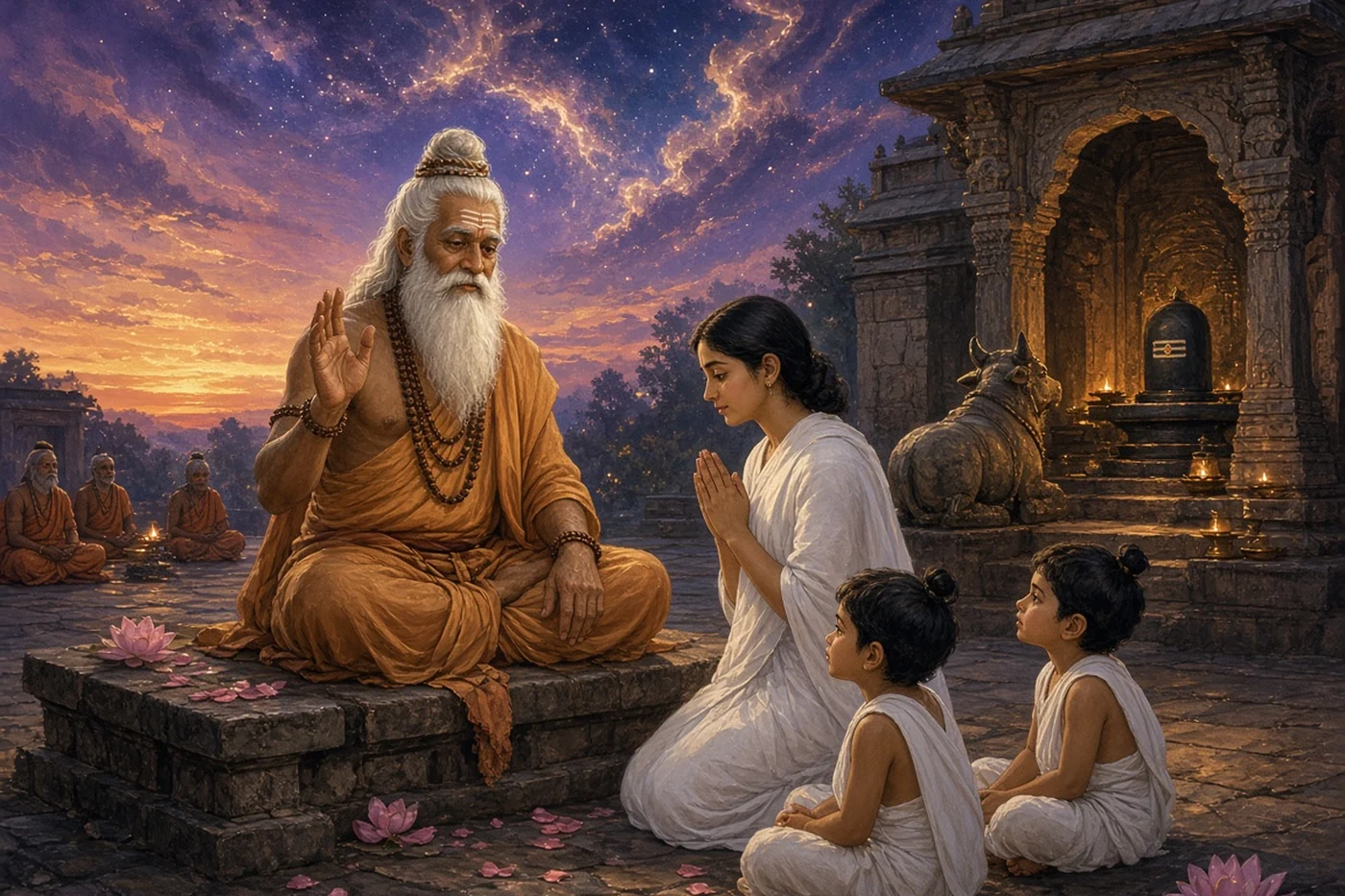
Uma brought both boys up in the village of Ekachakra on alms. One morning her round took her into a Shiva temple full of old sages. One of them, Shandilya, looked at the boys and laughed in wonder.
"See what fate can do. A prince, living on another woman's alms."
Uma bowed to him. "A beggar told me to take him in. I have never known whose son he is."
So Shandilya told her whose son he was, and why it had gone so. In another life that king had ruled the Pandya country, and one evening at the Pradosha hour, the dusk of the thirteenth day, he left his worship of Shiva half done to have a captured rebel beheaded, and ate that night without finishing his rite. And her own boy, in his last life, had lived on gifts without doing the rites that go with them.
"Is there a way out of this poverty, for both of them?" she asked.
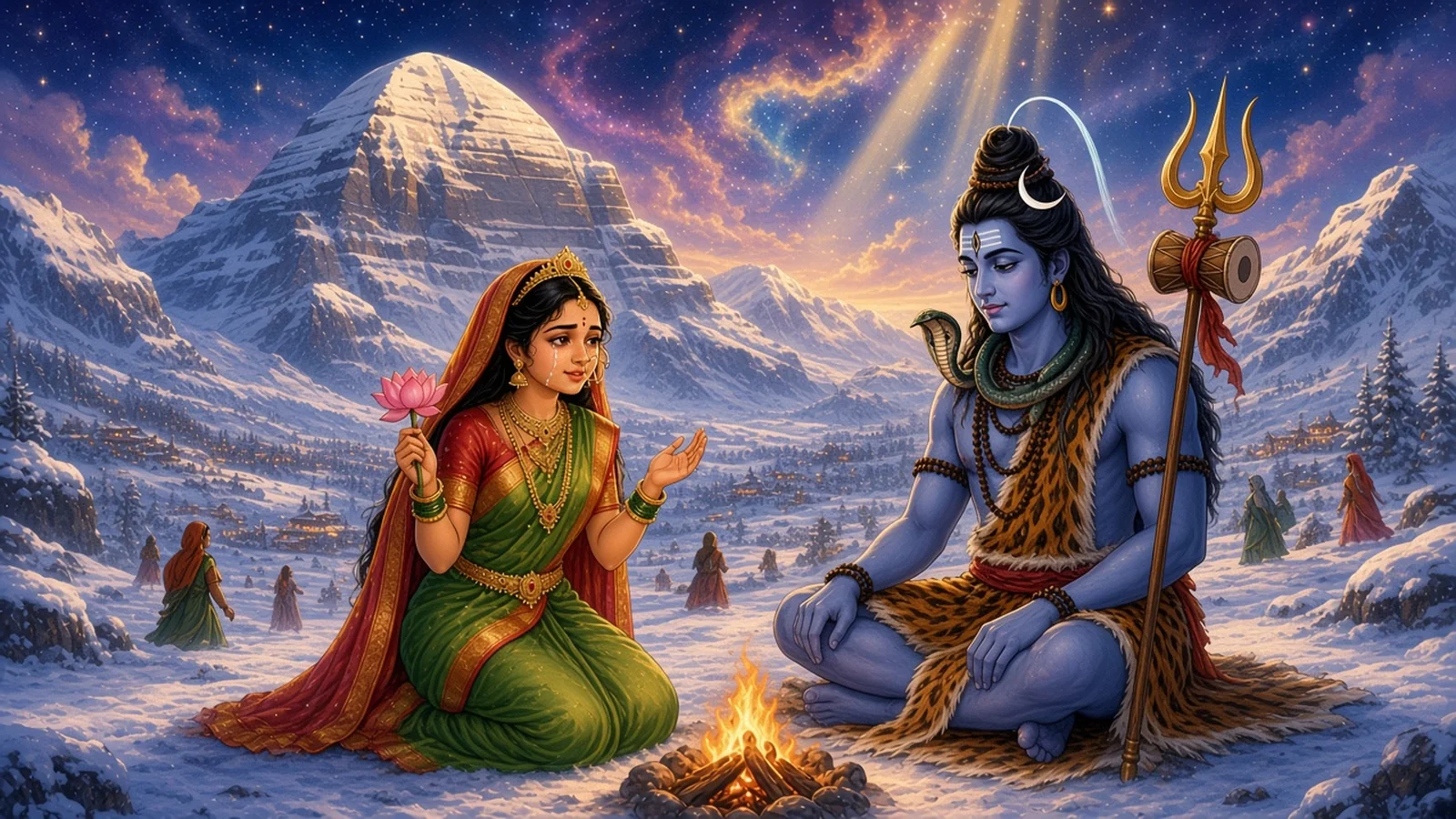
"Keep the twilight," said Shandilya, and taught her the vow. On the thirteenth of each fortnight, fast. Bathe a little before sunset, put on white, and when the sun goes down worship Shiva with Gauri beside him. "At that hour," he said, "Shiva seats Gauri on a jewelled throne on Kailasa and dances for her, and every god comes to play for him. Worship him then and you worship them all. Within a year you will see."
"This is my son, Shuchivrata," Uma said. "This is the prince. I name him Dharmagupta."
The boys kept the vow. Four months later Shuchivrata went down alone to bathe in the river, and where the current had eaten away the bank he saw something shining. It was a pot full of treasure. He carried it home on his head.
"Mother, mother! Look what the lord of Girija has given us!"
Uma called the prince. "Share it between you, half and half."
Dharmagupta shook his head. "It came to your son for his own merit. Let him keep it. The same lord will be kind to me."
A year went by. In spring the two young men wandered into a forest and saw hundreds of Gandharva girls at play. Shuchivrata turned back. Dharmagupta went on, and one of the girls sent her friends away and waited for him.
"I am Amshumati, daughter of the Gandharva Dravika," she said, and took off her pearl necklace and gave it to him.
"I am a prince with no kingdom," he said. "You have a father. How can you choose me?"
"Come back here the day after tomorrow," she said.
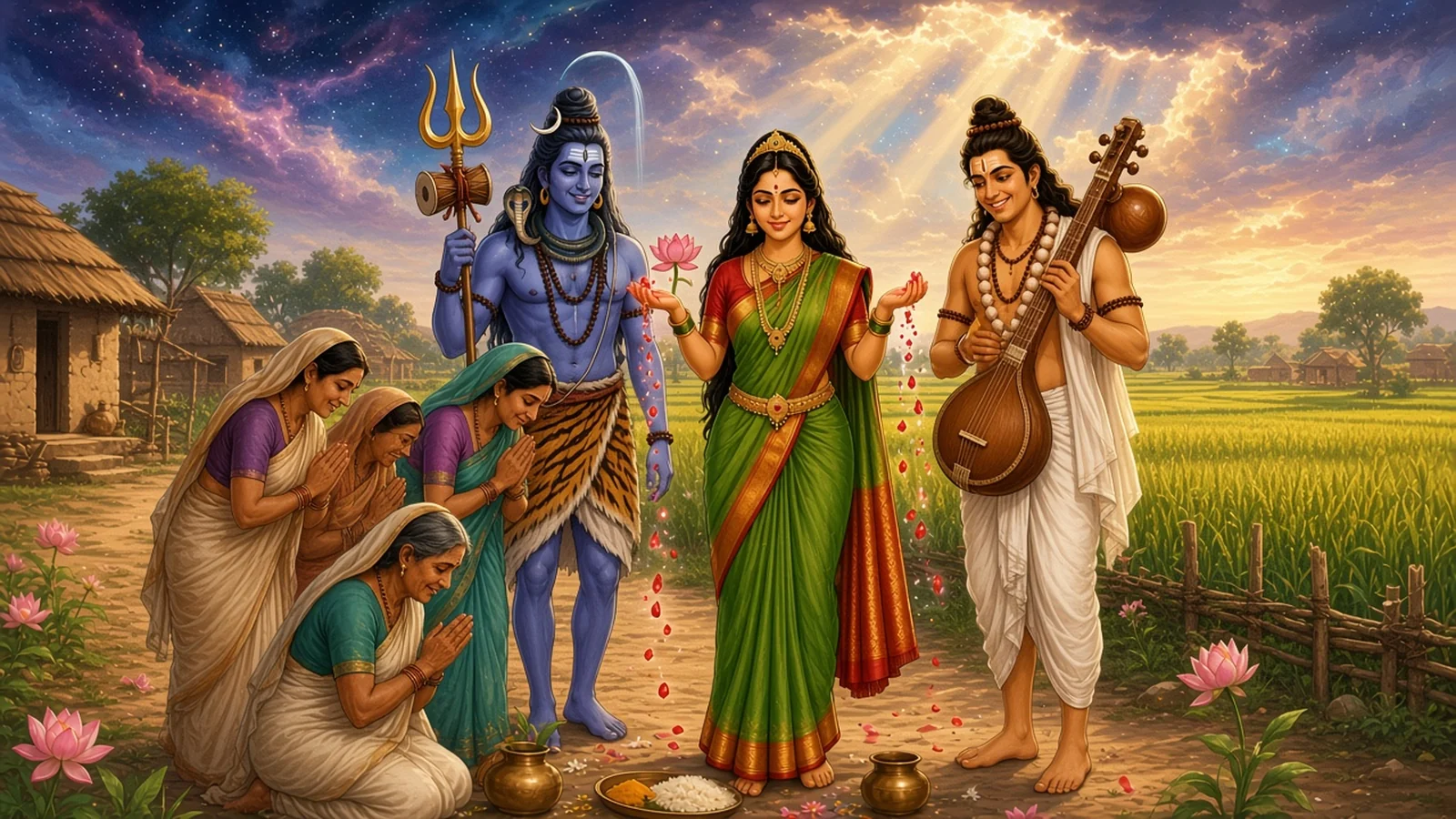
When he came back, her father was waiting with her. "I was on Kailasa," the Gandharva king said, "and Mahadeva, with Parvati beside him, told me of a poor prince named Dharmagupta who worships him every evening. I am to put him back on his throne."
He gave Dharmagupta his daughter, wealth and a Gandharva army. The prince went home to Vidarbha, killed the usurper with a spear, and was crowned. Uma stayed his mother, and Shuchivrata his brother.
The Monday katha
Told across the north · the Soma Pradosha vrat katha · 2 min read
In the north, on a Monday that falls on the thirteenth, households read a shorter telling. It opens with the sages of the forest asking the storyteller Suta what the vow is worth. He begins with the rite: bathe in the morning, think of Shiva and Parvati and worship them, offer water, say Om Namah Shivaya a hundred and eight times, and then ask plainly.
"I am drowning in sorrow. Debts weigh on me and the planets turn against me. Lord, protect me."
Then he tells who kept it.
In a certain town there was a Brahmin woman whose husband had died. Nobody looked after her. Every morning she took her son and went out begging, and what they were given fed the two of them.
Coming home one day she found a boy on the road in a pitiful state, and she could not walk past him. She took him home. He was the prince of Vidarbha. A neighbouring king had attacked his father and seized the kingdom, and the boy had nowhere left to go. She raised him with her own son and made no difference between them.
Once, when the two boys were out playing, a band of Gandharva girls came by, and they could not take their eyes off the prince. The Brahmin's son went home. The prince stayed and talked with one of them, whose name was Anshumati.
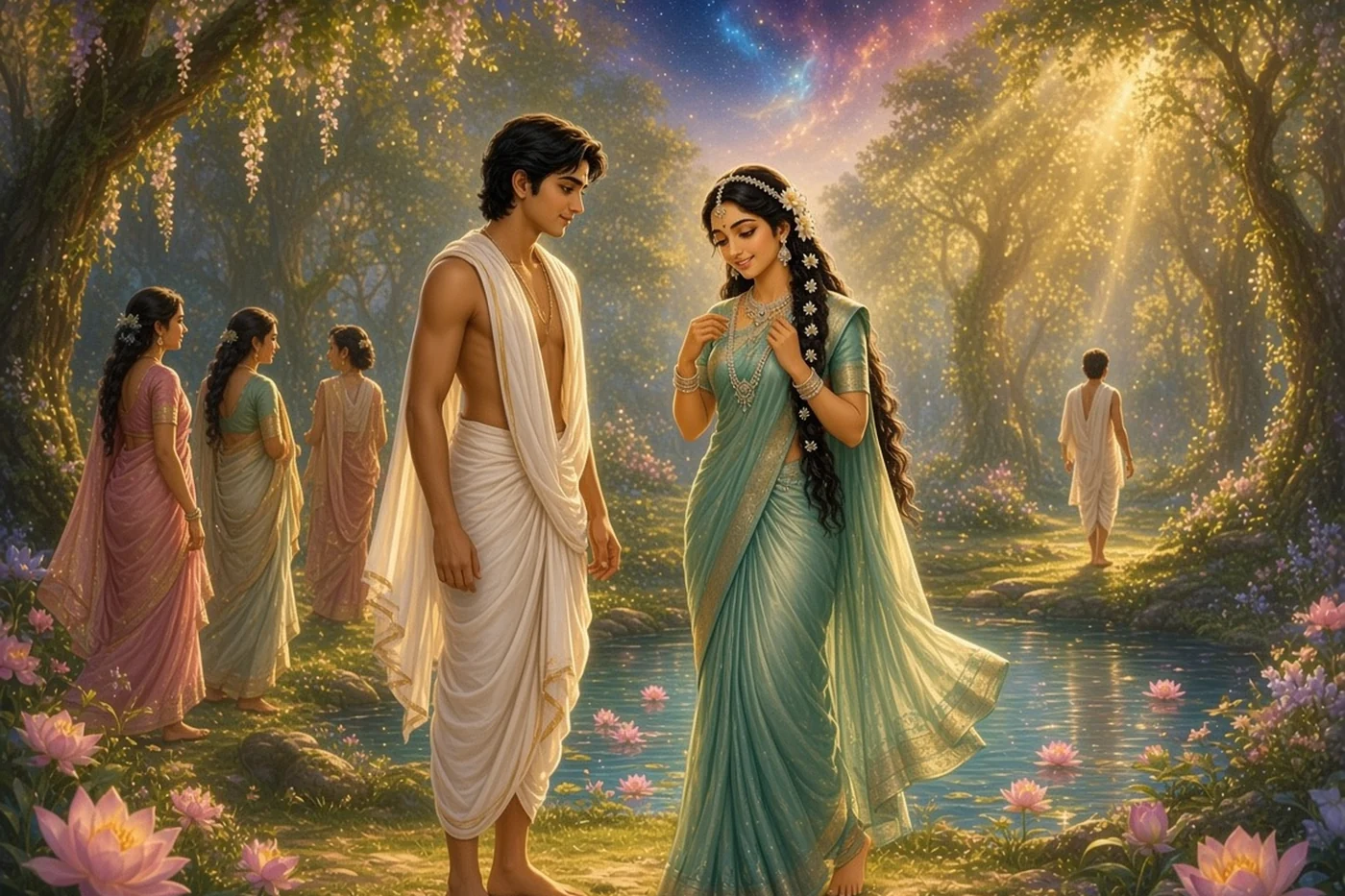
The next day Anshumati brought her mother and father to see him, and they liked him as much as she did. A few nights later Shiva came to them in a dream.
"Give your daughter to that prince," he said.
They did as they were told. The widow had been told by the sages to keep the Pradosha all her life, and she had kept it. By its merit the prince, with his father-in-law's Gandharva army behind him, drove the usurper out of Vidarbha and sat on his father's throne. He made the Brahmin's son his chief minister.
"As the widow's vow changed those two boys' lives," Suta ends, "so Shiva changes the life of everyone who keeps it."