As the Garhwali jagar sings it
North India · Garhwal, from Nauti · 3 min read
Hemant Rishi lived in his wife's country, and Narad would not let him forget it.
"A man who eats at his father-in-law's hearth," the sage said, smiling, "is a guest who has forgotten to leave."
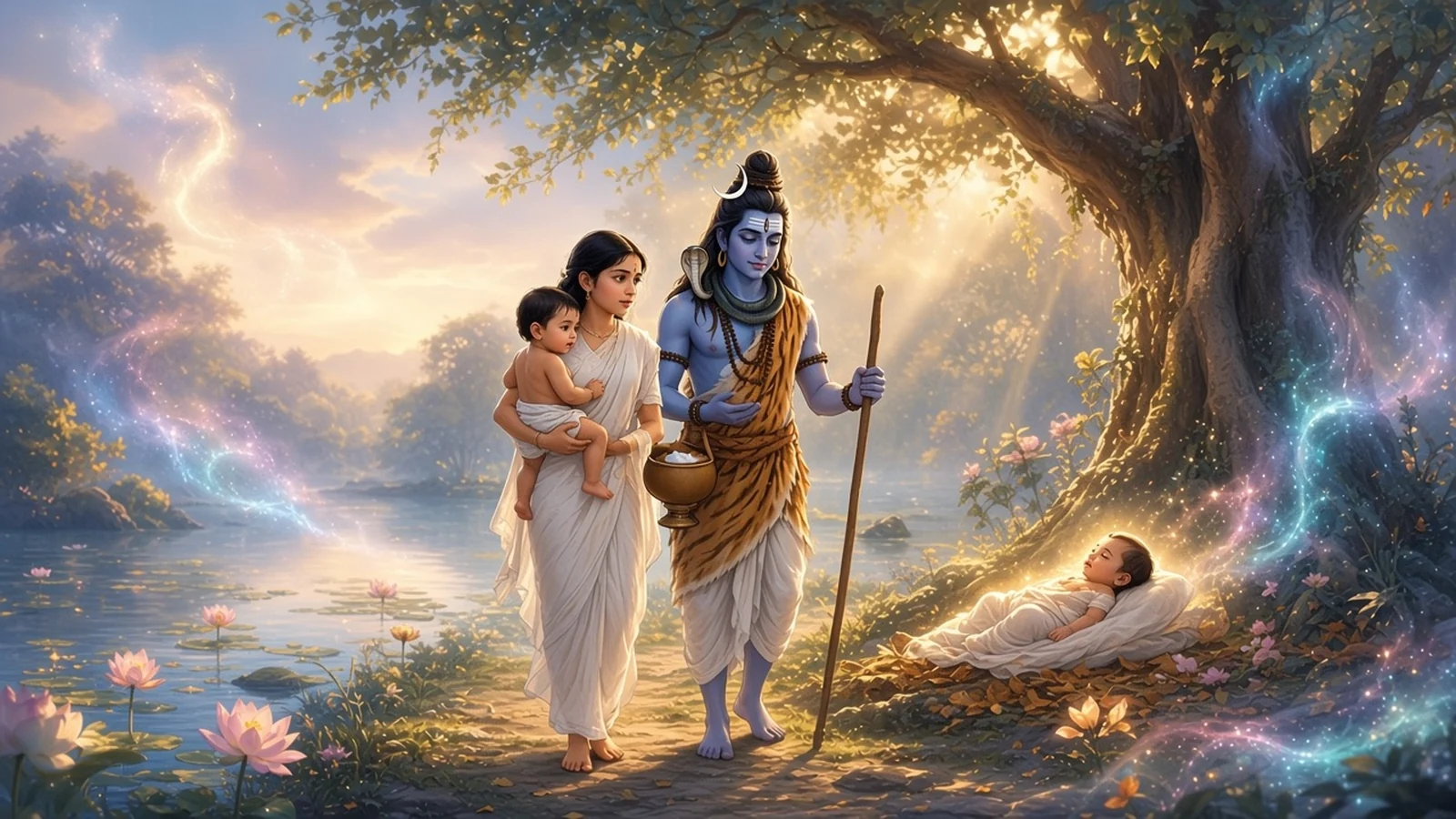
So Hemant went, and Maina followed him though she was heavy with child, and on the road the child came. Maina laid the girl in a hollow of red earth and hurried after her husband, because a wife follows her husband. When at last the parents went back for her and held the naming, the baby slipped out through the smoke-hole in the roof and named herself. Nanda, she said. Maina wiped the clay from her and could not meet her eyes for shame.
She grew into the brightest thing in Rishasau, and they called her Gaura for her colour. Then Narad came back with a groom: a jogi from the snows whom nobody at Rishasau had asked for.
"Hide your beauty," Maina told her daughter, "and perhaps he will go away."
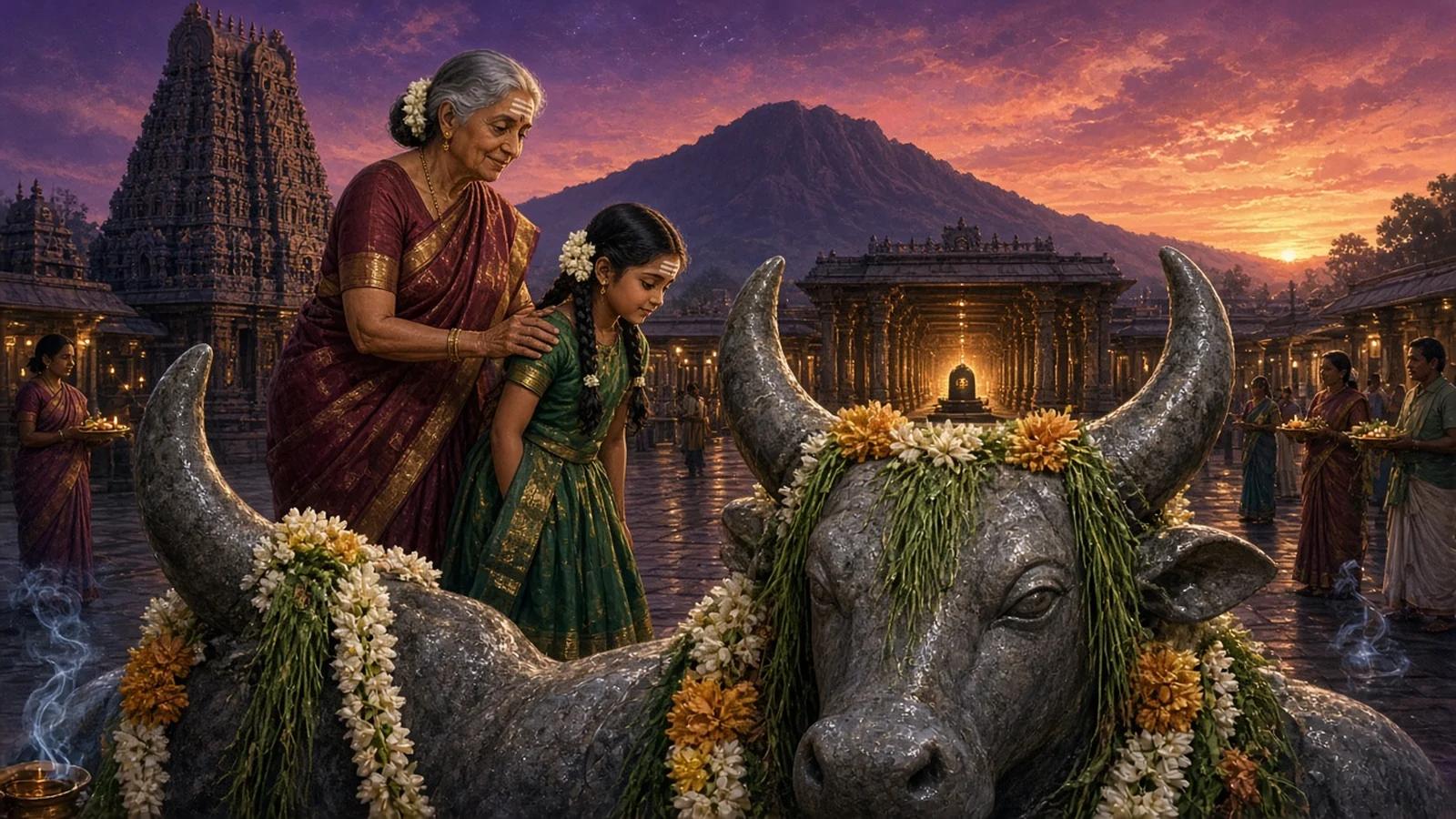
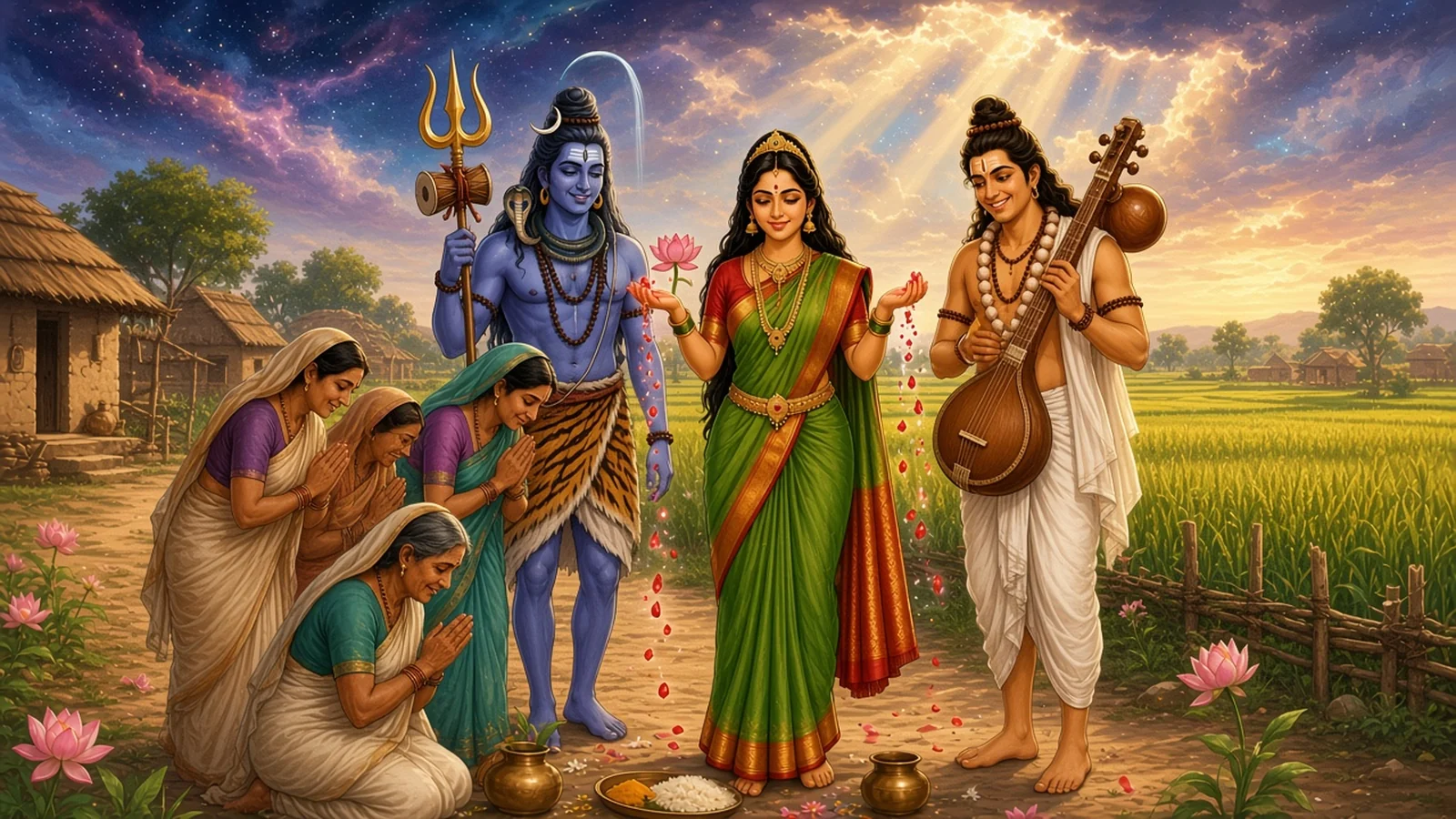
Gaura put her beauty off like a shawl. It lay on the hillside as a yellow phyunli flower, and the wedding went ahead all the same. The gods came in their chariots with the bull Nandi, the sage Vasishtha gave her away, and her brothers Binsar and Latu poured the parched grain into the fire. When it was time to go she held on to the door and named what she was leaving: her friends, the carved balcony on its nine posts, the small nephews who had sat in her lap, and her mother's lap, where she had sat herself. Then she went up to Kailash.
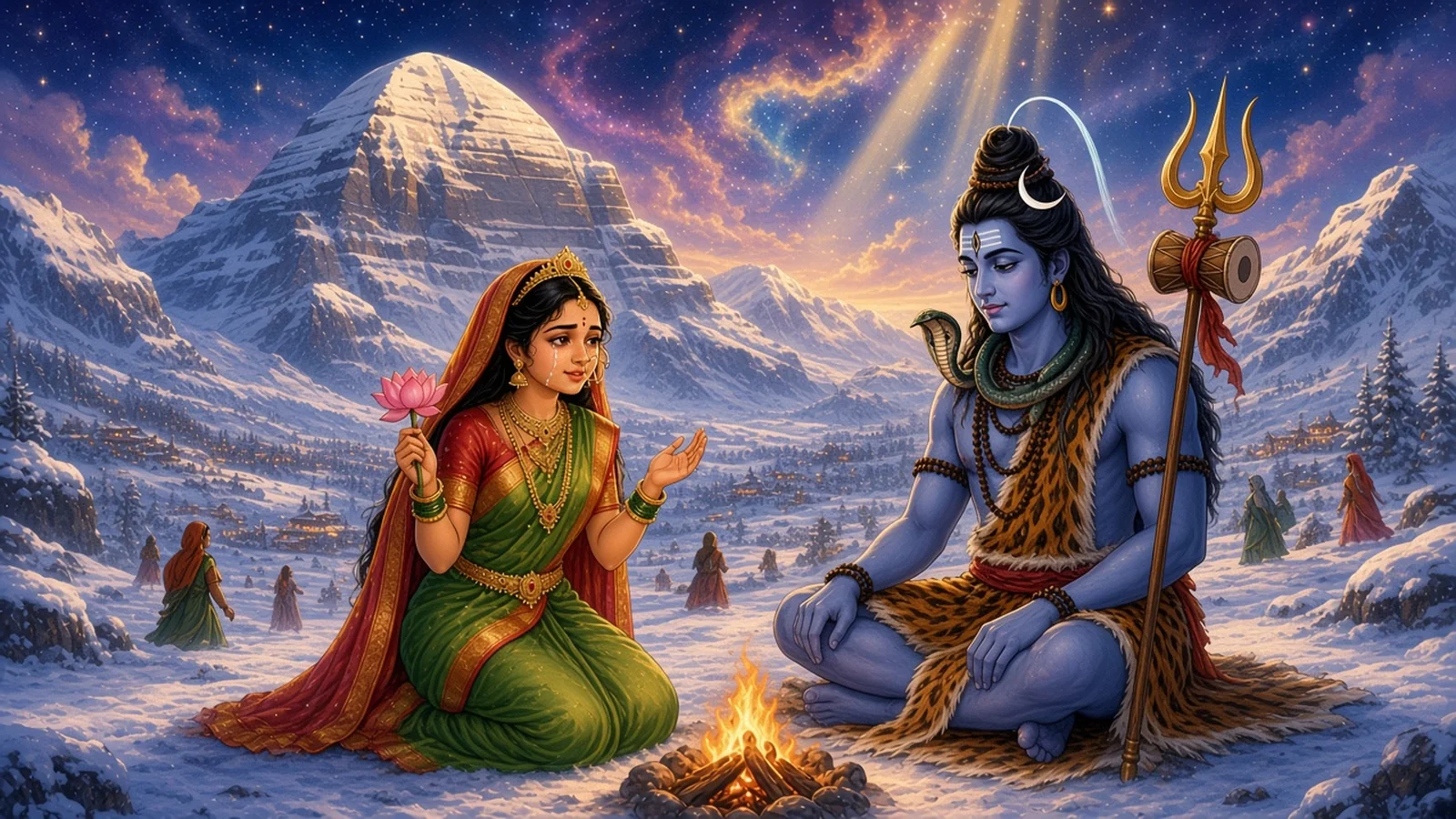
Up there it was always winter. When Pus came, the month when married daughters are called home for the cold weeks, she watched the girls of the hills go down the paths to their mothers' houses, and she sat in the snow.
"Seven sisters and five," she said, "and I am the one my father gave to the high mountain. I sleep on snow and I pull snow over me. I grind your bhang until my palms blister, and I blow on your fire until my cheeks swell. Every daughter has gone down to her maita. This Kailash of yours does not even have seasons."
She went to Shiva.
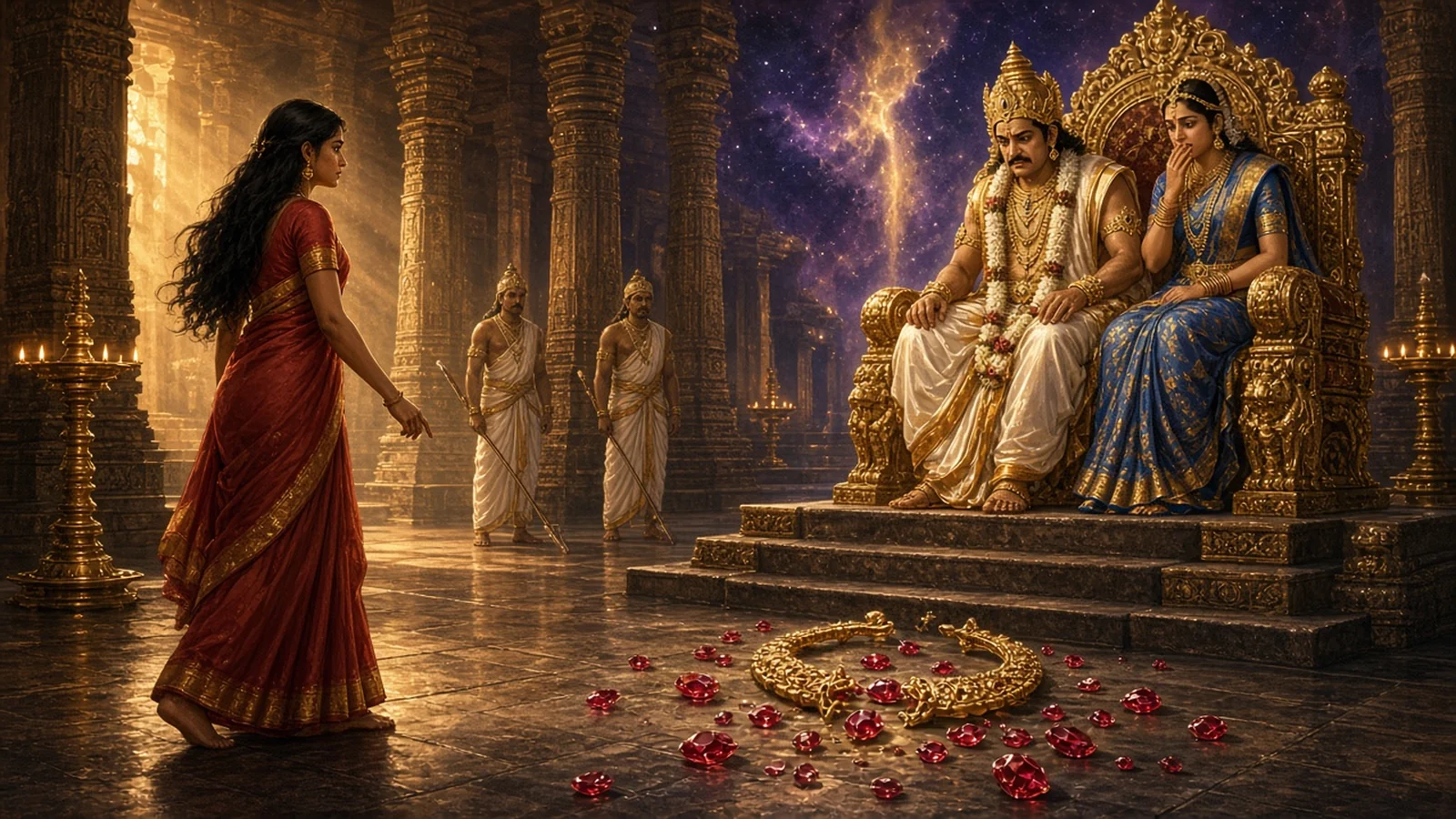
"Four days, my lord. Only four. There is a gathering at Rishasau and word has come for me."
"Your place is here," Shiva said, and turned back to his fire.
She cried then, and the hill people say that is why the rains come as they do. One of her eyes was the month of Sawan, and the other was Bhadon.
Down at Rishasau the cows began to drop buffalo calves. The milk dried in the pails, the grain would not fill, the wealth ran out of the houses. Twelve sages sat down to find the cause. They sent for a Brahman from Gaya and a learned man from Kashi, and between them they read it out.
"It is the girl," they said. "That girl Nanda who lives on Kailash. Nobody has called her home."
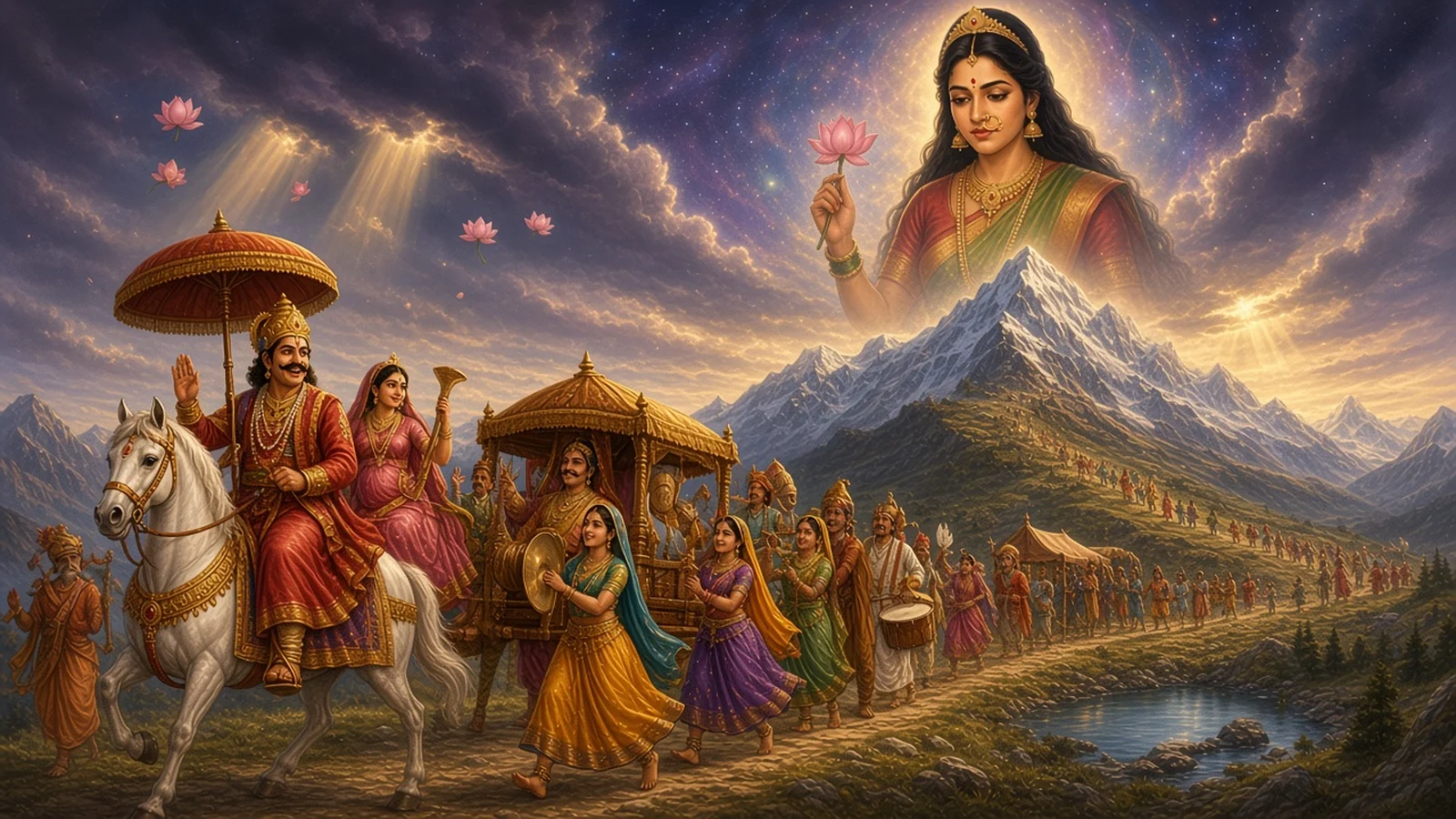
So the king of the country called her. He brought her down, fed her the food of her childhood, dressed her, and filled her basket with everything a daughter is given when she leaves. Then, because a married daughter must go back, he walked her up to Kailash himself, with the drums in front and the whole country weeping behind.
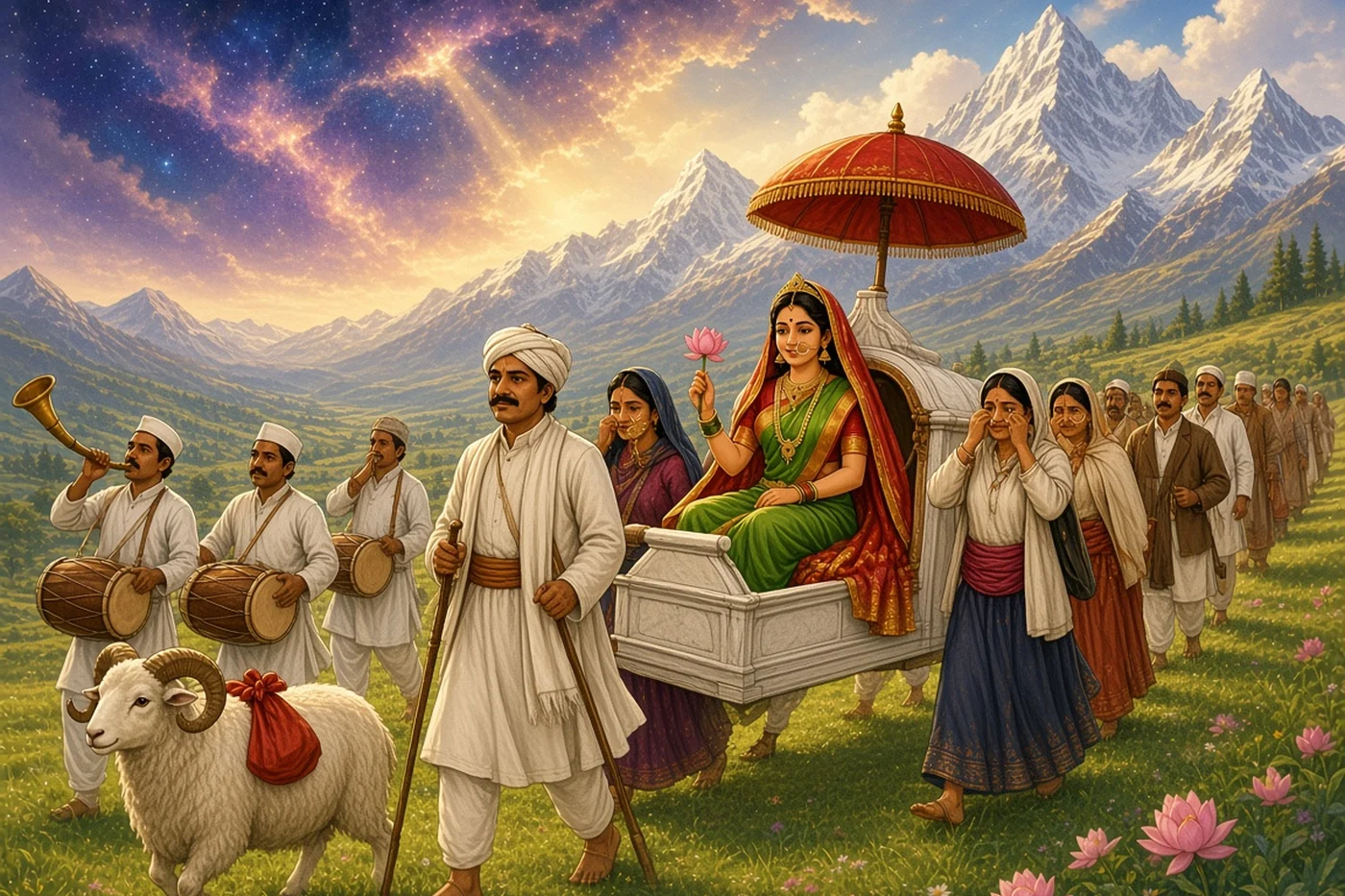
They have walked her back that way ever since.
As Kumaon keeps her
North India · Almora and Nainital · 2 min read
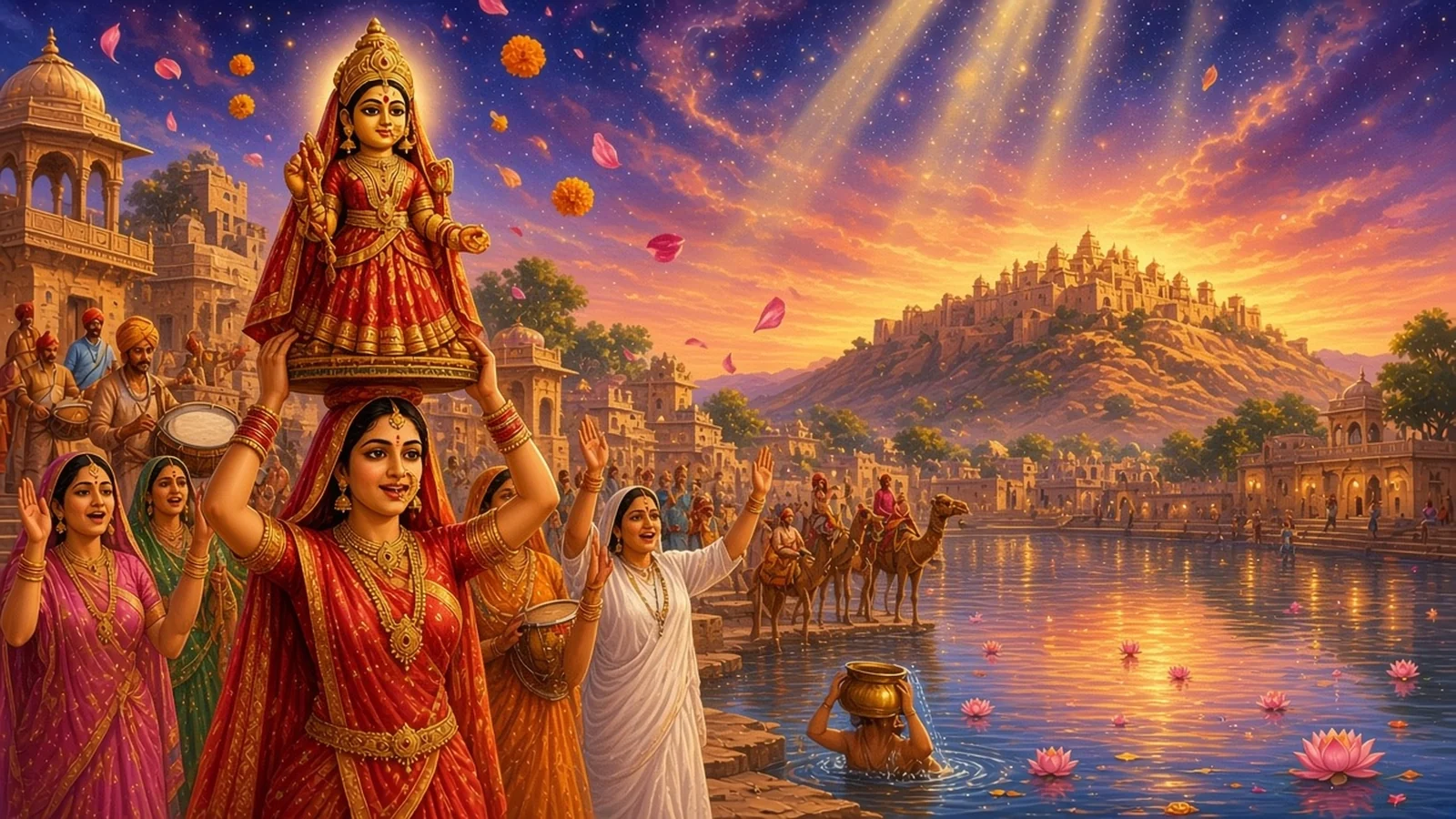
In Kumaon they tell of a princess of the Chand house, the sister of King Kalyan Chand, who was out in the fields when a buffalo came at her. She ran and hid behind a banana plant, and its broad leaf covered her. A goat wandered up and ate the leaf. The buffalo saw her, and killed her.
That, people say, is why Nanda is made of banana in Kumaon, and why for centuries a buffalo was offered at her fair.
In the seventeenth century King Baz Bahadur Chand took his army into Garhwal and fought at Badhan Garhi, near Gwaldam. He had been told he would never win without Nanda, and when he came home he brought her with him, an image from the Garhwali fort, along with a sword. The sword he left at Kot Bhramari on the seventh of the bright fortnight, and a fair is held there still. On the eighth the goddess entered Almora. His family already had a goddess of its own, Sunanda, and the two were set side by side and called sisters.
Every Bhadrapada since, on the sixth day, the priests go to the banana groves and throw grains of rice at the trees. The tree whose first leaf stirs is the one the goddess has chosen. It is tied with red and white cloth and cut on the seventh, and craftsmen shape two figures from the trunks: Nanda and Sunanda, dressed in yellow, with crowns, a little moon for the Chand line, a ring in the nose, and a red pichora over the shoulders. Before dawn on the eighth, Nanda Ashtami, the priests give the figures life. For a few days the town comes to see its daughters. Then they are carried through the streets on a dola and given to the water.
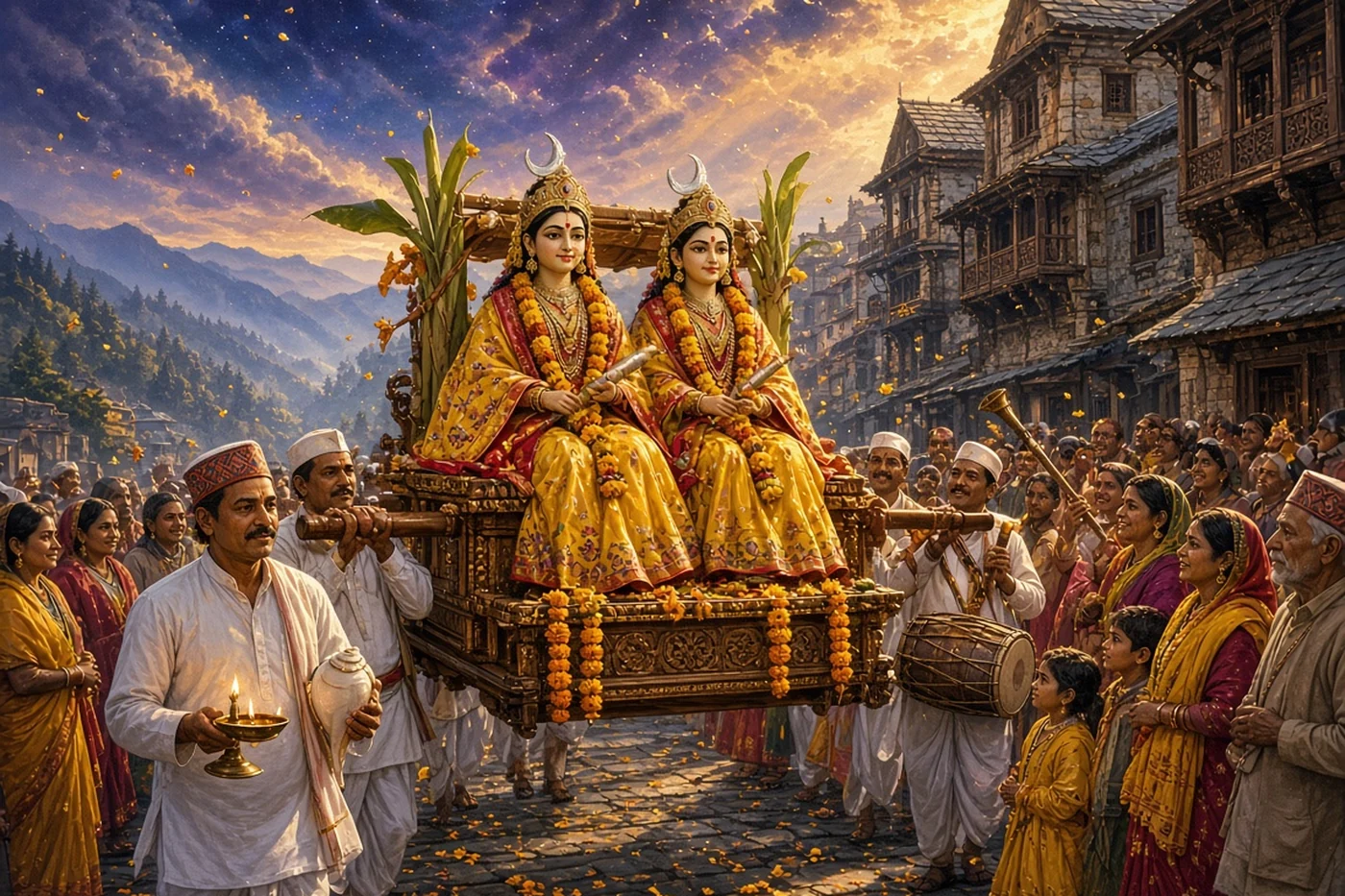
In 1903 Moti Ram Shah carried the custom down to Nainital, and the Shri Ram Sevak Sabha has kept it on the lake since 1926. The buffalo there stopped in 1978 and the goats after a court order in 2011; people break coconuts at the shrine instead.