As Jaisalmer tells it: the raid at Gadisar
West Rajasthan · the Sonar fort and Gadisar lake · 3 min read
Jaisalmer keeps its Gangaur a day late. Every noble house of the desert held its own procession on the third of bright Chaitra, so the capital took the fourth, and on that day the thakurs rode in from their villages to walk behind the royal Gauri.
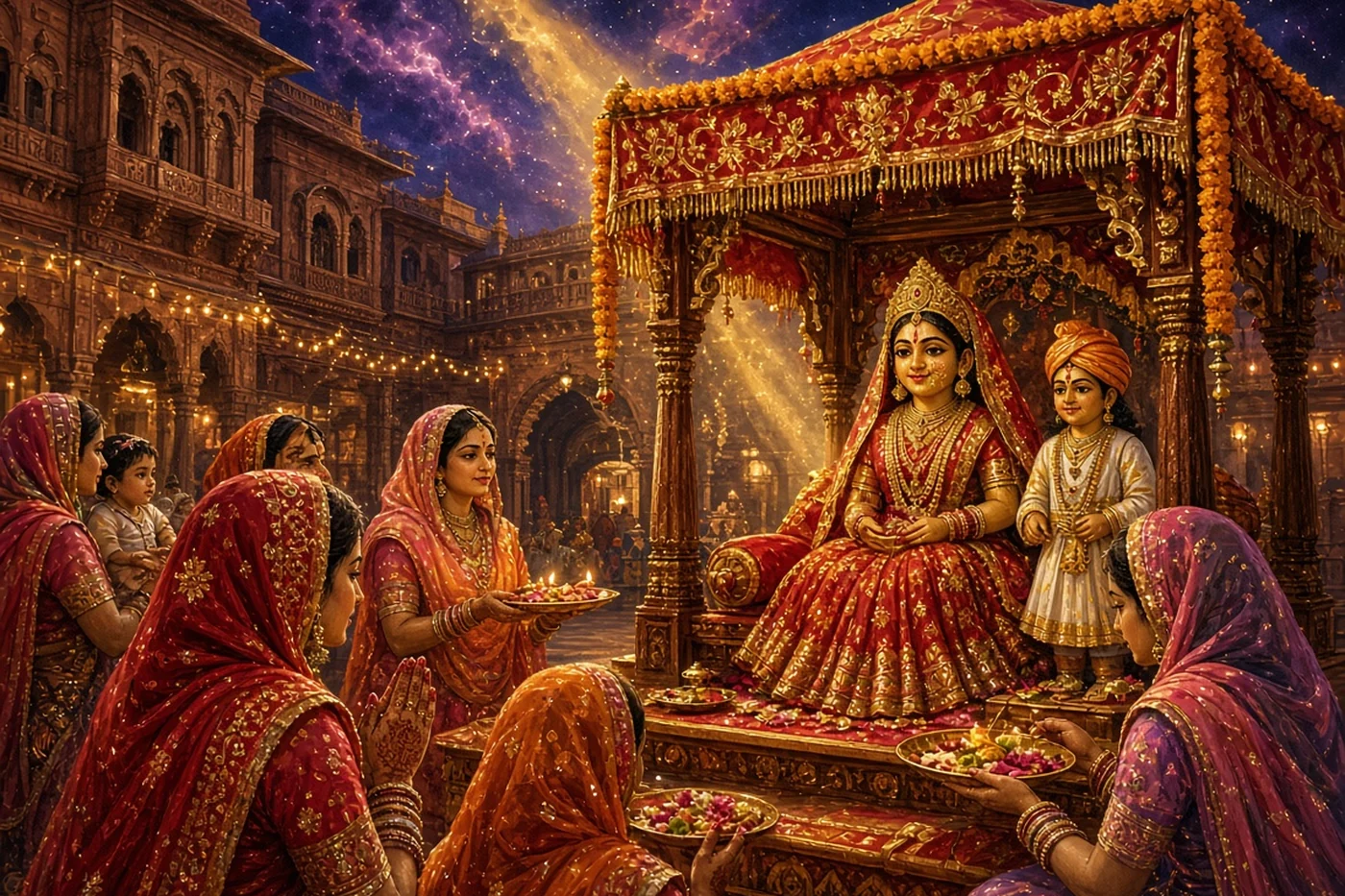
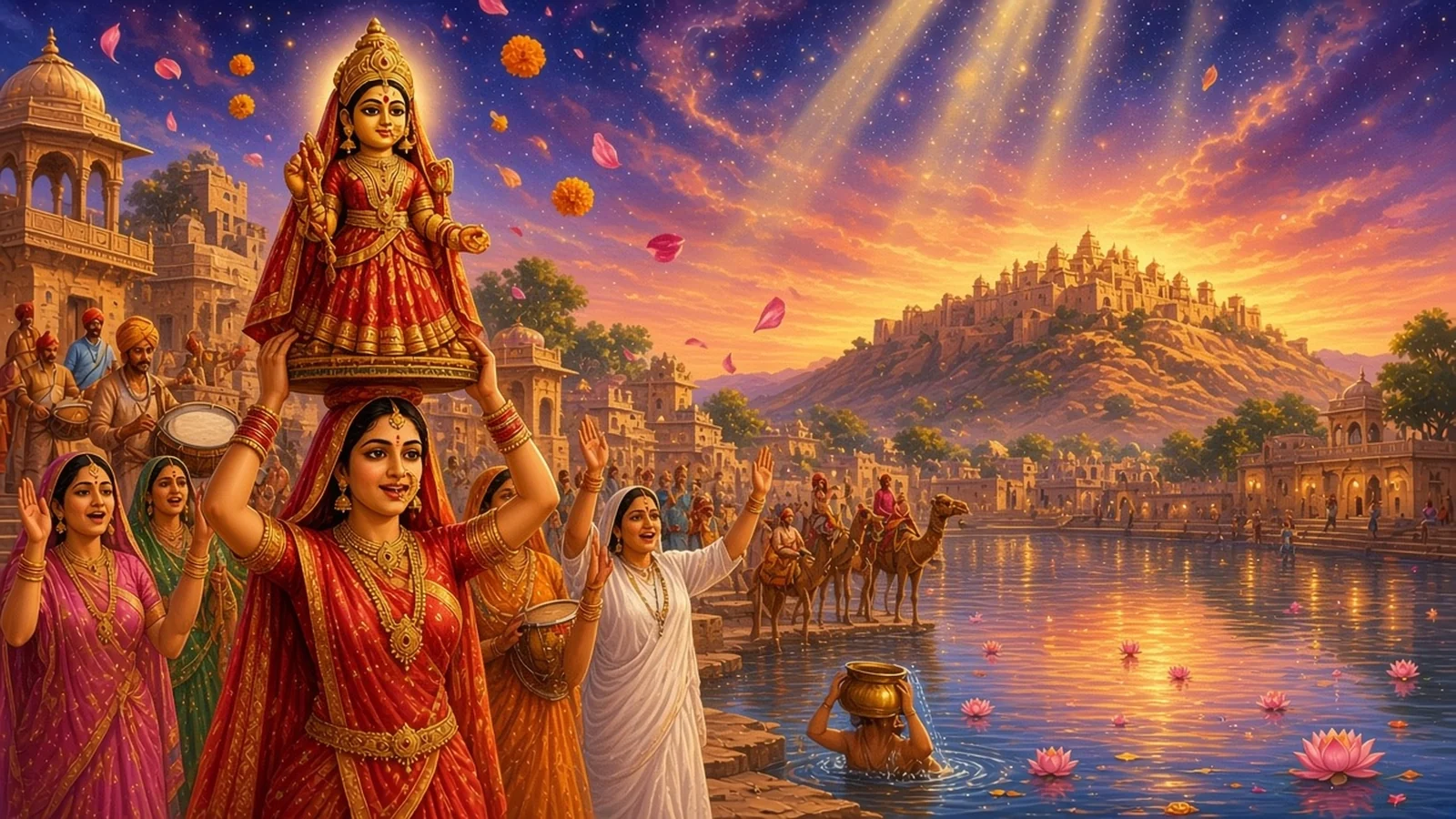
In those days she did not go alone. In the palace on the fort and in the temple of Aai Nath the priests did the puja for both of them, Gavar and her husband Isar, dressed and jewelled, and at five in the afternoon the procession came down out of the golden fort.
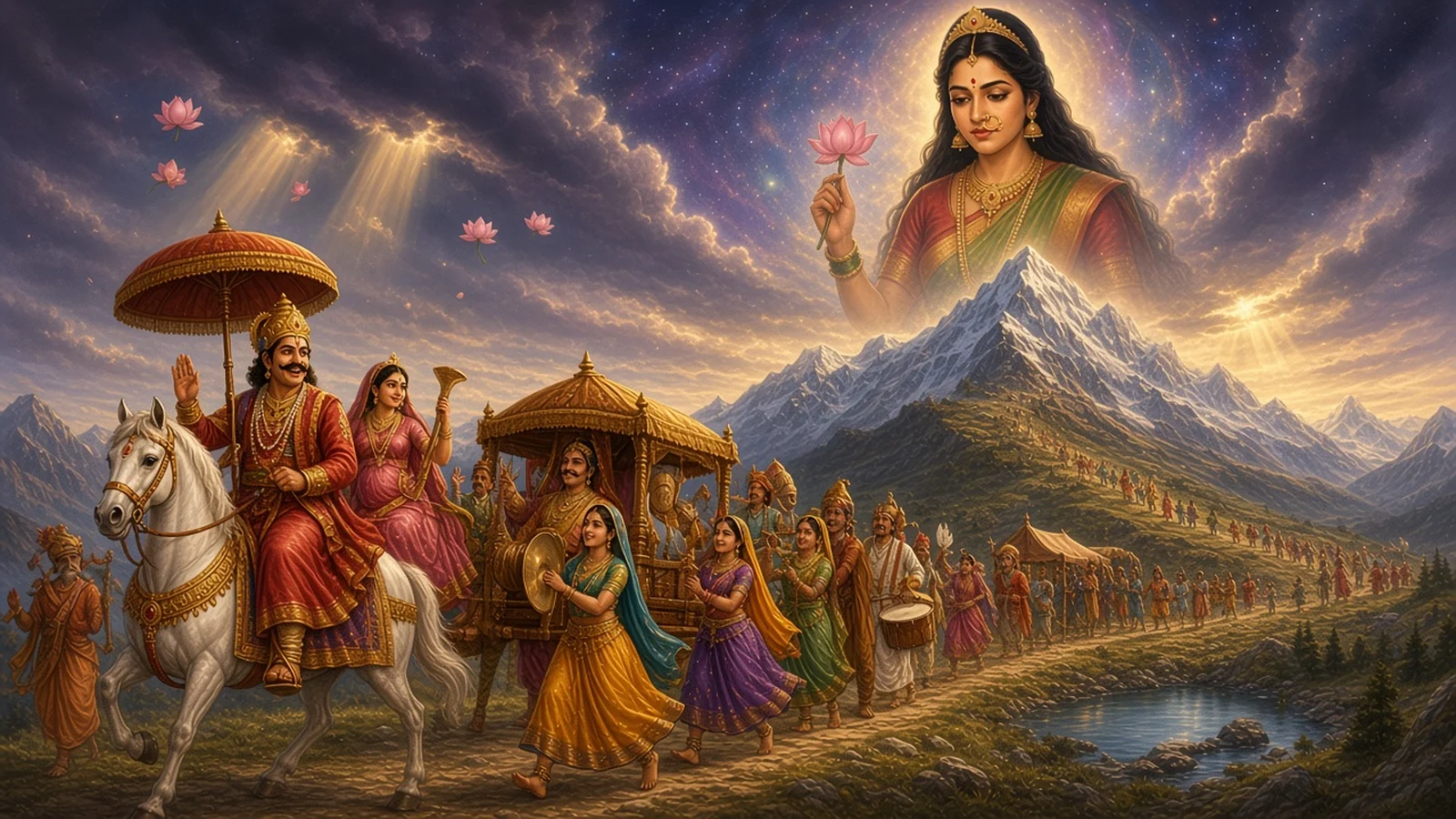
The kettledrums went first, then the horses and the camels. Behind them walked the women: the queens, the women of the Bhati clan, and the women who carried the images on their heads, with two more beside them waving white chowries. All the way down, the people of the town pressed in to fill the goddess's lap.
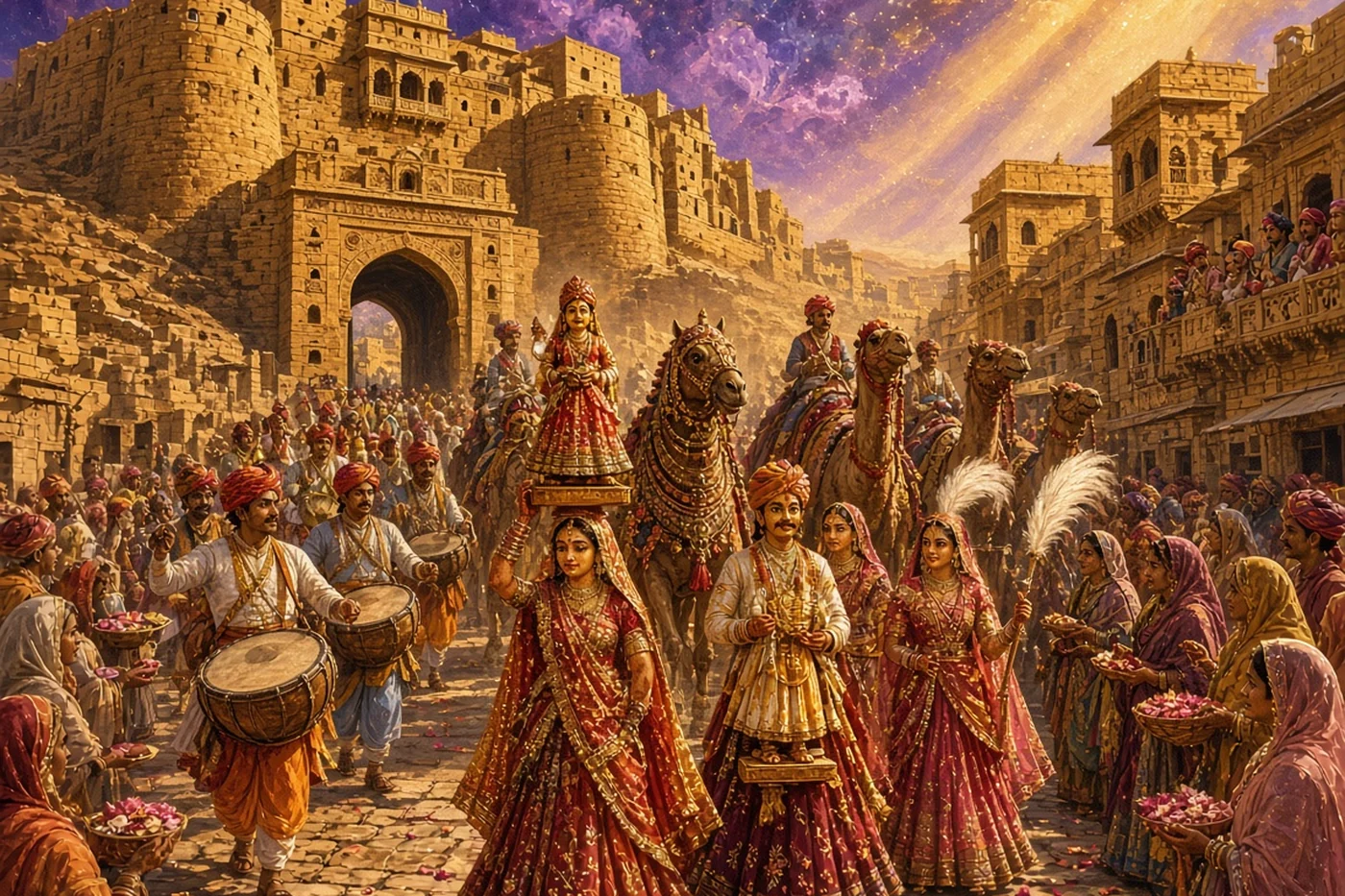
"Slowly," the eldest of the women said to the one carrying Gauri. "She is a bride going to the water. Let them see her."
The road ended at Gadisar, the great tank below the fort, where the goddess is given water to drink. The women came down the steps to the edge, singing the songs of Gauri and Isar.
They did not know who was waiting there. The quarrel, Jaisalmer's historians say, had begun years before at a wedding in Udaipur. Maharawal Gaj Singh of Jaisalmer was the groom, and a bridegroom's party from Bikaner was at the same celebrations. In the wedding pavilion Jaisalmer's diwan, Salim Singh, flung a shower of gold coins over his master's head, and the lords of Bikaner took it as a slight. They said nothing then. They remembered.
Now Rathores of Bikaner lay hidden round Gadisar, and as the water touched the goddess's lips they broke from cover.
"The Gauri!" someone screamed. "Save the Gauri!"
The men of Jaisalmer drew their swords and closed round the women. In the dust and the shouting, Gauri was snatched up and carried back towards the fort, held tight against someone's chest. When the raiders were gone, she was safe.
Isar was not. They had taken him to Bikaner.
Another Isar would not have been hard to make. Any image-maker in the city could have finished one before the next fair.
"Have a new one made," one of the men said. "Why should she walk alone?"
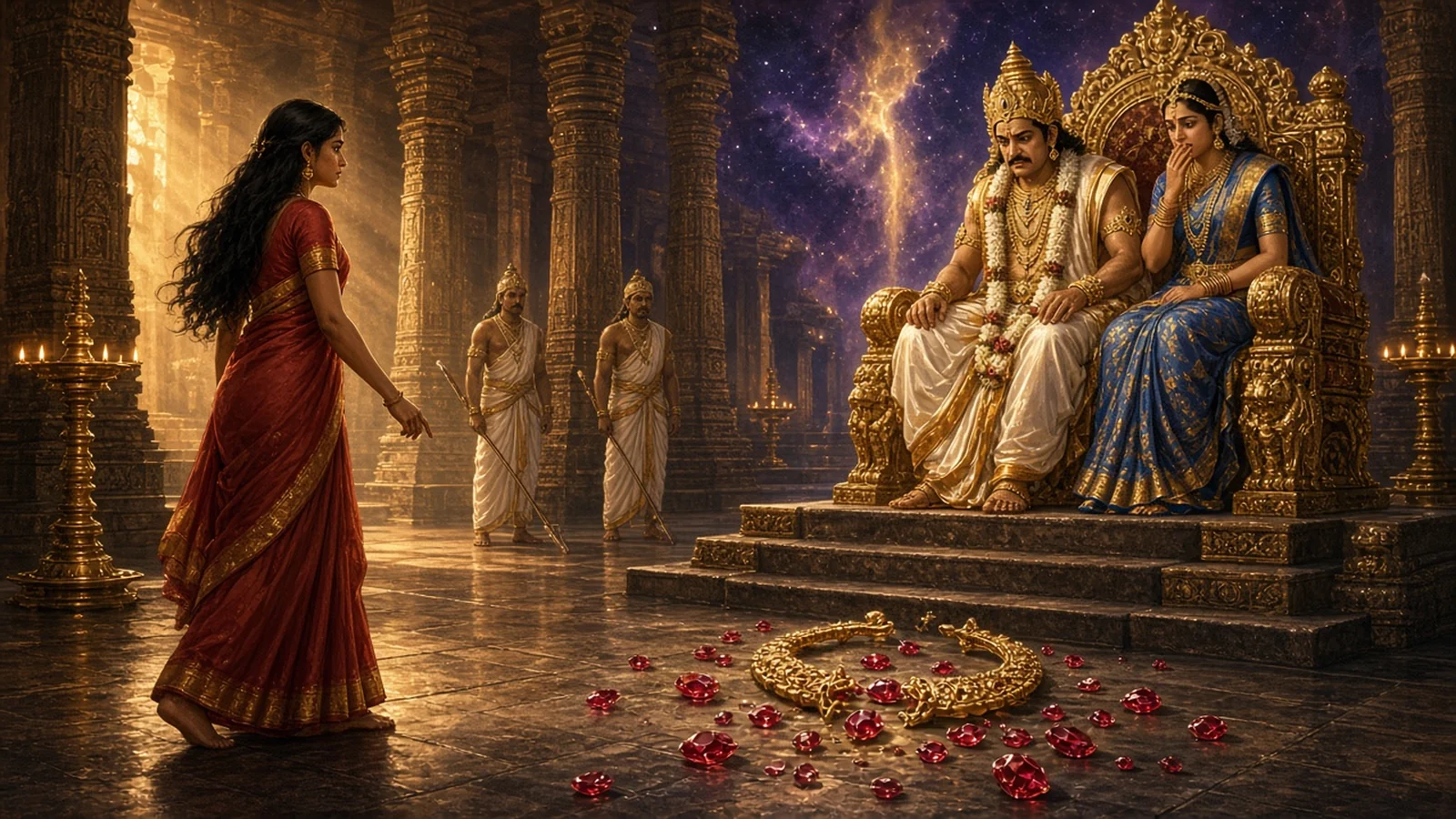
"She has a husband," an old woman answered. "He has been taken from her. A wife does not take a second husband because the first is gone."
The royal house and the city came round to her, and no new Isar was made. Every year since, the Gauri of Jaisalmer has gone out alone, and every year, the tellers say, she is still waiting for him. Jaisalmer's historians say that he sits with the royal house of Bikaner to this day, and some in the city have asked, courteously, for him to come home.
On the fourth of bright Chaitra the former Maharawal still does her aarti in the Tripolia room of the fort. She is set beside the temple of Chamunda in Dussehra Chowk so that the whole city can see her, and when the procession goes out she rides to Gadisar to be given her water, with the drums, the camels and the Manganiyar singers ahead of her and flowers falling from the roofs. Then she goes back up to the fort, on her own.
Bikaner's side: the Gangaur taken first
North-west Rajasthan · Bikaner, Junagarh and the village of Sirda · 2 min read
The historian Tane Singh Sodha begins the story in Bikaner, and a year earlier. About 1631, he says, when Manohardas ruled Jaisalmer and Karan Singh ruled Bikaner, some Bhatis from the village of Sirda in Jaisalmer's country came upon Bikaner's Gangaur and carried the image away.
Bikaner did not take it as a prank. Karan Singh called it an insult to his state, as grave as if a woman of his house had been stolen, and his court began to plan an answer.
The man who rode, in 1632, was a warrior named Lakhan Singh. His party struck without warning as Jaisalmer's royal procession was leaving the fort. The Bhatis fought and kept their Gavar, but Lakhan Singh's men came home with the Isar, and Karan Singh gave him a jagir for it. In this account it was a reckoning, one carrying off answered by another.
Sodha does not pretend the matter is closed. He calls its history disputed, and says that if the Isar were ever brought back to Jaisalmer with honour, it would begin a new chapter for both cities.
Bikaner, meanwhile, keeps Gauris of its own. A Bachhawat family tradition, written down by a friend of the family, holds that the city's three great Gavris, the royal one, the old diwan's and the Dhaddhas', all came from Jodhpur and Jaisalmer, parted from their own Isars. On the last days all three go up to Junagarh fort, where the women fill the goddess's lap as at a bride's ceremony, and she is given water at the Chautina well.
The most famous Gauri in Bikaner never leaves her square. Chandmal Dhaddha's Gangaur, jewelled from head to foot and watched by police, sits in Dhaddhon ka Chowk for two days, and the women who come to her pray for sons. Beside her stands no Isar but a small figure the city calls Bhaiya. One paper calls him her brother, another her son, and Bikaner is content to leave it there.