As the pilgrims tell it
North India · Wan, Bedni Bugyal and Roopkund · 2 min read
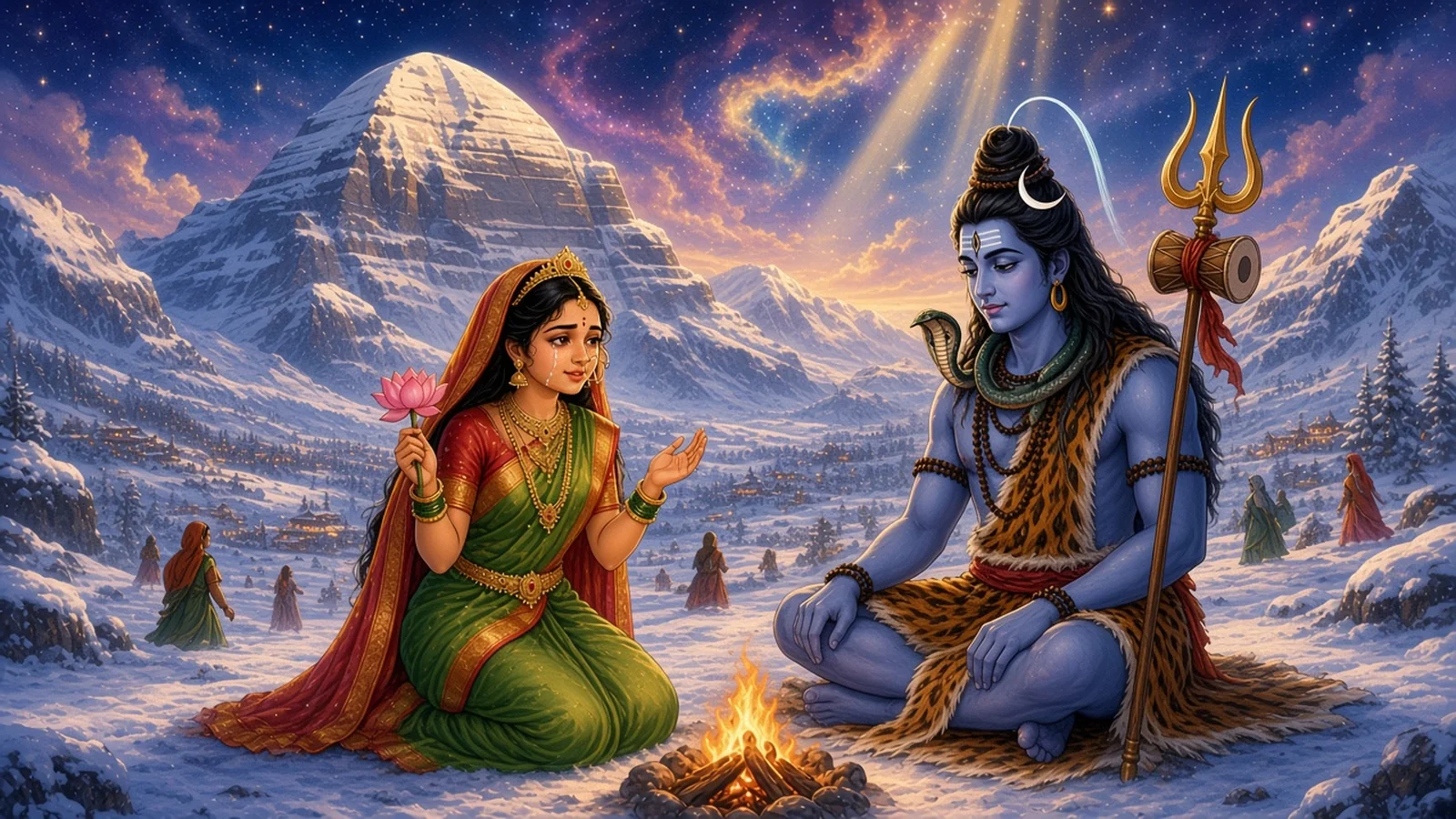
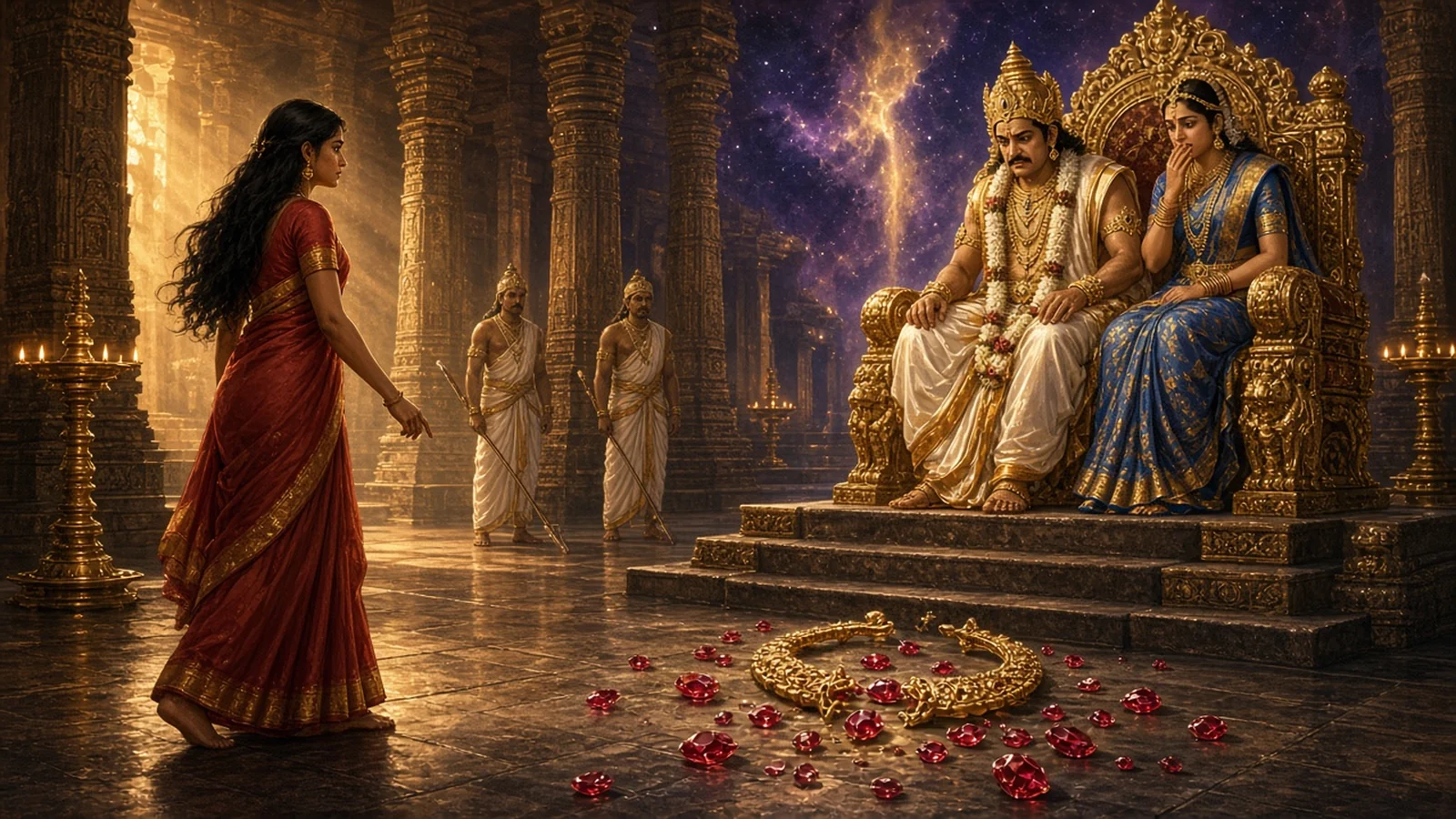
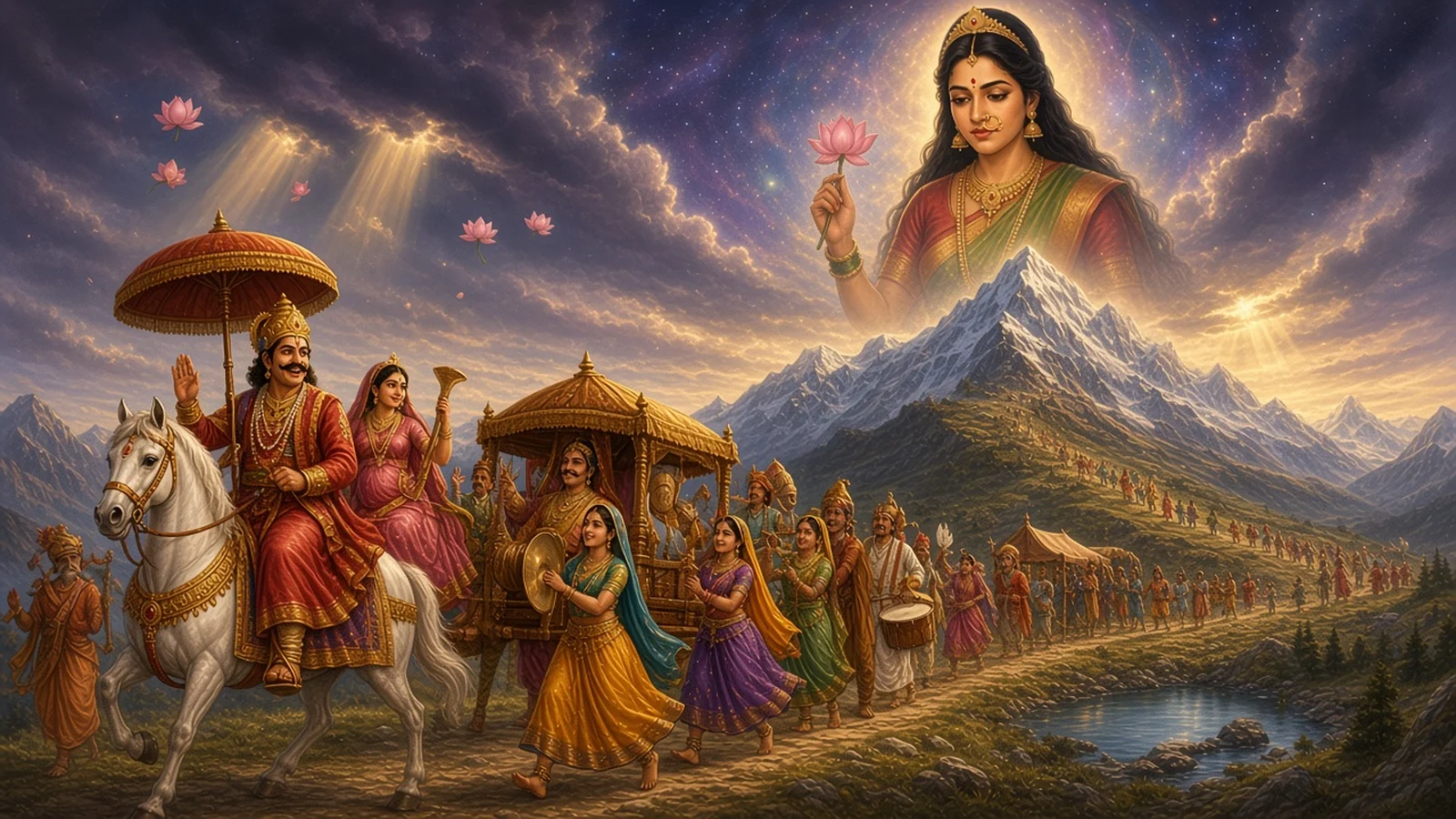
Jasdhaval was king of Kannauj, far down on the plains, and he set out on Nanda's pilgrimage the way a king does everything. He brought his queen Ballampa, though she was carrying a child and her time was near. He brought cooks and servants, porters with his tents, musicians, and a troupe of dancing girls to make the evenings pass. The villages along the way watched the procession climb and said nothing, because he was a king.
At Wan, the last village, an old man stood by the path below Latu's shrine.
"Beyond Bedni no woman goes," he said. "And nobody walks the goddess's road for pleasure."
"I have come a long way to honour her," said the king. "She will see that."
They went up through the forest into the meadows of Bedni, where the grass is short and a small pool lies flat as a mirror, and the queen went on with the men. A little above the meadow her pains began. There was a cave beside the path and her women took her into it, and there, on the goddess's road, the child was born.
The king did not turn back.
Higher up, on a shelf of open ground scattered with stones, he had the tents pitched and called for music. The dancers came out with bells on their ankles. They danced in the thin air until the light went red on Trishul, and the king clapped.
"Again," he said.
They danced again, and while they were dancing they stopped. Their feet would not lift. Their arms stayed where they were. They had turned to stone, and they are still there in a ring, at the place called Patar Nachauniya, the dancing stones.
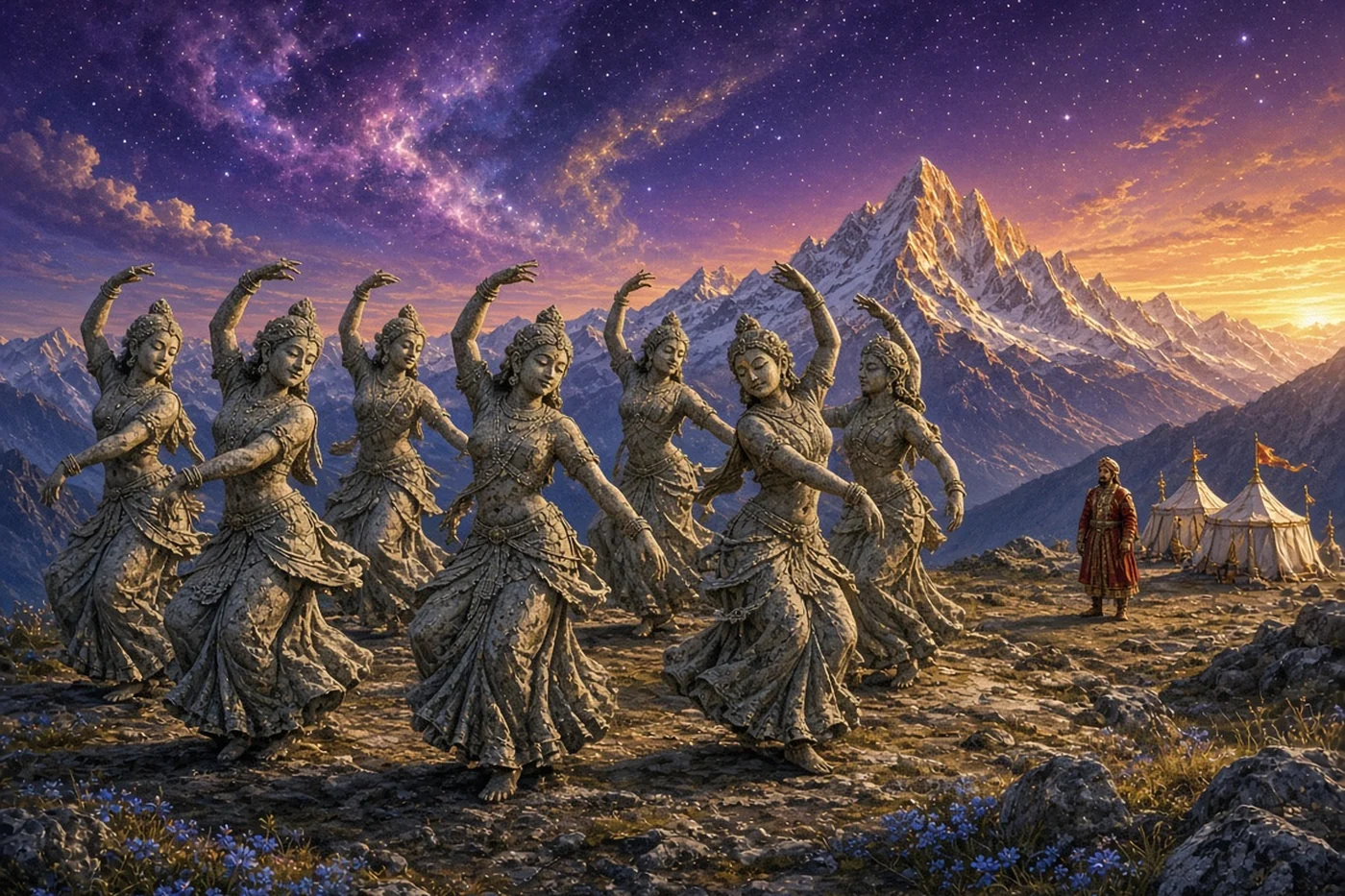
Then the sky over the ridge went dark. Some say Nanda called on her brother Latu, and some say she needed no one. Hail came down on the king's camp at the little lake below the pass, stones of ice as hard as iron, and on that bare slope there was nowhere to run. The queen, the newborn child, the servants, the musicians and the king himself all died there, in the water and around it.
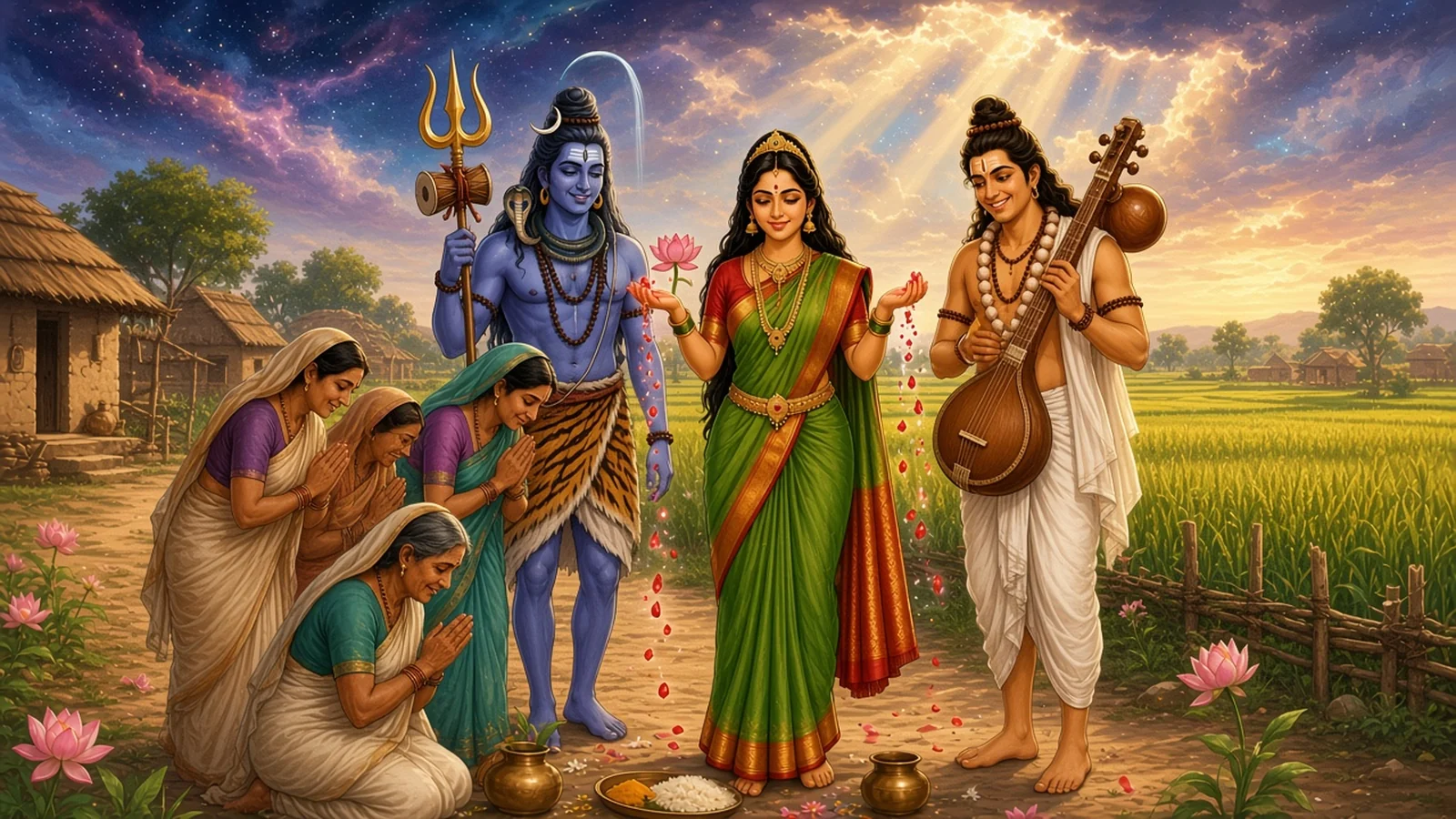
Afterwards the goddess spoke to the people of the hills.
"Come to me every year," she said. "Every year, and properly."
A queen begged on their behalf, because every year was more than poor villages could carry, and the goddess relented: once in twelve years, then. And so that no one could pretend to forget, a ram with four horns would be born in the Nauti country whenever the time came round.
The bones still show at the lake when the snow draws back in late summer, and the pilgrims passing on their way to Homkund do not stop long.
As the scientists read the bones
Roopkund · from 1942 to 2019 · 2 min read
In 1942 a forest ranger, Hari Kishan Madhwal, climbed to the lake and found its shore littered with bones. It was wartime, and the British officers who heard of it first wondered whether a party of Japanese soldiers had crossed the Himalaya and perished there. That fear passed quickly. The bones were far older than any war.
Among them lay wooden objects, iron spearheads, leather slippers and rings. Over the years the remains of several hundred people were counted, some still with flesh kept by the cold. The Anthropological Survey of India studied them in the 1950s. A number of skulls carried wounds from something round falling from above, which led to the idea of a sudden storm of hail, and a radiocarbon date of about 850 was reported. It seemed to fit the legend almost too neatly: one party, one storm, one night.
In 2019 a team of geneticists and archaeologists published the DNA of thirty-eight skeletons in Nature Communications, and the single night came apart. Twenty-three of the dead were South Asian, from a range of different backgrounds, and had died around 800, though not all at the same moment; they had reached the lake in more than one event. Fourteen others carried the ancestry of the eastern Mediterranean, closest to people living in Greece and Crete today, and had died around 1800, about a thousand years later. One more person was of Southeast Asian ancestry, from the same late period. Their diets had differed too. Whatever happened at Roopkund, the authors wrote, it was not one catastrophe.
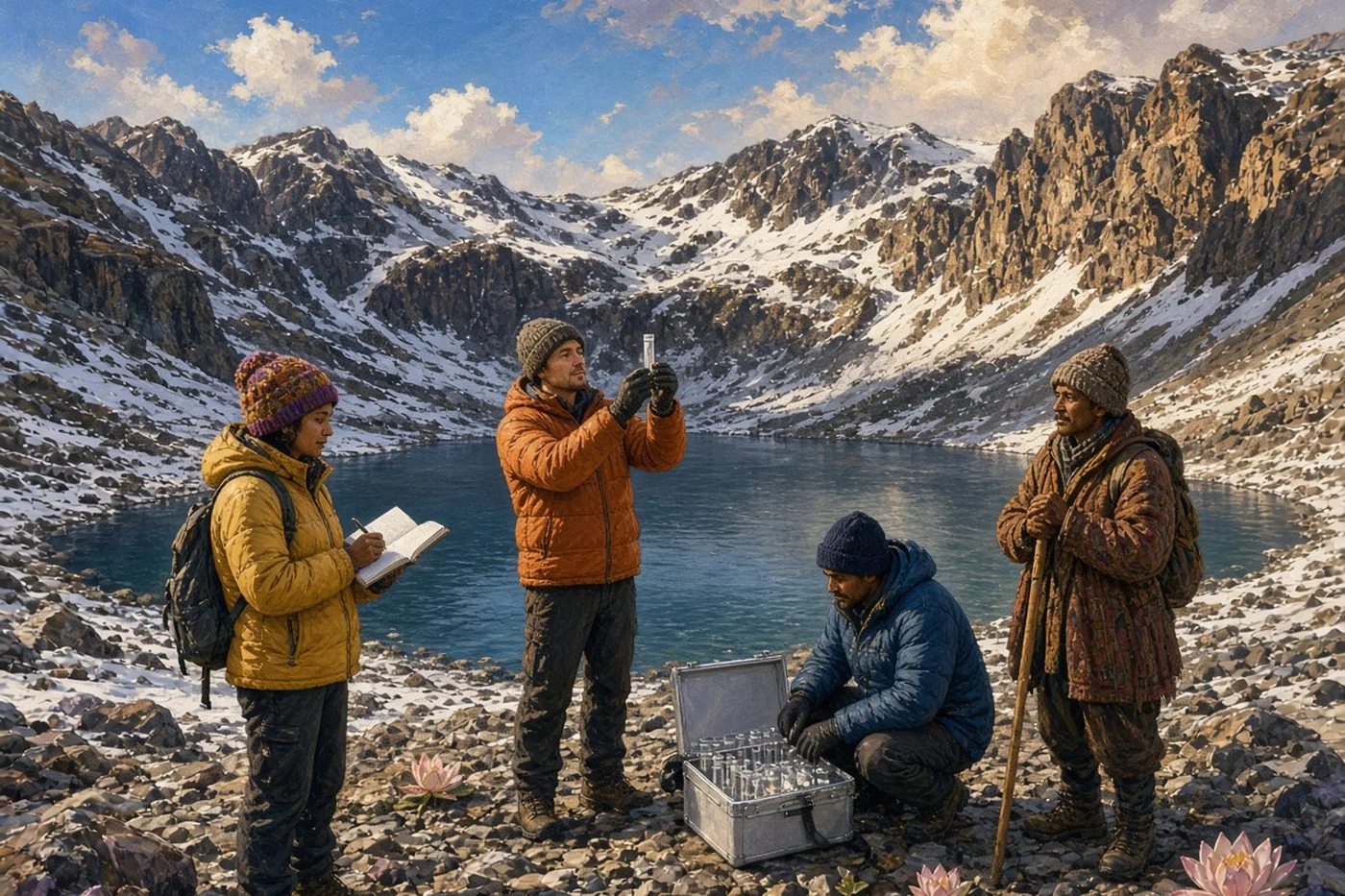
Why travellers from the Mediterranean died at a Himalayan lake two centuries ago, and whether the older dead had come as pilgrims, are questions the study left open. The bones are still there each summer, fewer than before, because trekkers have carried some of them away.