As Ilango tells it: the anklet and the king
Tamil Nadu · Puhar and Madurai, in the Silappatikaram · 3 min read
In Puhar, the port where the Kaveri meets the sea, the merchant Manayakan gave his daughter Kannaki to Kovalan, son of the merchant Masattuvan. For a while their house was full of lamps. Then Kovalan went to live with the dancer Madhavi, and the wealth of two families went with him.
At the festival of Indra by the shore, Madhavi sang songs that Kovalan heard as proof she loved another man. He walked out of her house and came home with empty hands. Kannaki did not ask him where he had been. "I still have these," she said, and held out her pair of anklets, gold, with gems sealed inside. "Take them. We will begin again somewhere else."
They walked for many days to Madurai, the city of the Pandya king. Kovalan left his wife outside the walls and went into the bazaar with one anklet, and there he met the king's goldsmith, who walked with a hundred craftsmen behind him.
"Can you name a price for this?" Kovalan asked. "It is fit for a queen." The goldsmith turned it in his fingers and thought of the queen's own anklet, which he himself had stolen. "Wait here by my hut," he said. "I will show it to the king."
The king was on his way to the queen's rooms when the goldsmith bowed in his path. "The thief who took the queen's anklet is waiting at my hut," he said. "He needed no crowbar. He put the guards to sleep with charms." The king asked nothing. "Kill him," he said, "and bring me the anklet."
The guards looked at Kovalan and lowered their spears. "This man has no thief's face," one of them said. The goldsmith talked on about the tricks of thieves until a drunken man among them lost patience and cut Kovalan down. On that day, the poet says, the Pandya's sceptre bent.
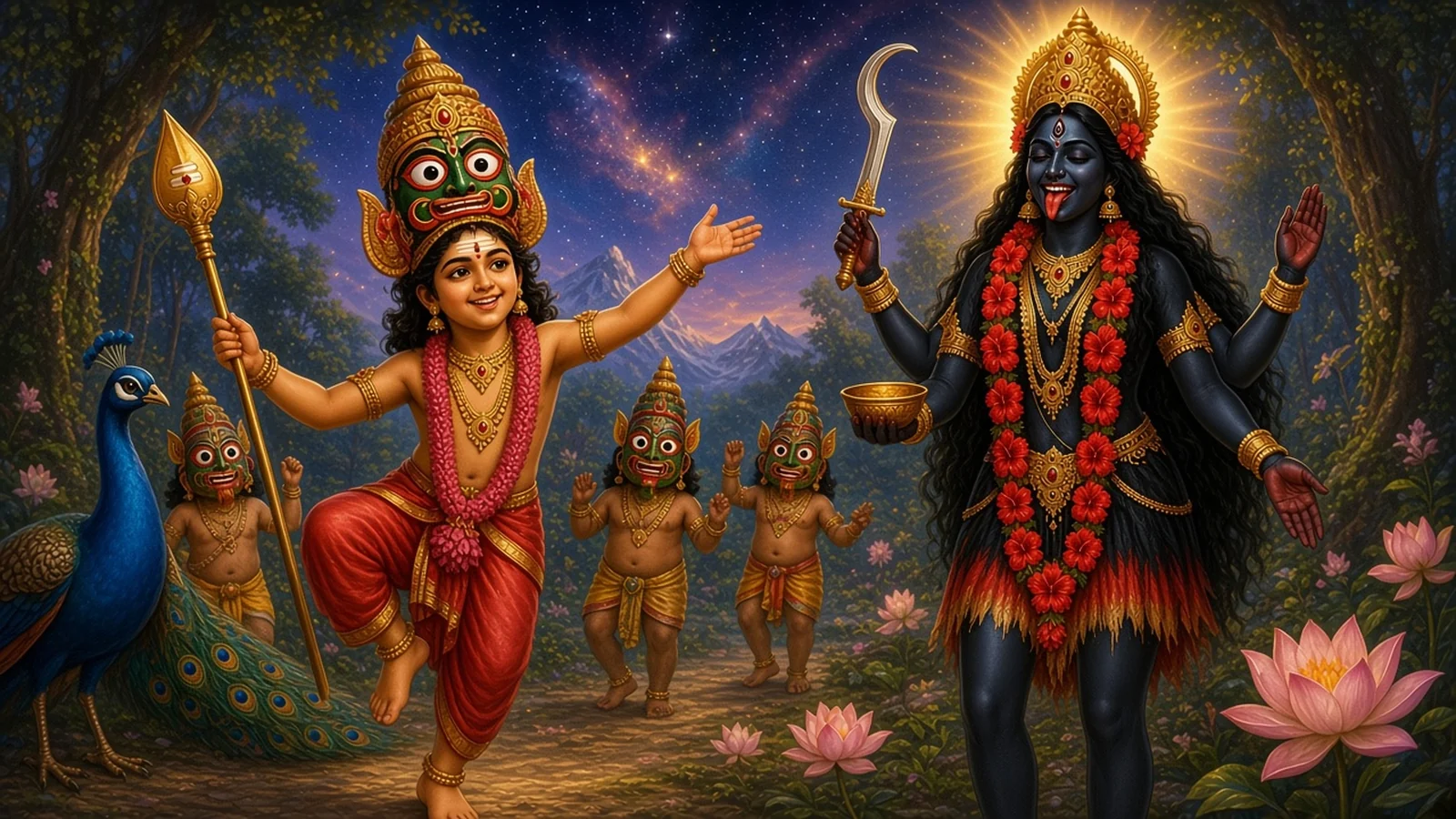
Word came to Kannaki. She found her husband's body at dusk, and in the morning she stood at the palace gate with the other anklet in her hand and her hair unbound. The gatekeeper ran in. "There is a woman at the gate," he told the king. "She is not Korravai on her buffalo, nor Bhadrakali, nor the Kali of the forest, nor the one who tore Daruka open. I cannot say what she is."
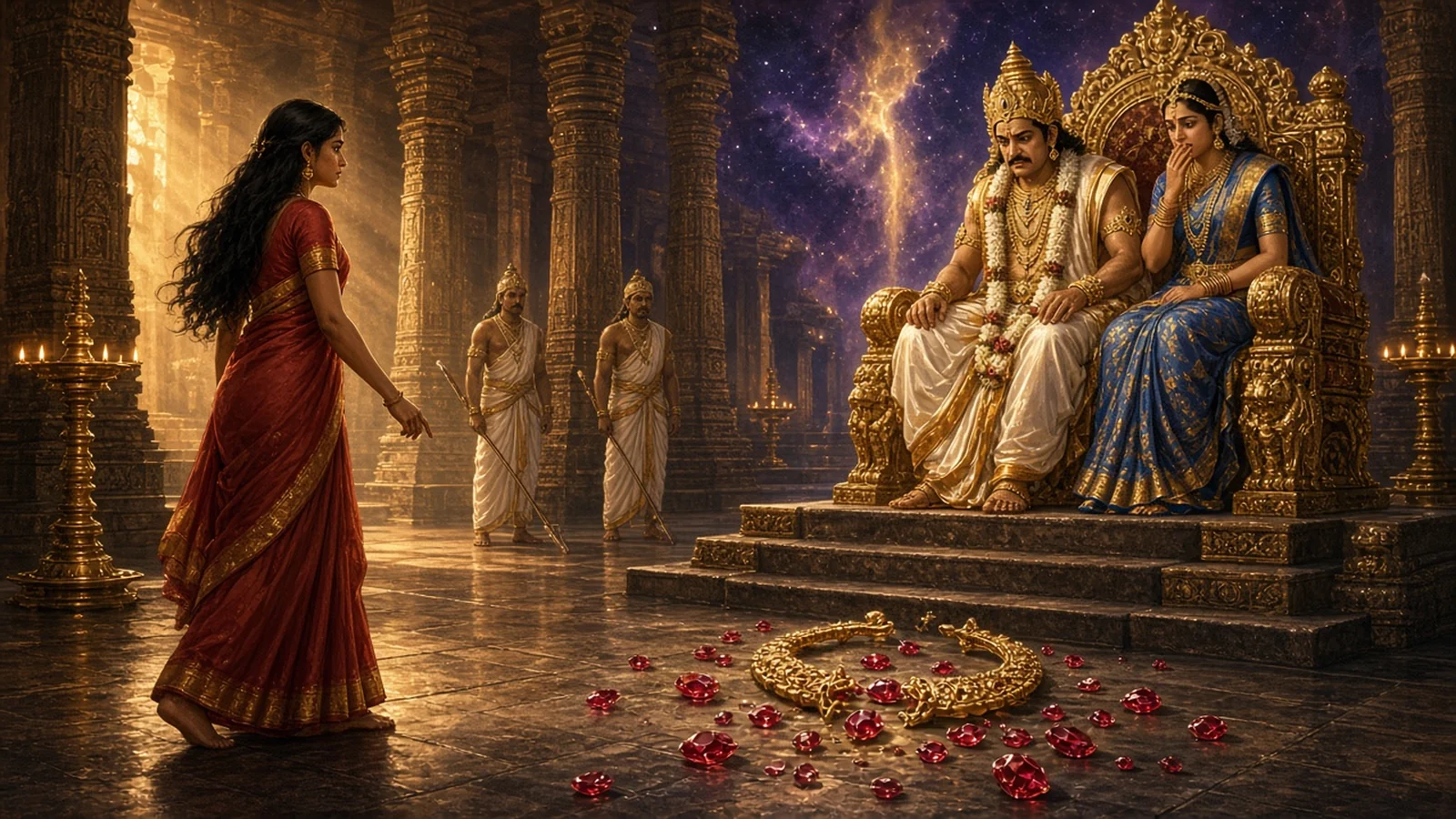
The king had her brought in. "To kill a thief is no injustice," he said. "My husband was no thief," said Kannaki. "My anklet holds rubies." "The queen's holds pearls," said the king. Kannaki broke her anklet on the floor, and the rubies flew, and one struck the king in the face.
He looked at the red stones for a long time. "What king am I, who took a goldsmith's word?" he said. "I am the thief." He fell from the throne and did not rise, and the queen fell beside him.
Kannaki went out into the street. She twisted off her left breast, walked three times round the city and threw it down. Agni stood before her as a Brahmin and waited for her word. "Spare the Brahmins and the good," she said, "the cows, the faithful wives, the old and the children." Then Madurai burned.
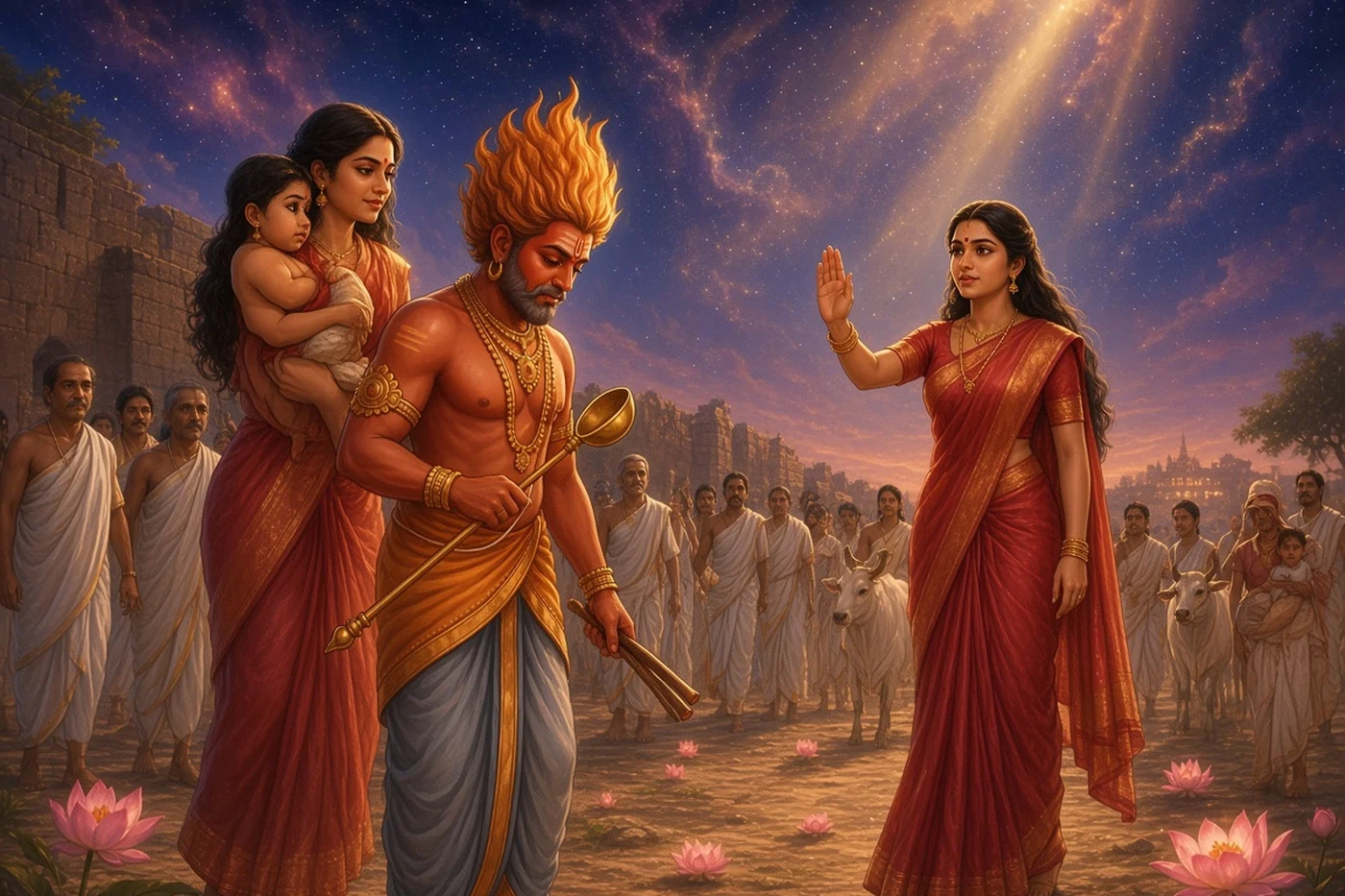
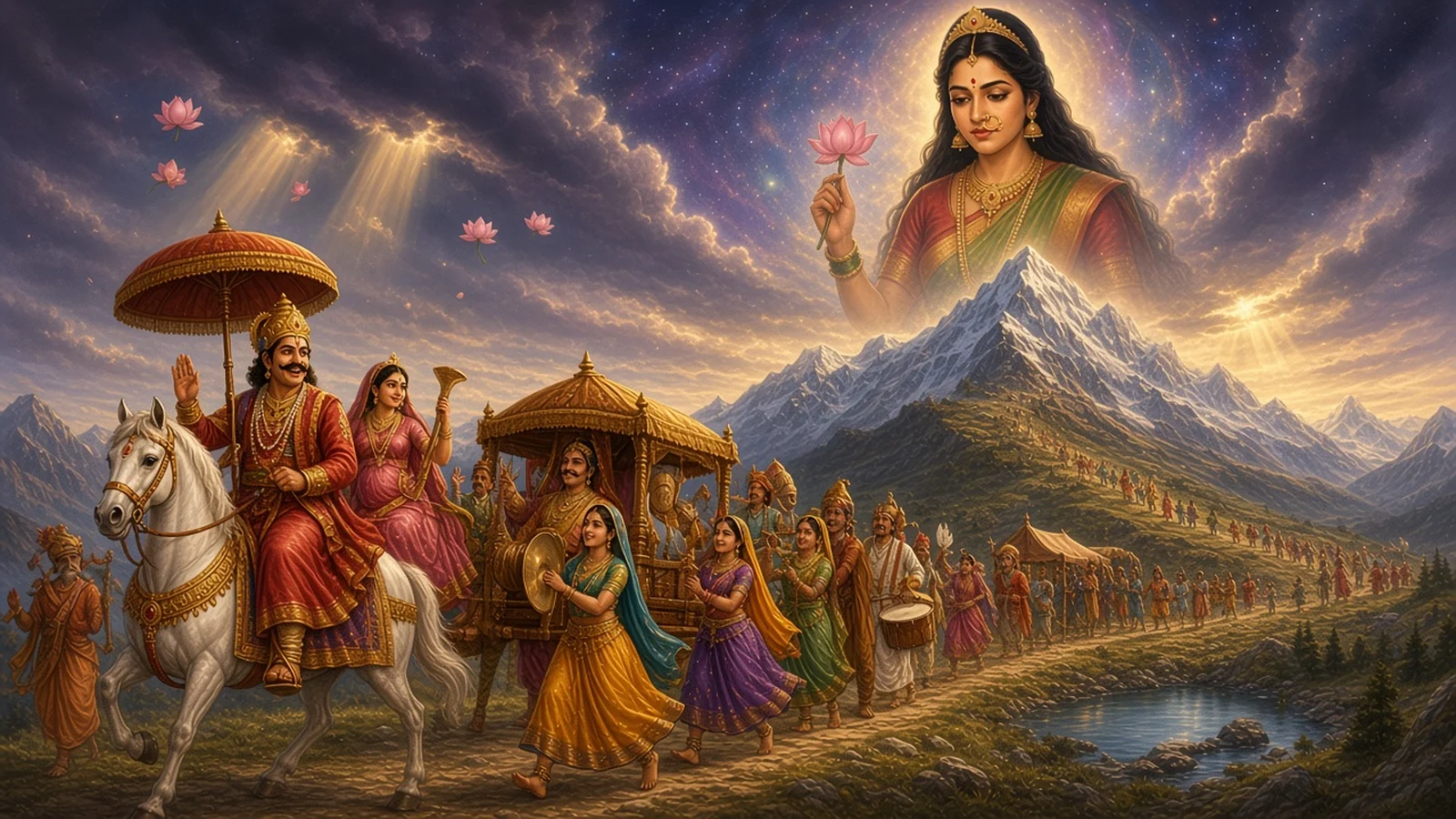
The goddess of the city came to her that night and told her this had been written in an earlier life, and that in fourteen days she would see her husband again. Kannaki broke her bangles at the temple of Korravai and left by the western gate. She walked west for fourteen days and climbed a hill to stand under a vengai tree, and on the fourteenth day Indra's chariot came down with Kovalan in it, and they went up together. Long after, the Chera king Chenguttuvan brought a stone from the Himalaya, carved her in it, and worshipped her as Pattini.
As Attukal tells it: the girl at the river
Kerala · the Killi river at Attukal, Thiruvananthapuram, and the road to Kodungallur · 2 min read
The singers at Kerala's Bhagavathy shrines do not leave her on a Tamil hill. In the songs of Attukal she is simply the Devi and her husband is Palakan, and many who come to the temple say she was Parvati on earth and he was Shiva. When Madurai was ash, they say, she turned west over the hills into the Chera country, toward Kodungallur on the coast.
One evening the elder of the Mulluveettil family went down to the Killi river for his evening prayers. Standing in the water, he saw a girl on the far bank, very young and bright, as if she carried her own lamp.
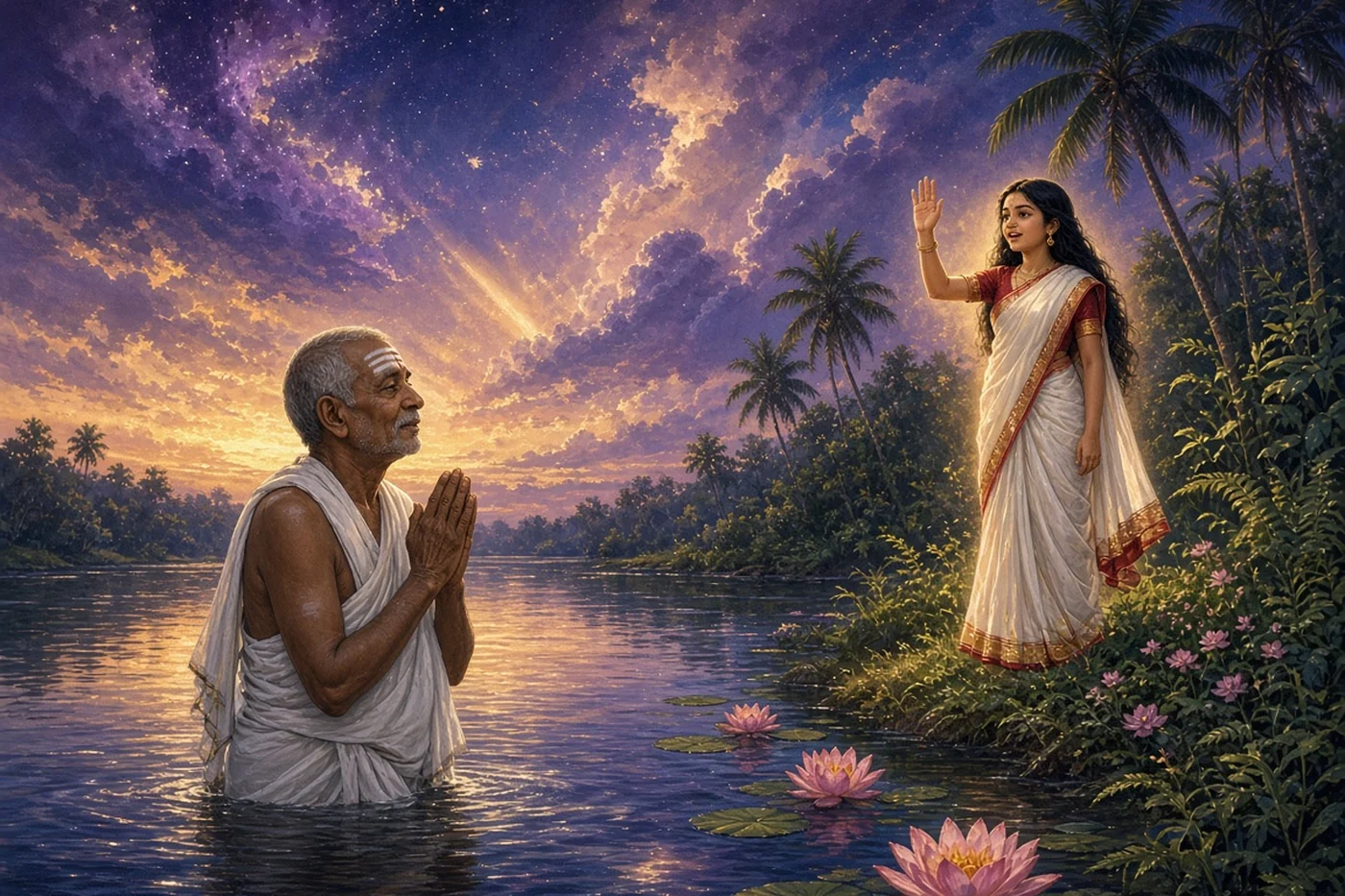
"Take me across," she called to him. He waded over, brought her back through the current and led her to his house, where he seated her on a mat as a guest of rank. "Rest," he said. "I will bring food." When he came back, the mat was empty.
That night she stood beside him in his sleep. "Make me a place in the grove near your house," she said. "I will leave a sign." At first light he went to the grove and found three lines drawn on the ground where nobody had walked, and there he set her up. That place is Attukal.
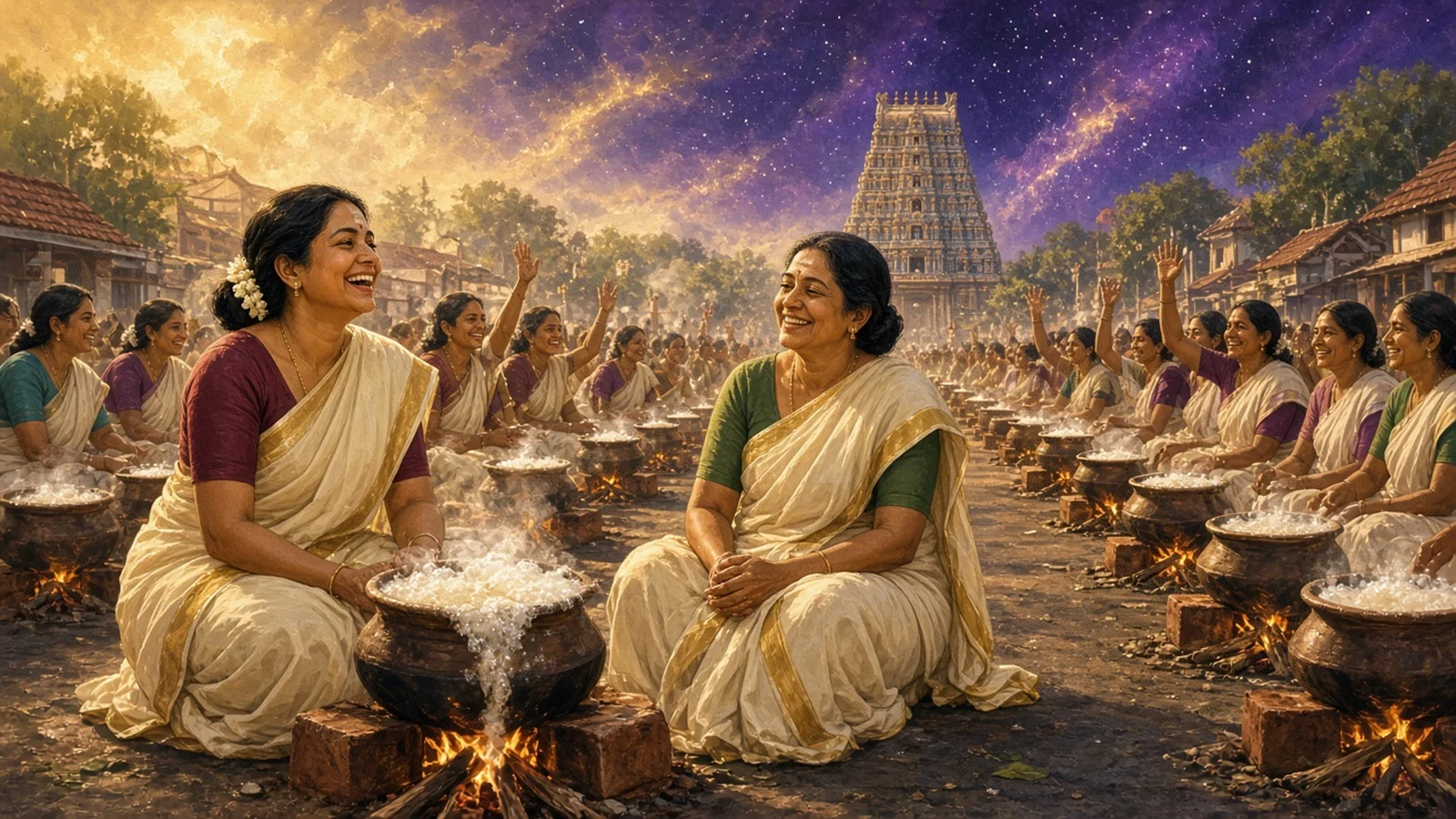
Those who keep the shrine say the girl was Kannaki, still hot from the fire of Madurai, resting on her road. The women of the place came out with new pots, rice and jaggery and cooked for her where she sat, and her rage cooled. Then she went on to Kodungallur, where she is one with Bhadrakali. Every year the singers call Kodungallur Amma back to Attukal for ten days, and on the ninth, when their song reaches the Pandya king's death, the women light their fires again.