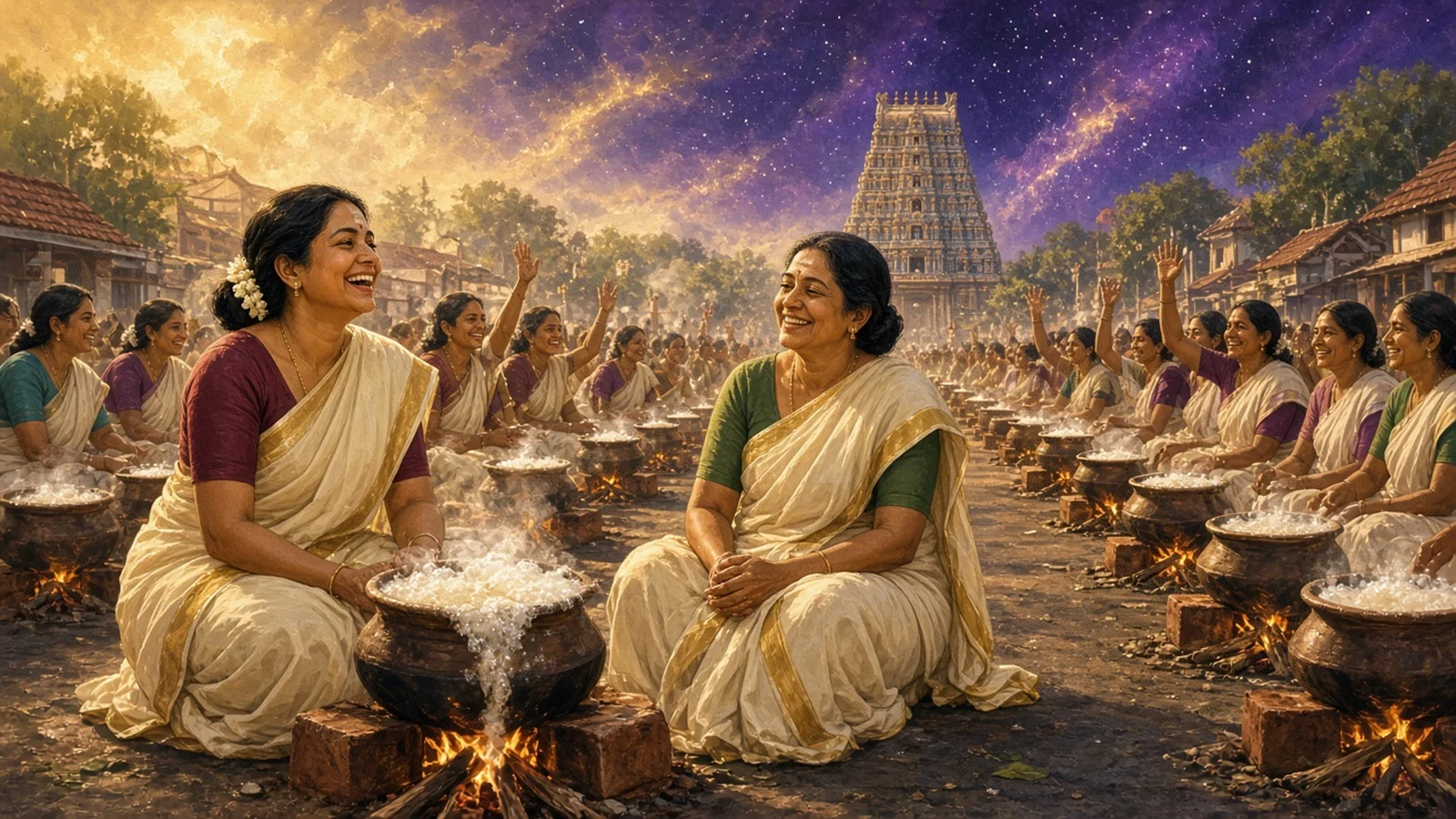
On a road near Attukal: Lalitha's pot
Kerala · a road near the Attukal temple, Thiruvananthapuram, on Pongala day · 3 min read
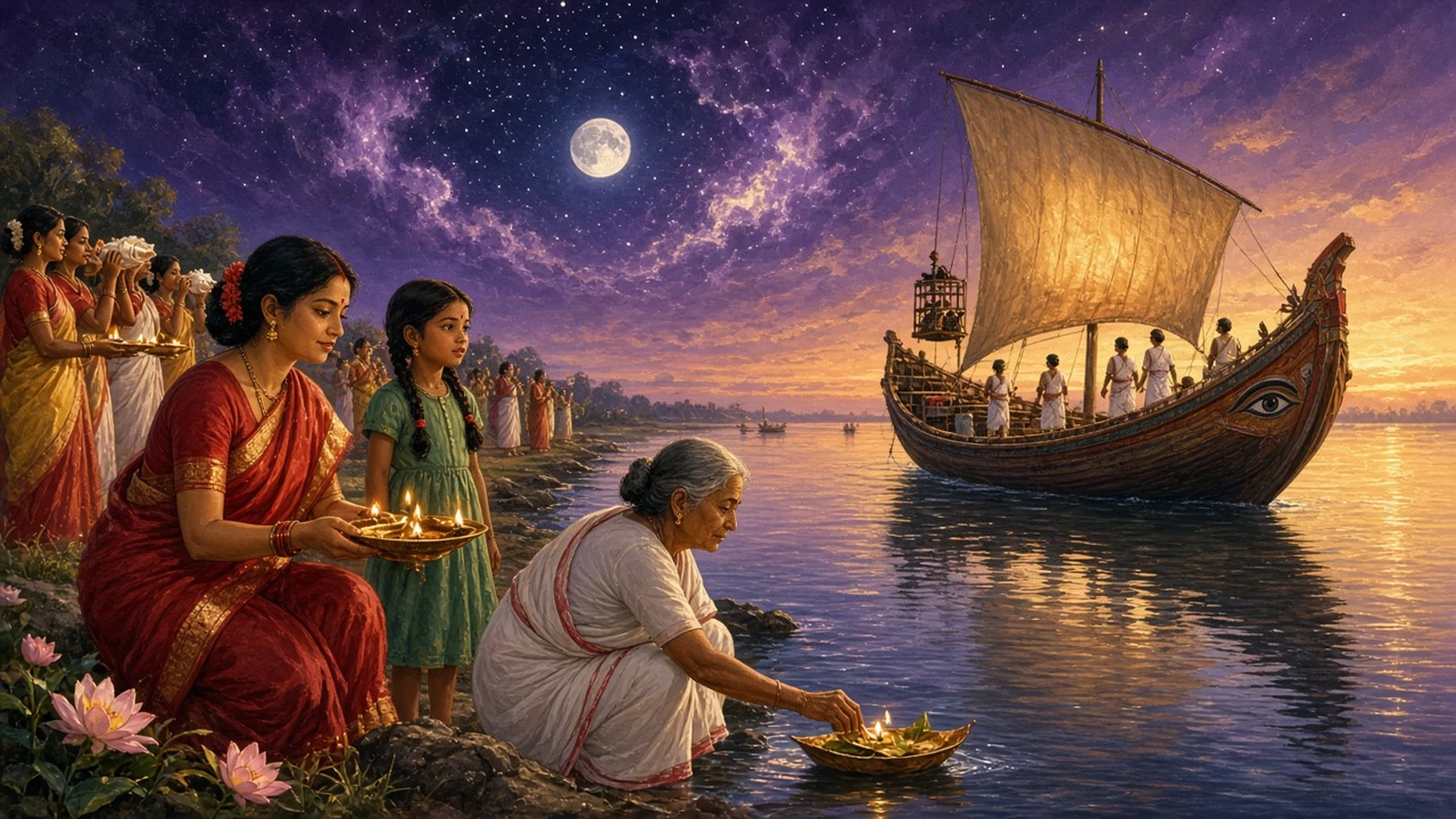
Lalitha came in from Kollam on the evening train with her sister-in-law, a sack of rice, a block of jaggery, two coconuts, a bundle of dry coconut fronds and a new clay pot wrapped in newspaper. By the time they reached the road behind the Manacaud mosque, the pavement was marked out in chalk and bricks, and women were already asleep on mats beside their places.
"Here," said Rema, and set the pot down on a free square of tarmac before anyone else could. A man from the mosque came along the row with a steel jug. "Water is inside the gate," he said. "The toilets too. The ground at the back is open for your fires."
In the morning they bathed early. Lalitha set three bricks in a triangle, the way her mother had, put the pot on them and laid the fronds and firewood ready. She had eaten nothing since the night before; nobody on the road had. The sun came over the roofs and the heat rose off the tarmac, and loudspeakers on the poles carried the voices of the singers in the temple, who had been singing Kannaki's story for nine nights.
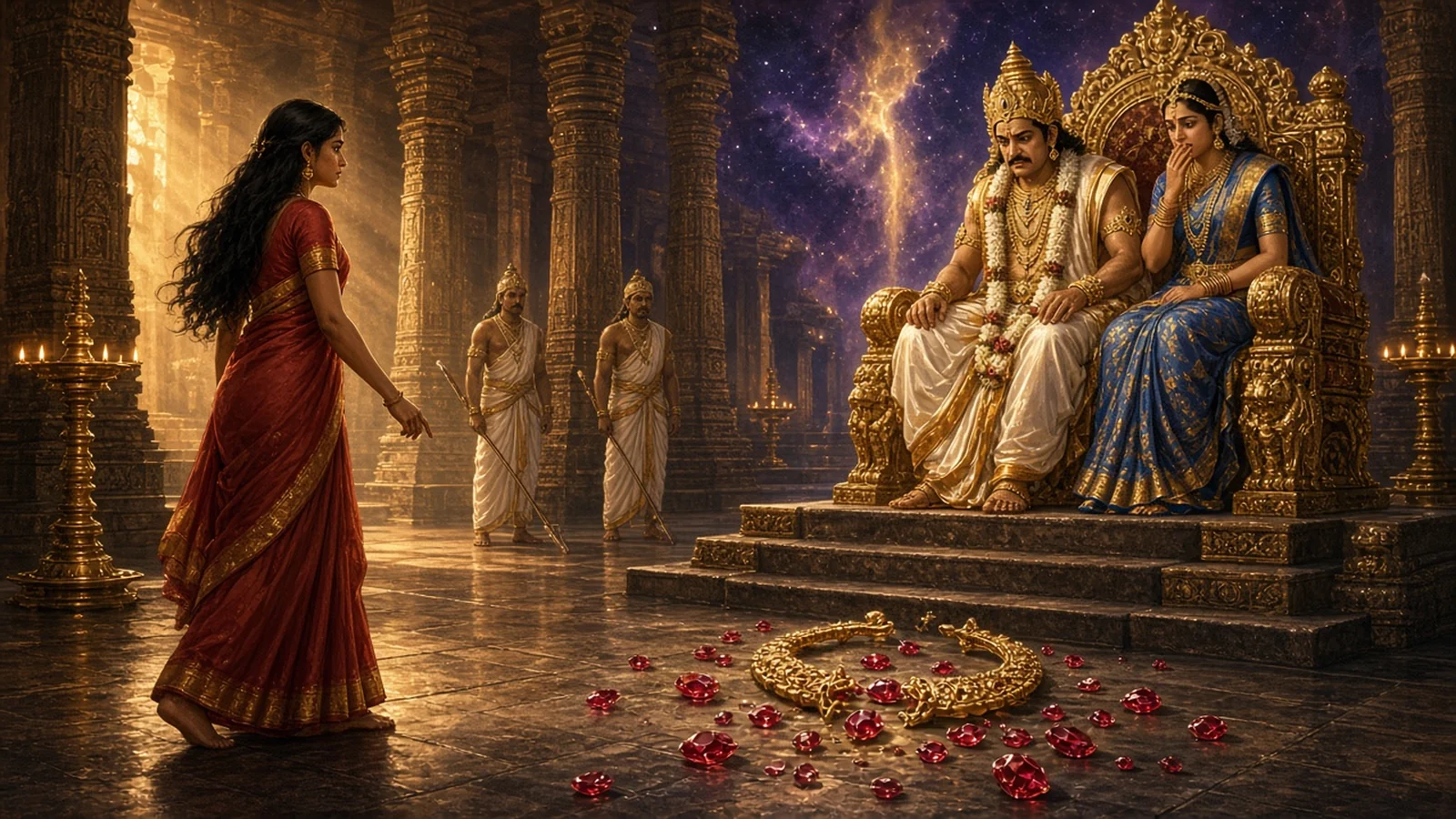
"Where are they now?" Lalitha asked. The old woman on the next mat listened for a moment. "The king has sent for the queen's anklet," she said. "Soon."
Then the song reached the king's death. Drums broke out at the temple, and the long trilling cry of the women rose and ran down the road and round the corner and on, and firecrackers went off somewhere near. Inside, the priests had carried fire from the shrine to the great hearth in front of it. A burning frond came along the row from hand to hand. Rema lit hers from it, and Lalitha lit her own from Rema's and turned to pass it to the girl behind.
Smoke filled the street at once. Lalitha's eyes ran and she let them. When the water boiled she took three handfuls of rice, circled each over the pot and let it fall, then added the jaggery, broken small, and the grated coconut.
"Don't stir it," Rema said. "Let her see it rise." The foam climbed the black lip of the pot, hung there, and spilled onto the bricks, and all along the road women cried out as their own pots went over. Lalitha sat back on her heels and laughed.
In the afternoon a priest came down the road with a boy carrying a pail, dipped a spray of areca flowers and shook it over each pot as he passed. Petals drifted down out of the sky above the temple. The waiting was over. Lalitha drank tender coconut water at a stall, covered the pot with a banana leaf, and gave a spoonful of the pongala on a leaf to the woman from the mosque house who had come out to watch.
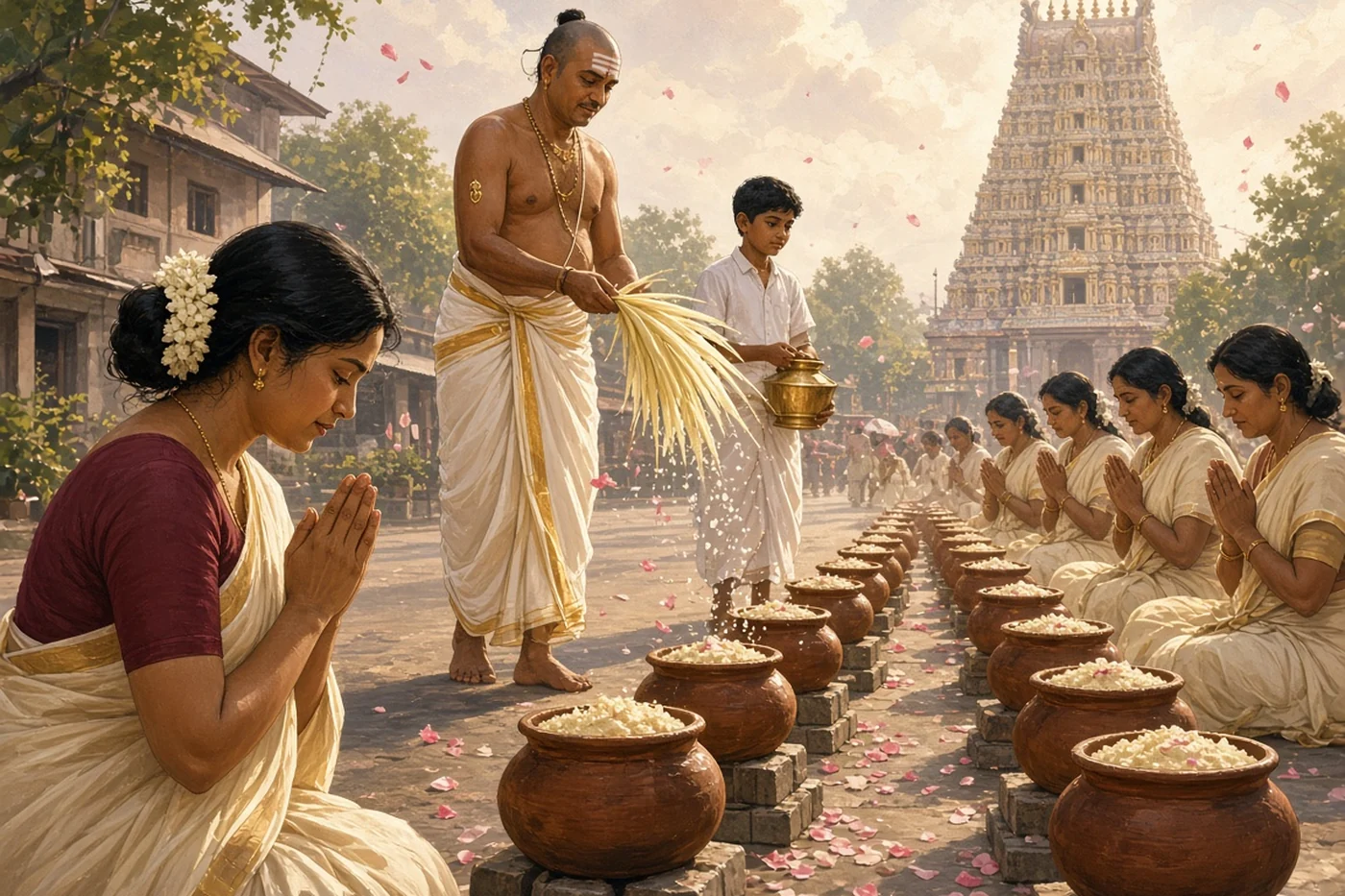
When their train left that evening the road had changed again. Workers in uniform were sweeping up the ash, a tanker was washing the tarmac, and volunteers were stacking the bricks into lorries, to be built into houses for families who had none.
Inside the temple: a Kuthiyottam boy and his sister
Kerala · the Attukal temple and the road to Manacaud, from the third day to the tenth · 2 min read
Arjun was eleven, and this was the last year he could do it. On the third morning of the festival he went down into the temple pool with the other boys, came up dripping and bowed before the goddess in his wet clothes. He laid seven silver coins on the wooden plank before the shrine, and from then on he belonged to the temple.
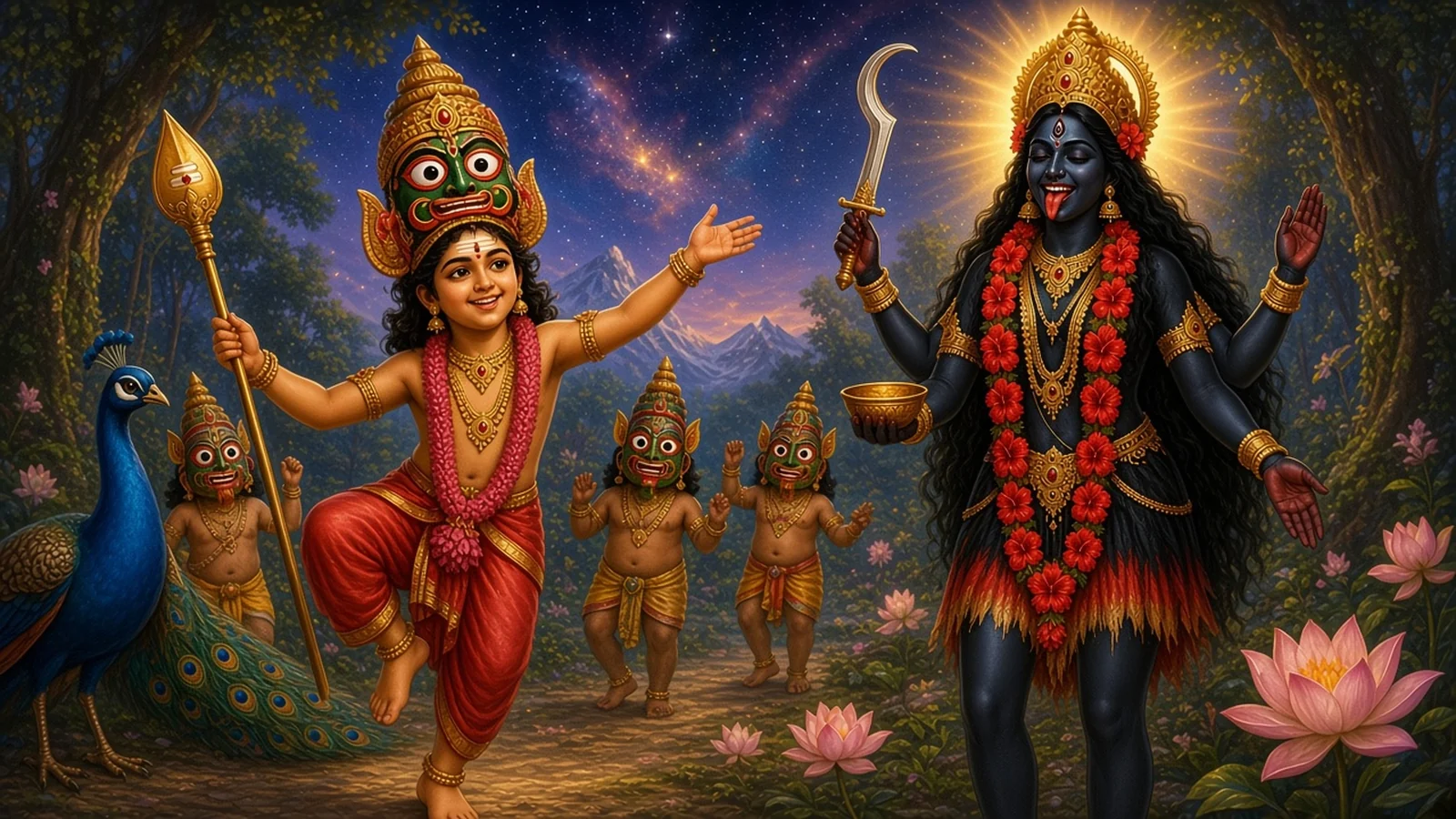
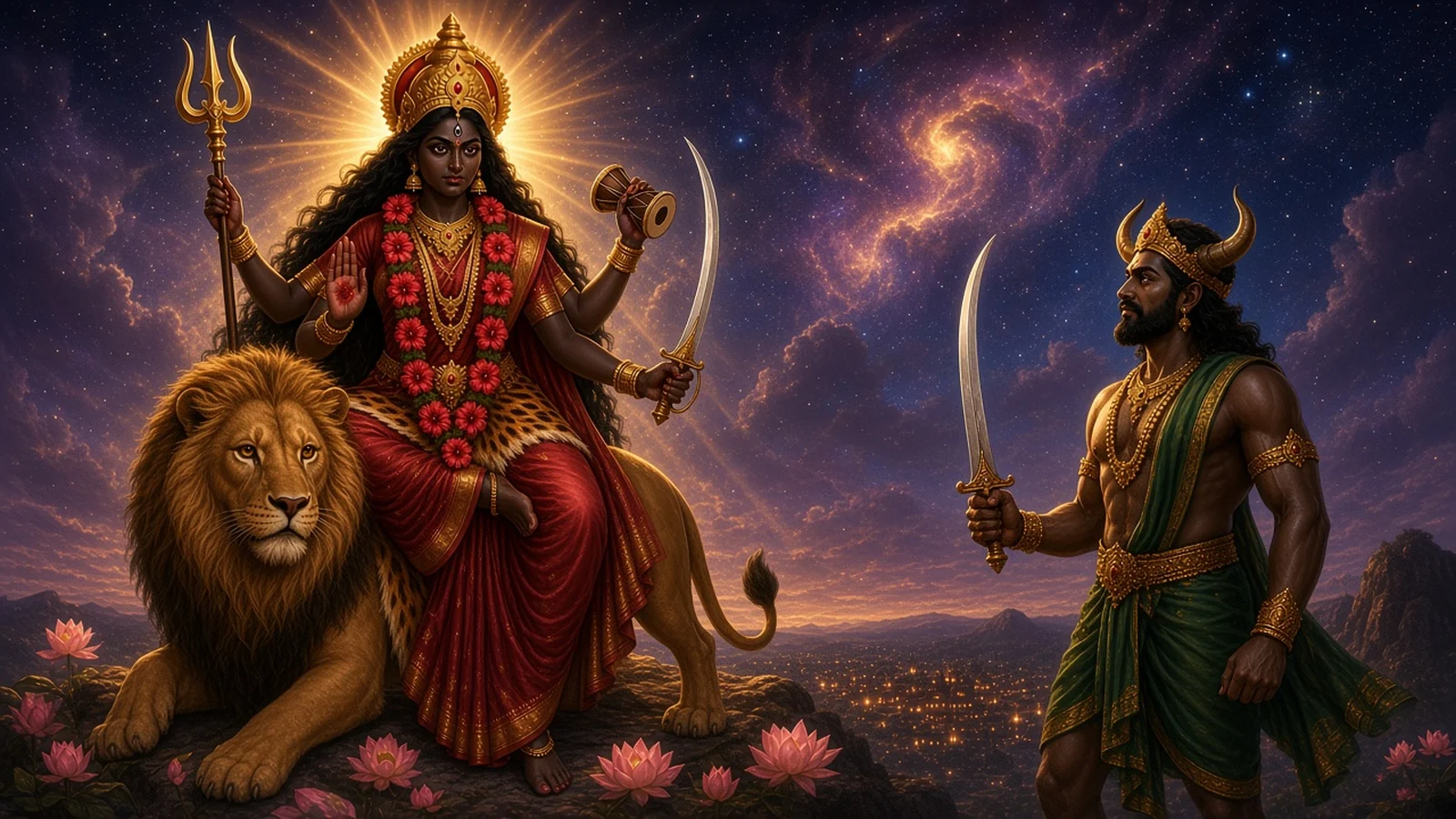
For seven days he did not go home. He slept on a mat on the stone floor with the others, ate only what the vow allowed, and morning and evening went down on the ground again and again until the count reached a thousand and eight. An old man who had kept the vow as a child told them what they were. "When the Devi fought Mahishasura, her soldiers came back wounded," he said. "You are those soldiers. You stand guard for her." Another man said it was the war with Darika. Arjun's knees did not mind which.
On the ninth morning his sister Meera came with their mother, in a new silk skirt, with jasmine in her hair and a brass plate of rice, areca flowers and a coconut, a small lamp burning on it. She carried it high to the goddess with the other girls of the Thalappoli. "I saw you," she whispered to him afterward. "You look thin." "I am a soldier," he said.
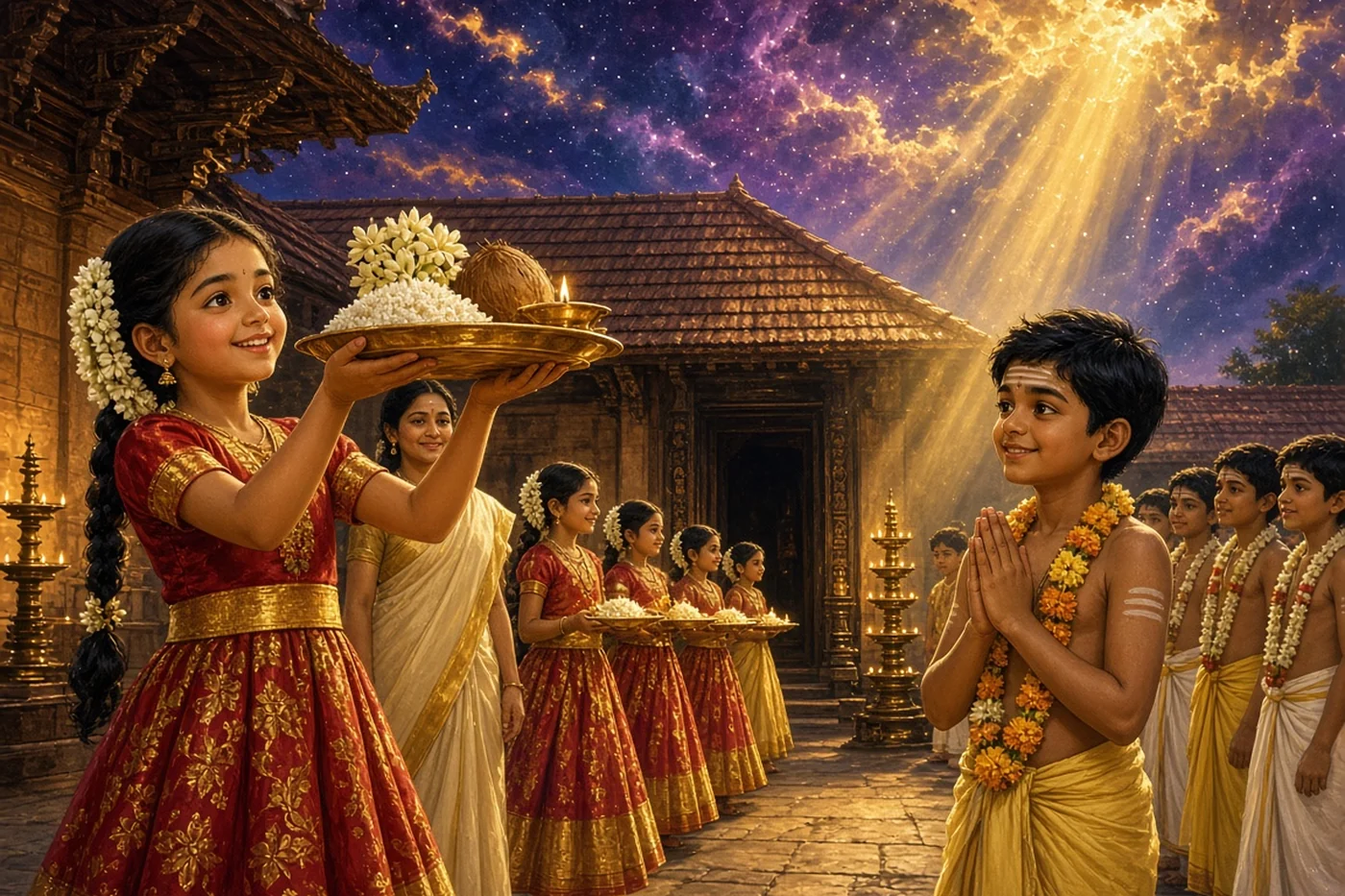
That night, after the chooral kuthu, the boys' rite of the cane, the goddess came out of her shrine on an elephant to visit her brother at the Manacaud Sastha temple. The boys walked around her as her guard through streets that still smelled of smoke, with drums ahead and the girls' lamps behind. She stayed with her brother until the next day and then came home. On the last night the bands tied on her sword and on the priest's hand were untied, and at midnight the Kuruthi offering closed the ten days.