As the hill sings it: Chamundi and her sister
Mysuru, Chamundi Hill and Uttanahalli · 4 min read
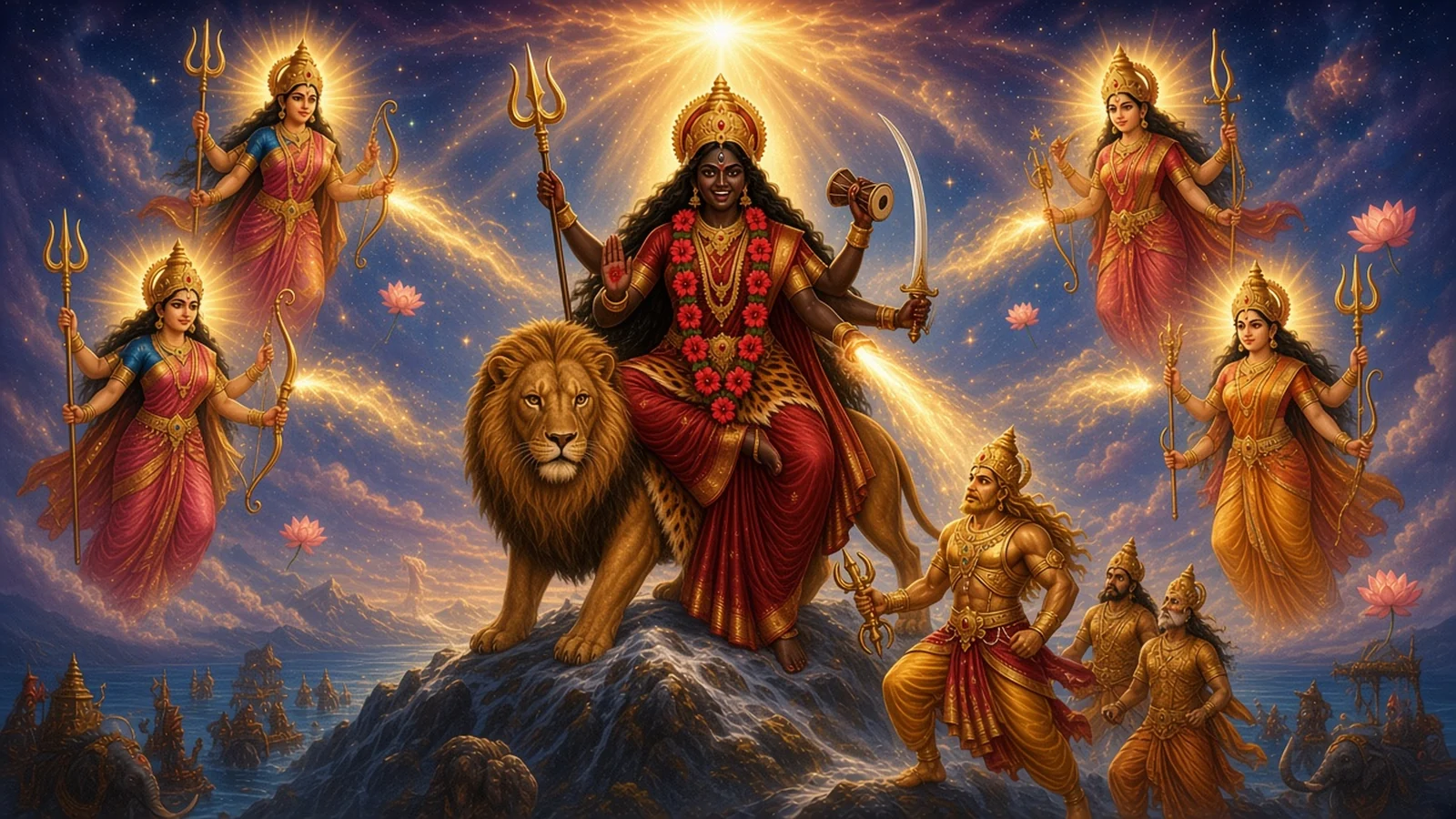
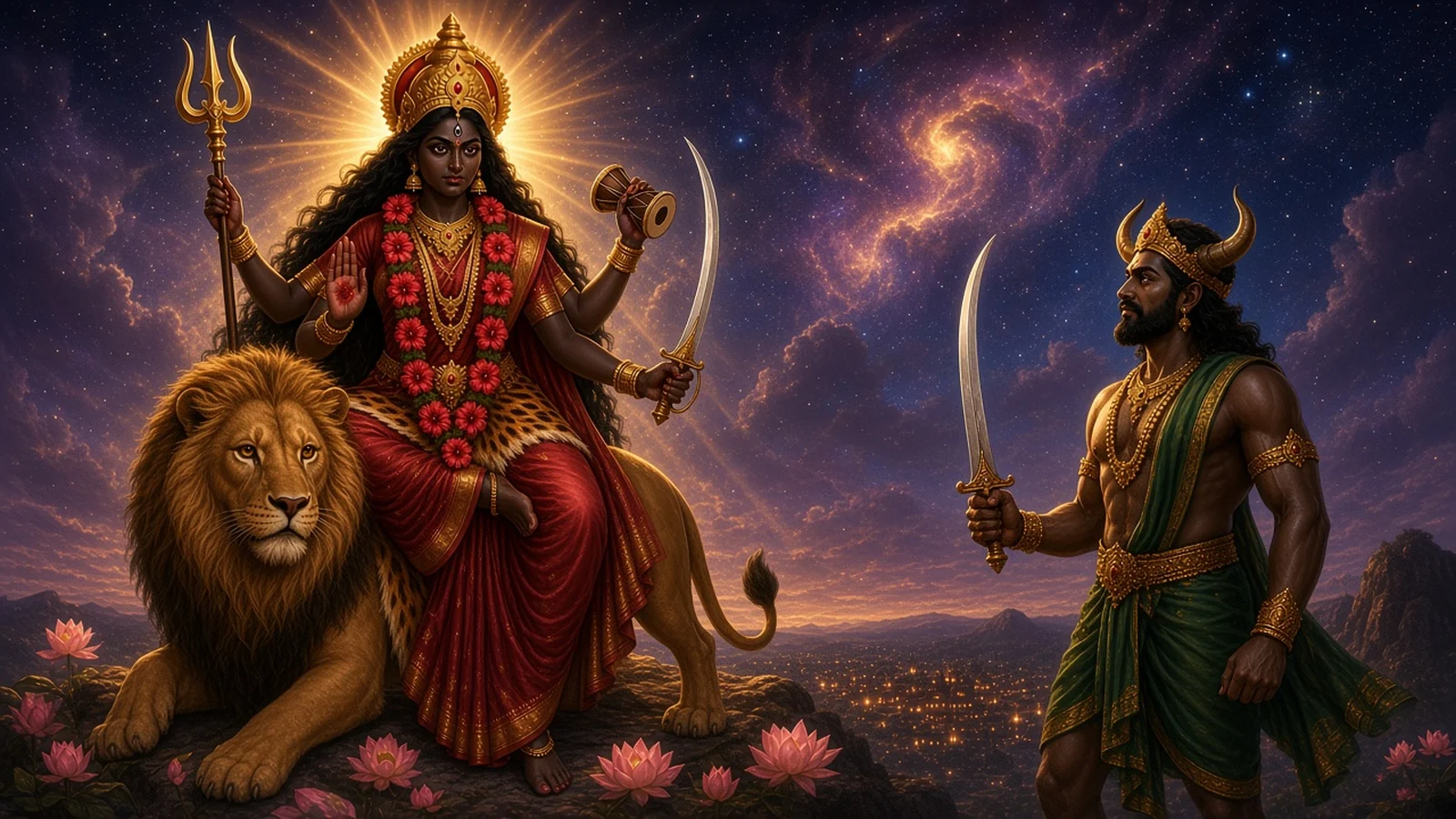
The town below the hill once belonged to the buffalo king, and it was called Mahishuru after him. When the gods could bear him no longer the Goddess came, and the hill above his town is where they met. The Kamsale singers of the Mysuru country, who sing to the clash of small cymbals, do not linger over that fight. Shiva had given her the strength for it, she took up sword and dagger in her twenty hands, and the buffalo king fell.
What the singers want to tell is what came after.
Mahishasura had a younger brother, Aisasura. He came at the goddess while she stood over the dead buffalo and caught hold of her forearm. She took him by the back of the neck and struck, and wherever a drop of his blood touched the earth, demons stood up, more than anyone could count. She struck again and there were more. Then Aisasura slipped inside the belly of the dead buffalo and hid there, and from his hiding place he went on bleeding demons into the world.
She set her foot on the buffalo's hoof, stood up, and looked to her left and to her right.
"I cannot kill all of these," she said. "Not alone."
Sweat ran down her. She wiped it from her face and flung it to the ground, and her eyes filled.
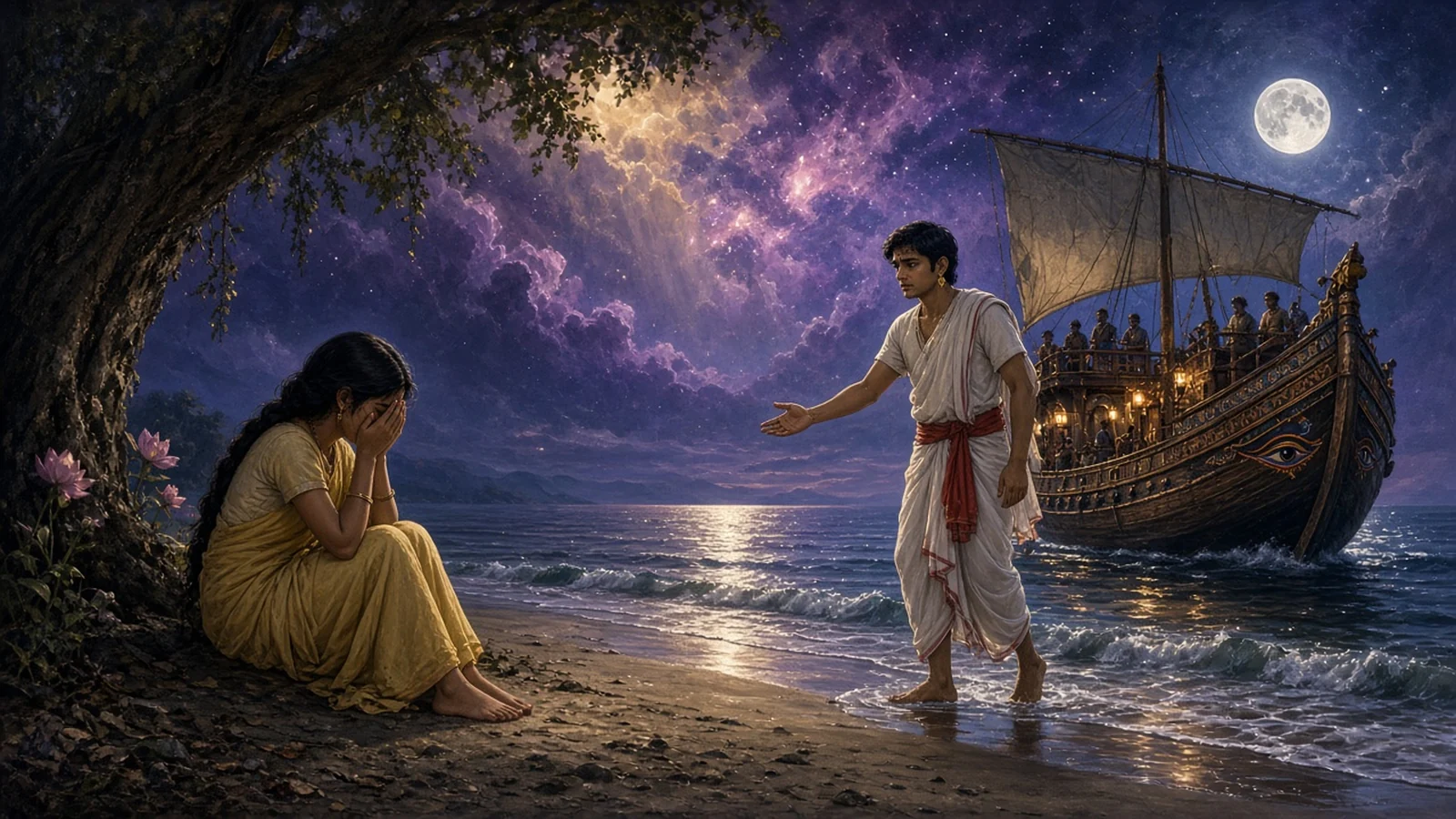
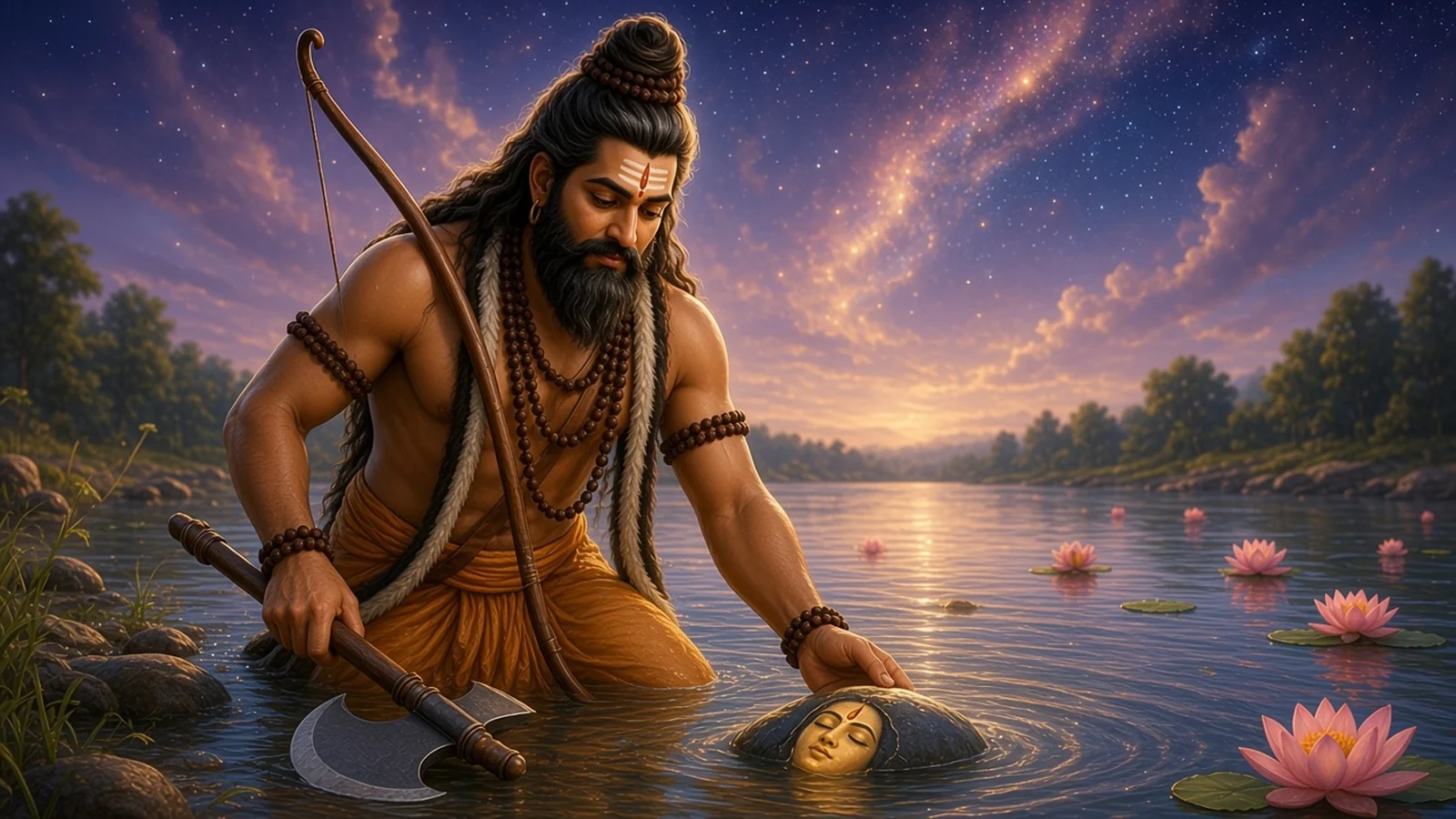
Far away, Krishna saw the goddess weeping. He told Rukmini he had to go, mounted Garuda and came to the Mysuru country, where he watched her sweat running down the hill like a river. Over it he gave his boon. Out of the sweat rose a goddess with seven hoods spread like a cobra's and seven tongues, and she took Chamundi by the hand.
"Sister, do not be afraid."
"Who are you?"
"Do you not know me? I was born from your sweat."
Chamundi was glad. "Then you are nearer to me than any sister born another way," she said. "From now on you are mine." And she told her the trouble: the brother, the blood, the demons rising from every drop.
Fire woke in the younger goddess's belly. "While I stand here, why should you fear? Not one more drop will touch the ground." She spread her seven tongues around the hill, over the rocks and down the slopes. "Stand on my tongues and fight."
So Chamundi stood on her sister's tongues and fought, and the blood fell on them and went no further. But when she looked for Aisasura he was gone. She went round the hill and all the hillocks near it and came back with nothing.
"He is in the buffalo," said her sister. "The buffalo is dead. Put your trident through it."
Chamundi drove her trident into the carcass and it split in two, and Aisasura came out in his true shape, as big as a hill, his teeth like great white radishes, his mouth as wide as a cooking pot. He came for her with his hands out.
Brahma saw her tears and was troubled, for it was he who had given Aisasura the boon of his blood. He sent down a lion made of fire, and it came to the goddess and bowed.
"Oh, a little lion," said Chamundi, and climbed on its back. From the lion she caught Aisasura by his long hair and killed him there on the hill.
When it was over, her sister asked what she should do now.
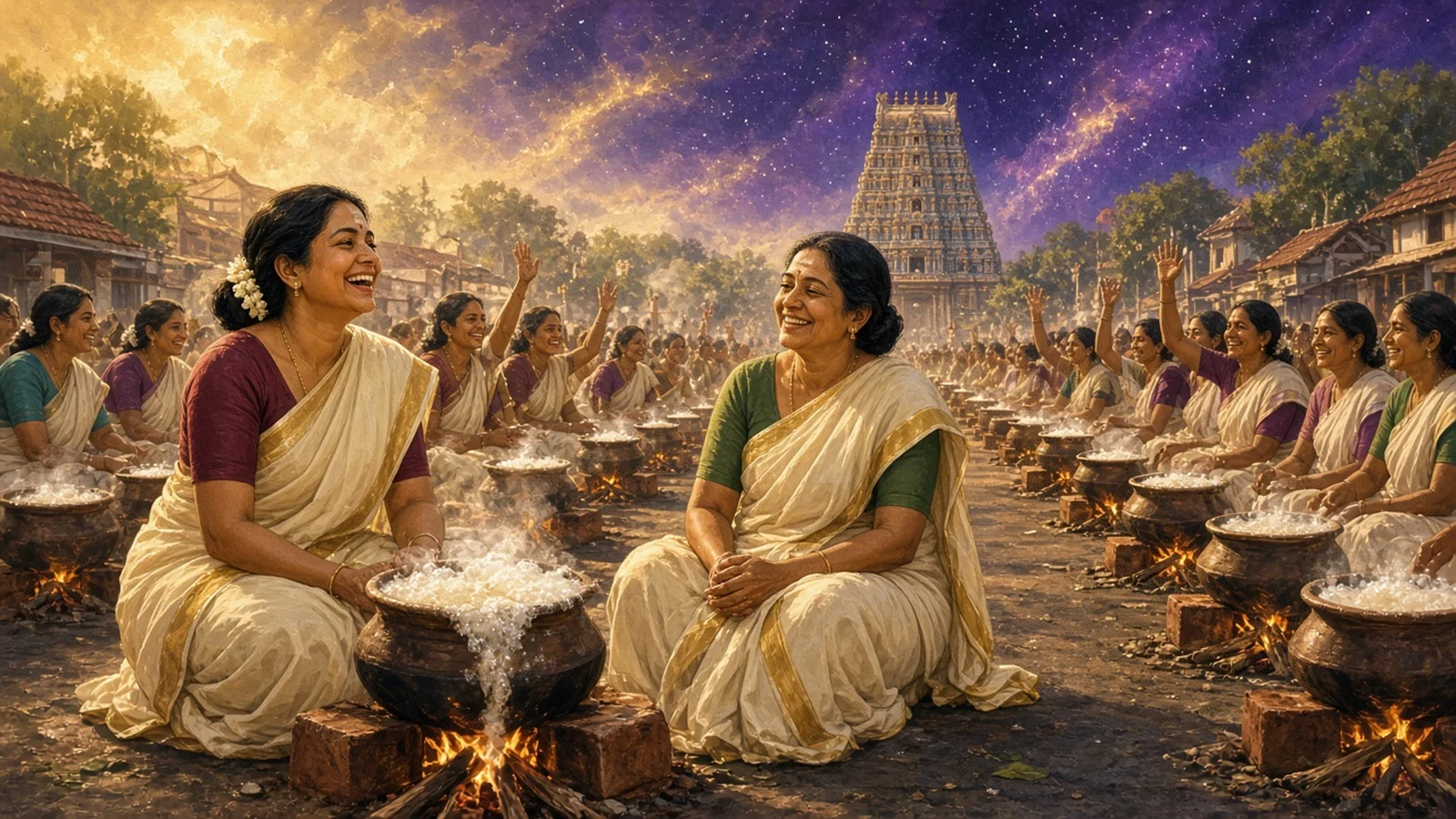
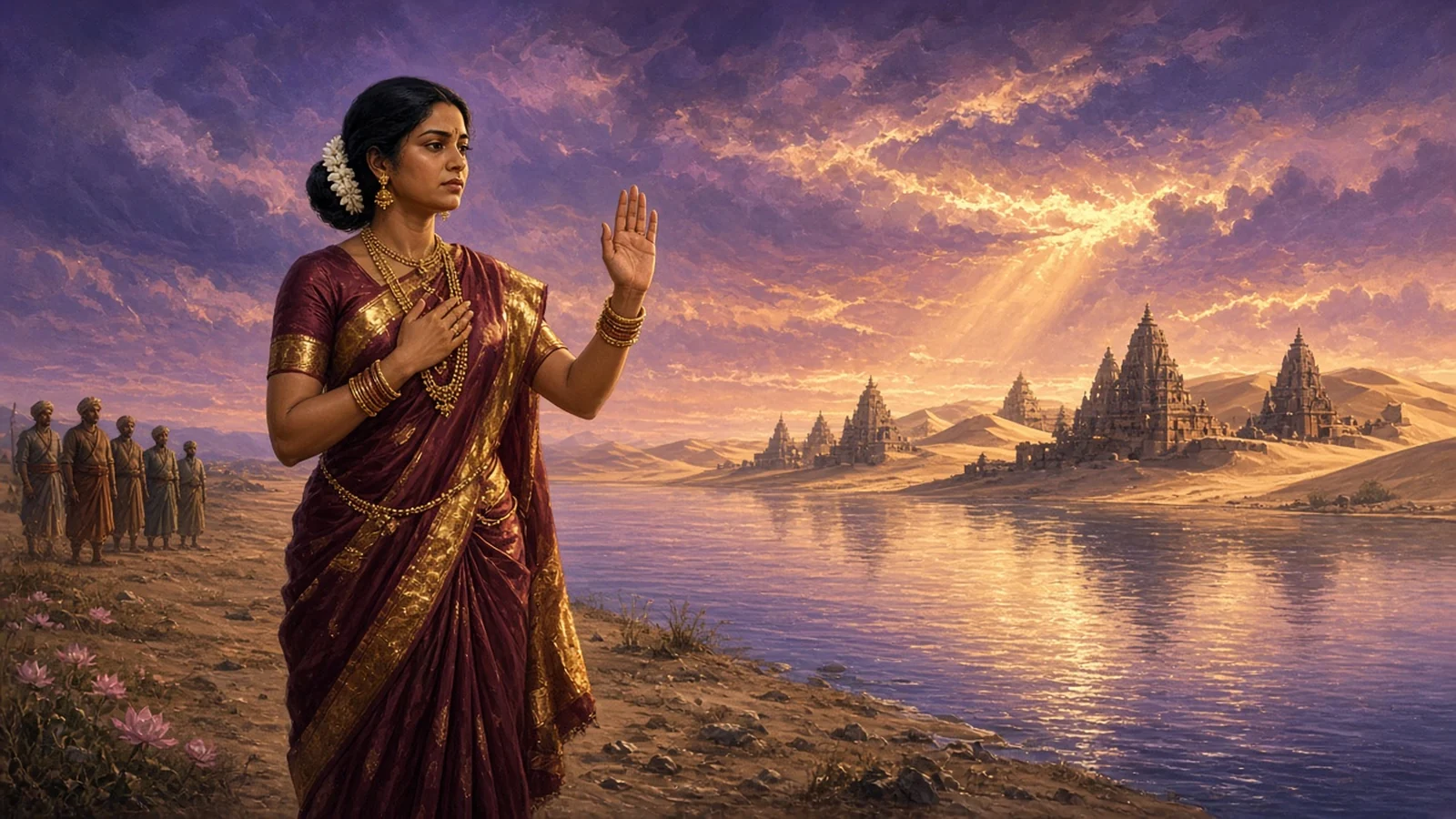
"Do not go far," said Chamundi. "I will live on top of this hill, the goddess of Chamaraja Wodeyar, and once a year I will go down to take his puja. You live at Uttanahalli, on the side of the hill. I will see that you have your puja every year, and I will send you tambittu."
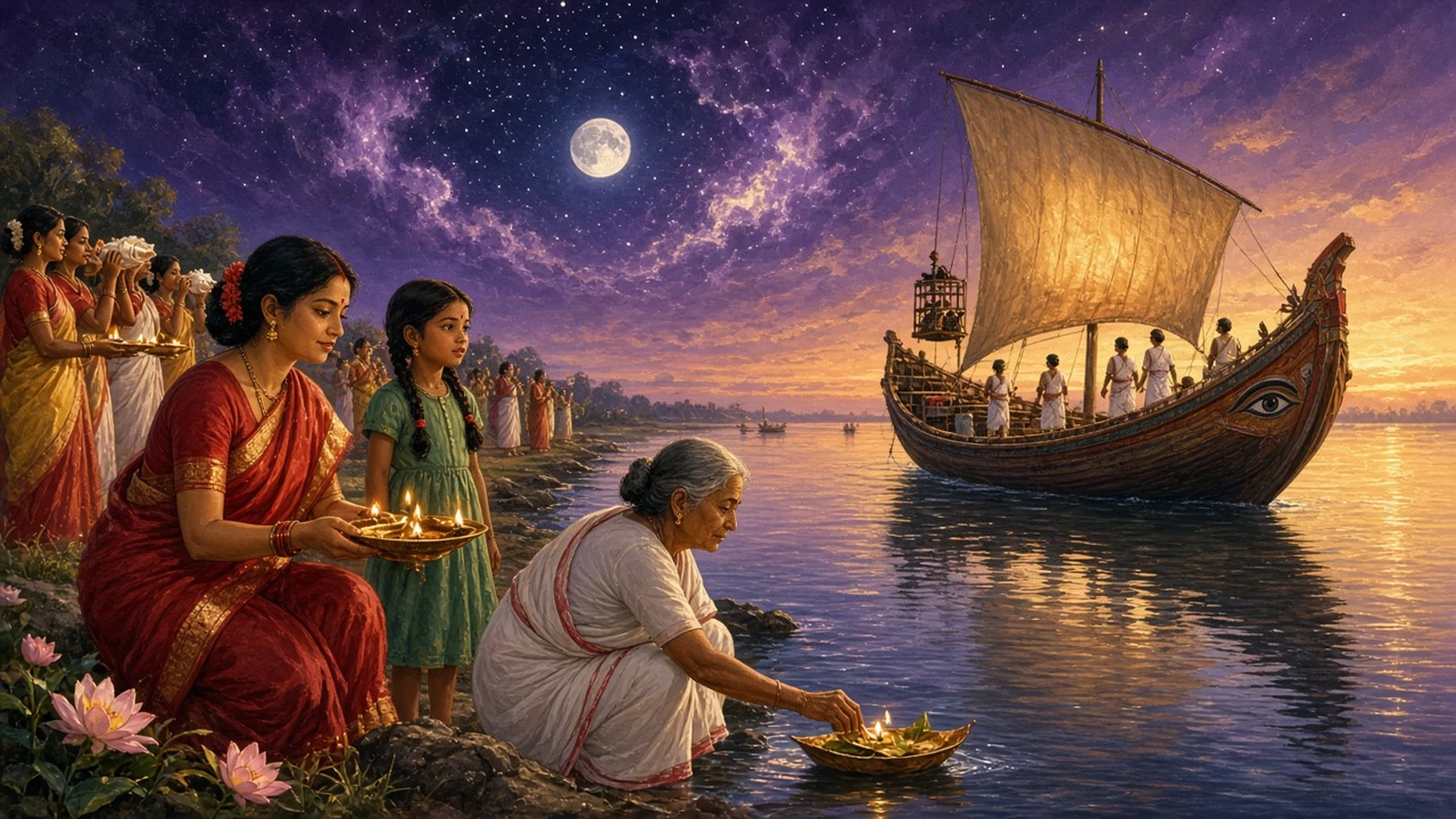
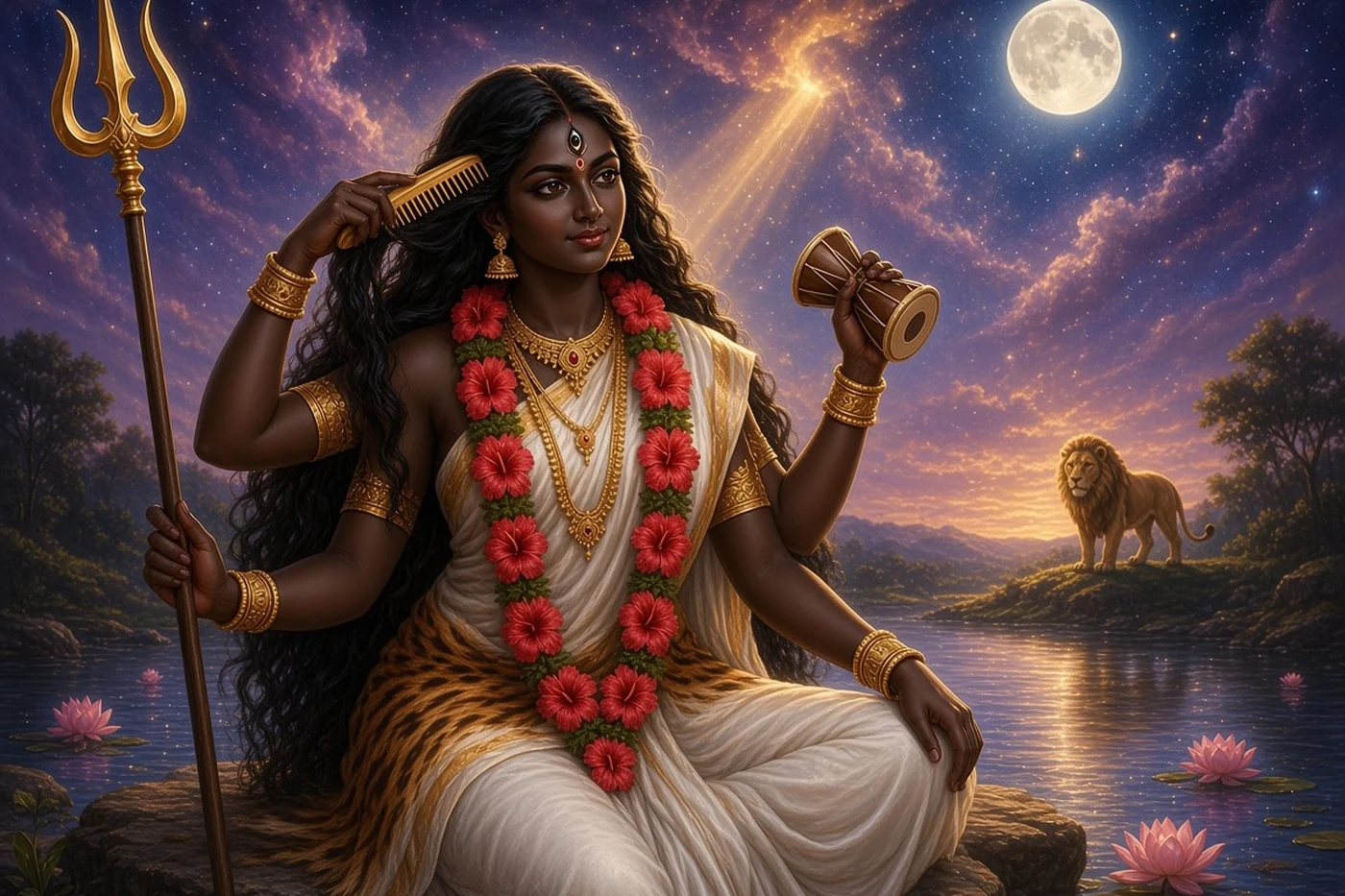
So the sister went to the village and took its name. And in the middle of the night Chamundi told the lion to wait for her and went down to the Kapini at Nanjangud. She washed the demons' blood from her right hand, put on a white sari, made herself a comb of gold and sat combing out her long hair.
As the kings made the hill
Mysuru, Chamundi Hill · 2 min read
Nobody knows when the goddess first sat on the hill. The oldest records that mention her, from the seventeenth century, call her Bettada Chamundi, Chamundi of the hill, or the Mother of the hill, and people in Mysuru still say "the hill" and "Amma". The hill had an older god. Its old name was Mahabalachala, and the temple of Mahabaleshvara there is older than hers; the Hoysala king Vishnuvardhana made it a gift in 1128.
The Wodeyars of Mysore made her their own. Hiriya Bettada Chamaraja had a tank, the Hiri-kere, dug behind her temple. In 1639 the court's writings first name her Mahishasuramardini, and from then on the hill was the place of the Devi Mahatmya's battle. In September 1647 Kanthirava-Narasaraja opened the nine nights of his Mahanavami by worshipping Bettada Chamundi, whom his court poet calls the household goddess of the royal family, before the durbars, the wrestlers and the shami puja of the tenth day. He sent gifts to her and to Jvalamukhi of Uttanahalli.
Dodda Devaraja, who came to the throne in 1659, laid a thousand steps up the hill, and in 1664 set a bull carved from a single rock midway up them, nearly five metres high. Krishnaraja Wodeyar III built her a gopura with gold finials and put statues of himself and three of his queens there, ordered her festivals and processions in 1827, and in 1843 gave her a lion to ride. In his reign Brahmin priests were placed over her temple, and the court's chronicle called her sister only Jvalamukhi, the fire-faced.
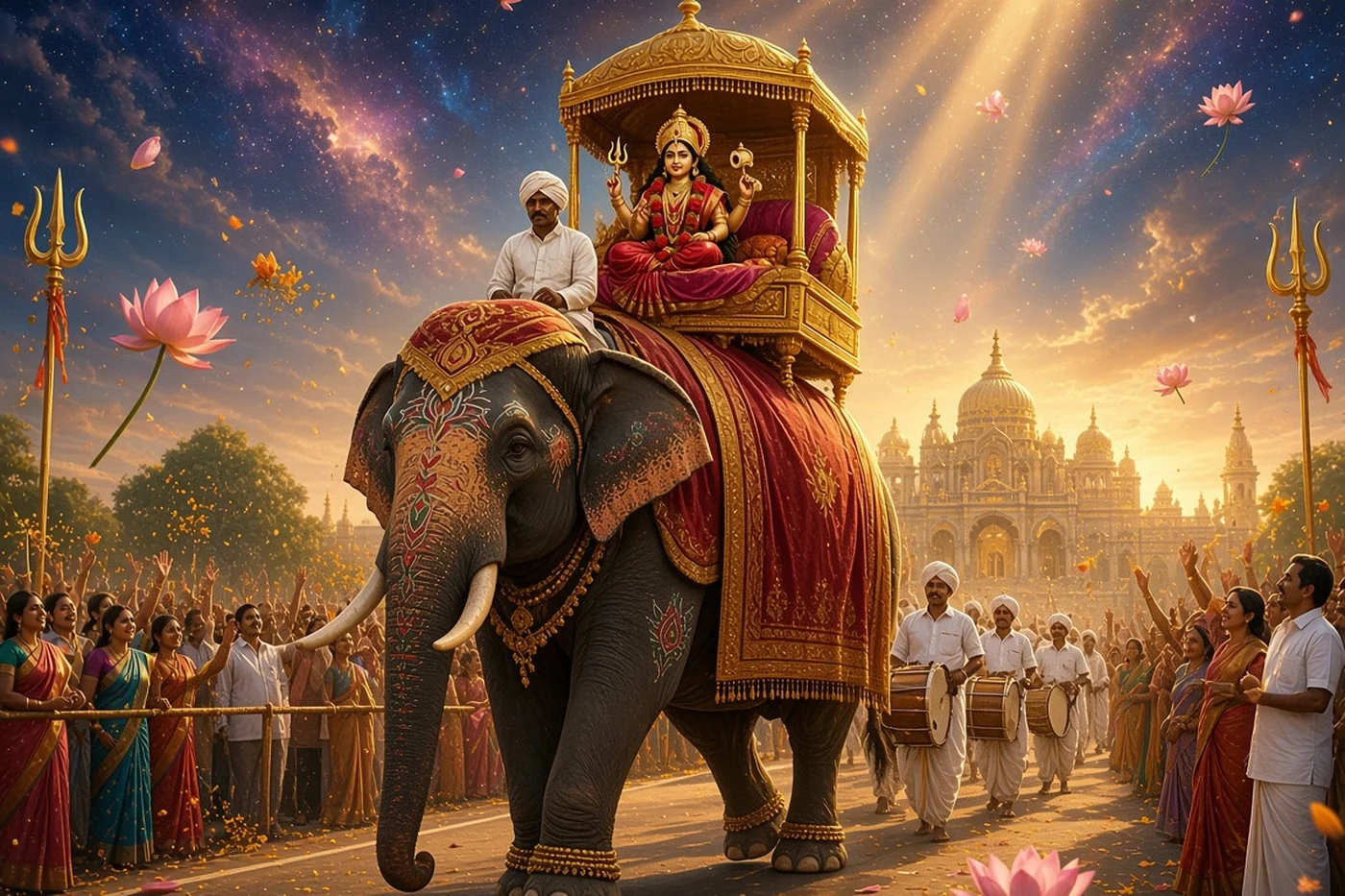
When the kings stopped ruling, the hill kept its place in their festival. The state's Dasara still opens with a puja to her in her temple, her image set in a silver chariot. On the seventh day the jewels kept for her in the district treasury are carried up to dress her. On Vijayadashami a small image of her rides through Mysuru in the golden howdah, where a king used to sit.
Near the Nandi is a place called konana mule, the buffalo's stone, with hollows in the rock like the prints of a foot, a paw and a hoof. Temple workers will walk a visitor along them and show where the goddess, her lion and the buffalo went, and devotees say the hills themselves are what is left of the buffalo's body.