As Mysuru tells it: the jewels and the river
Srirangapatna, Talakadu and Malangi · 2 min read
In 1610 the island city of Srirangapatna, in the middle of the Kaveri, passed from the old empire to the Wodeyars of Mysore. Its viceroy, Tirumala, who had held it for the emperors of Vijayanagara, was a sick man, eaten by a sore on his back that people called the disease of kings, and he had gone down the river to Talakadu to pray at the temple of Vaidyeshvara. Raja Wodeyar rode into the city.
That September the new master of Srirangapatna kept the nine nights of the goddess as the emperors had kept them. On the eve of the festival his eldest son, Narasaraja, died.
The learned men of the court came to him. "Lord, there is a death in the house. Can the feast still be held?"
"It will be held," said the king. "And from today, no death in this house, however near, will stop it."
The nine nights went ahead.
At Talakadu, Tirumala died. His wife Alamelamma had long been a devotee of Ranganayaki, the goddess beside Ranganatha in the great temple of Srirangapatna, and now, a widow, she gave her jewels to the goddess. On Tuesdays and Fridays Ranganayaki wore them, and among them was a nose ring of pearls. On the other days the jewels came back to Alamelamma, who kept them with her at Malangi, across the river from Talakadu.
The temple's people went to the new king. The goddess's jewels, they said, belonged in the temple's keeping. Raja Wodeyar agreed, and sent his men to Malangi.
"The king asks for Ranganayaki's jewels," they told her.
She gave them the nose ring. "Take the goddess this," she said. "The rest stay with me."
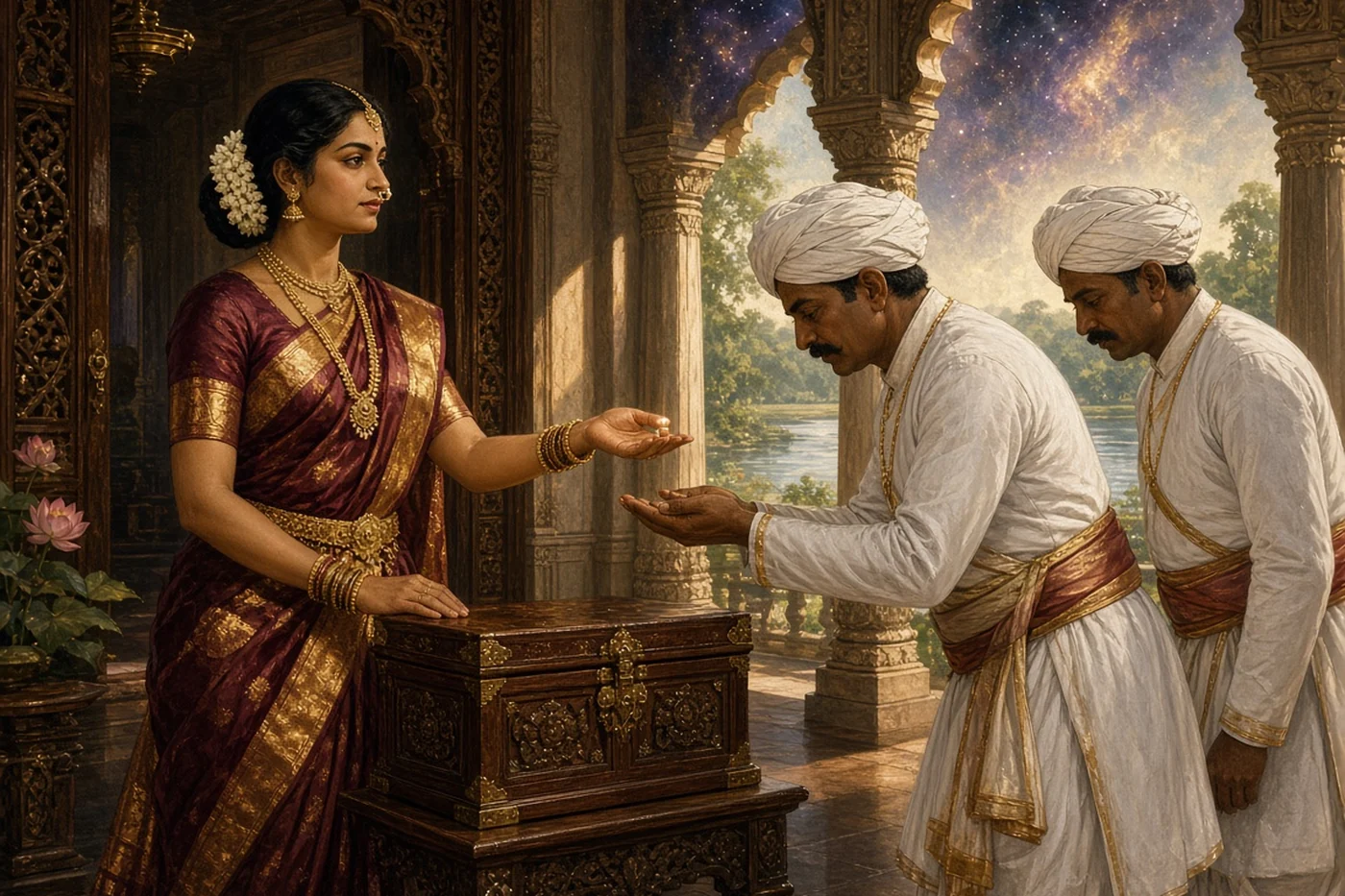
The men went back with the nose ring, and the king sent soldiers.
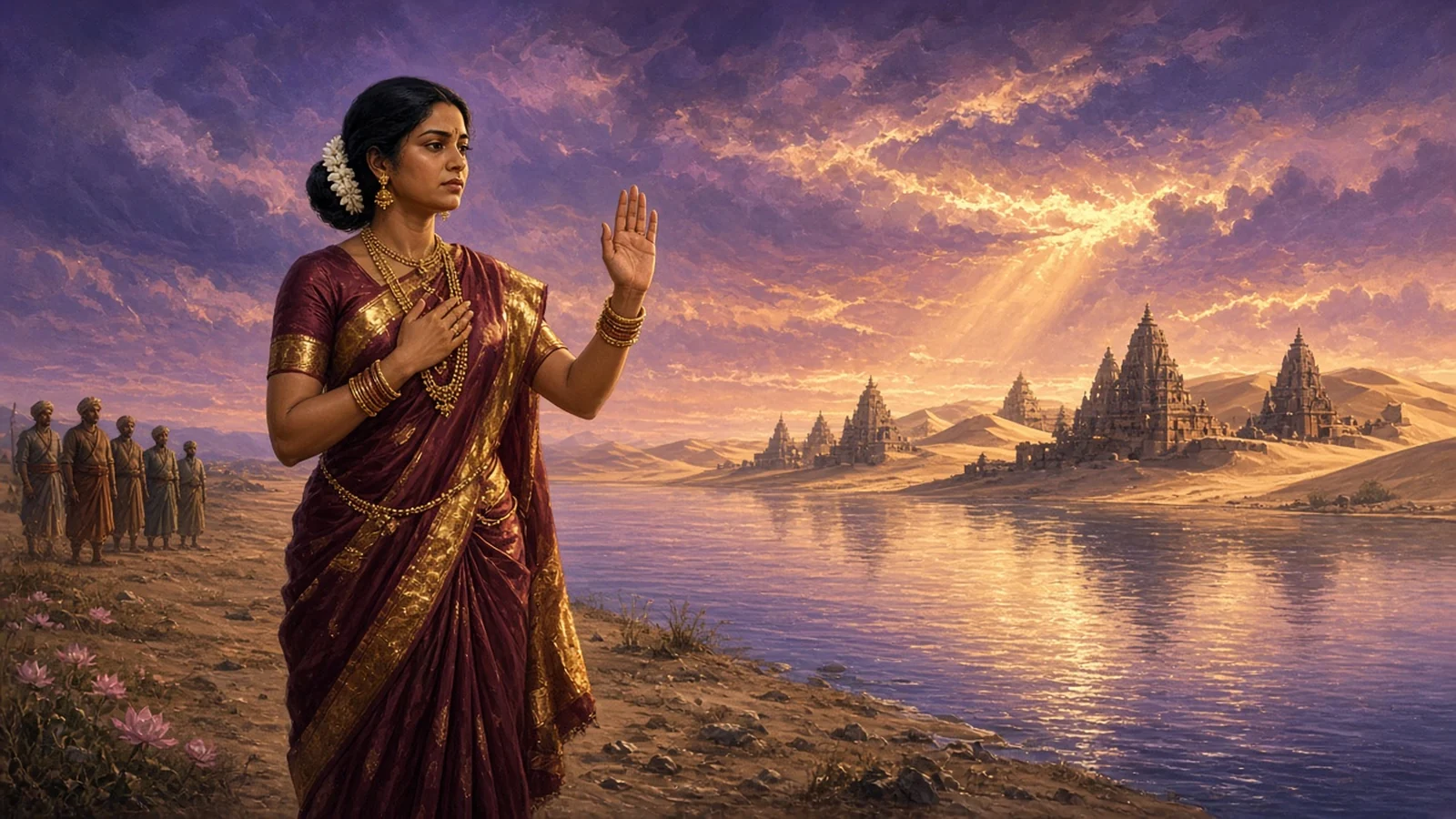
Alamelamma saw them coming along the bank. She went down to the place where the river turns in a whirlpool, with the jewels about her, and she spoke to the soldiers and to the king who had sent them.
"Let Talakadu turn to sand. Let Malangi become a whirlpool. Let the kings of Mysuru have no sons to follow them."
Then she went into the Kaveri, and the whirlpool took her and the jewels with her.
When Raja Wodeyar heard what had happened, he had an image of her made and set up in his palace, and he offered it worship. The family has gone on worshipping it ever since, and during Dasara her image wears the pearl nose ring she sent back.
People in Mysuru will tell you the curse has held. The old town of Talakadu lies under sand, some thirty of its temples buried beneath dunes that once crept forward nine or ten feet a year. And again and again the throne of Mysuru passed not from father to son but to a boy adopted into the house.
As the historians tell it
Srirangapatna, Hampi and Mysuru · 2 min read
The historian Hayavadana Rao, writing in 1943 from the court poems and chronicles, tells the fall of Srirangapatna as a war. Tirumala, nephew of the emperor Venkata, had quarrelled with the rising Wodeyar for years. Early in 1610 the chiefs who gathered for him north of the city were routed by Raja Wodeyar's son Narasaraja, and Tirumala, alone and without allies, slipped away towards Malangi near Talakad, leaving his family behind. Raja Wodeyar sent Tirumala's queen, Rangamma, after him under escort, and on 8 February 1610 he entered the city. Rao calls it a conquest. Other accounts, as later writers sum them up, have the viceroy giving the city up in his illness, or the emperor ordering it, and the emperor confirming the grant in 1612.
Rao follows a traditional account of that first Navaratri, 8 to 17 September 1610, with the son's death on the seventh and the king's ruling after it. The feast he continued was the empire's.
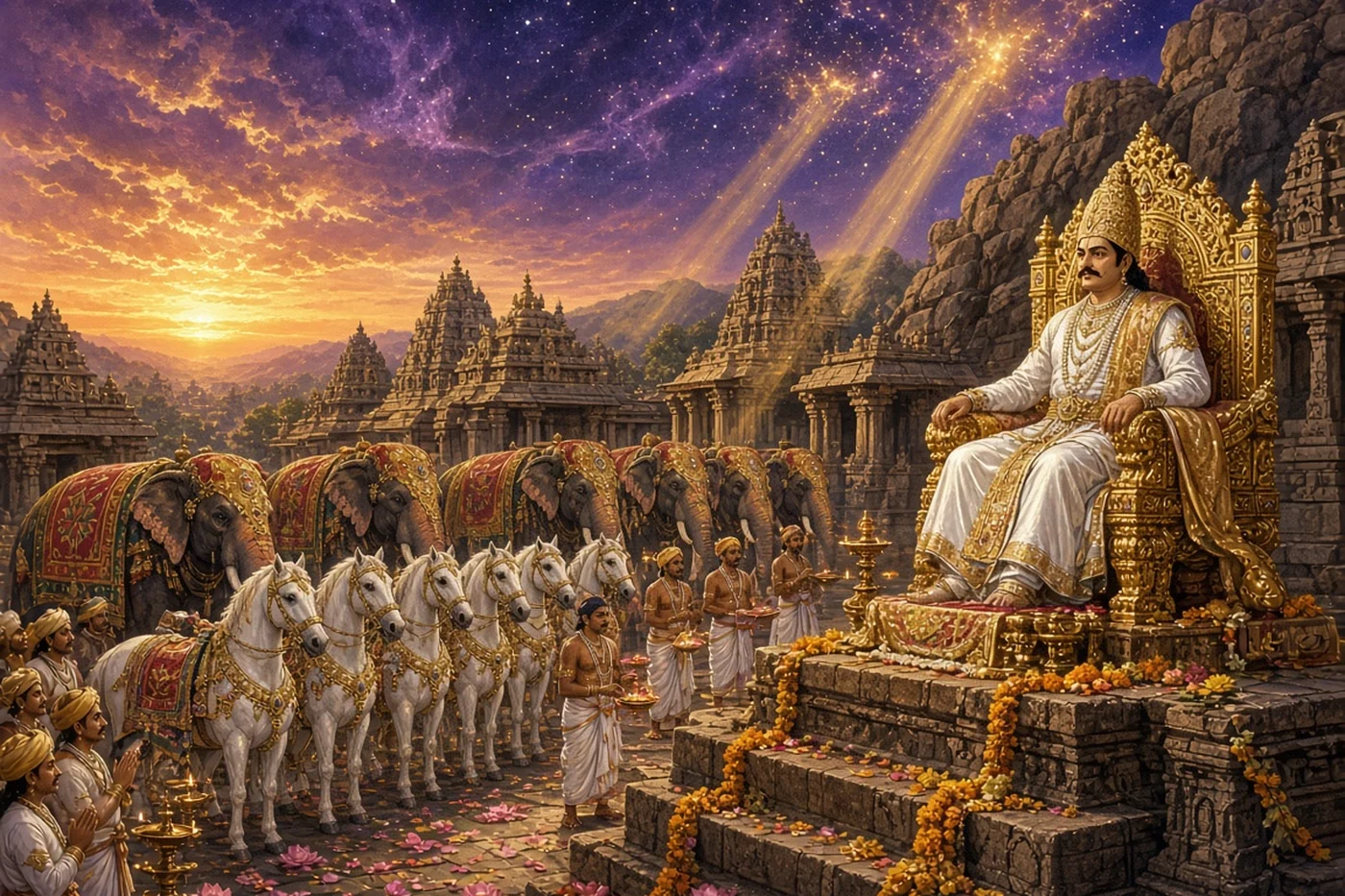
Domingo Paes, a Portuguese visitor, watched the Mahanavami at Vijayanagara in 1520: nine days from 12 September at the king's House of Victory, wrestlers and dancing women, buffaloes and sheep killed by the hundred and on the last day by the thousand, and the king fasting throughout. Fernão Nuniz, some years later, adds the captains bringing their rents, nine horses and nine elephants blessed before the king, and a throne of gold and gems used once a year. The Persian envoy Abdur Razzaq described a festival there in 1443, though Robert Sewell, who translated Paes and Nuniz, doubted it was the same one.
Of Alamelamma the early sources say nothing. Rao found her only in the Annals, a later chronicle of the royal family, where she drowns at Malangi when made to give back the jewels of the Ranganatha temple, and he noted that the earlier sources know neither Tirumala's two wives nor the incident. The historian Nanjaraj Urs goes further and says there was no Alamelamma at all.
The historian A. Veerappa sees no room for a curse, but counts six rulers since the seventeenth century who were adopted sons. Srikantadatta Wadiyar, who died childless, said no document supports the legend, and that the family still worships her image at Dasara. In December 2017 a son was born to his adopted heir Yaduveer, the first birth in the family since 1953, and the papers wrote that the curse was broken.