As Banki tells it: Parashurama's stone
East India · Banki, on the Mahanadi · 2 min read
There is a story Banki tells about Parashurama, Rama of the axe, from the time after his mother died by his hand.
At his father Jamadagni's command he had struck off the head of his own mother, Renuka, without stopping to think. The site tells that day in The Axe and the Mother. His father gave her back her life at his asking, but Banki remembers the son's remorse.
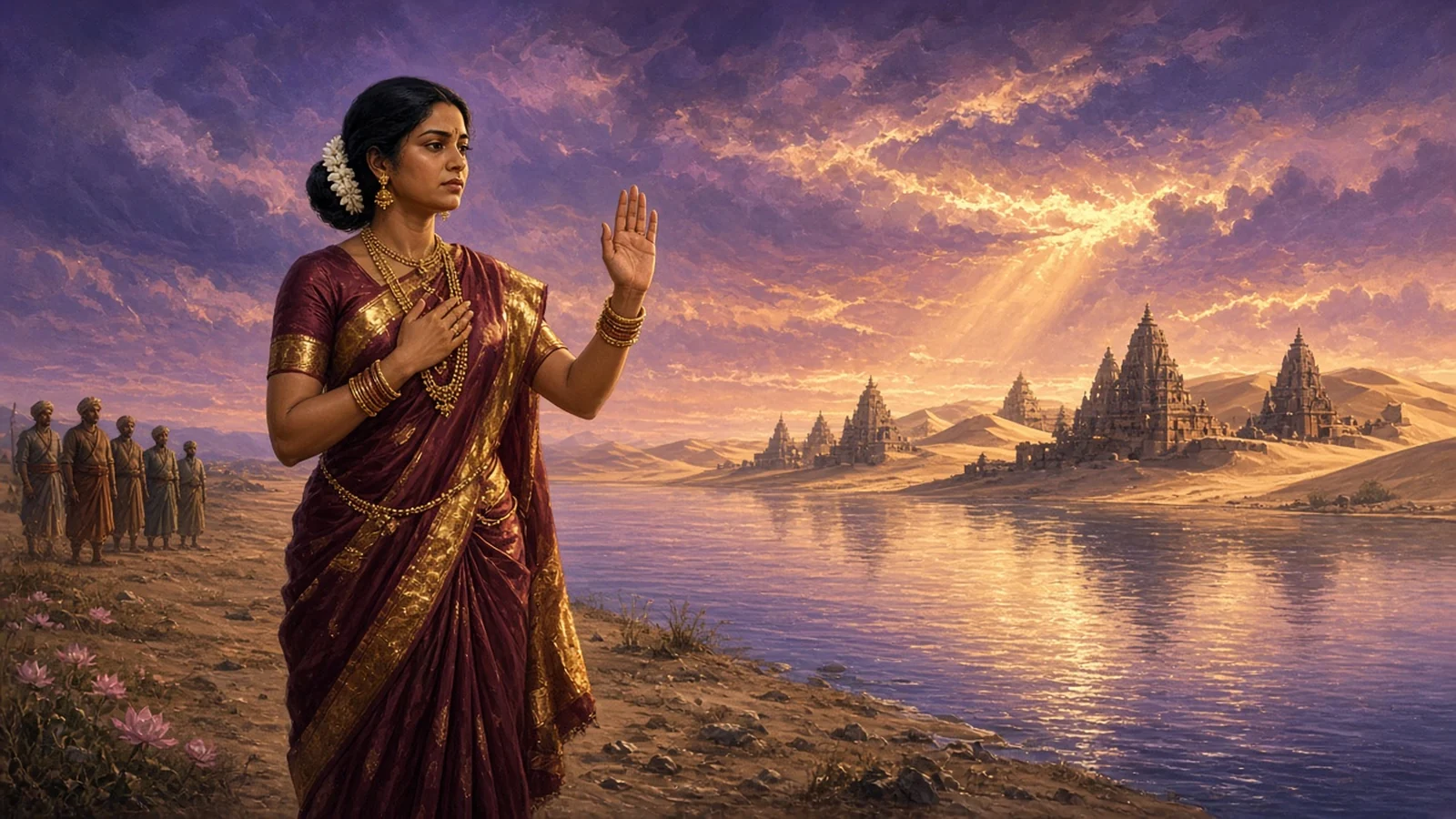
Devotees in Banki say that his remorse brought him to the bank of the Mahanadi in Odisha, to a low hill they call the Ruchika hill. There he sat down to repent. And there, from the great river, he drew a stream of water of his own, and gave it his mother's name.
"You will be called Renuka," he said to it.
The Renuka still runs below the hill.
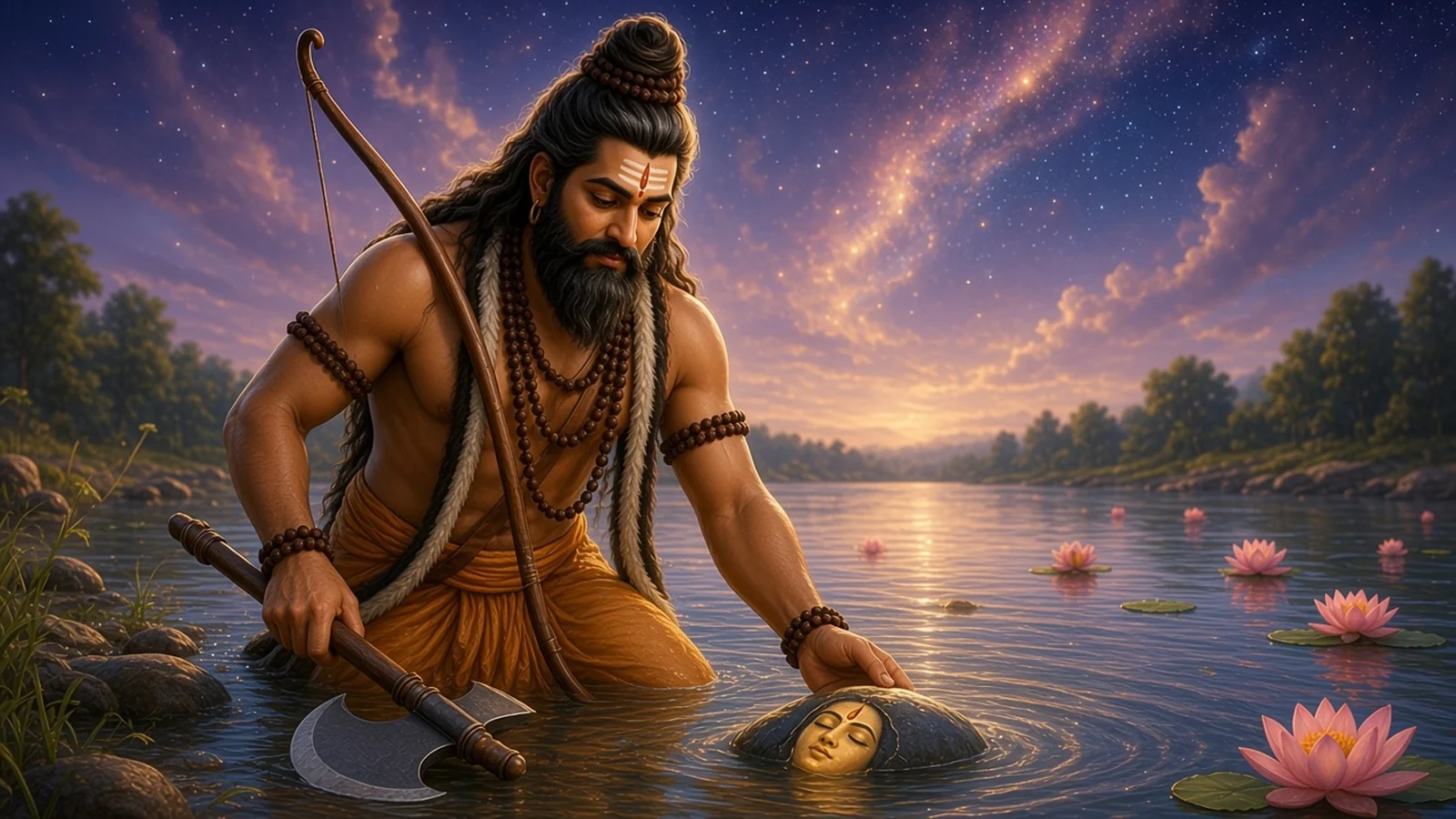
One evening Parashurama went down to bathe in the Mahanadi. As he stood in the water he saw a stone near him that would not lie still. It rose to the surface, sank, and rose again, over and over, as though it were breathing.
He waded closer and looked. On the stone was the face of a woman.
He lifted it out of the river and carried it up with him, and on a spot of his own choosing he set it down and began to worship it. Some in Banki say instead that Parashurama made the image himself. Either way, devotees agree that it was Parashurama who first gave the goddess a place here.
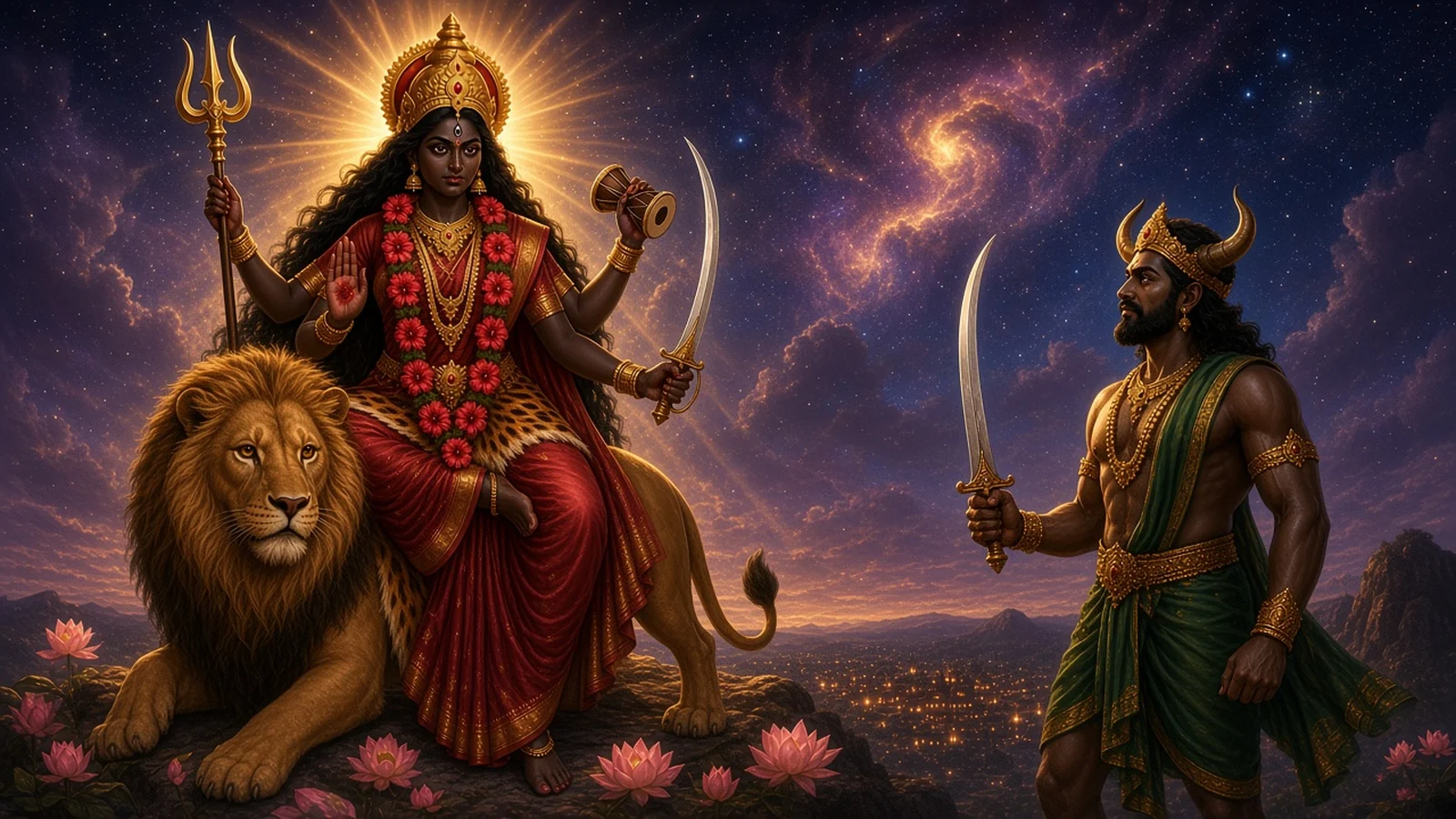
Later the goddess came to him in a dream. She was Charchika, the name Banki gives to Chamunda.
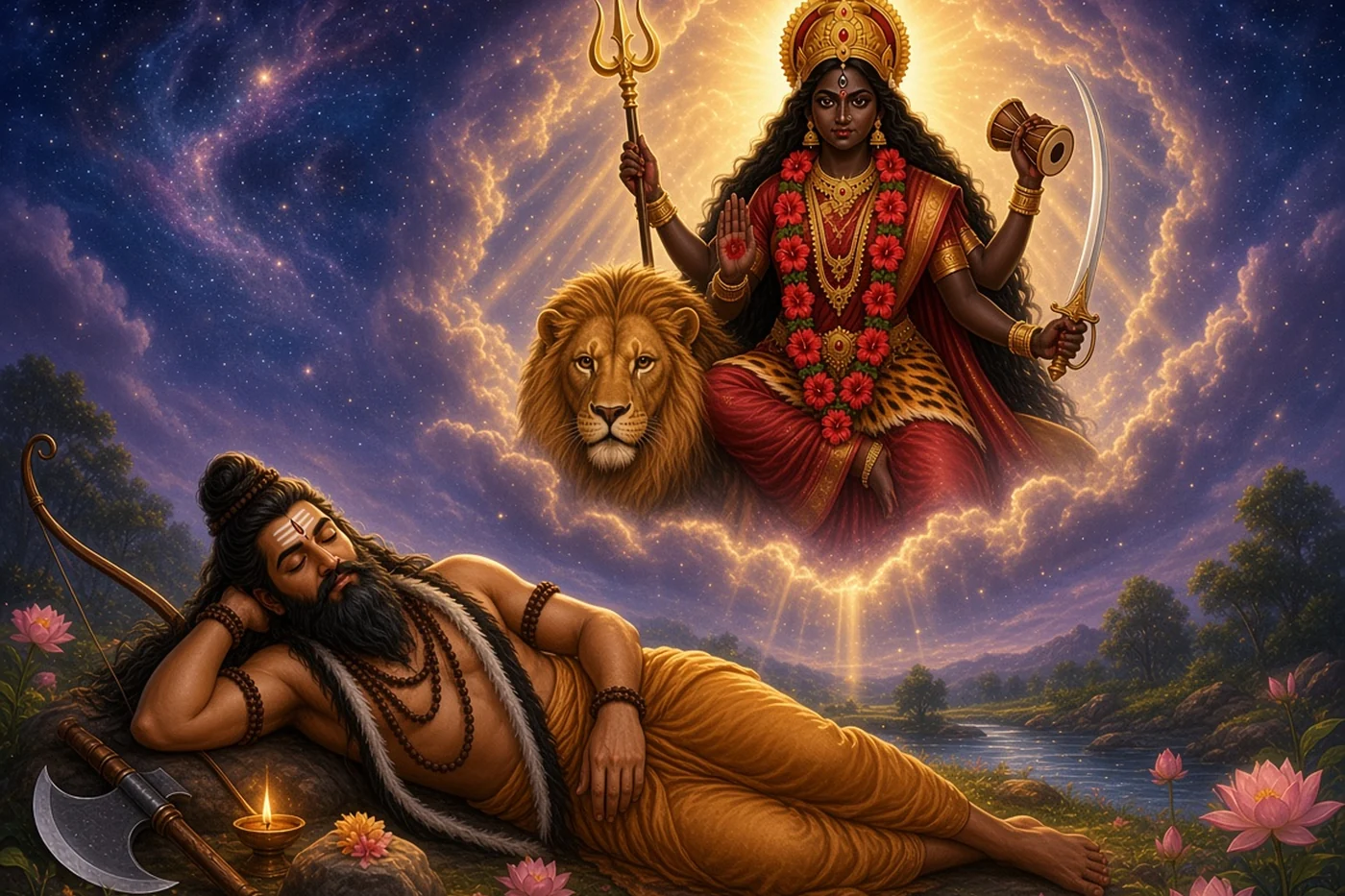
"Build me a temple here," she told him.
Word of her went out along the river. People came to see the goddess Parashurama had found, and they went home and told others.
"There is a goddess by the Ruchika hill," they said. "Parashurama found her in the river."
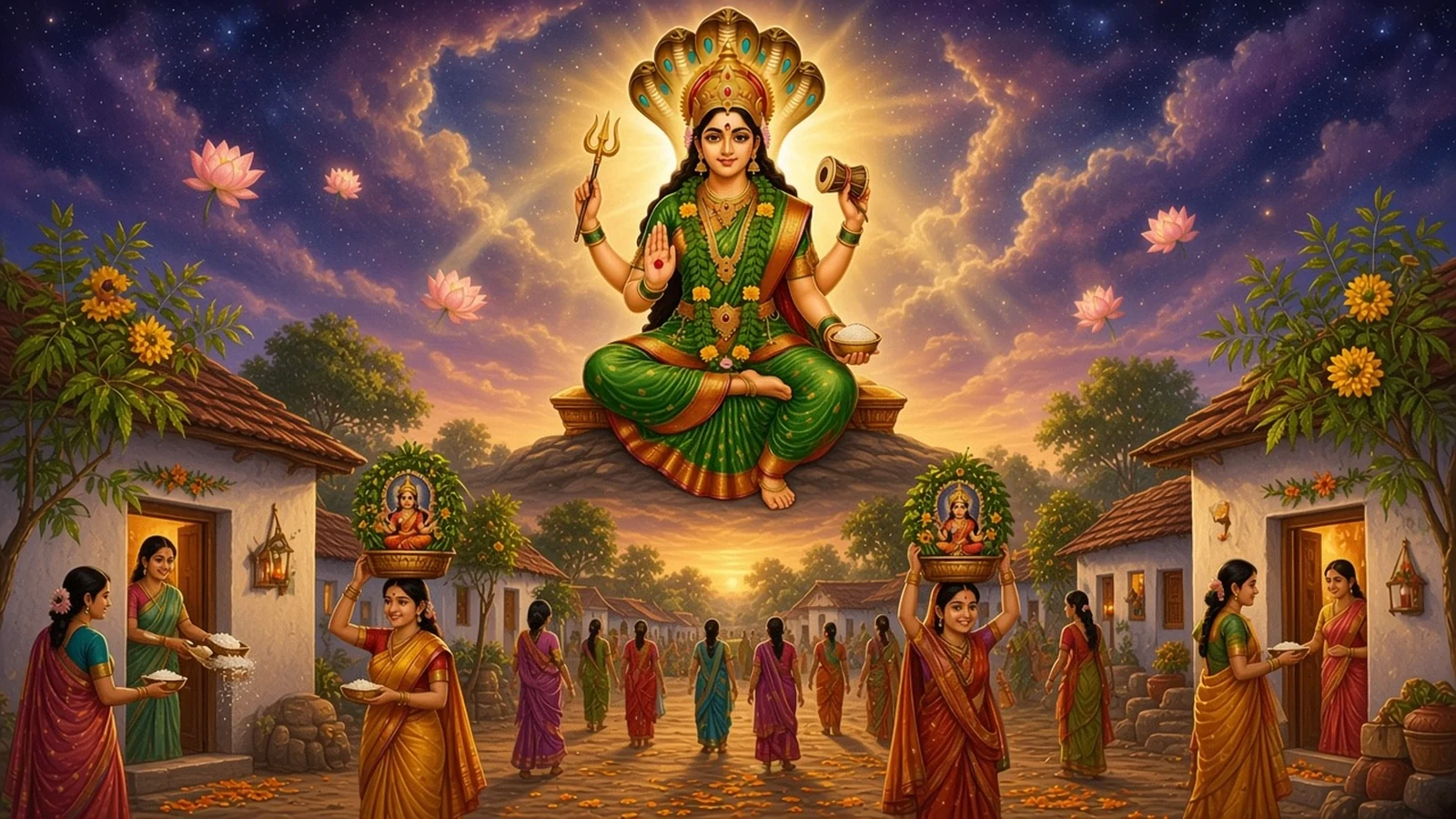
When the news reached the ruler of Banki's fort, he built her a temple. The people of the villages around came in crowds for her blessing, and they have not stopped coming.
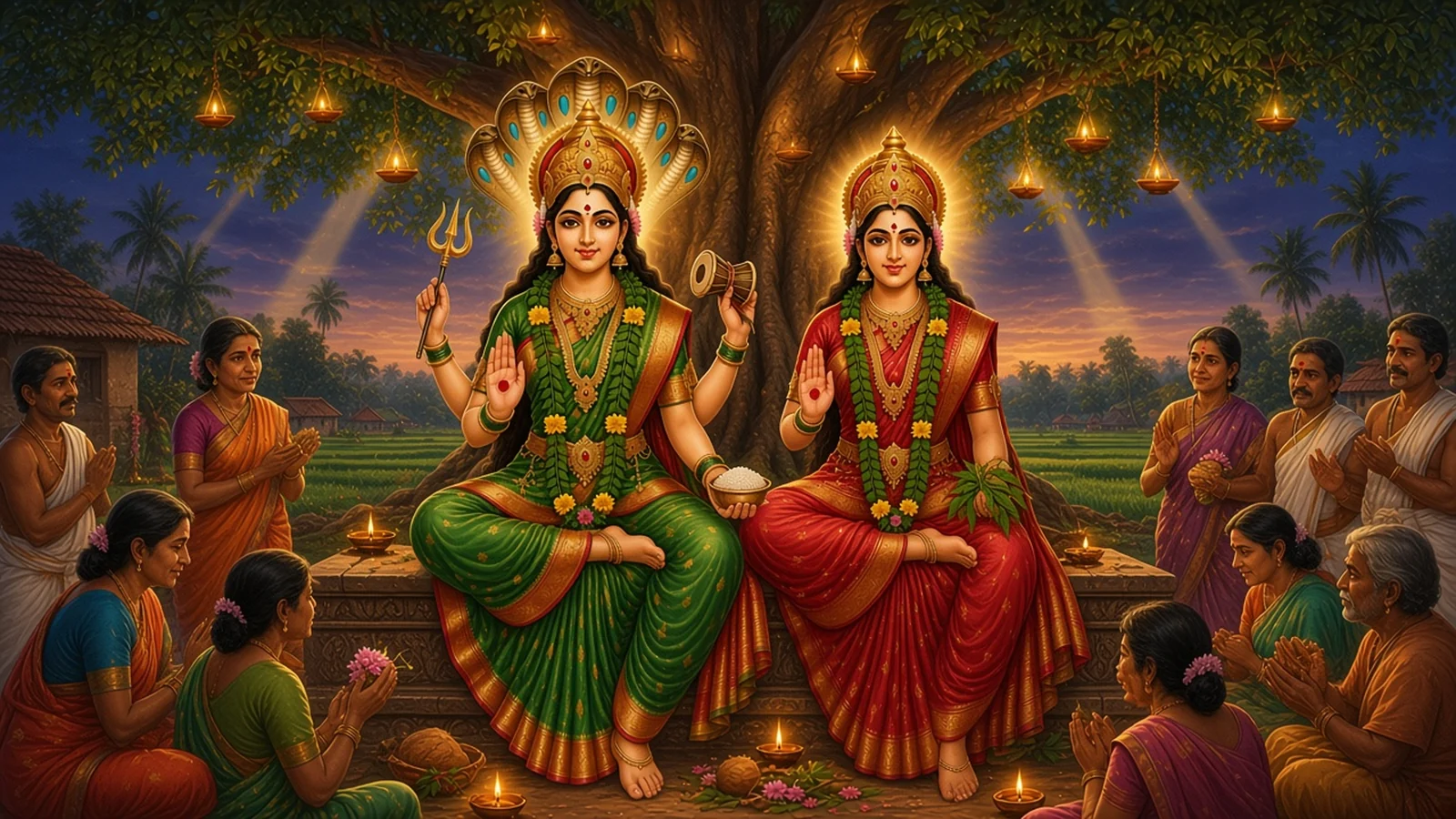
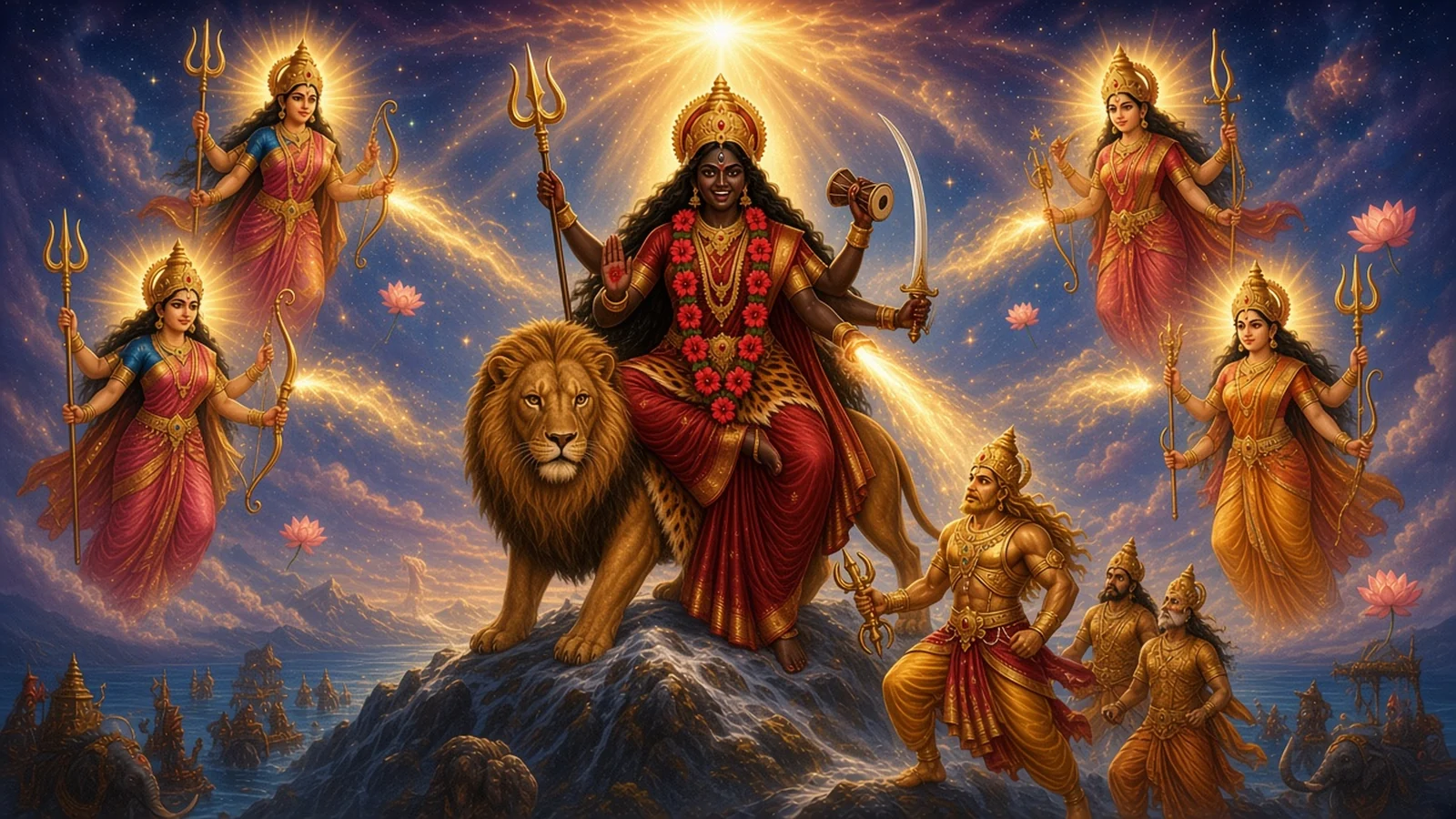
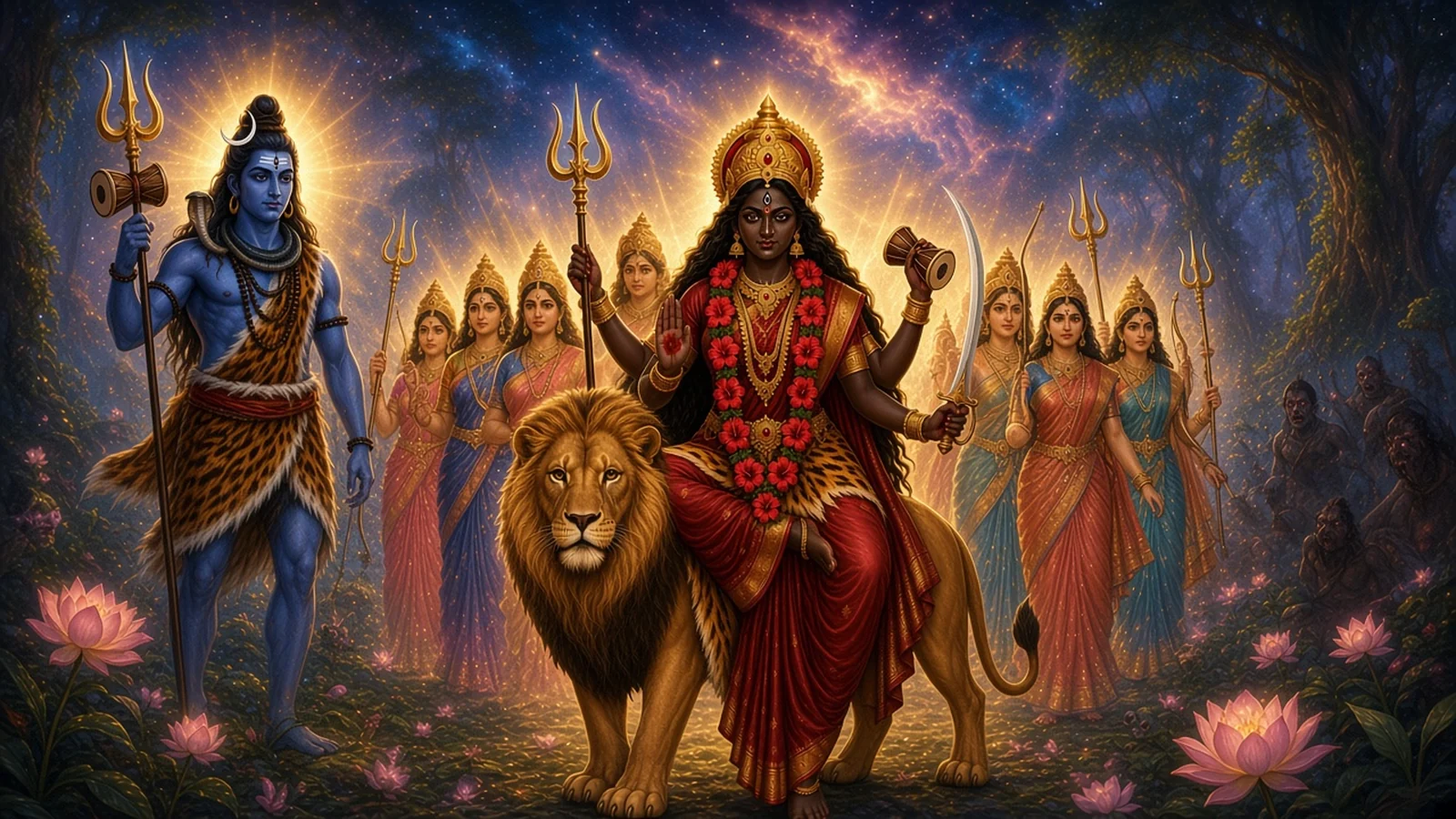
She sits there now in her shrine above the Renuka, eight-armed, on a fallen body, with a garland of skulls. In her right hands are a sword, a trident and a dagger, and the fourth is open to give. In her left are a severed head, a cup of blood and a small drum, and one finger is dipped in red. She is frightening to look at. In the evenings, devotees also go to the shrine of Dakshina Chandi to offer food.
As the river story is told: the house under the Renuka
East India · Banki, the Renuka river · 1 min read
Banki has a second story about the river, and in it Parashurama does not dig it at all. The goddess sends it.
There was once a man who worshipped Charchika faithfully, and in time, the story says, he pleased her.
Then he robbed her. He took away everything that belonged to the goddess, her things and all her ornaments, and with what they were worth he built himself a house.
The story does not give the man's name, and it does not say whether anyone saw him go. It says only what she did. She meant to punish him and to leave him without a home, and so she made a river, and she made it flow on the very spot where his house stood. The house went under the water, and the river that covered it is the Renuka.
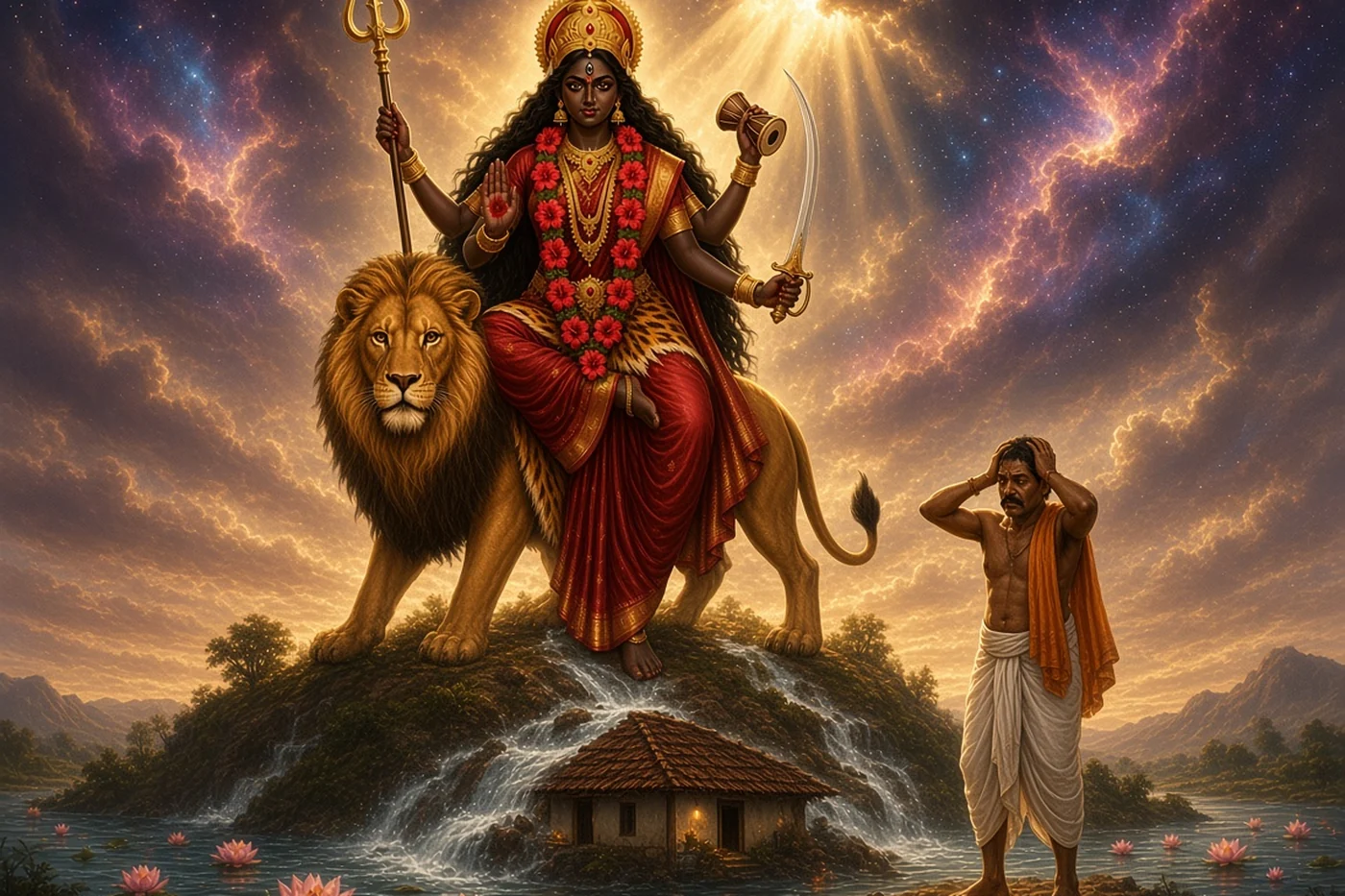
The two stories cannot both be how the river began, and Banki keeps both. One gives the river a son's grief, the other a goddess's anger. In both, it runs past the foot of her hill, and in both, the goddess on the hill is Charchika.
The river has kept moving since. In 1982 a great flood re-formed the Renuka, and the temple itself is not the first one: the building that stands today was raised again in the nineteenth century. The goddess inside it is much older than the walls. The ceiling of its wooden hall is carved and painted with animals and birds and with scenes from the Bhagavata Purana. Below the hill runs the river that the two stories quarrel over.