Who Chamunda is
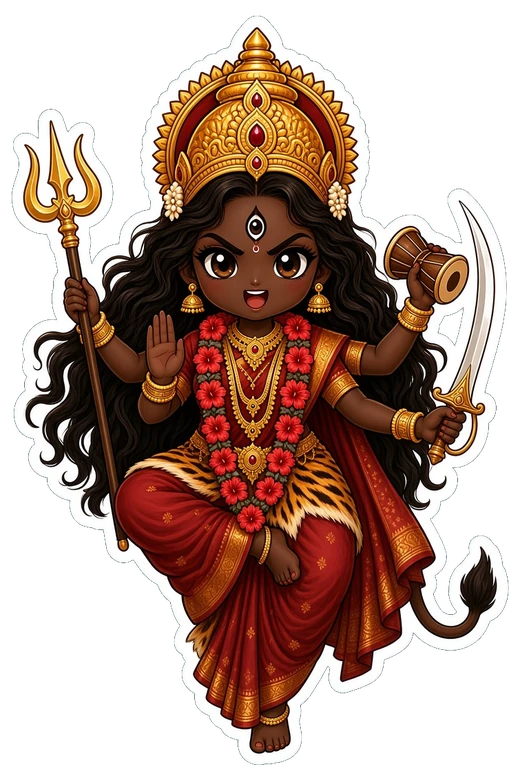
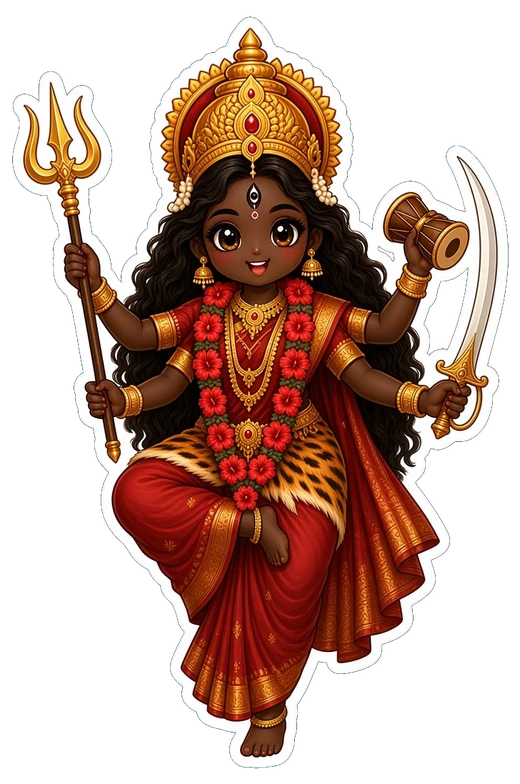
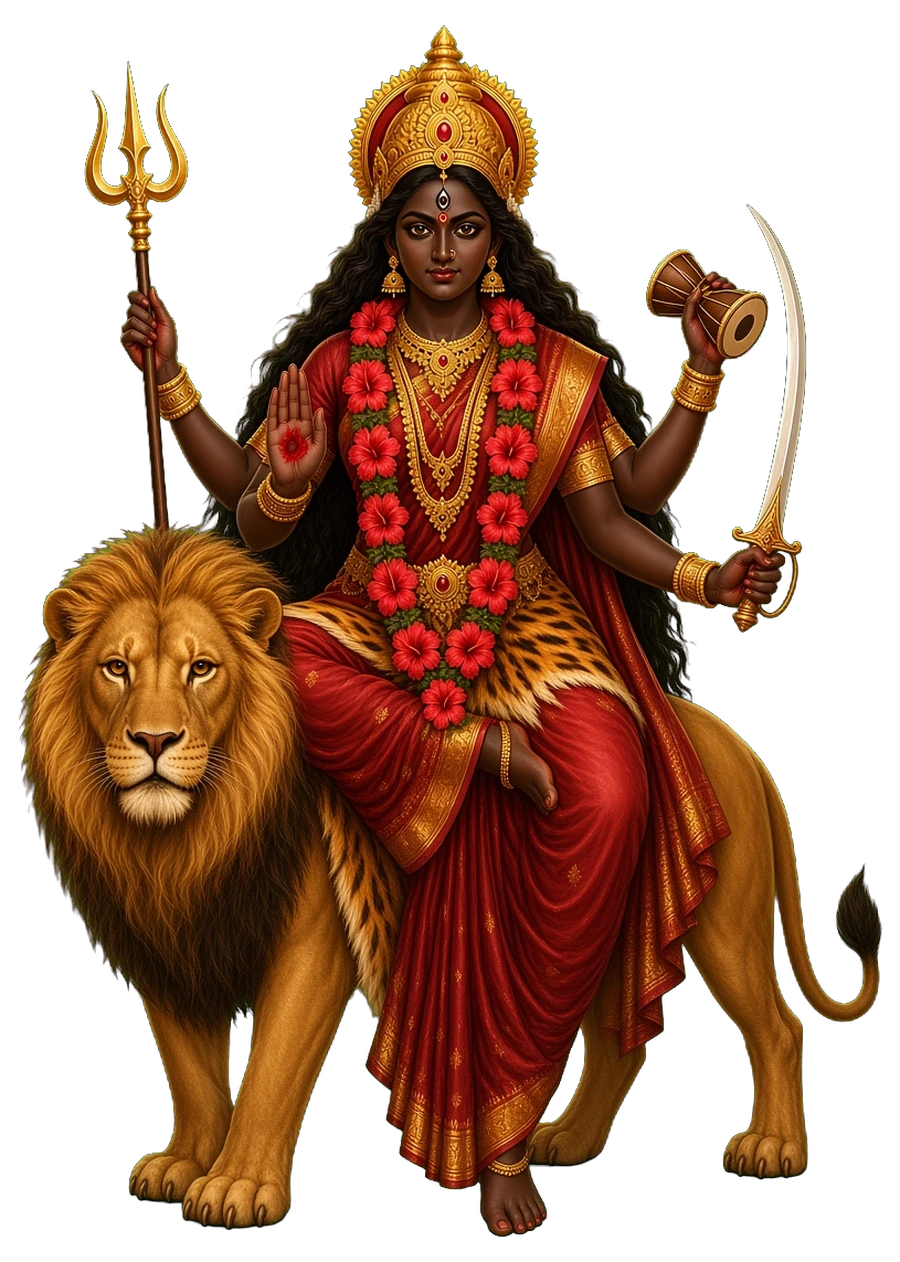
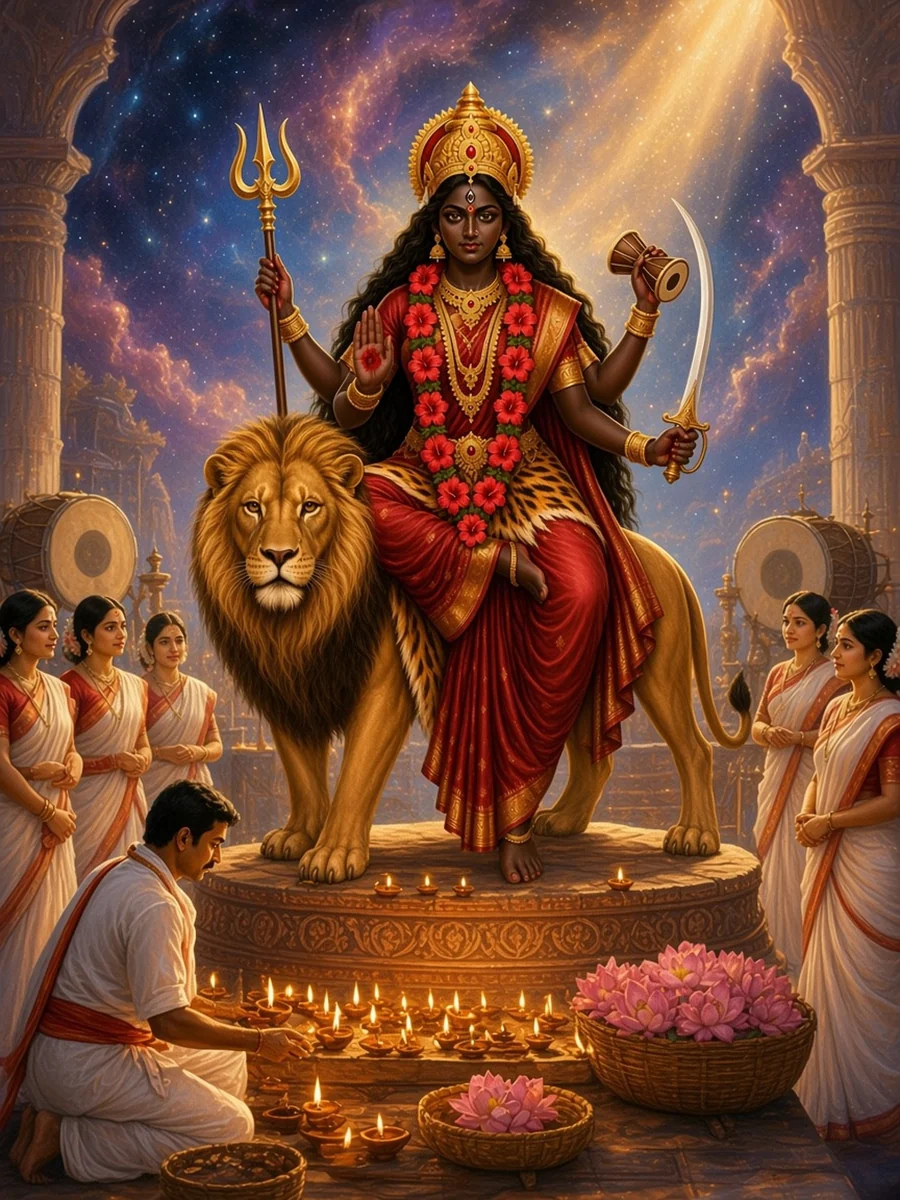
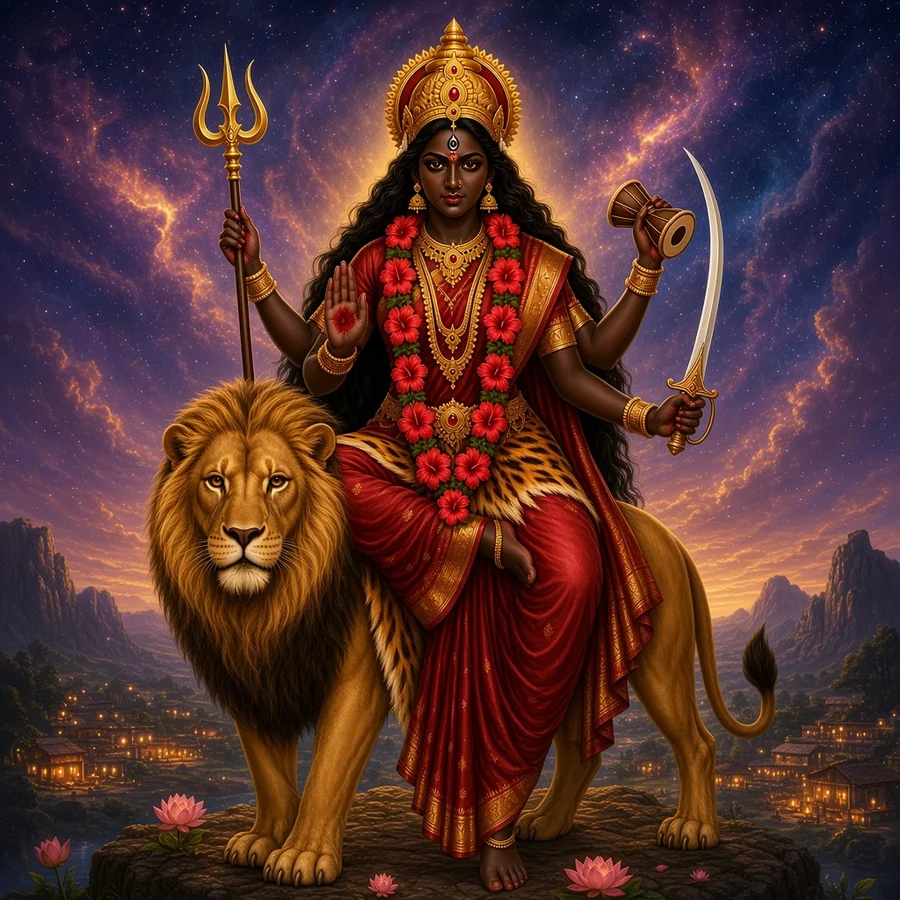
Chamunda is the most frightening of the Mothers and one of the best loved goddesses of India's hilltops. She is gaunt to the bone, her eyes sunk deep and red, with a tiger skin, a garland of heads and a mouth wide open, and she sits on a corpse. People climb hills to her with their vows all the same.
Her name is a gift. In the Devi Mahatmya the demon generals Chanda and Munda come to seize the Goddess, and Kali springs from her angry brow, destroys their army and comes back laughing with their two heads. The Goddess names her for them:
Yasmach chandam cha mundam cha grihitva tvam upagata, chamundeti tato loke khyata devi bhavishyasi: Because you have seized Chanda and Munda and brought them to me, goddess, the world will know you as Chamunda (Devi Mahatmya 7.27).
In the next battle she drank the blood of Raktabija, whose every drop became another demon. That night is told on this site as The Night Kali Was Called.
Other Puranas give her other beginnings. The Varaha and Padma Puranas make her a goddess sprung from Rudra, doing penance on a blue mountain, who killed the sea-demon Ruru, and the Varaha takes her name from his skin and his head. The Matsya Purana counts her among the Mothers whom Shiva made to drink the blood of the demon Andhaka, and the Vamana Purana gives that drinking to a girl born of Shiva's sweat and called Charchika, a name the dictionaries and the temples give to Chamunda.
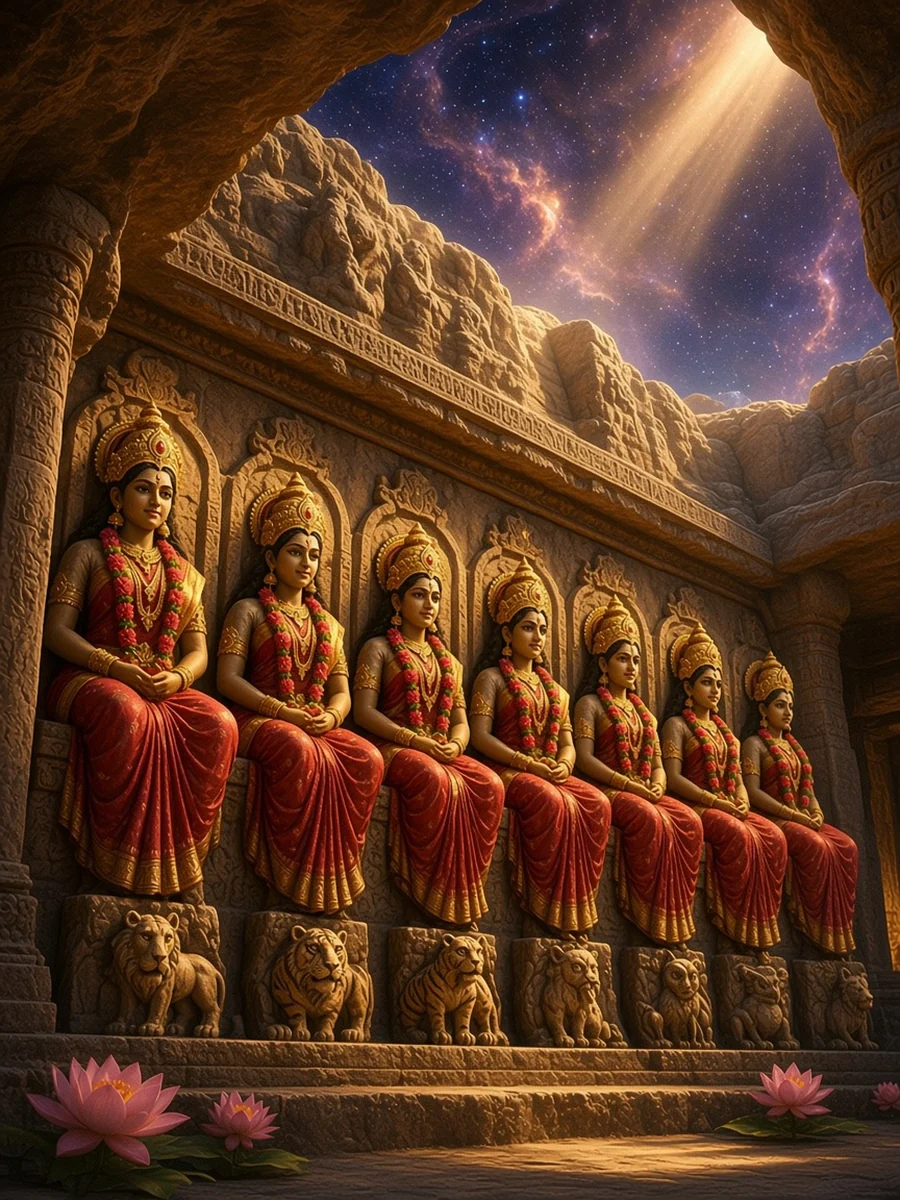
She is one of the Seven Mothers, the goddesses who stand in carved rows on temple walls, each the power of a god. Chamunda comes last in the row, and she alone is the power of the Goddess herself. The scholar David Kinsley calls her an important goddess in her own right, and she is the one Mother with temples of her own: in the hills of Kangra, in the fort of Mehrangarh, at Banki on the Mahanadi, at Chotila in Gujarat. In Bengal, at the Sandhi Puja of Durga Puja, the Goddess is worshipped as Chamunda in the minutes when the eighth day turns into the ninth.
Her stories on this site: The Mothers Who Would Not Stop, The Goddess on the Blue Mountain and The Stone That Rose and Fell. Her naming and Raktabija are in The Night Kali Was Called, the Mothers going back into the one Goddess in The Goddess Who Would Not Be Married, and Bengal's Chamunda walking the houses on the darkest dusk of the year in Fourteen Lamps for Fourteen Ancestors.