Devalok ← All gods
Also calledNarasinghaNrisimhaNarasinghLakshmi NarasimhaUgra Narasimhathe Man-Lion

Artwork ›

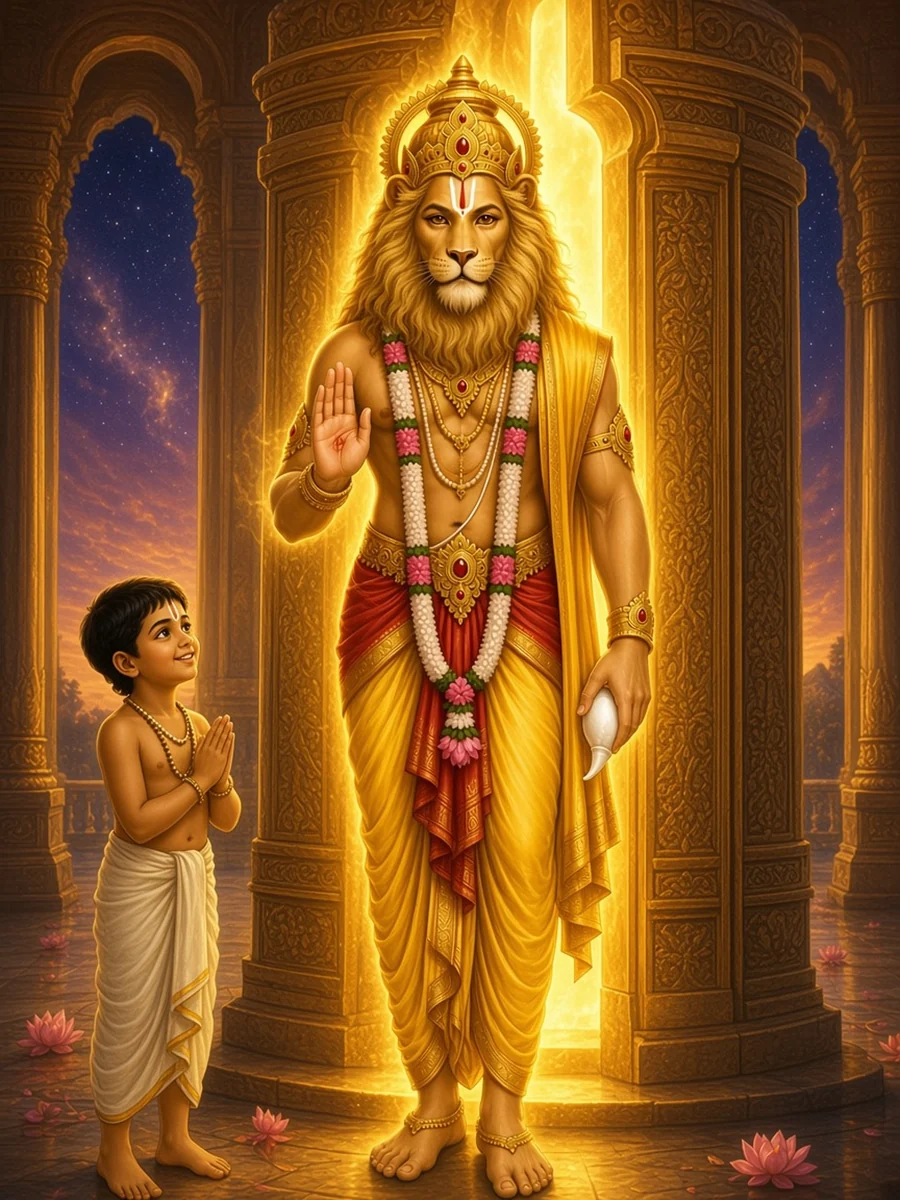
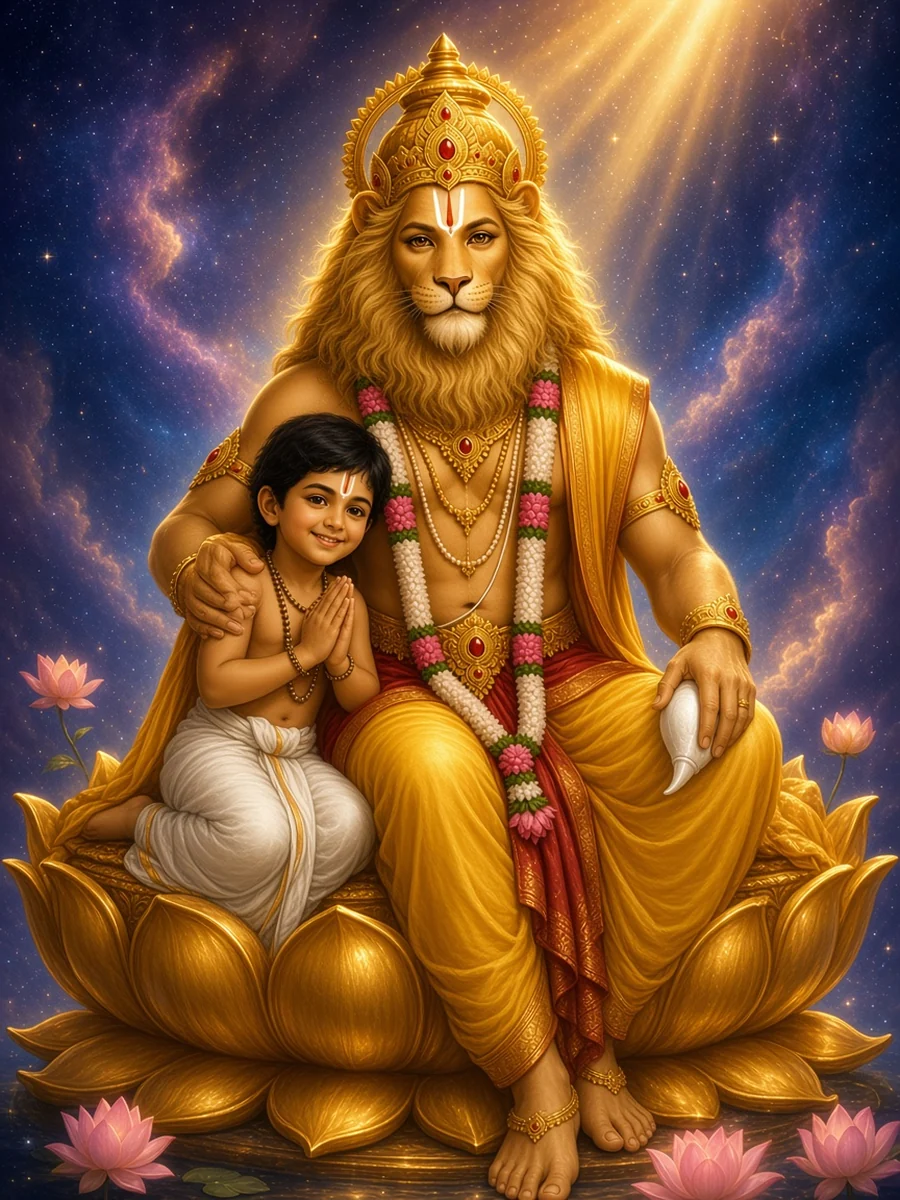
The pillar splits at dusk and the man-lion steps out to bless Prahlada Calm at last, the man-lion holds little Prahlada on his knee

For kids

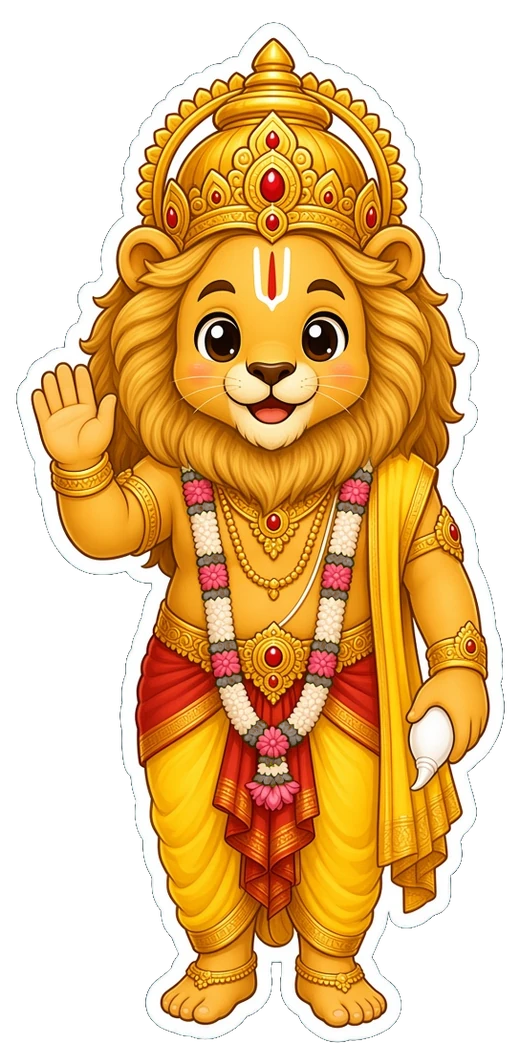
A little man-lion waves a happy blessing
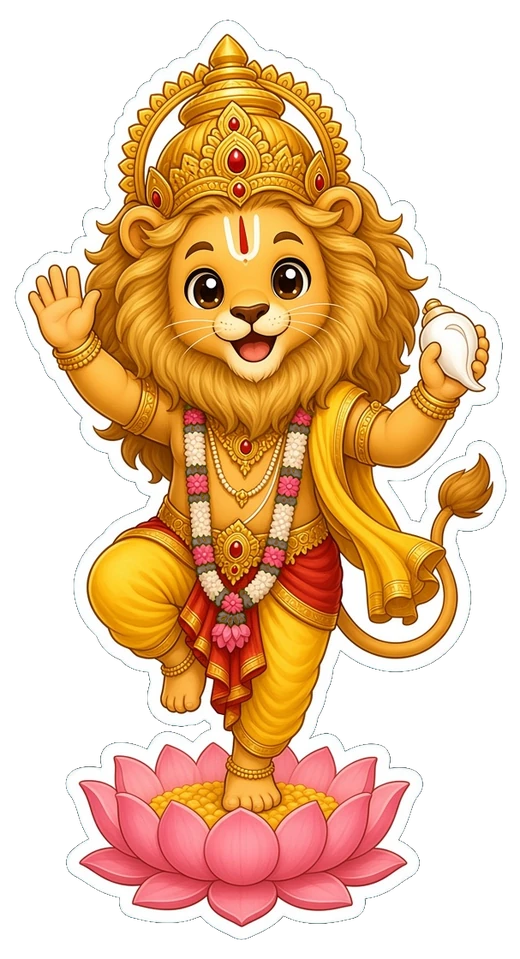
A little man-lion dances happily on a pink lotus

At a glance

TraditionVaishnava
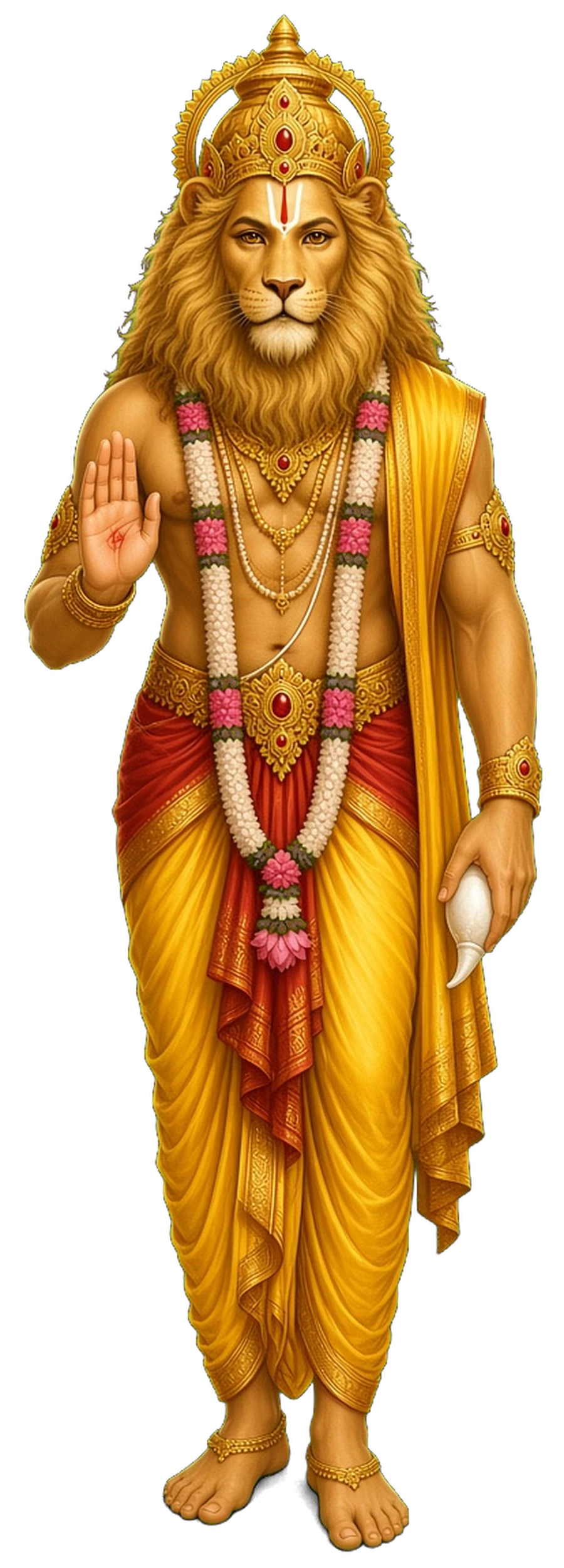
FormA man's body with a lion's head and mane, often four arms
FierceTearing open Hiranyakashipu across his knees, the demon's entrails in his claws

Who Narasimha is

Narasimha is the man-lion, the fourth avatar of Vishnu, and the fiercest.

The demon king Hiranyakashipu had won a boon that he could be killed by no man or beast, by day or night, indoors or out, on earth or in the sky, by no weapon. His small son Prahlada would not stop worshipping Vishnu, and the king tried every way to kill him, and failed. At last he struck a pillar in his hall and asked where Vishnu was now.

The pillar split, and out came Narasimha, neither man nor beast. It was dusk, neither day nor night. He carried the king to the doorway, neither in nor out, laid him across his lap, neither earth nor sky, and tore him open with his claws, which are not weapons.

Ugram viram mahavishnum jvalantam sarvatomukham, nrisimham bhishanam bhadram mrityumrityum namamyaham: I bow to the fierce, heroic, blazing man-lion, terrible and kind, the death of death.

Then his rage would not cool, and only Prahlada could calm him.

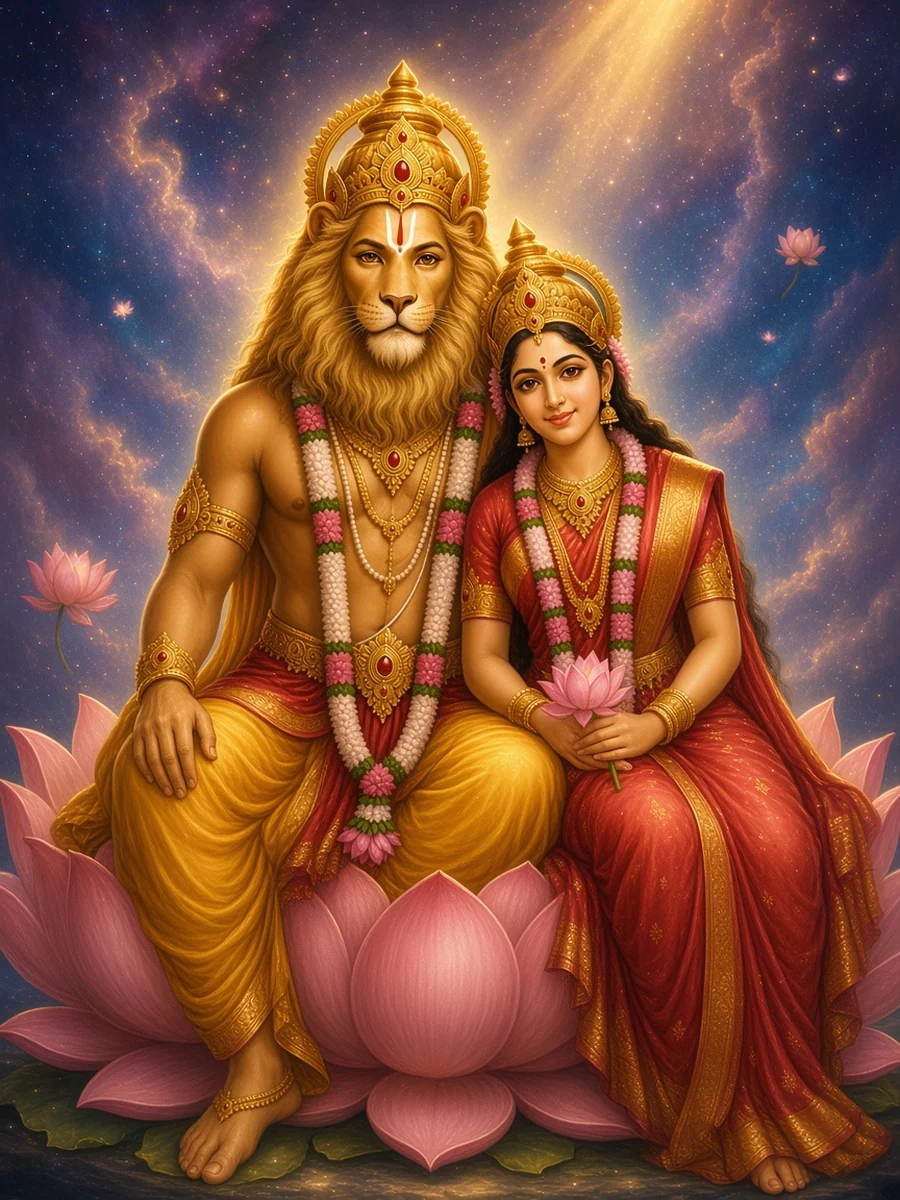
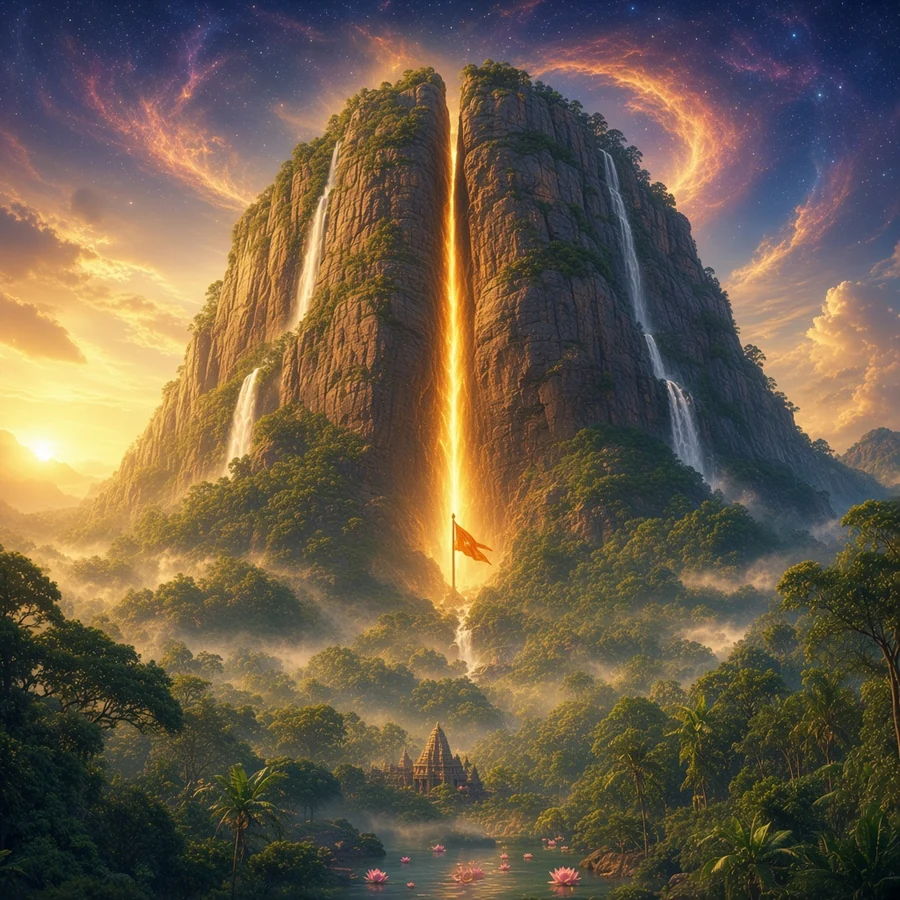
He is a god of protection, called on by people in danger. He is worshipped in two moods: the fierce, Ugra Narasimha, still tearing at the demon, and the gentle, seated in yoga or with Lakshmi on his knee. His temples are thickest in Andhra Pradesh and Telangana, in hills and caves: Ahobilam in the Nallamala forest, where the people of the hills say the pillar stood; Simhachalam, where the god is kept under sandalwood paste all year; Yadagirigutta; and Mangalagiri, where he drinks sweet panakam.

Before the Puranas

The Vedic roots of Narasimha

Narasimha is among the oldest of the avatars in stone. A relief from Kondamotu in Guntur district, of the fourth century, shows him with the Vrishni heroes, and the Gupta period has many images.

The Mahabharata's Shanti Parva praises the god who took the form of half man and half lion, with tawny eyes and mane and with teeth and claws for weapons. The Puranas tell the full story, above all the Bhagavata, in its seventh book, which gives the boon in exact words and has the killing on the god's lap at the doorway at dusk. The Narasimha Purana, a later fifth-century work by R. C. Hazra's dating, is devoted to him.

His anger became a battleground between traditions. The Bhagavata says no one could calm him but Prahlada. The Shiva Purana says Shiva had to take the form of the winged Sharabha to subdue him, and southern Vaishnavas answered with the two-headed bird Gandabherunda, Vishnu's form that subdued the Sharabha, which became the emblem of the Mysore kings and now of Karnataka.

In the south his worship grew with the Vaishnava movements. The Ahobila Matha, founded at Ahobilam by Adivan Satagopa in the early fifteenth century, keeps the nine shrines of the hill. At Hampi, Krishnadevaraya's monolith of 1528, nearly seven metres high, once had Lakshmi on its knee; she was broken off when the city was sacked in 1565.

Simhachalam reveals the god's true form once a year, at the Chandanotsavam on Akshaya Tritiya. Yadagirigutta was rebuilt and reopened as Yadadri in March 2022.

See how the Vedic gods became the Puranic ones →

Related gods