As north Malabar keeps it
a night at the shrine · 2 min read
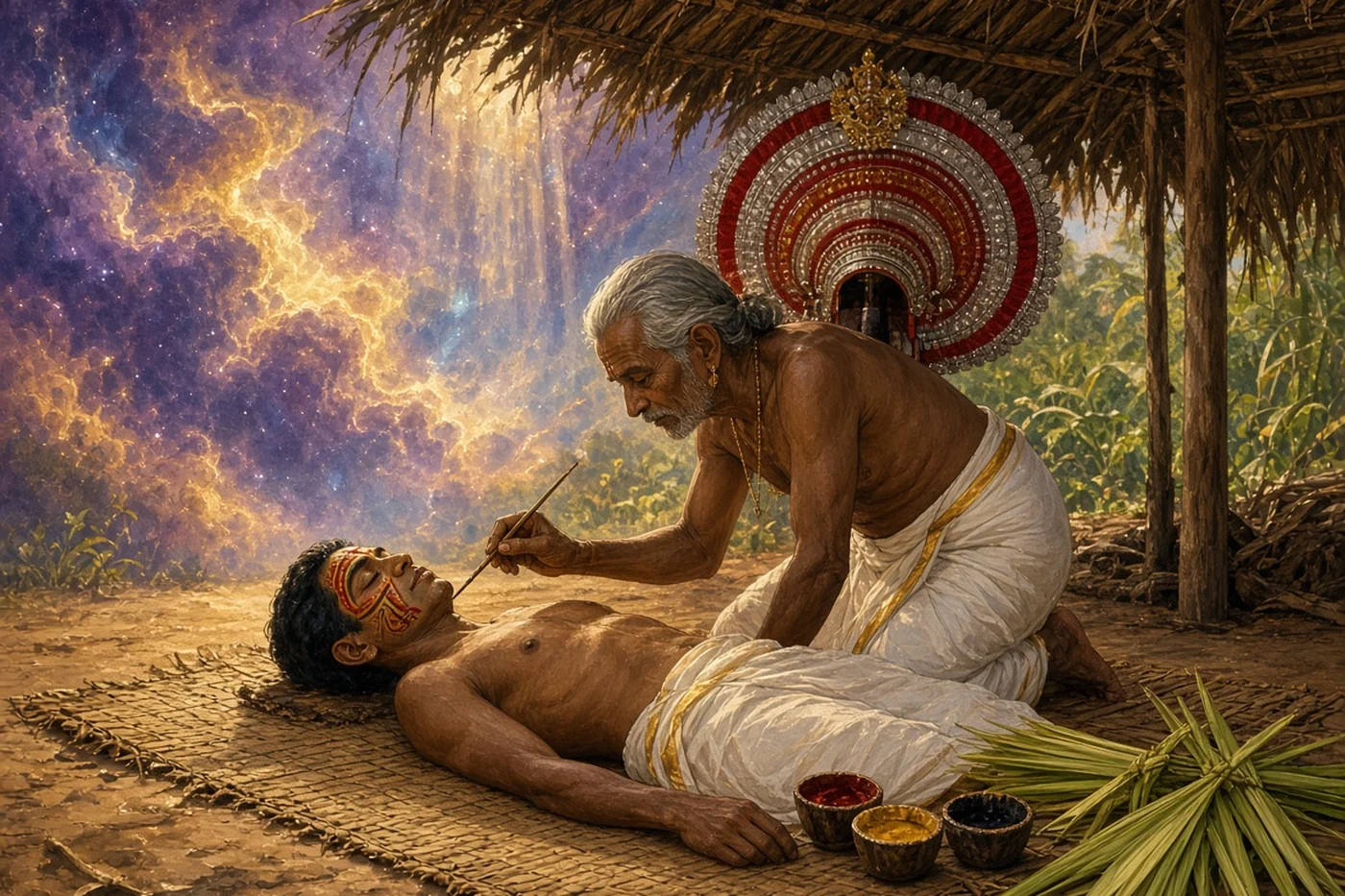
The story begins long before dark, in a corner of the shrine yard, where the performer is lying on a mat having his face painted.
It takes hours. The colours go on in fine lines, red and yellow and black, until the man's own face is gone under them. Then the costume is built onto him, layer by layer, a skirt of fresh young coconut fronds, cloth and ornaments, a towering headdress. He is a man from one of the communities that have always held the right to dance this god. By the time they are finished he can barely move without help.
The village has gathered. Everyone knows the story he is about to tell. They have heard it every year since they were children.
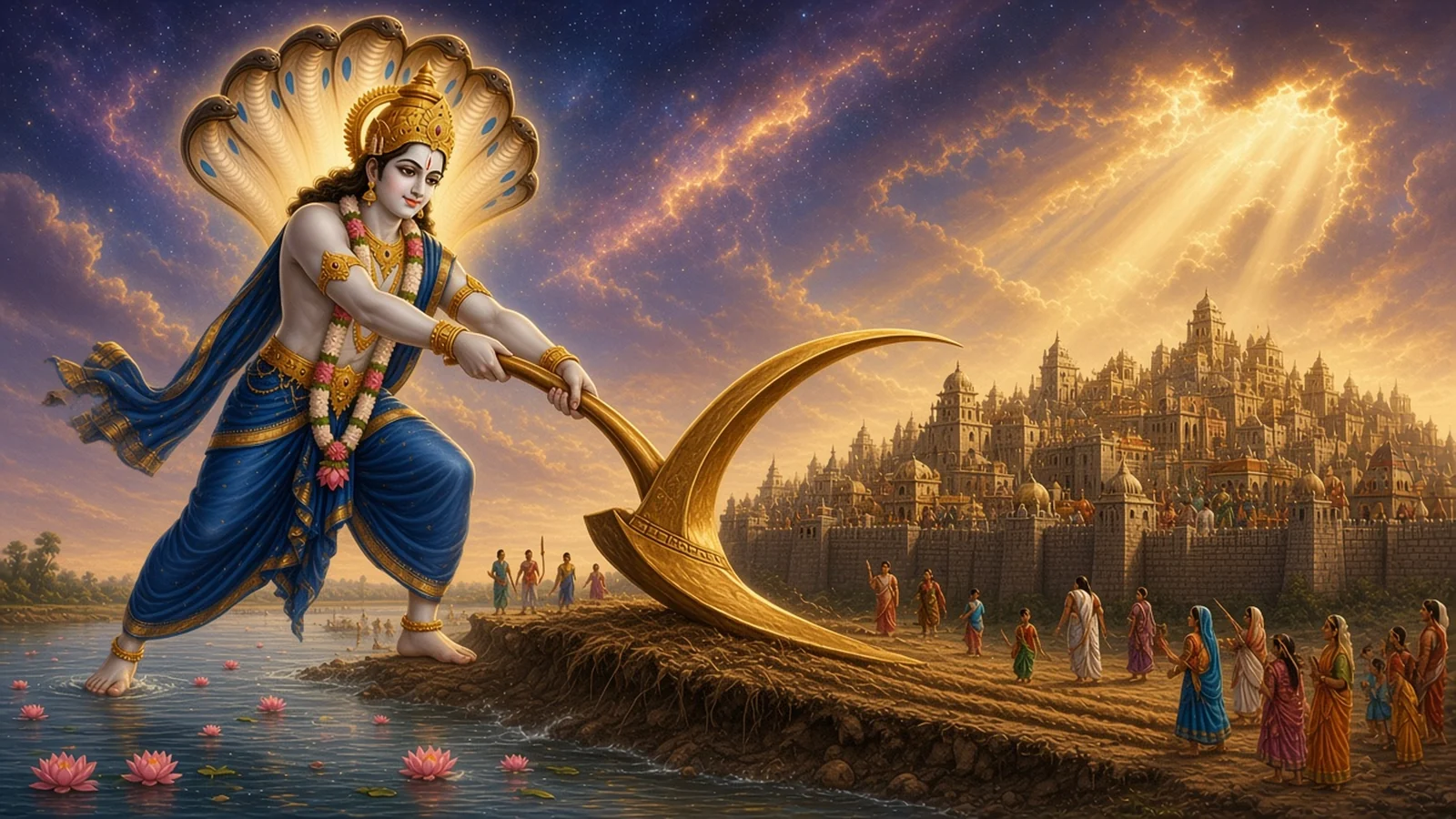
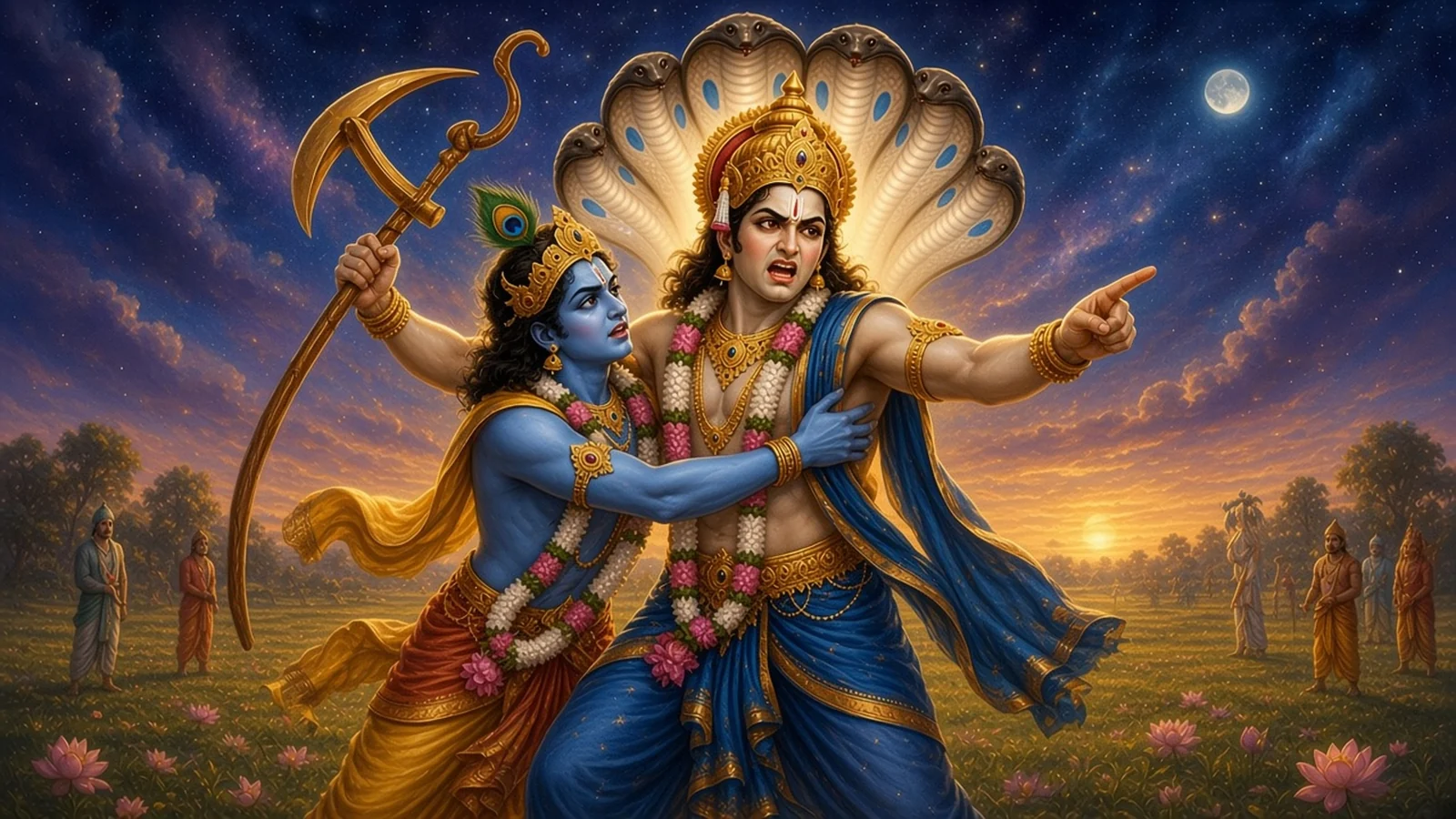
First comes the song. Drummers and singers set out the story of Hiranyakashipu, the demon king who could not be killed by man or beast, by day or by night, indoors or out, and who hated Vishnu. They sing his cruelty, and the stubbornness of his little son Prahlada, who would not stop saying Vishnu's name whatever his father did to him.
"Where is your Vishnu?" the king shouts at his son, in the song. "Is he in this pillar?"
"He is everywhere," says the boy. "He is in the pillar too."
And then the song stops being a song.
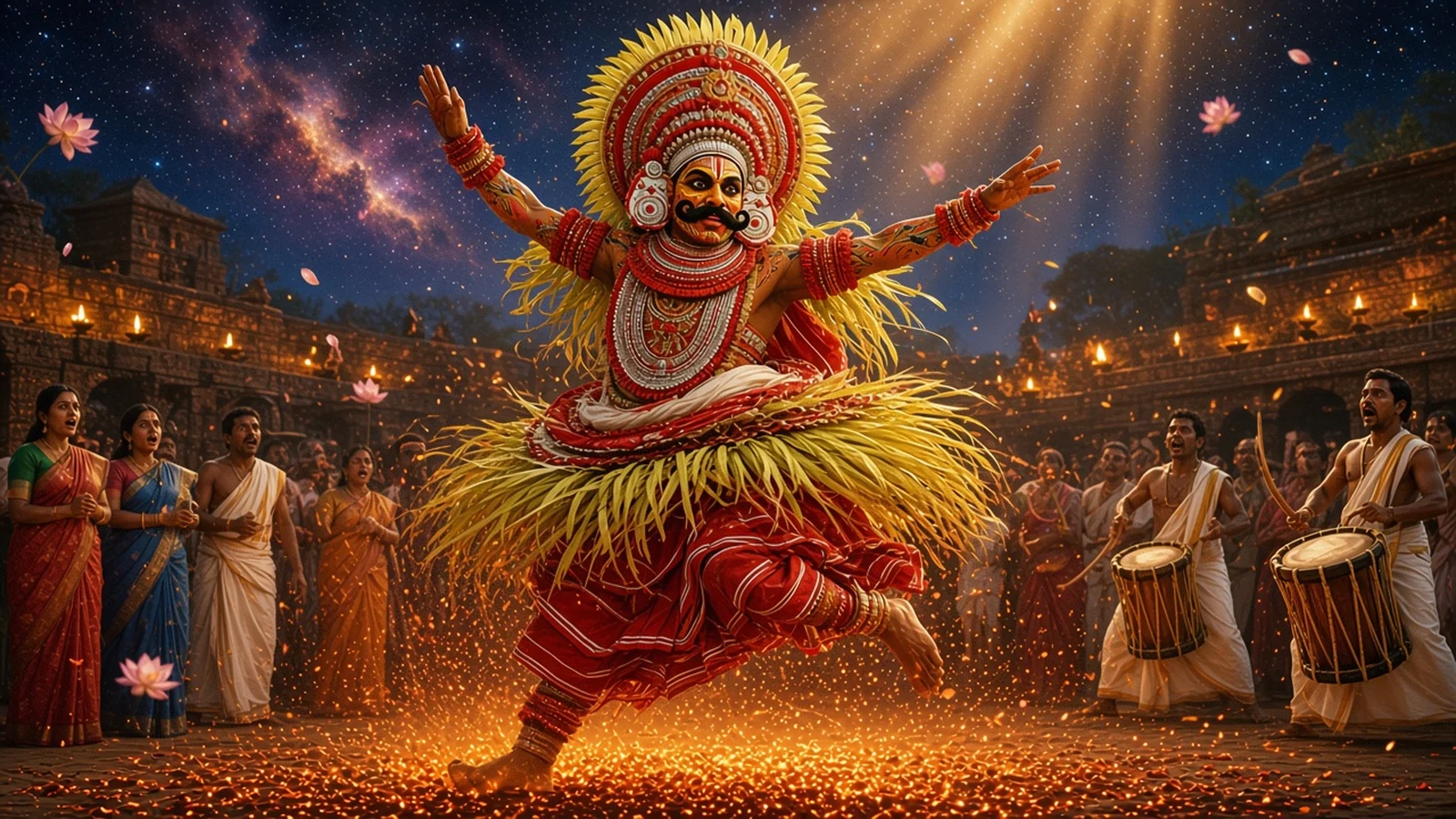
The drums grow louder and faster. In the middle of the yard there is a great heap of glowing embers, raked up from a fire that has been burning since evening. The dancer, who is no longer quite the dancer, throws himself onto it, and through it, again and again. The sparks fly up around the fronds of his skirt.
Then he is the lion. He springs and roars and tears at the air, and the village watches the demon king die once more, at the threshold, at dusk, on the lion's lap.
What matters most comes after.
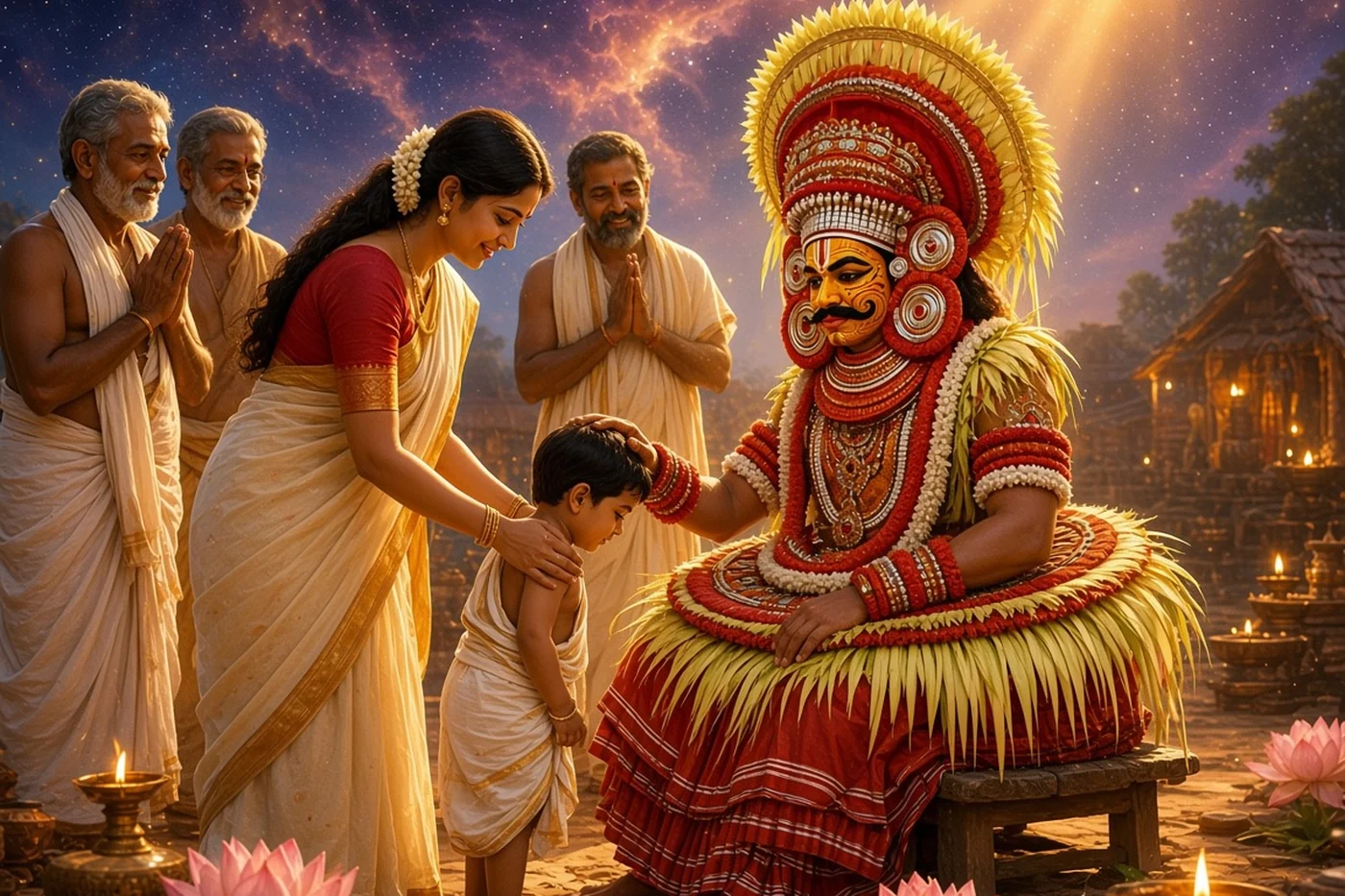
The anger fades. The god sits. From the moment the possession came on him, the dancer has not been spoken to as a man. Now he is addressed as Vishnumoorthi himself, and the families of the village come forward one by one, to stand before him and tell him their troubles.
"Lord," says a woman, holding out her child, "bless him."
The god puts his hand on the child's head, and speaks to her, and she steps back for the next family.
It goes on into the morning. The plot was over hours ago. Nobody leaves, because the god is still there.