As the encyclopedia gives it
the rite kept at Saundatti · 3 min read
Every morning Renuka went down to the river to bathe before her husband's fire offering. Her mind was so still that she could shape a pot from the river sand and carry water in it without baking it, and she used a coiled snake for the rope. Jamadagni never had to wait for his water.
Then one morning she saw the gandharva king Chitraratha at play in the river with his wives. She watched for a moment, and in that moment her stillness went. The sand ran back into sand, and the water was gone.
Jamadagni knew it before she reached the door, and he cursed her.
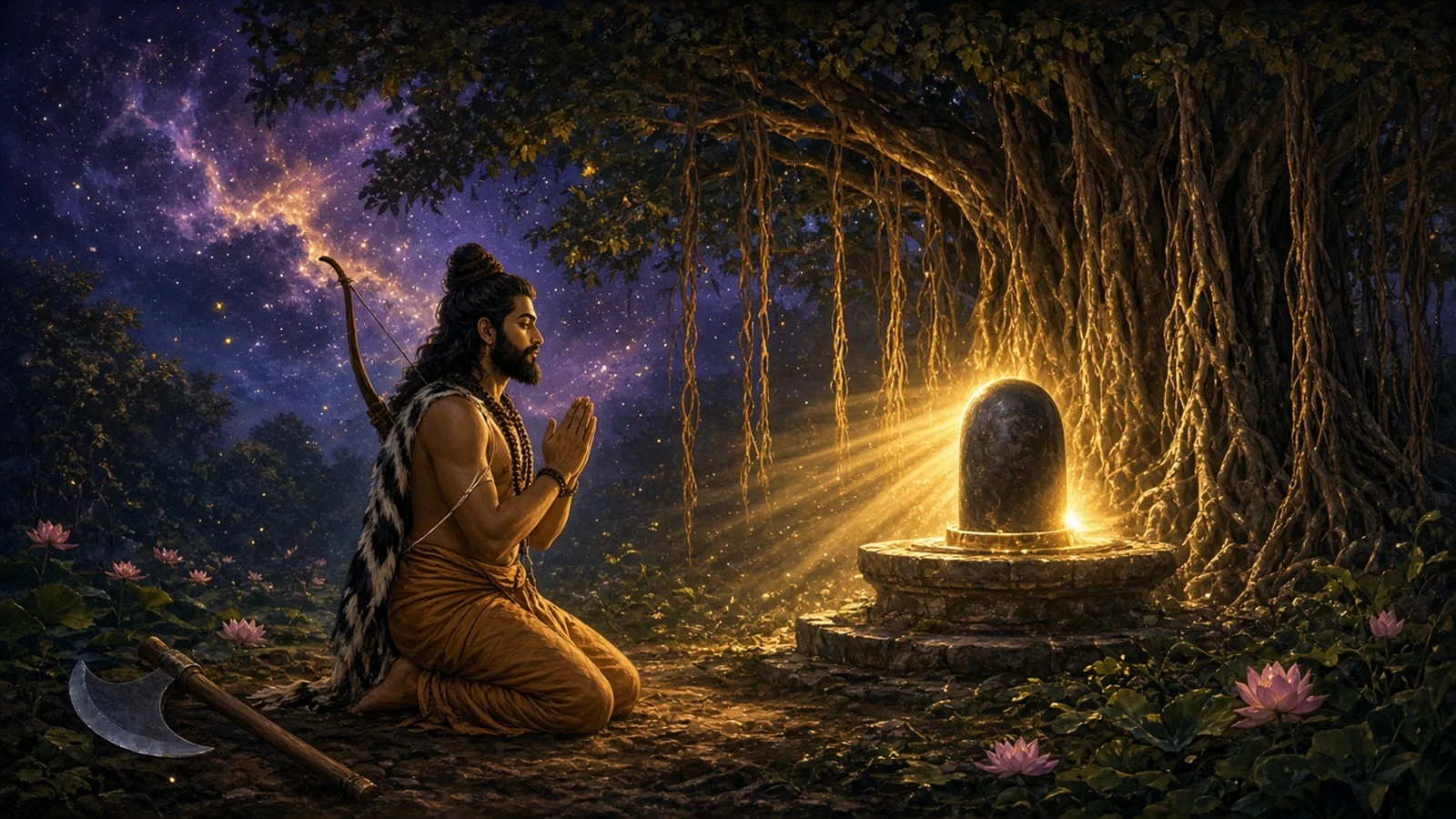
Renuka went into the forest and sat down to pray. There two holy men found her, Eknath and Joginath.
"My husband has cursed me," she said. "Help me win his mercy back."
They comforted her first. Then they told her what to do.
"Bathe in the lake nearby and make yourself clean," they said, and they gave her a linga of Shiva. "Worship this. Then go into the town and beg for rice at the doors. Give half of what you are given to us. Cook the other half with jaggery, and eat it with your whole heart. Do this for three days, and on the fourth day go home to your husband."
Then they gave her a warning.
"He is an angry man, and he may not forgive you all at once. You will go through the hardest time of your life, but it will last only a little while. After it you will be honoured forever, and you will have your husband again, and every kind of people will worship you."
And with that the two of them were gone.
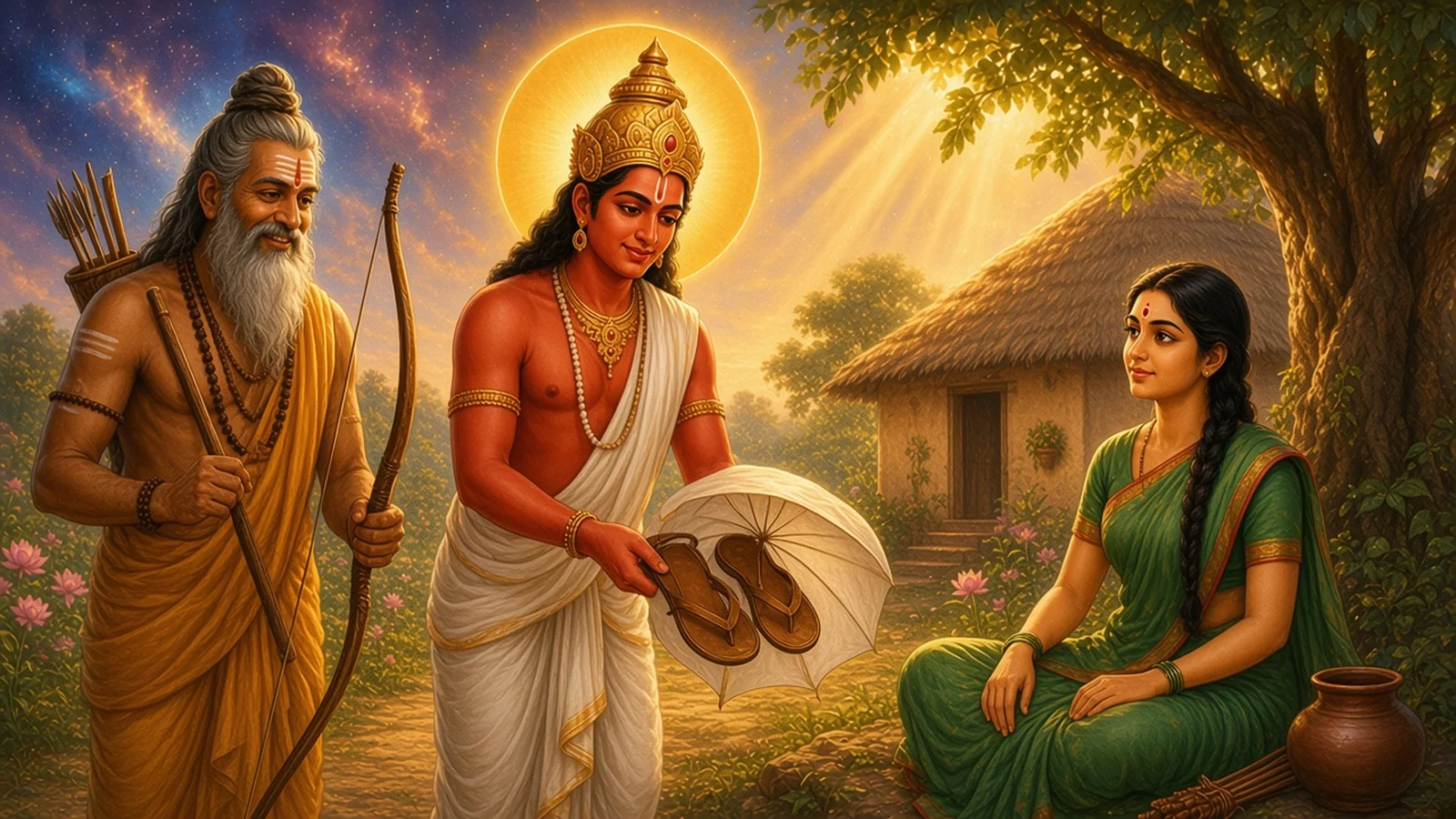
Renuka did everything they had said. She bathed and worshipped the linga. She went from door to door with her bowl, a sage's wife asking for rice, and gave half away and ate the rest sweetened with jaggery. For three days she did it.
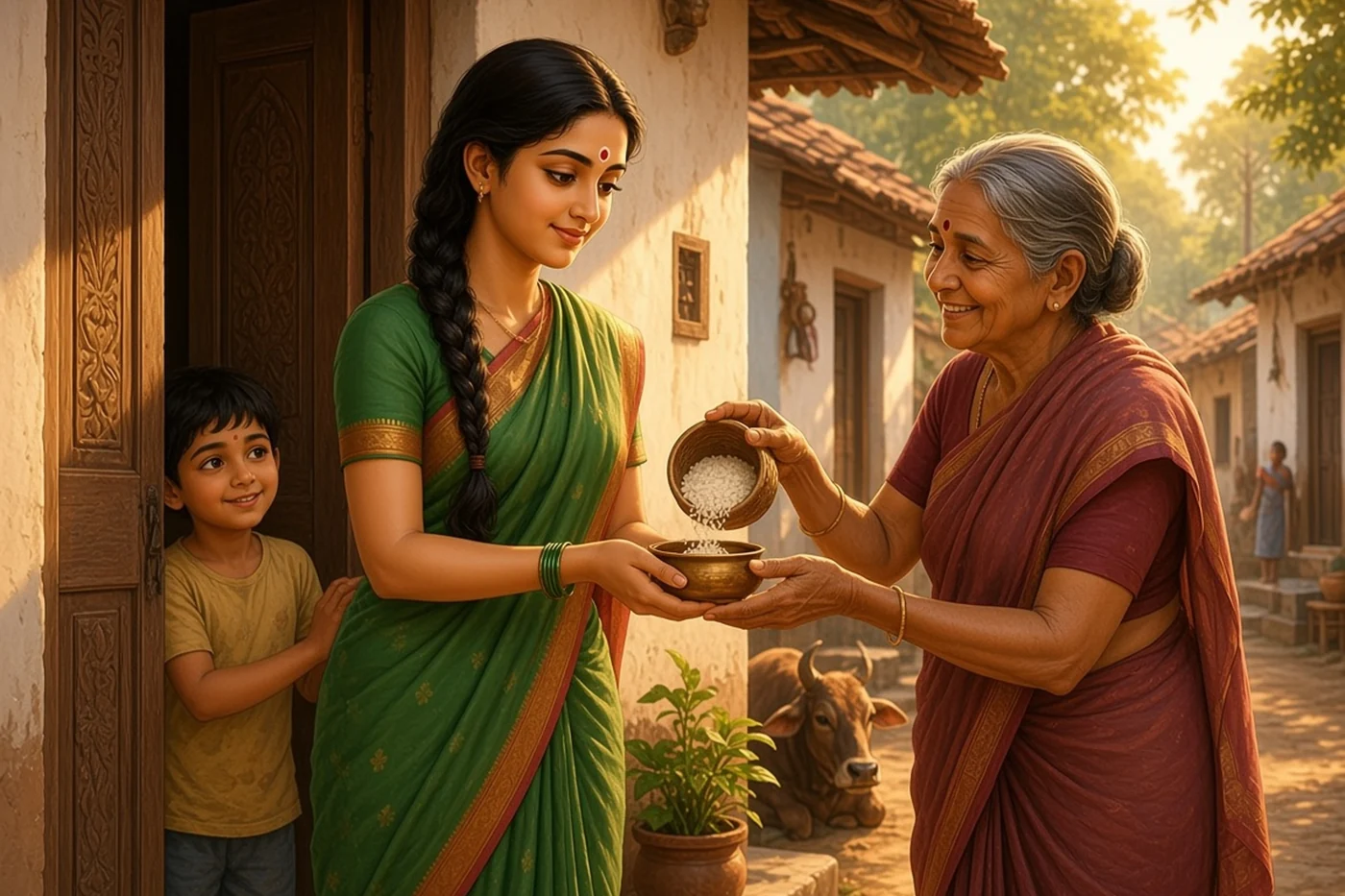
On the fourth day she went home.
Jamadagni was still furious.
"Kill her," he told his four eldest sons. Each refused, and each was burned to ash by his curse.
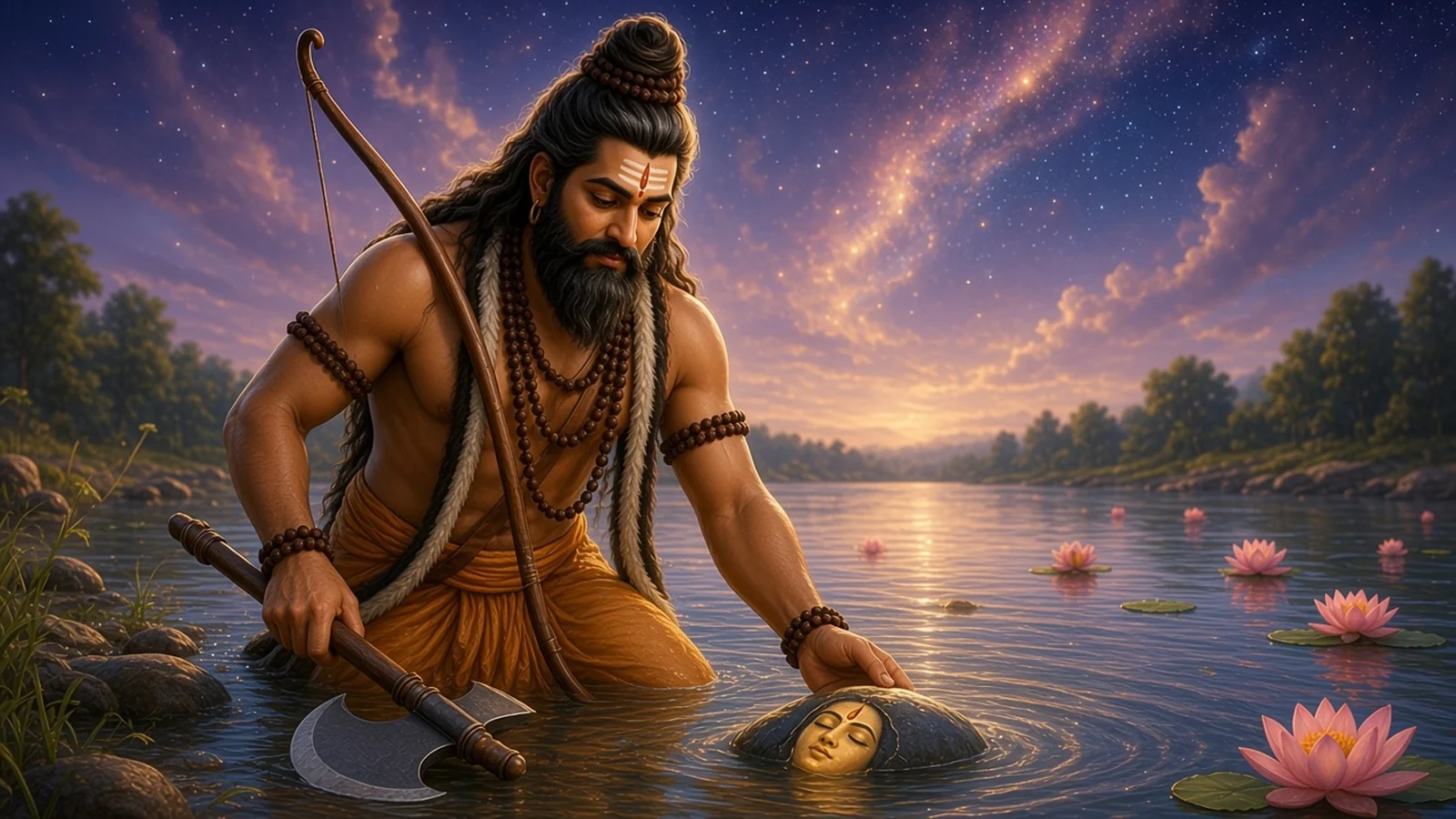
Then he called the youngest, Parashurama, who was sitting in meditation on Shiva, and Parashurama rose and struck off his mother's head with his axe. That was the hard time the holy men had foretold, and it was short.
"Ask me for anything," said Jamadagni, pleased with his son.
"Bring my mother back," said Parashurama, "and my brothers."
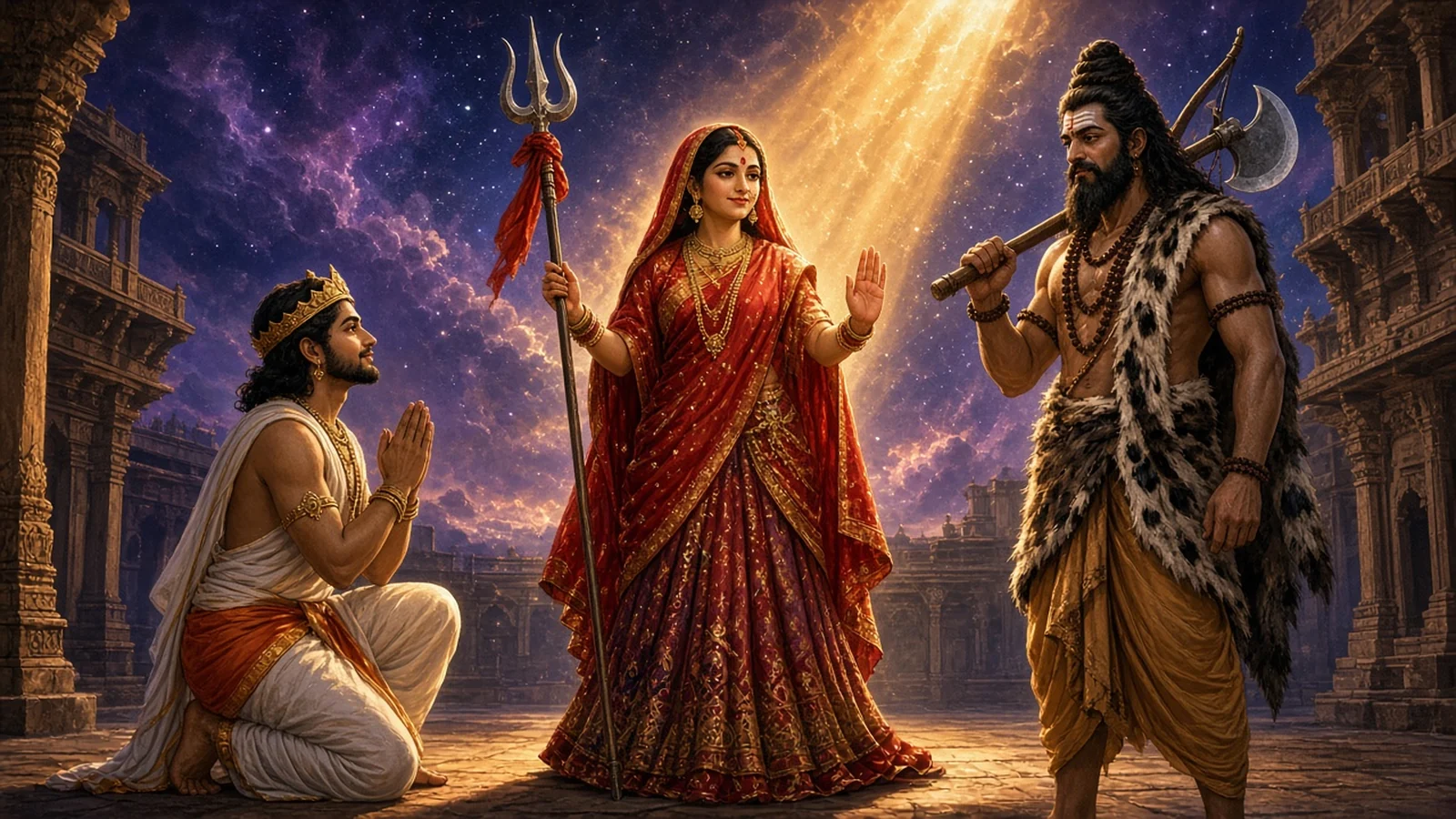
Jamadagni did, and he was ashamed, and he swore he would never let anger rule him again. But in his joy and haste the son had brought back another woman's head, the head of a woman called Yellamma, and so Renuka rose as Renuka Yellamma. The four brothers, cursed again for their disobedience, lost their manhood. They came to their mother for shelter, and she took them in.
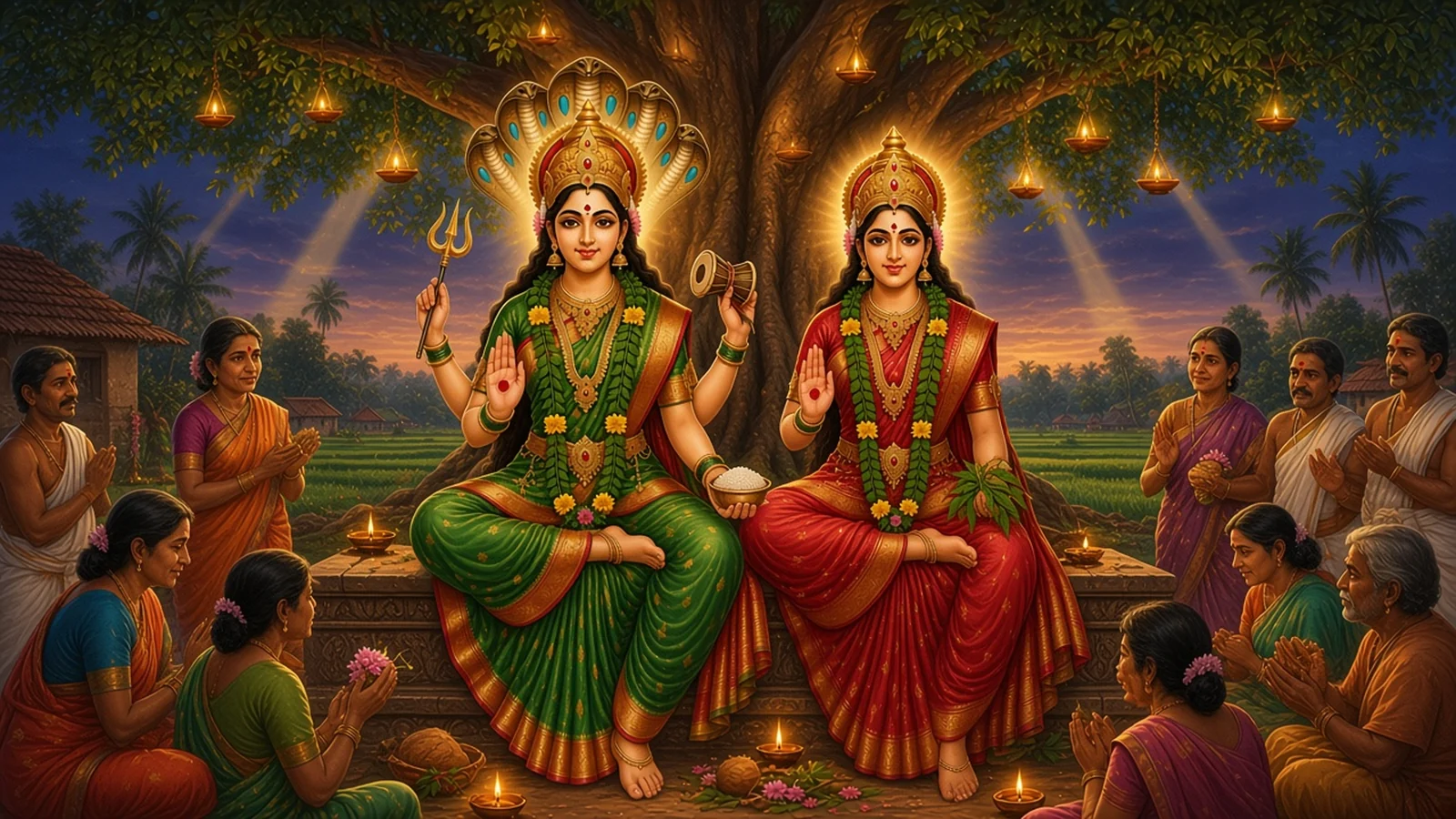
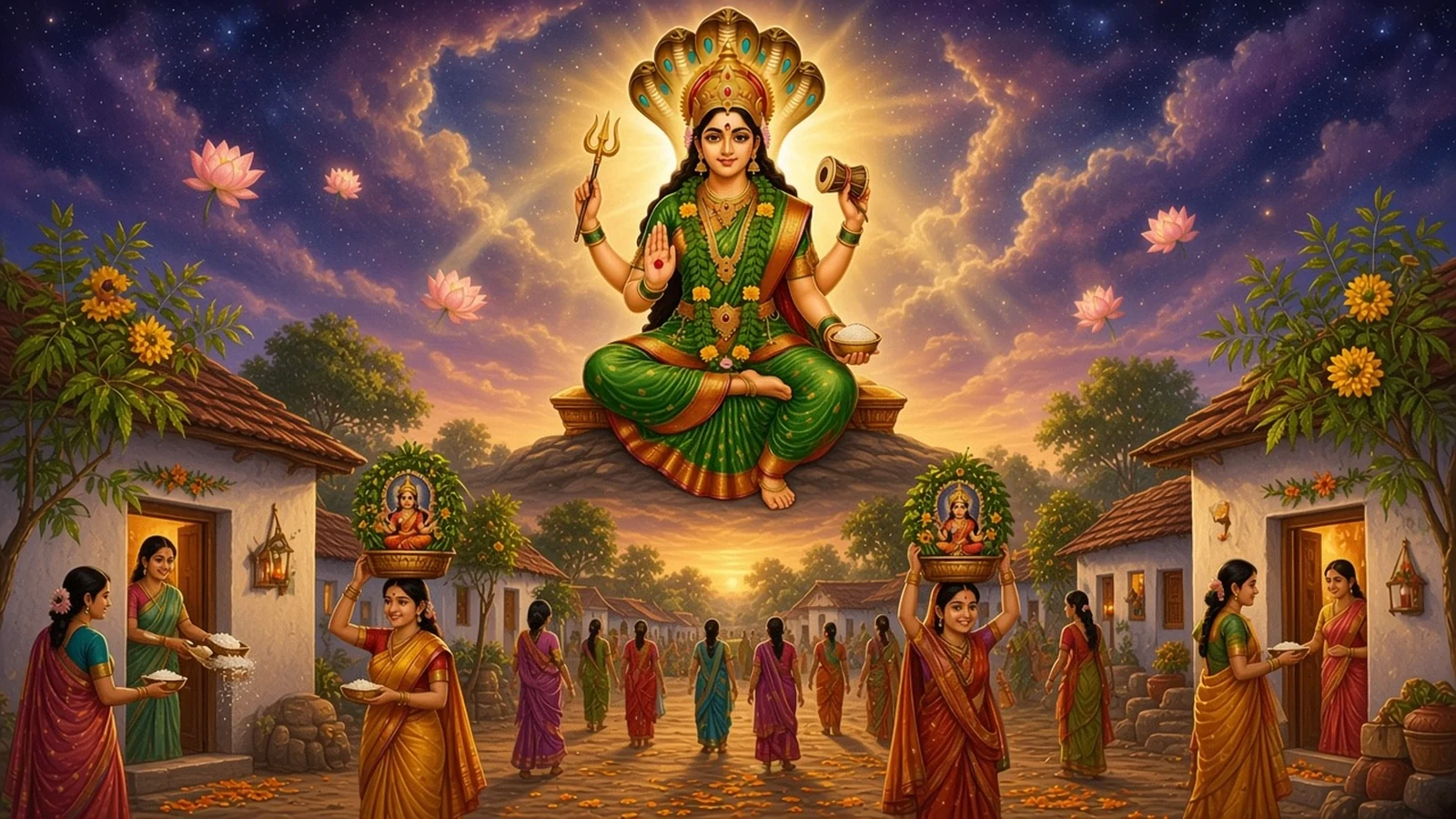
Saundatti still keeps her three days. In a certain month women go from house to house begging rice in her name, as she did. In Karnataka it is called Joga Bedodu, in Marathi Jogawa, in Telangana Yellamma Jogu. And her jogappas, devotees say, are her children still, the sons she sheltered.
As the hill keeps it
Yellammagudda, Saundatti, in the Ramalinga hills · 2 min read
The temple survey of Saundatti tells the story more briefly, and ends it somewhere else.
Here too Renuka is the wife of Jamadagni and the mother of Parashurama, known for her faith in her husband. Her pot was of unbaked clay, held together by nothing but that faith. One day at the river she saw gandharvas passing over in their chariot, and for an instant she wanted what she saw.
The clay melted in her hands. She sat down on the bank, afraid to go home.
Jamadagni had already seen it all by the power of his yoga. He ordered his sons to kill her. Each son refused, and each was turned to stone. Only Parashurama, the youngest, obeyed, and her head fell.
And then, the hill says, her head did not stay one. It multiplied and travelled, into one country after another, and wherever it came to rest it was worshipped. Her four sons, and many others with them, became the people who served it.
That is why, on this telling, there are so many shrines of the goddess, and why so many of them hold only her face.
Her own seat is on the rock five kilometres out of Saundatti town, on the hill now named for her, looking down on the Malaprabha. Before they climb, pilgrims bathe at the tanks and change into fresh clothes. Some walk round the shrine of Satyamma with neem leaves held in their mouths. The well called Jogula Bhavi is said to heal diseases of the skin, and beside the temple is the place where Parashurama is said to have done his penance.
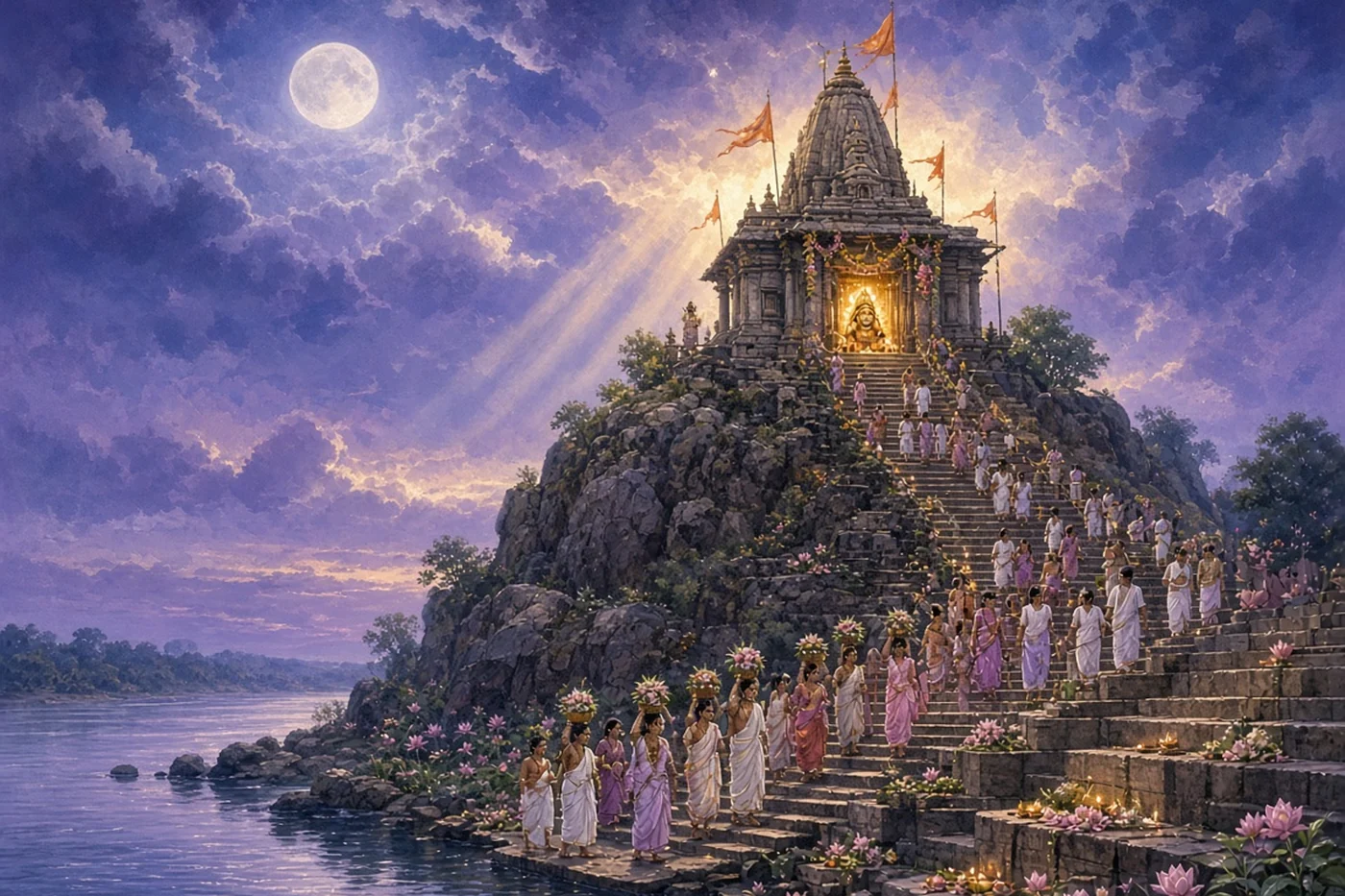
The festivals come between October and April, at the full moons, and on two of them, Banada Hunnime and Bharata Hunnime, the survey counts more than ten lakh people on the hill.