As the Brahmakshatriyas tell it
Sindh and Gujarat · the Brahmakshatriya families · 2 min read
After the sons of King Kartavirya killed his father, Parashurama took up his axe against every warrior king on earth. That is told in The Thousand-Armed King. In time his road brought him to Sindh, and the king of Sindh, Ratnasena, heard that he was coming.
Ratnasena did not wait for him. He took his queens and rode by night to the forest hermitage of the sage Dadhichi, on the bank of the Saraswati.
"Hide them," the king begged. "Parashurama is coming, and he leaves no Kshatriya alive."
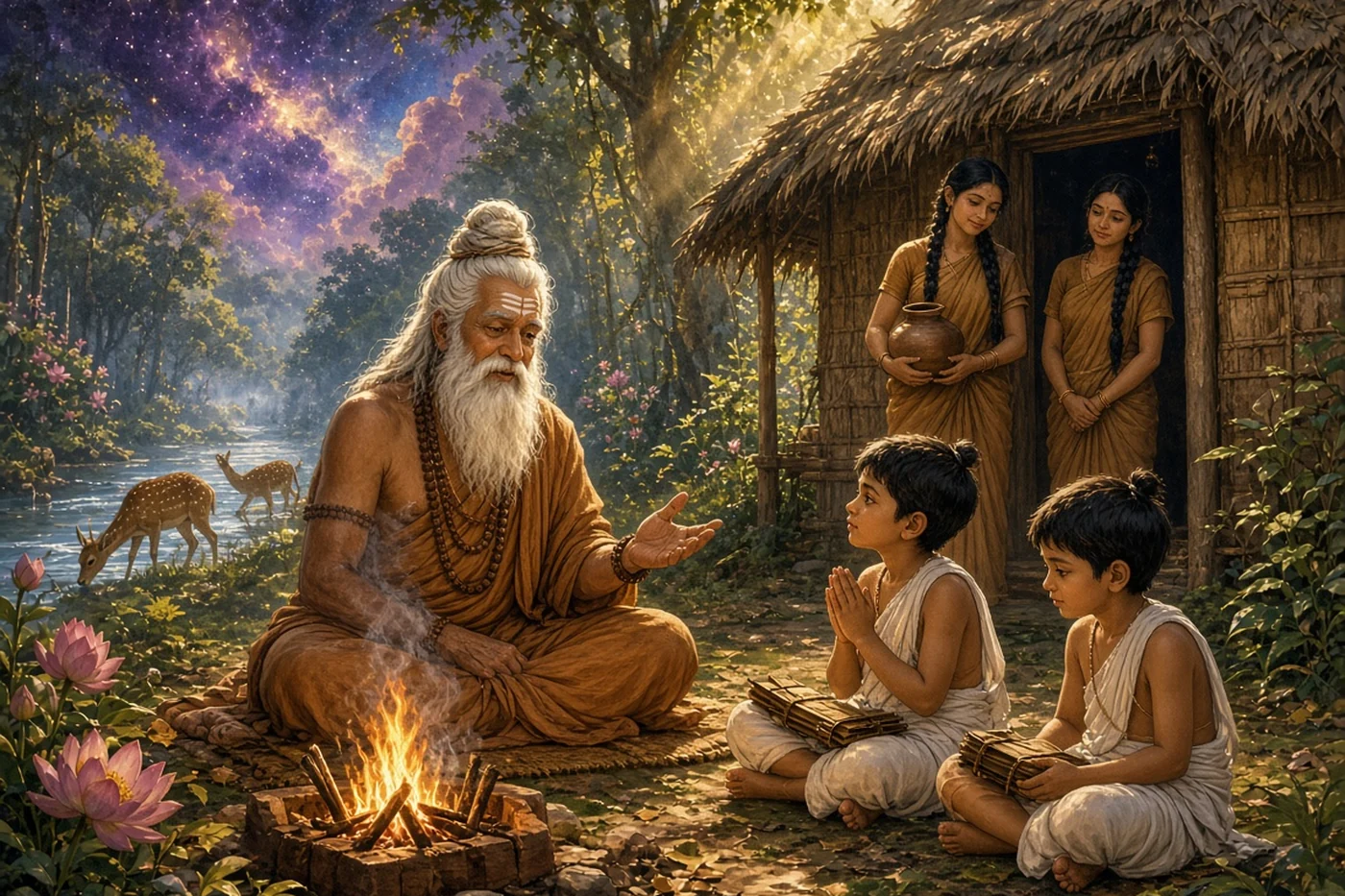
"Here they are under my roof," said Dadhichi, "and under the goddess's eye. Nobody will find a king's wife among my people."
So the queens of Sindh put away their jewels and lived as the wives of the hermitage live. There, each of them bore the king a son. The boys were brought up as Brahmins. They learned the Veda before they learned the bow, sat with the sage's pupils at the fire, and never heard their father's title spoken aloud.
The king himself could not live like that. One day he went out of the forest to hunt, and Parashurama, who was still in Sindh, found him and killed him. But the sons stayed hidden, and nobody told the man with the axe that the dead king had left heirs.
The years went by and the boys grew up. The eldest, Jayasena, came to the sage one morning.
"Sindh has no king," he said. "It was my father's. Let me go and rule it."
Dadhichi was quiet for a long time.
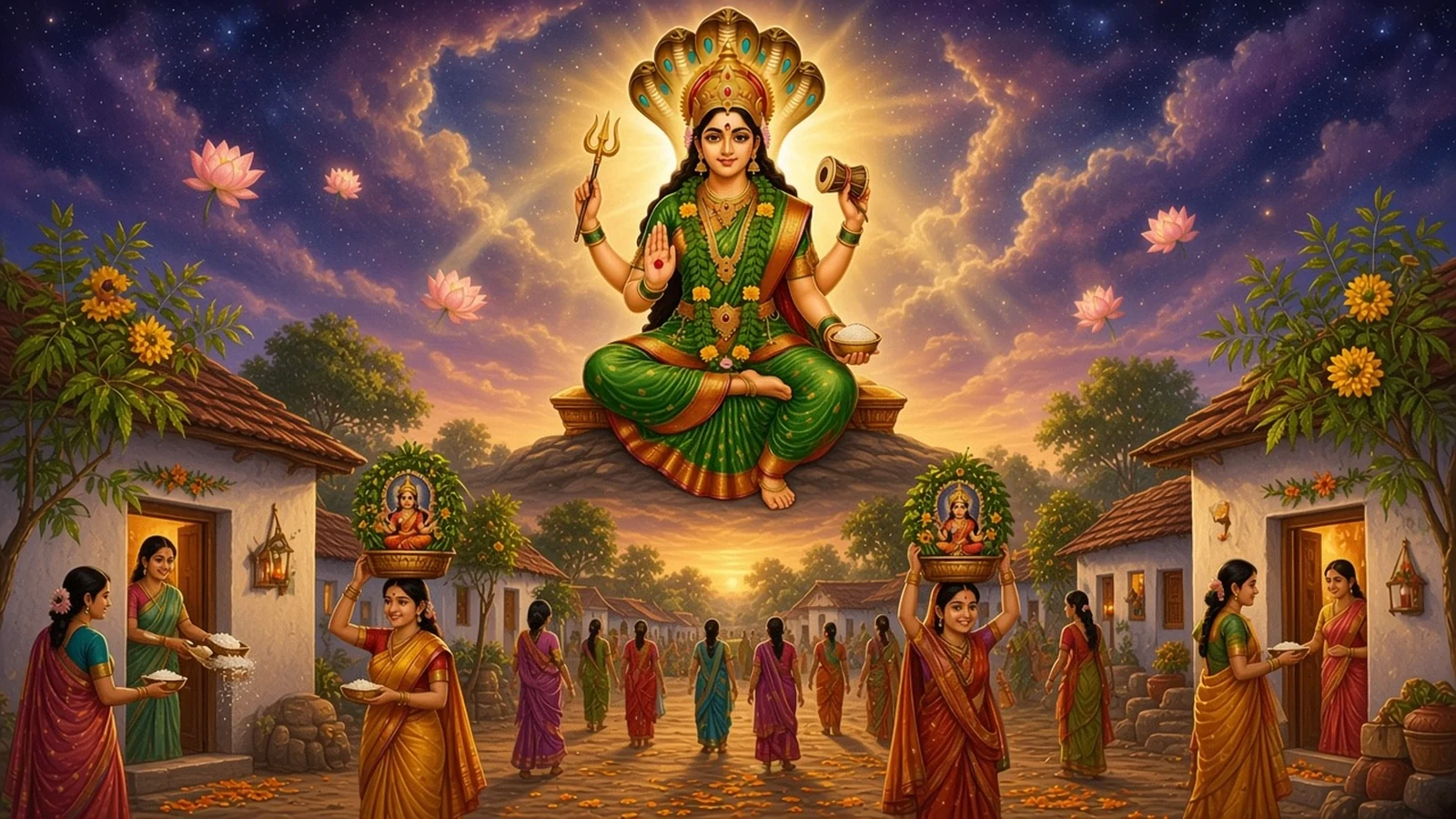
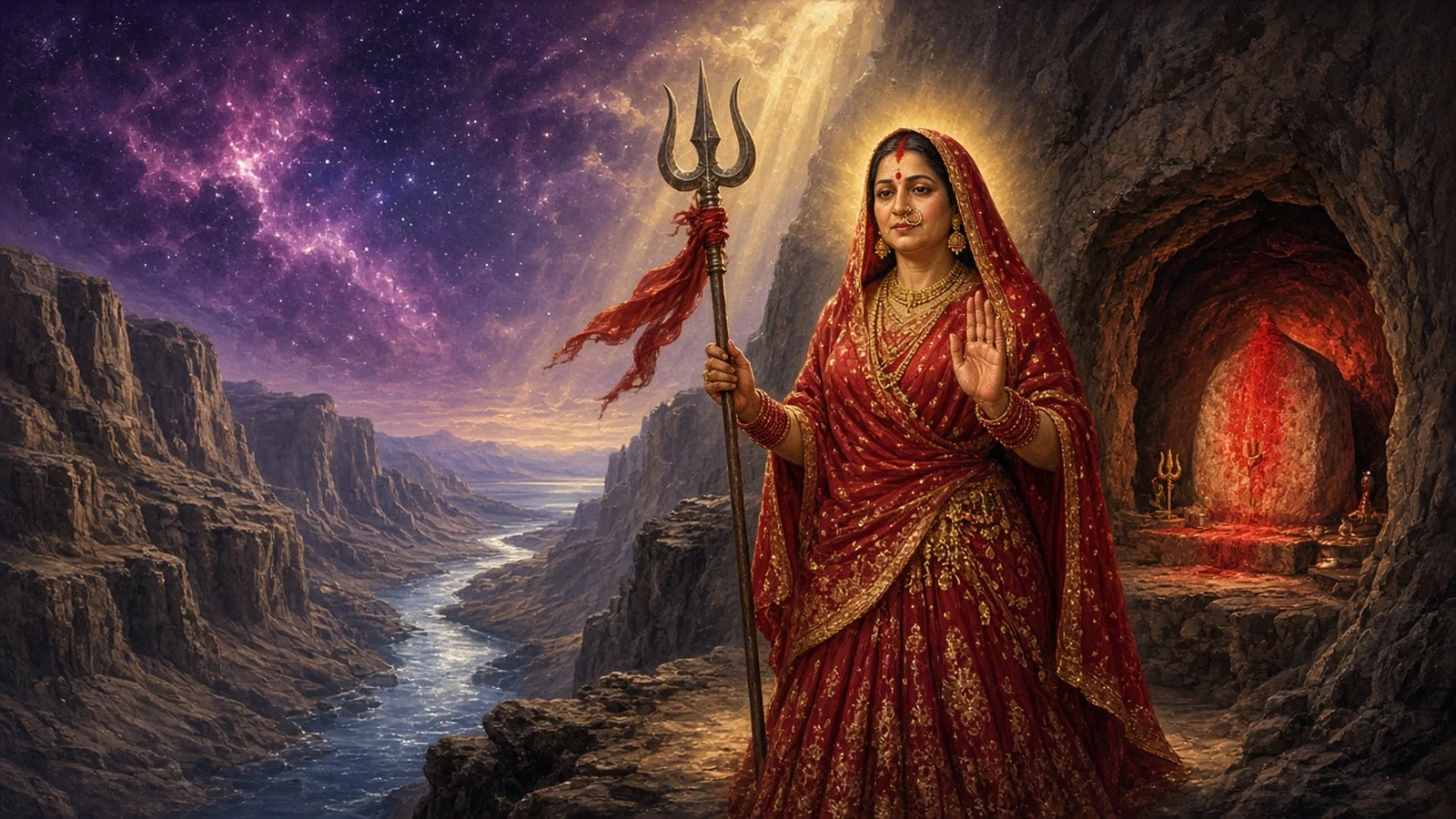
"If you go, Parashurama will hear of it," he said. "Take this with you, then." He gave the young man a mantra of Hinglaj Mata, the goddess of the cave in the western hills, and taught him to say it. "She will stand by you when no one else can."
Jayasena went back to Sindh and took his father's seat, and the mantra was never off his lips. Soon enough the news reached Parashurama that a Kshatriya was ruling Sindh again, and he came with his axe.
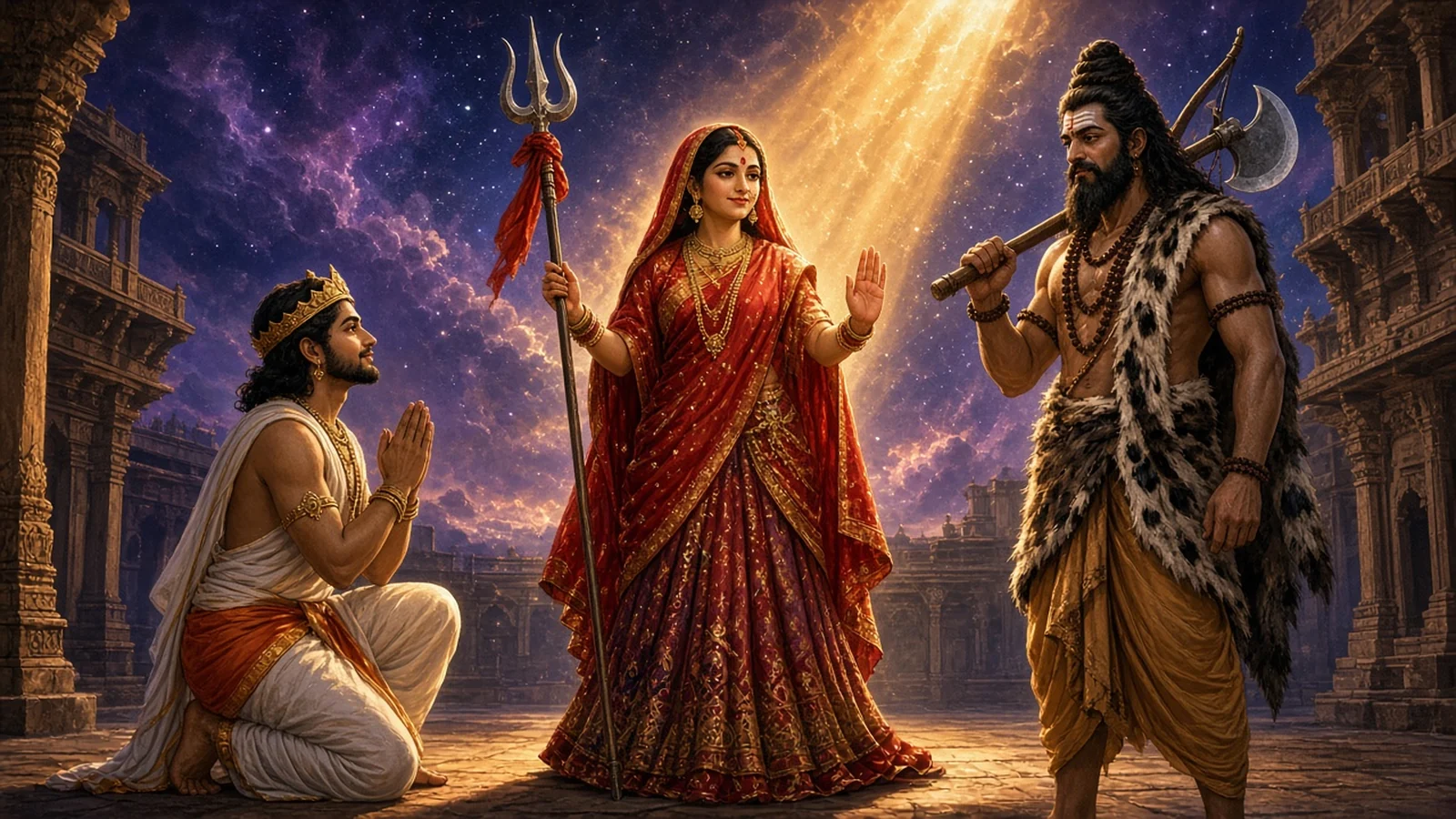
But when he raised it, the goddess stood in his way.
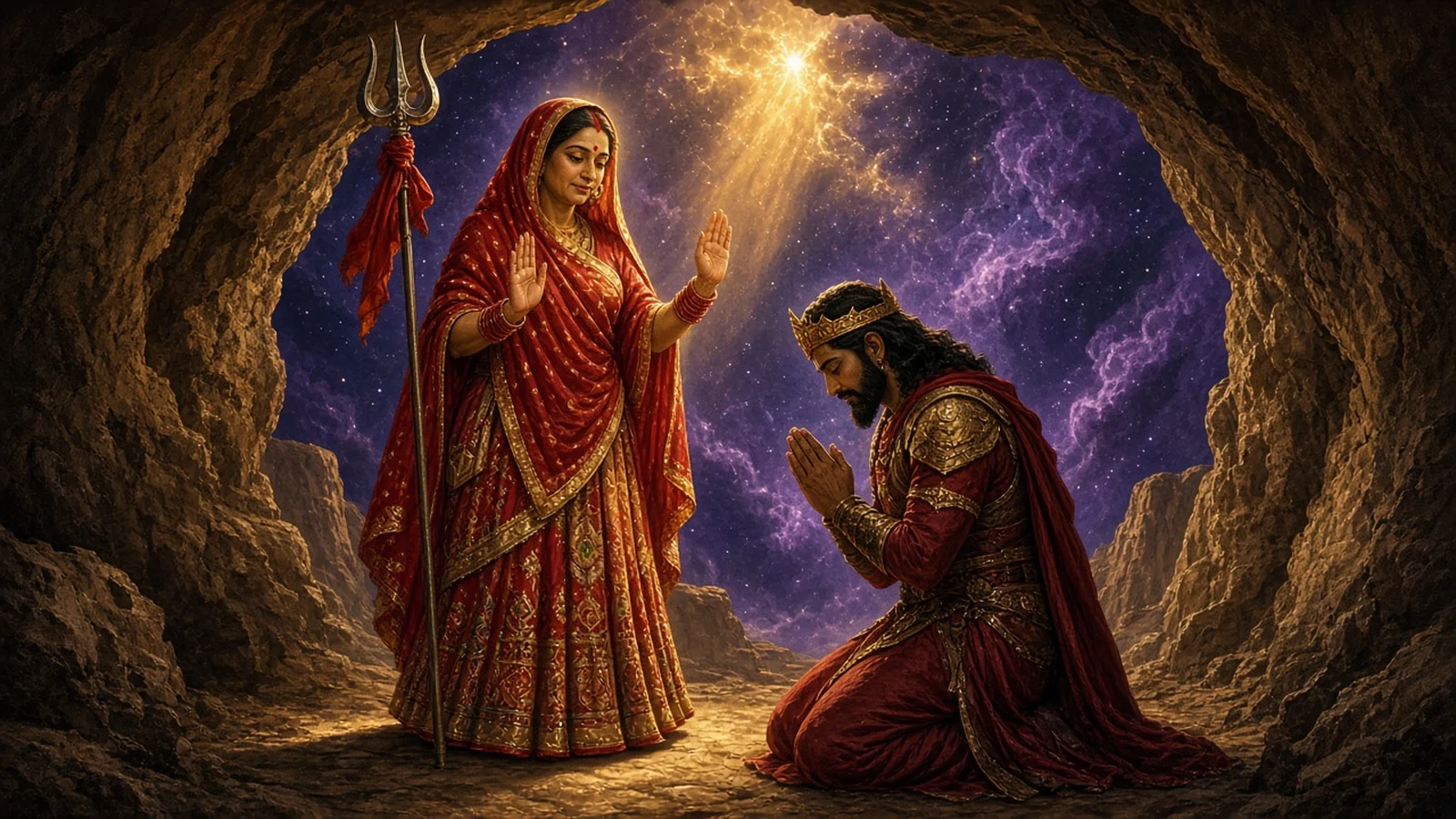
"Enough," said Hinglaj Mata. "This one is mine. He was raised by a sage and he carries my name. You have killed enough kings. End it now."
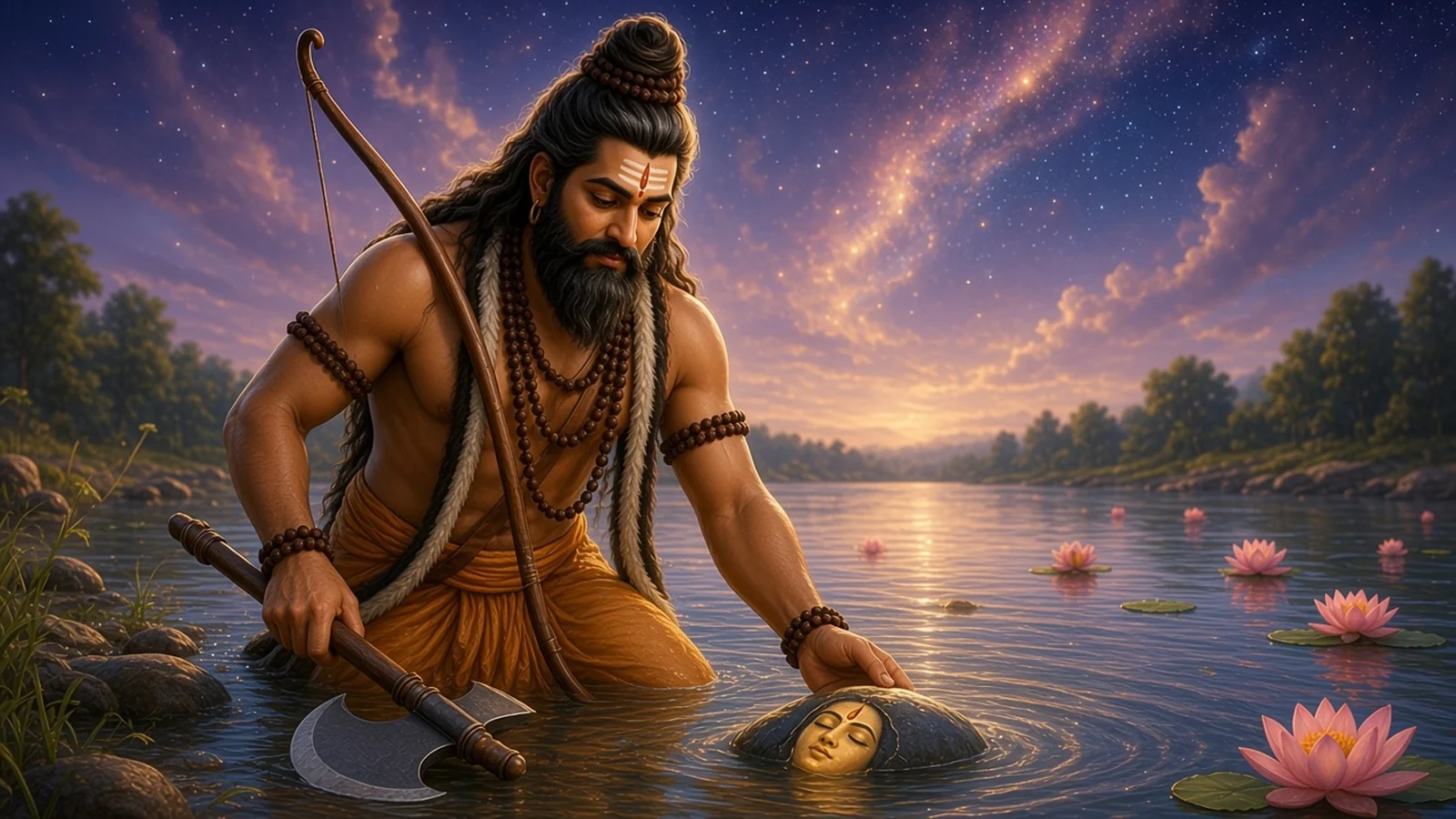
Parashurama lowered his axe, and in the Brahmakshatriya telling his long war against the kings ended there, at her word.
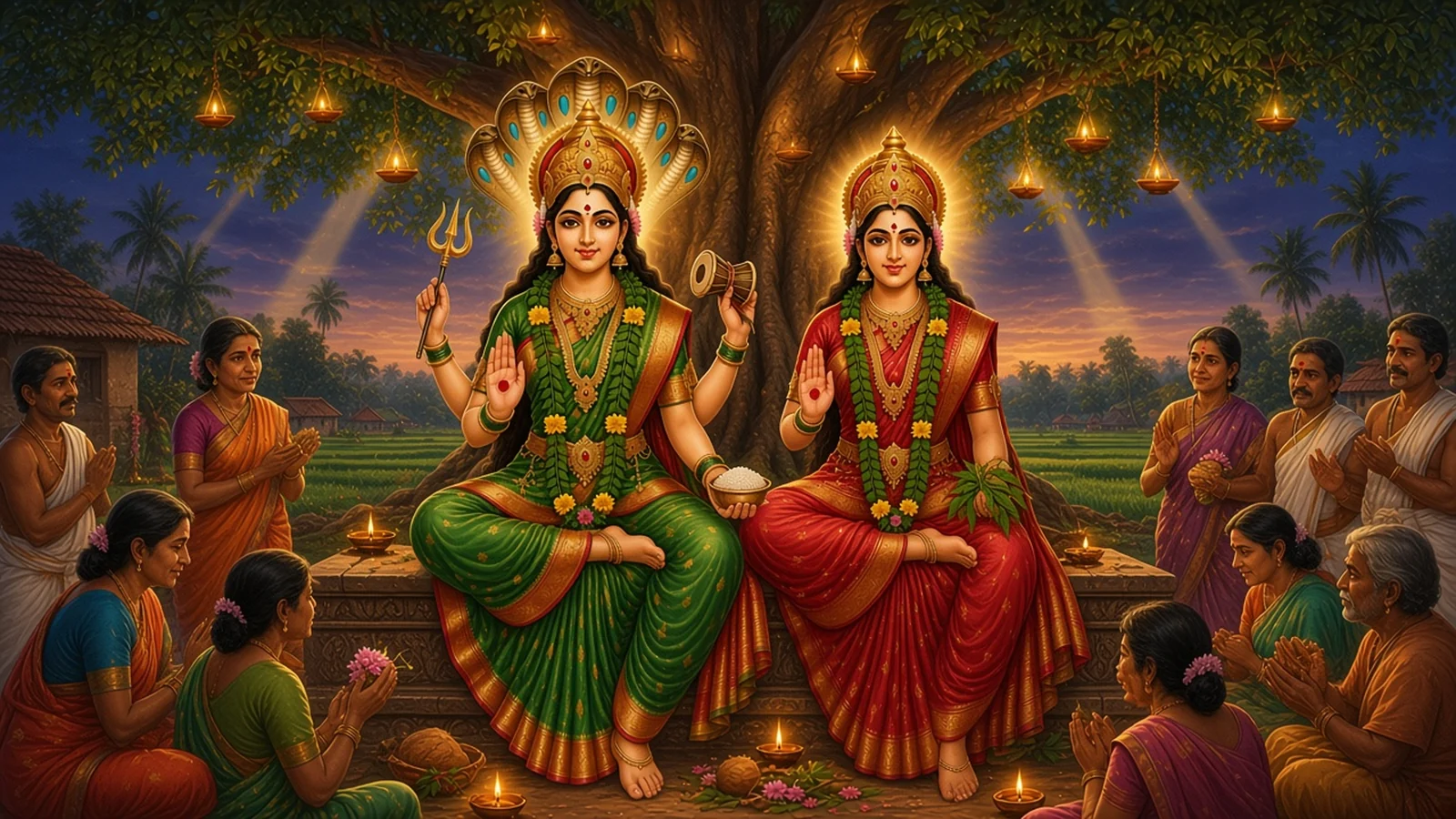
Some families add that he took Jayasena as his pupil, and finding in him both the learning of a Brahmin and the courage of a Kshatriya, called him Brahmakshatriya, the name his people carry still. They spread from Sindh to Kutch and Gujarat, and wherever they settled they kept Hinglaj Mata as the goddess of their family.
As the Sahasrarjun Kshatriya weavers tell it
the Deccan and Gujarat · Khatri, Bhavsar and Shimpi families · 1 min read
The weaving families who call themselves the Somavanshiya Sahasrarjun Kshatriyas tell it of their own ancestors, the sons and grandsons of Sahasrarjun, the thousand-armed king himself.
After his death they were so afraid of Parashurama that they gathered their weapons and left their palaces. They stored their heavy arms in grass huts at the forest hermitage of the sage Chyavana and went north to King Janaka, who in their telling ruled in Nepal. Janaka was afraid for his own life. He sent them on to their family goddess, Hinglajimata, in her dark caves in the desert hills by the Hingol.
There they prayed, and made her offerings of sheep and goats, until she appeared.
"Go back," she told them, "and leave the little weapons you still carry at Chyavana's hermitage too."
They obeyed. Parashurama came to the hermitage and found the weapons piled there. The monks told him why, and he did not believe them, so he set out for the caves himself.
When the clan heard he was coming, some ran away into the desert; they are the Bhavsars. Some crawled deep into the tunnels and hid behind the boulders; they are the Shimpis. The rest stayed where they were and prayed, and the goddess named them Khatris.
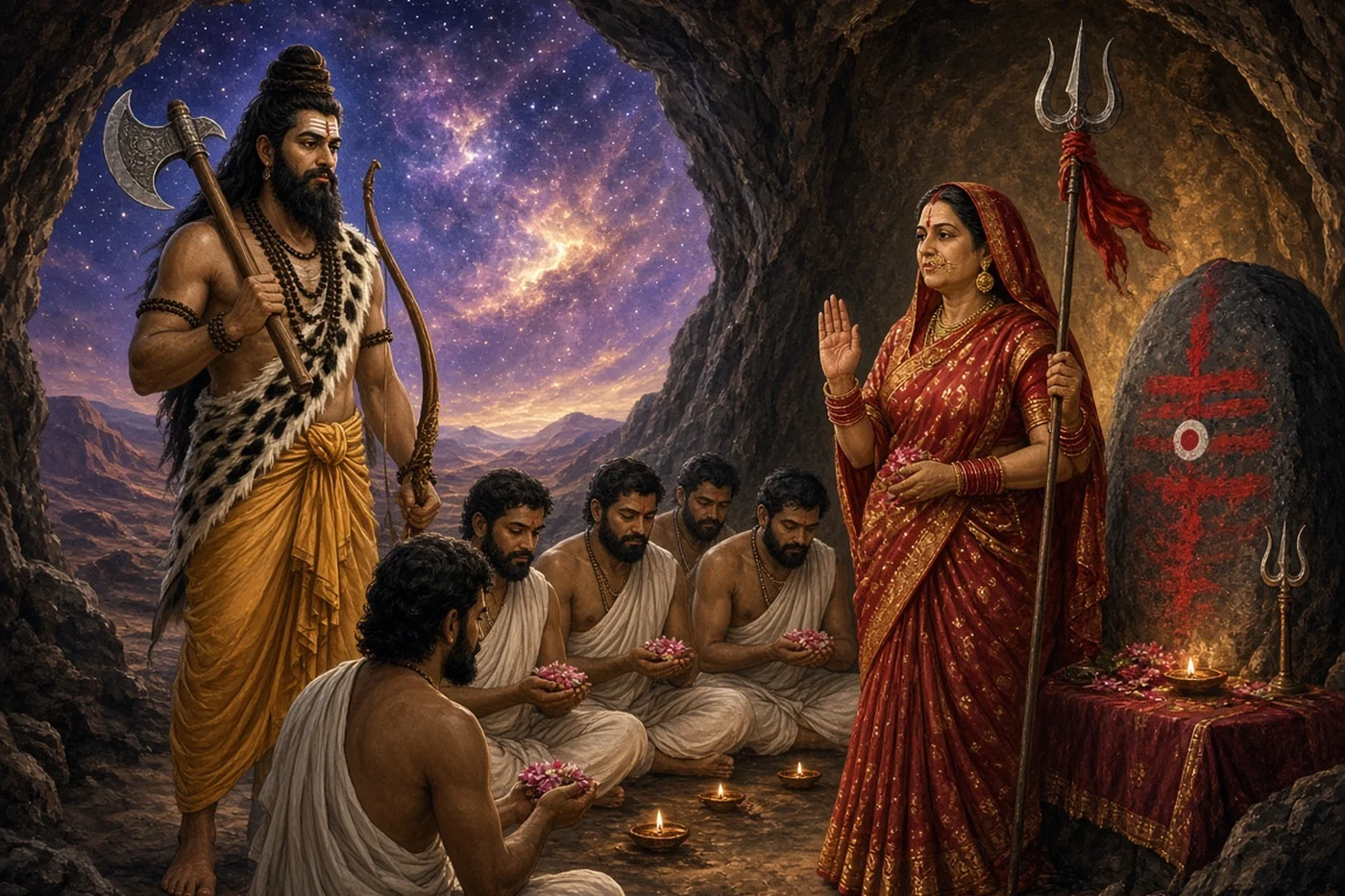
Parashurama came into the cave ready for a fight and found men sitting quietly in sacred threads, with flowers in their hands, chanting the Gayatri. The goddess told him they had given up arms for good. So he taught them a living instead: the Khatris to weave cloth, the Bhavsars to dye it and the Shimpis to sew it. Their families, the folklore says, have kept those trades ever since.