As Whitehead's teller told it
South India · the shrines of Mariamma and Yellamma · 3 min read
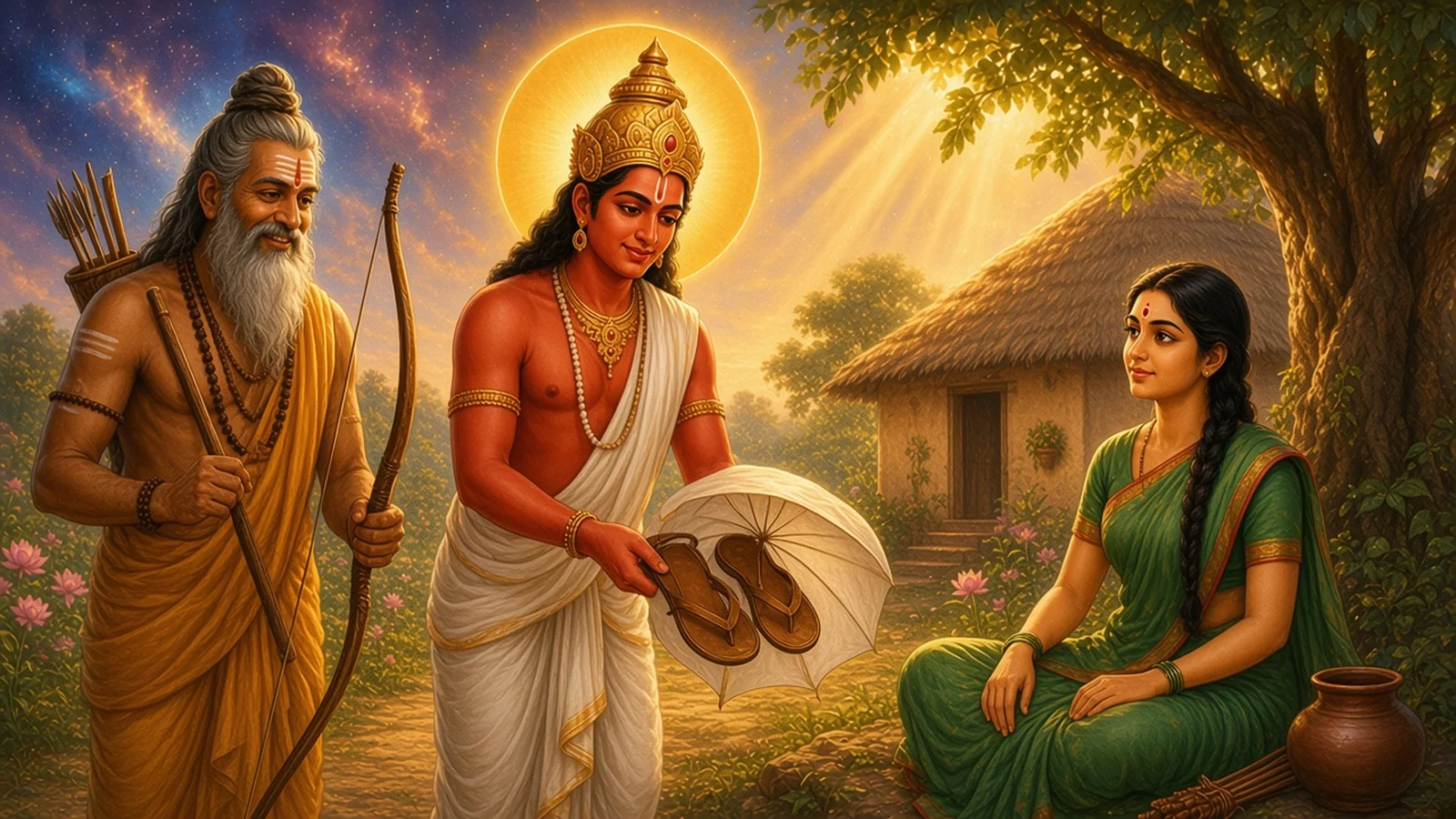
Renuka, the wife of the sage Jamadagni and the mother of Parashurama, was so pure in her mind that she needed no pot. When she went down to bathe she gathered the water in her two hands and it held together like a ball of glass, and she carried it home that way. Her wet cloth she simply threw up into the air, and it hung there in the sky until it was dry.
One morning, coming up from her bath with the ball of water in her hands, she saw a shadow cross it. Gandharvas, the singers of heaven, were flying over her, and their faces shone in the water she held. She looked at them for a moment longer than she should have, and thought how beautiful they were.
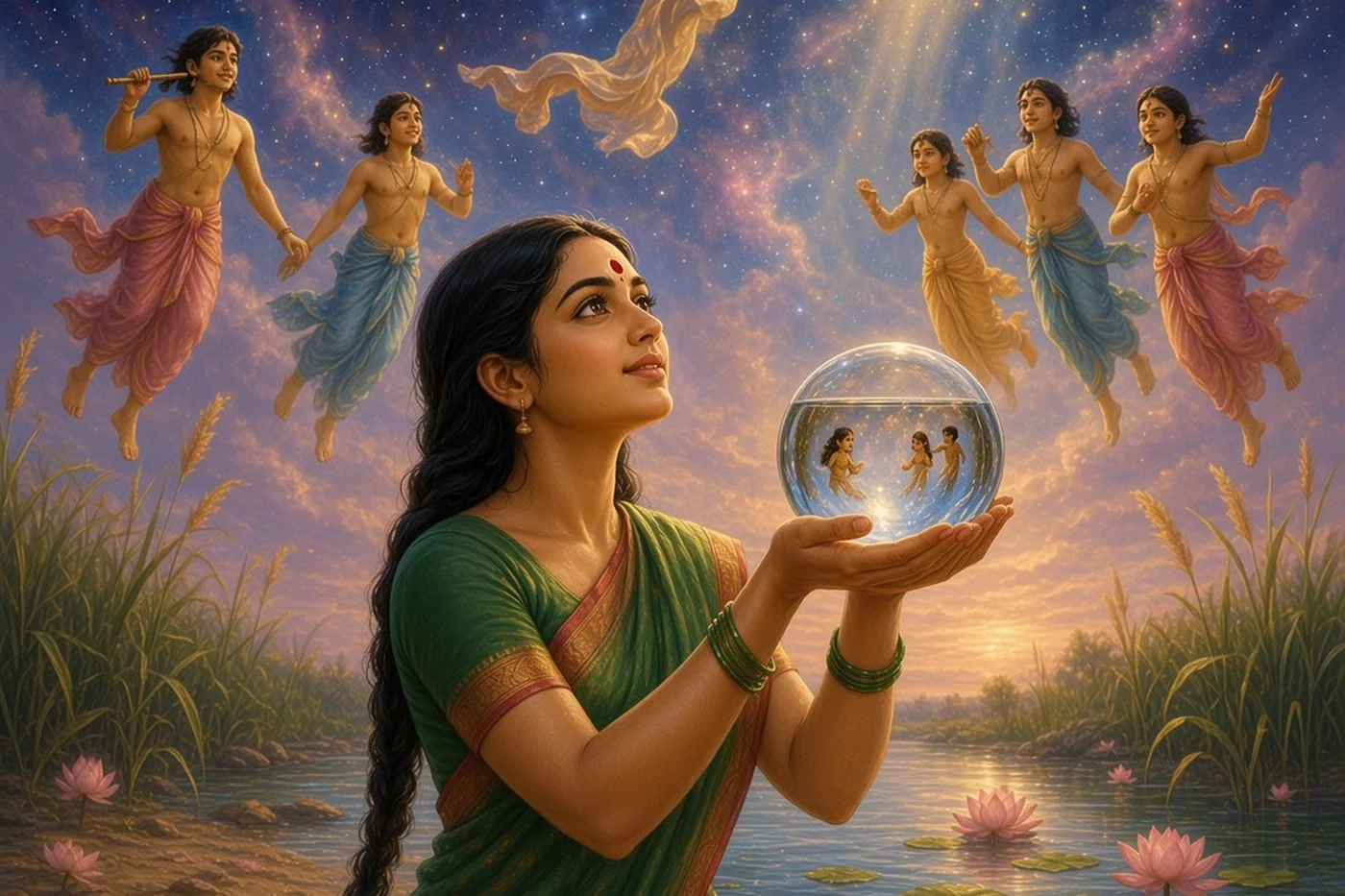
That was all. But the water ran through her fingers onto the ground, and her cloth fell down out of the sky.
She came home with empty hands and a wet cloth over her arm.
"Where is the water?" said Jamadagni. "Why is your cloth wet?"
"I looked up," said Renuka. "I saw the gandharvas in the water, and I admired them. That is all I did, and it was enough."
Her husband was a stern man, and he did not forgive her. He called their son.
"Take your mother into the wilderness," he said, "and cut off her head."
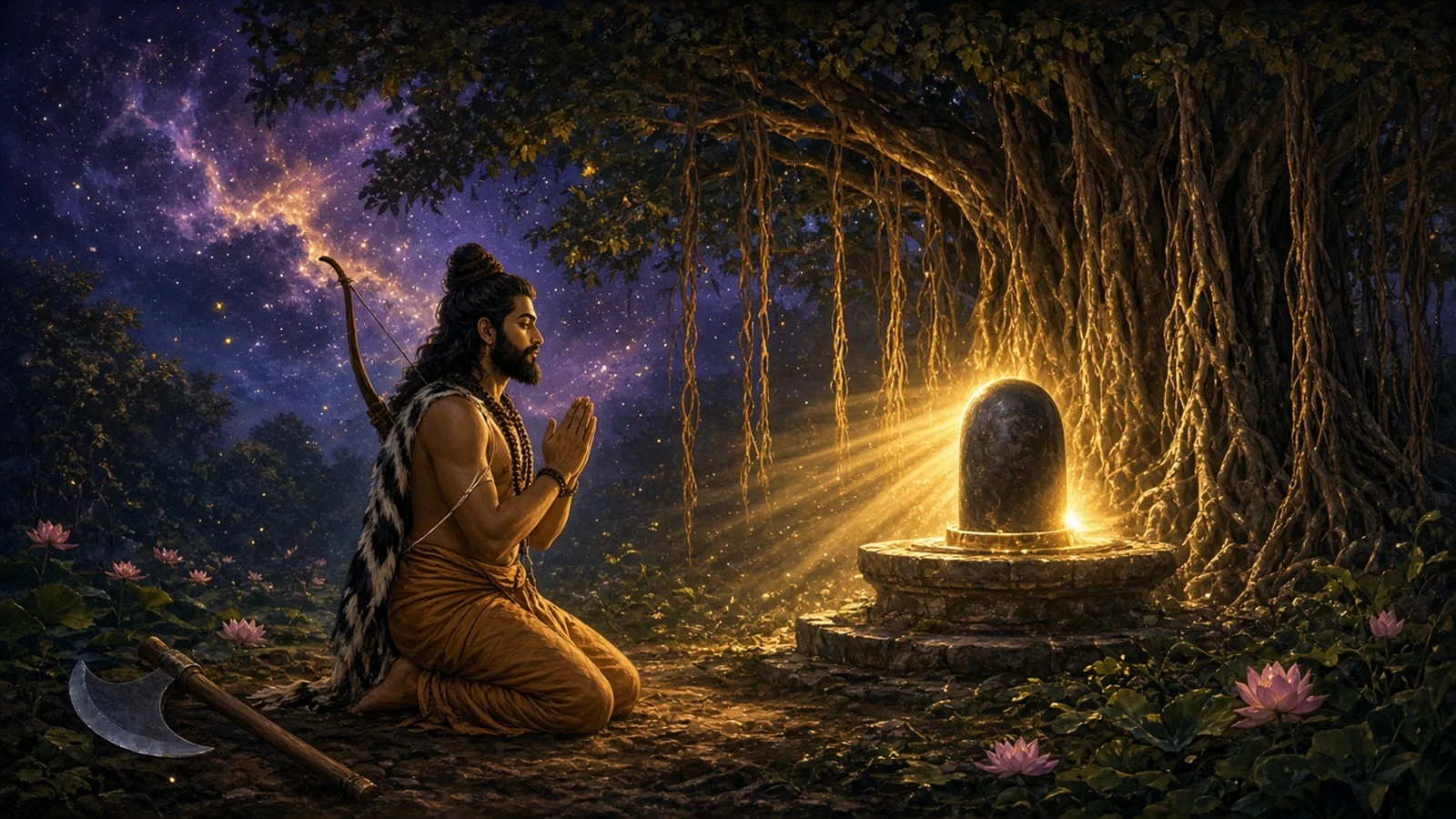
Parashurama led his mother out of the hermitage and away into the wild country. They walked a long way without speaking. At the place his father had named, a woman was standing by the road, a woman of the Paraiyar, the people who lived outside the village.
Renuka went to her and put her arms round her. She wanted, more than anything, to be held by someone.
"Stay with me," she said.
The woman stayed. And Parashurama, who had his father's order and could not wait, struck once, and both their heads fell together.
He walked home slowly, sick with sorrow.
"You have obeyed me," said Jamadagni. "Ask for anything you like, and it is yours."
"Give me back my mother," said Parashurama.
His father gave him a vessel of water and a cane.
"Go back," he said. "Put her head on her body. Sprinkle the water on her, and touch her with the cane, and she will live."
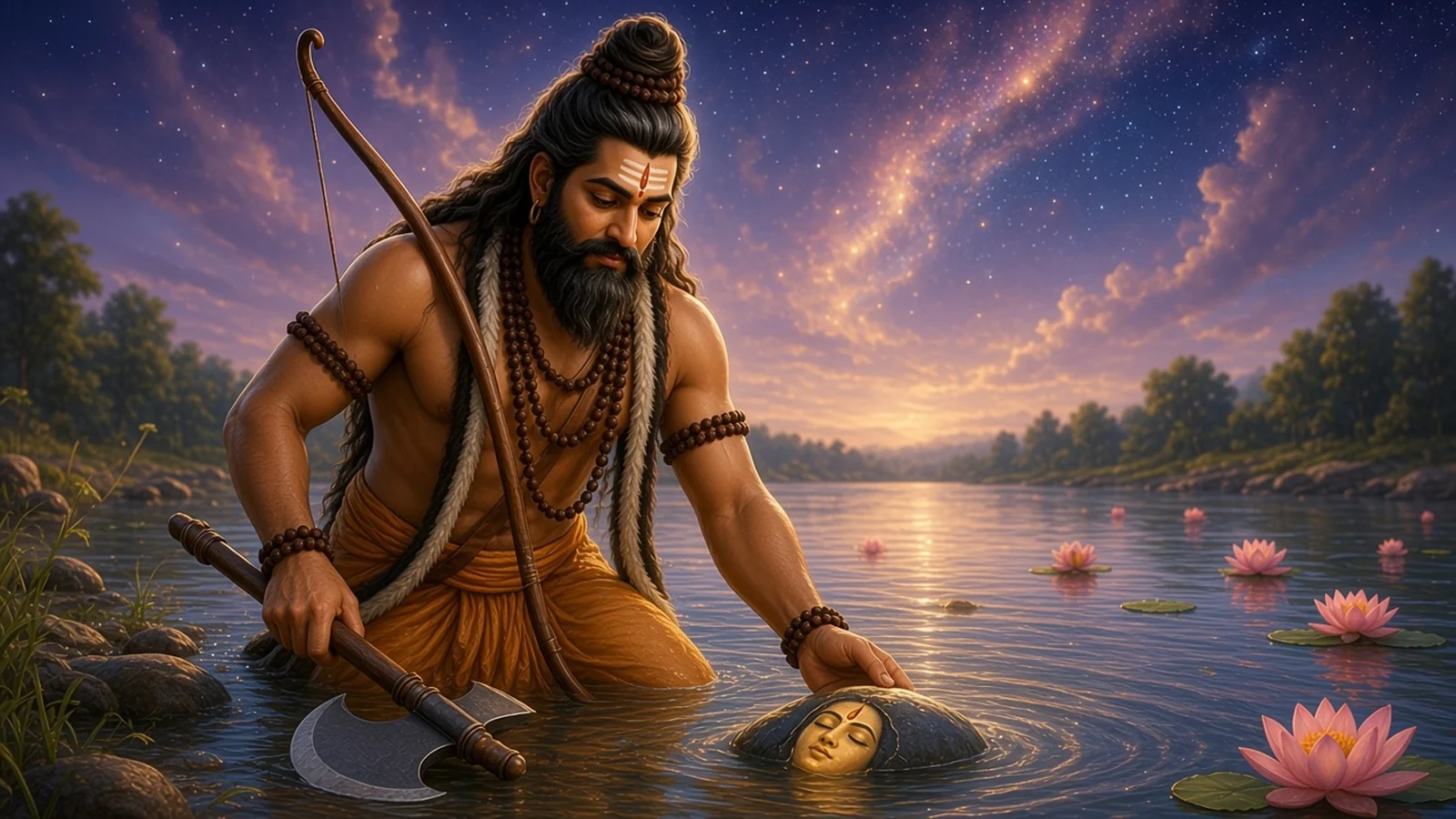
Parashurama ran all the way. He was in such a hurry to see his mother alive that he did not stop to look. He set his mother's head on the other woman's body, and the other woman's head on his mother's body, sprinkled them both and touched them both with the cane.
And both women stood up alive.
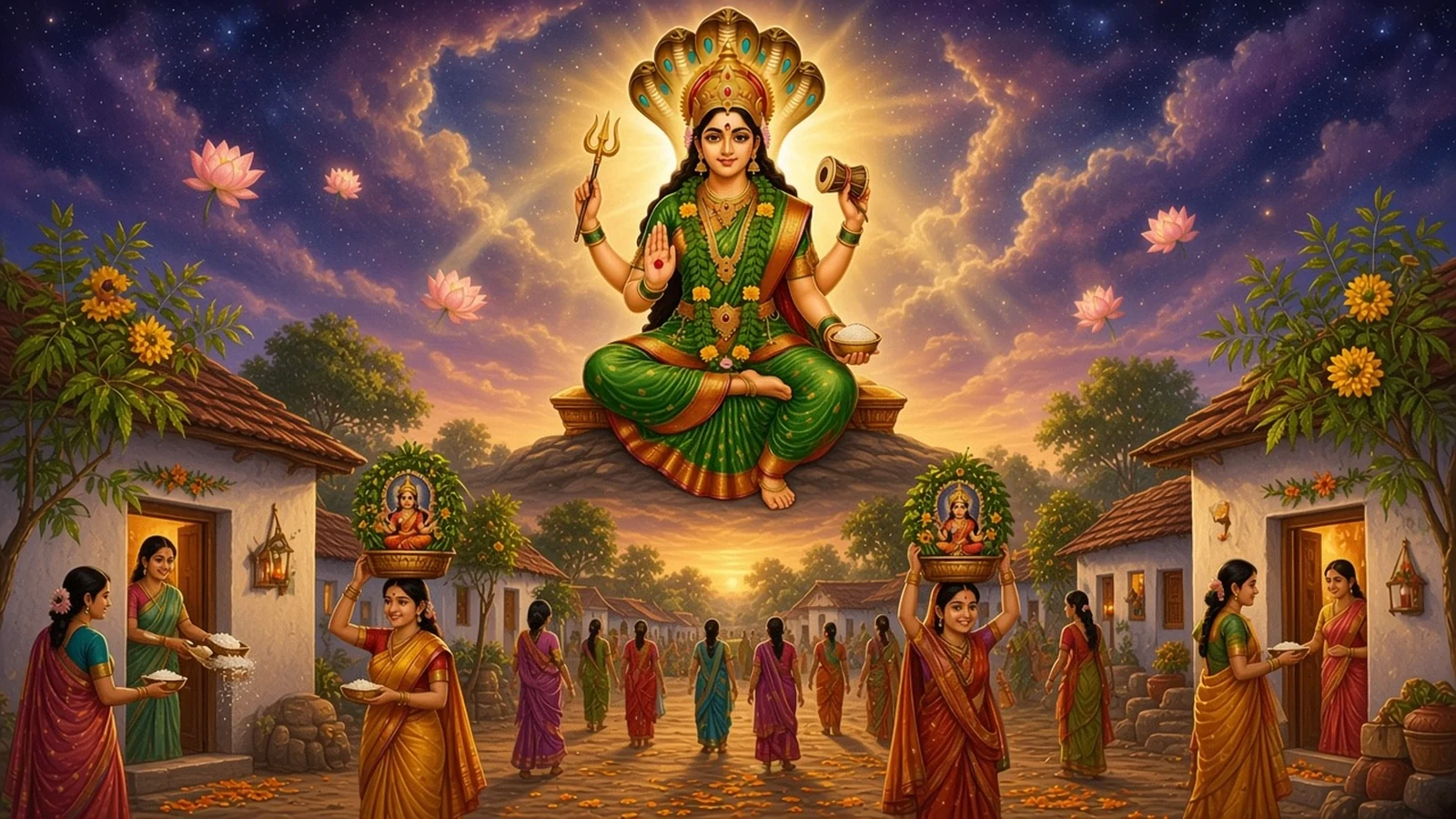
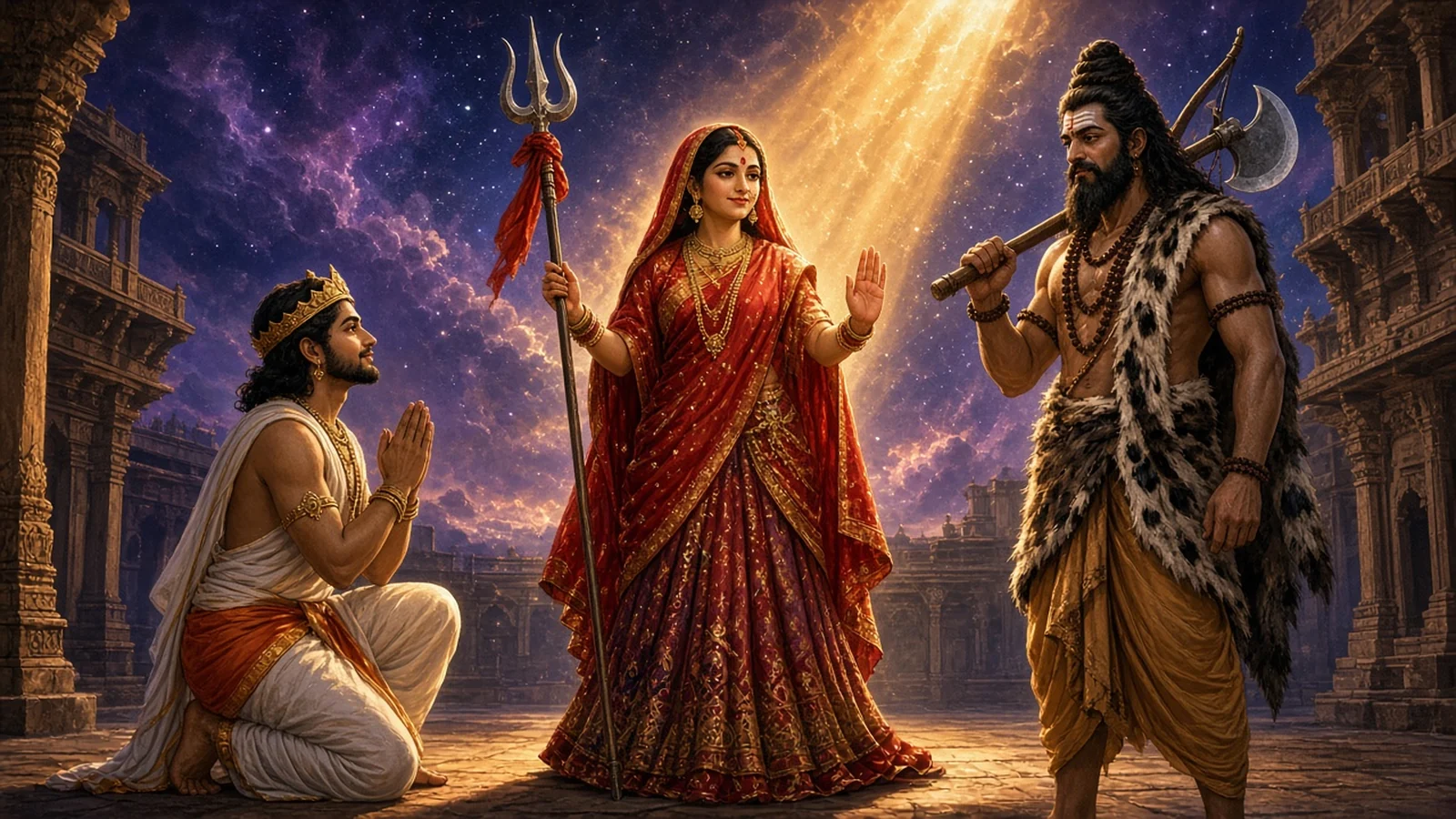
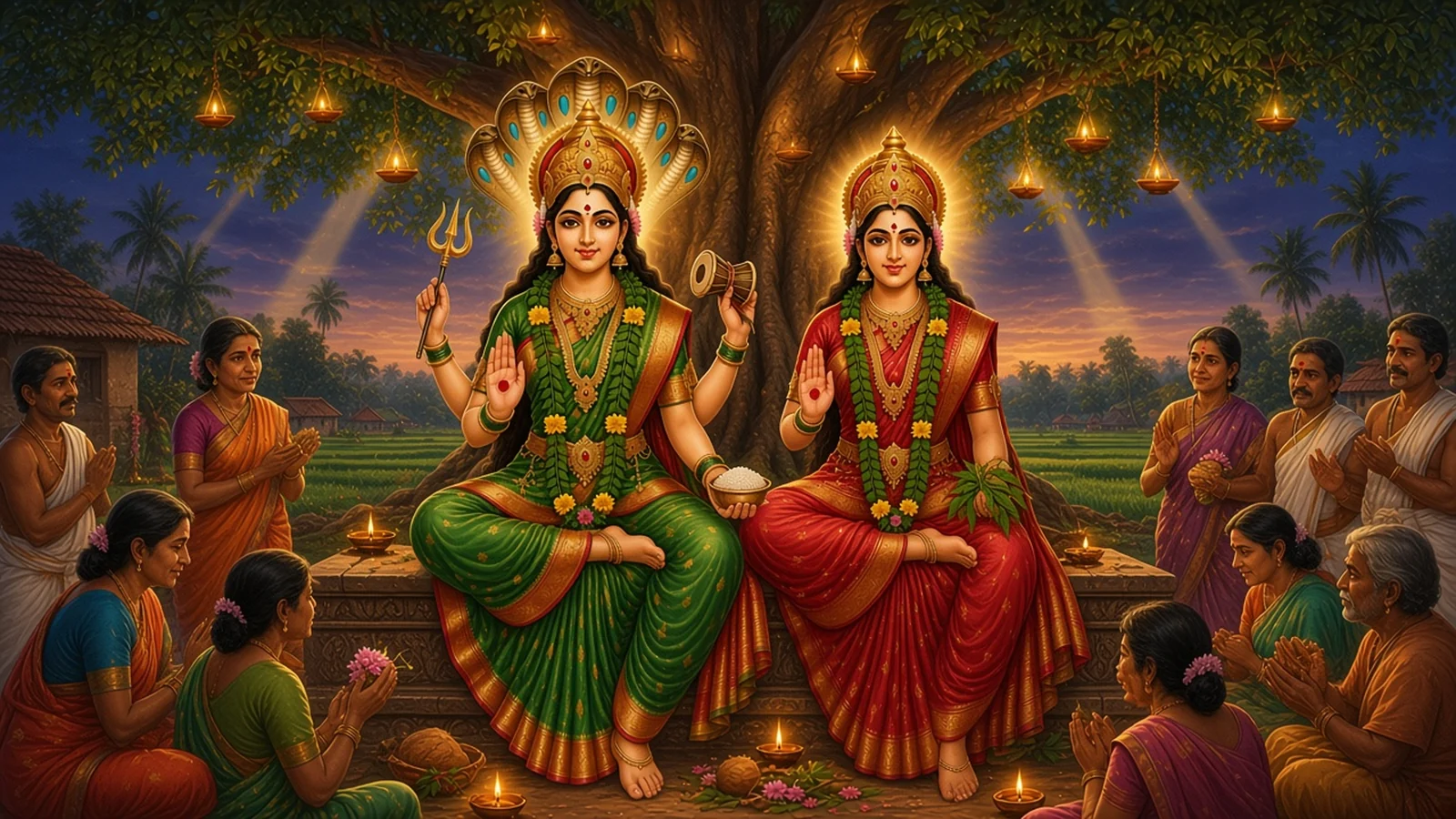
The one with the Brahmin head and the Paraiyar body came to be worshipped as Mariamma. The one with the Paraiyar head and the Brahmin body came to be worshipped as Yellamma. The two goddesses are not served alike, the teller said: buffaloes are given to Yellamma, while Mariamma takes goats and cocks, and never a buffalo.
As the Tamil country told it to Oppert
South India · the Tamil country · 1 min read
In the Tamil country, Gustav Oppert was told, Ellamma, the mother of all, was Renuka come back to life.
She had been the faithful wife of Jamadagni and the mother of his five sons. One day she saw Chitraratha, the king of Mrittikavati, at play with his queen, and for a moment she envied them their happiness. Her husband saw it in her, and he ordered his sons to kill her. The four elder sons would not. The youngest, Parashurama, said he would.
Renuka heard of it and ran. She fled to the next village, where the Paraiyar lived, and asked them to hide her, and they took her in. Her son came after her and found her there. Oppert's tellers say plainly that the village paid for its kindness: the people who had sheltered her died with her, and Parashurama carried his mother's head home to his father.
Jamadagni was pleased with his son's obedience and offered him a boon, and Parashurama asked for his mother's life. His father agreed. So the son went back with the head to the village where she had died, and set it on one of the bodies lying there, and the body rose up alive.
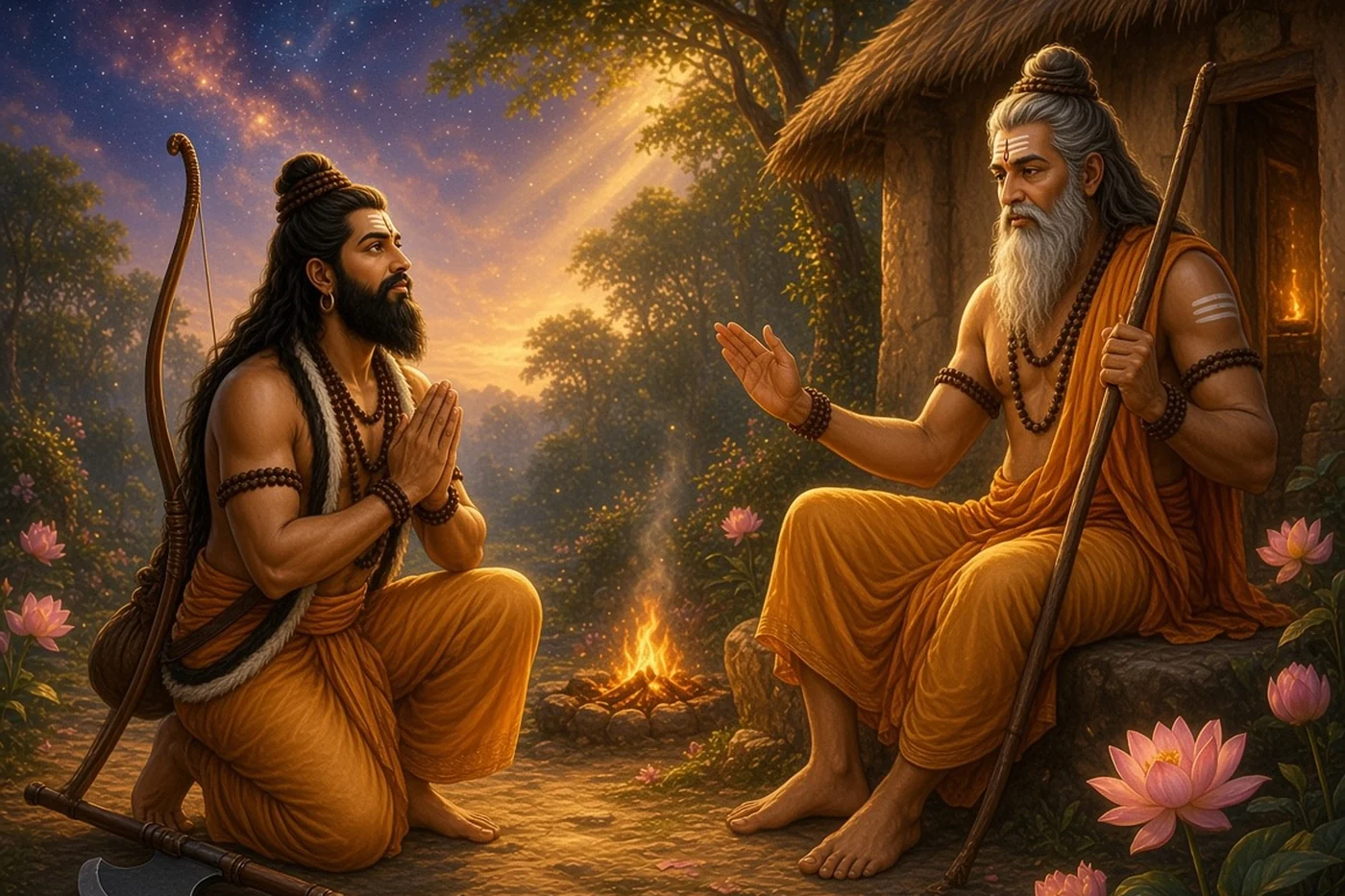
But it was not his mother's body. It was the body of a Paraiyar woman, and Renuka's head now lived on it. This, Oppert was told, is how Ellamma began.
There was another telling in the same country, which turned it round. In that one Parashurama set the Paraiyar woman's head on Renuka's body. When the woman stood up, Jamadagni would not take her for his wife, and so she was given to the Paraiyar to worship as their own. Renuka's head itself, in that telling, was called Ammachar.