Devalok ← All gods
Also calledRenukaEllammaYellamma DeviRenuka DeviRenuka YellammaEkviraMahur RenukaJagadamba

In short

Who is Yellamma?
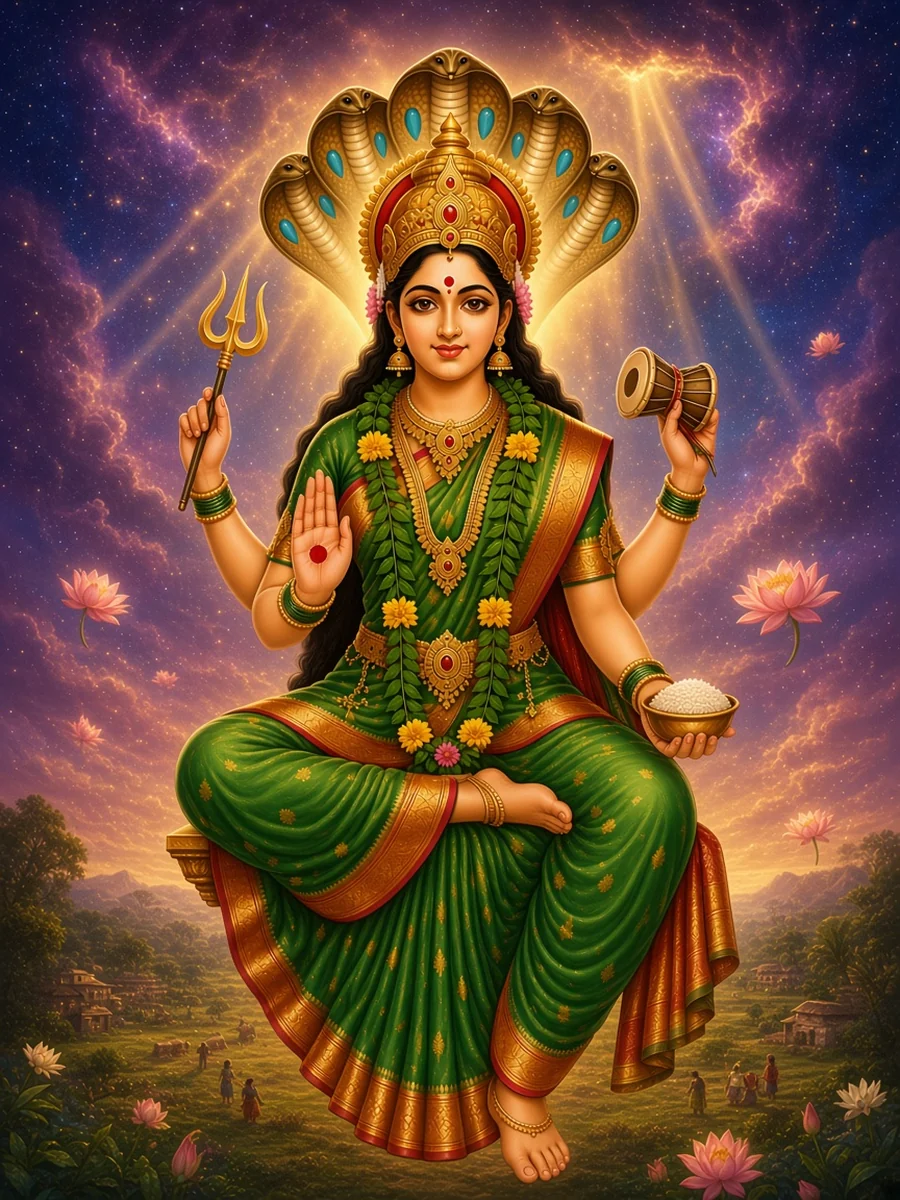
The great goddess of the Deccan, worshipped at Saundatti in Karnataka and in village shrines from Maharashtra to Tamil Nadu. She is Renuka, the wife of the sage Jamadagni and the mother of Parashurama, who came back from death as a goddess.
Why is she so often only a head?
Her son struck off her head at his father's word and asked her life back. The village tellings say the head was joined to another woman's body, or travelled on by itself, and many of her shrines hold only her face.
Who are her jogatis and jogappas?
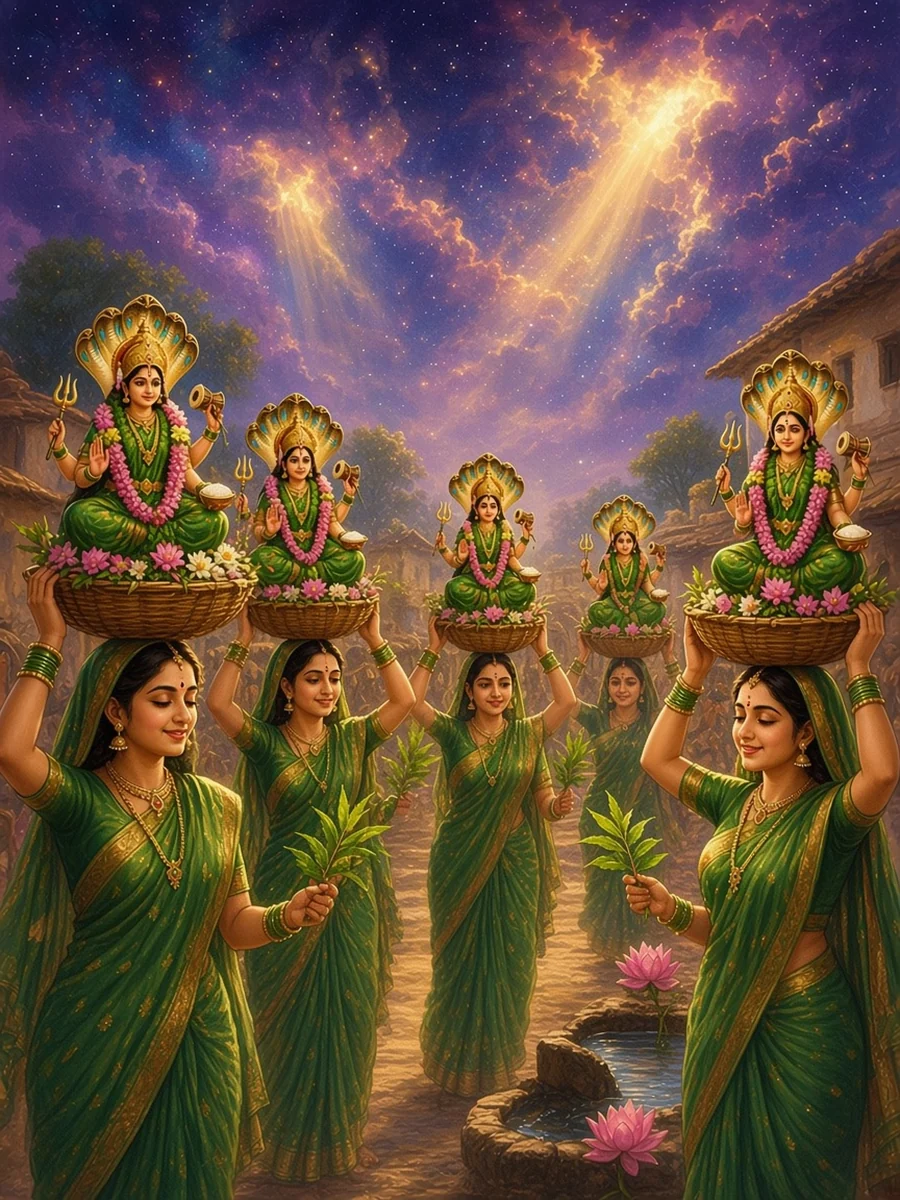
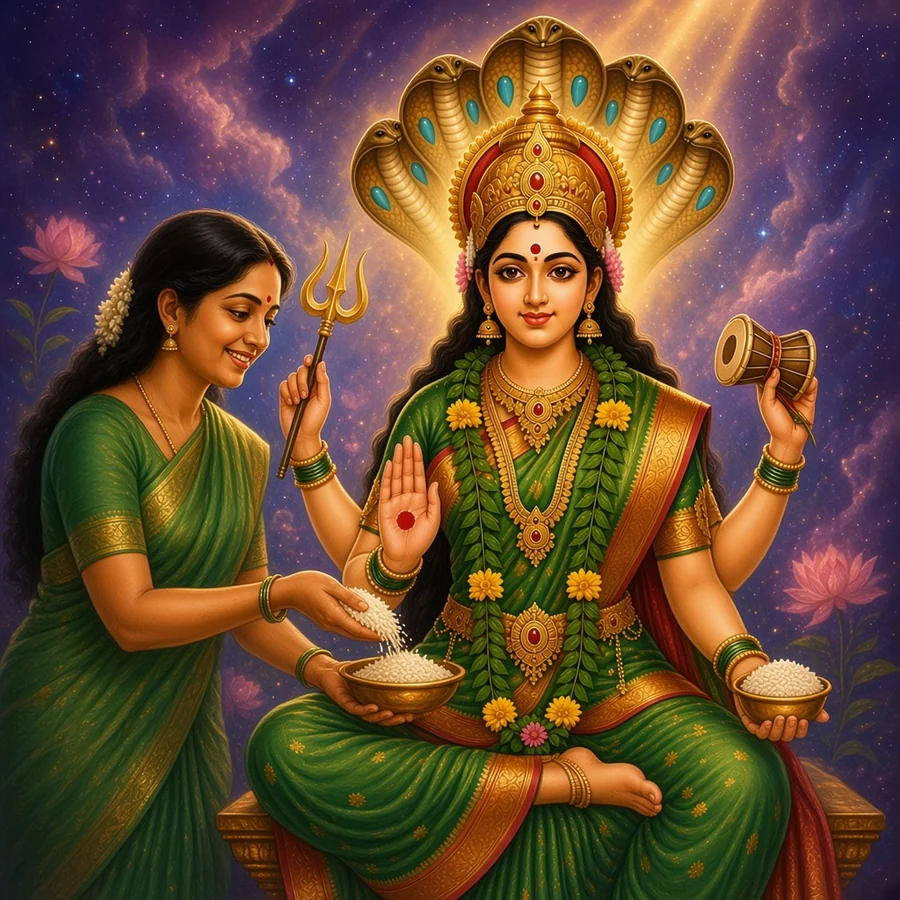
Women and men who give their lives to her service, carry her image on their heads, dance for her and beg in her name, as she begged rice for three days at Saundatti.
Is she the same goddess as Mariamma?
In one village telling the two are sisters of a kind, two women whose heads were exchanged when they were brought back to life together.

Artwork ›

Yellamma's hill at Saundatti Yellamma, the mother of all

For kids

Green bangles for Amma
Udho Udho Yellamma
Udho Udho Yellamma

At a glance

TraditionFolk and Shakta
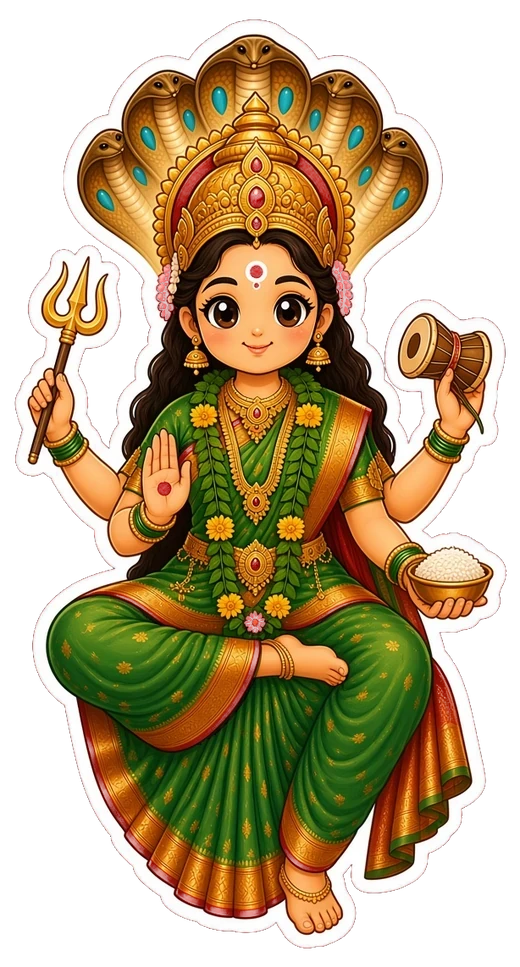
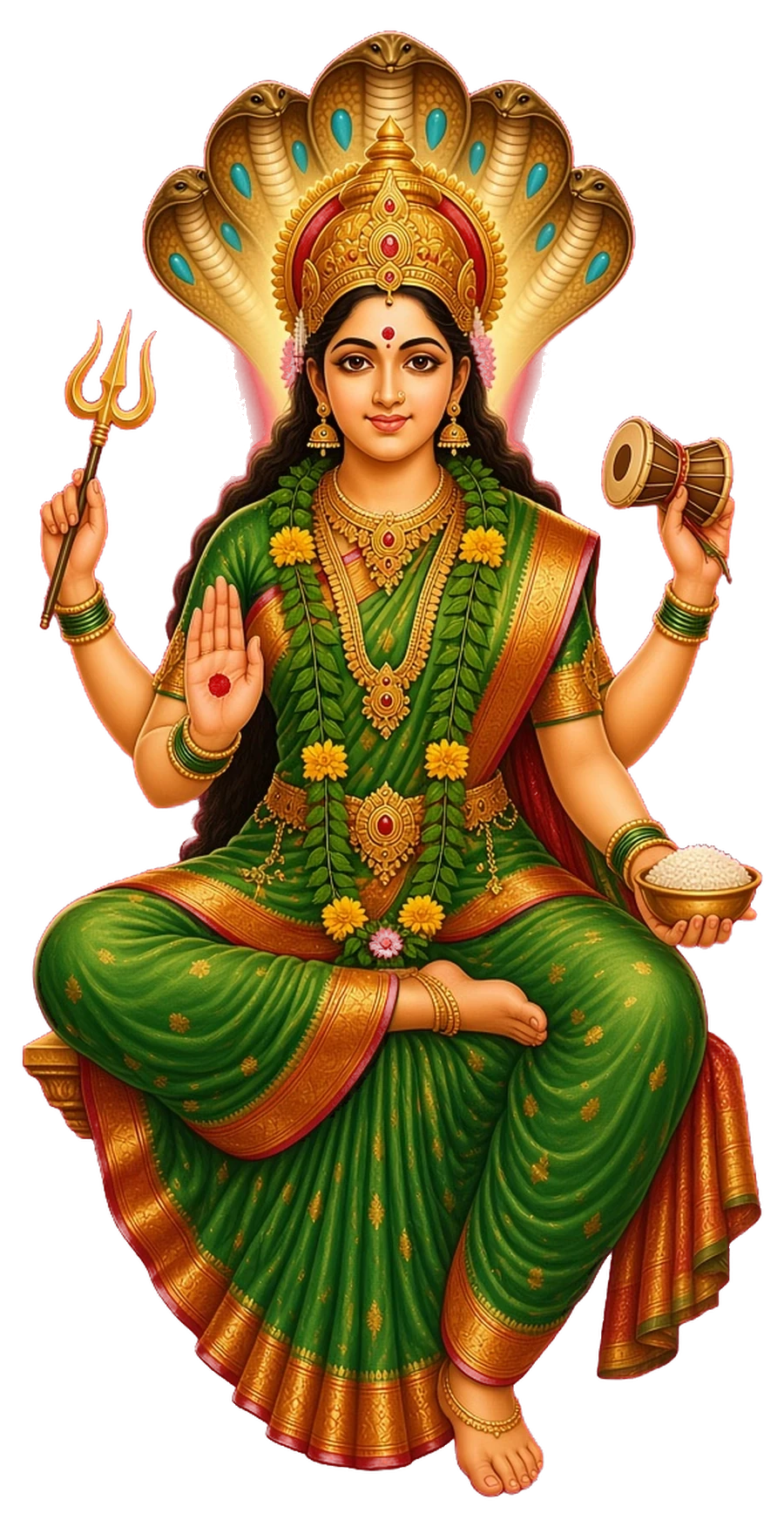
FormOften a face or a head alone

at Mahur a great self-made head painted red under a huge crown, only the head above the ground

EmblemsA snake hood

which a Telugu village telling makes her head, and a royal staff for her son's hand, carried at her worship

Who Yellamma is

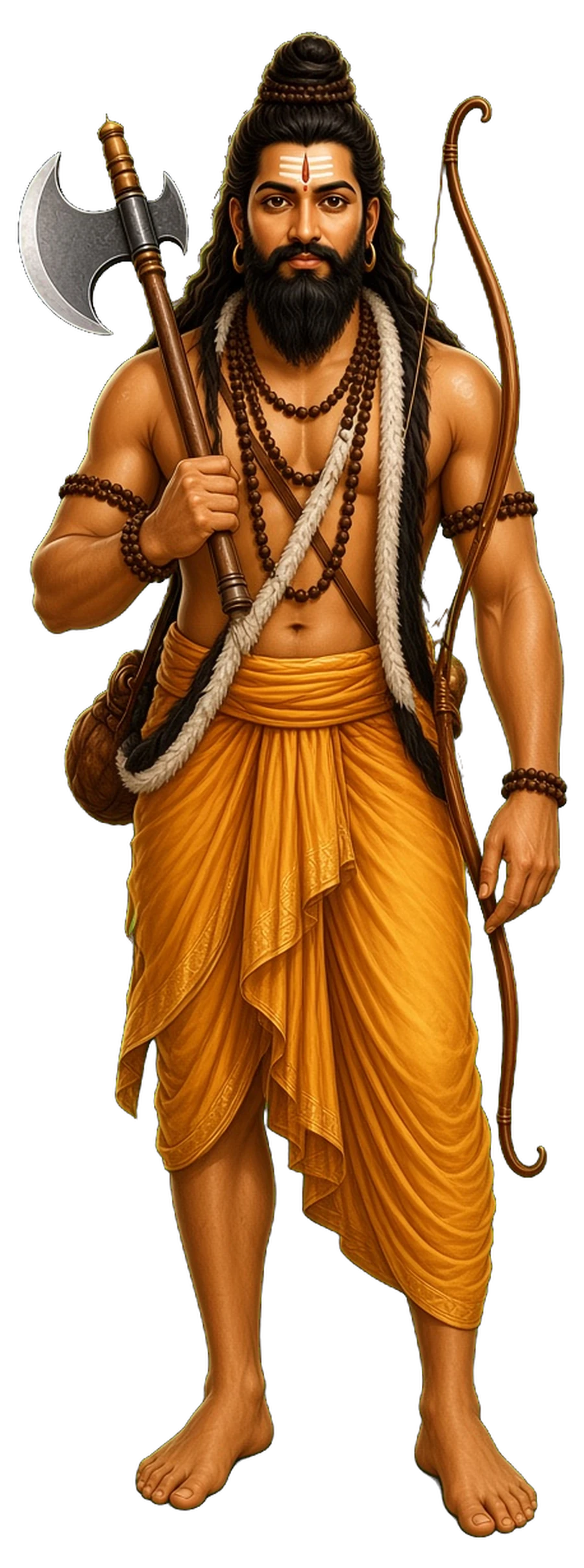
Yellamma is Renuka, the wife of the sage Jamadagni and the mother of Parashurama, and she is also much more than that. In the Mahabharata she is a king's daughter who gathers her husband's arrows and is struck down at his word by her own son, then given back her life. On the Deccan she is the mother who came back from death as a goddess, and her temples run from Mahur in Maharashtra through Saundatti in Karnataka to the village shrines of Telangana, Andhra and Tamil Nadu.

Her people tell her return in their own ways. Her head was joined to the body of a woman from outside the village, and the two rose as two goddesses, Yellamma and Mariamma. Or she begged rice from door to door for three days before she went home to her husband's anger, and women still beg in her name. Or her head multiplied and travelled, which is why so many of her shrines hold her face alone.

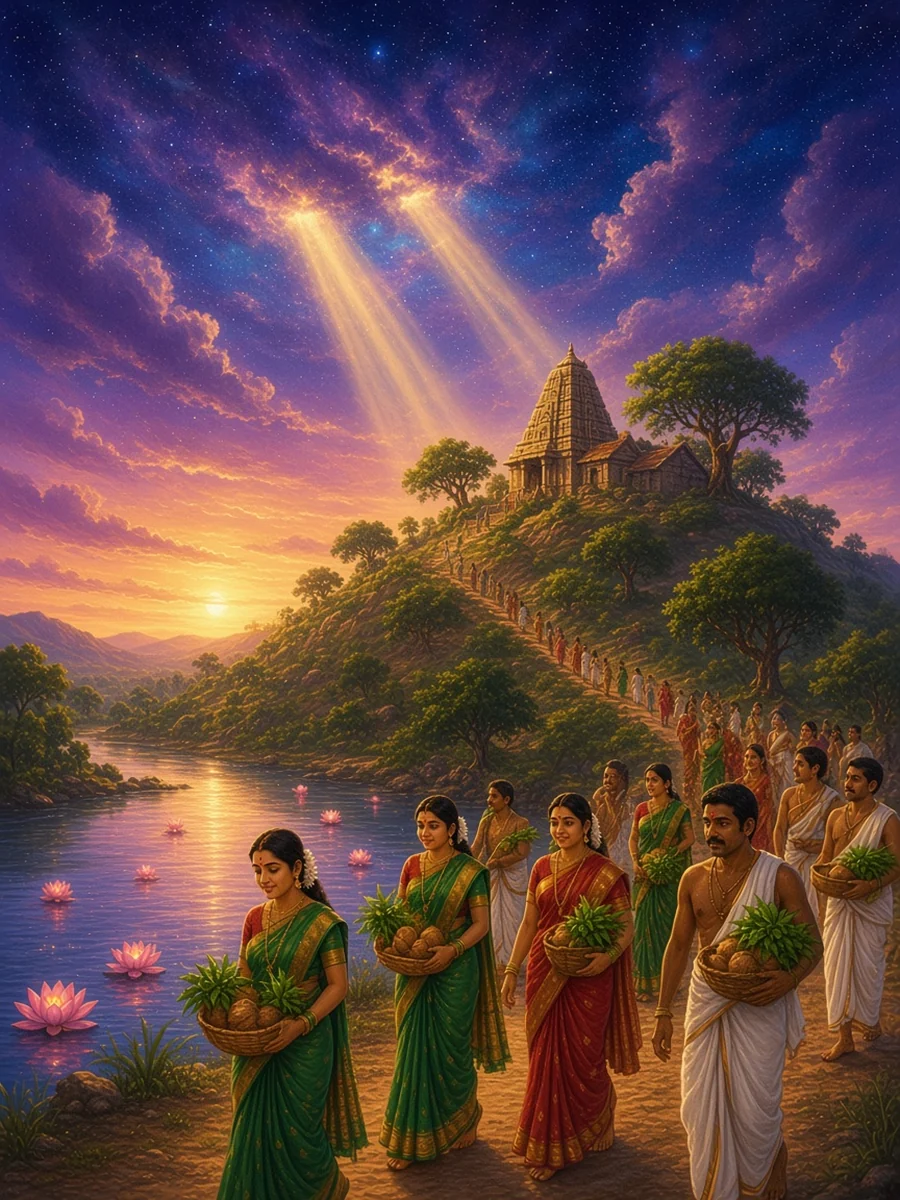
Her seat at Saundatti stands on a hill above the Malaprabha, where pilgrims bathe at the Jogula Bhavi well, walk round the shrine with neem leaves in their mouths and gather in lakhs at the full moons of the festival season. Her jogatis and jogappas, women and men who have given their lives to her, carry her image on their heads, beg in her name and keep her dance, the Jogathi Nritya, alive. In older times girls were dedicated to her temples; that dedication is now banned by law.

The Devi Bhagavata counts her among the goddess's great seats:

Matuh puram dvitiyam cha renukadhishthitam param: And the second, the Mother's city, supreme, where Renuka dwells (Devi Bhagavata Purana 7.38.5).

The Mother's city, Matripura, is taken to be Mahur, which counts itself one of the three and a half seats of the goddess in Maharashtra.

Her stories on this site: The Two Heads, The Rice She Begged and The Umbrella and the Sandals. Her death and return as the epic tells them are in The Axe and the Mother, and Jamadagni's death in The Thousand-Armed King. At Banki in Odisha a river carries her name in The Stone That Rose and Fell, and in Hyderabad she is one of the sisters who come home in The Daughter Who Comes Home in Ashadha.
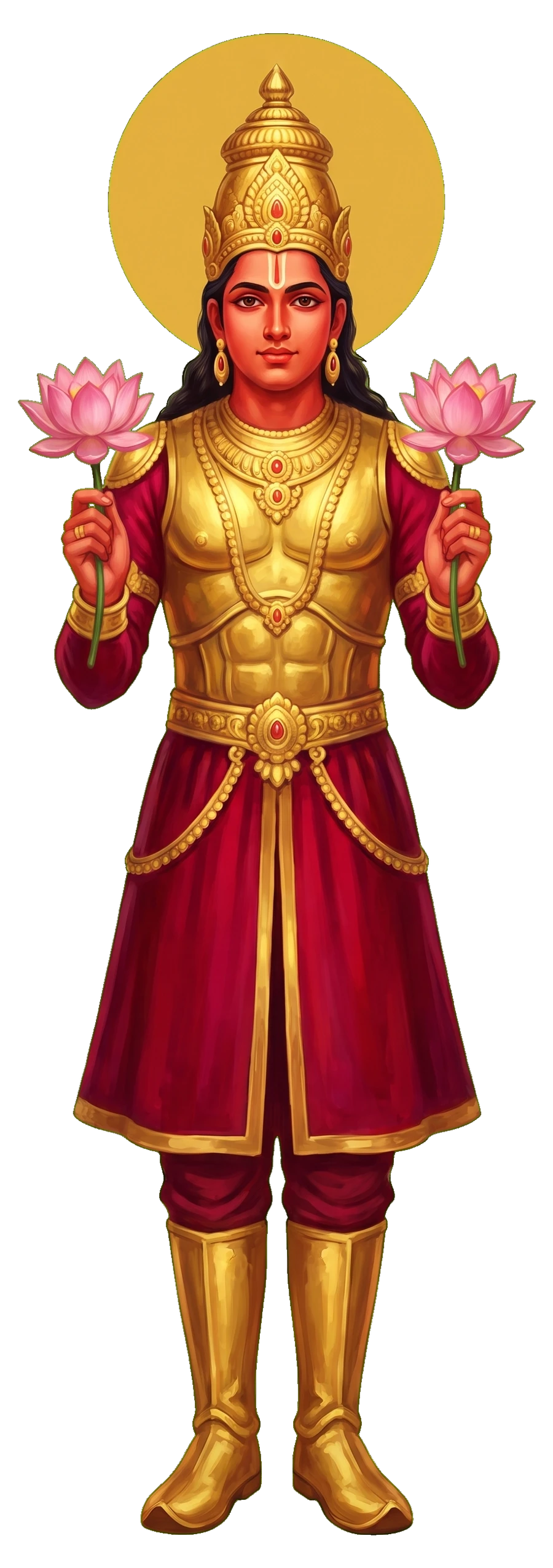
Before the Puranas

The Vedic roots of Yellamma

The Vedas do not know Renuka or Yellamma. They know her husband: Jamadagni is a seer of the Rigveda, and a hymn to Mitra and Varuna (3.62) ends by calling them praised in Jamadagni's song. His wife has no hymn and no name there. Renuka enters with the Mahabharata, and the goddess Yellamma grew out of her story on the Deccan, where the village tellings made the sage's wife the mother of all.

In the Mahabharata (Vana Parva 116) she is the daughter of King Prasenajit, given to Jamadagni, and the mother of his five sons; she lingers at the river watching the gandharva Chitraratha, and her youngest son strikes off her head at his father's word and asks her life back. The Anushasana Parva (95 and 96) has a gentler scene, Renuka burned by the noon sun as she gathers his arrows. The Bhagavata Purana (9.15 and 9.16) retells the beheading and has her cry out for her son when the king's sons kill Jamadagni. The Brahmanda Purana, as the Puranic Encyclopedia summarises it, ends her life on her husband's pyre. The Devi Bhagavata (7.38) lists Matripura, the Mother's city, as a seat where Renuka dwells.

The village goddess was recorded by a Sanskrit scholar and two missionaries in the Telugu and Tamil country. Gustav Oppert (1893) found Ellamma, the mother of all, revered by every caste as the first power. W. T. Elmore (1915) heard Renuka called the source of all the goddesses, and Henry Whitehead (1921) took down the telling of the two heads. Whitehead read it as two ways of worship meeting; Elmore read the war legends as an honour paid to the village goddesses. Those are their readings, not the tellings'.

Her hill at Saundatti carries a temple built in 1514 by Bomappa Nayaka of Raybag, and archaeologists there, as the encyclopedia reports, have found signs of a shrine centuries older.

See how the Vedic gods became the Puranic ones →

Related gods